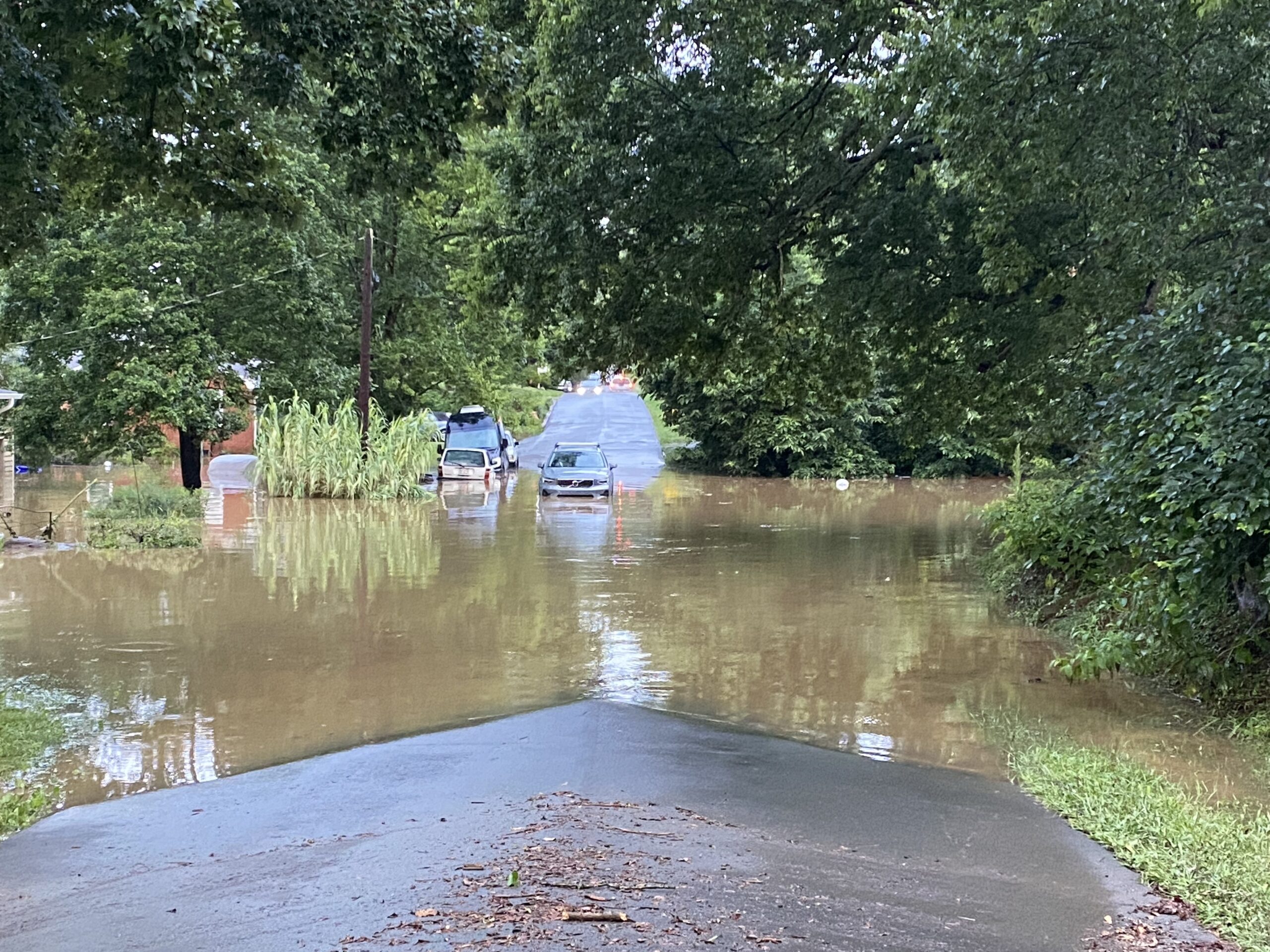
One year after Tropical Storm Chantal’s significant rainfall flooded several areas in the Triangle, the region’s local governments are still adjusting to its physical and financial impacts.
The towns and counties impacted by the storm on July 6, 2025 provided emergency rescue, resources, and direct aid to their residents as flash floods damaged buildings, roads, and their own infrastructure. As they strategize for covering operations and services, the governments are largely awaiting reimbursement to help with bigger rebuilding projects, while balancing the recognition of ongoing recovery by residents still grappling with their own individual losses.
“It has been a year of watching people struggle through a pretty catastrophic time for our community,” Chapel Hill Mayor Jess Anderson told 97.9 The Hill. “People are still worried about their neighbors who haven’t totally recovered, and it is still the work of not just the town, but a lot of other agencies and levels of government to continue to figure out how we’re going to help people recover.”
Some of those still feeling the storm’s effects are public housing residents. The Town of Chapel Hill is working to complete rebuilds of units at two of its low-income neighborhoods – Airport Gardens and S. Estes Drive – as eight remaining people out of 105 displaced from flood damage are not yet back into their homes. The local government reported spending $800,000 on repairs to those neighborhoods and $700,000 on booking households into hotels. It also saw damage to its infrastructure, spending around $4 million to repair greenways and trails and $3 million to fix sidewalks and right-of-ways — although those projects are largely finished.
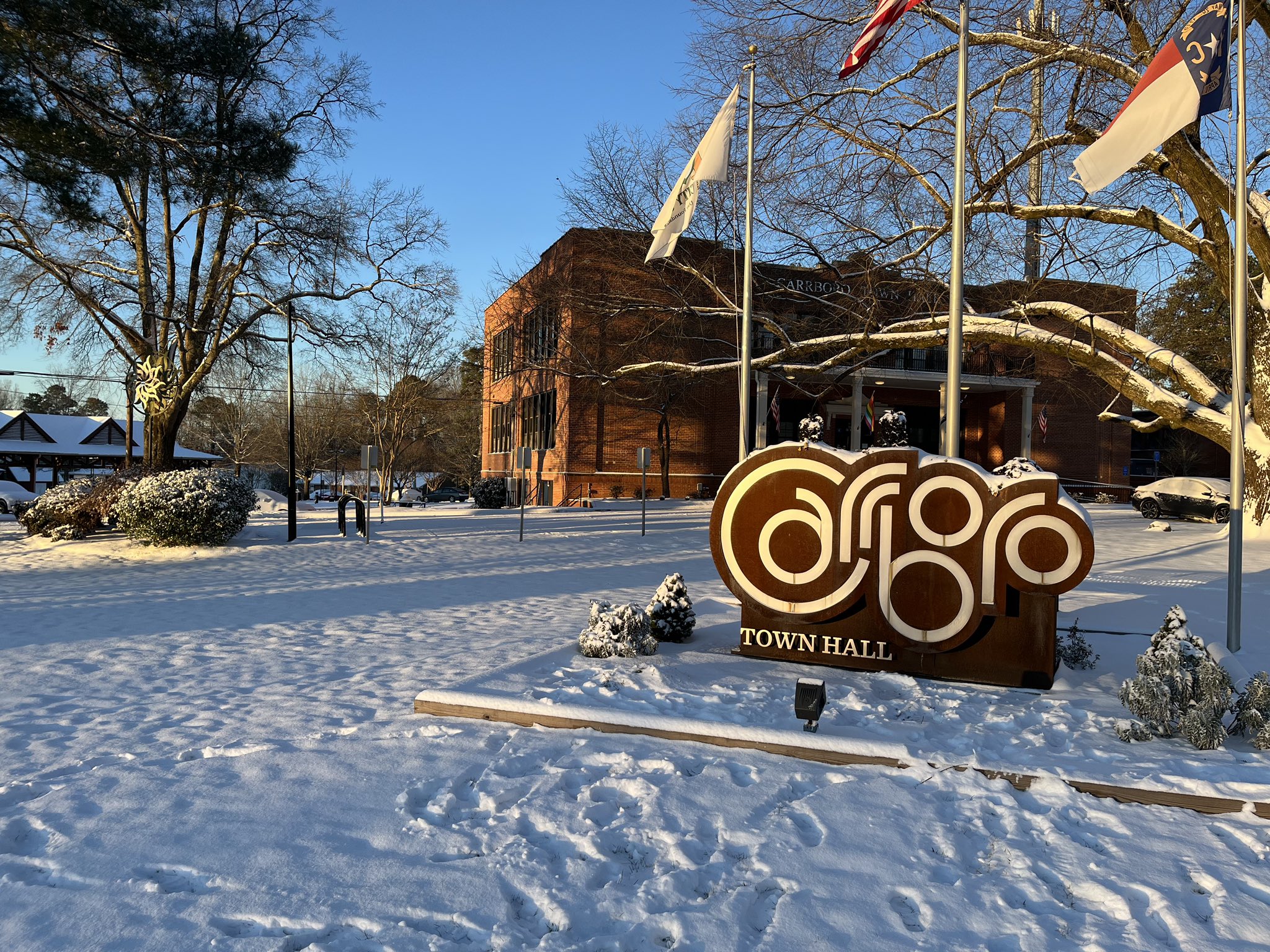
The neighboring Carrboro suffered damage to a key facility for its local government: the Public Works Department’s workshop. Dozens of vehicles were totaled by the floods and the building took on several feet of water, leading the town to quickly alert residents that services may be impacted.
But the town government was able to adapt by using partnerships with other municipalities to borrow equipment and cover for the losses. Fire Chief Will Potter, who is also the coordinator for Carrboro’s recovery to Chantal’s damage, said with services restored in a matter of days, most respondents to the town’s community survey said they didn’t notice a difference in quality.
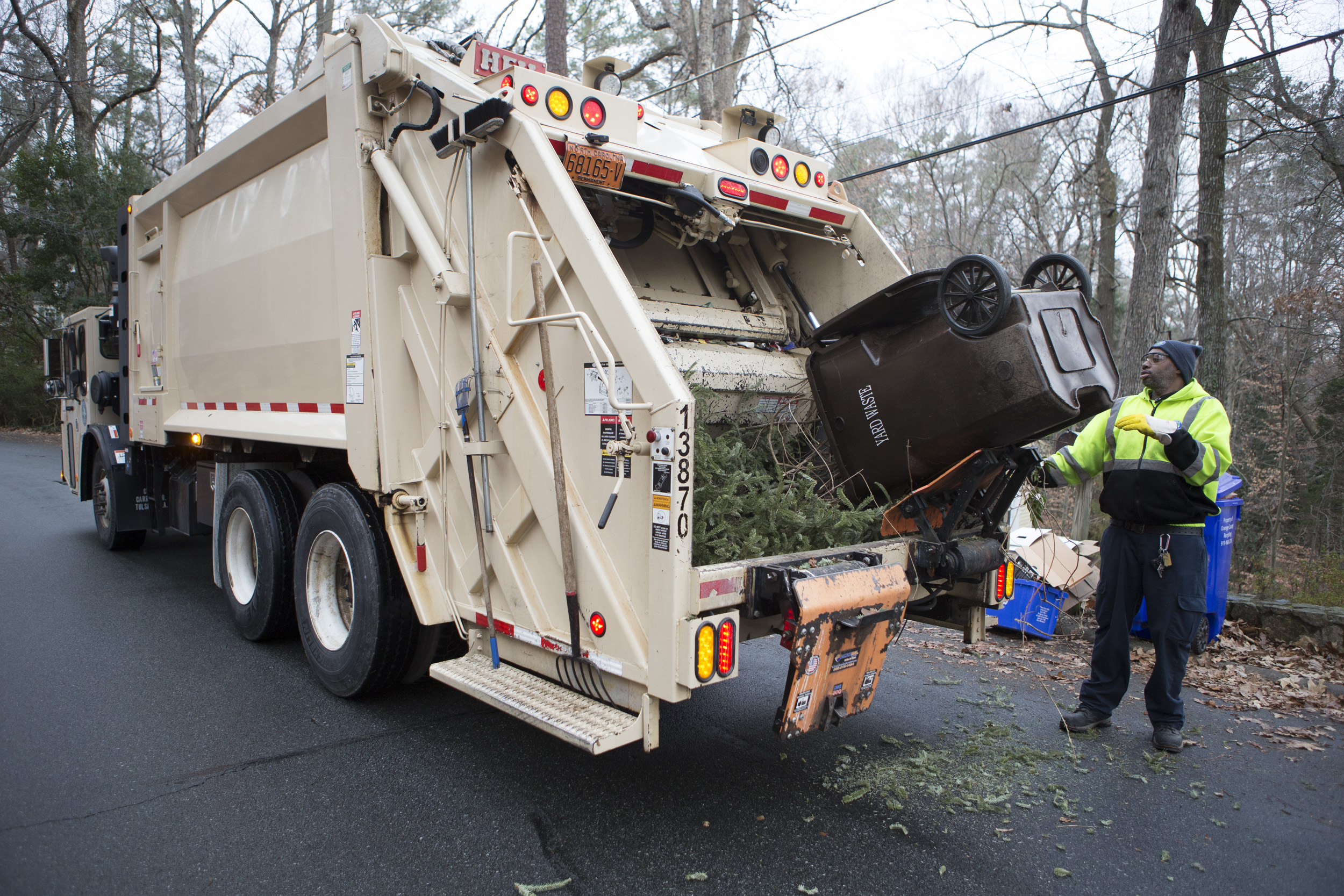
“The Public Works Department is often the unsung hero of the community,” Potter said. “You don’t think about what they do unless they’re not doing it. They lost all of their trash trucks during the storm, and if you don’t pick up trash, people notice that very quickly. And they didn’t notice that, because our staff was able to come up with solutions.”
After spending $1 million in the past year on vehicle replacements, the town’s budget for the ongoing fiscal year includes nearly $3 million more for new equipment and vehicles. Since some of the vehicles take 13 months to be built and delivered after being ordered, Carrboro is looking at several years to restore its fleet to full capacity instead of months. The fire chief said town staff are planning for most storm-related expenditures to be reimbursed by FEMA through its Public Assistance program – although a federal department shutdown in 2025 slowed the process of getting their paperwork submitted and reviewed.
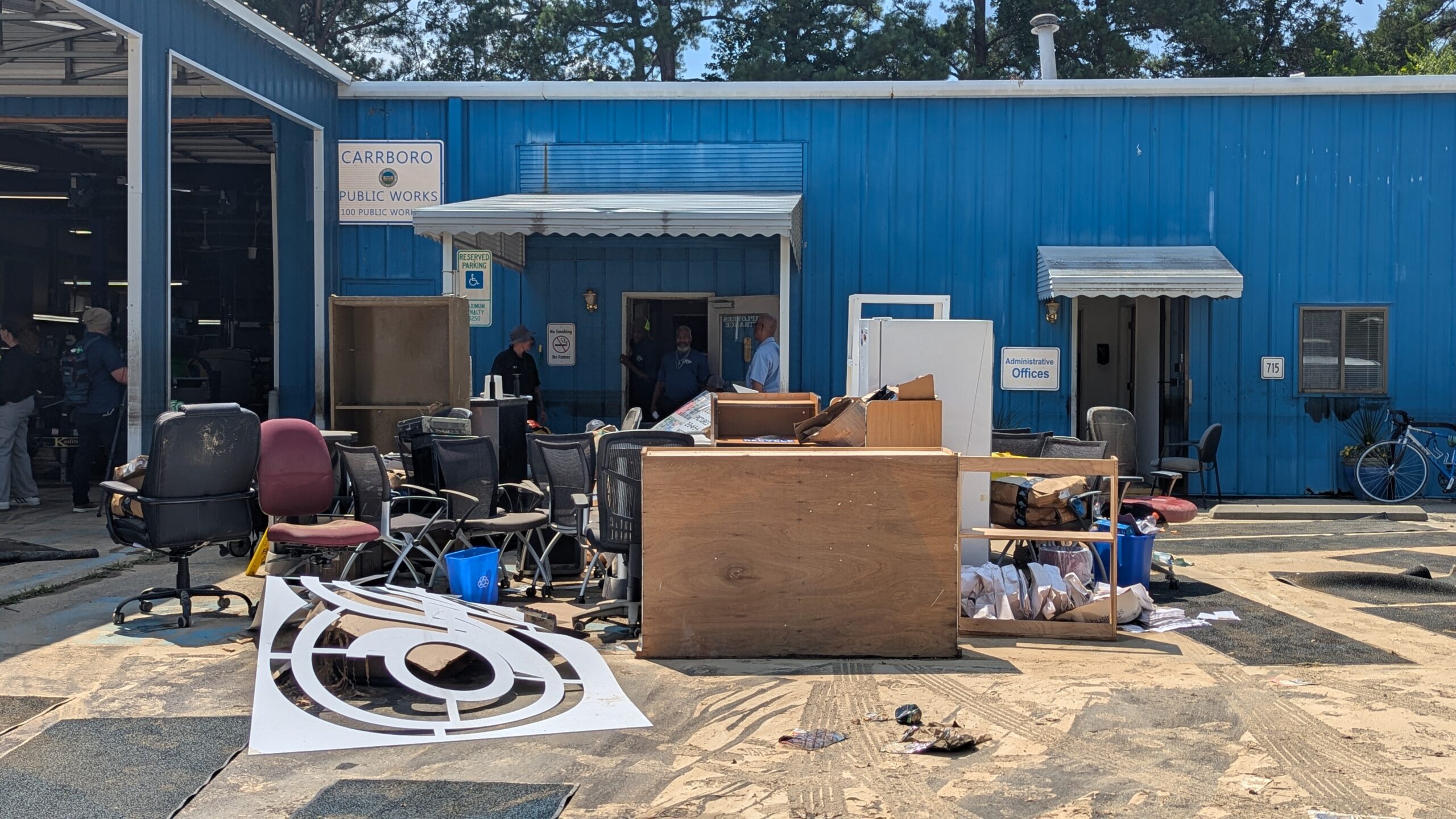
After Carrboro’s Public Works building flooded during Chantal, the town government is also weighing where to potentially moves its headquarters and workshop. (Photo by Brighton McConnell/Chapel Hill Media Group.)
Meanwhile, Hillsborough is trying to get money from FEMA promised years ago to help with some of its flood-impacted infrastructure. The Eno River throughout town saw historic water levels, damaging a wastewater pump station that sits on the riverbank. Chantal’s flooding was so severe that it knocked out the station for several days and Hillsborough relied on rented equipment for six months until repairs were finished. The machinery’s position makes it prone to even normal levels of flooding, which is why Hillsborough sought and was granted $6.8 million from the federal BRIC program in 2021. But the Trump administration attempted to cancel the entire program amid a purge of the department – and despite a court order saying federal government is obligated to pay the approved projects, Hillsborough Mayor Mark Bell said the town still has not received that funding. While he said Hillsborough’s budgeting practices allowed the local government to react quickly while absorbing the cost of immediate flood response, the BRIC grant funding is still crucial.
“That drama has a lasting impact as well, because we still need to move that station out of the flood plain,” Bell said. “There’s still ongoing work to be done, there’s still financial recovery to be received from insurance and other federal grants that were promised, so we’re very much still living in that recovery mode.
“We understand the scope, the scale, the impact, how to make ourselves more resilient from that damage,” he added. “But there’s still more work to be done.”
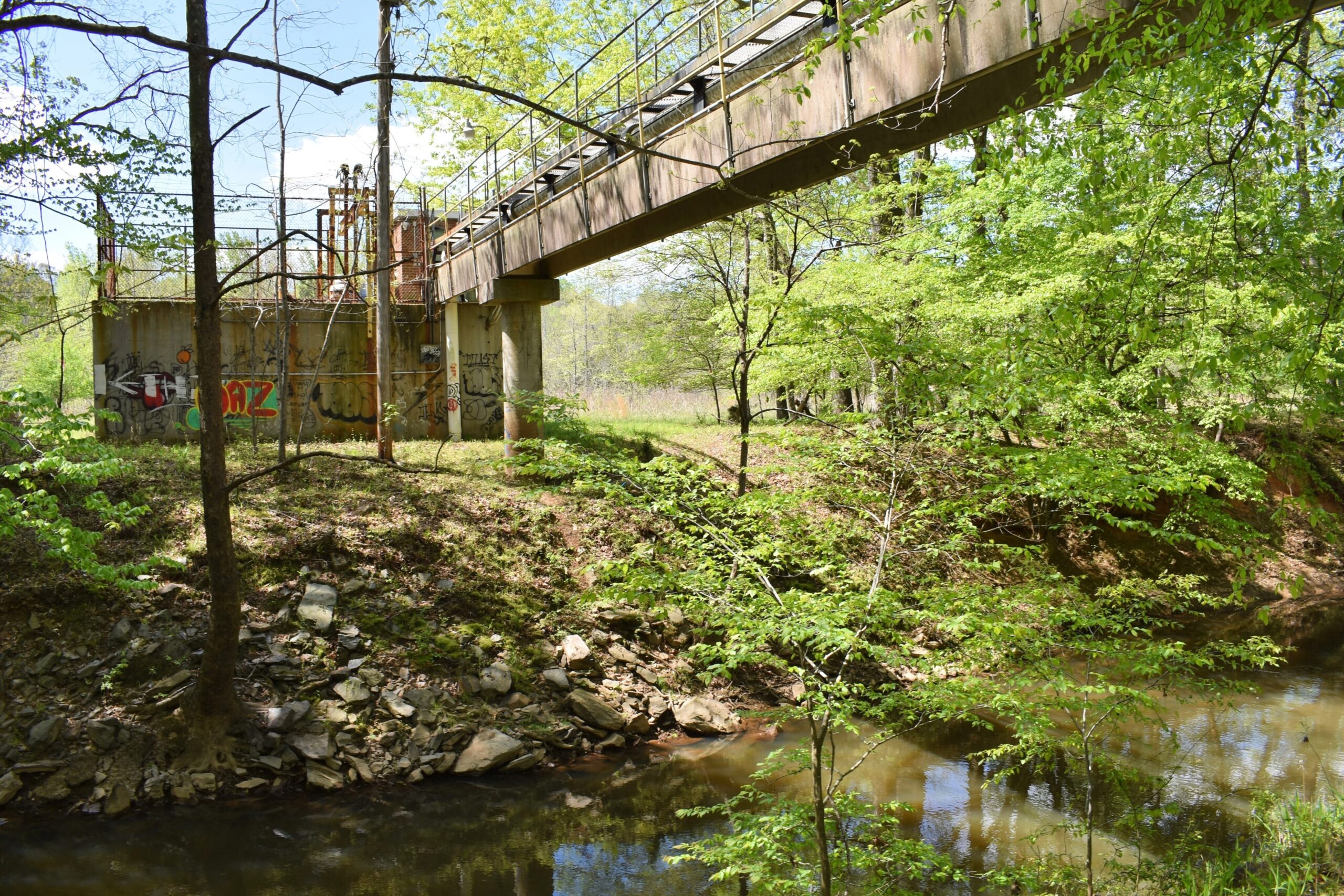
Hillsborough’s River Pump Station may not look like a crucial piece of infrastructure. But when the facility went underwater from the Eno River’s flooding on July 6, roughly 75% of the town’s wastewater was sent back into the river instead of across the bank to the wastewater treatment plant. Its proximity to the Eno River is why the town received a BRIC grant to move it and help its operations become more environmentally resilient. (Photo via the Town of Hillsborough.)
That includes repairs on the town reservoir’s spillway, with Hillsborough crews discovering damage once the water receded. Similarly, the City of Mebane suffered severe damage during the storm to the water pump station and spillway at its water treatment plant shared with Graham.
“We’re looking at, roughly, $21 million for the spillway,” Mebane Public Utilities Director Kyle Smith said. “We’ve selected an engineer in conjunction with the City of Graham. We’ve been in touch with FEMA quite a bit, we’re working with them to fund most of this project. And just moving forward, we’ll go into construction later on and do a complete rebuild of the spillway.”
Beyond a focus on rebuilding what Chantal’s flooding damaged, the local governments’ staff are also looking at ways to prepare for future extreme weather. Some of that may come through policy and formal changes, as Chapel Hill and Carrboro work on revising their land-use management ordinances. But other methods come from relying on a source of support seen throughout the region since last July: community members.
In June, Chatham County launched a dashboard on its website to help track and report flooding incidents. Chair of the County Commissioners Amanda Robertson said the application is the result of elected officials asking staff to create a tool to update Chatham County’s understanding of where water flows and pools during storms.
“Residents in the area,” Robertson described, “be it in an apartment or a house, or even a business, can go into this portal now. And if you’ve experience flooding – whether it was from Chantal or some storm since or some storm in the future – make a marker on that map. This way, we can stay on top of it…both the government, but also as a community.
“We know we’re going to get hit like this again in the future, and I think this will help us be much better prepared,” said the District 2 county commissioner. “And it allows residents and the county to participate and contribute to their own safety and the safety of their neighbors.”
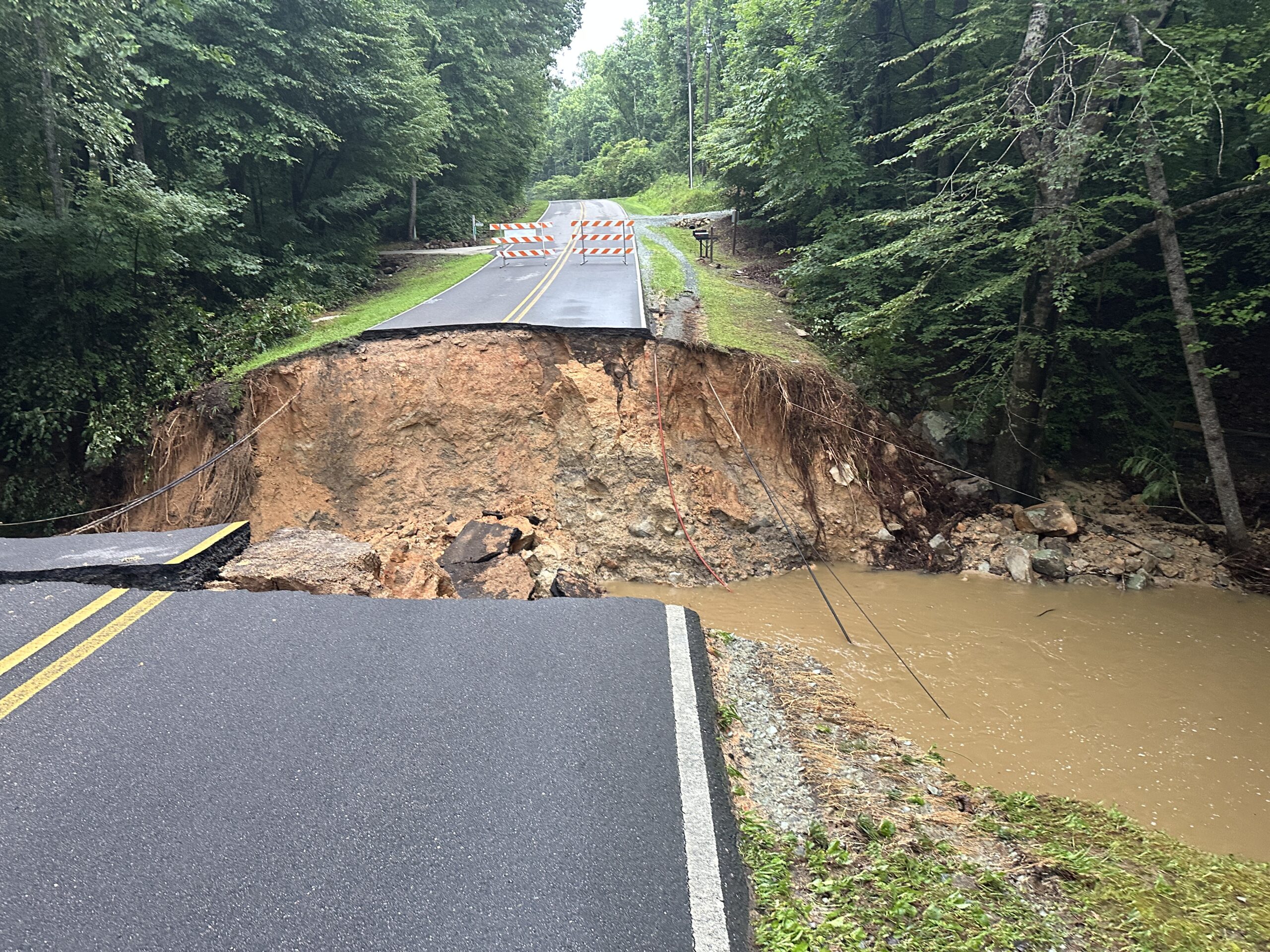
Floodwaters from Chantal caused a collapse on Lamont Norwood Road in Chatham County. (Image via Frank Cuicchi)
In the days following Tropical Storm Chantal, Orange County’s quartet of local governments asked for donations to its Community Giving Fund as a way for community members to both broadly and specifically finance relief efforts. One year later, the county reported raising nearly $128,000 in donations, half of which went to food, clothes and supplies for flood victims and half of which went to covering long-term housing costs.
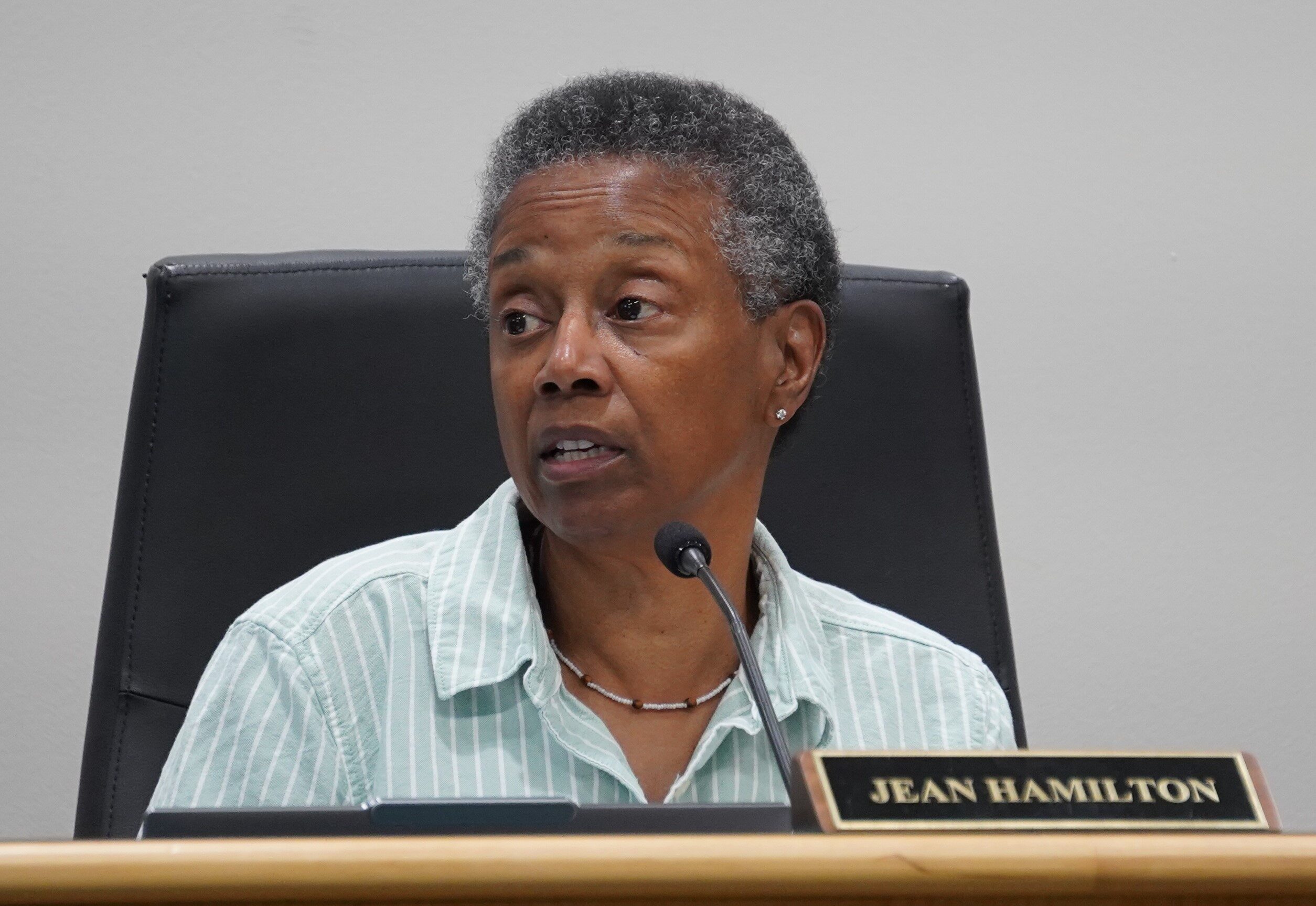
Chair of the Orange County Commissioners Jean Hamilton said she was surprised at how successful the fund was, serving as a testament to how neighbors rallied around to help others. She added that she believes the fund could be an important resource reacting to other disasters and as North Carolina local governments could see their ability to raise taxes impacted by a constitutional amendment.
“This Community Giving Fund has been in the county [government] – it’s something we’ve had for years, created out of the Department of Social Services,” said Hamilton. “And I think it is something [where] in the future – given climate change and the unpredictability of events like Chantal – that we may need this. The flexibility [of] having that money was really important.”
Featured photo via the Chapel Hill Media Group.
Chapelboro.com does not charge subscription fees, and you can directly support our efforts in local journalism here. Want more of what you see on Chapelboro? Let us bring free local news and community information to you by signing up for our newsletter.