To reflect on the year, Chapelboro.com is re-publishing some of the top stories that impacted and defined our community’s experience in 2025. These stories and topics affected Chapel Hill, Carrboro and the rest of our region.
Perhaps no singular event influenced the community’s experience in 2025 more than Tropical Storm Chantal. While it lessened to a tropical depression by the time it reached the Triangle, the storm system dropped an historic amount of rain onto the area, triggering intense flash flooding that swept through low-lying areas, and damaged homes, businesses and flood plains. While community members rallied to help those affected in the immediate aftermath of the floods and people have been adjusting to a new reality, there are still some residents and business owners who are navigating recovery five months later — and are asking what will happen when an extreme storm hits.
The Storm
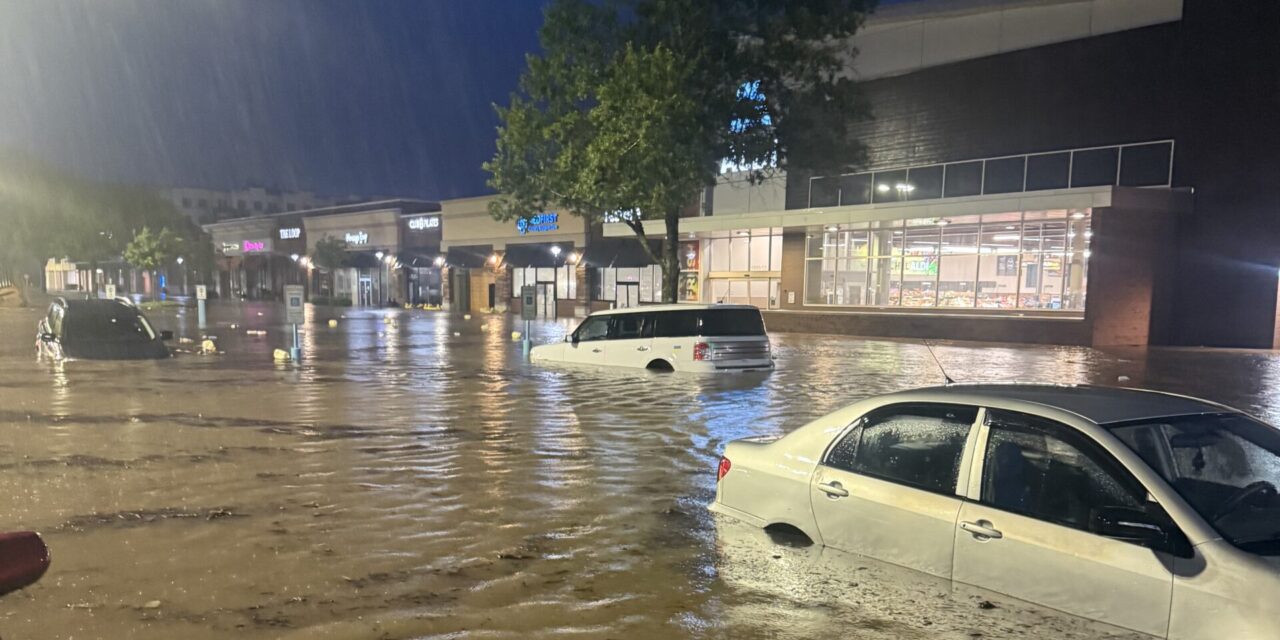
On the night of July 6, the National Weather Service issued a flash flood watch for low-lying areas in Orange, Chatham and surrounding counties as Tropical Depression Chantal was forecasted to moved south to north through the Piedmont. What was not predicted, though, was how the storm would slow over the region and drop intense rain — reaching up to 10 and 11 inches in some parts of Orange County. The rain resulted in widespread flooding, with creeks turning into rivers and rivers turning into powerful waves of water, and a flash flood warning being issued. What started as a typical summer storm turned into a 500-year flood event.
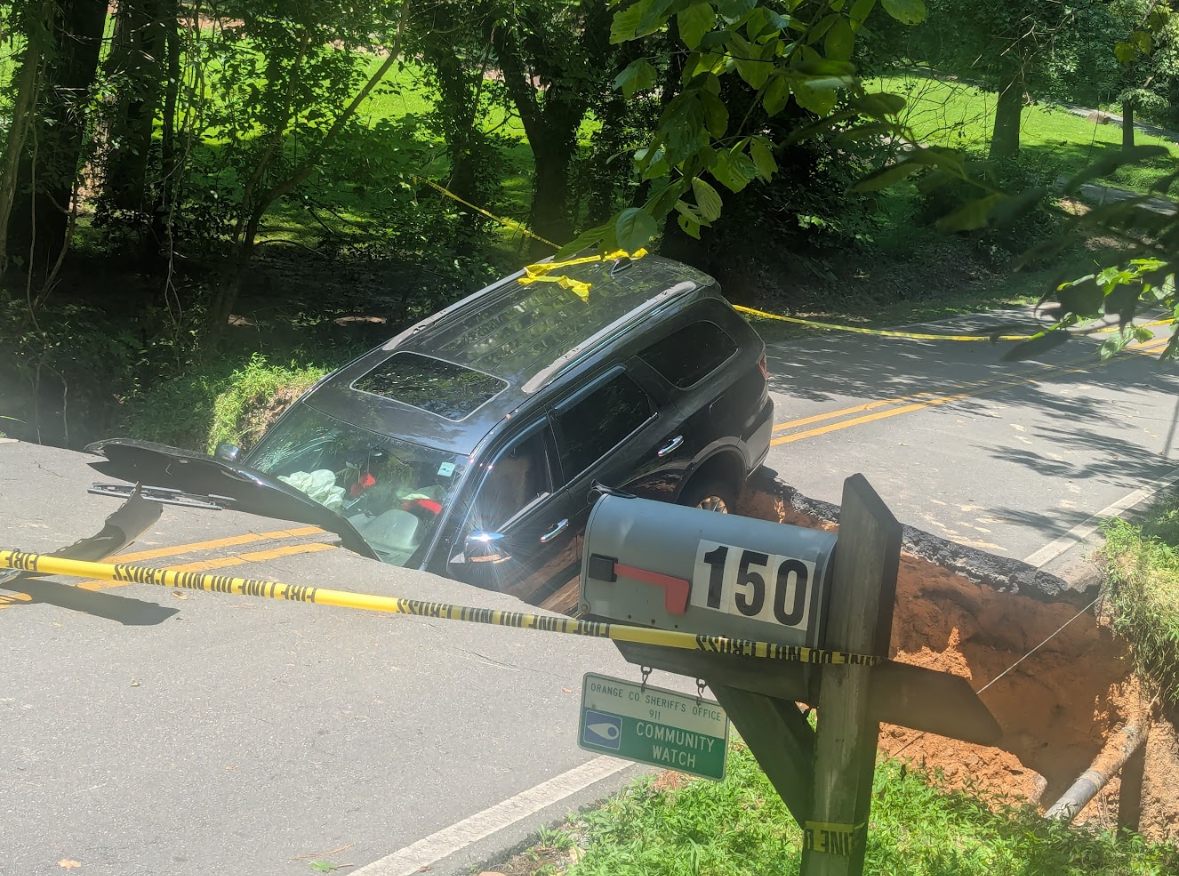
Dozens of water rescues began in the late evening, with first responders using boats to carry hundreds of people from homes. Communities like Camelot Village in Chapel Hill and Weatherhill Pointe in Carrboro where rivers run directly by homes in the floodplain were hit especially hard. In total, Orange County reported receiving more than 7,900 calls to its 911 Emergency Center the night of July 6 and completed more than 70 water rescues. Chatham County reported several water rescues too and more than 100 roads across the county damaged from floodwaters. Both counties saw fatalities related to the storm as well, with a Person County woman dying during the storm in Orange and a pair of boaters on Jordan Lake being recovered in the days after Chantal in Chatham.
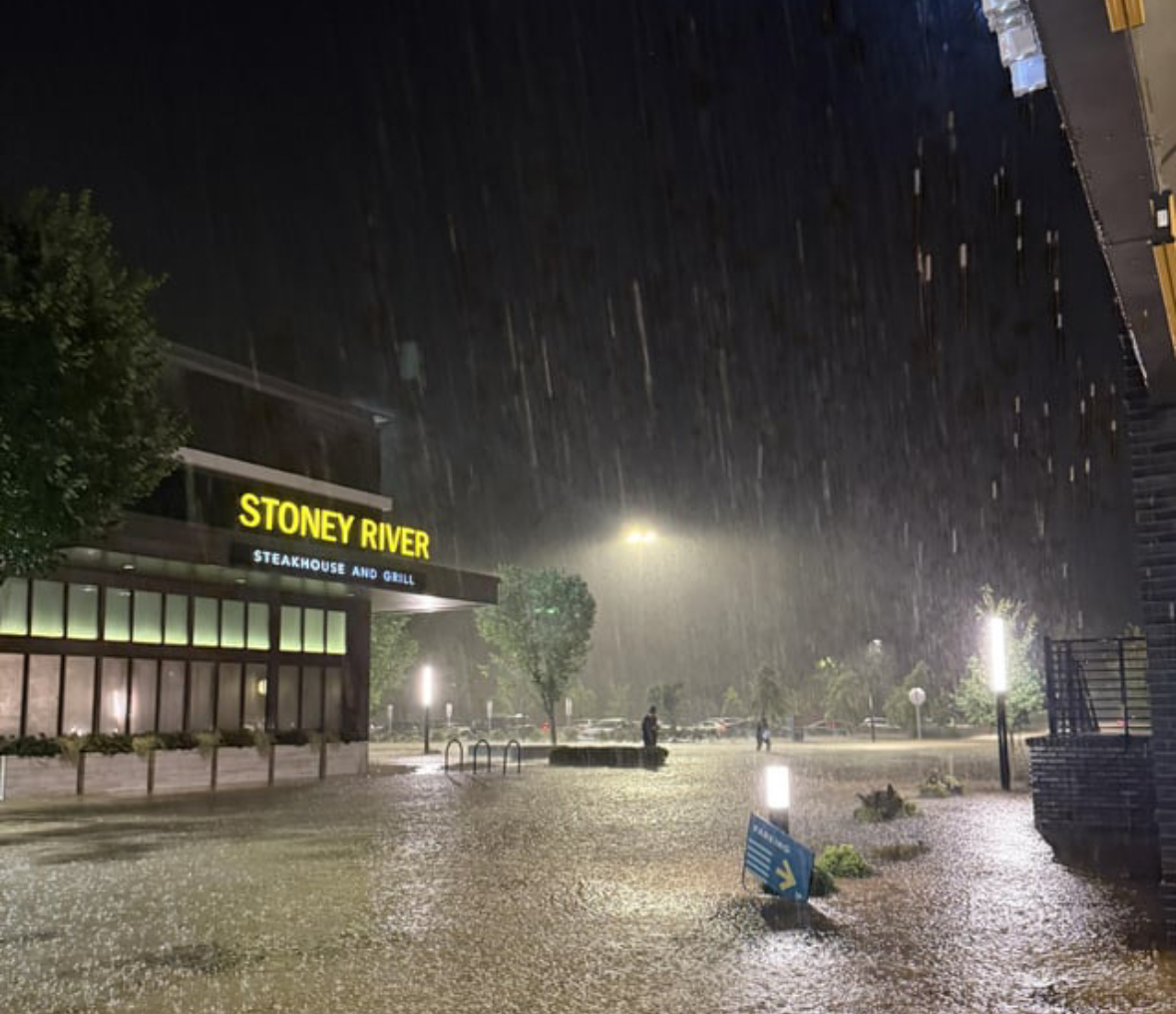
Flooding outside of Stony River Steakhouse at University Place in Chapel Hill on July 6, 2025. (Photo via Michael Powell.)
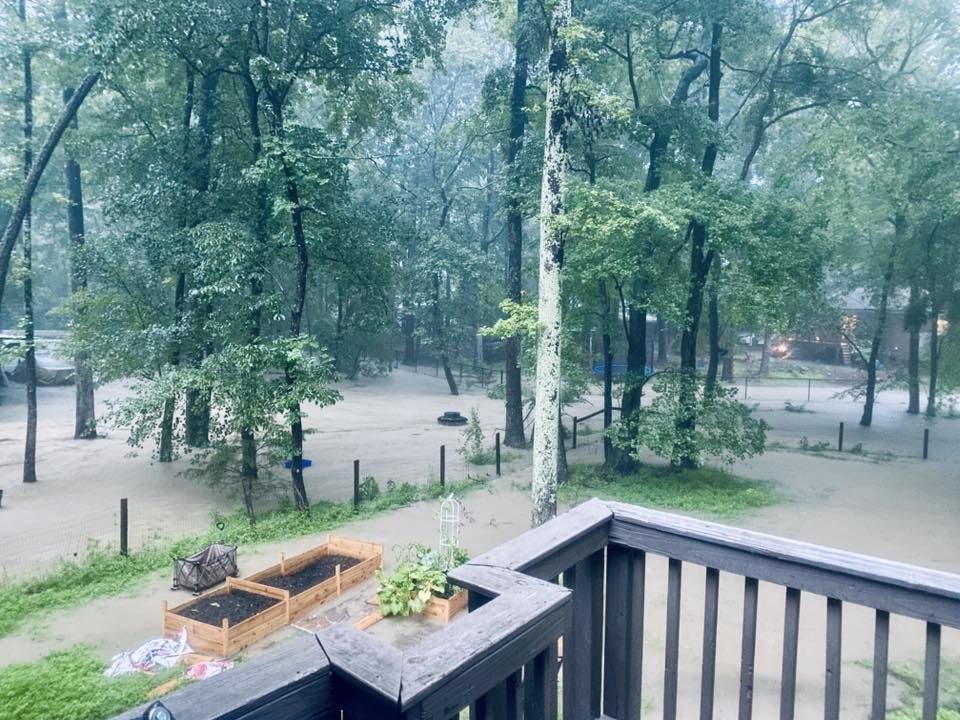
Flood waters from Tom’s Creek in Carrboro. (Image via Jessica Hackney Williams.)
Orange County’s after-action executive summary of Tropical Storm Chantal reported 448 total homes in the county directly impacted by the storm, with 244 suffering “major damage” and two fully destroyed. The estimated residential property damage, as of September, was more than $24.1 million. Similarly, the amount of estimated damage to public facilities and spaces was $24.5 million and estimated damage to businesses in the county was $26.9 million.
Some of those public spaces and facilities impacted created immediate issues in the aftermath. The Town of Hillsborough saw its water treatment facility and wastewater pump station suffer flooding from a historic crest of the Eno River, causing roughly 75% of its sewer customers’ wastewater to flow directly into the Eno River without any treatment. As a result, residents were under no water, conserve water and boil water advisories across five days before a temporary line was create to help. The City of Mebane water customers faced their own water restriction and conservation calls from damage to the Graham-Mebane Water Treatment Plant. While able to respond to affected residents, the Town of Carrboro saw a significant portion of its police and public works fleet destroyed by flooding at its public works facility near Morgan Creek. Public recreation facilities near the rivers in Hillsborough (the Riverwalk and Gold Park, as well as the county-supported Occaneechi Replica Village) and in Chapel Hill (several of its trails and greenways) suffered damage that took months to repair before reopening.
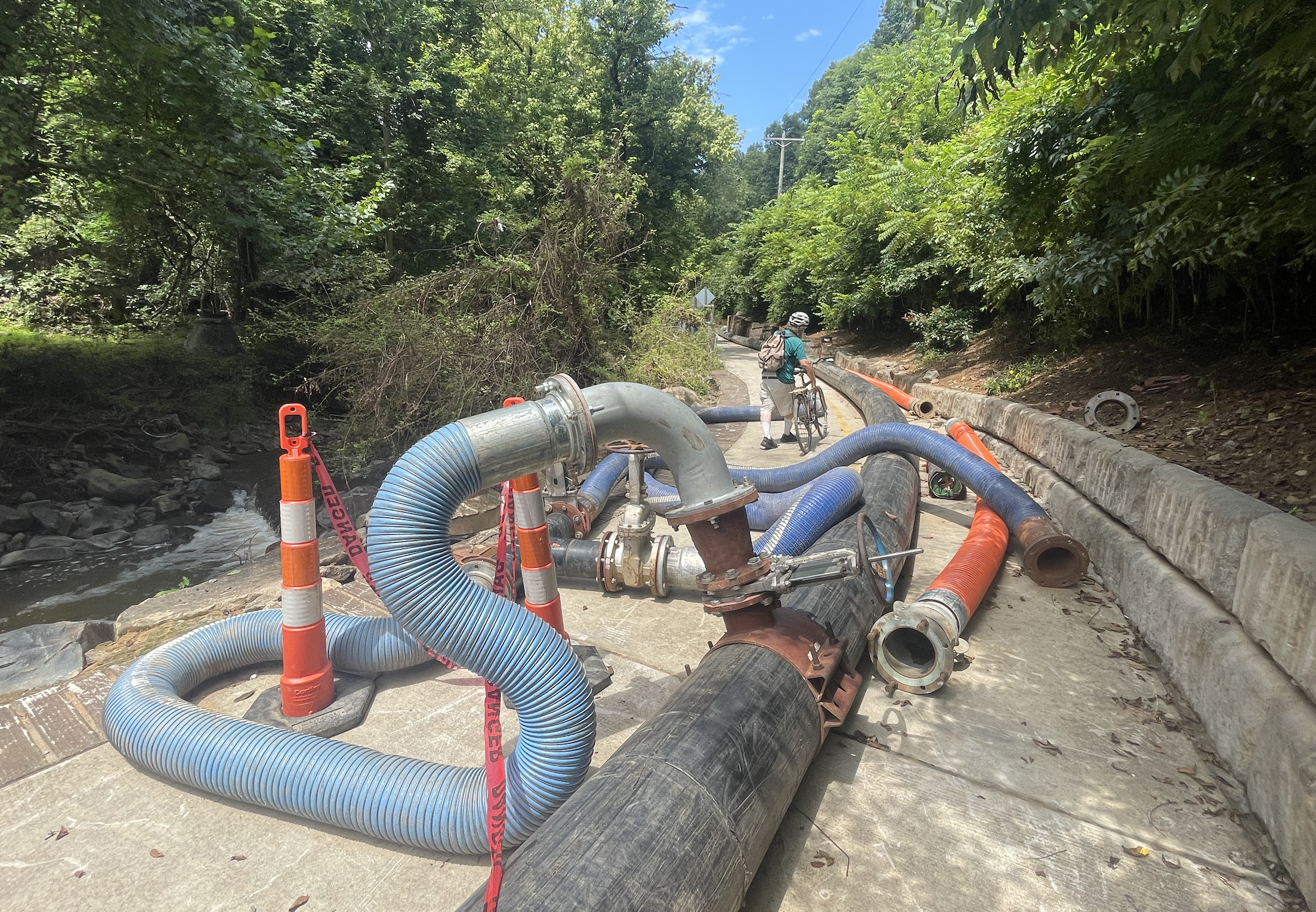
Loren Hintz walks his bike among machinery on the damaged and debris-filled Bolin Creek Trail in Chapel Hill. (Photo by Ben Crosbie/Chapel Hill Media Group.)
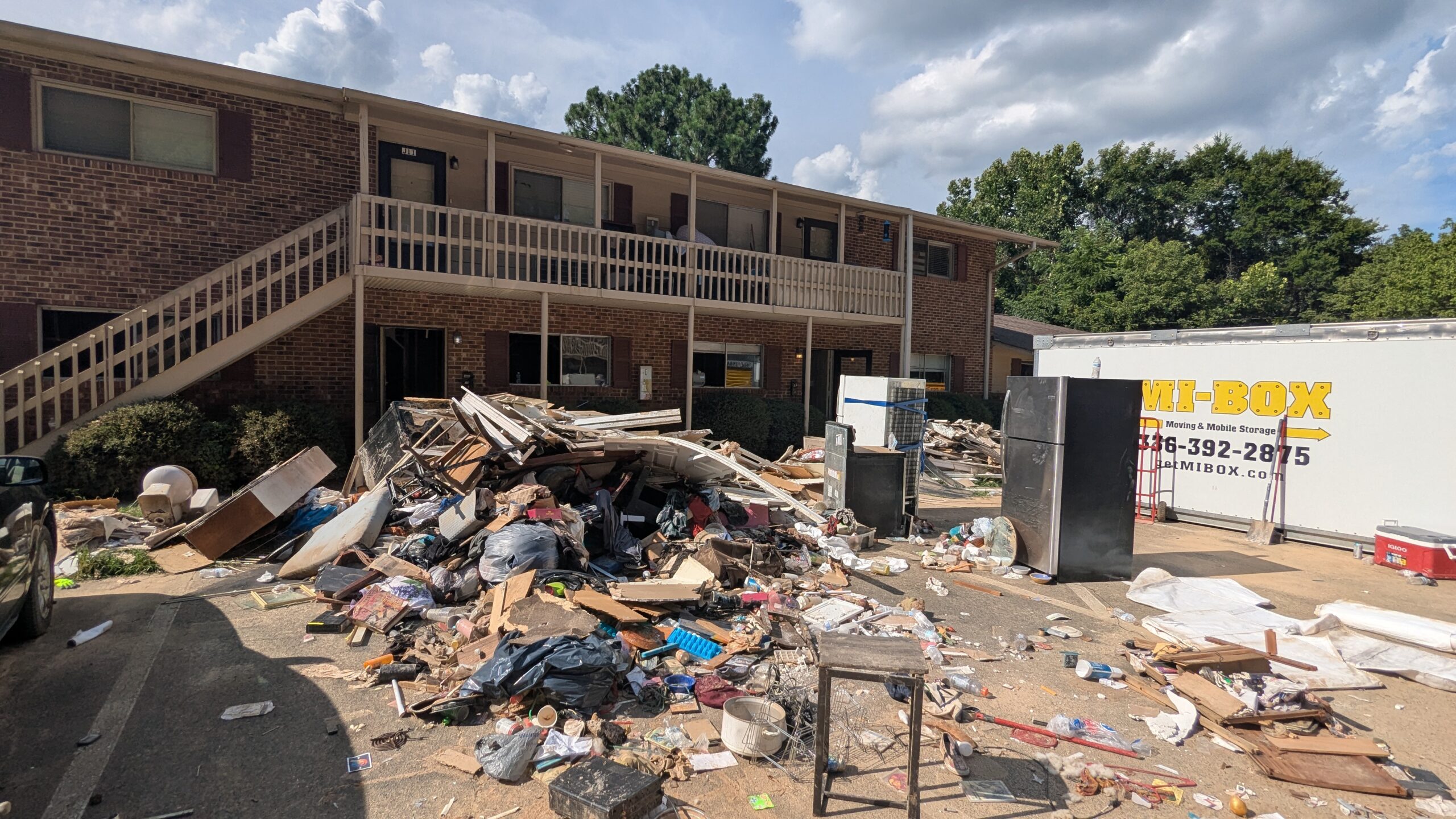
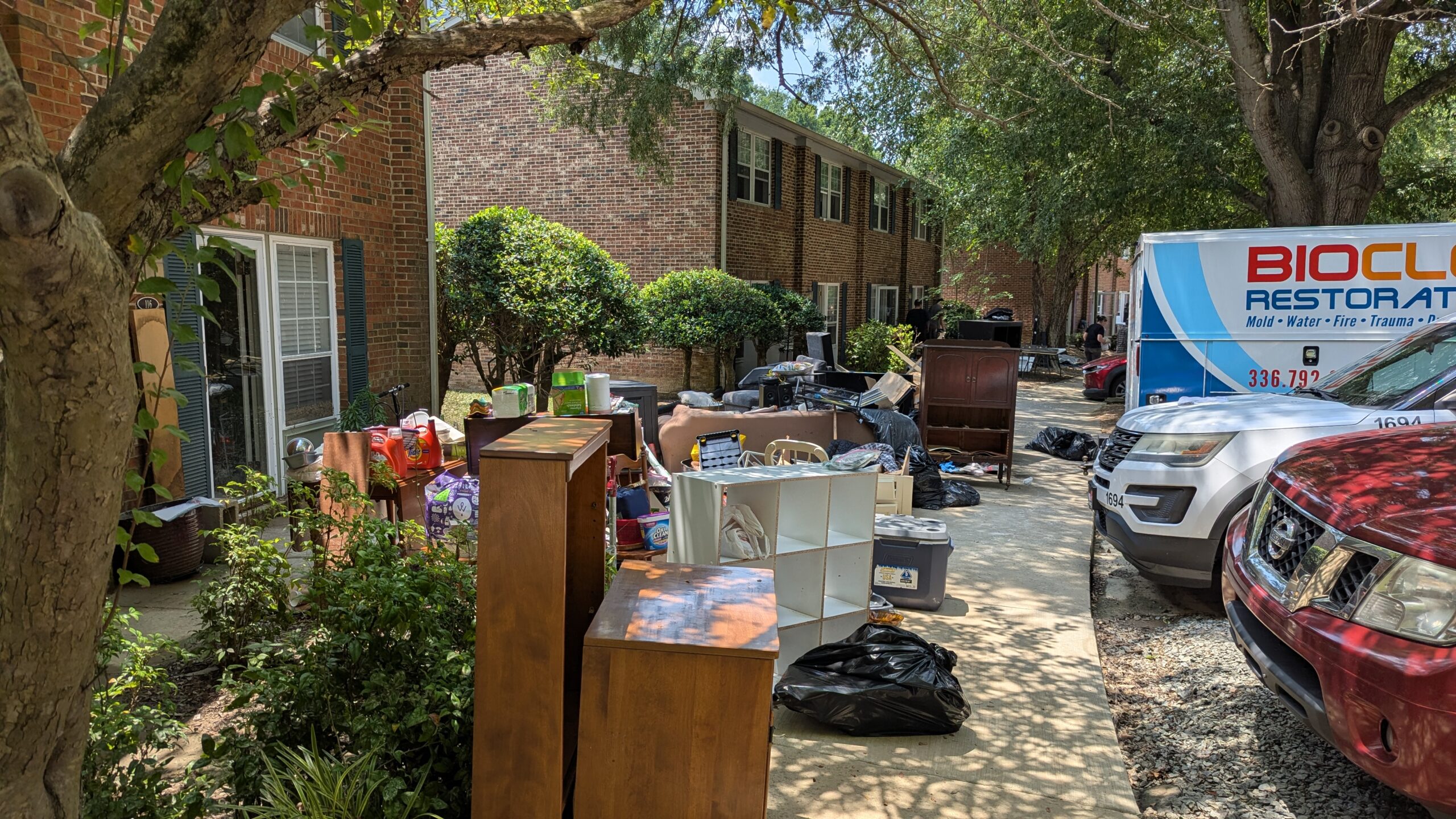
Both debris and rescued belongings sit outside many of Camelot Village’s units on Friday, July 18. (Photo by Brighton McConnell/Chapel Hill Media Group.)
The Response
With the amount of property damage reported, several Orange County residents were displaced in the days following the storm. The county government set up an emergency shelter in partnership with the Red Cross at Smith Middle School, which served around two dozen people and the county provided housing to roughly 100 displaced residents — but the real amount of displacement was much higher, as people found other places to temporarily live without local government assistance. While some people ended up staying with friends or finding new housing in the following days and weeks, some of the hardest-hit and low-income communities saw residents displaced for more than a month at a time. Camelot Village residents teamed up with the Triangle Tenant Union to hold a press conference in August and alert people of the lack of landlord action, the need for a county extension of shelter assistance and the challenge to find affordable housing in general.
To help create that shelter assistance, Orange County declared a state of emergency from the floods on Monday, July 7 and began coordinating with other local governments on how to provide support for displaced residents, impacted businesses and disrupted government functions. It also opened a Recovery Assistance Center at Carrboro’s Drakeford Library Complex to connect people to county, nonprofit and state resources. Later, the local governments of Orange County partnered to create a “community giving fund” for residents to donate and address critical needs in different areas of response, like housing, health and human services and economic recovery.
The North Carolina government’s emergency management system helped coordinate to provide help with rescues and drinking water shortages, and as early cleanup progressed in the damaged areas, Gov. Josh Stein issued an emergency declaration for affected counties from the tropical storm on July 16. The move helped open up further disaster relief requests from local governments, with the state later providing its own relief and pushing the federal government for a disaster declaration. That came two months later in September, with President Donald Trump’s administration making the announcement alongside additional funding for North Carolina to continue recovery from 2024’s Hurricane Helene. In the meantime, the Small Business Administration set up an office at the Drakeford Library Complex to help impacted business owners fill out low-interest loan requests.
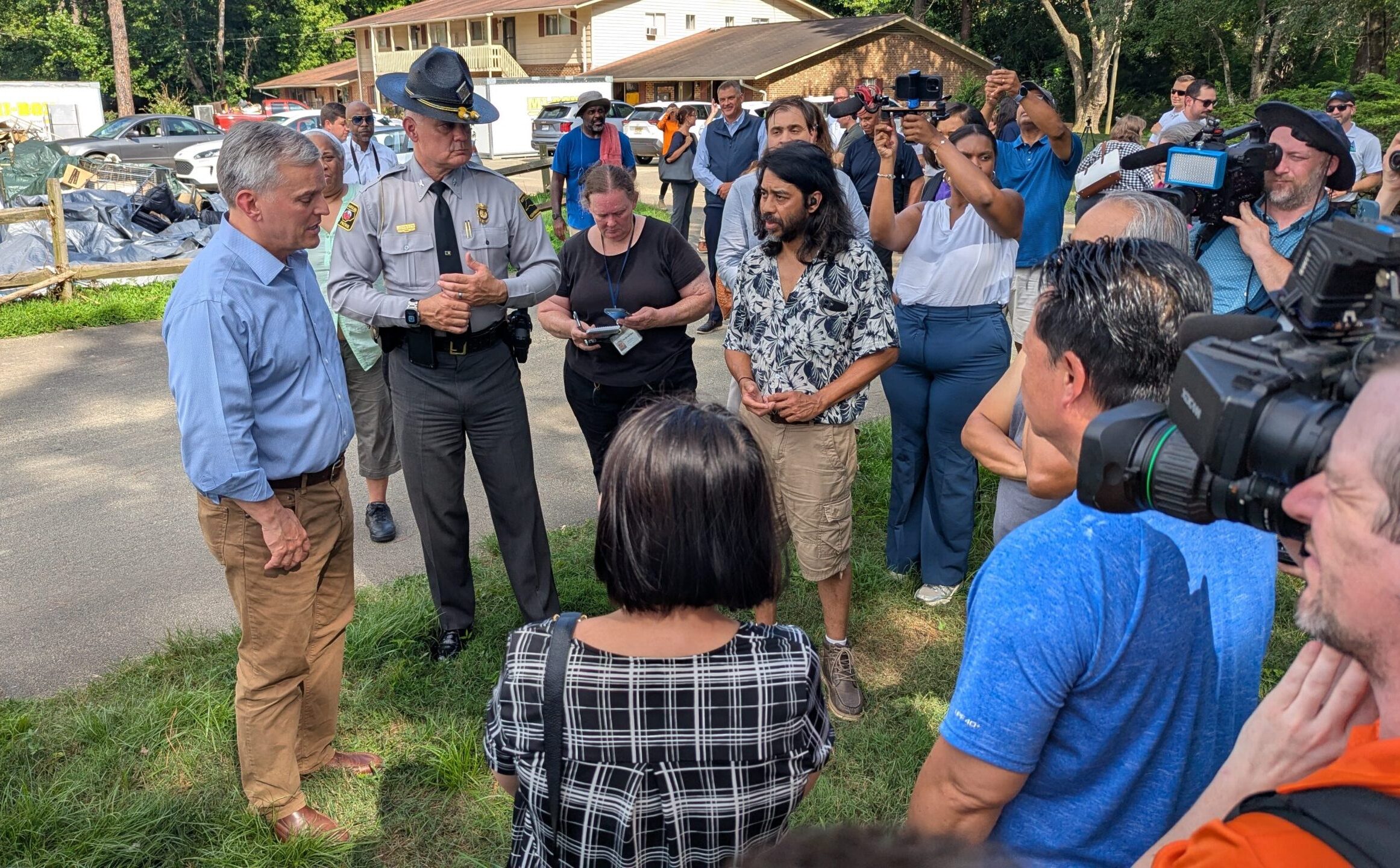
Gov. Josh Stein listens to a group of Camelot Village residents recount their experience of Chantal’s flooding and the evacuations of the property two weeks ago.(Photo by Brighton McConnell/Chapel Hill Media Group.)
Stein visited flood-impacted areas shortly after making his emergency declaration in July, coming through to Chapel Hill on July 18 and touring impacted businesses at the Eastgate Crossing shopping center and damaged units at Camelot Village. At that time, the Chapel Hill native pledged that the state and his administration would do “everything we can to help these [flood victims] recover.”
“Whether you have a storm like [Hurricane] Helene,” the governor said, “or whether you have a storm like Chantal that may hit ten counties in a fairly localized way… if it’s your home, it doesn’t matter if you’re one of ten or one of a million. Your life has been turned completely upside down. And what we have to do is everything in our power to help folks get back on their feet — whether it’s the homeowners in this complex, the property owners, the small business owners at Eastgate…or helping the towns of Carrboro and Chapel Hill, which lost millions of dollars worth of equipment and property.”
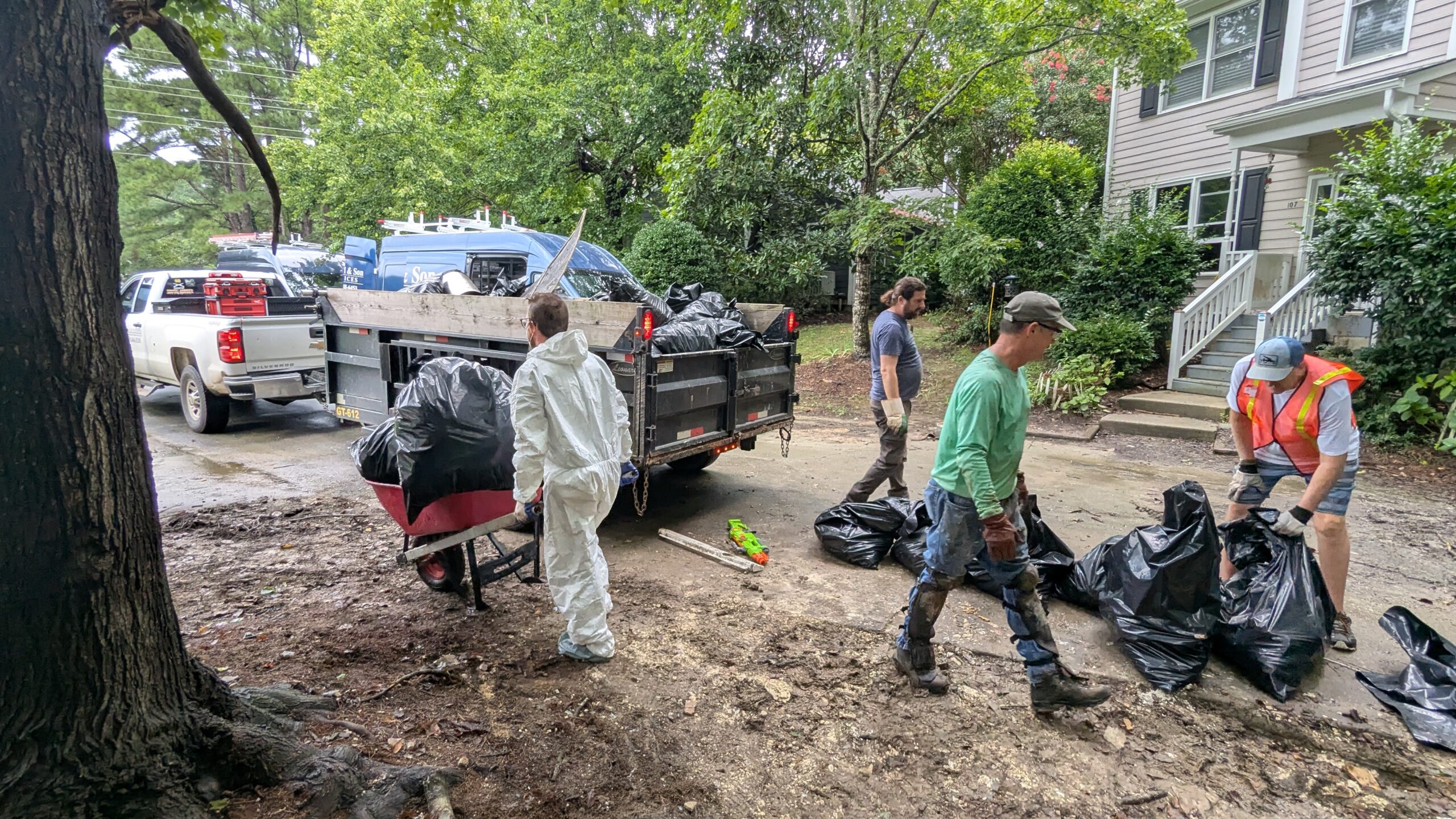
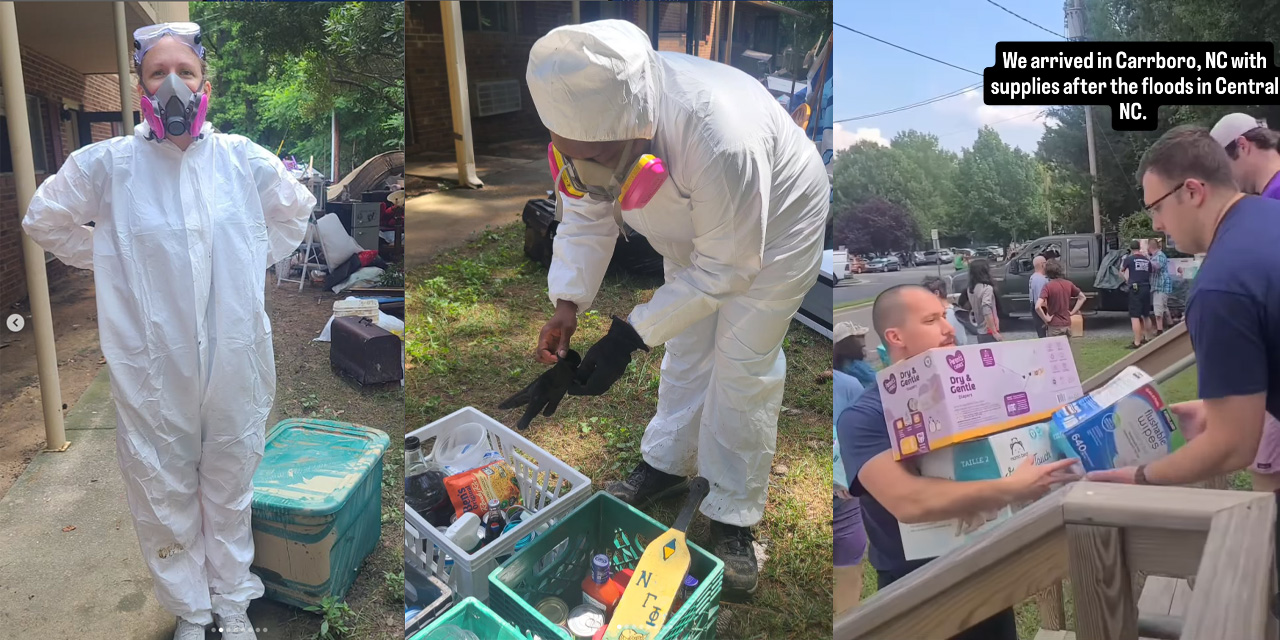
While county and state funding options were one avenue of response, plenty of community members took it upon themselves to offer more immediate cleanup and financial support to flood victims. Volunteers and community leaders coordinated cleanups in some of the flooded neighborhoods. Food banks and nonprofits, like Triangle Mutual Aid, stepped in to run food drives and raise thousands of dollars for displaced residents. UNC’s Carolina Center for Public Service curated a list of relief efforts to support and river-focused groups like the Haw River Assembly and Sound Rivers started funds to monitor water quality and clean up the riverbanks. By the start of August, the biggest rivers in the Piedmont saw their water quality return to safe levels.
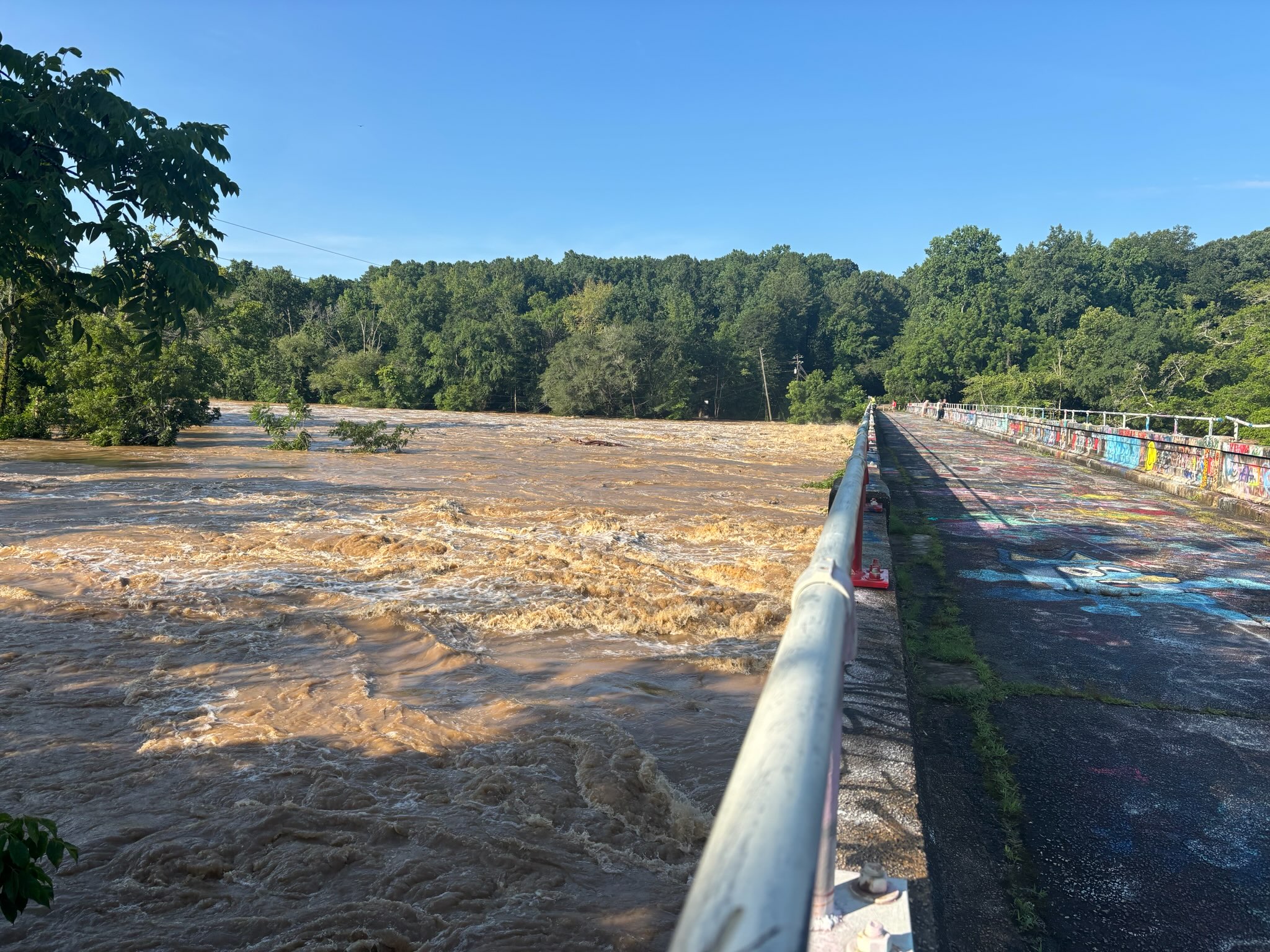
Rushing Haw River waters pass under the Bynum Bridge outside of Pittsboro the day after Tropical Depression Chantal. (Image via Barclay Spotz.)
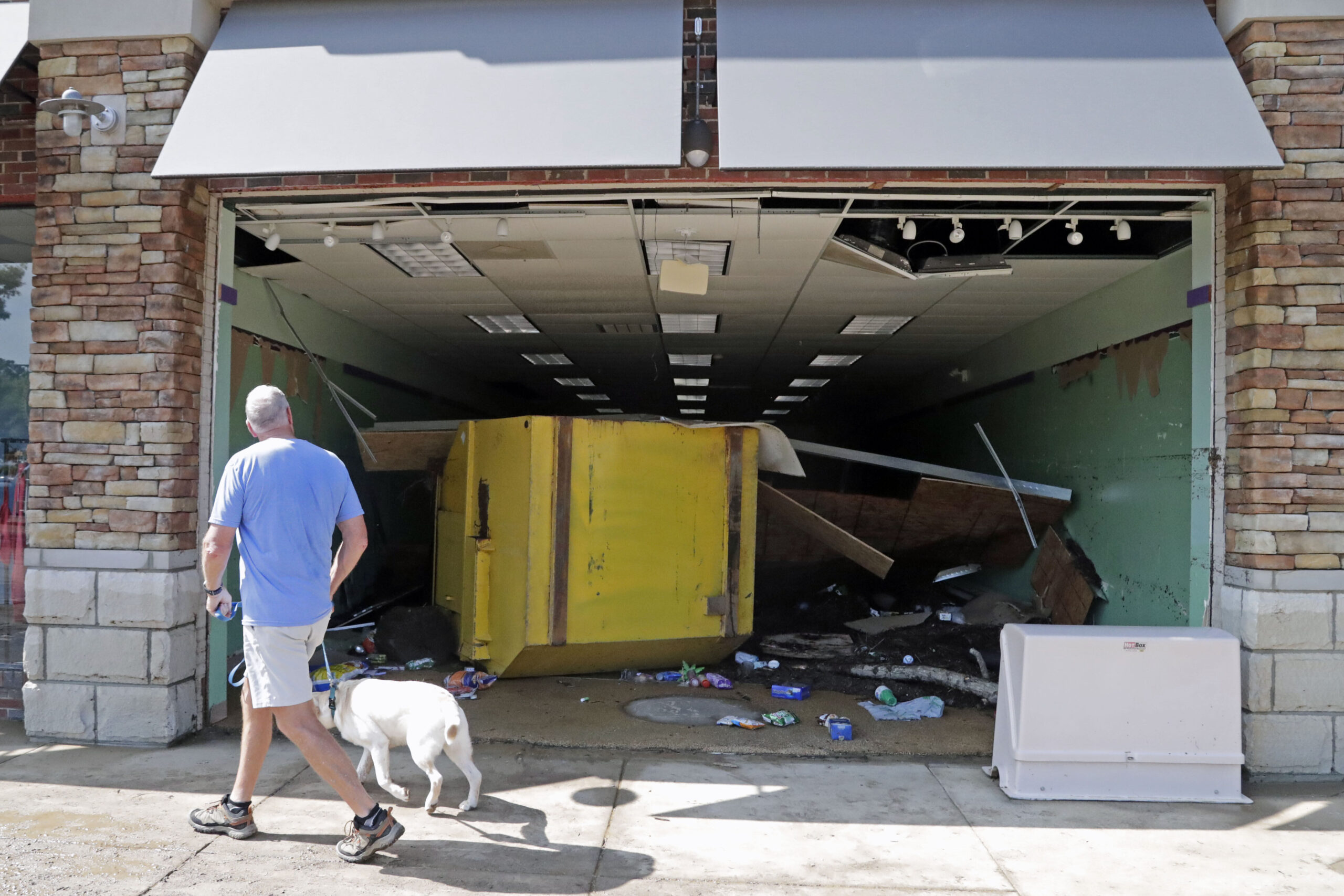
A floating garbage container crashed through the front of this business in the Eastgate Shopping Center after it was flooded during tropical storm Chantal, Monday, July 7, 2025, in Chapel Hill, N.C. (Photo by AP Photo/Chris Seward.)
The Recovery
Five months removed from the storm, Chantal’s impact is still felt. Some residents and business owners have adjusted to find new homes, rebuild enough to move back into spaces or chart a new path forward. While some of those resources offered in the summer and fall might have helped in the short-term, though, there are still many people still searching for long-term solutions or support.
Camelot Village still has plenty of units uninhabitable. Canterbury Townhomes HOA President Carolyn Kravchenko says residents of eight townhomes are back in their units after repairs and restoration, but 20 units are still being built back. Residents displaced or rebuilding at Weatherhill Pointe have difficult decisions to make about whether to remain in the neighborhood. The News & Observer reported in November several homeowners sold their properties to outside investors at under-market prices because of their damage, who then “flip” the sales to other investors for a quick profit. Low-income residents face limited options in an already squeezed affordable housing market.
The economic impact and recovery also sparks plenty of questions. Vice President for Advocacy at the Chamber for a Greater Chapel Hill-Carrboro Ian Scott says out of the roughly 100 businesses in Orange County that suffered some kind of flood damage in July, 12 are still not yet operating and five have confirmed they do not plan on reopening.
“In the weeks after,” he says, “it really did become an individualized take for each business based on where they are in their business cycle, what their insurance coverage looked like, what their lease looked like. There were several local attorneys and accountants that donated some of their time to try to help businesses plan. These became very complicated, tough and personal decisions for a lot of business owners and operators to assess their likelihood of when they’re going to be able to get out of debt and remain profitable when they reopen. Or, for some, [they have] the very hard question of ‘should I reopen?’ Those are not fun conversations to be part of.”
The Town of Chapel Hill’s economic development department worked closely with the chamber both in the immediate aftermath and the following months. A resource summit was held just days after the floodwaters receded to help connect business owners and operators to the right contacts, and the town created an expedited permitting process for impacted businesses to go through. Chapel Hill Business Vitality Manager Sarah Potter adds that the town partnered with Carrboro and the chamber to create both an economic recovery center webpage and an emergency preparedness resource guide built specifically for businesses.
Now, she says, the goal is upkeep of relationships by the local government to ensure the businesses are getting what they need to operate.
“There’s been flooding before, but not to this magnitude,” says Potter. “The level of coordination that needed to happen, and the [number] of businesses impacted had not been seen before. So, we wanted to make sure we were checking with folks who have reopened what was that experience like, what can be improved upon.”
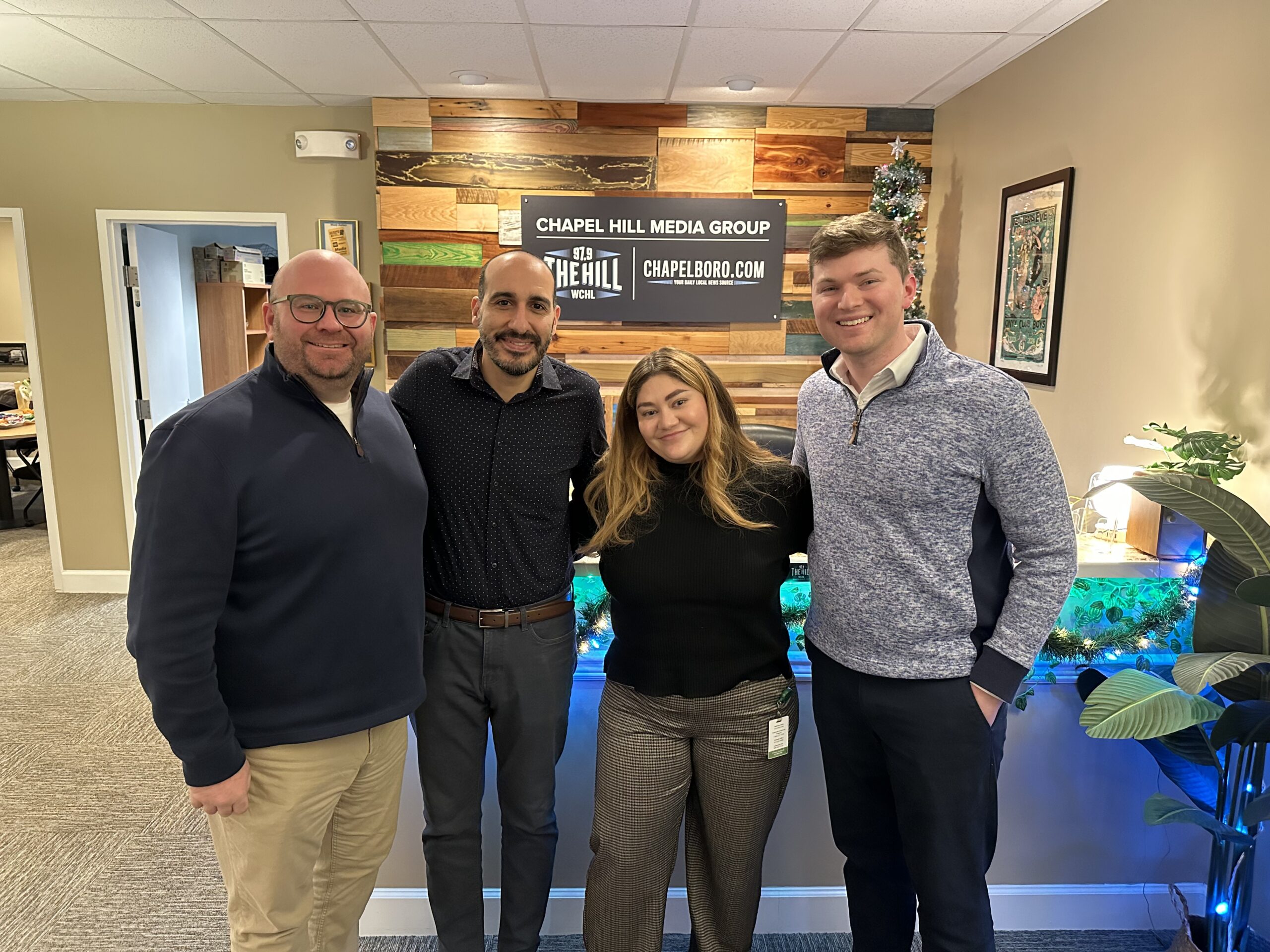
From left to right: Ian Scott, Elie Abou-Rjeileh and Sarah Potter spoke with 97.9 The Hill’s Brighton McConnell on Dec. 8 for a panel about the business community’s ongoing recovery from Tropical Depression Chantal. (Photo by the Chapel Hill Media Group.)
Still, the resulting months of recovery have not always been smooth. Rebuilding spaces can be costly and keeping up a cash flow without a physical storefront is impossible for many small businesses. Additionally, disaster relief resources are limited for business owners and operators compared to what’s available to homeowners. Scott credits the SBA for its outreach efforts in Chantal’s wake, and the administration is still accepting applications from those who suffered economic injury through next April.
“But again,” Scott says, “that’s applying for loans, not grants. And for way too many businesses, those loans have not come in yet. Businesses that needed cash months ago still haven’t gotten it.”
Olmaz Jewelers is one of those businesses. Co-owner Elie Abou-Rjeileh says even though he and his partner were among the first to submit a loan request to the SBA, they have not yet seen it process and are awaiting a transcript from the IRS to help that happen. The co-owners acted quickly, though, and were among the businesses who set up a temporary location elsewhere as they restored the Eastgate Crossing space. When they returned, Abou-Rjeileh says it was with a flood insurance policy five times as much as what they had before.
“I had an insurance agent shop around,” he says, “and we were turned down by multiple insurance companies until we found one that would give us the coverage that we need, because it wasn’t enough the first time. So, hopefully it will never happen – but if it did, we have enough coverage to be able to rebuild our store.”
Abou-Rjeileh says Olmaz heavily weighed the risks of returning to Eastgate Crossing, saying they realistically understand it will likely flood again in the near future. Whether it will be as bad as Chantal — and whether the shopping center ownership or business operators have enough warning to raise their floodgates — is one of the many unknowns. In addition to the higher flood insurance, Abou-Rjeileh says the jewelry store is looking at more water-resistant materials for its interior, like using metal instead of finished wood for its showcases and cabinets.
While plenty of businesses reopened in time to capitalize on end-of-year holiday shopping or foot traffic, plenty of others remain closed. Most of University Place and Carrboro’s South Green’s businesses returned to normal, but a couple have not reopened. The line of stores at the south end of Eastgate Crossing is largely still under construction and many are not among the dozen businesses on Eastgate signs who are welcoming customers back.
Overall, Scott says the long-term economic impact of Tropical Depression Chantal is still incalculable. While it’s clear that it will be profound and result in some local and regional losses, the extent of recovery for damaged stores – and even those physically unharmed – will determine a lot.
“There was collateral economic damage from businesses that did not take on water – but their proximity to businesses that did has hurt their sales,” says Scott. “I don’t have a really good estimate of the total economic impact…I don’t think we actually know that yet. But it’s definitely in the millions of dollars.”
Editor’s Note: Olmaz Jewelers is an advertiser with the Chapel Hill Media Group. The business’ inclusion in this story was not a paid advertisement.
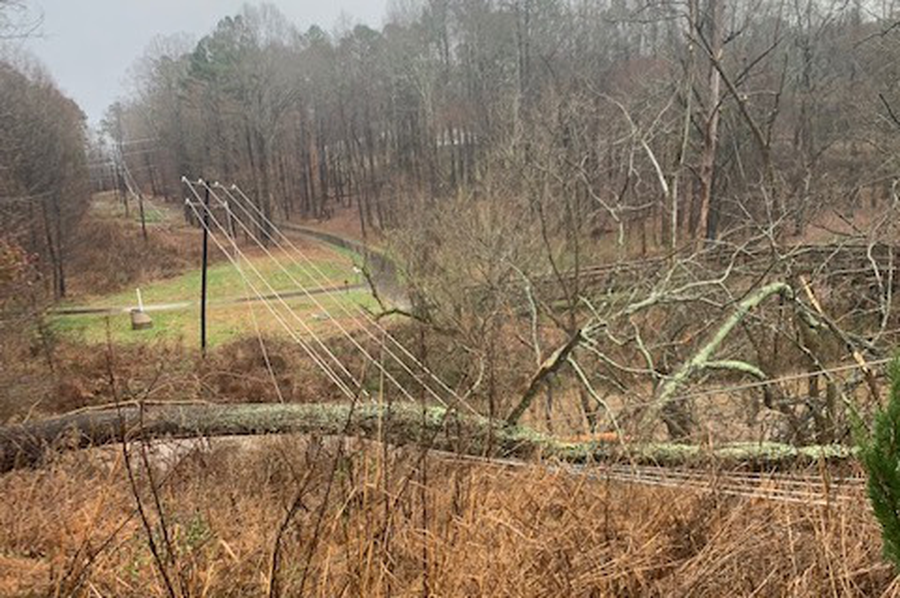
Featured photo via Joe Nanney.
Chapelboro.com does not charge subscription fees, and you can directly support our efforts in local journalism here. Want more of what you see on Chapelboro? Let us bring free local news and community information to you by signing up for our newsletter.