Carrboro Town Council Member Eliazar Posada-Orozco describes getting just a handful of hours of sleep the week when federal immigration enforcement officers came to North Carolina and made dozens of arrests. As a connected member of the nonprofit and immigrant rights community, he worked statewide networks and was on call to relay information to different groups as people contacted them reporting arrests and sightings of agents in Charlotte, Raleigh and Durham.
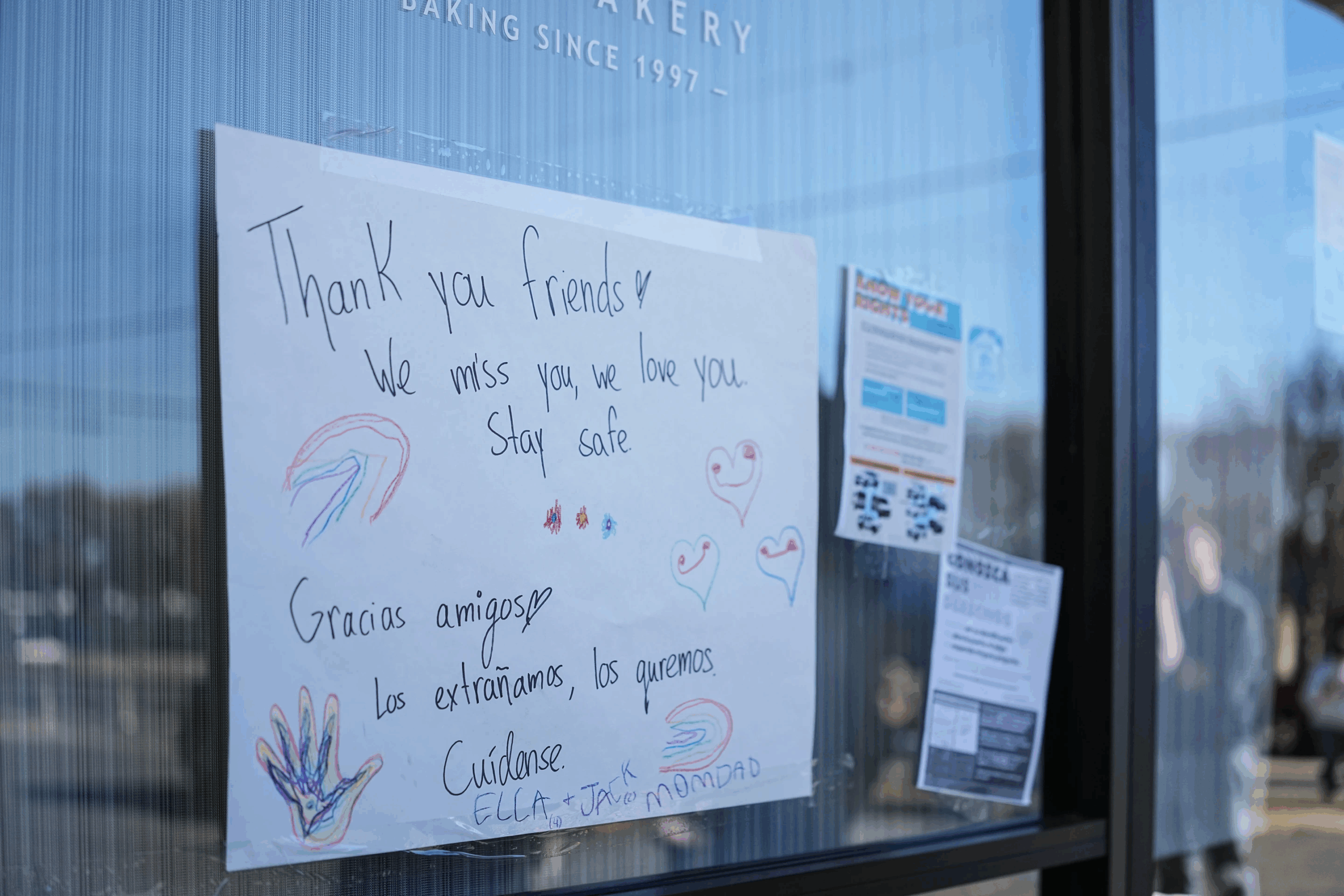
After “Operation Charlotte’s Web” wound down, Posada-Orozco visited different neighbors and immigrant families in Carrboro to check up on them. He says it was cathartic to see them re-emerge from their houses for the first time in days, eat outside with them, and hear their stories.
“It’s been good seeing our community safe,” he says, “but it’s also one of those [experiences] where I’m going to need a little bit of time to recover from.”
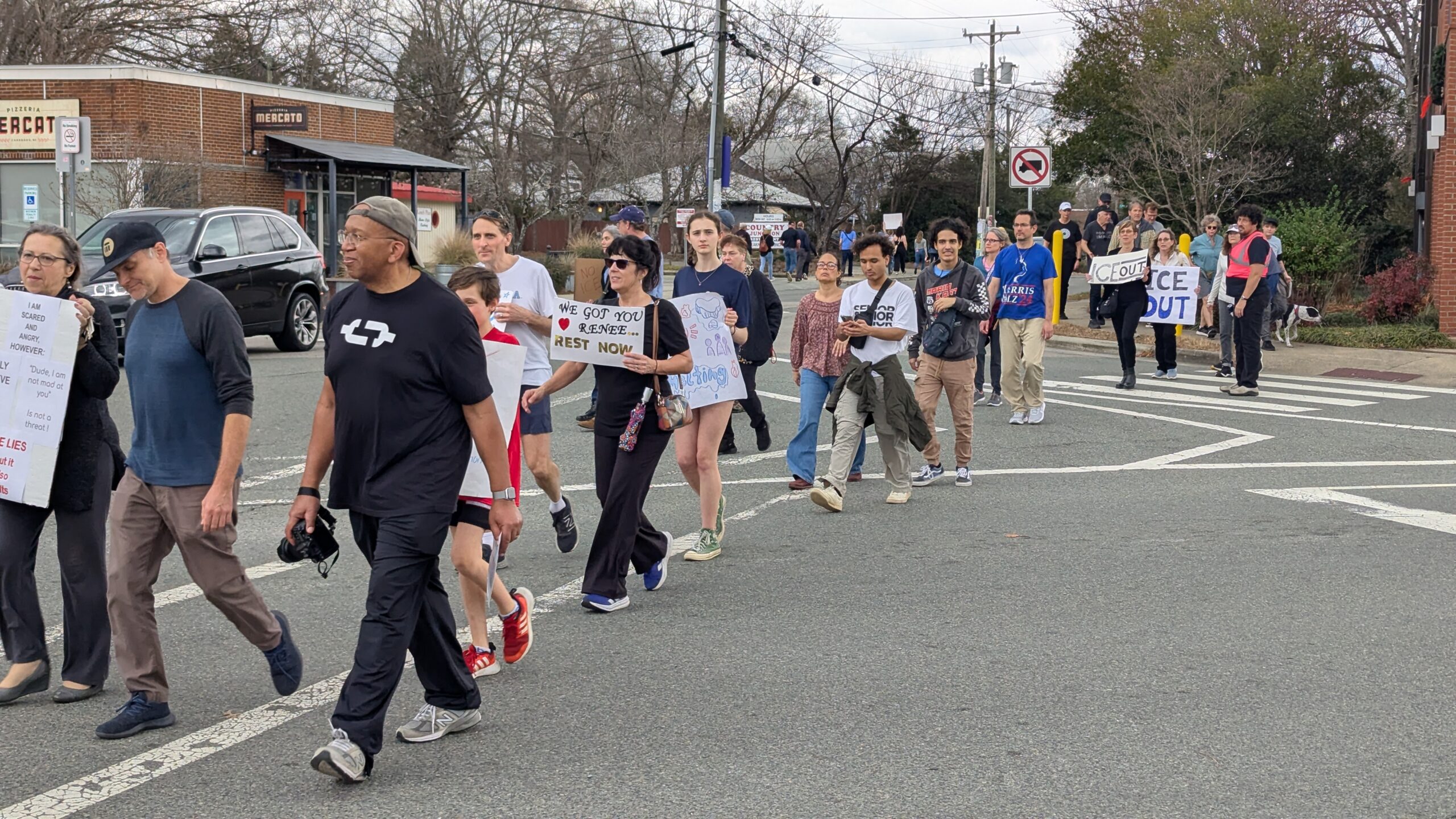
Despite the Orange County community not reporting any arrests during the Immigrations and Customs Enforcement (ICE) and Border Patrol operations in mid-November, it felt the influence of the federal officers’ presence. Weeks later, people are still unpacking their experiences, trying to understand the impacts, and discussing the best way to move forward.
To Posada-Orozco, these mass arrests encouraged by President Donald Trump’s administration have a clear purpose: to create fear and project strength through racial discrimination.
“We have the misinformation, we have the fear that you’re sewing into the immigrant community – but we also have the fear that you’re sewing and disconnect you’re sewing into the broader community,” says Posada-Orozco. “By saying, ‘We’re going to target all these dangerous criminals, and we weren’t able to catch them,’ not only are you making it even more fearful for communities who are the backbone of our society to go and be able to do their jobs, you’re also making it so that everyone else now fears that community.”
The Carrboro elected official is one of several local leaders who is pushing back against the federal government’s branding of the ICE operation as a “targeted effort” to arrest and deport violent criminals. Posada-Orozco maintains the majority of people detained in the efforts have “no actual way” of going through due process because of officers’ sweeping, discriminatory tactics.
“Maybe you are targeting one person,” he says. “But what [these federal officers are then doing] is walk around the neighborhood, then you go around the grocery store, you ride around the town. And if you see someone who looks brown or immigrant, you go and ask them what they’re doing. That is not targeted enforcement.
“And I want to be clear: much of what we’re hearing is ‘Many of them are criminals, they’re doing these heinous crimes,’” Posada-Orozco continues. “Tell me how many of them have gone through a legal process to determine their guilt. I’m waiting for that information.”
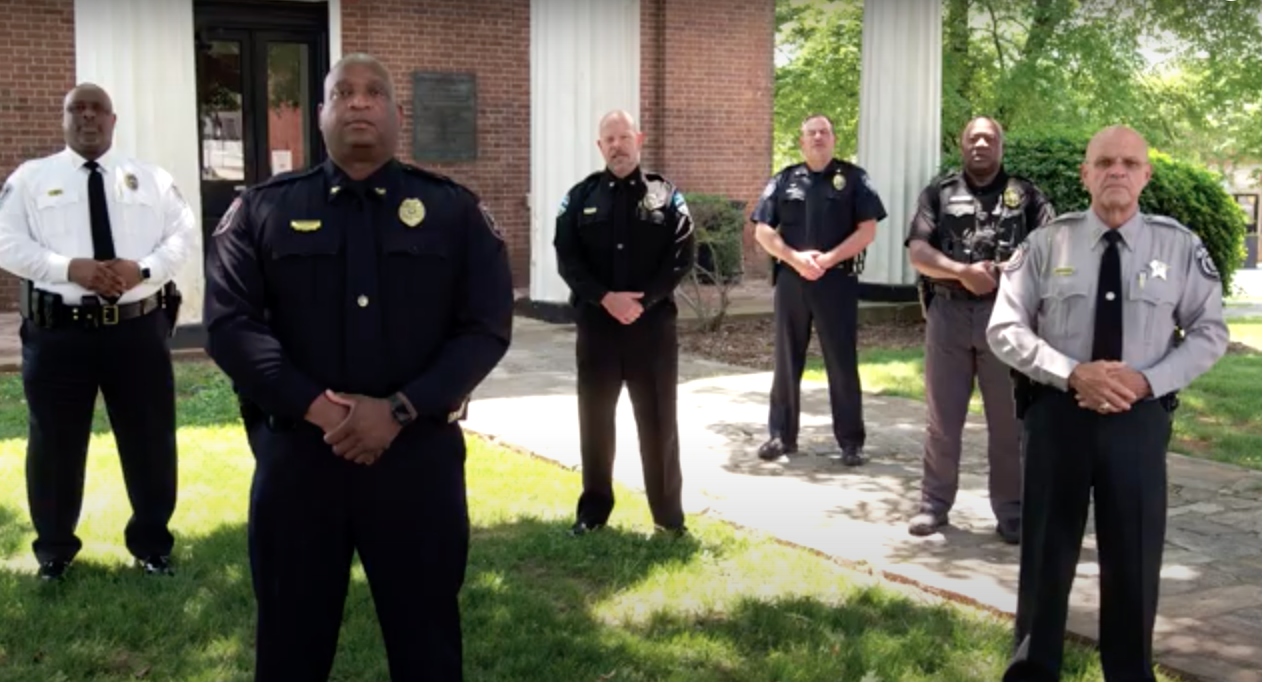
Orange County Sheriff Charles Blackwood said the federal agencies involved in November’s North Carolina operations never contacted his office to communicate their plans or provide information on arrests. His legal team and staff met with concerned community members as ICE started its arrests to share details about residents’ rights – and to set the record straight on what federal agents should and shouldn’t be allowed to do. Blackwood also pushed back on the misconception that the sheriff’s office either ignores or doesn’t enforce the law when it comes to immigration.
“Being here undocumented is not a violation of criminal law in North Carolina or any other state,” the sheriff told 97.9 The Hill. “The other misconception is that I can arrest someone for [having] crossed the border. Well, if I’m at the border, I see it and I’m an agent around that area, certainly I can [make an arrest.] It’s against the law, criminally, to attempt to cross or cross the border – but there’s not a border in Orange County.
“So,” he concluded, “the idea that we’re turning our heads…well, it’s very wrong.”
To Blackwood, a sheriff’s job is to help the community be confident in its public safety. His philosophy is based around building trust “without blue lights on” and respecting other people’s experiences. That includes controlling the things you can control – and he added one of those things is not how immigration policies are made.
“[In] the ten years that I’ve been sheriff,” said Blackwood, “I’ve not changed by position on immigration one time. That’s because I follow the law. Not the law as keyboard kamikazes see it, but the law as it is written. It’s one of the things our judges tell juries when they’re deciding guilt or innocence: you must interpret the law as it is written, not as you wish it would be.”
UNC law professor Rick Su says it’s not just the law that’s being interpreted differently with these ICE arrests, but the relationships of other levels of government with the federal agencies. Su studies the intersection between cities, immigration, and the criminal justice system. He says when he began teaching more than a decade ago, the debate was whether cities could even be involved in immigration enforcement, since it was an exclusive federal authority. Now, the debate is whether these state and municipal governments can say no to the operations.
“There’s been a big flip,” says Su, “and in some ways, it’s happened so rapidly in politics that we’ve forgotten…for hundreds of years, immigration enforcement was mostly at the borders. Immigration enforcement was almost entirely a province of the federal government – they paid for it. But now, we’re really looking at all this pressure to outsource and pull in officials at all different levels, doing all sorts of different things into immigration enforcement.
“And, of course,” he adds, “[the Trump administration] is saying: ‘Oh, you haven’t provided 100% support, that’s why we’re here.’ But this is relatively new – this has never been demanded by the federal government of the states or of the cities.”
The pushing and pulling of the state and local levels only further muddle the underlying reason why the federal government is going through these operations, Su says, and the next question will be how cities or states may seek legal recourse. And even if some areas begin to adopt policies that align with the federal government’s efforts, he adds, they will have to drill down the central question of ‘why.’
“We think there’s something simple here, but it’s not,” Su says. “What are we trying to do with immigration enforcement? Who are we targeting? What is the messaging? And it’s so mixed in some ways, that if there’s any agreement [around the topic] it’s, like, ‘Immigration is a big policy [point.]’ But what we’re trying to do gets lost, and it just becomes a political football.”
As far as the messaging from local leaders and immigrant advocates, Posada-Orozco says he believes it’s simple: speak up and make support for immigrant communities clear. He said he’s seen more of that this time compared to the Trump administration’s efforts in 2018 – and since ICE and CBP are acting with impunity, he believes it is critical to take a stand.
“And I encourage all of my colleagues, whether it’s here in Carrboro, Chapel Hill, Asheboro, Buncombe [County] or Statesville,” says Posada-Orozco, “let’s pass resolutions, let’s pass policies that are going to be supporting our community – not just our immigrant community, but our overall community. Because when our community members feel safe, our communities thrive.”
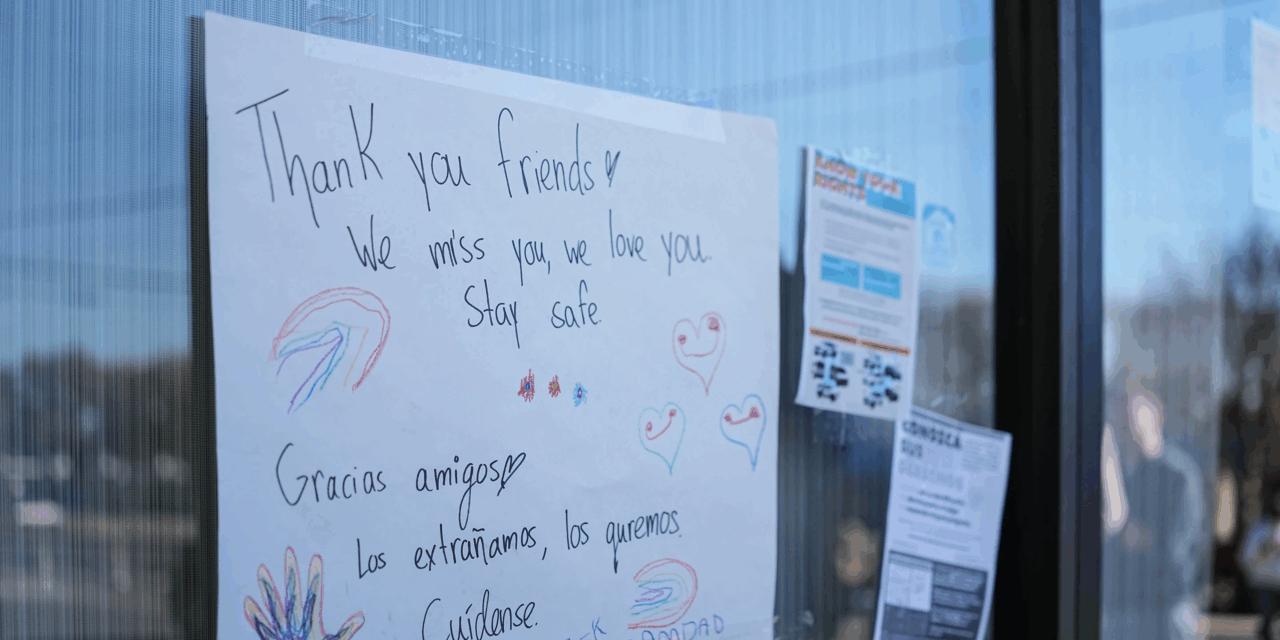
To find and explore Chapelboro’s guide of local nonprofit resources and know-your-rights guides for interacting with federal immigration officers, click here.
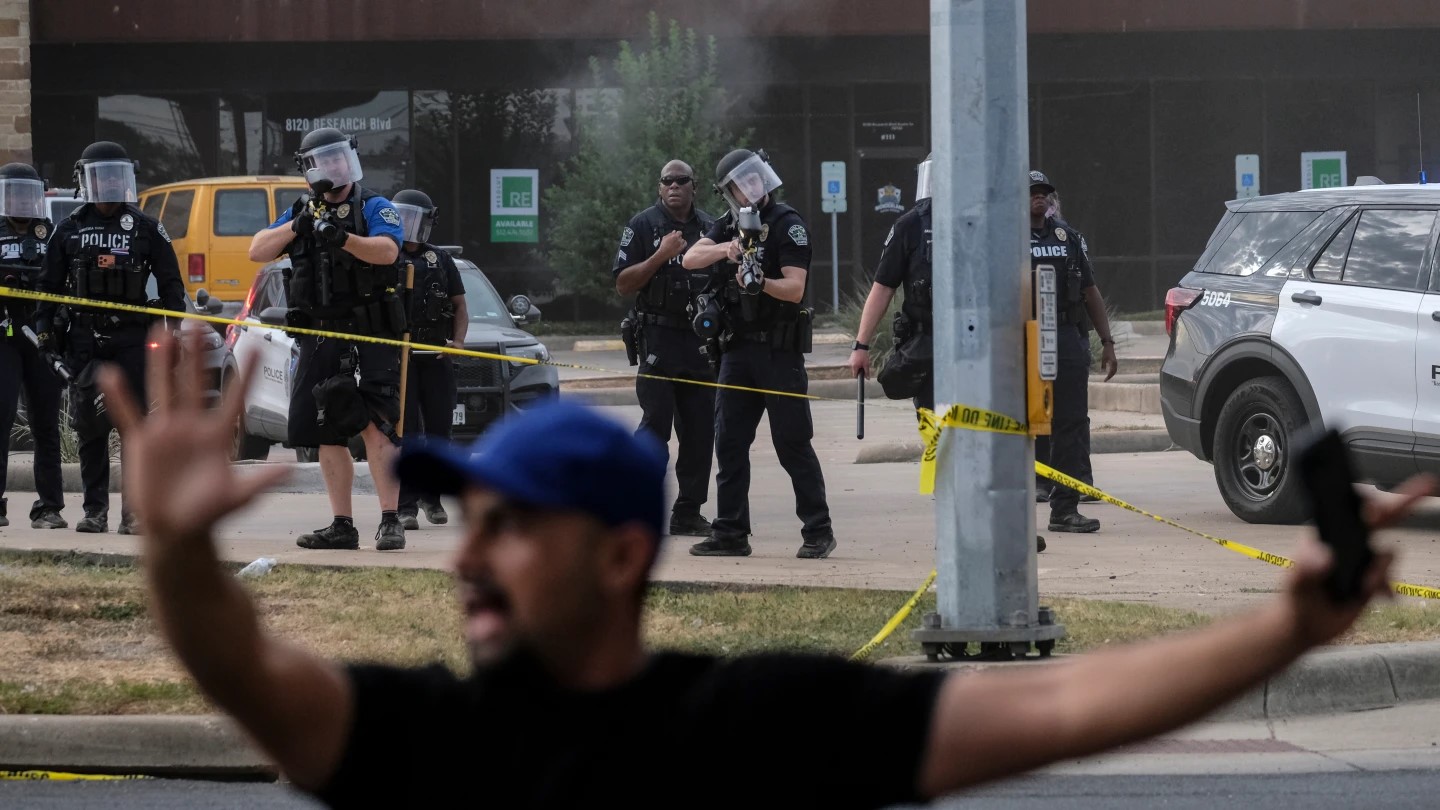
Featured photo via AP Photo/Matt Kelley.
Chapelboro.com does not charge subscription fees, and you can directly support our efforts in local journalism here. Want more of what you see on Chapelboro? Let us bring free local news and community information to you by signing up for our newsletter.