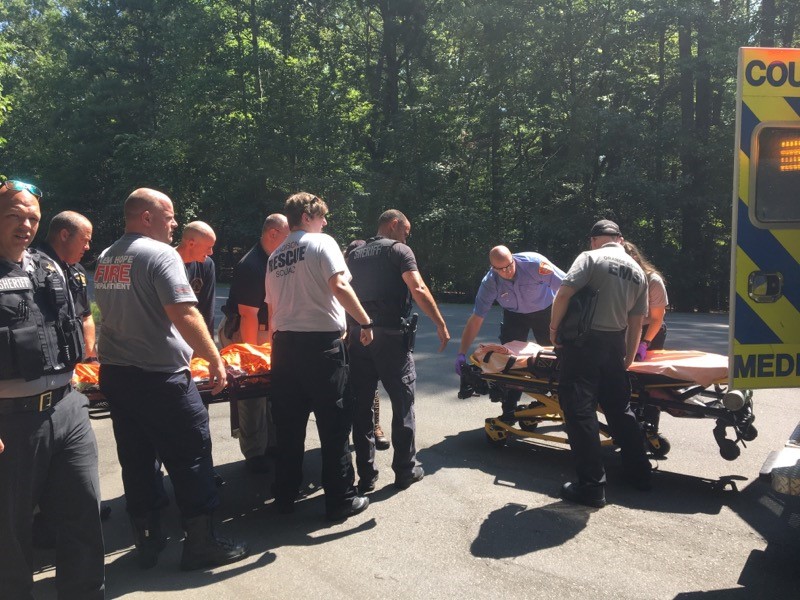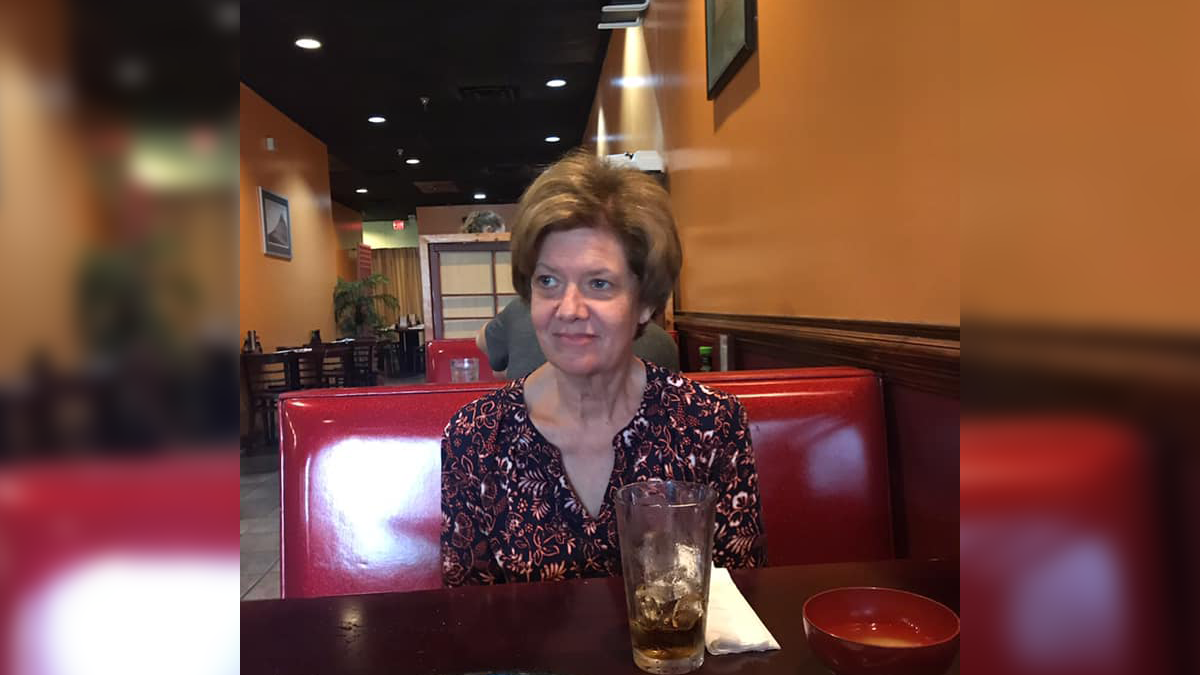
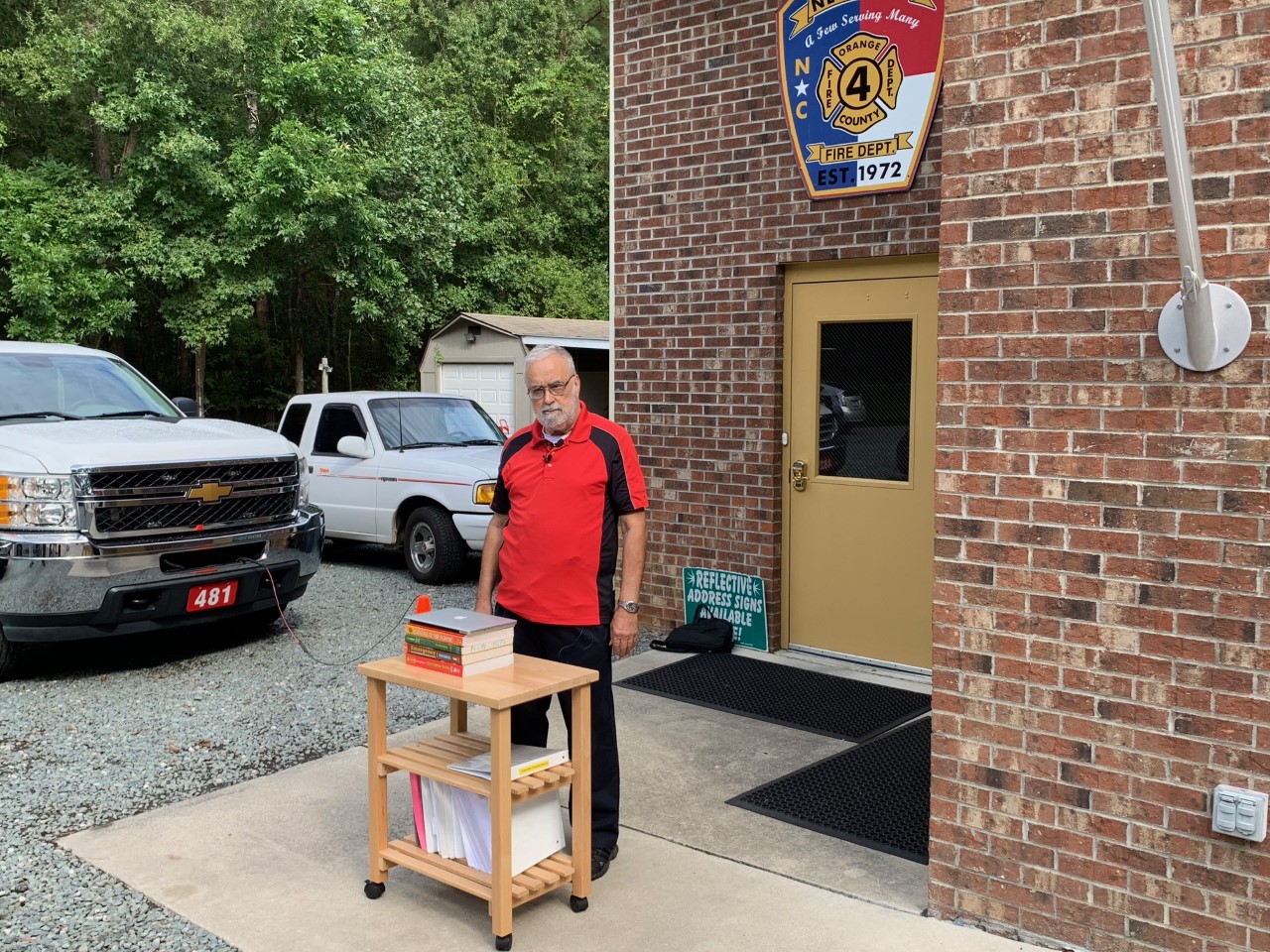
“It’s been a terrible week, and it’s been an amazing week,” Julian Rosenman said on Friday in front of the New Hope Fire Department just outside the Chapel Hill town limits. That same fire station had been taken over the week before by emergency officials from across the state as crews were searching for a missing woman – Rosenman’s wife.
After more than 50 hours and multiple thunderstorms, Maryanne Rosenman was found last Friday morning by crews who had been searching since she was reported missing on Wednesday.
Maryanne suffers from a variation of Alzheimer’s and Julian has been her primary caregiver over the last couple of years. Julian is now “semi-retired” after his work as a doctor treating cancer patients for 35 years. He said Friday that he had never imagined a scenario where Maryanne would wander off.
“Things like that do not happen,” he said, “until they do.”
Maryanne was found in a stream near the Rosenman’s home in the area around Whitfield Road. Officials do not have an idea of how long she was at the location where she was found, but they’ve said that area had been searched twice before.
Julian said that Alicia Stemper – the public information officer for the sheriff’s office – called him 49 times over the course of the search to let him know that crews had still not found his wife. And then, the fiftieth call, she had been found alive and well.
“My only thought was, I want to get home and see her.”
Maryanne was cold, even in the August heat. She had been sitting in the stream and her internal temperature was below normal. But she is now recovering in the hospital.
The length of the search was bordering on when operations move from rescue to a recovery mindset, officials said.
“I had dreamt about her knocking on the door and saying, ‘I’m here; I found my way home’ or somebody calling in the middle of the night and saying, ‘We got her,’” Rosenman said. “But this happened in kind of a funny way.”
He added Maryanne had no recollection of what happened over the course of the time she was missing. Now that his wife of nearly 50 years is back in safe hands, Rosenman has a message for other community members.
“There’s a certain delusion on my part that she was fine; she’ll be better; I can handle this,” Rosenman said. “And for two years, I was with her 24-7, just about, or had somebody reliable with her.”
Rosenman encouraged other community members to contact the Orange County Sheriff’s Office about the life track bracelet program that is offered. Maryanne now has one, he said.
“I asked for it either in gold or silver, and I was told, ‘How about cheap, white plastic?’ And I said, ‘Sounds good.’”
Julian asked the emergency officials at Friday’s press event if having the bracelet would have allowed them to find Maryanne quickly.
“Thirty minutes or less,” Sheriff Charles Blackwood said. “It’s a radio frequency wave that we search for with an antenna off of that bracelet. We use the information that’s provided from witnesses, family members, and also, we take into account the terrain and the pattern of behavior of that person.
“But it’s generally very quick.”
The life tracker bracelet program helps locate “people with cognitive or mental health special needs who wander away from their caregivers,” according to the sheriff’s office website.
Beyond the life tracker program, Orange County Emergency Services emergency management coordinator Kirby Saunders – who led the search operation that found Rosenman – is asking more Orange County residents to opt into OC Alerts: emergency alerts from the county that can be tailored to neighborhood-specific information.
Saunders said Friday that roughly a dozen of the nearly 250 homes in the area that was searched while crews looked for Rosenman had registered with OC Alerts.
“That gives you direct information from the local authorities or local officials in a time of need. We can give you instructions or actions – to evacuate, to stay in place – or, in this case, to help us help someone else live another day.”