The arrival of June means it’s crunch time for town and county governments, who have just a few weeks left to sign off on their annual budget plans before the fiscal year begins in July. The town managers in Hillsborough and Carrboro have proposed budgets that avoid raising property taxes – but with both towns also contending with major financial pressures, town board members say a small tax increase is still on the table.
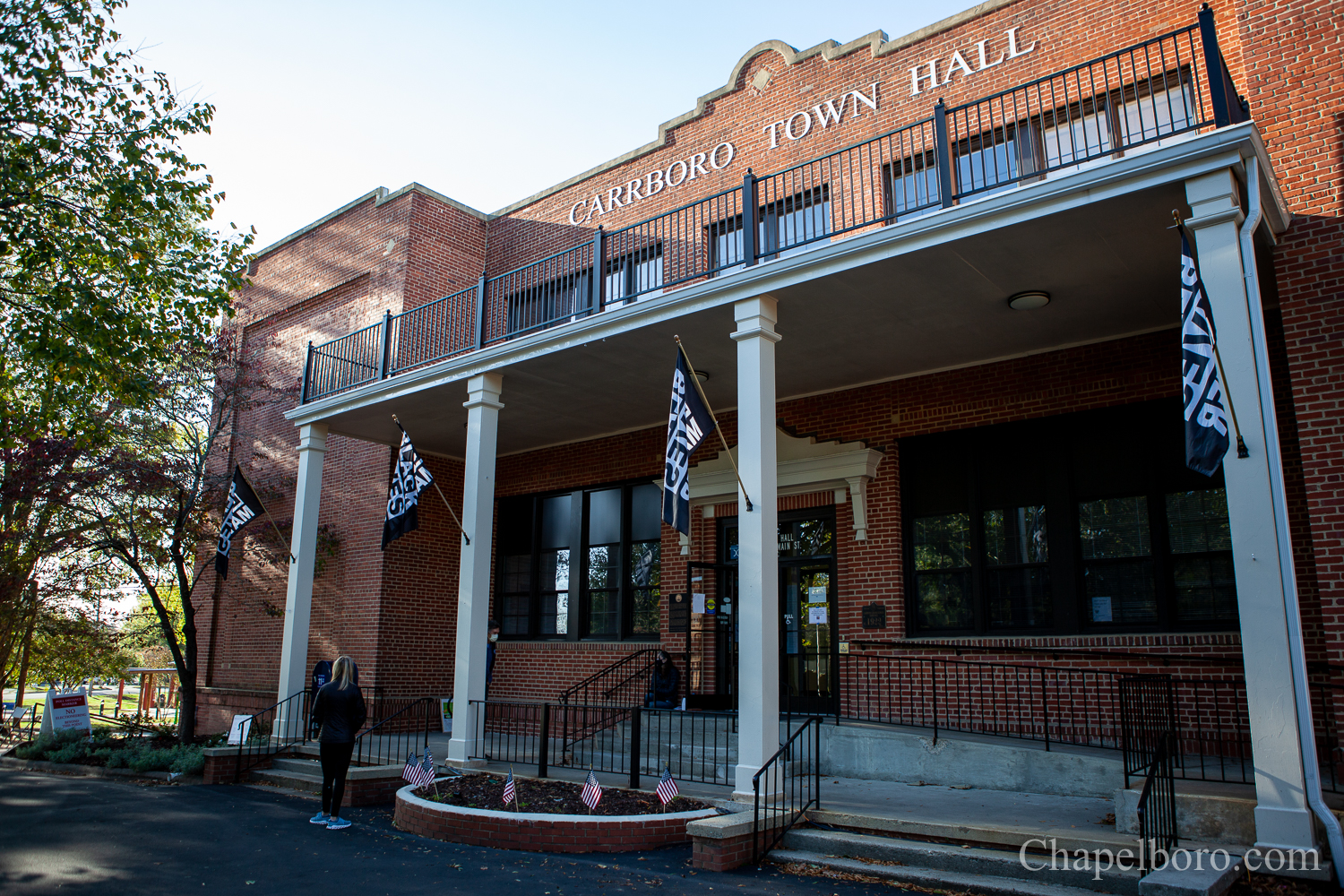
“I would find it very hard to support any type of property tax increase this year,” said Carrboro Mayor Barbara Foushee at a recent meeting of the Town Council. The mayor said she’s especially reluctant because Carrboro imposed a 9-cent tax increase just one year ago.
“You think about inflation, folks that have to put gas in their cars, buy food, and all these other things that are just through the roof – I would not want to burden our residents so soon after last year,” Foushee said.
But those same inflationary pressures are also driving up costs for town governments. And local governments across the state are also losing property tax revenues because of the so-called “Blue Ridge loophole” – a byproduct of a recent court ruling that’s enabling apartment developers to avoid paying property taxes by nominally partnering with affordable-housing organizations.
And in Carrboro and Hillsborough, those pressures are compounded by last year’s Tropical Storm Chantal, which left both towns saddled with extremely expensive repairs.
“Our Public Works department still does not have a home, and we have to replace vehicles,” said Mayor Foushee. “So we’re working through all of that still.”
In Carrboro, that means in order to hold the line on property taxes, Town Manager Patrice Toney had to make significant budget cuts – most notably a 45 percent cut for human services, which includes town funding for nonprofits. That’s about $200,000 less for those organizations, coming as many of them are seeing a big increase in need – not to mention major cuts on the federal level as well.
“We are extremely concerned about the proposed 45 percent reduction,” said Jackie Jenks of the Inter-Faith Council for Social Service. “Programs providing meals, grocery support for survivors of domestic and sexual violence, are critical safety-net resources.”
With that in mind, council member Catherine Fray proposed a tax increase of no more than two cents, to keep the increase below the inflation rate. Fellow council member Jason Merrill agreed.
“By not raising taxes, we are benefiting the people who actually have the privilege to own homes here, and we are making the folks that don’t have those opportunities suffer,” he said. “And as someone who grew up the only child of a single mom who relied on these services, it’s hard for me to consider cutting (them).”
But council member Eliazar Posada-Orosco sided with Mayor Foushee, saying last year’s big tax increase makes another one this year untenable.
“I fully understand what these organizations are going through – heck, some of these organizations, I’ve worked for in some way, shape or form,” he said. “But I also see my role as an elected official as looking at that fiduciary responsibility – and after all the (tax) increase from last year, I’m not in a place where I would want to increase that (again).”
The same question is driving discussion in Hillsborough, where the town board raised property taxes by 5.7 cents last year. Hillsborough town manager Eric Peterson has proposed a budget that holds the line on property taxes this year, but only by making significant cuts and pulling money out of the town’s existing fund balance – a move that might necessitate another tax increase soon to make up the difference.
That’s led several town board members to propose a one- or two-cent tax increase this year, particularly after Chantal demonstrated how costly an unexpected disaster can be.
“We’re going to have another disaster, and I feel we’re too high-risk right now,” said town commissioner Kathleen Ferguson. I don’t feel we’re in a very good position. If we have three years of disasters, I don’t know how we would handle it.”
But fellow town commissioner Robb English disagreed, saying he’s not comfortable putting any additional tax burden on residents who are already burdened enough as it is.
“My gut tells me, with the increase in stormwater, water and sewer fees – that’s going to be a lot,” he said.
For Hillsborough as well as Carrboro, there are still no clear answers, but both town boards will have to make a final decision soon. The Carrboro Town Council may take a final vote as soon as Tuesday, June 2, while Hillsborough Town Commissioners are slated to take their final vote next Monday, June 8.
Speaking at a recent meeting, Hillsborough’s Kathleen Ferguson summed up the general feeling: “I mean, it’s tight,” she said. “Every year I’m impressed with what’s done (with the town budget), but…I’m uncomfortable.”
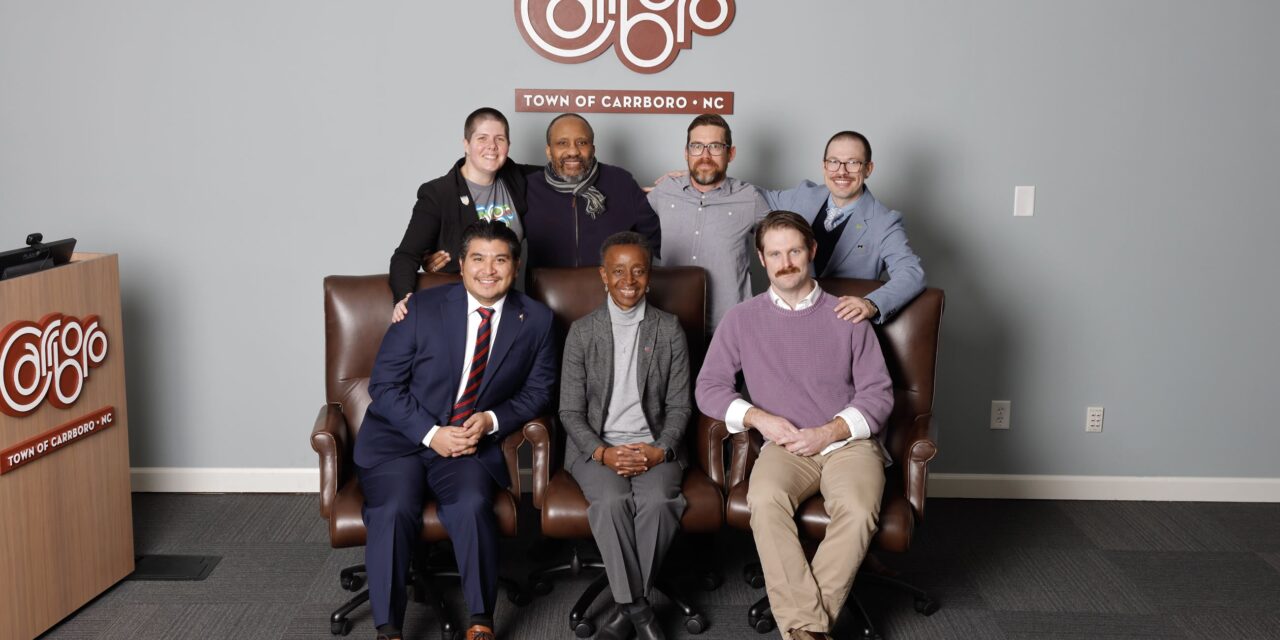
Featured photo of the Carrboro Town Council, via the town of Carrboro.
Chapelboro.com does not charge subscription fees, and you can directly support our efforts in local journalism here. Want more of what you see on Chapelboro? Let us bring free local news and community information to you by signing up for our newsletter.