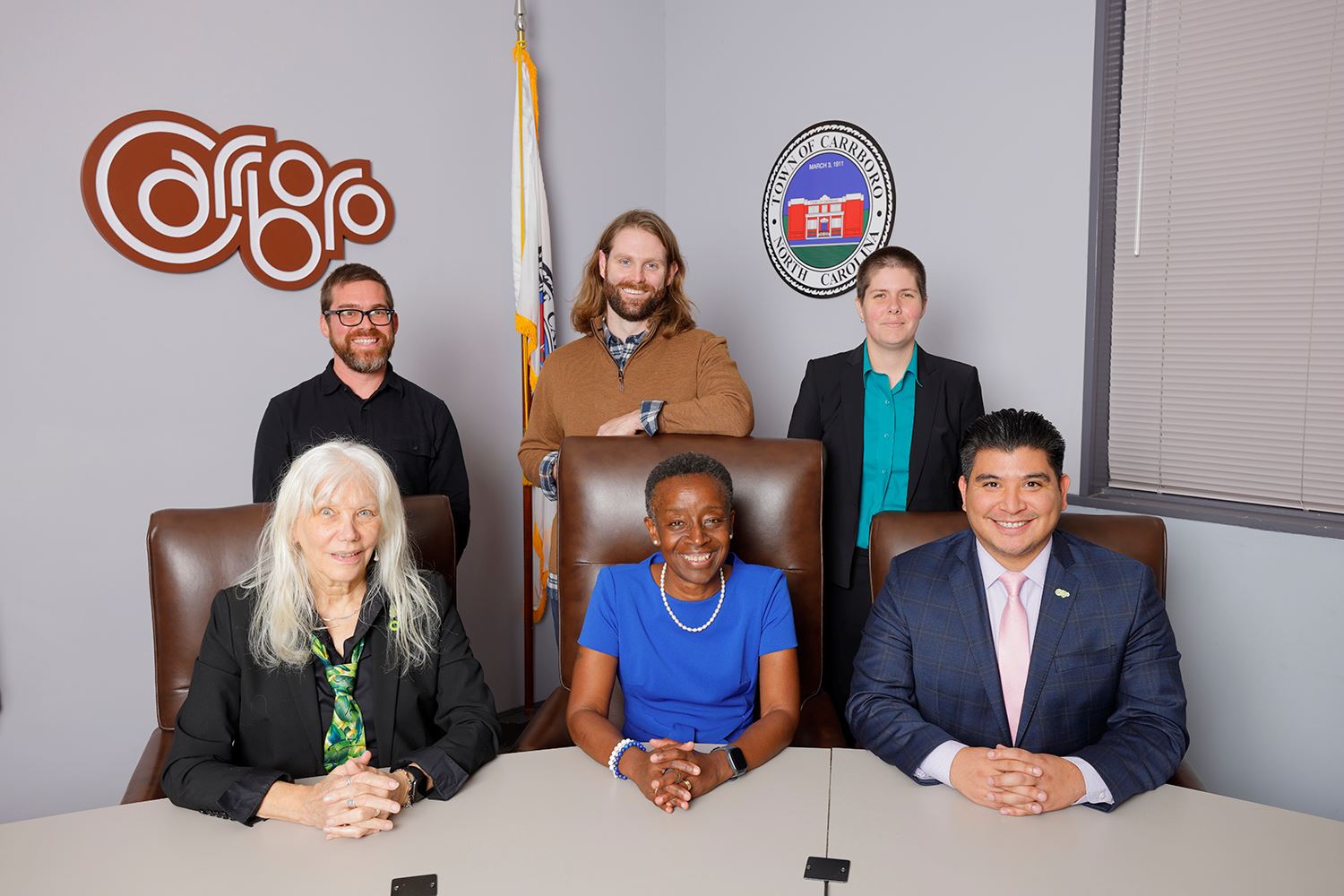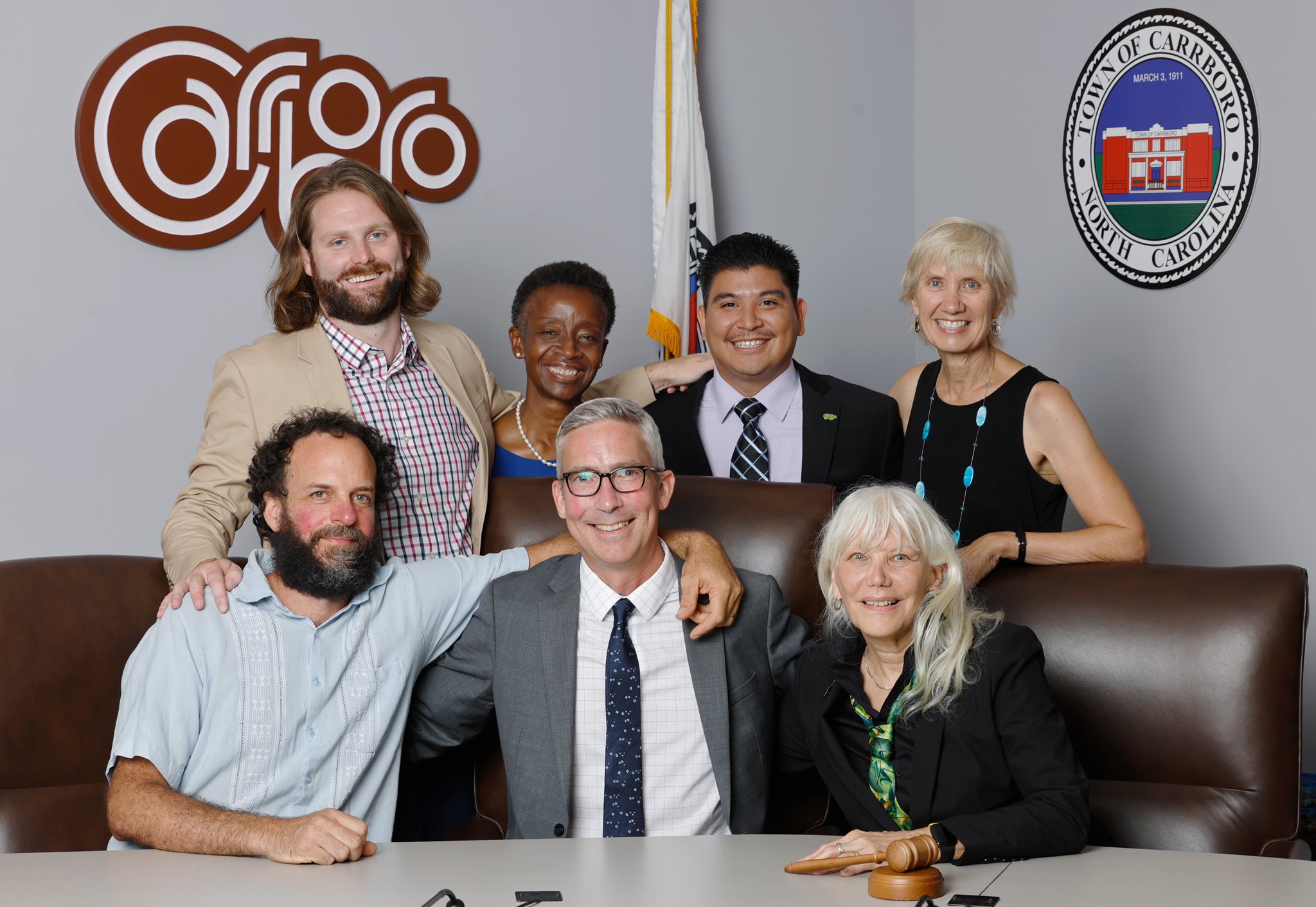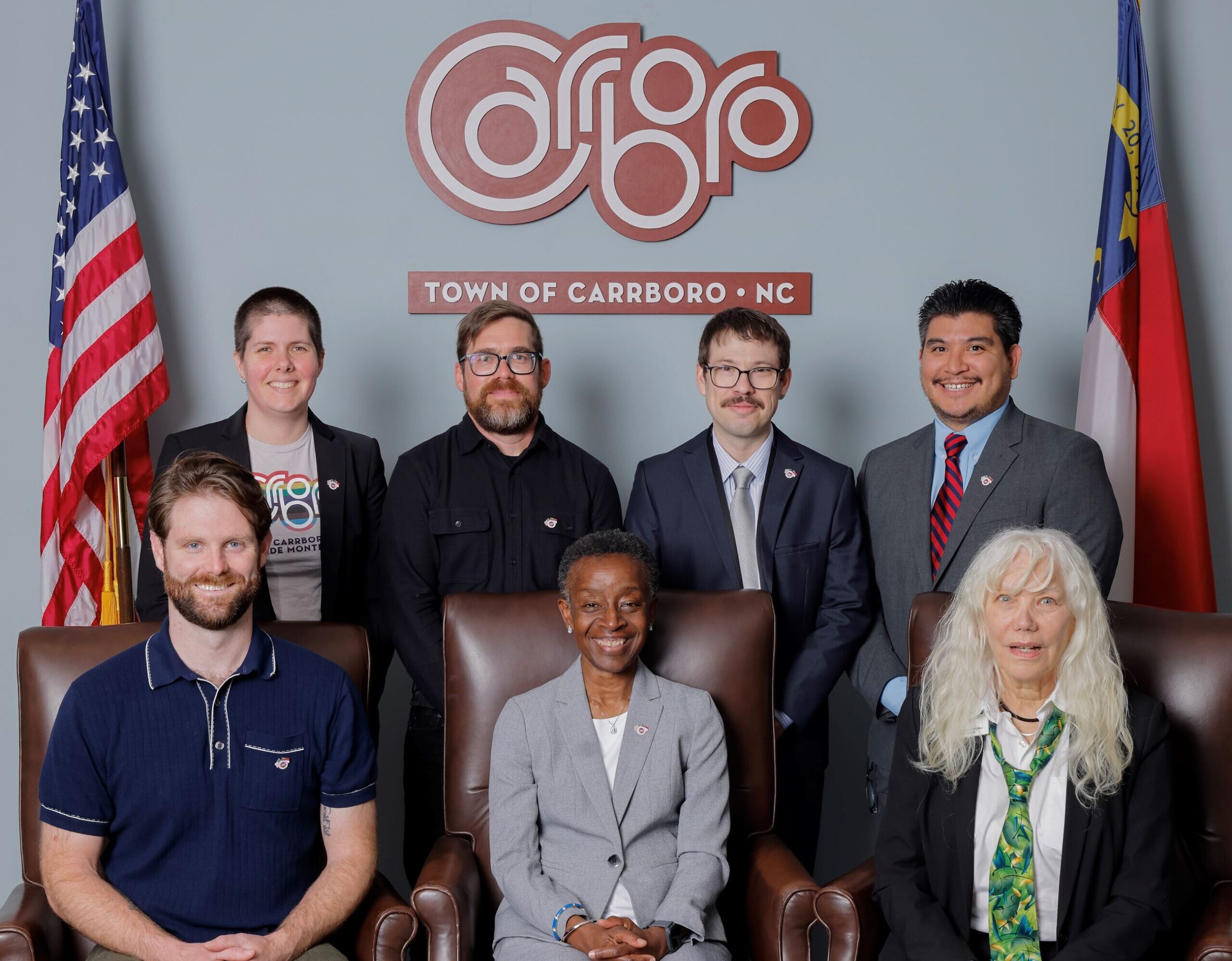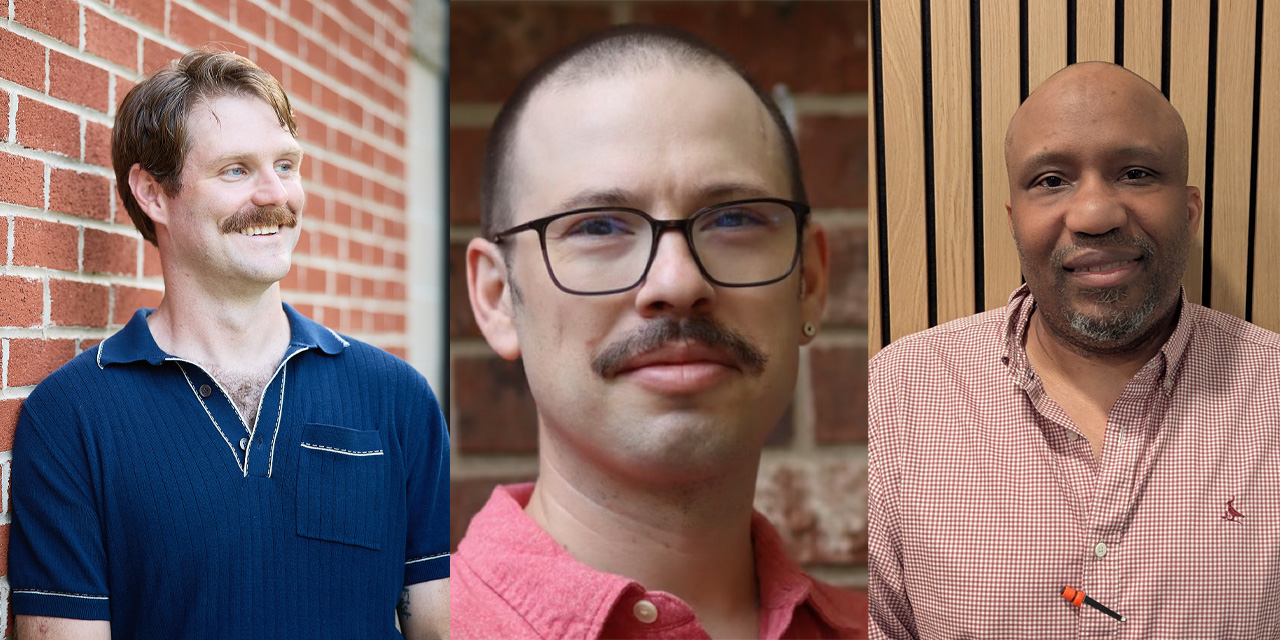
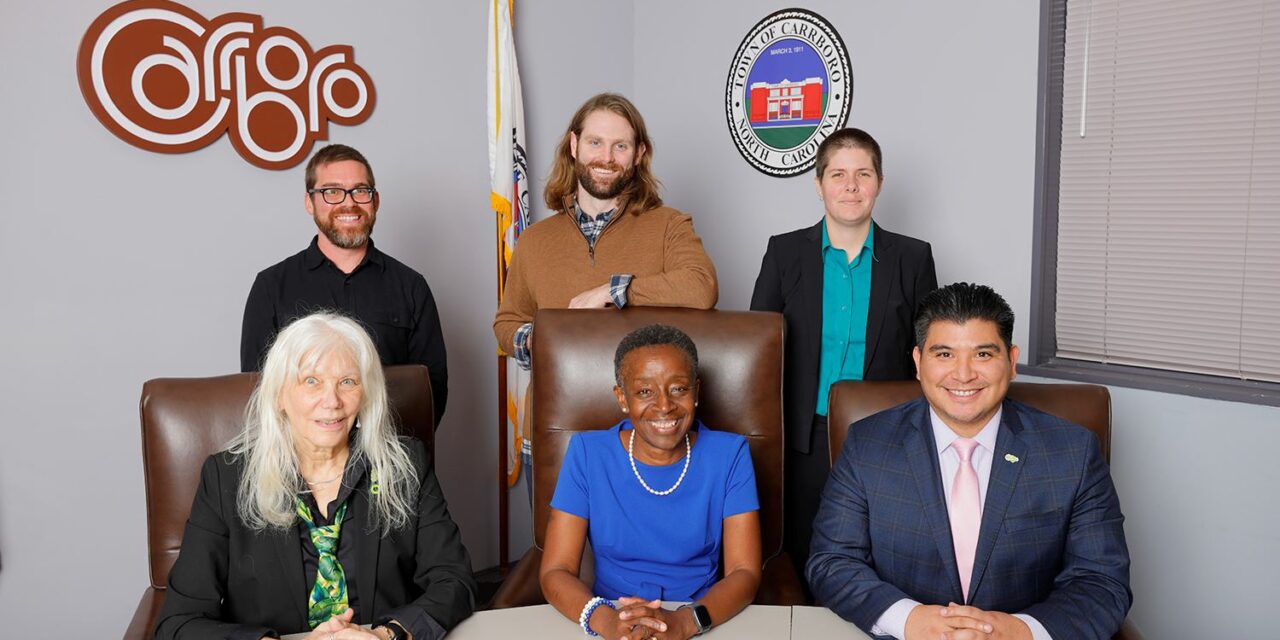
The Carrboro Town Council held its first meeting of 2024 on Tuesday, January 9. Newly elected Mayor Barbara Foushee led the meeting. She was joined by Mayor Pro Tempore Danny Newell, returning council members Randee Haven-O’Donnell and Eliazar Posada, and newly elected council members Jason Merrill and Catherine Fray.
Here are some highlights from the group’s agenda:
Discussion of Possible Changes to Water and Sewer Service Boundary in Chapel Hill Jurisdiction
Trish McGuire, Planning Director for Carrboro, spoke to the council regarding the Town of Chapel Hill’s proposed expansion to the water and sewer services boundary in the southern part of Chapel Hill along the US 15-501 corridor to the Chatham County line.
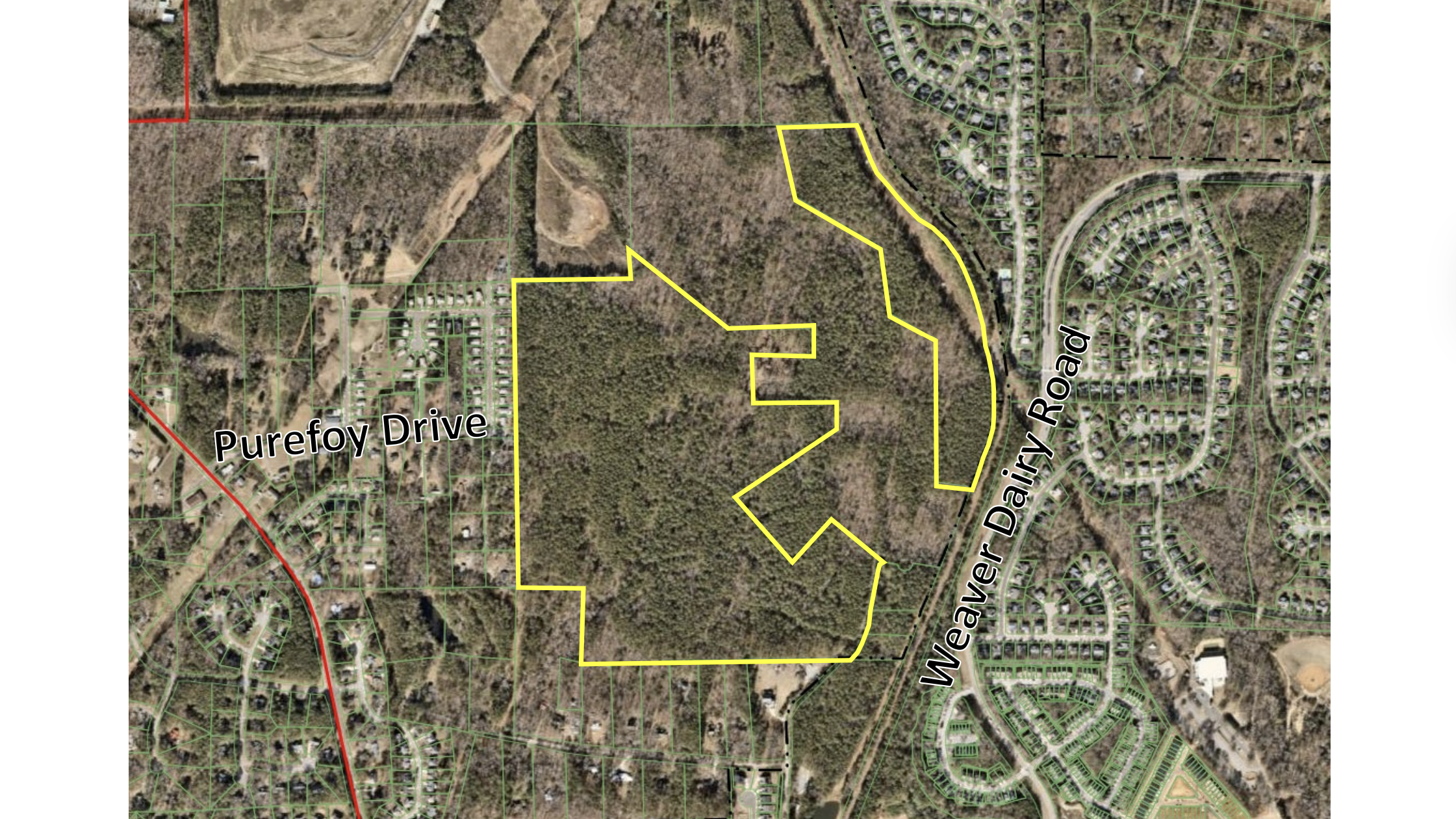
The most recent effort to rezone along the 15-501 corridor was first raised on June 14, 2023, when Aaron Nelson, President of the Chamber for a Greater Chapel Hill-Carrboro, submitted a petition to the Chapel Hill Town Council requesting an amendment to the Water and Sewer Management Planning and Boundary Agreement (WASMPBA). The amendment was reviewed by the Town of Chapel Hill on September 20, 2023, and approved by the town on November 15, 2023. If the amendment is approved by all relevant parties, the change to WASMPBA would extend the county boundary by approximately half a mile on each side of the 15-501 corridor. Relevant parties in WASMPBA also include Carrboro, the Orange Water and Sewer Authority (OWASA), Hillsborough, and Orange County. The new boundary would include 360 acres, or 139 parcels, of property that could be used to service affordable housing demands.
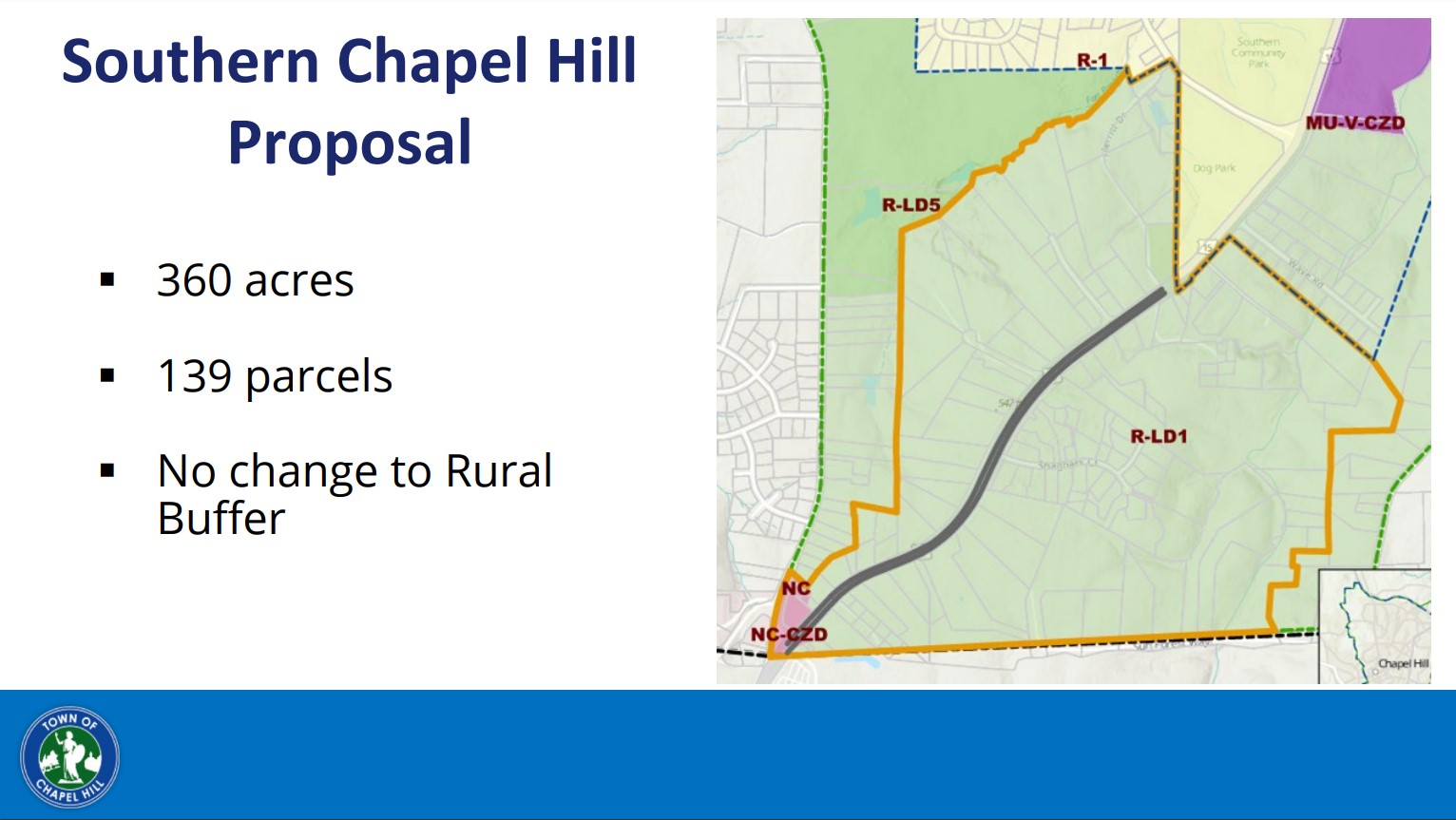
A diagram of the proposed changes to the water and sewer service boundary in Chapel Hill’s jurisdiction
After the council heard from members of the public on the matter, including Nelson, Council Member Haven-O’Donnell voiced their hesitancy to approve the amendment at this meeting.
“I think that this is really tricky,” said Haven-O’Donnell, “because of all the work that we do on climate resiliency and mitigation and stormwater issues. I do believe that this is going to be approved at some point, but personally, I feel responsible to have the due diligence information on the environmental impact assessment on the mapping only because I know the area’s topography well enough to know that checking twice is really important, and having the most updated information.”
“I appreciate what Chapel Hill is doing,” they continued, “and for all the reasons that Aaron mentioned, because I think it’s important, and that’s why I do think it will happen at some point. But, between now and that point, as a steward of Carrboro’s environment, I feel that my personal preference is that as a council we have all that information in front of us before we greenlight it.”
Council Member Haven-O’Donnell also raised issue with the lack of assurance that the rezoned area would be used for affordable housing. Council Member Merrill echoed this point.
“As for questions or comments,” Merrill said, “mine are very similar to Randee’s. What assurances do we actually have that this will turn into any sort of development that we would like to see? I assume that it’s going to be development, and we don’t want to see McMansions. It’s hard to vote for it in good conscience without some plan in place, so I would just add to Randee’s request that we have more kind of concrete information before we are expected to make a decision.”
Mayor Foushee followed up on the sentiments of the other council members regarding environmental impacts, watershed mapping, and assurances for affordable housing developments. She also asked for further information on the inclusionary zoning requirements of Chapel Hill in advance of voting on a resolution in February.
Councilmember Posada motioned for the staff to have a resolution prepared for the council on February 6 with information from key stakeholders and answers to questions raised by council members at this meeting. His motion was passed unanimously.
Approval of Residential Stormwater Assistance Program Design
Randy Dodd, Carrboro’s Stormwater Utility Manager, spoke to the council on the design of the Watershed Restoration Residential Assistance Program. The purpose of the program is to provide Carrboro residents with assistance in mitigating challenges caused by surface water and other ecological challenges relating to flooding and runoff. The program aims to increase rainwater infiltration, interception, and evaporation, slow runoff, and decrease erosion. It also aims to improve the water quality of local creeks through protection and restoration. The proposal for the program includes funding for a new stormwater assistance coordinator position set to be added in the Summer of 2024.
Though surveys collected in early 2023 indicated that more than 60 percent of participants in the program are likely to implement all of the recommended practices of the program, Dodd addressed prospective challenges based on survey responses.
“Some of the responses,” he said, “indicated the need for more information both on the technical side of the proposed practices and also on the financial side. There are some responses as well that indicated the work could be too expensive for the resident to pursue without assistance, and also need for assistance finding contractors.”
“For those responding in the survey that were clear about their need for financial assistance,” Dodd continued, “most indicated that they would need a 50 percent cost share.”
Dodd explained the plan projects the launch of the Residential Stormwater Assistance Program for the fall of 2024. He was joined by Michael Dupree, an independent contractor on the project and former Watershed Conservationist in Durham County.
Council Member Posada asked for a hypothetical timeline a Carrboro resident might face in beginning a project under the Watershed Restoration Residential Assistance Program.
“How long would this process go,” Posada said, “from a resident applying for technical assistance, to the filing for support or cost-sharing application, to something being complete?”
Dodd voiced his expectation that, at worst, a project would go from conception to completion in about a year. Dupree followed up by explaining the expected timeline of starting projects under this plan.
“You could have from the initial site visit,” Dupree said, “a quick design under 5,000 dollars, which is the threshold that was set, could be staff approved. Projects that would cost 25,000 to 30,000 would need to go before the commission which would be monthly, and then if it’s more than 30,000 I believe it’s outlined that they would need to go to the town manager for approval and the council for approval. So those smaller projects that I showed you would move pretty rapidly. The larger projects would take probably 90 days.”
Council Member Haven-O’Donnell voiced their support for the design of the program, though asked for a formal assessment of the pilot program after its launch.
“I would also like us to have some assessment of the pilot, have a formal assessment after it’s launched, and then to be able to look progressively in terms of the programming,” said Haven-O’Donnell. “What does it look like if we apply the program tools, not necessarily the funding and the cost-sharing in the same way, but some of the program tools to moderate-income homes? Because one of the things that is really eroding moderate-income families is flooding.”
The council proceeded to unanimously pass the resolution, formally establishing the Residential Stormwater Assistance Program. They also set a public hearing for February 27, 2024.
Unanimous Passage of ARPA Funding, Family Financial Assistance Program
The council unanimously passed a resolution designating American Recovery Plan Act (ARPA) funds to establish and implement the Carrboro Family Financial Assistance Program. The purpose of the project is to address residual financial challenges facing Carrboro residents caused by the pandemic. To qualify for the program, applicants must meet certain eligibility requirements. These requirements include having an income below 200 percent of the federal poverty level or meeting the Carrboro affordable housing goals and strategies documented by earning below 60 percent of Carrboro’s median income. Eligibility details and application information for the program can be found on the Town of Carrboro’s website.
Annual Financial Report and Independent Audit
Director of FORVIS LLP Chad Cook presented the results of the independent audit his company conducted for Carrboro for the 2023 fiscal year. His report showed that the town increased its cash and investments by 4.7 percent, its general fund available balance by 30.5 percent, general fund revenues by 5.4 percent, and general fund expenditures by 9.6 percent. A complete breakdown of FORVIS LLP’s audit report can be found on the Town of Carrboro’s website.
The Carrboro Town Council’s next meeting is scheduled for Tuesday, January 16 at 7:00 p.m.
Chapelboro.com does not charge subscription fees, and you can directly support our efforts in local journalism here. Want more of what you see on Chapelboro? Let us bring free local news and community information to you by signing up for our biweekly newsletter.