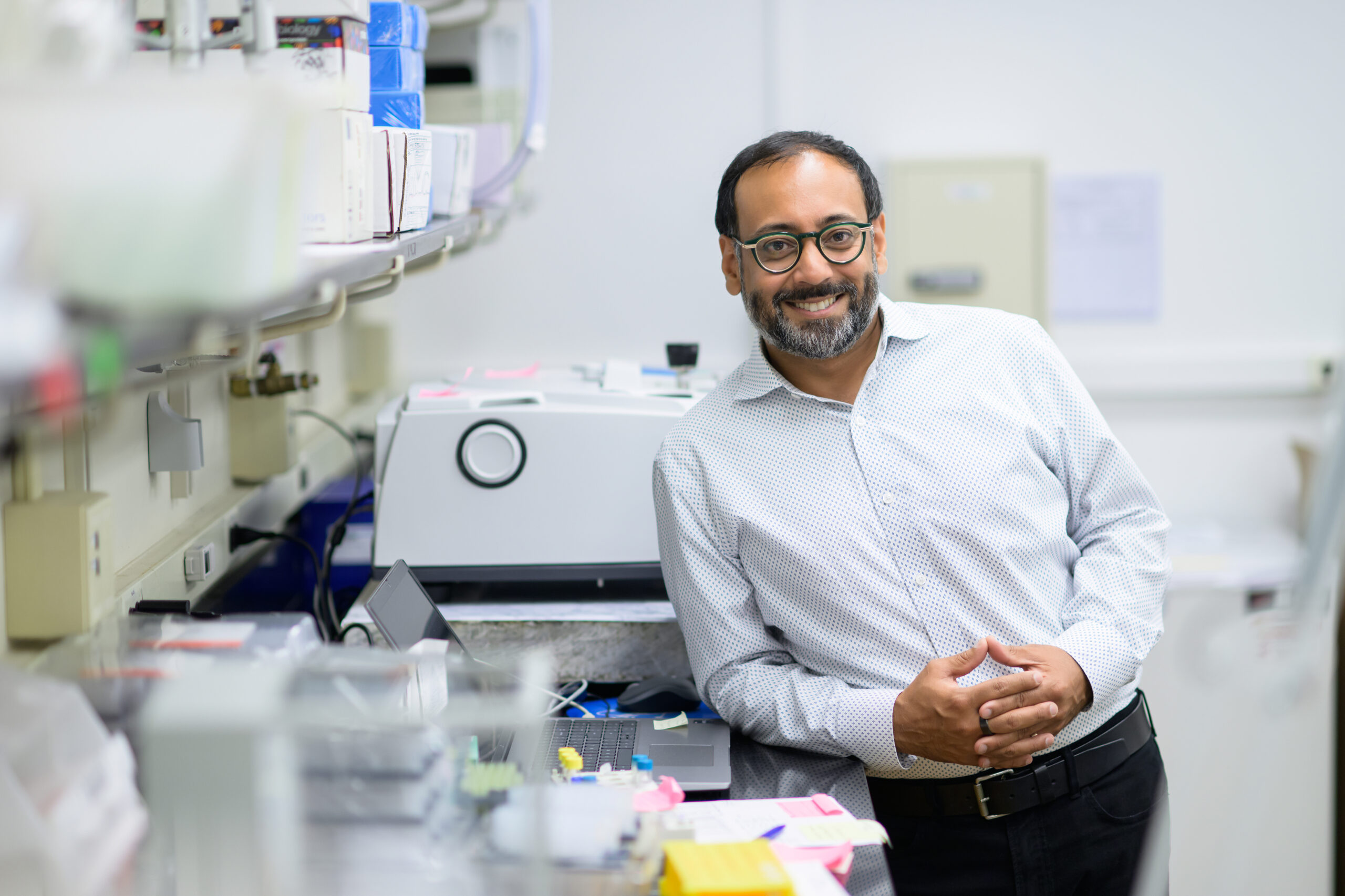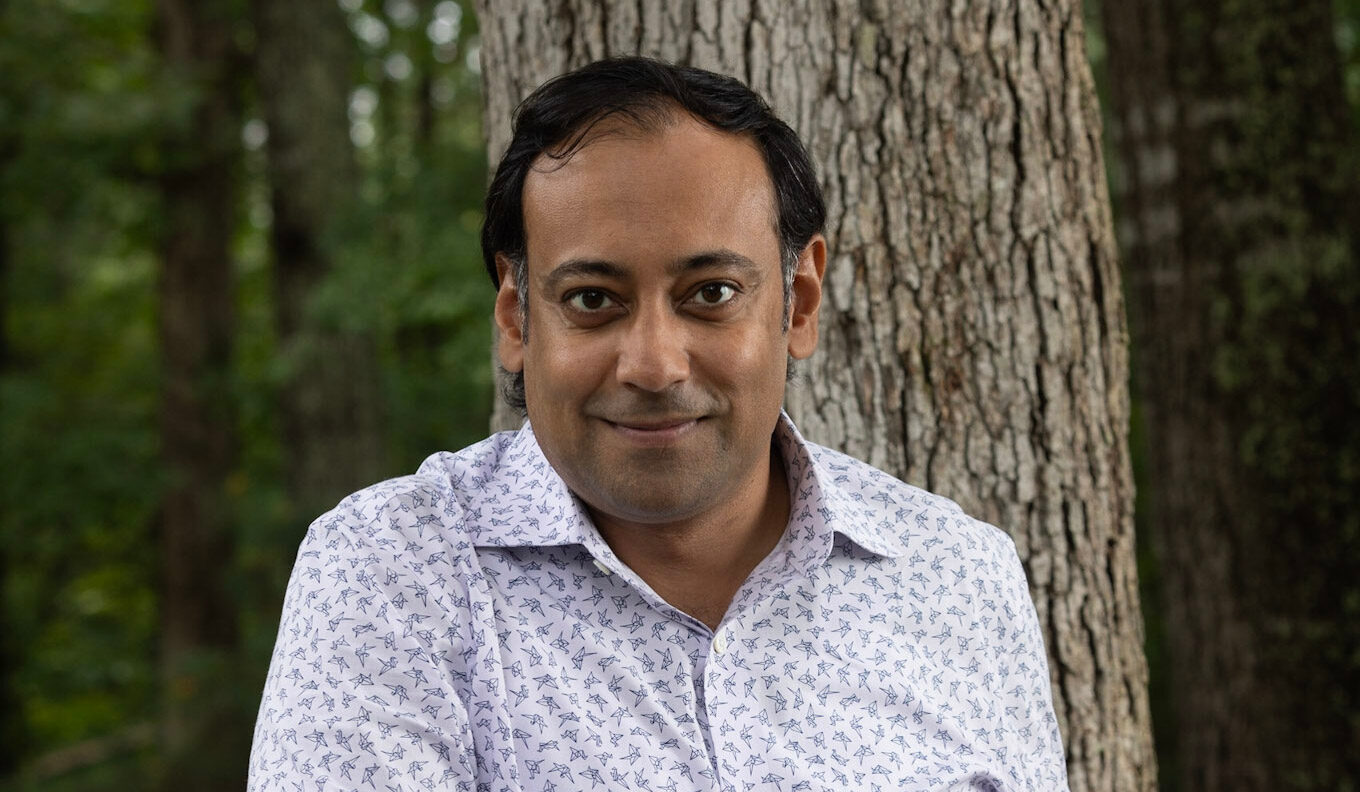
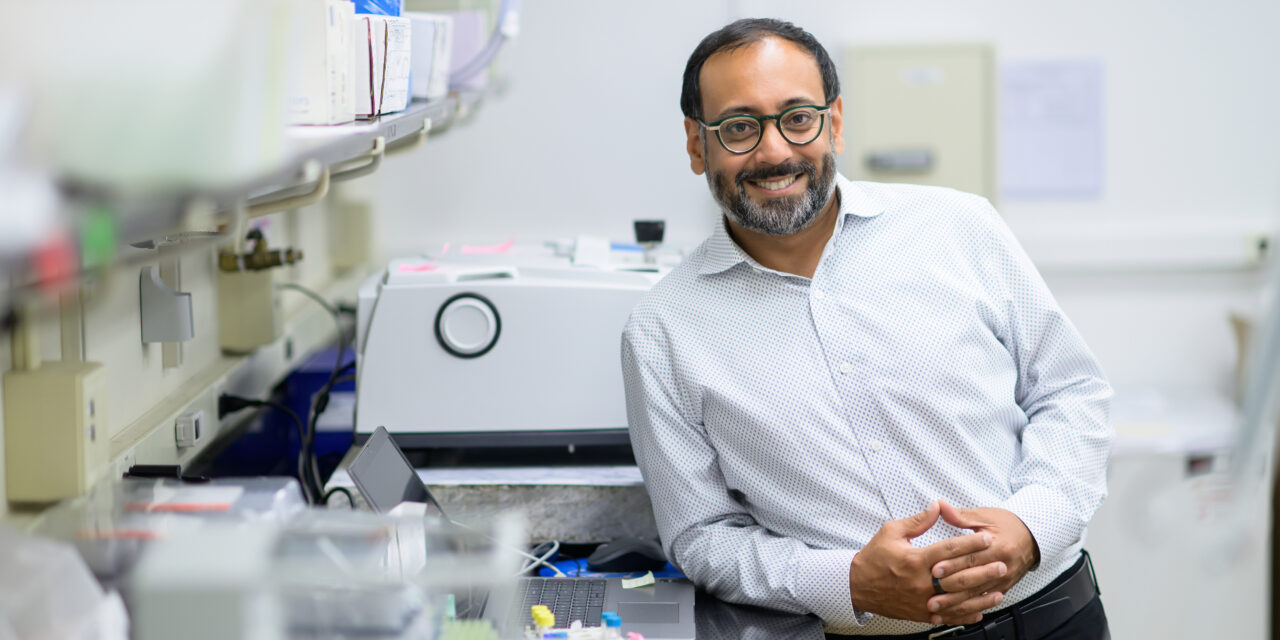
This month, UNC’s Nabarun Dasgupta was named as a recipient of a MacArthur “Genius” Grant, an $800,000 award in recognition of his lifesaving work to help fight the opioid epidemic.
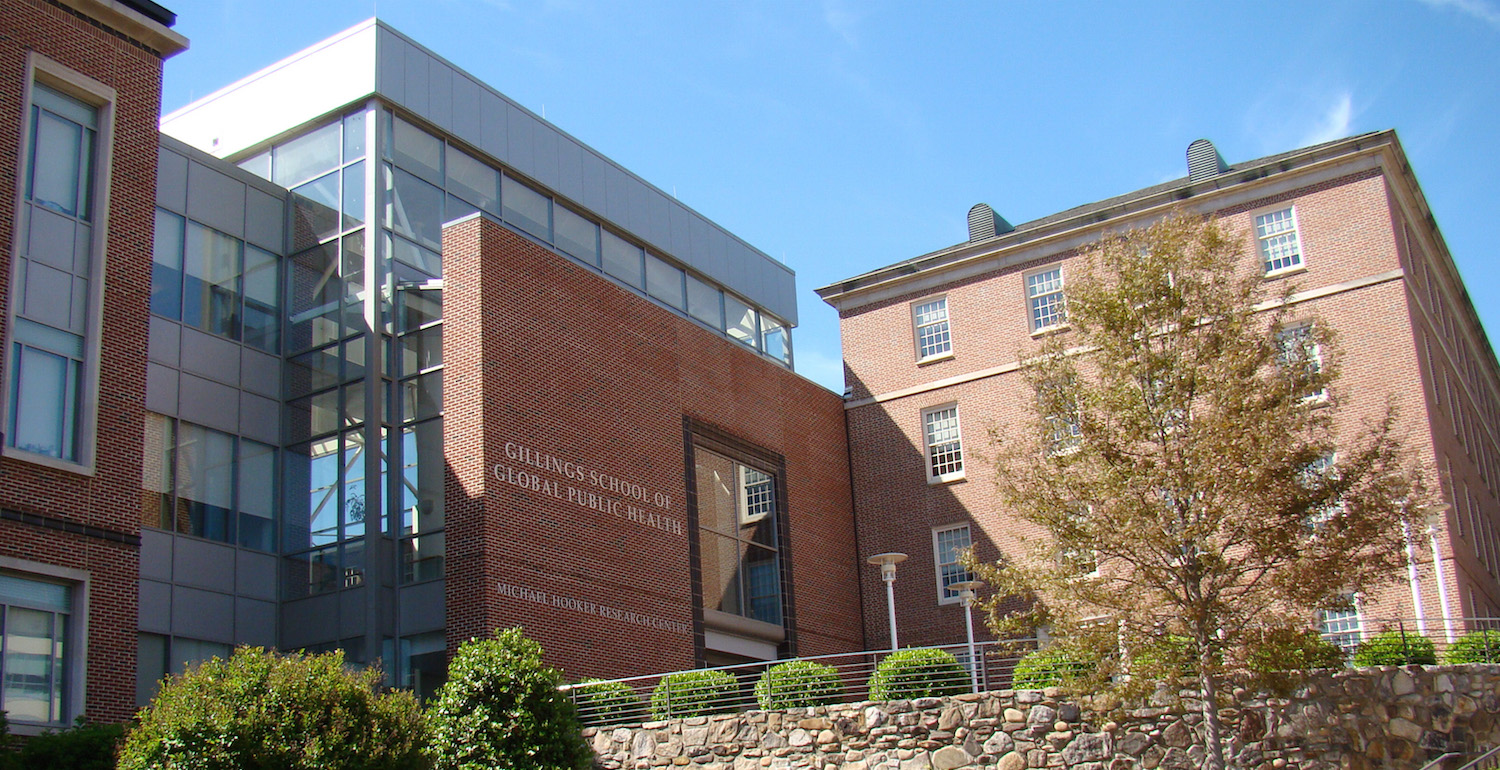
Dasgupta is an epidemiologist and researcher with UNC’s Gillings School of Public Health. His Opioid Data Lab tries to determine the actual contents of drugs found on the street, to help individuals made smarter choices and to help first responders and therapists provide better care. He’s also spent years working to prevent overdose deaths by providing naloxone to communities around the U.S. He’s one of 22 individuals selected this year for the five-year MacArthur grant – and only the third in UNC’s history, joining Kevin Guskiewicz and Tressie McMillan Cottom.
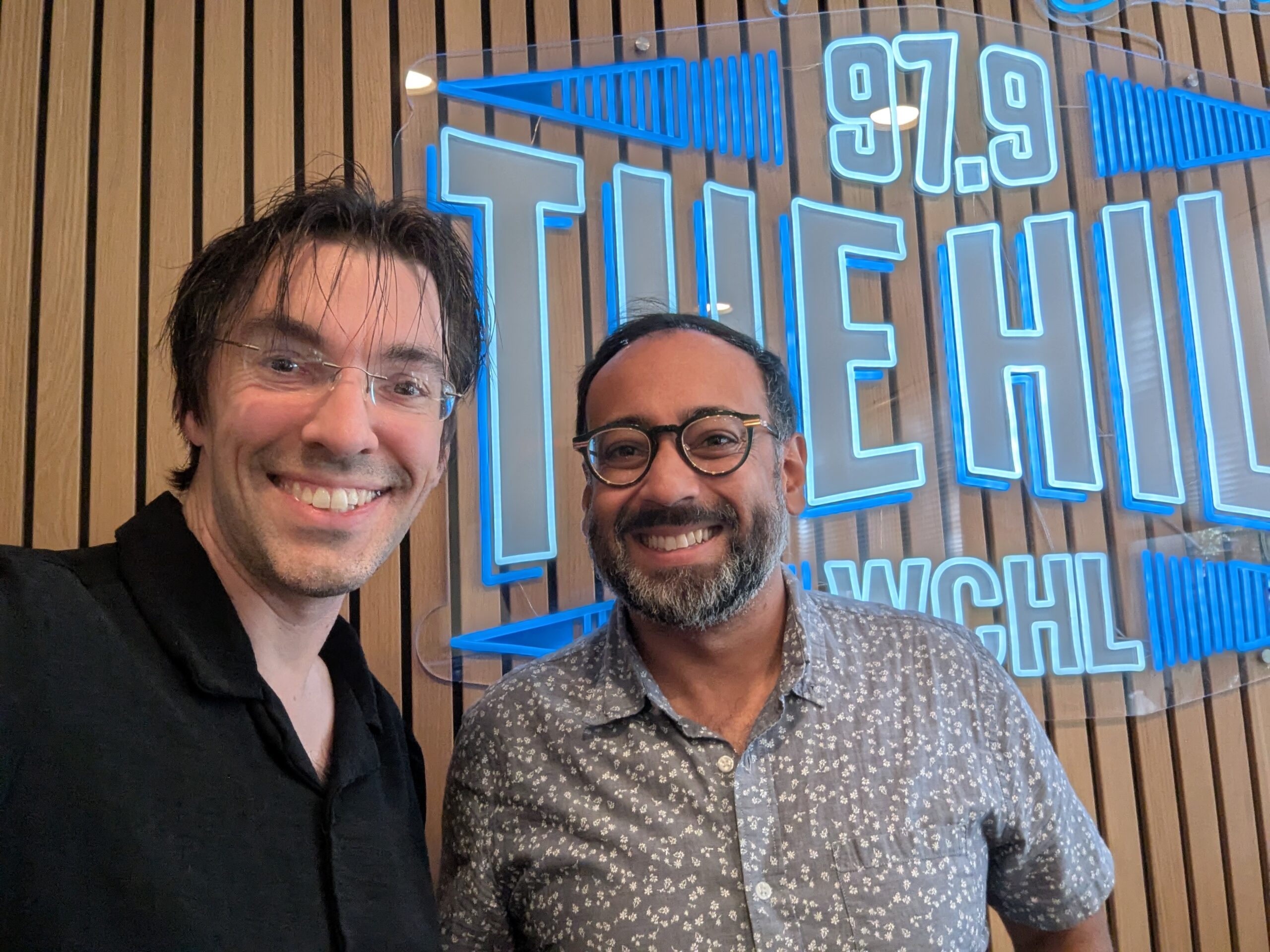
Following the announcement, Dasgupta joined 97.9 The Hill’s Aaron Keck to discuss the honor – and the work that earned it.
Click here to listen to their full conversation. The transcript below has been edited for clarity.
Aaron Keck: What were your thoughts on getting the grant? How did you learn about it, how is it announced?
Nabarun Dasgupta: It starts with a phone call out of the blue. But it was a really intense, bittersweet moment – because our very close colleague, Louise Vincent in Greensboro, had passed away the weekend before. (She was) someone I’d worked with for 20 years around drugs and overdoses. We had a team meeting and I broke the news to my team, came back to my office, turned off the lights, and just needed a moment to sit with – with her memory, and the intensity of it – and I got a call from Chicago. They told me the news, and it was surreal.
Keck: In that moment, when you had just broken the news?
Dasgupta: It was the highest high (and the) lowest of lows. I don’t know. I felt like crying tears of joy and grief at the same time. And that’s the way it is with doing this work. We lose people. And there are (also) moments of great joy.
Keck: And this isn’t something you apply for, right? It just came out of the blue.
Dasgupta: That’s right. It’s something that you hear about in academia, because it’s like the Big Prize – but it’s not something you would ever dream to hope for, because it’s so super-selective and (there’s) no application process. (But) I found out after the fact that they interviewed, like, dozens of my colleagues! Somehow they all kept the secret.
Keck: Tell us about the Opioid Data Lab.
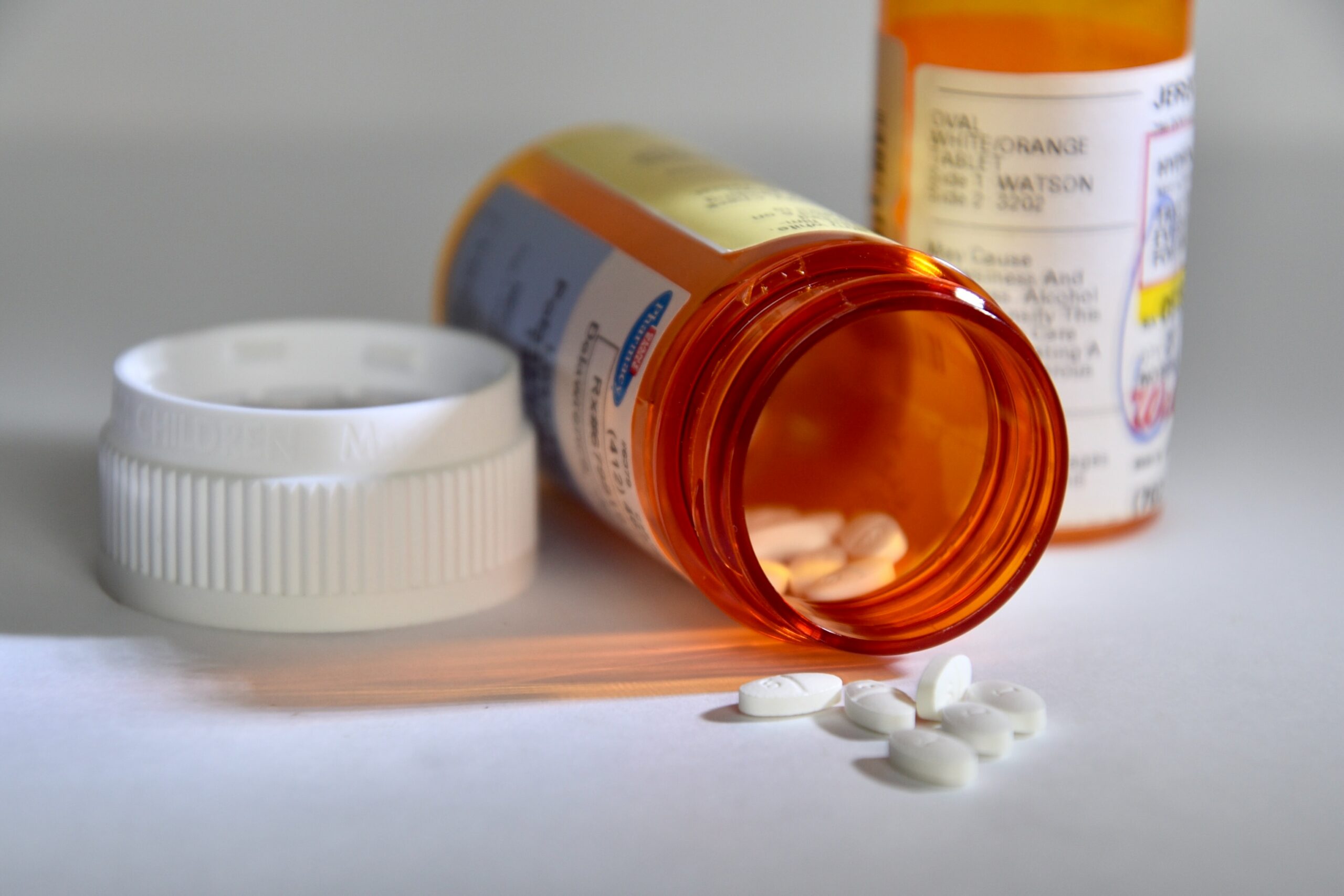
Dasgupta: So we have capabilities on campus to analyze street drugs sent to us from around the country. We’ve tested about 17,000 samples from 40-plus states, including heavily in North Carolina. And we analyze the drug samples with atomic precision, figuring out exactly what the substances are in it…
So when someone says they’re taking fentanyl, it’s almost never just fentanyl. There’s (always) a bunch of other things mixed in. So when someone has an emergency, or wants to stop using, and seeks medical help, there might be other kinds of withdrawal or physical harms that are associated with those adulterants, those cuts, those mixes. And our job is to figure out, A, what’s in them, and B, what (they’re) doing to the body.
Keck: How did that project originate?
Dasgupta: We had seen the (drug) problem shift from prescription opioids to heroin to fentanyl, and during that transition we knew there was going to be a diversity of fentanyl species and other drugs. So we needed a way to measure that…
(And) we wanted to do something different: we wanted to be able to give results back to community members directly, instead of trying to translate our research from a research paper two years later, when it’s no longer relevant to anybody on the street. So we designed this project to be a public service of a public university. We think of ourselves as “science in service.” So we give the results back to the individual donors through our website, and they get the information first, even before public health authorities or the scientific world.
Keck: What’s been the impact of that, on the ground?
Dasgupta: We’ve detected all kinds of new adulterants. Most (people) can name a couple dozen different drugs, but we’ve seen about 460 in the drug supply. (And) we get told that our service has saved lives. We get messages and handwritten notes on a weekly basis, saying that we’ve made a difference (for) all these community programs and the people they serve…
I see part of our responsibility as (not only) to do good, rigorous science, but then to work to explain it, tell stories with it, in ways that people can really attach on to. We have an illustrator on retainer, who we work with every month to help us communicate better. We work with our Advertising 101 professor, Allison Lazard, on campus, to figure out the right way to portray some of these messages. We’ve leaned into the science of communication, and (we) see that as part of our broader mission.
Keck: What should folks know now about the state of the opioid crisis?
Dasgupta: We are at an intergenerational inflection point. Things have changed in the last eight months or so, in a way that we haven’t seen in 30 years. Overdose deaths in the United States are down about 30 percent from their peak in 2023. And at the same time, the fentanyl supply is being replaced with very heavy sedatives and anesthetics. We’re seeing an aging out of drug use: 70 percent of overdose deaths happen (among) Gen X and millennials, (but) Gen Z has really kind of chosen a different set of substances than opioids. Gen Z is favoring much more cannabis, ketamine, MDMA and psilocybin – (not) even alcohol and caffeine. So we are seeing this intergenerational moment with changes in the street drug supply, demographic changes, and positive long term trends – and for the first time in my 20-plus years of doing this work, I don’t think I can predict what the picture is going to look like in six months or eight months.
Keck: Do you consider that an improvement, or is it just like a shift to a new thing?
Dasgupta: I think it’s an improvement. Fewer young folks (are) becoming interested in opioids. I think all the fundamentals are there for a positive trend in the short term. There might be some ups and downs, but I feel like we’ve actually turned the corner.
Keck: Which is remarkable, because we talk about a (growing) mental health crisis in this country, and you’d think that would be associated with greater risk over here.
Dasgupta: The mental health crisis is also very varied. There’s subtypes of mental health issues, and I think Gen Z’s mental health issues are fairly distinct from their parents’ or grandparents’ generations.
Keck: The MacArthur genius grant is $800,000, no strings attached over five years. Do you have any idea yet of where it’s going to go?
Dasgupta: My team really wants some nice swag! <laugh> But I think what this will allow us to do is: we know drugs are an international thing, right? We need to have over-the-horizon capabilities, (to) work with our colleagues in Latin America and Africa more, to understand what’s in the global drug supply and how that affects us here in North Carolina. I’m not committing to anything at this point, but that’s what catches my eye.
Keck: It’s been more than a week now since you got the news. You’ve had that much time to process. What are you thinking now?
Dasgupta: It’s been kind of exhausting, but also – I’ve heard from people from every portion of my entire life, old teachers and principals and family, friends and everybody. That’s been the coolest, the gift of remembrance, to be able to think back on those moments with these people who I haven’t had contact with…
It’s really odd to hear people say “you deserve it,” you know? It’s not an award that I was gunning for or thought I could get. And to have people say that – I don’t know – just takes your breath away. (But) it’s been very cool to see how the harm-reduction and public-health communities have co-opted and appropriated the award as a reflection on their values and themselves. Usually we think of ‘appropriation’ as a bad thing – but I could not be happier that this is being lifted up as a win for the movement.
Chapelboro.com does not charge subscription fees, and you can directly support our efforts in local journalism here. Want more of what you see on Chapelboro? Let us bring free local news and community information to you by signing up for our newsletter.