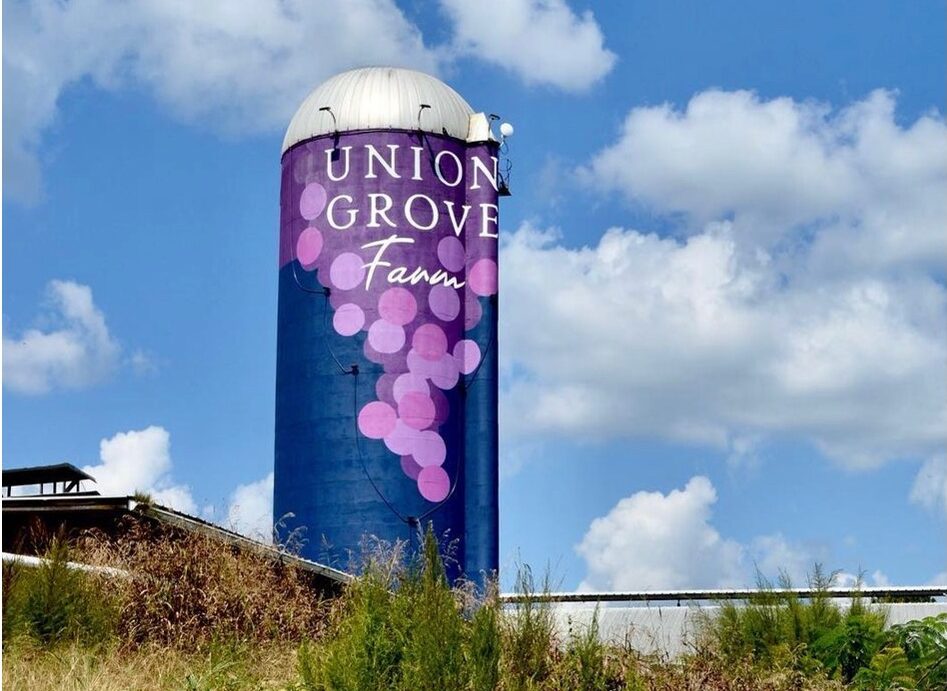
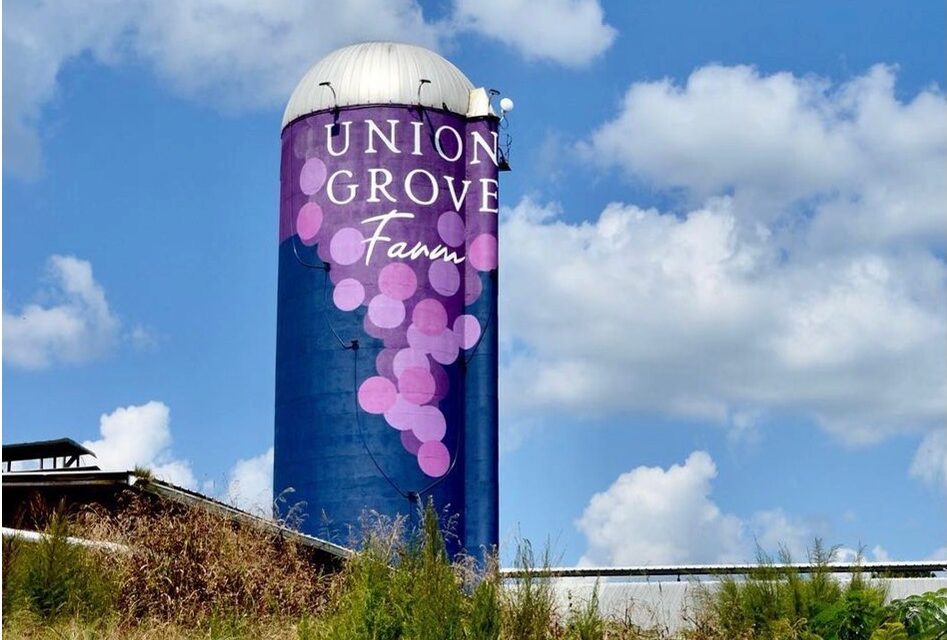
Triangle Land Conservancy has filed a lawsuit against Union Grove Farm, alleging repeated violations to the nonprofit’s conservation easement.
The complaint targets Union Grove’s plans to build a “Farm Stage” on the land formerly occupied by Hillsborough’s Maple View Farm, as well as the continued construction of three roads on the property.
“We have been in protracted good-faith conversations with the owners of Union Grove Farm, but to no avail,” TLC Executive Director Sandy Sweitzer said in an August 18 release. “Their continued construction of three prohibited roads through hard-wood forests and their plans for a prohibited 2500-seat amphitheater clearly violate the terms of the easement.”
TLC’s 1998 easement works to preserve the open space character, agricultural productivity, and scenic qualities of the farmland. The lawsuit specifically asks Orange County’s Superior Court to order remediation of the prohibited roads and declare the amphitheater as an easement violation.
“[Union Grove has] been notified of the violations on multiple occasions and have been given more than the required time to remediate these violations,” Sweitzer continued. “So, as an accredited land trust, the next step in the easement violation process is for TLC to sue. We have no choice.”
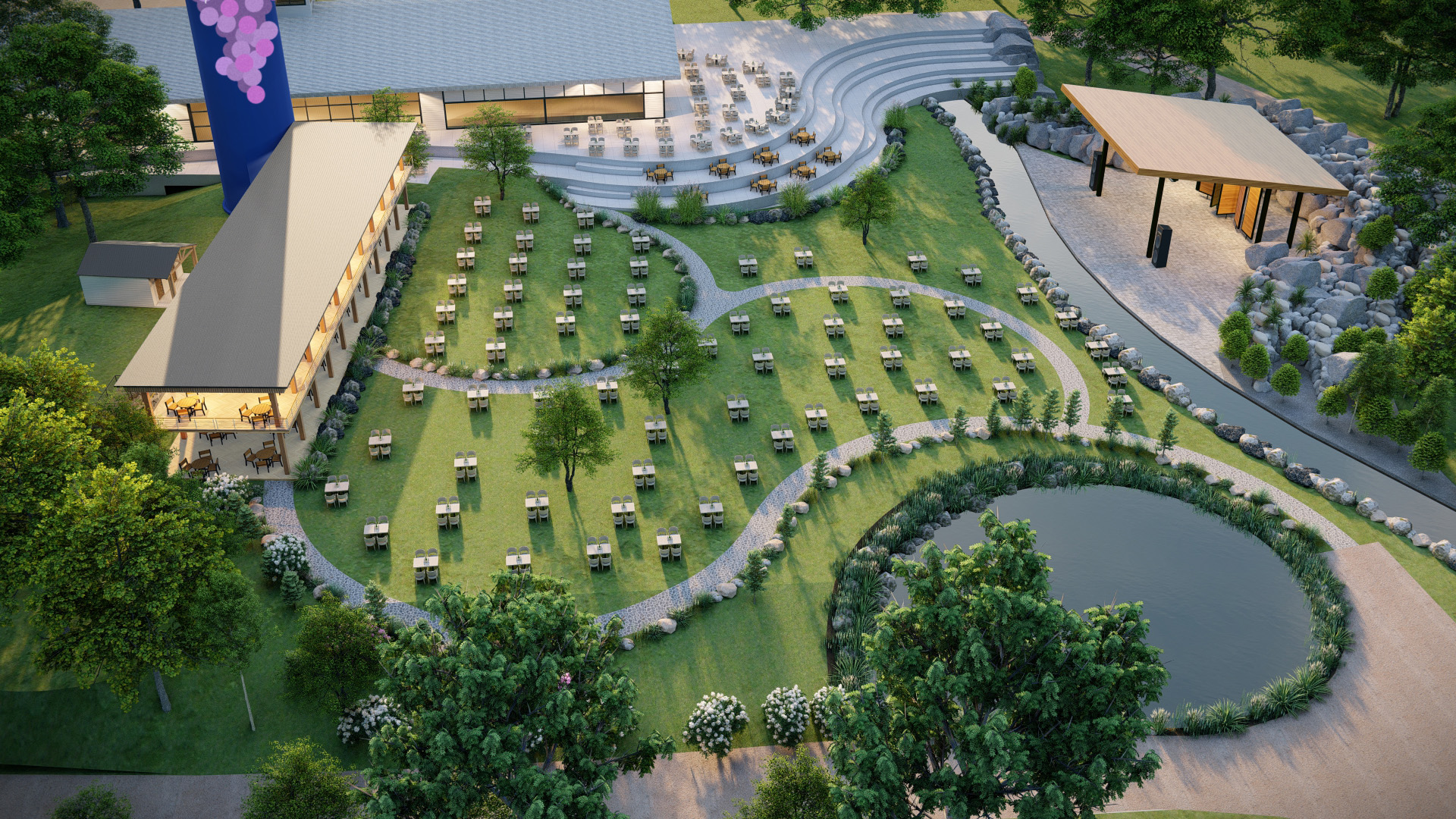
A rendering for the proposed Farm Stage, released July 3. It shows a covered performance area, a two-story pavilion for visitors, and a lawn with tables and chairs.(Image via Union Grove Farm.)
The lawsuit follows Union Grove’s plan to appeal an Orange County ruling that the stage did not qualify under the definition of agritourism and could not be built without zoning changes. Issued in June, the Final & Binding Determination letter did approve the farm’s plans for a culinary farm, distillery, and a “Center for Regenerative Agriculture.”
While state law exempts farm-related activities from county zoning rules, this does not apply to non-farm-related land uses even if they take place on farmland. Agritourism activities only qualify for the exemption if the farm setting is essential to the activity, and the county’s ruling deemed the proposed amphitheater as inconsistent with this definition.
TLC’s two-pronged approach to the lawsuit includes opposing the classification of the amphitheater as “agritourism” and also filing a civil action to declare how the stage violates the easement. The latter would prevent Union Grove from constructing the feature regardless of any agritourism designation.
“We have over 180 conservation easements across more than 8,000 acres in the Triangle and have never seen such egregious violations as these,” Sweitzer said. “As an accredited land trust, TLC has an obligation to take this next step.”
Union Grove’s hearing to appeal the county’s ruling is scheduled for October 8, according to the release. In July, Union Grove’s founder and owner Greg Bohlen called the stage component “critical” for supplementing and sustaining the farm’s agricultural operations through educational, entertainment, and recreational activities. The farm plans to highlight a more environmentally-friendly farming style free of pesticides, herbicides and insecticides and has already moved in grapevines and sheep as part of the effort.
Through a spokesperson, Union Grove Farm shared this statement with Chapelboro on Thursday, Aug. 21:
Union Grove Farm is disappointed by the actions of Triangle Land Conservancy (TLC) in filing its lawsuit alleging violations of the Conservation Easement on our property, as well as their opposition to agritourism plans that support the mission of our working regenerative farm. This is a dramatic change from TLC’s board of directors’ initial written approval in March 2024 allowing us to expand the Farm envelope to allow for agritourism plans. Despite their change in position, we have honored the terms of our easement agreement and are confident we will prevail as this case moves forward.
We are proud to have already created the third largest vineyard in North Carolina and the first certified Regenified table grape vineyard in the United States. We will continue to move forward with key projects that will help us educate the public on the important role regenerative agriculture plays in restoring ecological balance and improving food security by building more sustainable and resilient agricultural systems.
Editor’s Note: This story has been updated to provide a comment from Union Grove Farm.
Featured photo via Meredith Saybe/Union Grove Farm.
Chapelboro.com does not charge subscription fees, and you can directly support our efforts in local journalism here. Want more of what you see on Chapelboro? Let us bring free local news and community information to you by signing up for our newsletter.