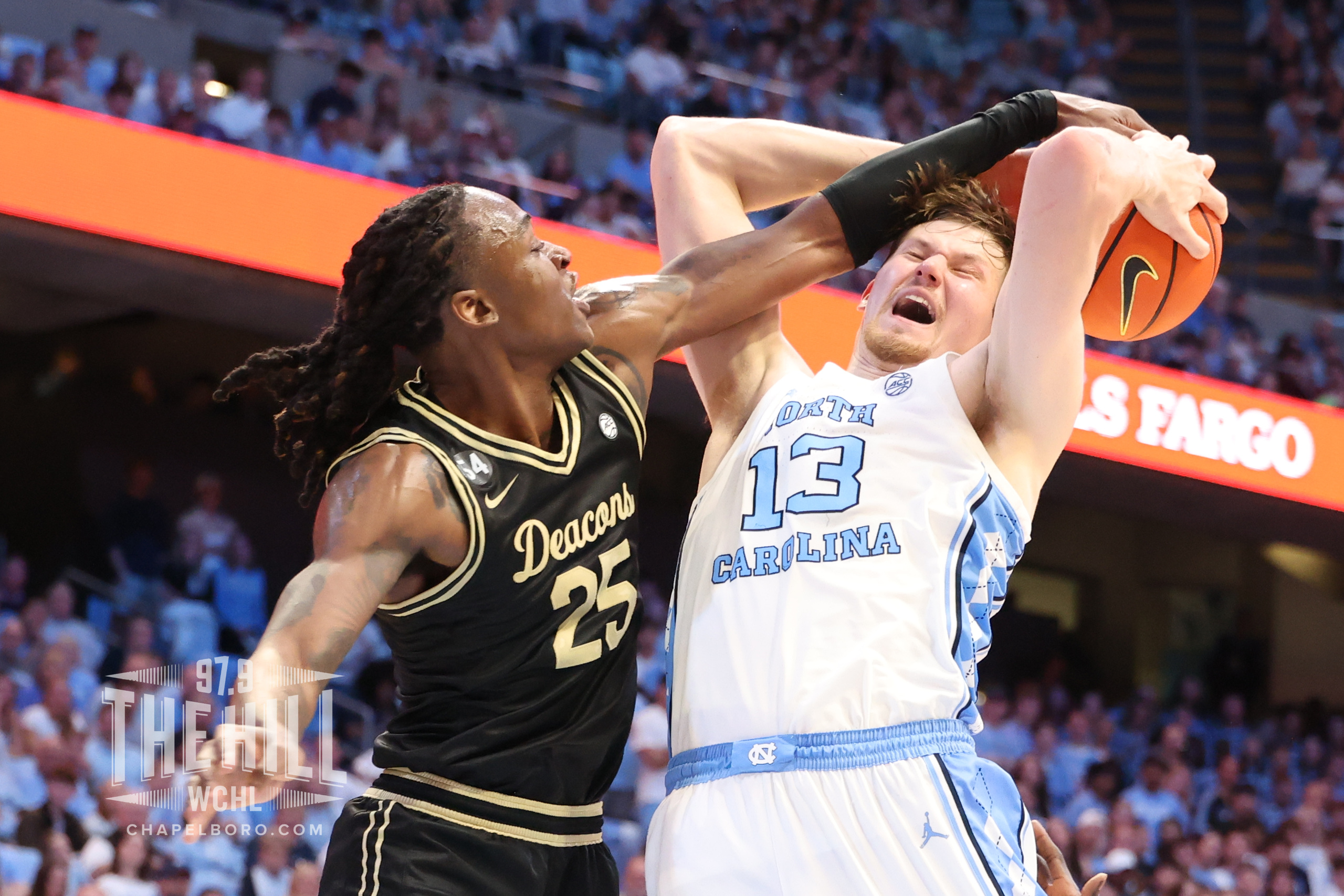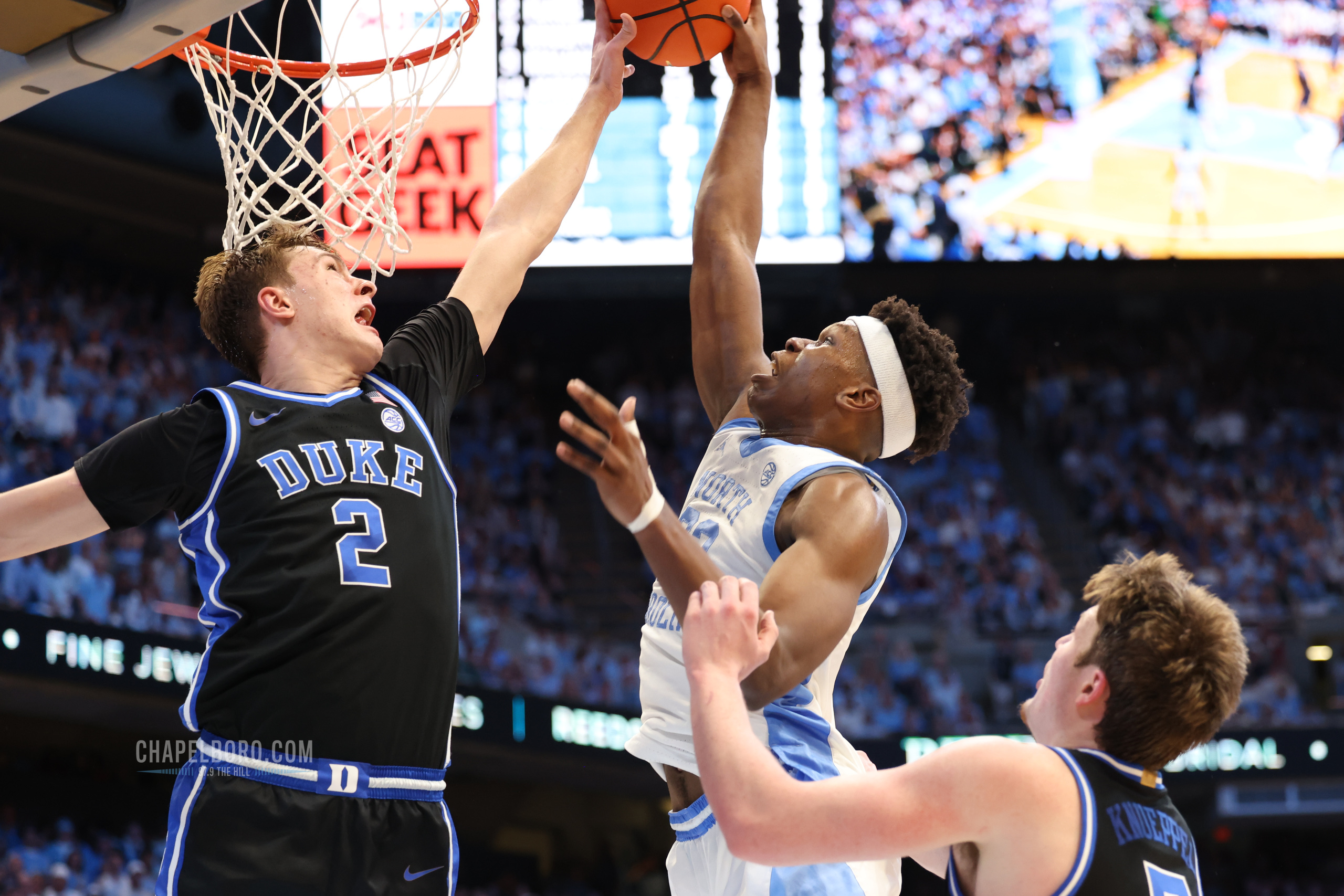
The Tar Heels return from California with their third and fourth defeats of a promising season that started 14-2.
Before losing to Stanford 95-90 on Wednesday, Carolina led for nearly 38 minutes and then succumbed to a late rally by the underdog Cardinal. In Saturday’s 84-78 loss to Cal, the score was tied just once, four minutes after tip-off, before the big underdog Bears eventually led by 20.
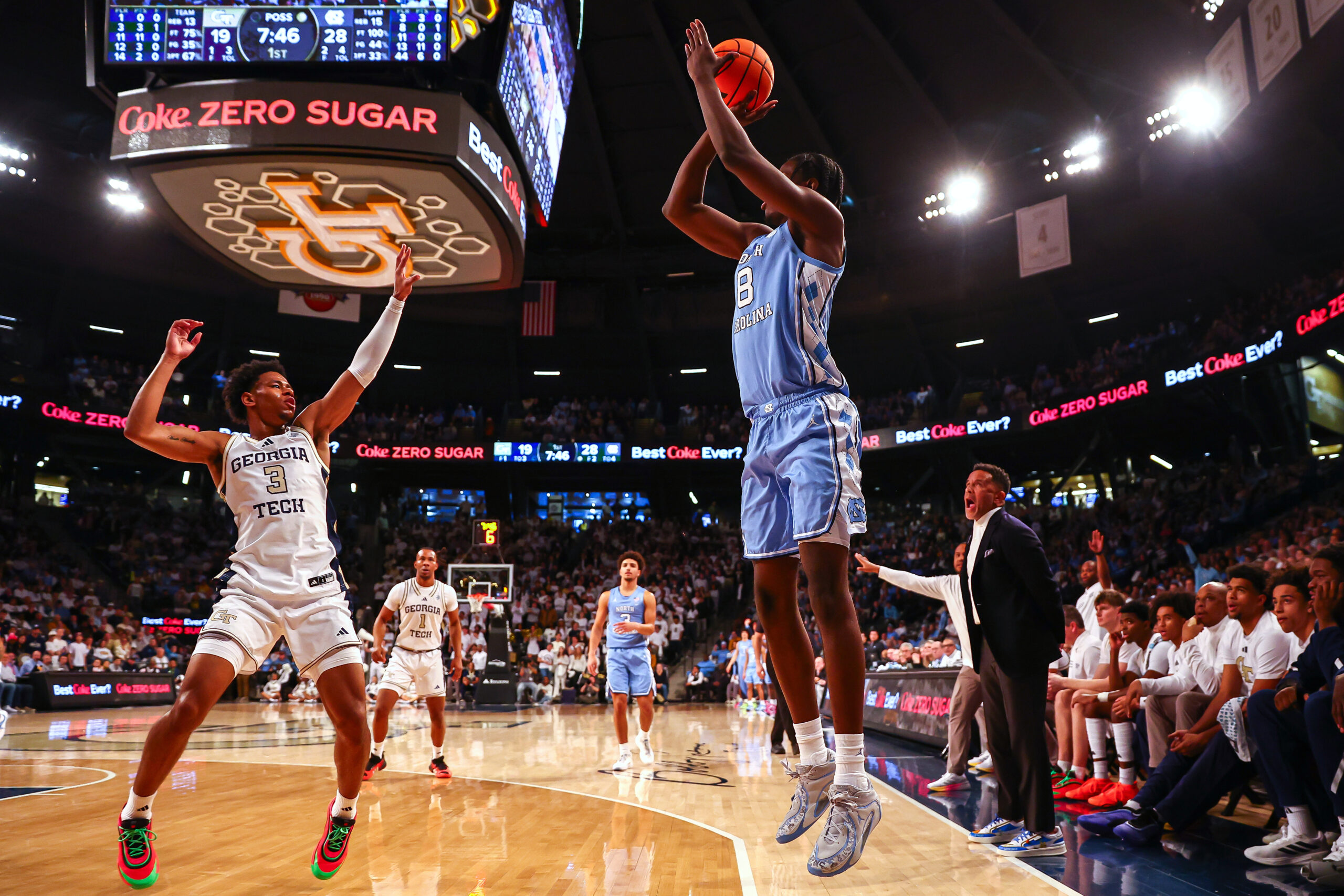
The similarities in both games: the Heels were blitzed from long range while playing much better defense around the basket. It followed a tendency that Carolina has played decent two-point defense while allowing one of the highest three-point percentages in the country.
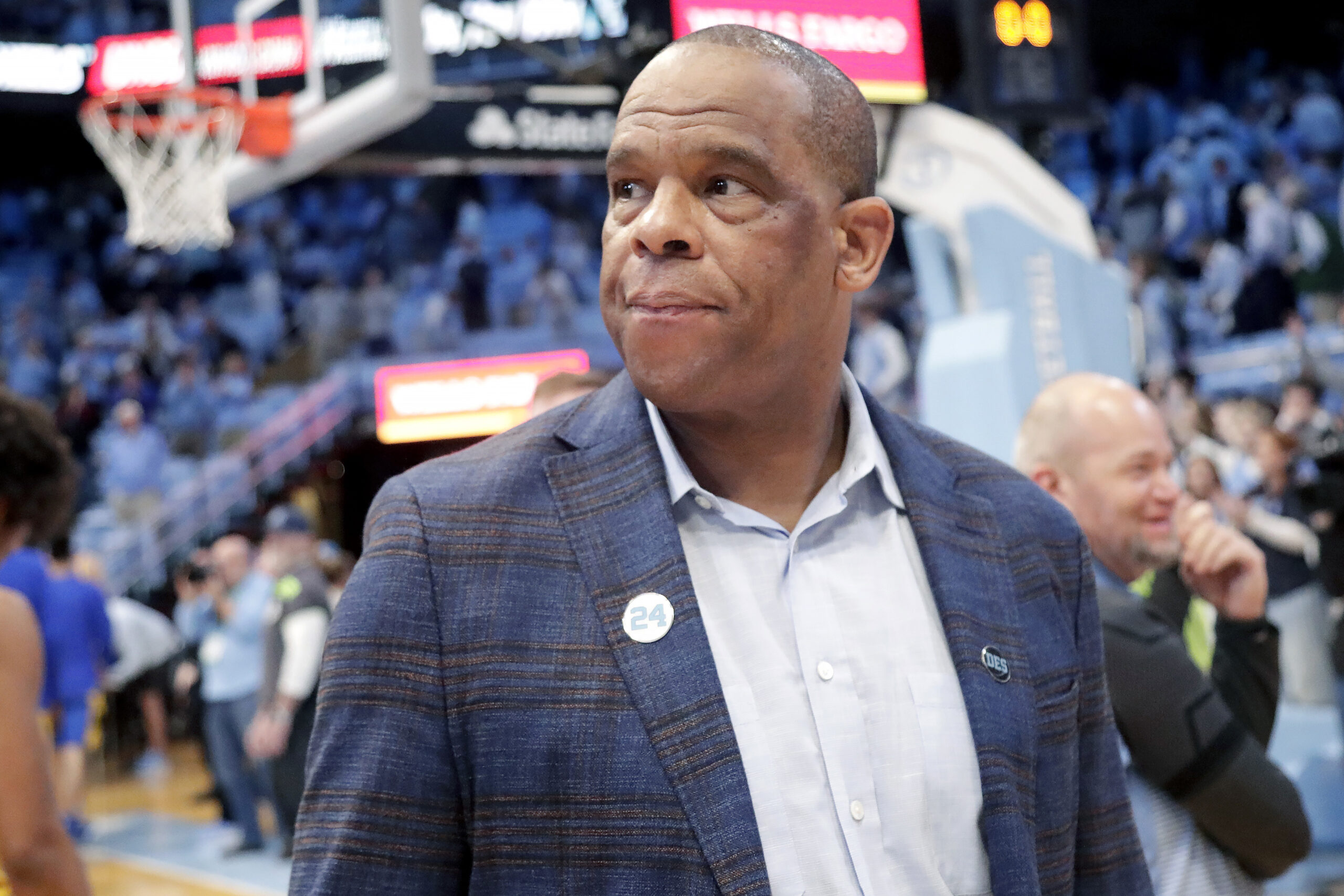
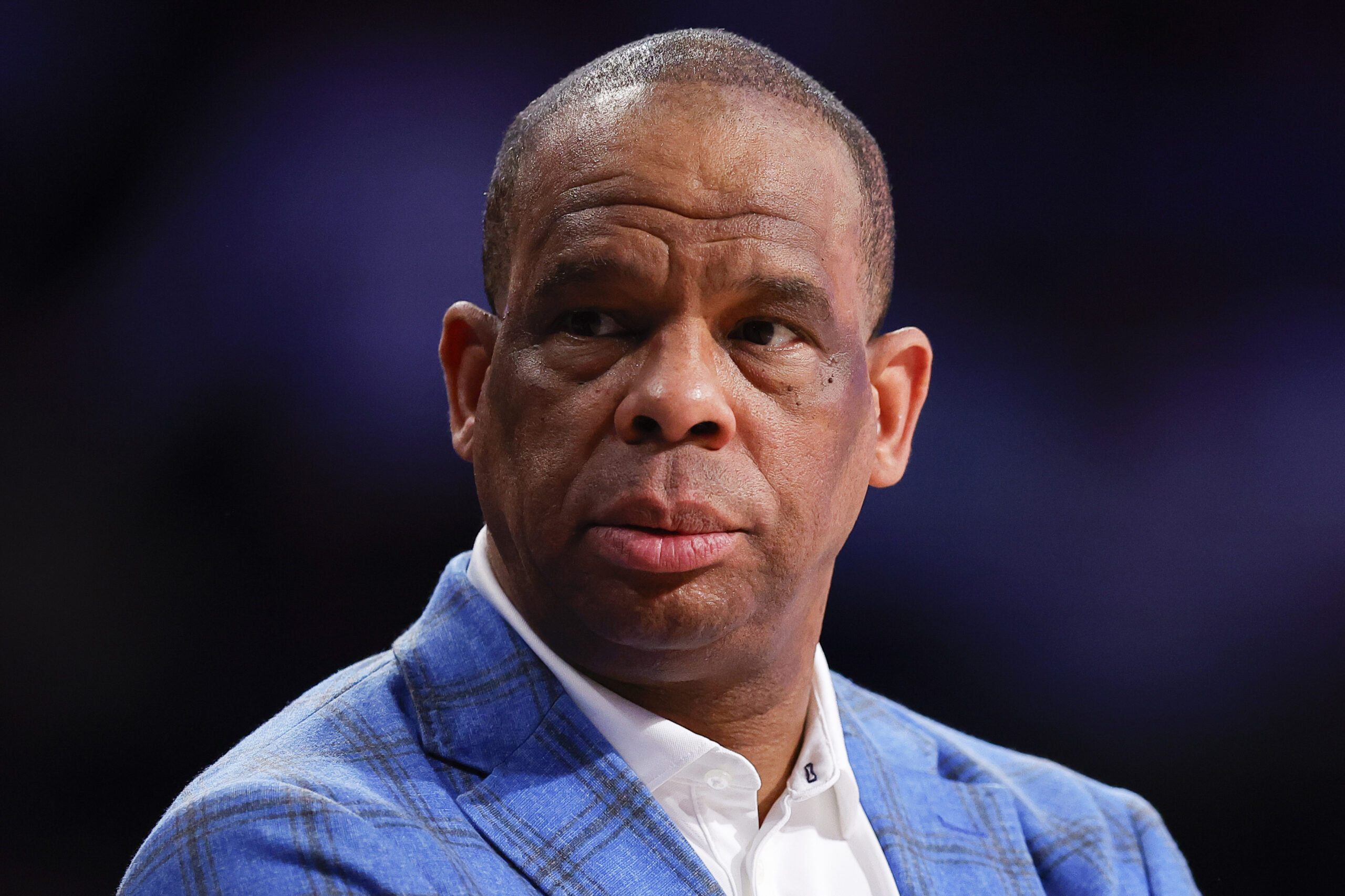
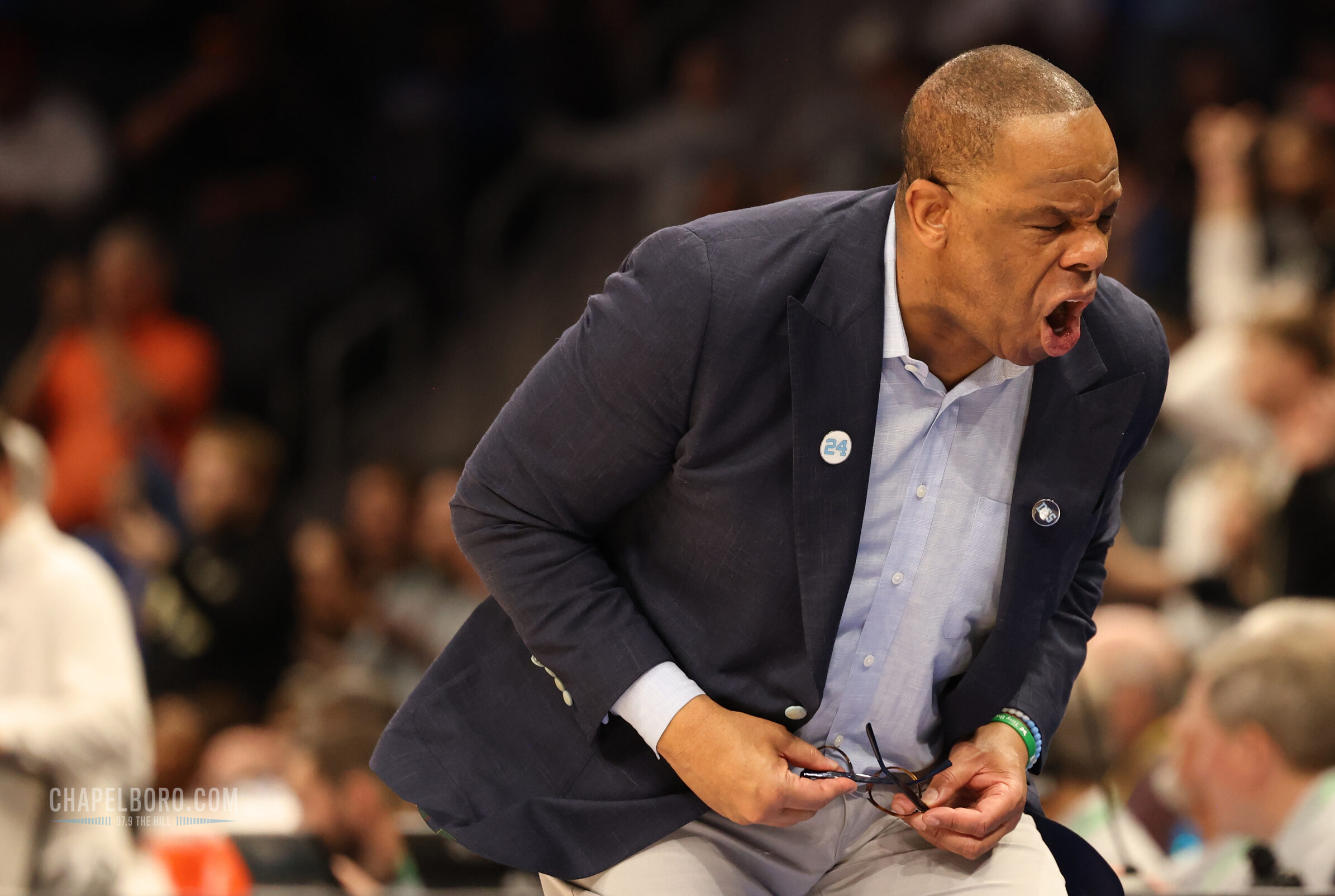
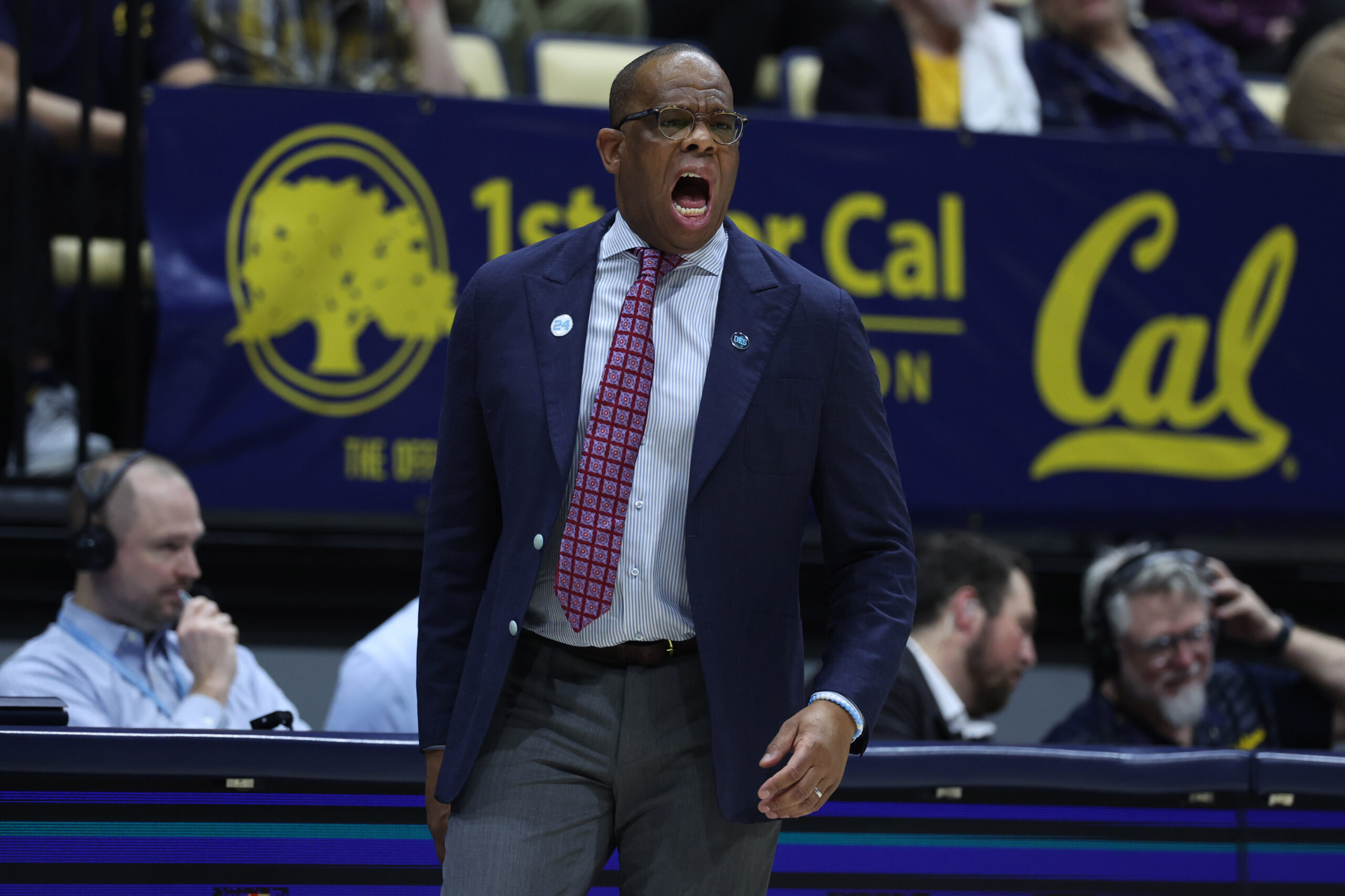
Three nights after Hubert Davis’ team was outscored 11-3 in the closing minutes, the UNC head coach was asked how it could possibly be guilty of giving up 54 points in the first half of what had shaped up as a must-win contest.
“I don’t know,” he answered.
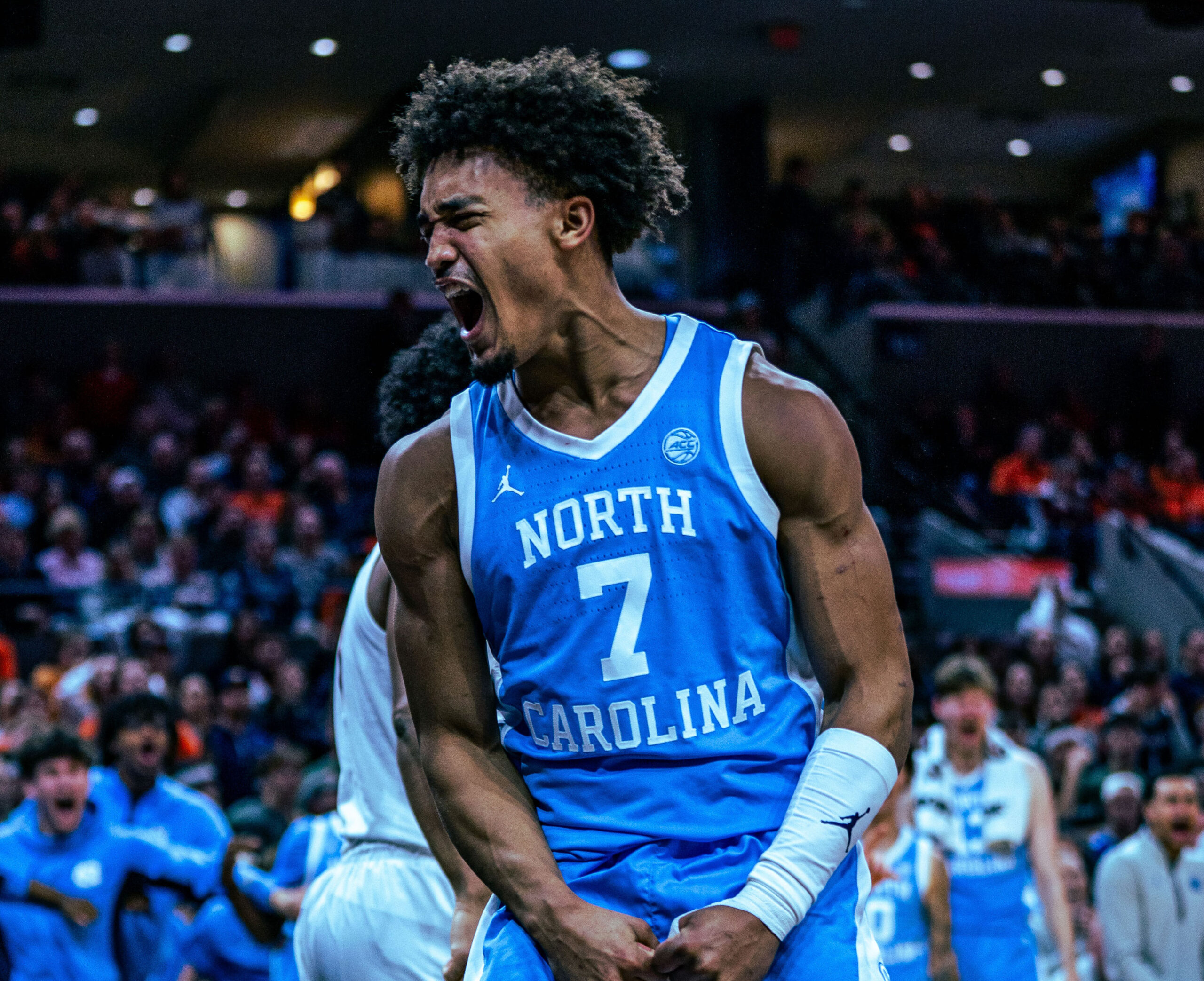
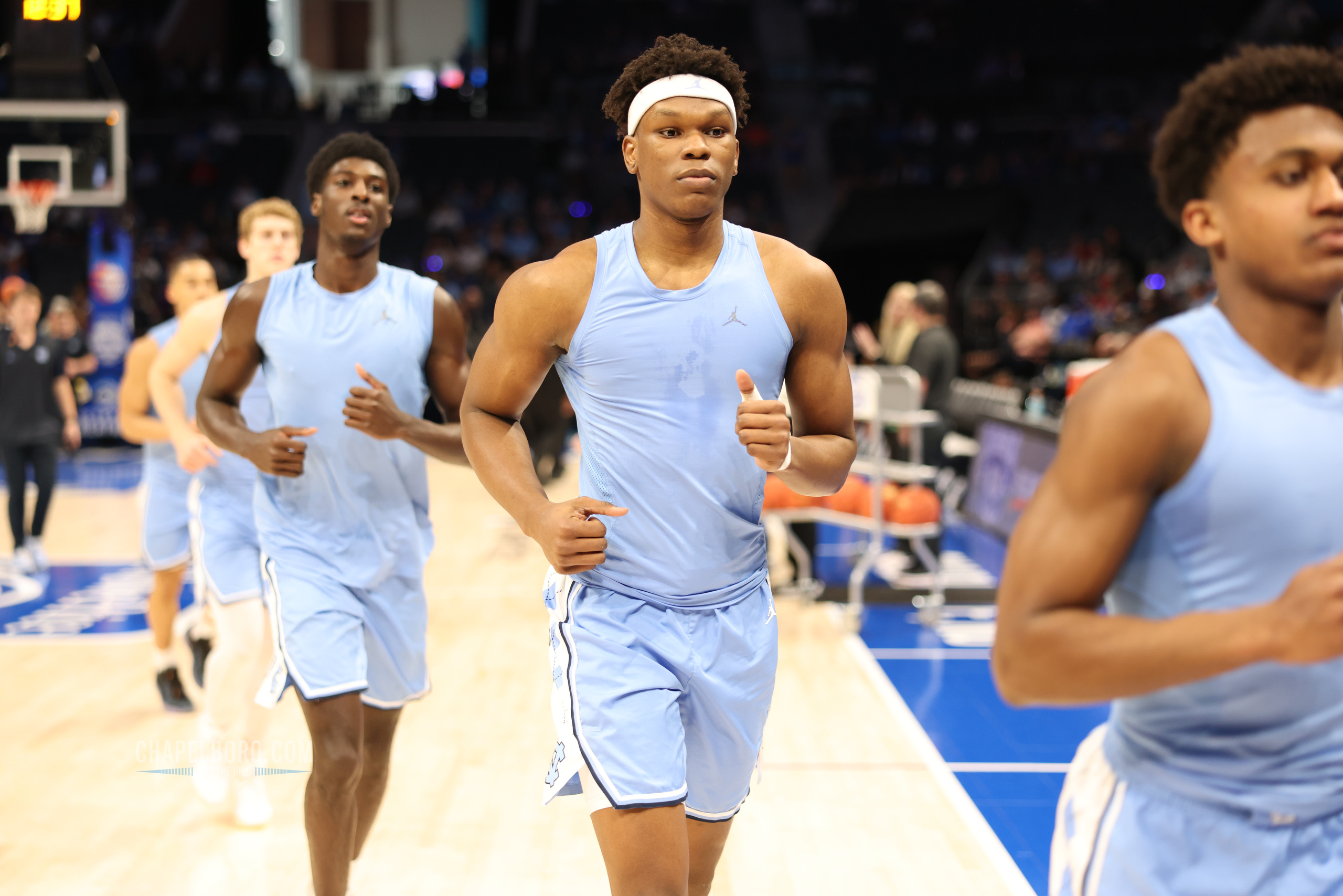
Those three words triggered widespread social media flak, from 30-year-old former star players to 80-year-old media alumni who have watched the Tar Heels but have never seen anything quite like this. The irony goes back to last season, when the undersized Tar Heels got most of their scoring from a backcourt led by R.J. Davis, and Hubert set out to sign bulk in 7-foot talented transfer center Henri Veesaar and super skilled 6-foot-10 freshman forward Caleb Wilson.
While Veesaar and Wilson are averaging 64 percent from the floor in five ACC games, the best backcourt shooter is Seth Trimble at 47 percent. Other perimeter contributors: Luka Bogavac (33 percent), Kyan Evans (27 percent), Derek Dixon (28 percent) and Johnathan Powell (46 percent). And despite their defense being heralded earlier in the year, the two star bigs have their fair share of blame in the recent inability to defend three-point shots.
Making matters more challenging is Carolina being one of the worst free throw shooting teams in the ACC – their 67 percent is third-lowest in the conference and is worse than opponents’ 70 percent at the line when playing the Heels. If that trend continues as the competition stiffens with 15 more conference games ahead, winning will get even more difficult.
Even when the Heels were not lacking in effort, their mistakes on defense resulted in opposing shooters getting great looks. Stanford and Cal made 28 shots from beyond the arc compared to 15 for the Heels — creating a differential of 39 points, often due to Carolina’s faulty execution against screens and poor closeouts on the shooters.
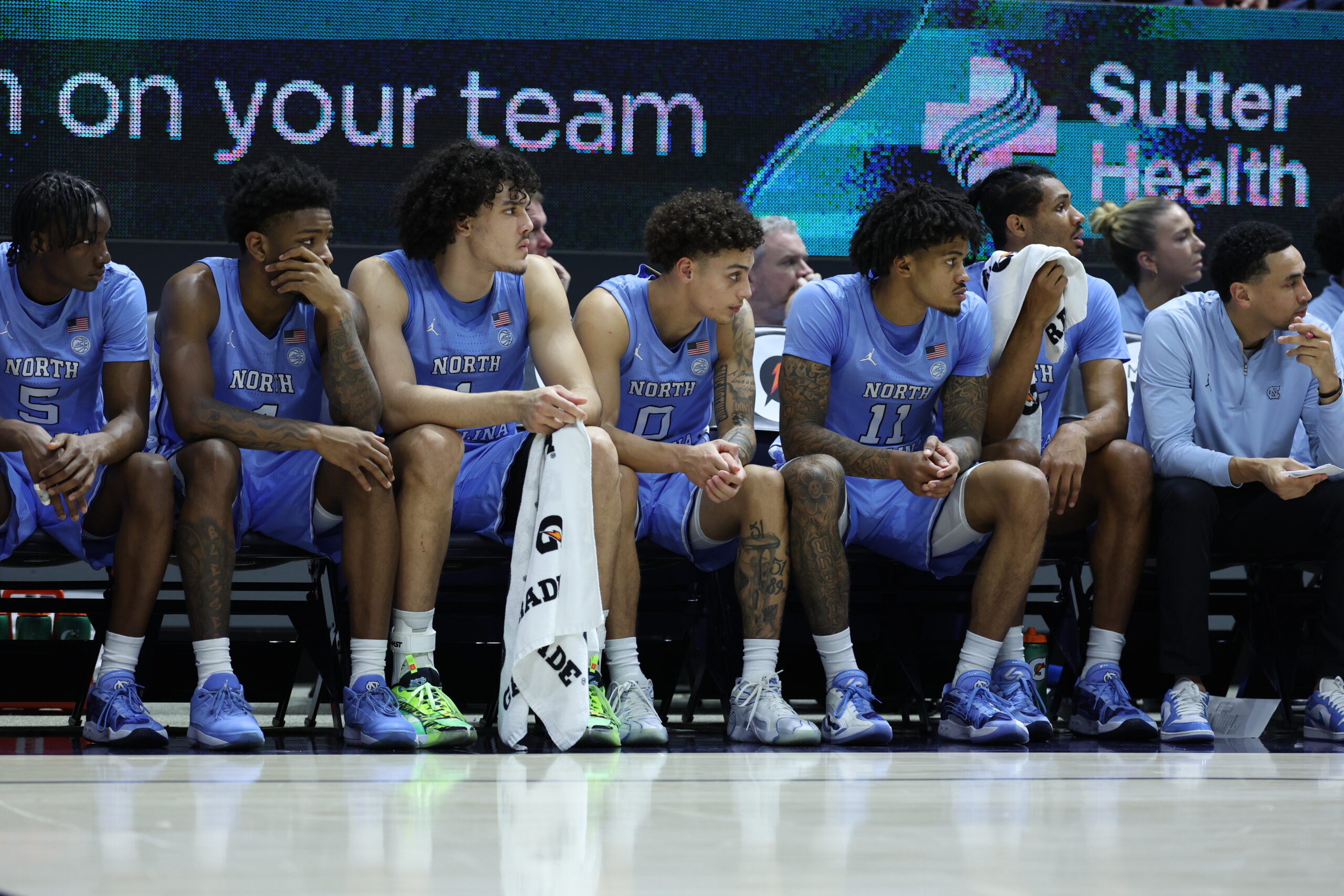
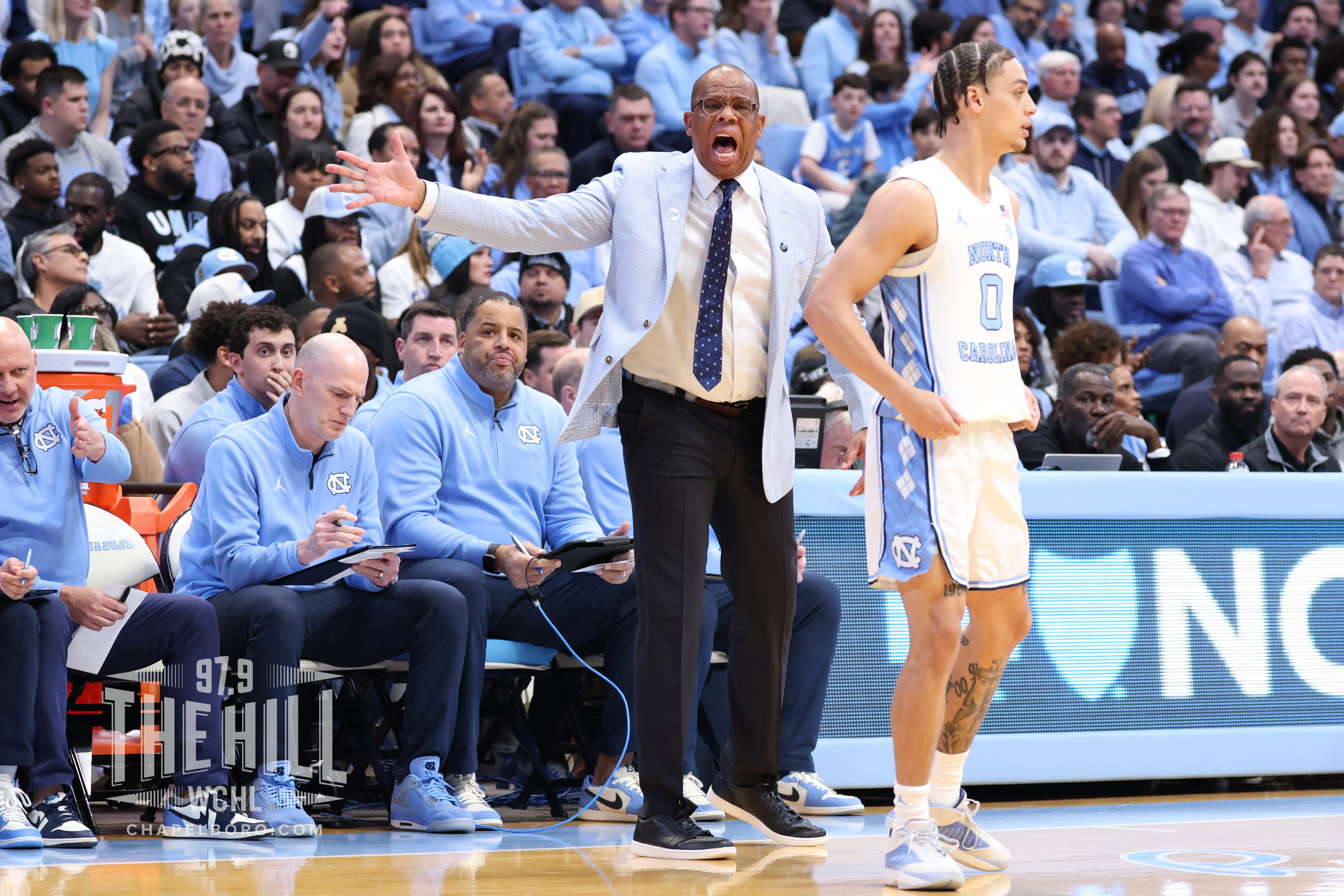
The North Carolina bench watches California during the second half of an NCAA college basketball game in Berkeley, Calif., Saturday, Jan. 17, 2026. (Photo via AP Photo/Jed Jacobsohn.)
Davis said the cross-country travel and four nights in hotel rooms had no bearing on his team’s poor play. “It doesn’t matter whether you’re in California or at home or wherever you are,” he said, “you’ve got an opportunity to compete and put on that jersey and be a part of this program; your job and responsibility and expectations to give everything you’ve got out there on the floor the entire game.”
The head coach was asked how to move forward from the poor finish against Stanford and the bad start against Cal, including changing lineups and juggling the minutes played beyond Wilson, Veesaar and Trimble. Freshman Dixon started at point guard and played 29 minutes against the Bears while hitting four three-pointers, while regular starter Evans played only 11 minutes and went scoreless. Jonathan Powell’s minutes have also dropped, perhaps due to poor shot selection and defensive gaffes. Bogavac got more minutes than wing player Jarin Stevenson and shot better.
“Nothing more than just tried to change some rotations a little bit,” Davis said of the split in minutes. “Zayden High had some more opportunities today, Jayden Young continues to improve. I played 10 guys and 10 guys deserved to play. And I thought Derek in his first start — which means nothing to me — looked very confident and comfortable out there.
“There’s a number of different things,” Hubert added. “I think you can move forward from the first 25 minutes. It is really the first time that this team has hit a little adversity. And one of the things that you have to understand is: every team goes through it — whether at the beginning of the year, middle of the year, or towards the end of the year. And you have to find a way to fight through it. This team has great leadership, great kids… I love coaching them. And at the end of the day we’ll be there.”
Dean Smith and Roy Williams also loved their players but held them more accountable than Davis, who has called himself a missionary to help young people in life as much as in basketball. While the five-year head coach gets fiery on the sidelines, he tends to keep anything other than positive feedback away from microphones. Maybe that’s helpful for the team, but adds fuel to the fire when it comes to speculation about why he’s using which players when in games.
The Tar Heels (2-3 in ACC play) came home to face Notre Dame (1-4) this week before going to Virginia (5-1) on Saturday. With Duke and Clemson both 6-0 in the ACC, the Tar Heels will have to heed Davis’ words and balance their scoring and — especially — fix what is broken on defense if they hope to keep their national standing and prove that their 12-1 start was more a product of wins over Kansas, Kentucky and Ohio State than a typically soft non-conference schedule.
“You can’t show up and expect to win in this league any given night without putting in that kind of effort, that kind of energy,” said Tar Heel Sports Network analyst and former ACC Player of the Year Tyler Zeller on Saturday. “And it goes across the board. There’s no single guy who wasn’t playing hard. I think they were trying, but I think you’ve gotta take it to another level to be able to compete and win at a high level each and every night.
“And for most of this game and the Stanford game, you don’t feel connected in that way,” Zeller added. “And you felt like the effort was there again, the last eight to 10 minutes… but not enough to be able to win an ACC game on the road and [at] a difficult place to play. Hopefully, they take that from here and now [the team] can continue to grow and get better — because we’ve still gotta go to Miami, to Syracuse, [and] to Duke. There are a lot of tough games left and that doesn’t include those home games we have that will be difficult.”
Zeller is right, and where this season might go has so many factors for UNC. It is still a virtually new team with its only veteran still fully recovering from a fractured left arm and with some erratic players not adjusting to an erratic rotation by Davis. An edgy alumni base and fans fed up with seeing the program’s consistency slip — and frustrated after the mess of a football season — ought to remember how revenue sharing, the transfer portal and NIL makes the job harder than ever before on all coaches.
Davis may not be the best coach to correct what seems to be going south for these Tar Heels in 2026, but he still needs a chance to turn this particular ship in the right direction. Taking the entire season into account, UNC is 14-4 and returning home from a long road trip. Whether this rough patch continues is up to the coaching staff and their players.
Featured photo via AP Photo/Jed Jacobsohn.
 Art Chansky is a veteran journalist who has written ten books, including best-sellers “Game Changers,” “Blue Bloods,” and “The Dean’s List.” He has contributed to WCHL for decades, having made his first appearance as a student in 1971. His “Sports Notebook” commentary airs daily on the 97.9 The Hill WCHL and his “Art’s Angle” opinion column runs weekly on Chapelboro.
Chapelboro.com does not charge subscription fees, and you can directly support our efforts in local journalism here. Want more of what you see on Chapelboro? Let us bring free local news and community information to you by signing up for our newsletter.