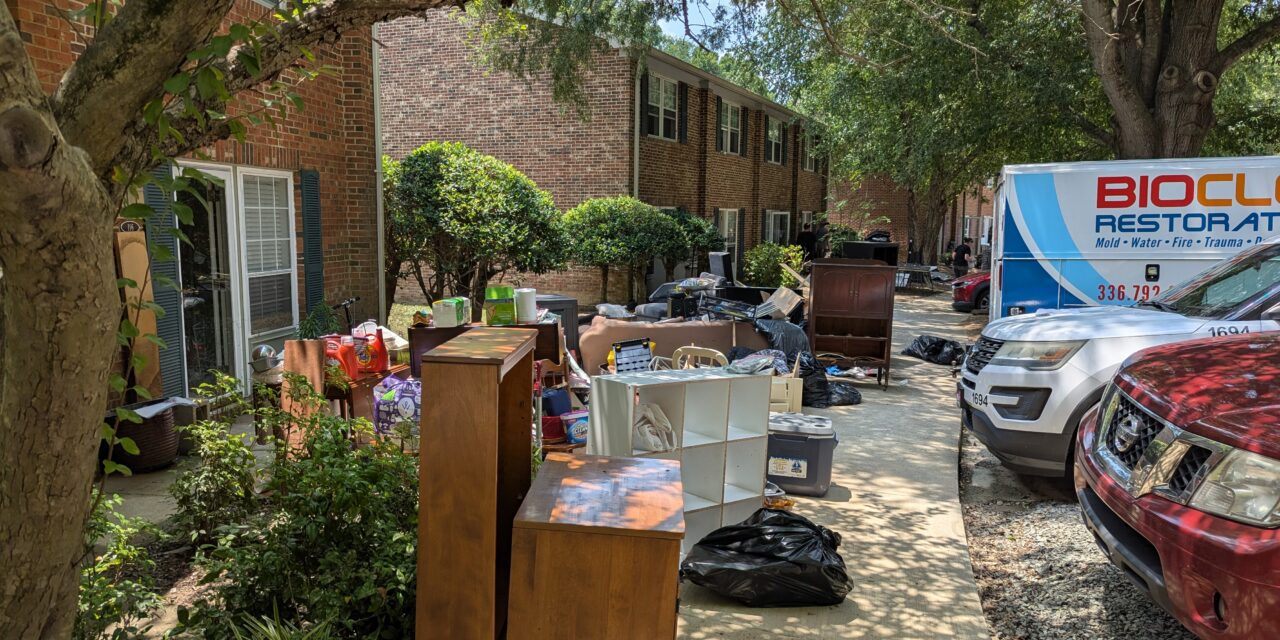
It has been just over a year since Tropical Depression Chantal descended on the community, flooding homes and businesses in Chapel Hill, Carrboro and Hillsborough. Orange County Emergency Services Director Kirby Saunders joined 97.9 The Hill’s Brighton McConnell on Tuesday, June 7, to reflect on the county’s initial response to the floods, the community’s recovery efforts, and how local officials are preparing for future incidents.
Here are some highlights from Saunders’ comments, which have been lightly edited for clarity:
On the unexpected nature of the flooding and need for response
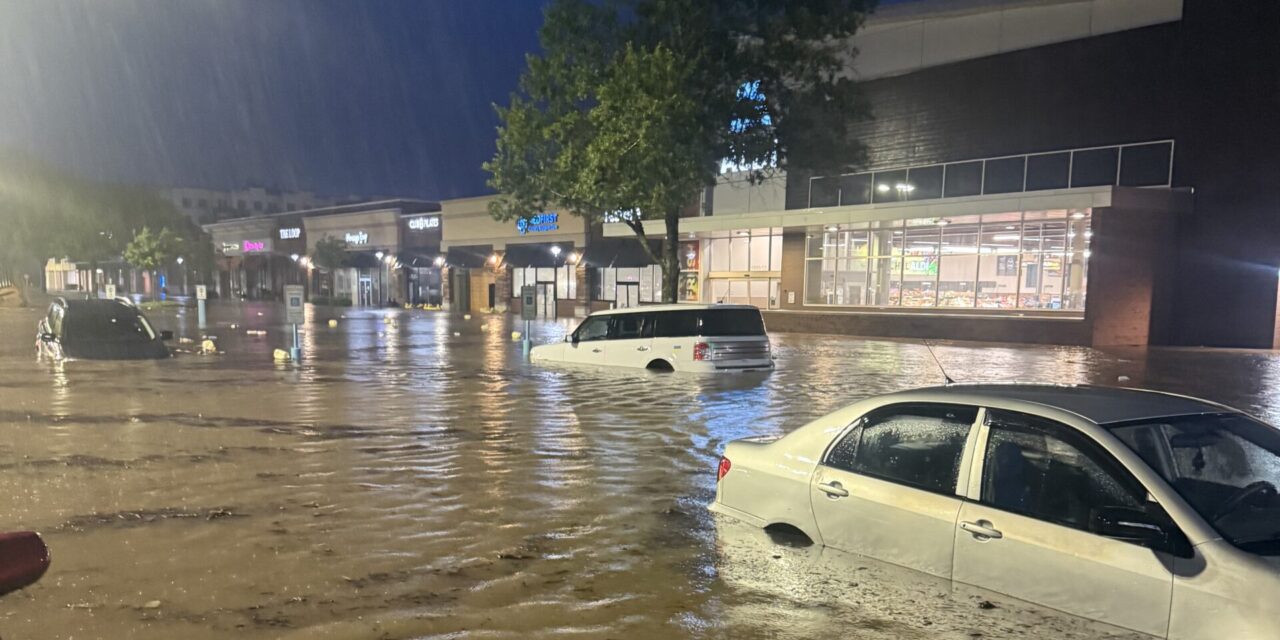
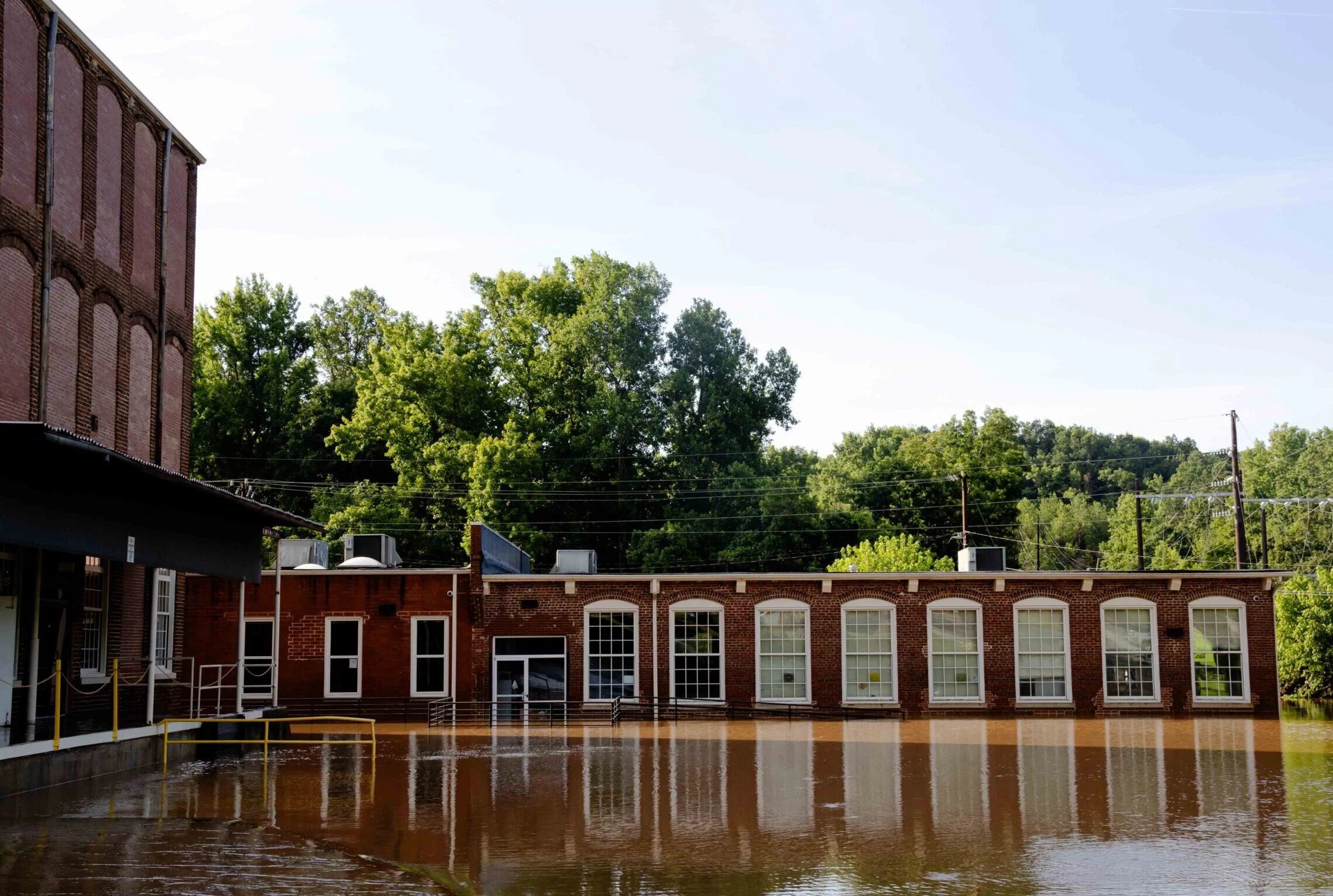
I think the first thing that comes to my mind is speed. The speed in which the storm impacted our community was unprecedented for us. We had monitored the remnants of Chantal coming our way for days and had been monitoring every forecast hour by hour on that Sunday. We were forecasted for three as much worst case scenario of five inches. That changed drastically in about 30 minutes. The speed in which the rain came and the impacts occurred, and the monumental lift it took to pivot our approach, meaning to activate our emergency operations center to surge up resources and swift water teams, it was almost impossible to meet the speed at which the water was moving, metaphorically and physically. The one thing that sticks with me is the speed at which conditions changed. Not just emergency response personnel, emergency managers, but those sitting in flood waters and watching their properties be consumed or surrounded by water so fast.
On the amount of 911 calls received by the county the night of July 6, 2025
We received almost 8,000 911 calls in that immediate period. There were over 2,000 emergency incidents on that night. It was one of the busiest in the county’s history in the 911 center. We were staffed as a normal shift in 911, and so when the volume of calls continued to pour in and grow and grow and grow, 60% [of the 8,000 calls] occurred in about a three hour period of time. That takes a burden.
Out of the 8,000, about 400 of those calls went what we call ‘abandoned,’ meaning either someone hung up before we answered it, or we got rolled over or got disconnected. There’s a sense of responsibility ingrained in all of us in public safety that when someone calls for help, we’re gonna go, no matter what it takes to get there. And in the 911 space we don’t like the word abandoned. That’s the technical definition, but we really feel that as a sense of abandonment. And so we were processing a lot of calls while we’re also making sure that we call every one of those 400 or so back throughout that period of time. That takes a toll emotionally, to know that someone called for help and for whatever reason, you weren’t able to get to them fast enough or answer the call, not knowing what was on the other side of that call and that request for help.
North Carolina was one of the first adopters of the next-gen 911 system. There’s only a handful of states that have included [it at] all their 911 centers in the entire state. North Carolina is one of those. That allowed those calls that were perhaps not answered by us to roll over to another 911 center. That was impactful during [Hurricane] Helene, but also impactful during Chantal for us.
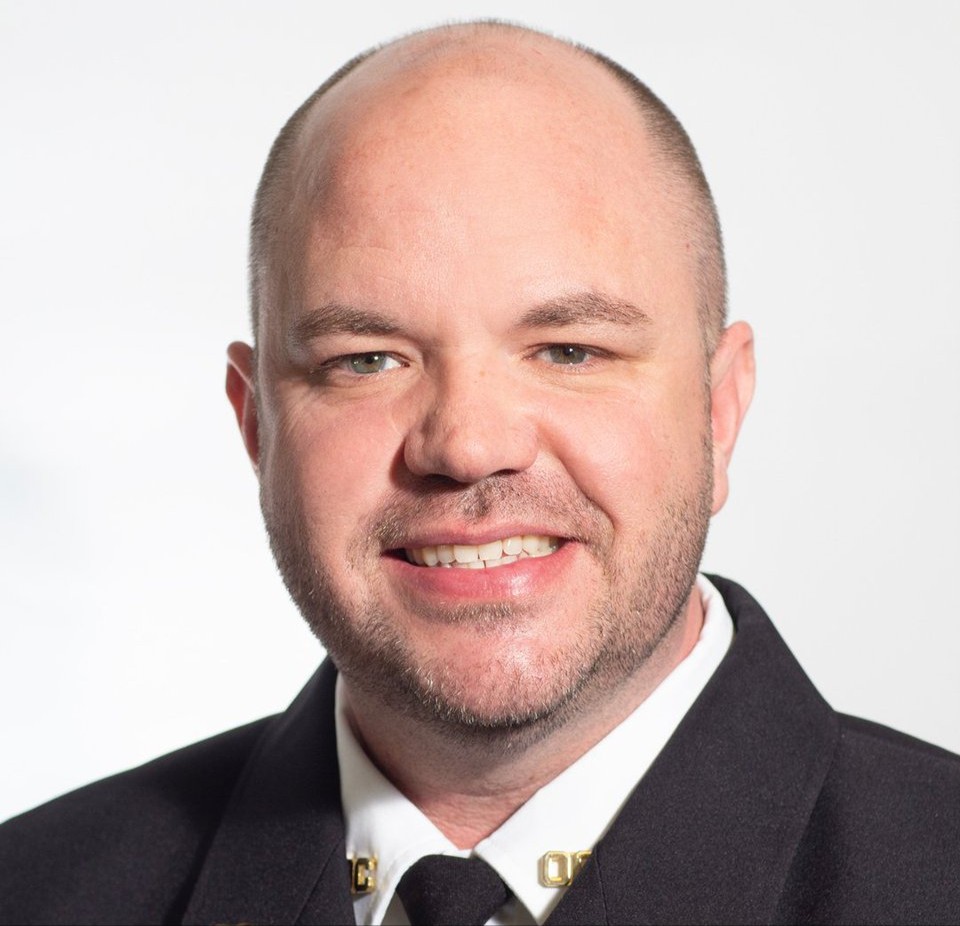
Kirby Saunders, Emergency Services Director. (Photo via the Orange County government.)
On lessons learned after responding to Chantal
I’m a firm believer that every challenge presents an opportunity. I believe that through struggle we find growth. Certainly we had a challenge. It was overwhelming. It did test our systems and our capabilities and our plans, and by-and-large, a lot of things worked very well. There were quite a few things that we learned that we didn’t anticipate.
We were not very fast in alert and warning, and that primarily comes from our ability to detect flash flood events. We largely rely on [the] Weather Service and weather forecasters to give us that. In Orange County, we only have one river that’s forecasted, and that’s the Eno River in Hillsborough. We don’t have a daily forecast that says ‘this is what the river level is going to be,’ even with a storm coming. It’s all dependent on flash flooding. That generates a lot of our challenges here in our community. We have relied heavily on the USGS’ gauges that are throughout our community. One on the Eno failed mid-storm, so we lost all visibility of what the level was, and it didn’t come back on until the next morning after sunrise.
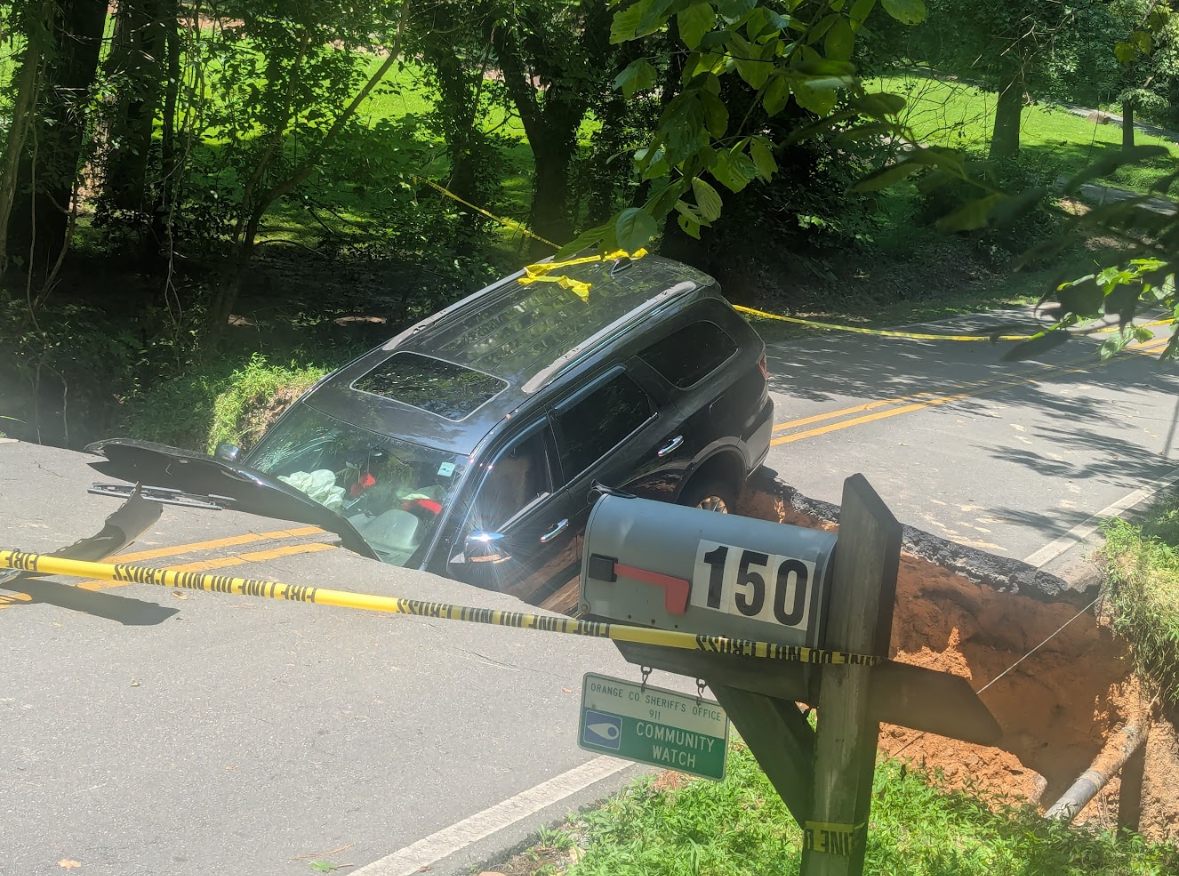
One of the biggest challenges is by the time we realized flooding was impacting these communities, the access routes had already been cut off. It required boats to even check if people need [to be] rescued. By that time, uh, it’s really too late to do any proactive evacuations. We are heavily focused on changing that.
On steps being taken to improve the county’s flood response
[Failed gauges] require us to send people to [physically] look at and see where the water is, and by that time, people’s homes could be impacted. It gives us no time to alert people and warn people and tell them to evacuate. We have pivoted funds in [the] last fiscal years, money in our department, to purchase three storm gauges, and we recently received a grant from the Duke Energy Foundation to purchase [an] additional three storm gauges. That’s being done in collaboration with our partners in Carrboro and Chapel Hill to improve our monitoring. Our goal is to hopefully make that automated. Especially in communities like Weatherhill Pointe that are at risk of flooding, we wanna build a network of these gauges. If the water gets to this [point] before it’s flooding your home, we’re sending alerts to that community.
There’s about 150 organizations that are involved in our county’s community response to a disaster or emergency of that magnitude. We focus our planning efforts on the framework in which we coordinate, not necessarily ‘if this, then this’ type of planning, because inevitably when we do that, something’s gonna happen that we don’t have a plan for. Instead, we focus on the process and the framework for which we coordinate, collaborate, respond and recover together. We had already started the county’s first comprehensive emergency operations plan, which includes unincorporated Orange County, all of its municipalities, [and] the government framework to work together. We’d already started that work prior to when Chantal occurred.
On the personal burden for himself and other emergency responders
Most emergencies we respond to, we’re used to responding to someone else’s emergency and helping them in their most critical time of need. That’s what we do. That’s the calling that we answer. What’s unique about a natural threat and our disaster is we are responding to meet the community’s needs while also having our own needs. And so our response personnel, while they were responding to meet the community’s needs, we’re also concerned with their own properties, their own families that live in the community that were also impacted. It’s unique in that aspect that we were both part of the response, but also impacted by the event itself.
I was at home like many people, and it was tough for me because our first team in the Emergency operations center, we’re a small team. In an event like this, having the patience to know that this was not gonna be over in a matter of hours, this is gonna be a days long event, it’s a marathon and not a sprint. It took a lot of self-control for me to know that the best thing I could do on that Sunday night is to allow my initial team in to get operations going, and I could come in to back them up and relieve them Monday morning. That took a lot of self-control for me to do that. Knowing that I wanted to be there, I wanted to be helping, but I knew if I did that I would burn out, and we would have nobody for the next day or the next day or the next day.
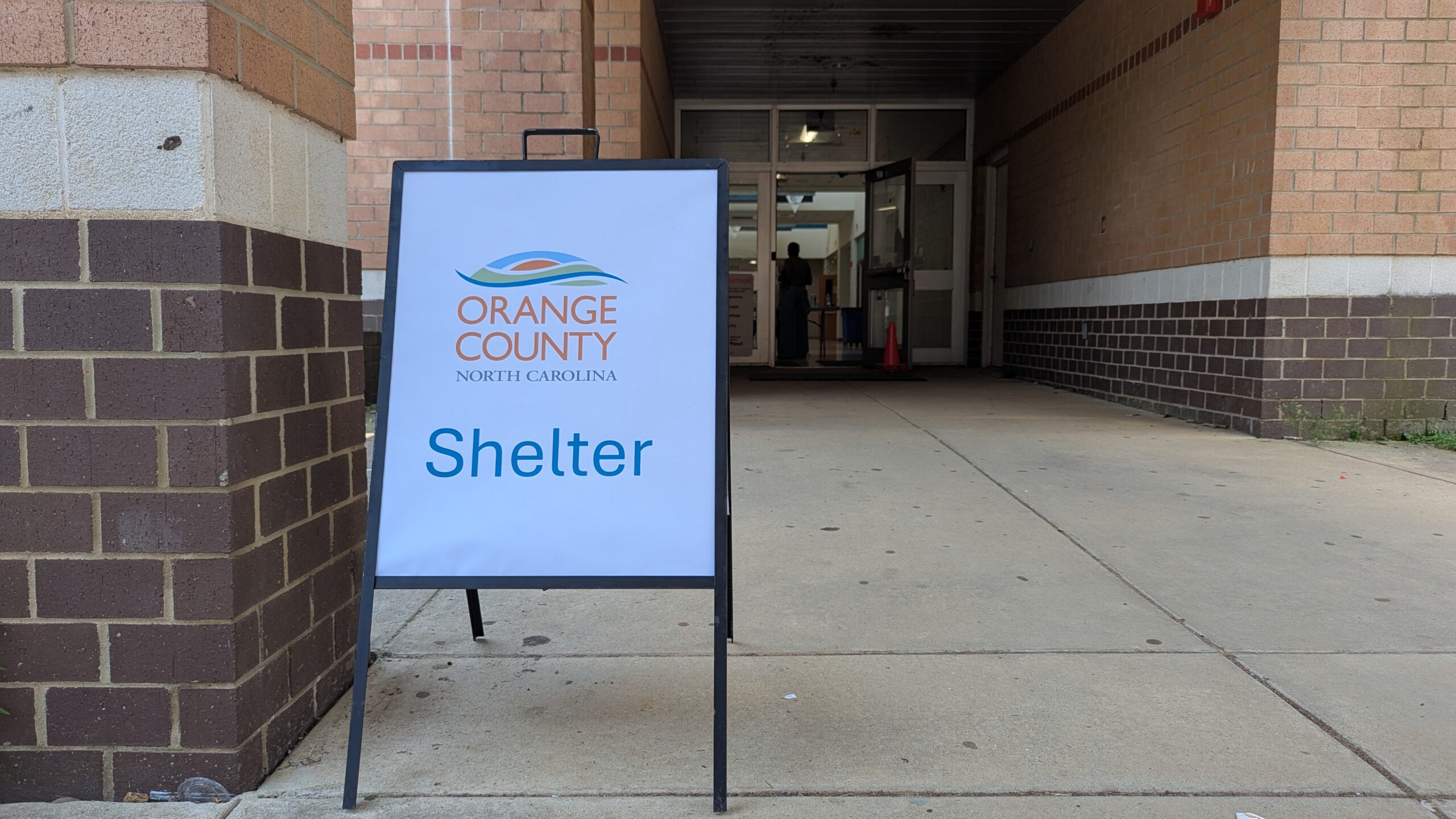
A sign directs visitors to the mass-care shelter at Smith Middle School for those displaced by the floodwaters of Tropical Storm Chantal. While the temporary shelter helped people in the week after Chantal, Orange County is hoping to develop a strategy for added transitional support for survivors of extreme weather events. (Photo by Brighton McConnell/Chapel Hill Media Group.)
On the burden placed on the wider community
Those who have survived [an] impactful event need more than just food and a shelter. They need spiritual, mental health support, [and] medical support. We cover the medical piece fairly well, but we need to do more work in the mental health and spiritual aspect and provide the whole care for the whole person while they’re there with us. We need to be able to build capabilities to do transitions from emergency sheltering to temporary housing or temporary transitional housing.
It takes years to build [those] capabilities. It takes the whole community, and so we’re continuing that work. It’s not something that happens overnight. We’ll continue to refine that and build that as we go. One of the key areas we also learned [in] was the value and the impact that the community has in itself and the volunteers, the organizations, hat really [are] the key to resiliency. We wanna do everything we can as part of that framework to empower that, not stop it, not slow it down, but how do we empower that? How do we support that? We’ll take care of the emergency needs. But how do we pivot as a community and support the natural human instinct to help one another in our time of need?
On how community members can prepare for future floods
Flood risk is a national problem. It’s just not an Orange County problem or North Carolina problem. It is the number one most costly natural disaster that occurs every year. [It can be] a temporary year or two long impact, or it can damage the rest of your life. Impact and flood insurance can help with that, particularly people who do not live in high risk flood areas, the flood mapped areas, if you will, it’s relatively affordable. Most people are not aware [of] this, but you’re 27 times more likely to experience a flood than you are a fire. Very few people have flood insurance. A lot [of people] don’t think it can happen to them. They don’t think they need it, or their mortgage doesn’t require them to have it because they don’t live in a flood mapped area.
The takeaway message is, if you live where it rains, you live where it can flood. And Chantal proved that again and again and again to us. About 42% of the properties in Orange County that flooded were not within the special flood hazard areas. Explore flood insurance at the very minimum, review your homeowners or renter’s insurance policies to understand what it does and does not cover. Again, it can make the difference between a year-long impact or a lifetime of impacts.
Featured image via Brighton McConnell/Chapel Hill Media Group
Chapelboro.com does not charge subscription fees, and you can directly support our efforts in local journalism here. Want more of what you see on Chapelboro? Let us bring free local news and community information to you by signing up for our newsletter.