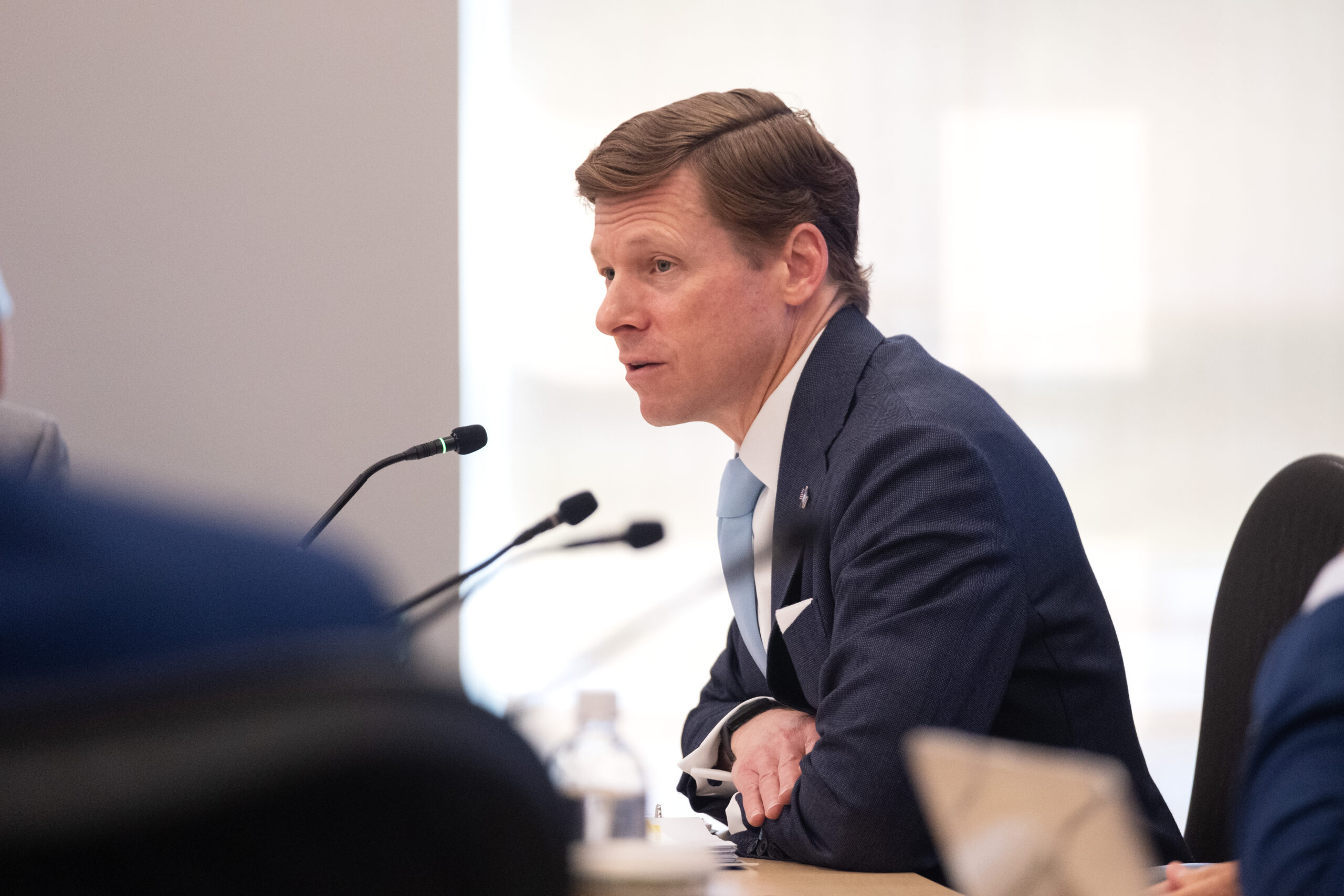
The UNC Faculty Executive Committee held its last meeting of the 2025-26 academic year on Friday and passed a pair of measures calling for clarity around the university’s recent creation — and subsequent investigation — of its School of Civic Life and Leadership.
The collective of current and former UNC faculty passed one resolution unanimously about clarity around school creation and the faculty input necessary to establish and approve schools. The other resolution, specifically calling on the School of Civic Life and Leadership investigation to be publicly shared with identifying information redacted, passed despite some council members voting no.
The move comes after a seven-month-long investigation into the school, nicknamed SCiLL, which began over allegations of skewed hiring practices and public discontent after several faculty resigned within the first two years of it offering courses. SCiLL was created by the UNC administration, with vocal support from the university’s Board of Trustees, in 2023 as a space to offer a degree built on teaching students how to discuss challenging issues in thoughtful manners and preparing them to engage in difficult discourse. In the messaging rollout of the school, however, it became championed as a way to improve free speech and provide space for conservative viewpoints some feel are quashed by campus culture.
In its March announcement of the SCiLL investigation’s completion, Chancellor Lee Roberts and the Board of Trustees shared their confidence in the school continuing operations while saying the full report would not be made public, citing sensitive employee information. Since then, the decision has drawn swift response from UNC faculty and students alike, with groups pushing for the redacted or un-redacted versions to be released for full transparency of what happened at the school. That included a demonstration organized by student groups on Friday before the Faculty Executive Committee meeting, where speakers criticized the university’s handling of the investigation.
The resolution on releasing the SCiLL report was brought by distinguished law professor Maxine Eichner and associate professor of medicine Dr. Jennifer McEntee, which called for a redacted version of the report to be shared in order to help the campus community “move forward with the transparency” all stakeholders deserve and to “lift the cloud these allegations cast” on the legitimacy of SCiLL.
“To be clear, there doesn’t need to be a public process and shouldn’t be a public process if this is a public record,” said Eichner when introducing the resolution. “Even if it’s not a public record…if all that prevents the administration from releasing this is attorney client privilege — which is what the chancellor said at your last meeting — he said he could waive it. Our own view is that the university, assuming privilege even applies, should be waiving that privilege. This is a record that concerns the entire community.”
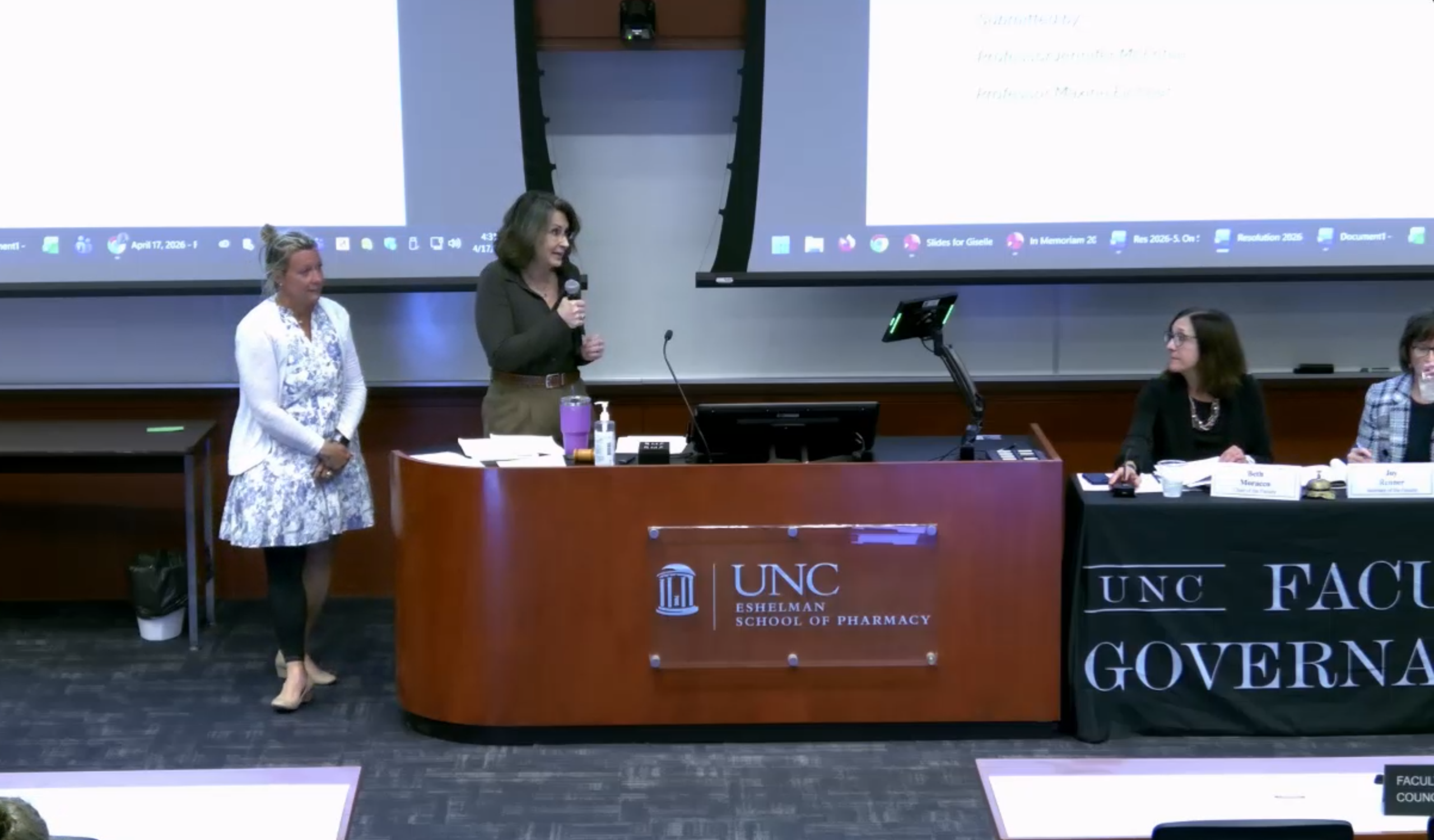
UNC law professor Maxine Eichner (standing, holding microphone) addresses the gathered faculty alongside Dr. Jennifer McEntee as the pair present a resolution on Friday, Apr. 17, 2026. (Photo via UNC-Chapel Hill/Panopto.)
One faculty member, drama professor Ray Dooley, expressed concerns on Friday about whether releasing the report public may still leave faculty with redacted information at risk of being exposed and sought after for retribution for interviewing during the probe. Some SCiLL faculty members told the News & Observer their concerns are releasing the full report could damage the school’s attempt to move forward or reflect poorly on UNC faculty who are not part of the school.
The other resolution, after some slight amendments, focused on clarifying the lack of faculty governance in the creation of SCiLL and whether “all schools are subject to the same policies and processes” in hiring, appointments, and curriculum development.
Provost Shares Remarks on Listening Tour, First Official Month
With Roberts having a scheduling conflict and being absent in the meeting, Provost Magnus Egerstedt took the microphone to share his thoughts and field questions from the faculty on Friday. Beyond deflecting one question about the aftermath of the SCiLL investigation — saying, “it’s almost pointless to talk – I cannot talk about anything having to do with current [litigation]” — he shared how he has been learning more about the UNC campus community and academic operations during a 90-day listening tour since formally becoming provost in March.
As part of those comments, Egerstedt shared his vision for shaping the role of provost around his skillsets and both UNC’s strengths and weaknesses.
“I am the bridge from faculty and students and the academic part of Carolina [to] the administration,” he said. “And the only way I can be an effective bridge is if people know who I am, and people have a close-working, trust-filled relationship with the people across campus.”
“And by the way,” Egerstedt added, “trust is not an email. Trust is not a speech. Trust is the daily grind of showing up and working together, and you have to build it over time.”
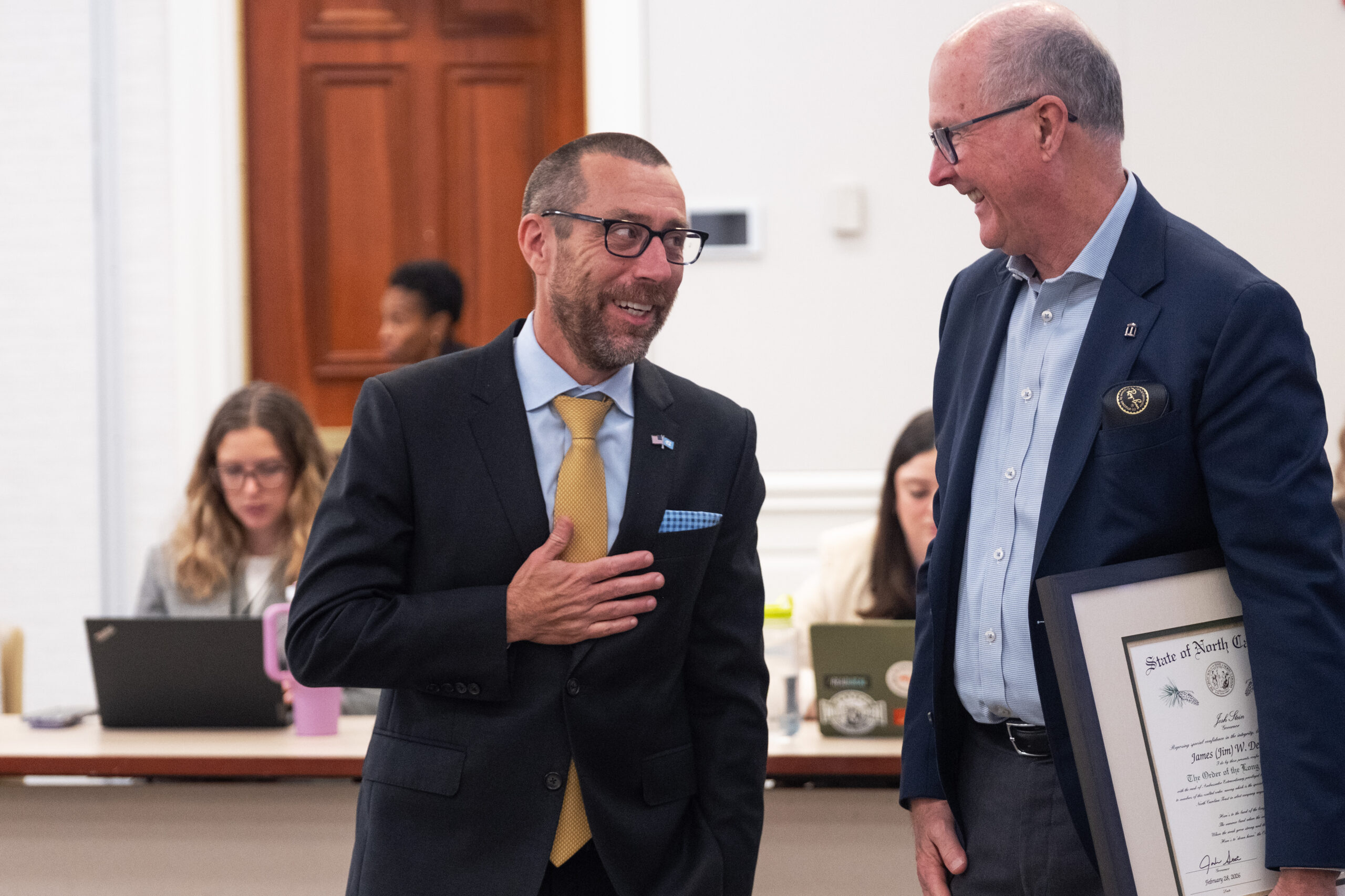
Current UNC Provost Magnus Egerstedt speaks with outgoing interim UNC Provost Jim Dean during the UNC Board of Trustees full board meeting in March 2026. (Photo via Jon Gardiner/UNC-Chapel Hill.)
One aspect of the job the provost emphasized to the gathered faculty is encouraging more inter-disciplinary work between UNC departments and research teams. Egerstedt said he believes those partnerships already happen fairly well on campus — “If we are siloed,” he said, “the walls aren’t that thick,” — and more can be easily done. To help drive that, he said he plans to examine how to improve awareness between disciplines and how to free up faculty’s schedules to “spend it on the things that actually matter.”
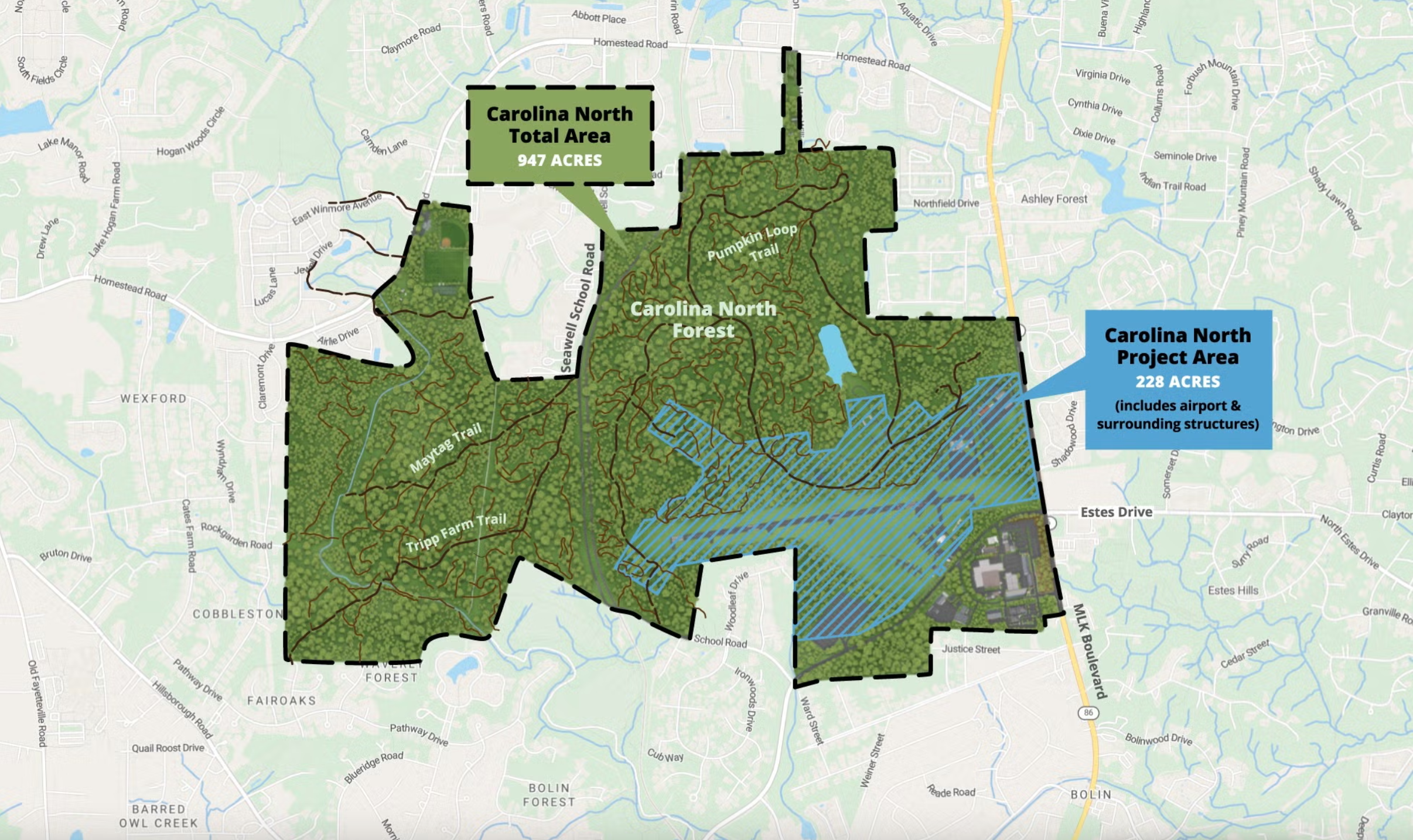
Some of that inter-disciplinary opportunity comes in the form of Carolina North, Egerstedt added. As provost, he is working to craft the academic vision for the future 230-acre campus expansion site off Martin Luther King Jr. Boulevard. He said that includes exploring ways to create a space to incubate partnerships between groups on campus and off campus, citing the Simons Institute for the Theory of Computing at Cal-Berkeley as an example of collaborative research site he’s envisioning.
“It’s really rare for a university of our caliber to have a blank canvass to imagine we can do something new in the academic space, in the teaching space, and in the research space,” Egerstedt said. “Really, what is Carolina North unlocking in how we operate? Sure, housing is really important – transportation, we’ve got to have that…rec centers. All of those matter. But that can’t be ultimately the reason why we’re embracing this new piece of our campus.”
Outgoing Faculty Chair Pushes Shared Governance, Incoming Chair Promotes Respect
Part of Friday’s meeting was the recognition of outgoing Faculty Chair Beth Moracco as her three-year term winds down — and her recognition of the faculty writ large. The public health associate professor and researcher said serving in the role has been the “greatest honor in my professional life.” She also said she leaves the role convinced even further of the importance shared governance holds on the UNC campus between its administrators and faculty – and said she is confident the incoming faculty leadership recognizes that.
“When I think about the various — and I couldn’t think of the exact right adjective for this — troubling, tumultuous activities or actions or events over the past three years,” Moracco said, “I realize that the common thread was either a threat to or a violation of the norms of shared governance. And within those storms, I include academic freedom. So, insisting on shared governance in our work is critical. And I am confident that the chair-elect and our faculty council members and committee members and leadership will continue in that tradition.”
Moracco added that she is “encouraged” and “optimistic” about Egerstedt’s vision for shared governance and framework for embracing it. During his comments, Egerstedt laid out the idea of separating the administration’s decisions into three categories. The first, which he said should be “extremely rare” and involving either legal or H.R. matters, is for decisions made fully by administrators with no forewarning or reasoning shared to the faculty. The second category is for decisions where faculty leaders are given a heads up and explained the reasoning, and the third category is for decisions made jointly and collaboratively between administrators and faculty. Egerstedt said discussing those three categories with Moracco and other faculty leaders are helping clear up any confusion around which UNC administration decisions can be made in conjunction with faculty and which cannot.
Faculty Chair-Elect Michael Gerhardt also addressed the council on Friday, crediting Moracco for being a “selfless, tireless and exemplary” leader. When sharing his goals for his own three years of leadership, he described wanting the Faculty Executive Committee to be more nimble in its decision-making and engaged with faculty members outside of meetings or not involved in the governance.
“Whatever our differences are, I think it’s essential that we not forget we are part of one community,” said Gerhardt, who is a distinguished professor in Constitutional law. “We have an enormous diversity of perspectives, with over 4,000 faculty, over 10,000 staff, over 30,000 students. Not to mention alums and others who care about the place.
“That’s a lot of different perspectives,” he continued. “And I think it’s important that we respect each other, and trust each other…and hearing, listening to each other… and speaking to each other about very tough issues. That is going to be one of my hopes to maintain in the future.”
The full Apr. 17 meeting of the UNC Faculty Executive Committee and Faculty Council can be watched here.
Chapelboro.com does not charge subscription fees, and you can directly support our efforts in local journalism here. Want more of what you see on Chapelboro? Let us bring free local news and community information to you by signing up for our newsletter.