North Carolina officials set a Sept. 10 date for a new election for the nation’s last unresolved congressional race after the November results were thrown out over concerns of ballot tampering. Parties will hold their primaries on May 14.
The state elections board determined that a new election was needed in the 9th congressional district after hearing days of evidence that tended to show a political operative working for Republican candidate Mark Harris hired people to collect mail-in ballots. The board acted because ballots were vulnerable to being changed or discarded.
North Carolina law prohibits anyone other than a voter or immediate family member from handling a mail-in ballot.
Harris had narrowly led Democrat Dan McCready, but before the elections board refused to certify November’s results pending an investigation. McCready is running again in the new election. Harris isn’t, citing health problems.
The operative Harris sought out and lined up ahead of his 2018 Republican primary, Leslie McCrae Dowless, was charged last week with seven low-level felonies, including ballot possession and obstruction of justice. The charges involve Dowless’ work for Harris in the 2018 Republican primary, for 9th district congressional candidate Todd Johnson in the 2016 primary, and other work he did in the 2016 general election.
Prosecutors are still investigating evidence of ballot tampering by Dowless and others during the November election for the 9th District, which includes part of Charlotte and extends eastward across several counties.
Harris has not been charged with a crime and has denied knowledge of any illegal practices by those involved with his campaign. But he too could come under scrutiny: He admitted in last month’s board meeting to writing personal checks to Dowless in 2017, a potential violation if the payments weren’t reported.
The North Carolina scandal represents the rare case of a federal election nullified and redone because of fraud.
In 1887, the U.S. House of Representatives vacated the seat Rhode Island’s William Pirce seemingly won in November 1884 after evidence of fraud raised doubts about whether the Republican won a majority of votes, noted University of Minnesota research fellow Eric Ostermeier. The U.S. House Committee on Elections received sworn testimony from several voters who said they were paid $2 to $3 to back Pirce, Ostermeier said. A special election was held the next month and this time the Democrat, Charles Page, defeated Pirce and served for the final 10 days of that congressional session.
Sixty years earlier, election fraud — which Ostermeier said was far from rare in the 19th century — might have cost John Calhoon his initial win in a special House election. It’s not clear why, but the votes from one central Kentucky county were thrown out in 1827 “owing to an irregularity,” the U.S. House biography of Calhoon’s rival, Thomas Chilton, states. Both men petitioned the governor for a redo election, which Chilton won. Calhoon would go on to serve four years in the House in the 1830s.
The House elections committee also voided the 1806 victory of John Culpepper in a North Carolina congressional district, Ostermeier said. The Federalist had been in Congress for nearly a year when the committee found irregularities in three of the district’s five counties and concluded, “It is most proper to give the citizens of that district an opportunity to have another election.”
Related Stories
‹
![]()
Operative Charged in Congressional RaceAn operative in North Carolina’s unresolved congressional race has been charged with obstruction and illegal ballot possession related to 2016 and 2018 elections. Wake County District Attorney Lorrin Freeman said Wednesday that Leslie McCrae Dowless Jr. was arrested after the grand jury indictments. According to testimony and other findings detailed at an election board hearing last […]
![]()
If Congressional Race Deemed Tainted, Will Redo Get Support?Attorneys for the candidates in the nation’s last undecided congressional race are anticipating the possibility that North Carolina’s elections board finds the contest tainted by ballot fraud, but have proposed distinct options should the divided body fail to order a re-do. Lawyers for Republican Mark Harris and Democrat Dan McCready submitted separate legal arguments Tuesday […]
![]()
N. Carolina Gov. Vetoing Bill with Congressional Race RedoNorth Carolina’s governor said Tuesday he’s vetoing legislation that directs fully rerun elections if fraud is found in a disputed U.S. House race, saying the hastily approved bill also adds new cover for lobbyists and people who violate campaign finance laws. Democratic Gov. Roy Cooper said he’ll sign the legislation if state lawmakers remove the […]

Postal Service Work To Comply With Trump’s Executive Order Is Rushed and Sloppy, a Whistleblower ContendsThe U.S. Postal Service is poised to launch a hastily built, error-riddled computer system that could jeopardize the process of mail voting.

Longtime Chatham County Educator Wins $10 Million Lottery PrizeThe North Carolina Education Lottery office revealed that Jean Johnson, who teaches in Chatham County, is the winner of a $10 million prize.
![]()
Theodore Nollert on North Carolina's Budget Corrections Bill and Its Process – On Air Today (August 26, 2026)Theodore Nollert — the directory of policy for Carolina Forward and a Chapel Hill Town Council member — joins 97.9 The Hill's Brighton McConnell on Wednesday, August 26.
UNC Health Expands, Rebrands Venture Capital Efforts of Emerging TechThe statewide healthcare system announced Rex Health Ventures platform is now UNC Health Ventures and will use $125 million to invest in emerging health tech companies.
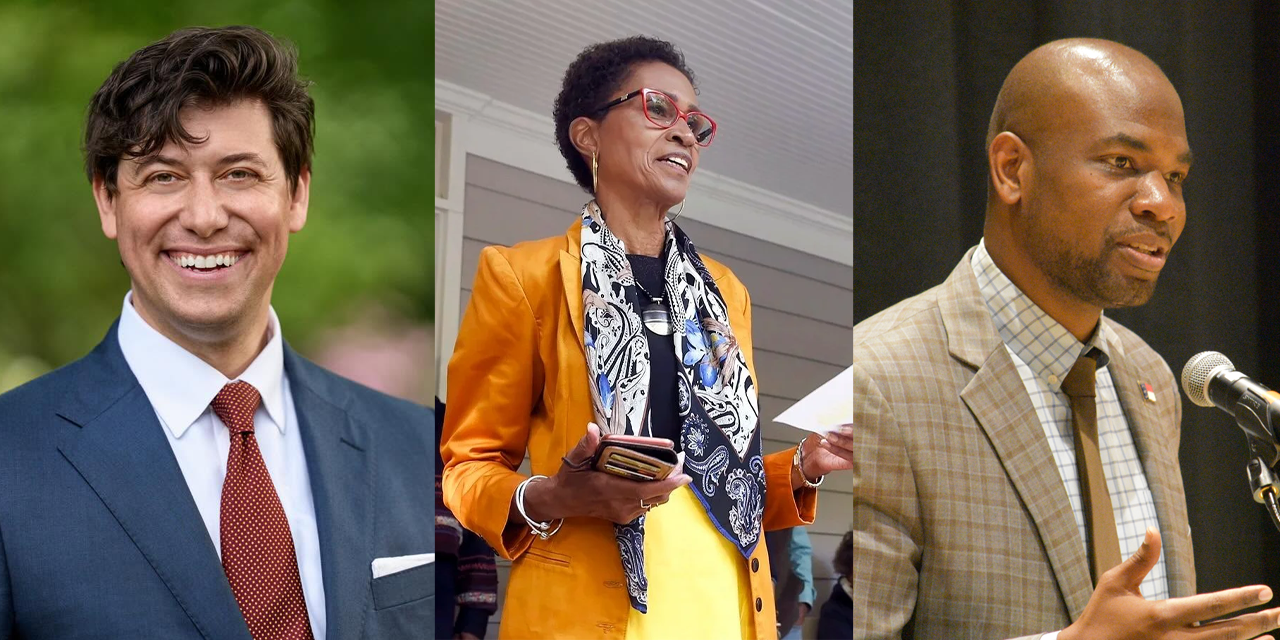
Corporate Tax Cuts, Prediction Market Leeway, and Underfunding Education: Why Orange County's Legislators Voted Against NC's BudgetAll three of Orange County’s state representatives voted against North Carolina's updated budget, citing issues with its contents and construction.

On the Porch: Dr. James Wood - Sports Around the WorldThis Week:
James Wood is currently Professor of Latin American and modern world history at North Carolina A&T State University. He is the author of The Society of Equality: Popular Republicanism and Democracy in Santiago de Chile, 1818-1851 and the co-editor of "Problems in Modern Latin American History: Sources and Interpretations", now in its fifth edition with Rowman and Littlefield. As a Fulbright scholar for Chile in 2016 he was a visiting professor at the Universidad Diego Portales in Santiago (where he observed Chilean student activism up close).
On the Porch: Bill Brown - Art and Science Merge at NCMAThis Week:
Bill Brown joined the North Carolina Museum of Art as a Conservation Intern in 1988. Thirty-two years later he retired from the Art Museum as Chief Conservator. He received his M.A. and Certificate of Advanced Studies in Conservation from State University College at Buffalo, NY in 1989. At the Museum, he established the Art + Science Initiative, a collaborative program with Duke University math and science departments. Bill has a passion for Italian Old Master Paintings of the 14th to 18th century. He works part-time as a conservator in private practice and provides conservation support for the Museum and Gallery collection of old master paintings at Bob Jones University in Greenville, SC . He enjoys retirement with his wife and young adult son.
›