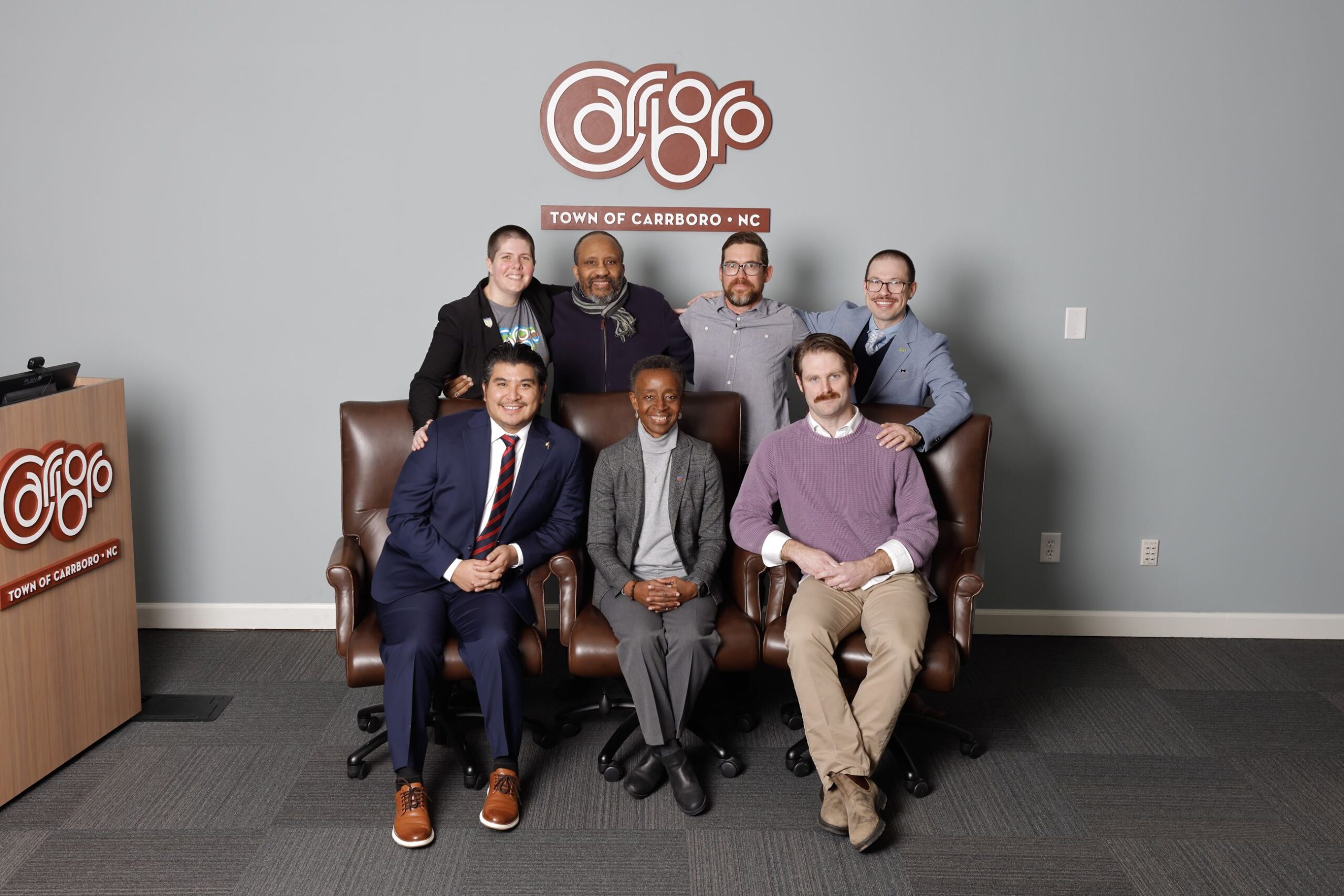
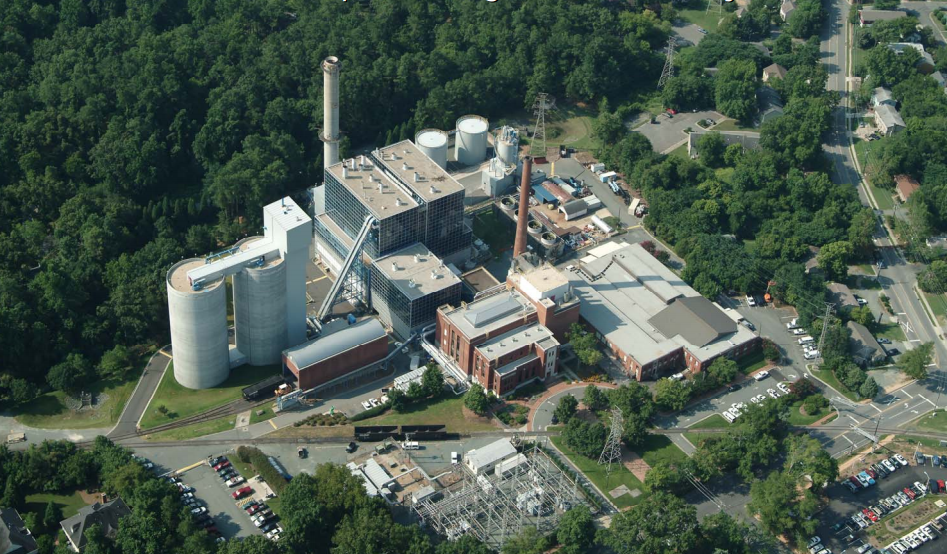
The Carrboro Town Council joined a memorandum of agreement supporting the transformation of UNC’s cogeneration rail line into a multi-modal greenway during its Tuesday meeting. The unanimous vote made Carrboro the first member of the agreement. The Town of Chapel Hill, UNC, Orange County, and The Southern Environmental Law Center will also decide on joining the memorandum of agreement.
The cogeneration rail line runs from downtown Carrboro through Eubanks Road, ending at the Norfolk Southern connection between Durham and Burlington. The long-term goal of the project is to transition the rail-line into a pedestrian and bike pathway, reduce car traffic on surrounding roads, and open the door for other developments that could economically benefit Carrboro, Chapel Hill, and UNC.
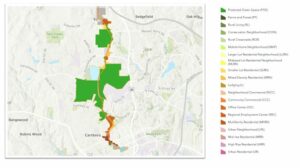
A map of the rail-line, color coded to show how land surrounding the rail line is currently used.
The project’s timeline largely depends on the university’s transition from coal, since the rail-line services UNC’s Cogeneration Facility, located at 575 West Cameron Avenue. The facility provides the university with the majority of its energy. The Cogeneration Facility’s number one source of energy is natural gas, followed closely by coal. Nuclear and other renewable energy sources provide the least energy. The cogeneration railway runs through parts of Carrboro, Chapel Hill, and Hillsborough.
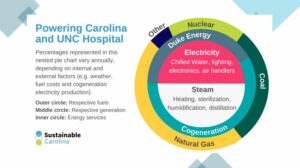
A breakdown of UNC’s energy generation, showing natural gas and coal as the leading energy sources. The Co-Gen Rail Line Project is largely dependent on the university’s transition away from coal.
The council heard a presentation from N.C. Sen. Greg Meyer (D), Director of the UNC Institute for the Environment and Chief Sustainability Officer Mike Piehler, and Local Government Services Director for Central Pines Regional Council Alana Keegan.
The Central Pines Regional Council is a resources and support hub for local governments, communities and partners in the Triangle area specializing in regional policy. UNC Chapel Hill and the Southern Environmental Law Center jointly commissioned Central Pines to facilitate the development of grant applications for long-term economic and transportation planning activities along the Co-Gen Rail Line, the primary focus of the memorandum of agreement.
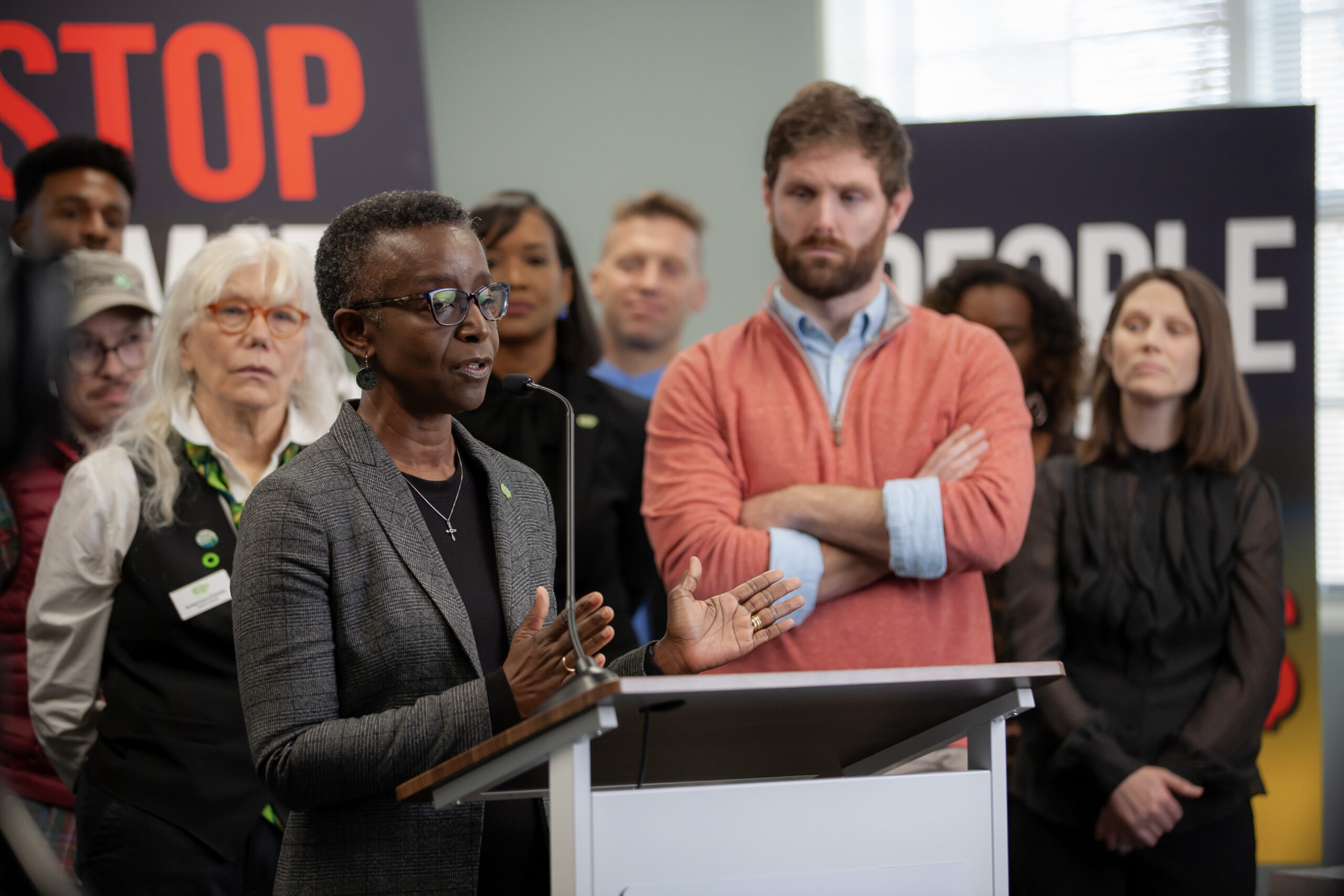
The facility’s use of coal has negatively impacted surrounding historically Black neighborhoods. Mayor Barbara Foushee asked the extent to which the project’s partners have considered racial equity throughout the project.
“Who are the equity partners that we’re talking about that are already at the table,” asked Foushee. “It’s really important because of the communities that we know that have been impacted for decades by the use of coal, particularly communities of color.”
Meyer said the No Coal UNC Coalition has done the most organizing of community members in surrounding neighborhoods. Meyer also credited the Marion Cheek Jackson Center and the NC Interfaith Power and Light branch of the NC Council of Churches for their involvement. He said the NC Interfaith Power and Light committed to partnering in community outreach and equity focused work. Despite these efforts, Meyer said the project has faced challenges surrounding equity.
“One of the struggles that we’ve had,” said Meyer, “not surprisingly for those of us that do equity work in this community, is in those neighborhoods that are adjacent where No Coal UNC has been organizing. We have had folks from those neighborhoods who have come to our meetings. They have not been Black folks. So there’s that extra step of saying we know you’re talking to those folks; how do we get some of those neighbors to come and participate and be present. That’s the challenge that we continue to try and work on.”
Council Member Randee Haven-O’Donnell asked whether Central Pines had discussed connectivity options with Chapel Hill’s transportation department regarding the North-South Bus Rapid Transit Project (NSBRT), recently included in President Joe Biden’s (D) federal budget proposal.
“We have not really had conversation with their transit plans,” said Keegan, “but we are talking with them about their RAISE Grant, which they just received that’s looking at their greenway system. We also will have Durham Chapel Hill MPO [metropolitan planning organization] at the table, so they should be able to also help with transit conversations. We can definitely make sure we make a concerted effort to talk with transit about the BRT.”
Council Member Eliazar Posada asked whether project leaders had a project timeline.
“I never say any timeline shorter than ten years,” said Meyer, “and we don’t even know if ten years is the right number because our friends at the university have to be the first mover. They have to make the energy transition first, and they don’t have a timeline for that, and I’m not going to ask them to make a commitment to that timeline in front of you tonight. But I think that is a really important thing to make clear in our communications with the public if there is an order of operations here. You can’t shut down the rail line until they’ve made the energy transition, and you can’t do the rail line development until you shut down the rail line. So we’ve got to go through the steps.”
To watch the full meeting from March 19, click here.
Photos via Central Pines Regional Council
Chapelboro.com does not charge subscription fees, and you can directly support our efforts in local journalism here. Want more of what you see on Chapelboro? Let us bring free local news and community information to you by signing up for our newsletter.