It’s not every day that there’s a world record attempt in North Carolina, let alone locally. But on Wednesday, Orange County served as a hub for an effort to break the record for single-day hands-only CPR trainings.
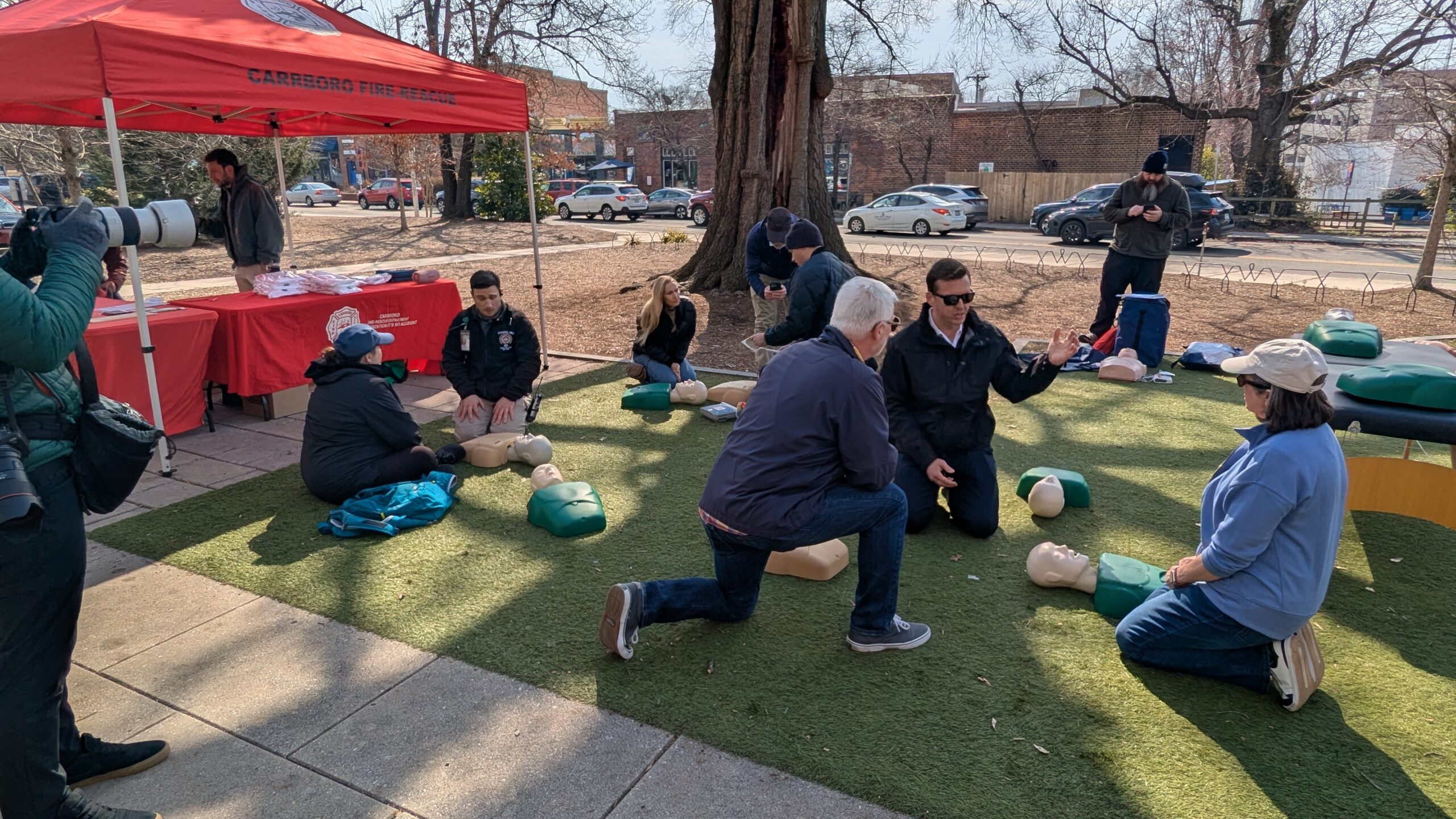
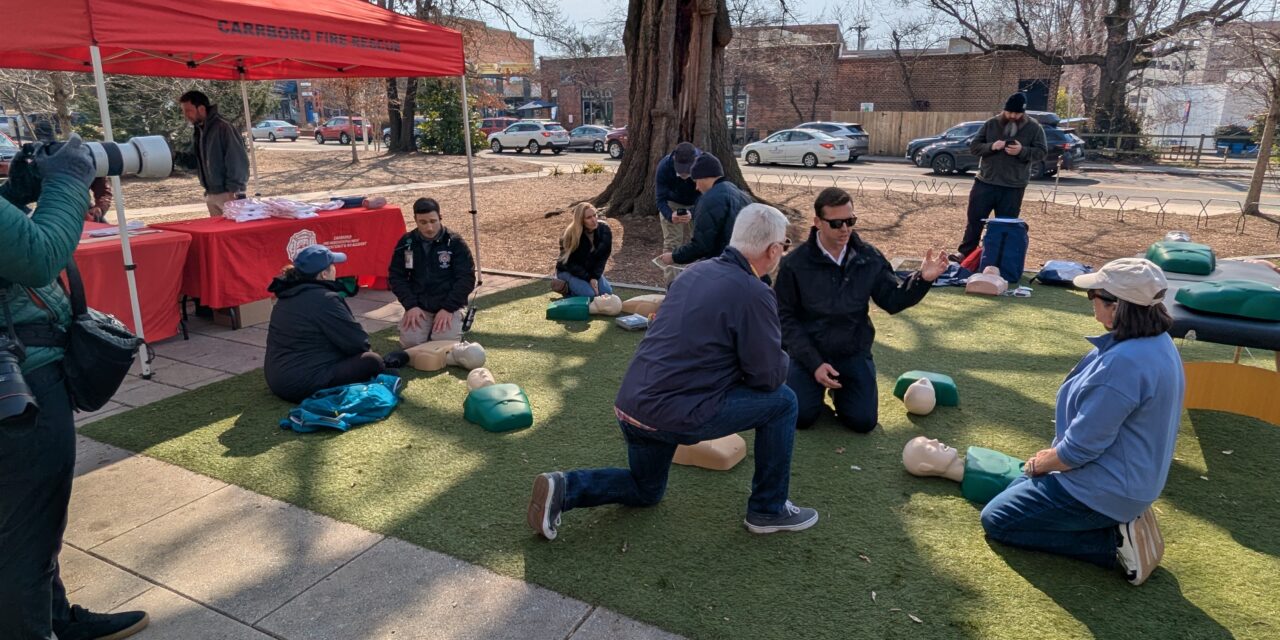
As people walked up to grab their groceries or a coffee from Weaver Street Market in Carrboro on Wednesday, members of the Duke Clinical Research Institute recruited them to brush up on their CPR training. After being ushered over to tents set up on the lawn, people would get briefed by a local fire or EMS responder before testing out their compressions on a rubber dummy and practicing how to deploy an automated defibrillator, or AED.
At the same time, UNC students in The Pit also got trained – as well as people at more than 50 other public locations throughout North Carolina. The goal was to break an Indian university’s record of 28,500 people trained in a single day, while also trying to improve the overall survival rate of cardiac arrests. Across the state and throughout the day, 19,773 North Carolinians were trained on how to respond to someone experiencing a cardiac arrest, which continues to be the leading cause of death among Americans.
Wednesday’s effort was organized by Tyler Cope, a PhD student working with the Duke Clinical Research Institute and its RACE-CARS Trial. The trial – whose acronym stands for Randomized Cluster Evaluation of Cardiac Arrest Systems – is funded through the National Institutes of Health and aims to help save an additional 10,000 people each year from cardiac arrest.
Cope credits the idea for a world record attempt to a Warren County EMS leader, but said it intrigued him as a way to draw attention to the need for CPR training. Cardiac arrest happens when the heart stops beating regularly and causes body functions, like blood flow and brain activity, to shut down. Once those symptoms begin, Cope told 97.9 The Hill, it becomes a race against time.
“The absolute best intervention that could happen,” he said, “is a witnessed cardiac arrest and a bystander is able to act immediately. Because every minute, every second is so crucial, one’s chance of survival skyrockets if they’re able to receive that quick intervention.”
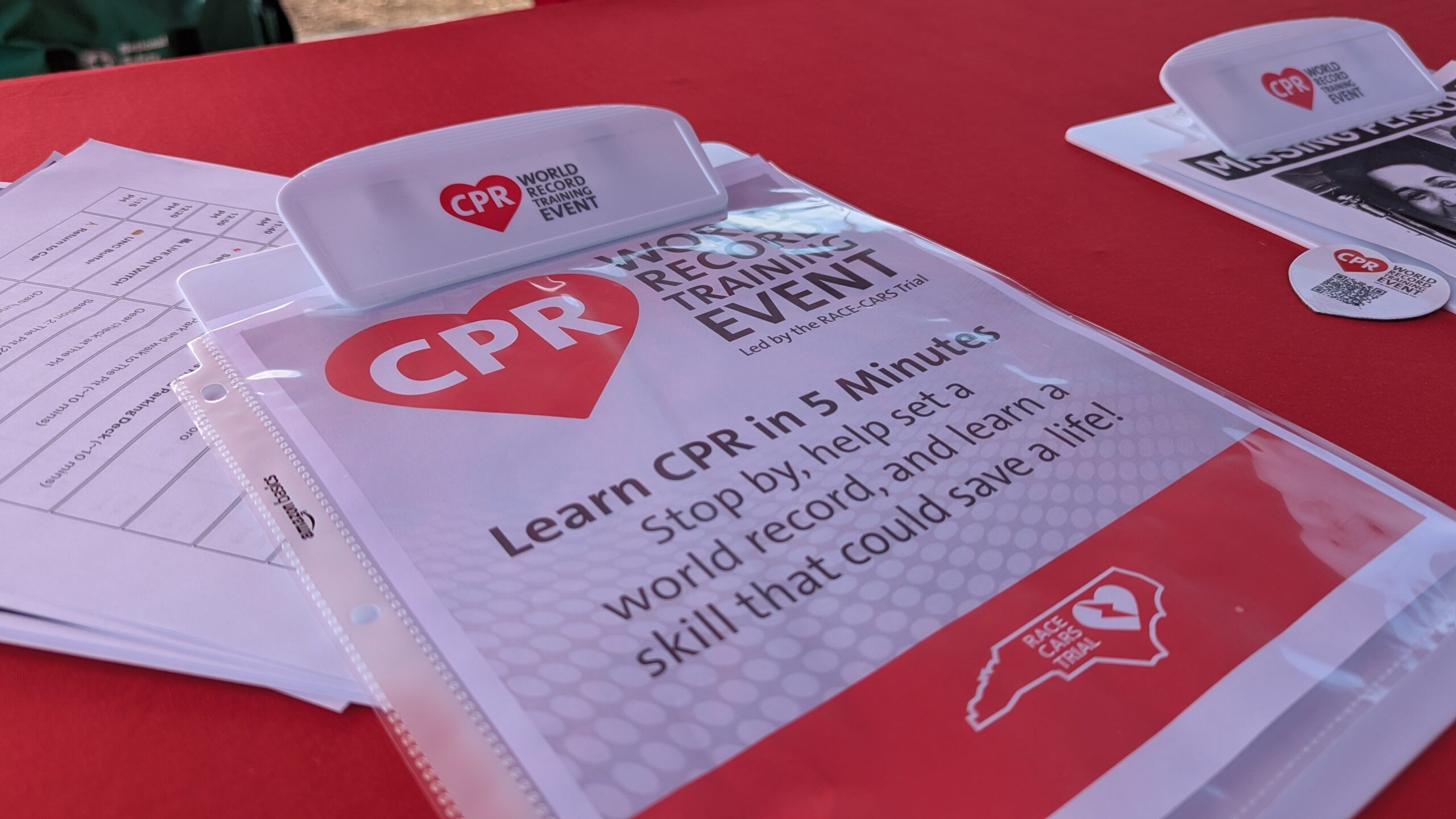
Photo by Brighton McConnell/Chapel Hill Media Group.
The mass community training is the culmination of nearly four years of preparation through the Duke institute to study the survival and CPR training rates across 30 counties in North Carolina. The trial worked with 911 tele-communicators to improve their over-the-phone instruction of hands-only CPR, as well as trained first responders who arrive at cardiac arrest calls. Helping bystanders be prepared is the final educational component before the research staff studies whether its work is improving outcomes.
Dr. Christopher Granger is the principal investigator for the RACE-CARS Trial. He said 80% out-of-hospital cardiac arrests happen at home, putting an onus on family members, spouses or caretakers to be prepared. But one example of the trial’s outreach to improve awareness is an effort through the Orange County faith community. RACE-CARS partnered with Rev. Sharon Freeland and the Orange Congregations in Mission nonprofit to add AED machines to dozens of local churches in case someone suffers a cardiac arrest.
“By looking at our data,” Granger said, “what we’ve seen is that when cardiac arrests occur in public places, 7% of the time that’s in churches. That’s a lot of people who have cardiac arrests in churches…and that’s a place where we should have a very high rate of survival. If there was an AED there and people knew CPR, we could save 50% of those people whereas the average survival rate in North Carolina is 8%. That’s just an example of what’s happening in this program.
“Recognizing that it’s a cardiac arrest, calling 911, starting CPR…that’s the foundation,” the head researcher concluded, “and that’s what today’s all about.”
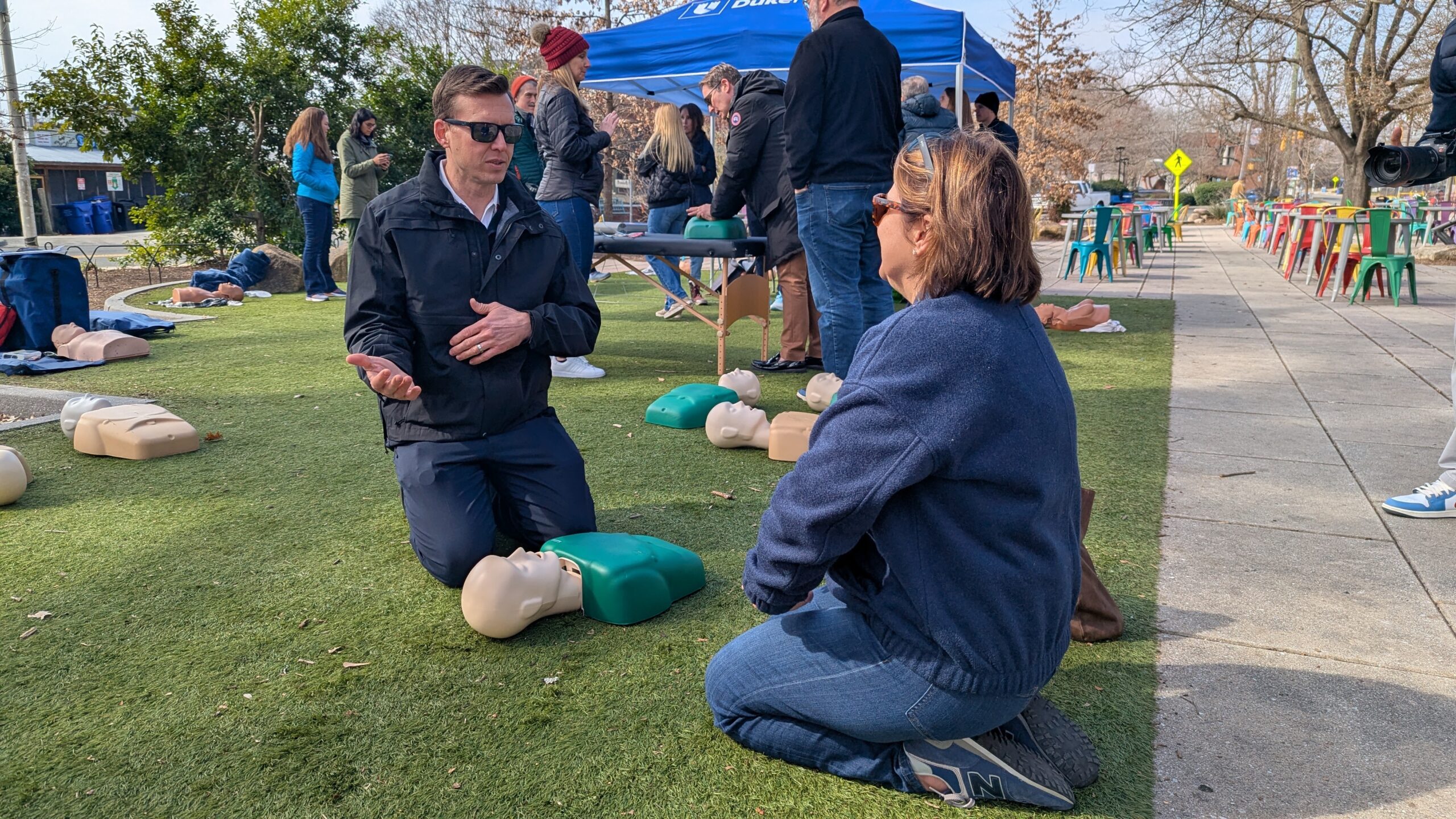
Carrboro Fire Chief Will Potter trains a community member on how to quickly conduct CPR at Carrboro’s Weaver Street Market on Feb. 25, 2026 as part of a world record attempt organized by the RACE-CARS Trial. (Photo by Brighton McConnell/Chapel Hill Media Group.)
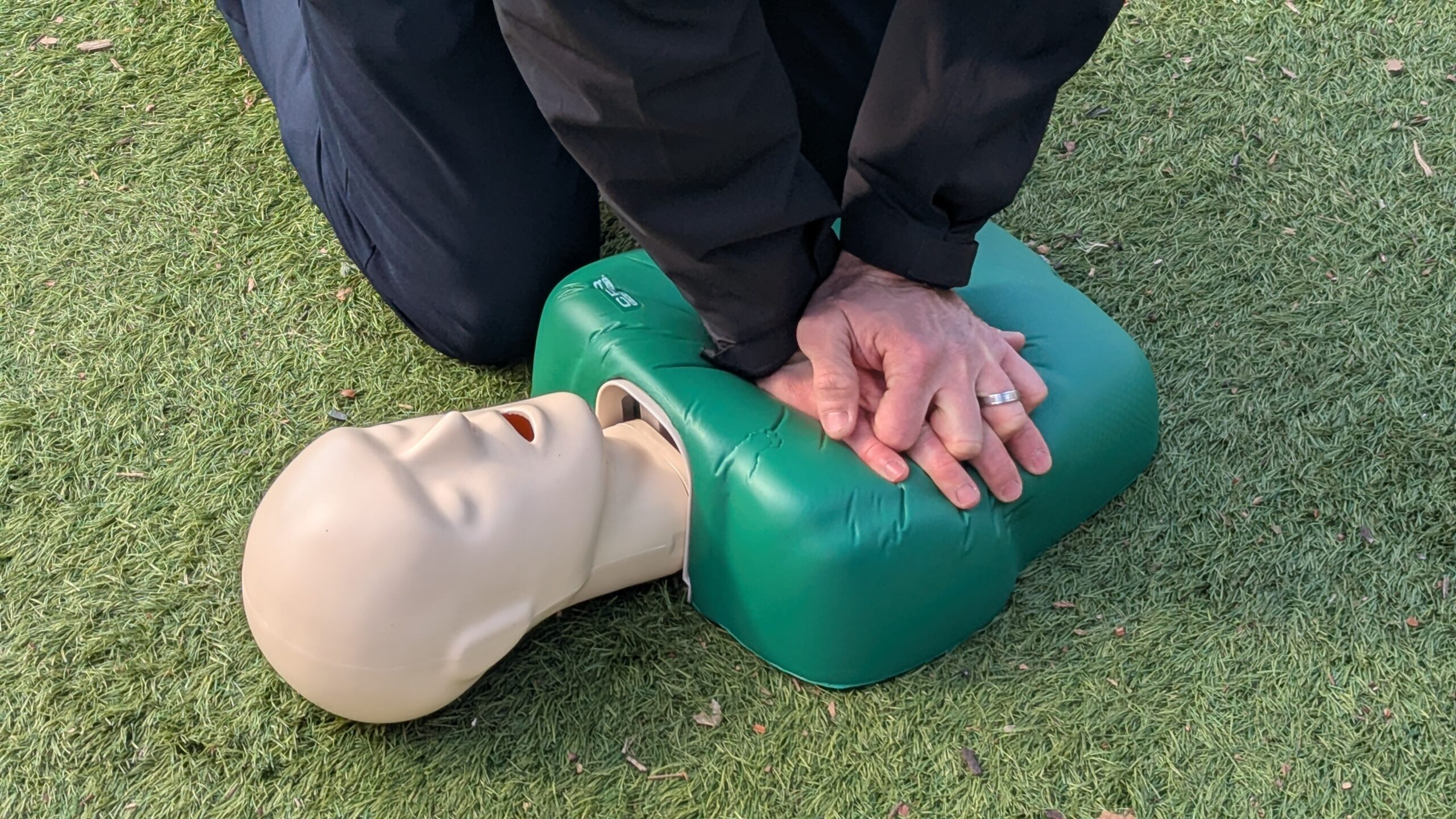
The proper positioning and hand technique for CPR compressions, as demonstrated by Will Potter. (Photo by Brighton McConnell/Chapel Hill Media Group.)
The training for most participants took roughly five minutes, as the emergency responders went over the Four C’s. First, you check to see if the person is responsive or breathing. Then, you assign someone nearby the task of calling 911.
The third “c” is compressions – which include pressing the heel of one palm into the center of the person’s chest and pressing down. The recommended beat is two compressions per second, meaning you can hum to the Bee-Gee’s “Staying Alive” or the 2026 equivalent, “Baby Shark” to keep pace. The fourth “c” is connecting an AED, applying its pads to the person before it gives shocks every two minutes between compressions.
Among the local first responders giving directions at the Weaver Street Market training site was Carrboro Fire Department Chief Will Potter. His department has partnered with the RACE-CARS Trial for years through the research group’s connections with Orange County EMS. While most people wouldn’t think of firefighters administering medical care, Potter said his crews are among the emergency responders who activate when a cardiac arrest call comes through. And since the average paramedic response time is 10 minutes, the fire chief said starting compressions early helps save lives.
“Every minute, your chance of survival goes down 10%,” Potter said. “So, if it takes us five, six, seven minutes to get to someone…sometimes the outcome has already been determined before we get there. The ability and availability of members of the community to start high-quality compressions early drastically improves the chance that we could save somebody’s life.”
Mary and John McCormick read about the event online and drove from Cary to take part. Mary said they were motivated to help keep each other safe and had been looking recently at what local training options were available.
“We’d actually talked about taking a CPR class the week before,” McCormick said, “and I said, ‘Hey, look at this! Let’s at least take this step in the right direction.’
“And we’ve had CPR [training] before,” added John, “but it’s been a long time and it’s changed a lot. We’re now up to date and we now know the latest recommendations.”
Orange County resident Durward House showed up to Weaver Street Market because his wife had seen about the world record attempt online. He said he came when he could, and she would come later to get refreshed on the training.
“If something happens to someone in the family – or anybody – just [good to] be able to help,” he said when asked about his motivation.
“I hope they break it,” House added of the world record, “because everybody should know [CPR].”
Featured image by Brighton McConnell/Chapel Hill Media Group
Chapelboro.com does not charge subscription fees, and you can directly support our efforts in local journalism here. Want more of what you see on Chapelboro? Let us bring free local news and community information to you by signing up for our newsletter.