With an aging population of farmers and the legal complexities of farm transition contributing to large amounts of lost farmland in North Carolina, the Chatham County Farmland Preservation Program is initiating efforts to inform people about specific options for passing their land to their heirs. As part of these efforts, the program ran two workshops this summer on June 26 and July 10.
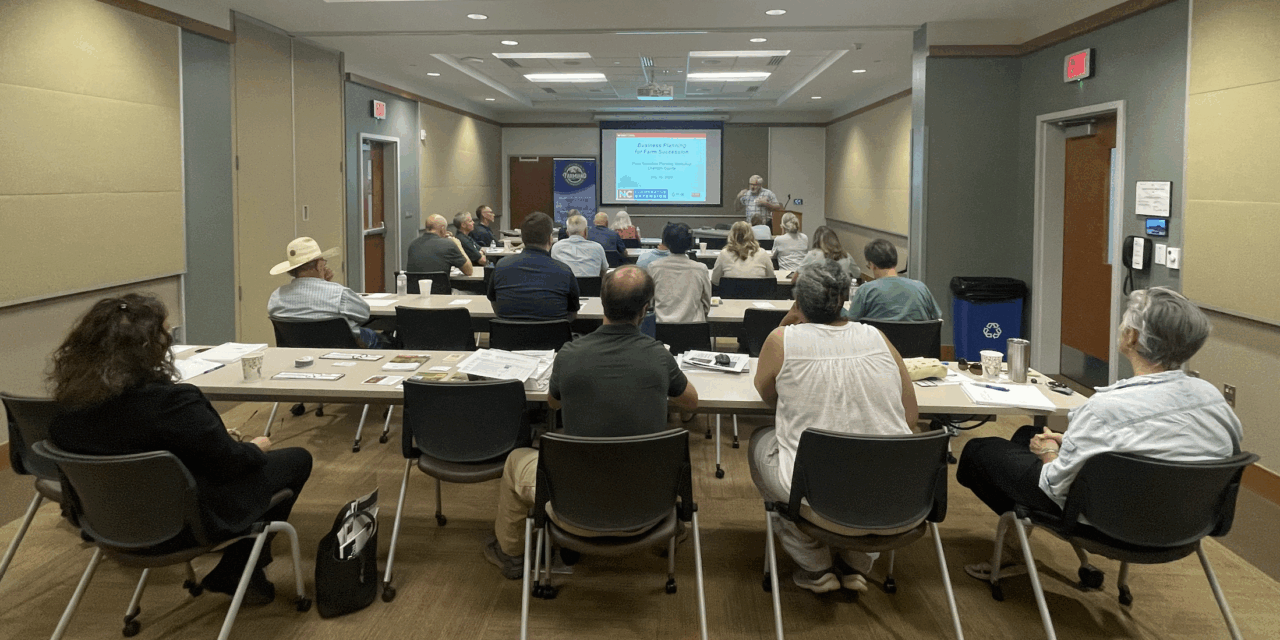
Held at the Chatham County Conference Center, the workshops consisted of thorough explanations of the legal details of planning wills and estates when it comes to passing down farmland to heirs and beneficiaries.
Andrew Waters, farmland preservation coordinator for Chatham County, was one of the organizers of the workshops. He said people need to become more aware of proper ways to plan the succession of their farms in order to avoid it being lost and developed.
“What we want to do with this program is bring some attention and some resources and some tools around this farmland transition issue,” he said. “A lot of farmland gets lost when it passes from one generation to another. It’s not as easy as you might think it would be to just pass down your farmland to your children. There’s a lot more involved in it than that, and at that moment of transition is when a lot of farmland gets put on the market and ultimately sold for development.”
Annette Hiatt, a senior staff attorney with the Land Loss Prevention Project, was also one of the main coordinators. She said North Carolina is facing issues of farming profitability and the aging of the farming community, which put the state at severe risk of losing large amounts of farmland.
“North Carolina is losing land at record pace, almost a million acres, in 20 years, of farmland. We heard about the impacts of aging farmers, of what’s happening in communities as farming shifts, what kind of farming is profitable at the time,” she said. “So it becomes more important to really think about how to pass it on to the next generation.”
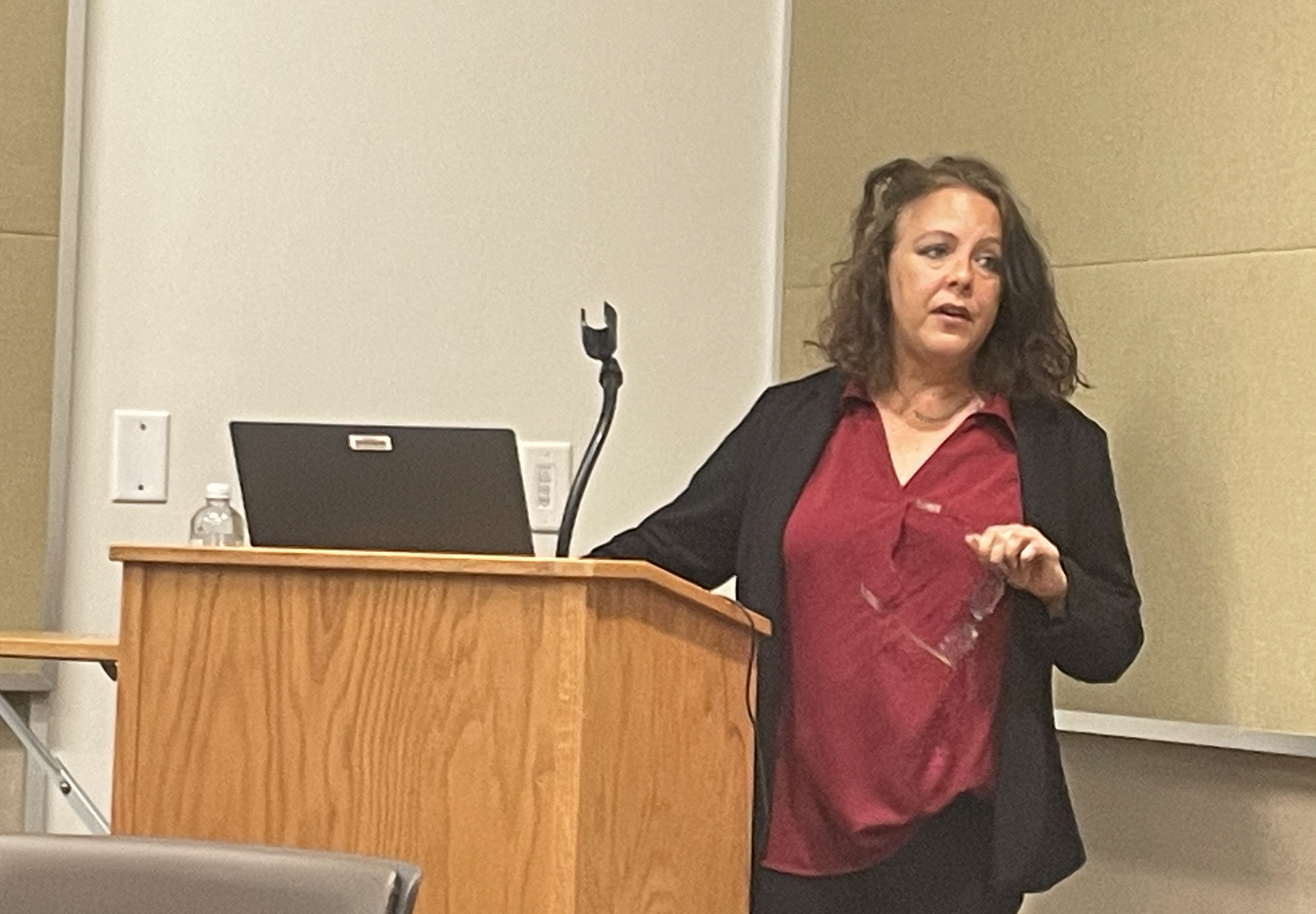
Annette Hiatt, senior staff attorney at the Land Loss Prevention Project, speaks at the farmland transition workshop on July 10 at the Chatham County Conference Center.
About 20 people attended the second workshop, most of them in situations where the issue of farm succession was important to their future plans. For example, Silk Hope farmer Joe Silvay was there to learn about options for managing the eventual succession of the cattle farm he and his wife inherited a part of from his father-in-law.
“It used to be a 300-acre farm, now it’s down to a 100-acre farm, so you can see exactly what happens when you have children and you divide a farm and give half to this one, half to that one. One wants to sell out and one doesn’t, and it becomes harder and harder to farm the smaller and smaller acreage you have, especially when you have cattle and hay, and it just doesn’t work,” he said. “So it’s just one of these things we have to address. It’s not an easy thing to do, but it’s a necessary thing to do, because, as one person said, having no plan at all is not a good plan.”
Emma Childs, working lands manager for Triangle Land Conservancy, said one of the most important ways people can start developing plans is by initiating conversations that can be difficult and uncomfortable.
“I would say, just encouraging people to have a conversation with folks around them, even if you’re not a landowner, or even if your family doesn’t farm,” she said. “Calling an older family member to ask boldly, ‘Do you do you have a will? How can I support you in that process?’ Because I think we just are afraid to ask those questions because they’re emotional and they’re complicated, but the more we can talk about it and bring it into the forefront of people’s awareness, I think the better we all are.”
She said TLC sees farmland preservation as one of the main focuses for preventing land loss.
“Triangle Land Conservancy is really invested in the conversation because we feel like this is actually where so much land loss happens,” she said. “And so if we’re thinking about conservation of contiguous acreage and supporting the next generation of landowners and farmers, this is a critical piece.”
The workshop ended with a presentation by Noah Ranells, the eastern regional director of NC FarmLink, a program connecting farmers and landowners with farm transition resources. At the end of the presentation, Ranells illustrated the complexity of farm transition by dividing the attendees into groups and presenting them with a hypothetical situation of a family navigating the succession of their farm. The game involved a variety of options for what courses of action to take and for what types of professionals to involve in the planning process.
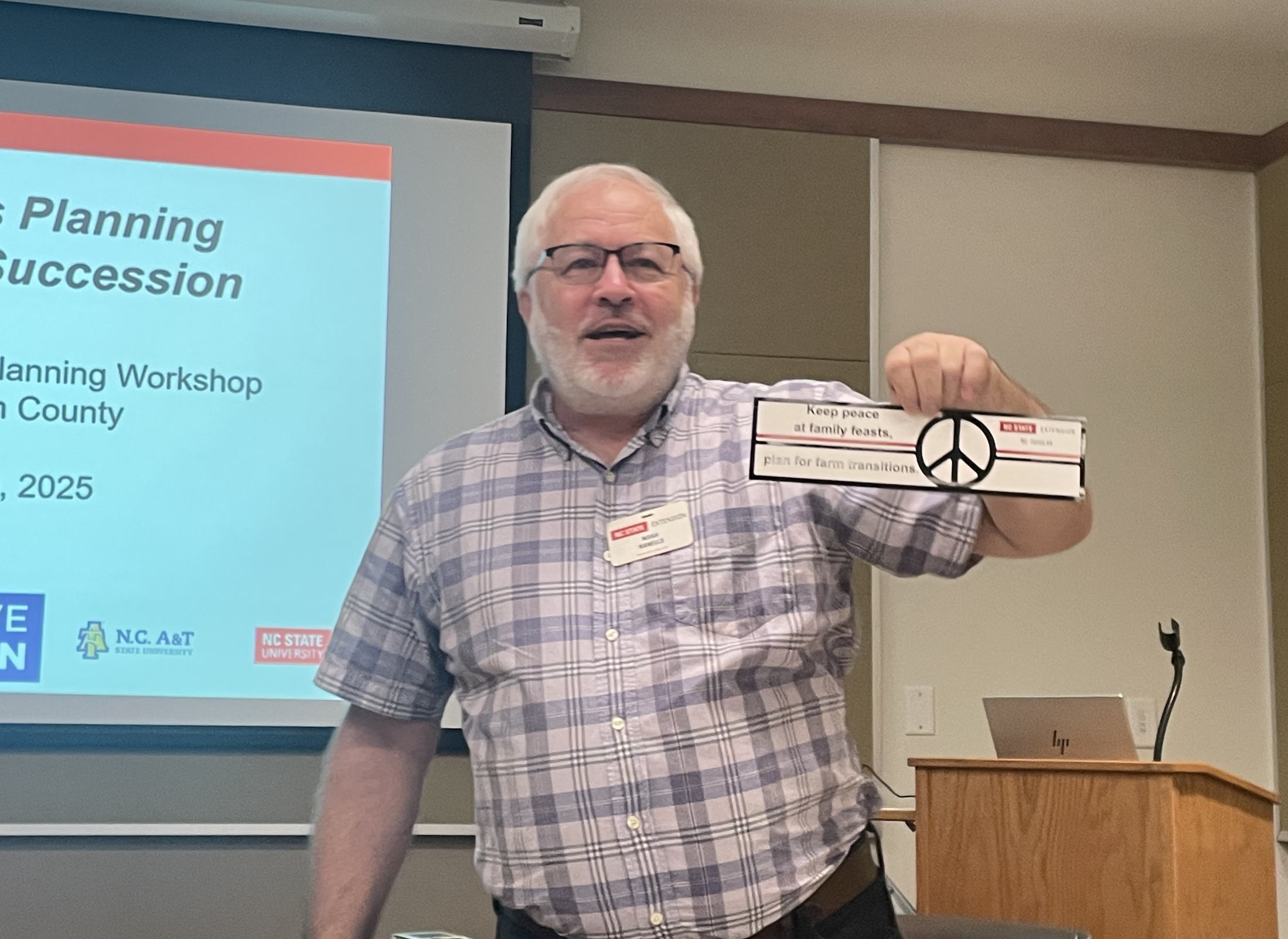
Noah Ranells, eastern director of NC FarmLink, speaks at the farmland transition workshop at the Chatham County Conference Center. He is holding a bumper sticker that reads “Keep peace at family feasts, plan for farm transitions.”
Sure enough, nearly every group came up with a different answer.
Chapelboro.com does not charge subscription fees, and you can directly support our efforts in local journalism here. Want more of what you see on Chapelboro? Let us bring free local news and community information to you by signing up for our newsletter.