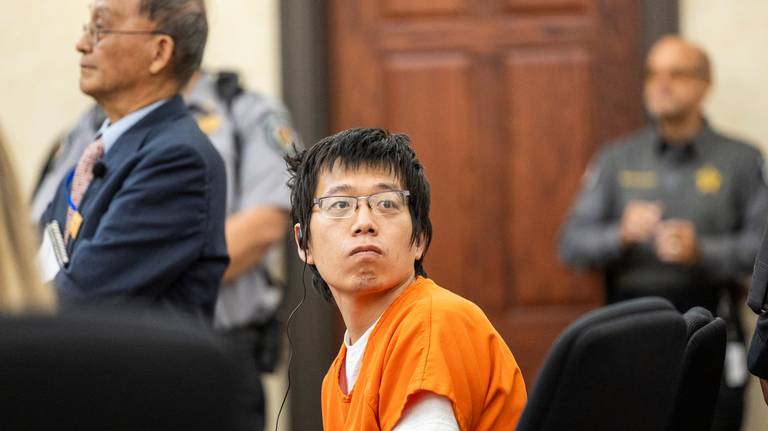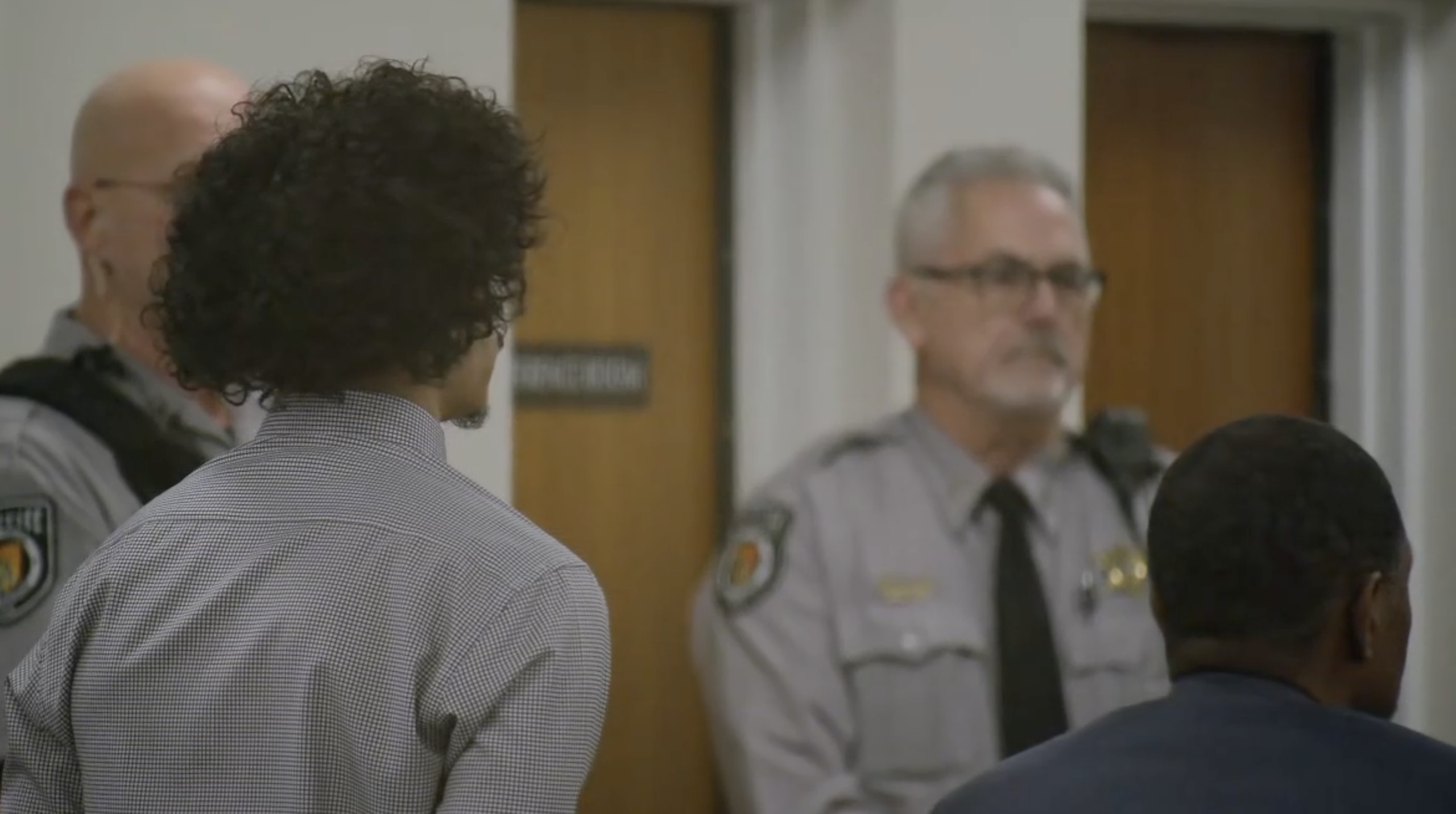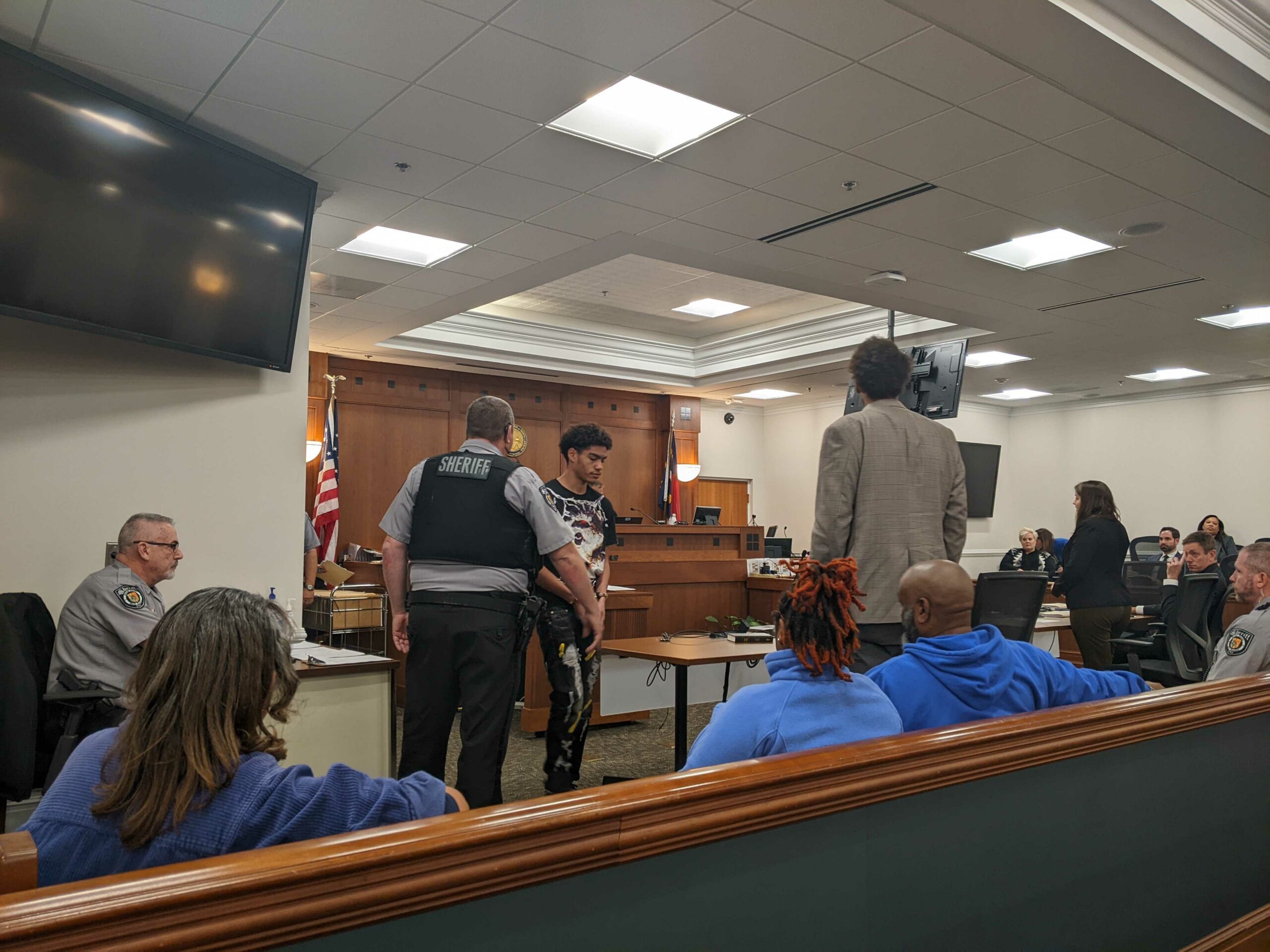
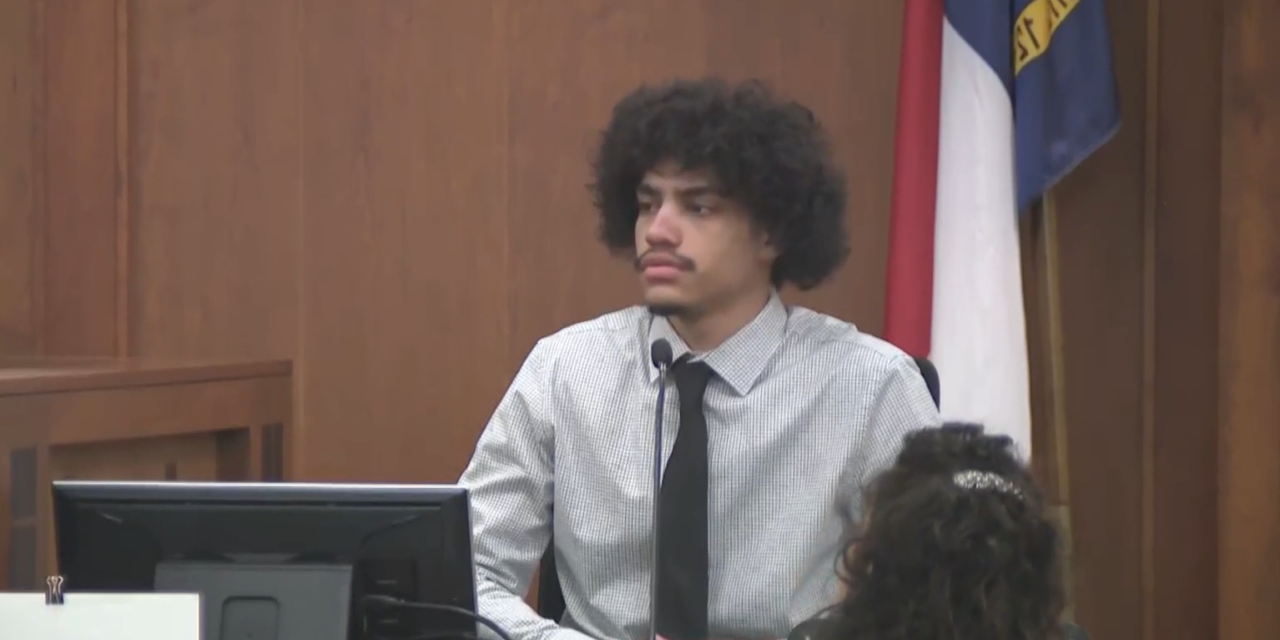
The defense wrapped up testimony in the double homicide trial of Issiah Ross Thursday in relation to the 2022 shooting deaths of Lyric Woods and Devin Clark in rural Orange County. Following the conclusion of testimony, the prosecution and defense both provided closing arguments, and Judge Stephanie Reese presented relevant statutes for the jury to consider during deliberation.
Thursday’s proceedings followed a packed week of testimony, with the prosecution calling star witnesses Tuesday, while the defense called its only witness, Ross himself, on Wednesday.
The Defense Finishes Direct Examination of Issiah Ross
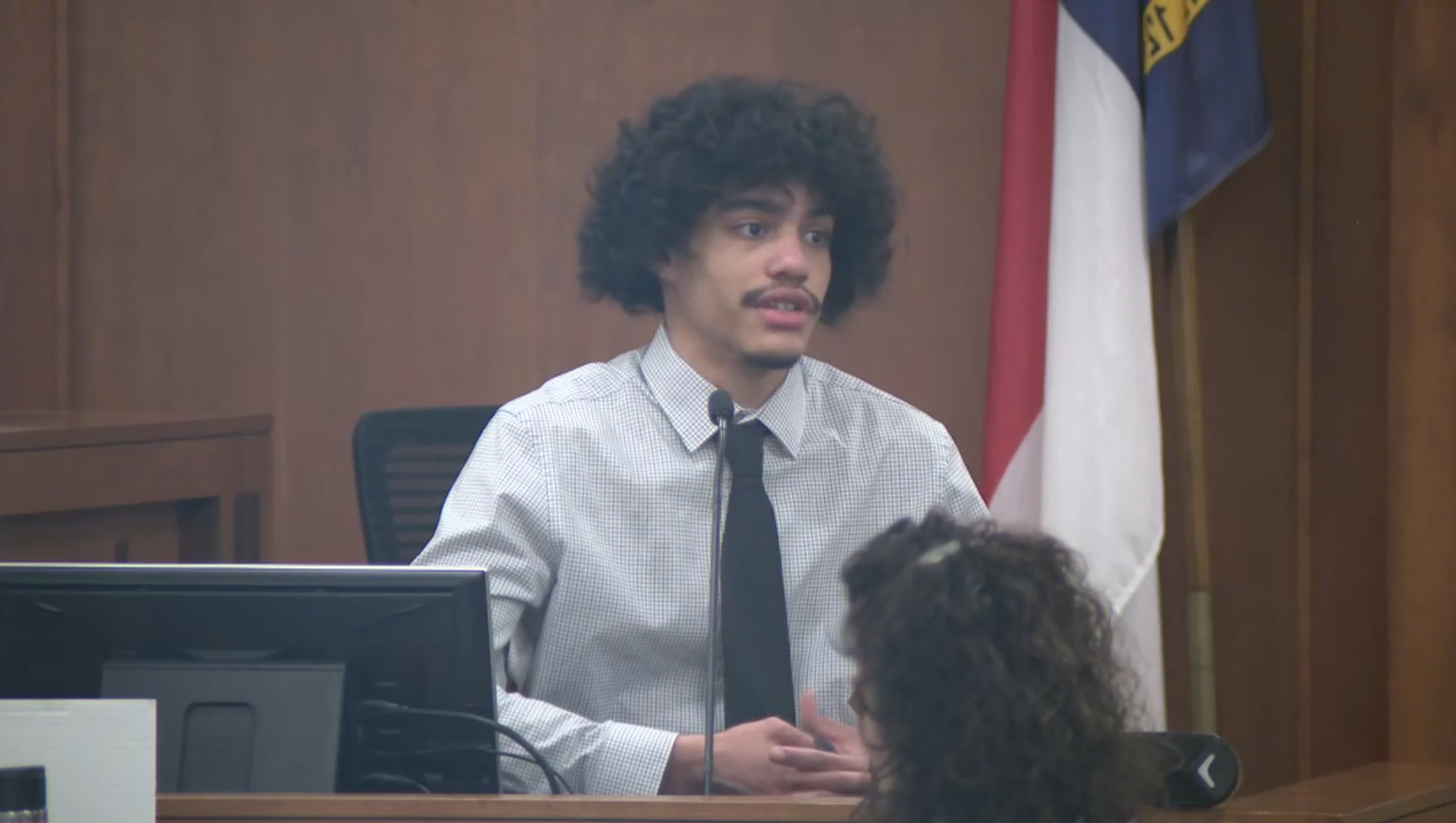
To begin Thursday’s testimony, defense attorney Jonathan Trapp asked Ross questions regarding his relationship with Christian Sykes, the state witness who claimed Ross admitted to killing both Woods and Clark via phone on Sunday, Sep. 19, 2022. According to Ross, his friendship with Sykes deteriorated after the two had a falling out, and Sykes’ primary motivation for contacting him that Sunday was asking to smoke marijuana and talk things out. Ross said he denied the request, but ended up telling Sykes limited details about the incident that occurred early Saturday morning.
According to Ross’ testimony Thursday, he told Sykes, “I almost died,” “I had to shoot him,” and “two people got hurt.” He said that he didn’t go into any more specifics than that. This directly contradicts testimony from Sykes, who said that Ross admitted to shooting Clark after a struggle over the gun and then shooting Woods to eliminate a potential witness. Ross’ story is instead that Clark killed Woods after a brief argument, before turning the gun on him and initiating the struggle that ultimately ended Clark’s life.
“I had no other choice,” Ross said to the jury. “If I had sat there and let him do what he was going to do, I would not be here speaking to you.”
Prosecution Cross-Examines Defendant, Questions Snapchat Messages
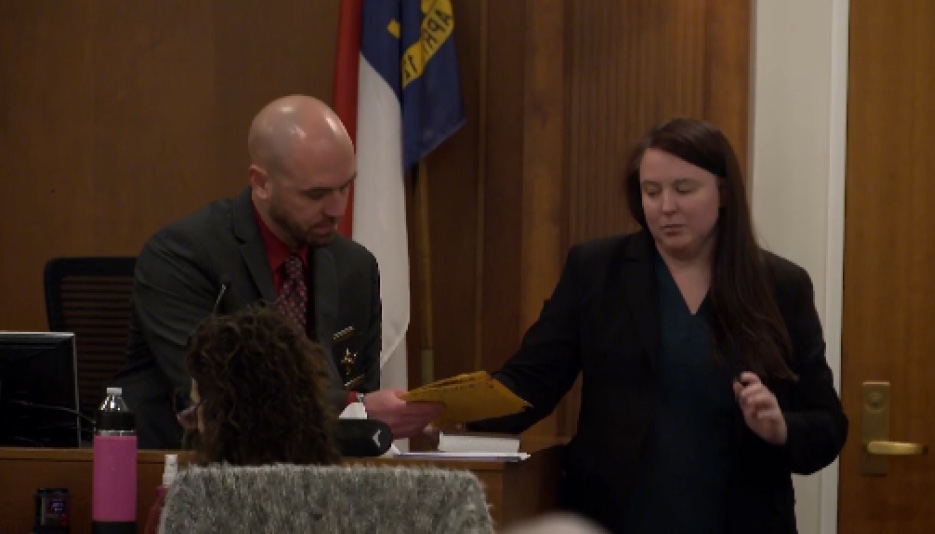
Next, state attorney Anna Orr began her cross-examination of Ross. After clarifying details about Ross’ recollection of events, the prosecution questioned the defendant about a series of Snapchat messages he sent in the days immediately following the incident. Each message, sent to mutual friends of his and Clark’s, indicated Ross was unaware what had happened or where Clark was, which were lies as proven by his own testimony. Ross said that he did not recall sending any of them, although he did say he recalled feeling “paranoid.” The defense objected as the prosecution went over each message, saying it did not need to go through them all if Ross couldn’t recall any. This was overruled by the judge.
After redirect from defense, which consisted of further clarification regarding timing, positioning, and more small details from the incident, the defense rested its case.
Judge, Prosecution, and Defense Debate Jury Instructions
Once the jury left the courtroom, both the defense and the prosecution presented arguments for which specific statutes should be considered by the jury. This creates the list of potential charges they could find Ross guilty of.
At this point, the defense renewed its motion to dismiss charges, claiming sufficient evidence had been shown that Ross did not kill Lyric Woods, and that his actions against Devin Clark were justified as self-defense. However, the judge said that evidence must be taken in the light that most favors the deceased parties, and denied the motion.
In the argument over whether instruction on self-defense statues would be given to the jury, the judge said yes, and accepted the prosecution’s request to include a stipulation over excessive force. If the jury decided Ross acted in self-defense but used excessive force, he would face a voluntary manslaughter change rather than involuntary manslaughter over the killing of Devin Clark.
A large part of whether self-defense applies in this case comes down to whether the victims were fleeing at the time they were shot. Evidence points to the majority of the gunshot wounds suffered by Woods and Clark entered their bodies from the back, which could indicate an attempt to flee their attacker. Despite the state’s attempts to remove the self-defense piece of instruction, the judge decided to include it.
One thing both sides seemed to agree on is that the case likely doesn’t fit the bill for second-degree murder according to either version of events. The state argued that either Ross acted in self-defense while killing Clark and didn’t kill Woods, or he killed them both and should be charged with two counts of first-degree murder. The defense argued that while it also did not see a second-degree charge applying in this case, they still thought it would be helpful to be included for the jury’s consideration. The judge ultimately decided she would instruct on second-degree murder.
Defense Presents Closing Arguments, “Fighting For His Life”
Upon returning, the jury heard closing arguments from both the defense and prosecution, starting with the former.
The defense presented the jury with a PowerPoint titled “Fighting For His Life.” The presentation featured a breakdown of the differences between first-degree murder, second-degree murder, and manslaughter. Defense attorney Jonathan Trapp went through the list of witnesses, recalling what each provided for the trial and asking the jury to exercise wisdom when considering the weight of witness testimony.
He highlighted a few key details from the case which may point to Devin Clark having been an aggressor that night, including Clark’s lip being busted open and derogatory messages he sent about Woods prior to Ross picking them both up.
He claimed that Christian Sykes must have either embellished his story or misunderstood what Ross told him over the phone, which would explain the inconsistencies between testimony from both. He used the example of how Sykes claimed the shots went off inside the car, which is contradicted by physical evidence.
Finally, he emphasized that in order to return a guilty verdict for first-degree murder, the jury must be certain beyond a shadow of a doubt. He used a physical model of a mouse, a cat, and a piece of cheese in a box to explain. If a mouse is left in a closed box with cheese, and you find the cheese gone, it is reasonable to infer the mouse ate the cheese, he demonstrated. However, if you leave a mouse and a cat in a box with a small hole, and you find the mouse gone, you cannot reasonably infer without doubt the cat ate it, as it may have fled through the hole. Trapp portrayed this case as a box with similar holes.
“The Backs Of These Victims Tell You Everything You Need To Know”
Next, the prosecution presented closing arguments, delivered by Anna Orr. She began her arguments by asking the jury to use their best judgement when evaluating any statements made by Ross on the stand.
“The defendant is not a neutral witness,” she said. “He has every reason to explain, to minimize, to justify. He told you what he needs you to believe.”
She spent a great deal of her time explaining numerous ways the state believes Ross’ testimony is directly contradicted by other evidence in the case. She pointed out how resident James Rogers testified he heard two instances of gunfire with minutes between them the night of the crime, which is contrary to Ross’ account that everything happened within a minute.
She emphasized Ross’ demeanor throughout testimony, which she described as “flat and unemotional,” and not reflective of what he calls the worst moment of his life. She asked the jury to recall attributes they highlighted as important when evaluating how trustworthy an individual is, and asked whether they believe Ross demonstrated those traits during his testimony.
She claimed that Ross lied about returning to the crime scene to retrieve his quarter zip hoodie, instead alleging the true motive for returning was to dispose of Clark’s phone. She pointed out that in the security footage of Ross at the gas station the night of the crime, he can be seen wearing a black quarter zip sweater, much like the one he claimed to need to retrieve after that point. She highlighted this as an example of Ross being dishonest during testimony.
She speculated about what may have led Ross to kill both Clark and Woods in the event he is guilty of two counts of first-degree murder. She pointed out that Clark seemed to promise Ross sexual favors from Woods, which could have led to the outburst he claimed Woods had where she said she “isn’t a whore.” She posited that being denied what he felt he had been promised may have caused Ross to become violent — although there is no specific evidence supporting this narrative.
Orr ended closing arguments by stating “the backs of these victims tell you everything you need to know,” emphasizing the fact that the majority of gunshots hit Woods and Clark in the back, and how this detail points towards first-degree murder and not self-defense.
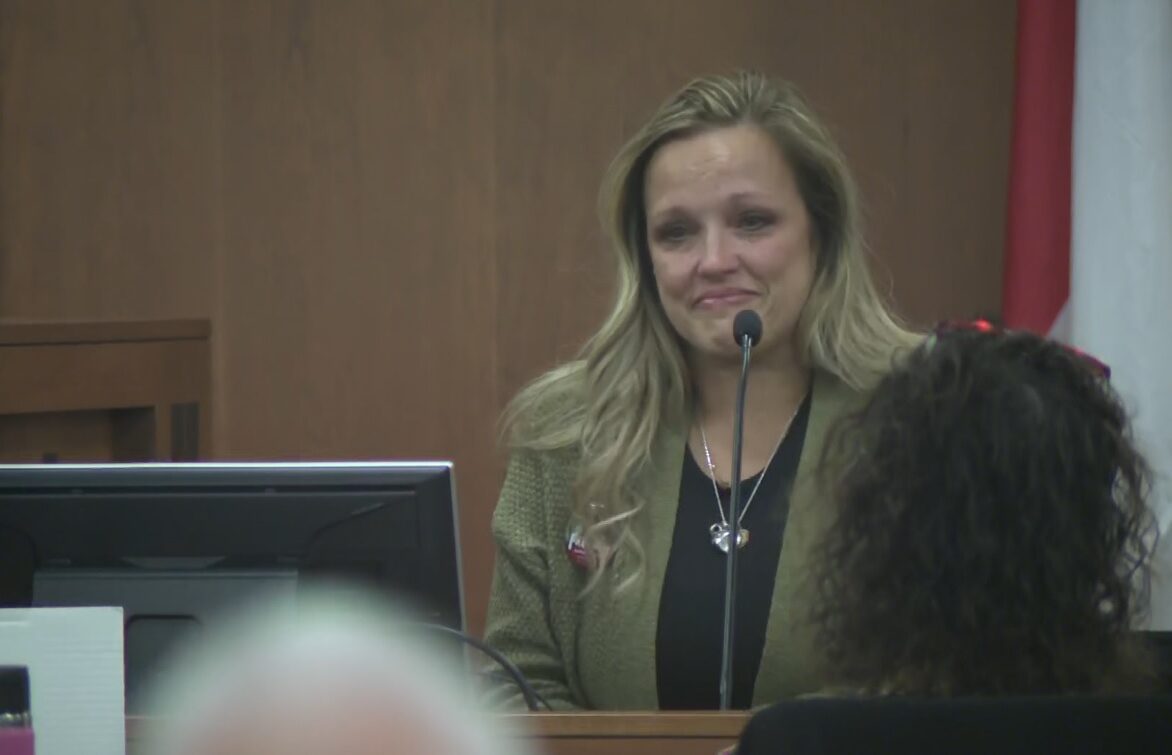
Multiple individuals in the courtroom, including parents of Woods and Clark, were moved to tears by the closing arguments.
Jury Receives Instructions, Leaves To Deliberate
Following closing arguments, the judge delivered detailed instructions for the jury to consider while deliberating, providing explanations of the differences between potential charges, as well as how to consider evidence and witness testimony.
After roughly 30 minutes of deliberation, the jury requested a whiteboard and a pad of paper, crime scene photos to be reviewed in court, Sykes’ testimony to be replayed in court, and for security footage from the gas station to be replayed in court, all of which will be handled Friday.
The judge ended the day by discussing with the prosecution and defense how court proceedings will move forward in the event of inclement weather. As of Thursday evening, the jury has yet to reach a verdict. Court will resume at 9 a.m. Friday morning.
Feautred image via the courthouse press pool.
Chapelboro.com does not charge subscription fees, and you can directly support our efforts in local journalism here. Want more of what you see on Chapelboro? Let us bring free local news and community information to you by signing up for our newsletter.