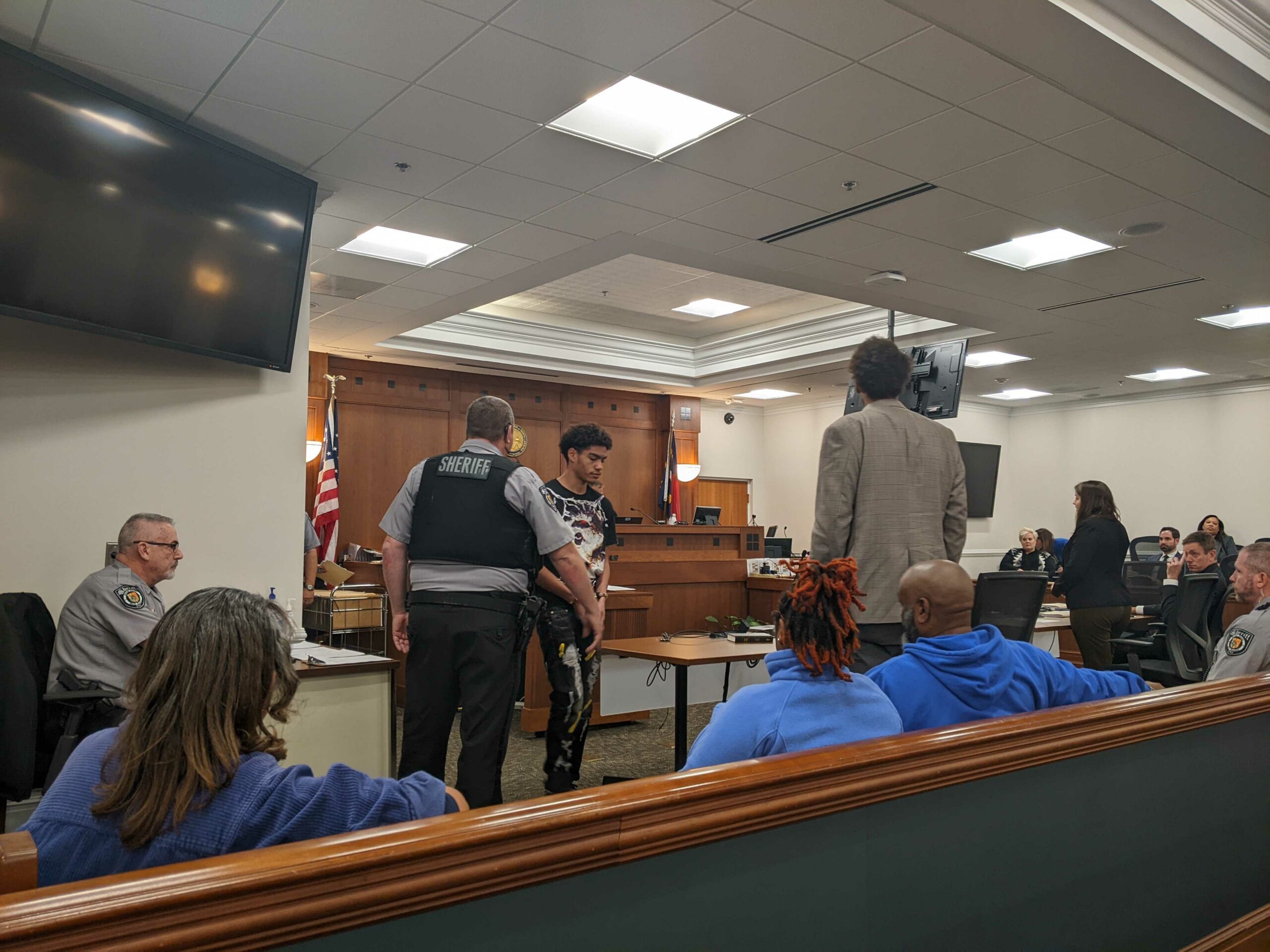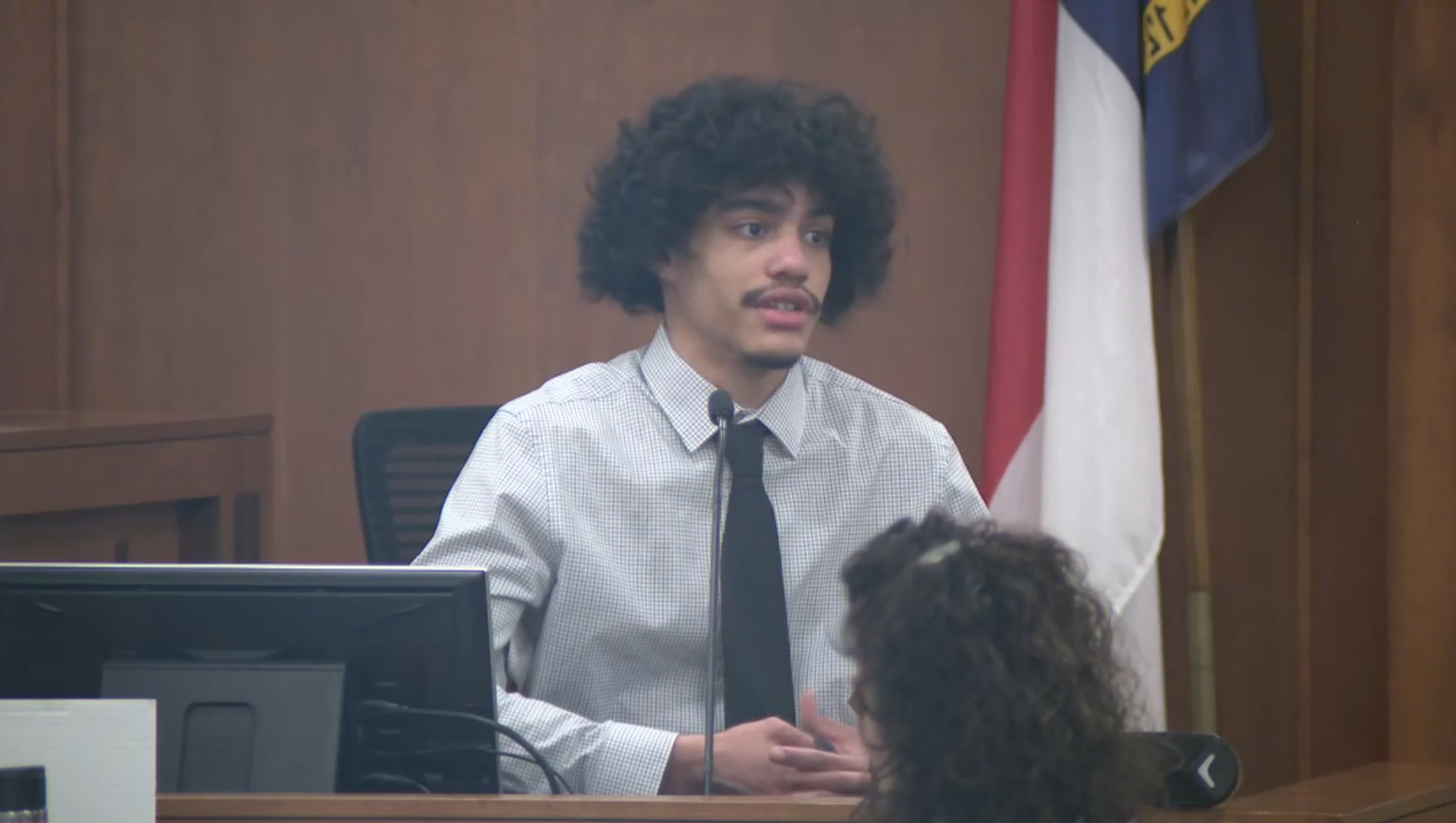
Orange County Superior Court returned to action on Tuesday after a long weekend, with the trial for Issiah Ross over the 2022 killing of 14-year-old Lyric Woods and 18-year-old Devin Clark continuing — and witnesses sharing critical information to the prosecution’s case.
After detailing the crime scene and evidence discovered on Sep. 18, 2022, as well as the groundwork for how law enforcement sought suspects in the case, state witnesses shed more light on how and why investigators charged Ross with first-degree murder. Tuesday featured a gas station’s security footage, the recitation of Snapchat messages, displays of cellphone geographical positioning and a witness who testified to hearing Ross confess he was responsible for killing Woods and Clark.
Here are the highlights:
Witness Shares Ross’ Confession — Which Conflicts With Some Evidence
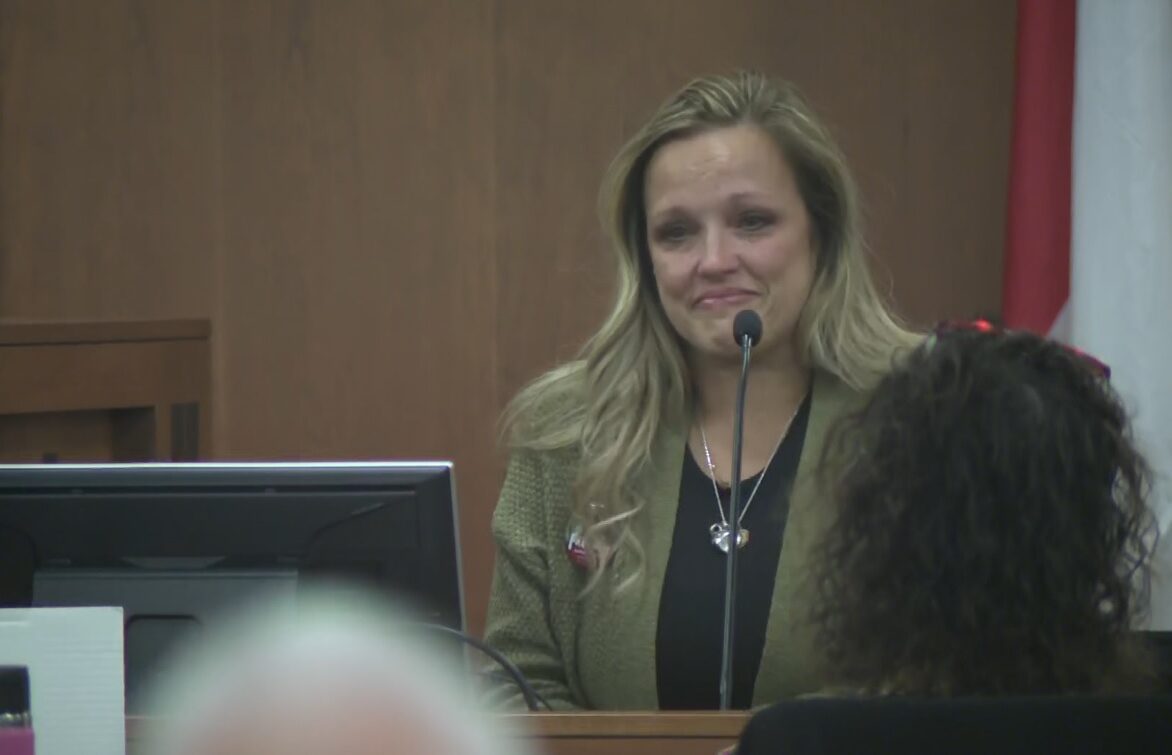
The prosecution brought its star witness to the stand Tuesday afternoon: Christian Sykes, a friend of Ross’ who told law enforcement in Sep. 2022 that Ross admitted to him about shooting two people and later confirmed it was Devin Clark and Lyric Woods. Sykes — who said he got to know Ross through smoking weed together with Sykes’ cousin — said Ross called him on Sunday, Sep. 18 as he was preparing to leave North Carolina after being thrown out of his mothers’ house.
While Sykes was hesitant to share details under oath, a recorded interview between Sykes and law enforcement on Sep. 19, 2022 proved to be pivotal in investigators identifying Ross as the third person in the car with Clark and Woods when they were shot and left in rural Orange County two days before.
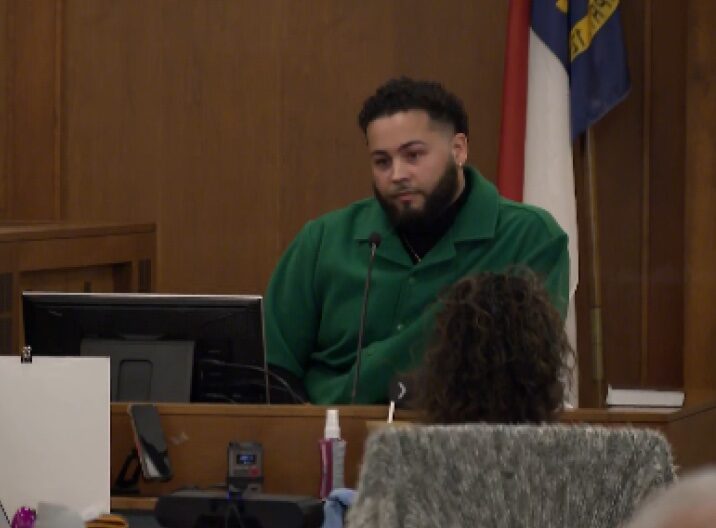
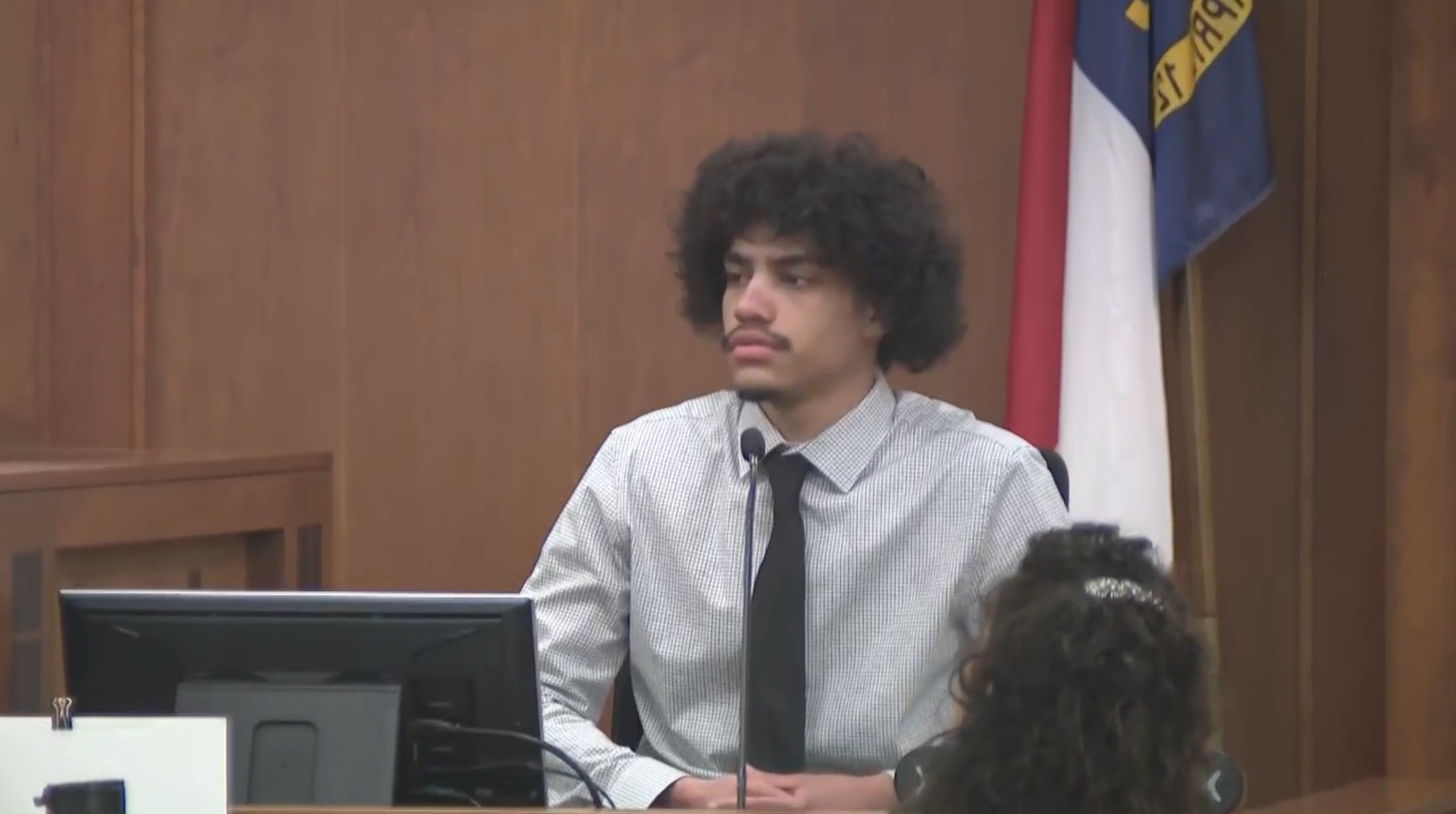
Christian Sykes shares witness testimony during the trial for Issiah Ross on Tuesday, Jan. 20, 2026. Sykes, who was previously friends with Ross, testified that Ross privately confessed to killing Lyric Woods and Devin Clark in Sep. 2022 before leaving North Carolina. (Photo via the courthouse media pool.)
Sykes acknowledged both in 2022 and on the stand that he knew Ross to often stretch the truth. But he recalled Ross showing off a gun in the video call and saying he had “capped” two people the night before after giving them a ride to have sex.
“He didn’t give me [any] names,” Sykes said in 2022. “He was like, ‘Well, the dude was holding the beam on me,’ and I’m assuming [Ross] meant the gun had a laser type of [attachment] to it. And he was pointing it at [Ross], and [Ross] was like, ‘I don’t like that.’
“He was like, ‘I told him to stop,” Sykes said in the video, “and then he said the grabbed the gun, and they were wrestling with the gun. Then I’m assuming Devin had his finger in it, and [Ross] said a bullet went between his legs. And [Ross] said he got the gun from [Clark] and shot him. And he said…the girl who was in the backseat…’She saw everything, so I turned around and I shot her.'”
Both under oath and in the interview footage, Sykes also said Ross called him outside his step-father’s house on Sep. 18 before being taken to the bus station and traveling northeast. While he came away thinking the interaction was unusual, Sykes said he began to suspect more after he told a friend about Ross’ story and they brought up the missing person reports for Woods and Clark. When he messaged Ross again and directly asked about the two people he shot, Sykes said Ross acknowledged they were Woods and Clark — messaging their names, saying “rest up” before adding an emoji.
Some of Sykes’ interview with law enforcement did not match the evidence and testimony about the seized 2017 GMC Terrain Ross was driving that night — as none of the investigators found bullet damage or shell casings in the car, nor an extreme amount of blood when running a Luminol test. The defense asked several times whether Sykes was sure he remembered the call correctly. Sykes maintained what he said on the video is how he remembered it, and he could not tell if Ross was saying he “capped them” or “capped him.” He also maintained seeing Ross hold up a black handgun in the video and clarified that while Ross implied it was used in the shooting, he did not remember the 17-year-old confirming it as the murder weapon. Dexter Clark Jr., Devin’s father, testified on Jan. 14 that he reported his 9-millimeter, grey-green Canik as missing from his house shortly after Devin’s body had been found in Efland.
Snapchat Records Reveal More About Sep. 17 Meeting, But No Instigating Messages
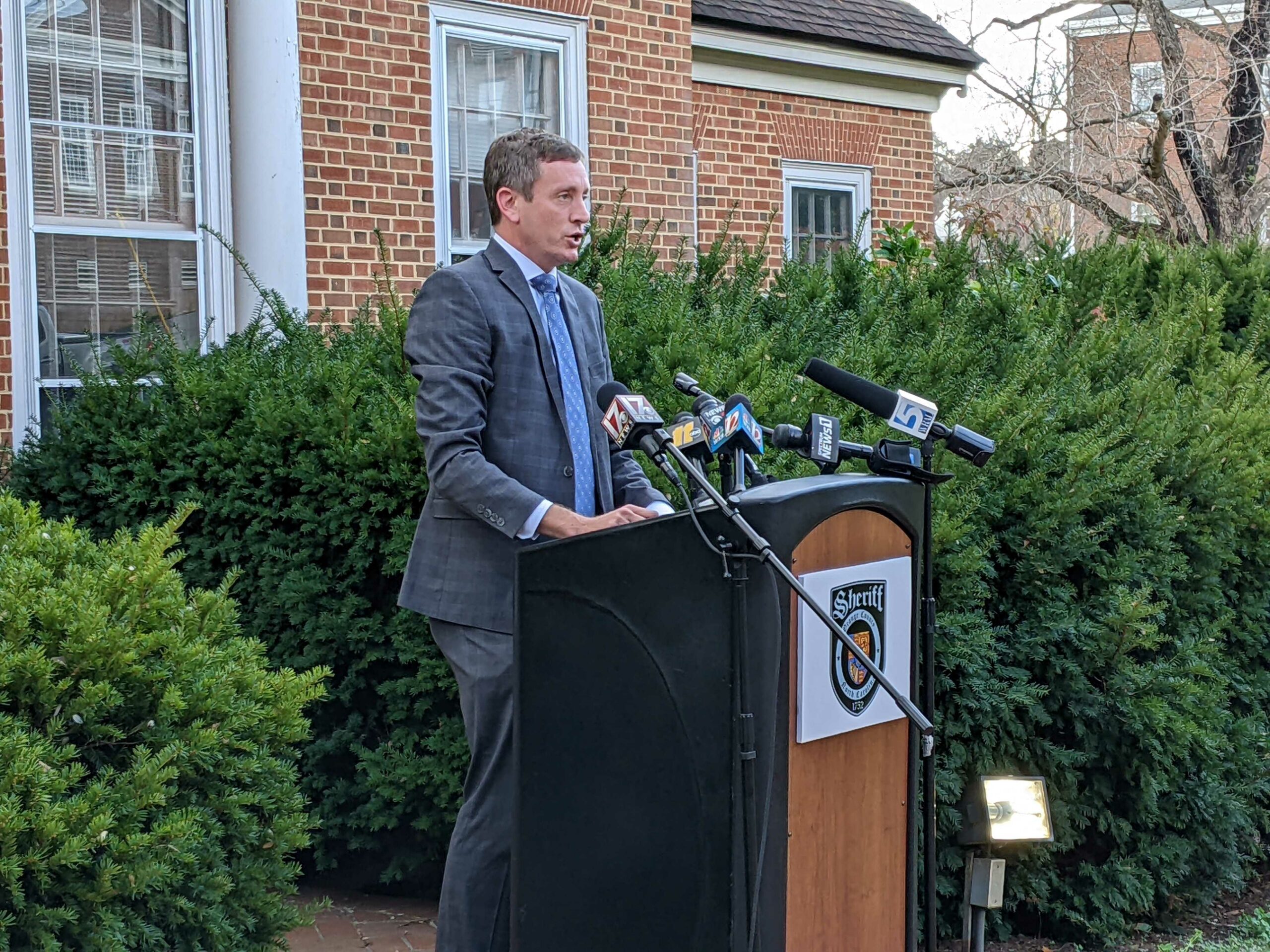
Keith Goodwin — the Sgt. of Criminal Investigation for the Orange County Sheriff’s Office, who is heavily assisting the prosecution with the case — took the stand as the second witness of the day. While he rehashed his experience at the crime scene on Sep. 18 and early investigation steps, much of his testimony was spent discussing a forensic download of Lyric Woods’ devices and efforts to get phone records for both Devin Clark’s cellphone and the phone number of Issiah Ross once he was established as a suspect.
From the data on Woods’ devices, Goodwin testified the sheriff’s office was able to see her messages with a Snapchat user during the 1 a.m. hour on Sep. 17. She told the account — which investigators later confirmed belonged to Clark — her home address and how to pick her up without being detected. With the Snapchat user was confirmed as Clark, Goodwin filed a search warrant with the messaging app to get other data from Clark’s account on the night of Sep. 16 into the morning of Sep. 17. Two strings of Snapchat messages, one to an unidentified user and another to a group chat with 11 users, claimed to offer “free buns” if Clark could borrow a ride — indicating Clark expected Woods to provide sexual favors.
Goodwin testified that no responses were given to Clark’s message in the group chat and no direct communication with Ross was found by the warrant. The Orange County Sheriff’s Office investigator said because of how Snapchat handles data, there was no way to access any prior conversation history between Clark’s and Woods’ accounts. Goodwin also said a data search of the infotainment system of the GMC Terrain Ross drove on Sep. 17 returned nothing substantive for law enforcement’s investigation.
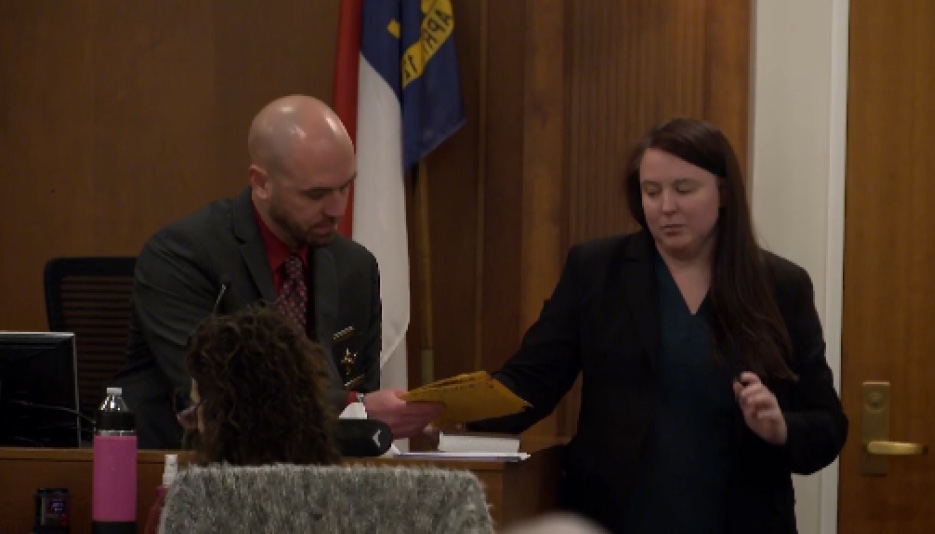
Investigator Keith Goodwin with the Orange County Sheriff’s Office and prosecution team confirms a piece of evidence to Assistant District Attorney Anna Orr during testimony on Tuesday, Jan. 20, 2026. (Photo via the courthouse media pool.)
Footage of that white Terrain pulling into the Petro Gas Station off Buckhorn Road in the 2 a.m. hour of Sep. 17 also helped strengthen law enforcement’s reasoning to search for Ross. Not only did footage show the teenager slowly the crash the car into a pillar at the gas station which aligned with its front bumper damage, but it showed him walking up to the window to pay for gas — which gave investigators a look at the person who matched Sykes’ description of Ross.
Ballistics and Cell Data Experts Share Thoughts on Evidence
Investigators did receive information from Clark and Ross’ phone carriers after Goodwin filed a search warrant with each to get historical records of the phones’ use and geographical location. Goodwin confirmed that Clark’s phone pinged around the crime scene on Sep. 17, but was not found during law enforcement’s sweeps of the utility easement, while Ross’ phone showed that he went to Delaware.
More details on this were shared in the afternoon by Harrison Putman, an FBI special agent who works with the bureau’s Cellphone Analysis Service Team. The specialized group uses cell sites communicating with mobile phones’ signals to determine general coordinates of phones by proximity and distance to the antennas. Putman testified working with Verizon and T-Mobile to check the geographical positioning of both Clark and Ross’ phones based on their data the morning of Sep. 17.
Using timing events that trigger a signal to the cell sites, Putman testified that Clark and Ross’ phones were near each other and close to Clark’s home around 1:23 a.m. before arriving to Woods’ residence before 1:39 a.m. From there, Putman said Clark’s phone had 61 timing events at the crime scene in Efland from 1:45 a.m. to 2:43 a.m., meaning the phone was likely stationary within that area. He added that since 2:44 a.m. on Sep. 17, that phone has not shown up on Verizon’s cell site data since.
Ross’ phone, meanwhile, also put him at the crime scene consistently between 1:45 a.m. and 2:14 a.m. before he left and drove to the Petro gas station two miles up Buckhorn Road. The FBI special agent said Ross’ phone pinged several times in that area from 2:20 a.m. to 2:29 a.m. before the phone returned to the crime scene for roughly ten minutes. Ross arrived back at his mother’s residence around 3:09 a.m., according to cell site data interpreted by Putman.
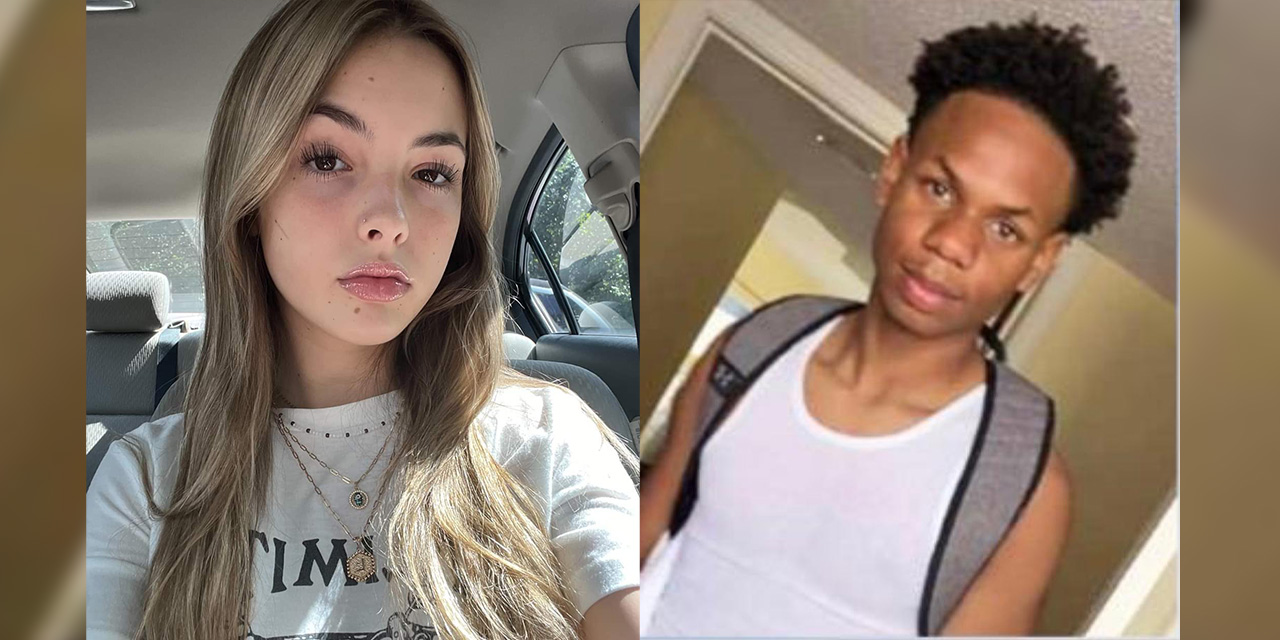
Photo of Lyric Woods via Facebook. Photo of Devin Clark via the National Gun Violence Memorial.
Firearms examiner Margaret Le Senechal also took the stand on Tuesday. An employee in the State Crime Lab, she examined the shell casings and a bullet jacket found at the crime scene, as well as the two bullets found in Woods and Clarks’ bodies, to see if they matched. While she said without the specific weapon she could not definitively say, Le Senechal said each shell casing was fired either from the same gun or by “a different firearm manufactured with the same tool and same approximate state of wear.” She cited the breech face impressions and detail on the casings’ primer and head as key characteristics for drawing her conclusion.
Judge Confirms Defense’s Plans to Admit Guilt
The trial will resume at 9:30 on Wednesday morning, with the prosecution expected to have state crime lab employees testify to their results from crime scene evidence. Once that is complete, the defense will begin to make its case for Issiah Ross acting out of self-defense.
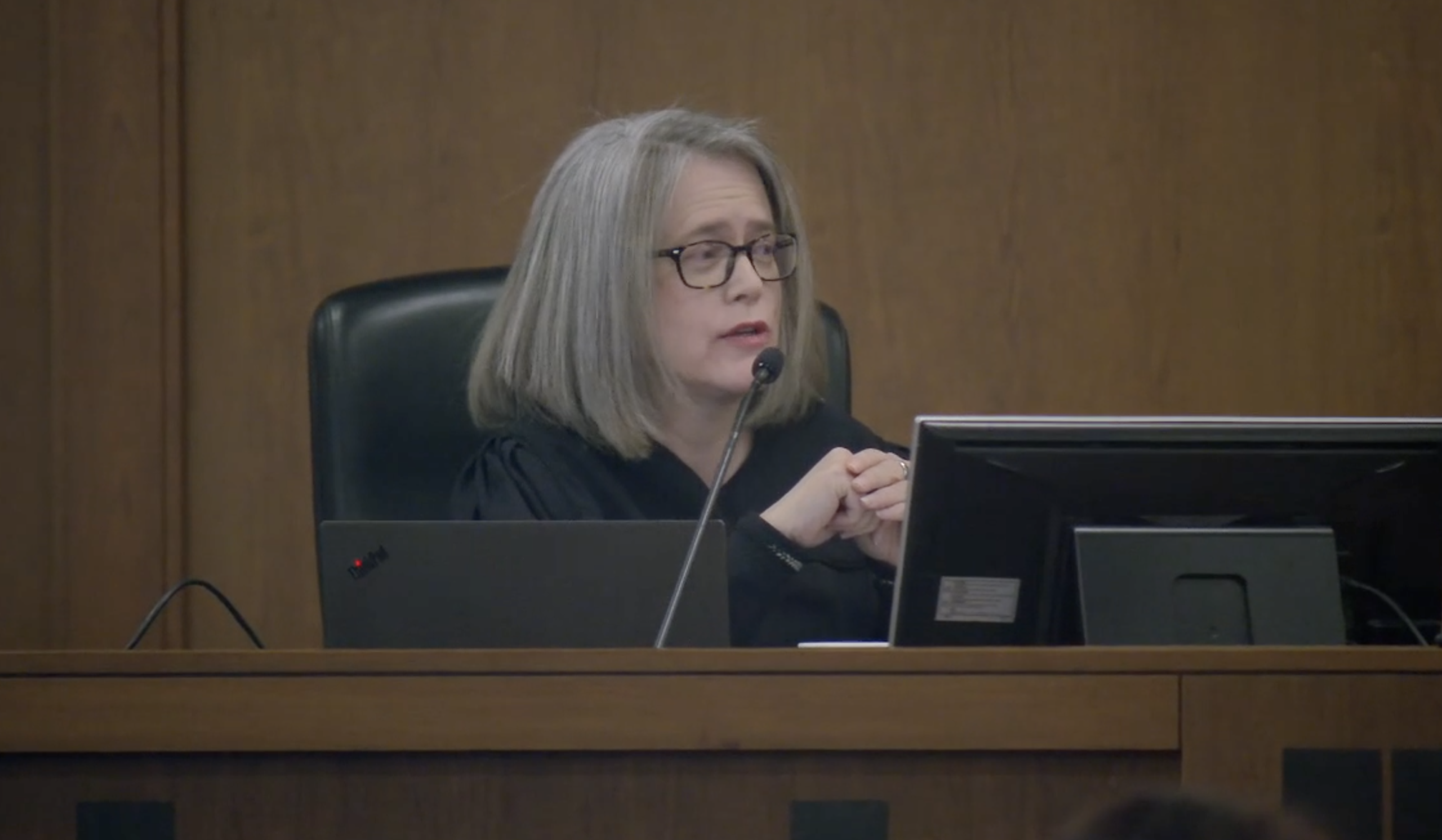
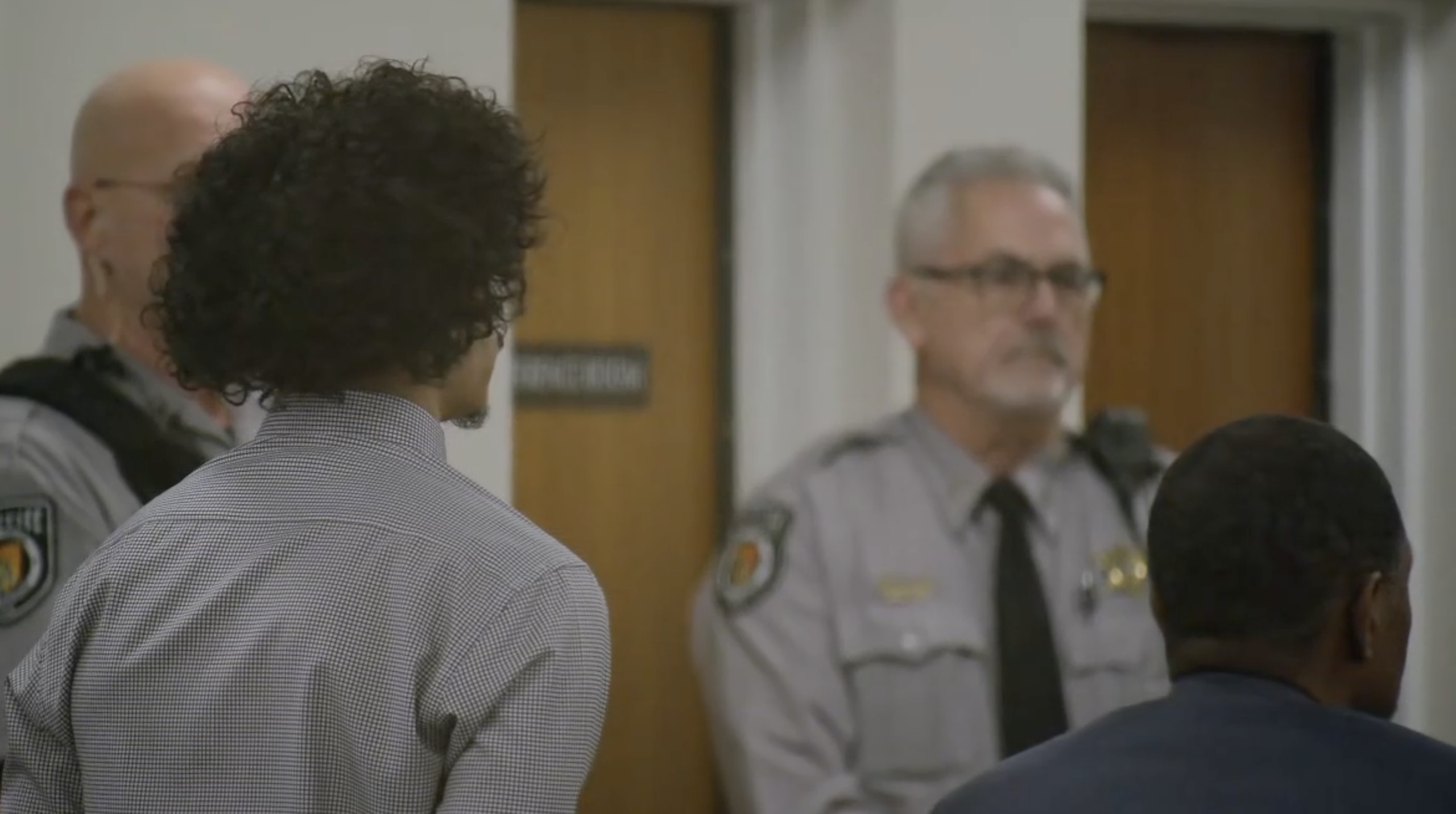
That argument was foreshadowed on Jan. 14 during opening statements, when defense attorney Jonathan Trapp told the jury his client shot Devin Clark after Clark had already shot and killed Lyric Woods. On Tuesday morning, prior to the jury returning to the court room, Judge Stephanie Reese confirmed with Trapp and Ross that the pair had spoken about the precedent set by 1985’s State v. Harbison, which is used to protect those on trial from their attorneys admitting guilt without the defendant’s consent. The case has since been used as a cornerstone of a trial strategy, which Ross confirmed he had not only discussed with Trapp, but supported. Tuesday’s closing comments by the state and defense indicated that Ross is planning to take the stand for testimony — likely on Wednesday.
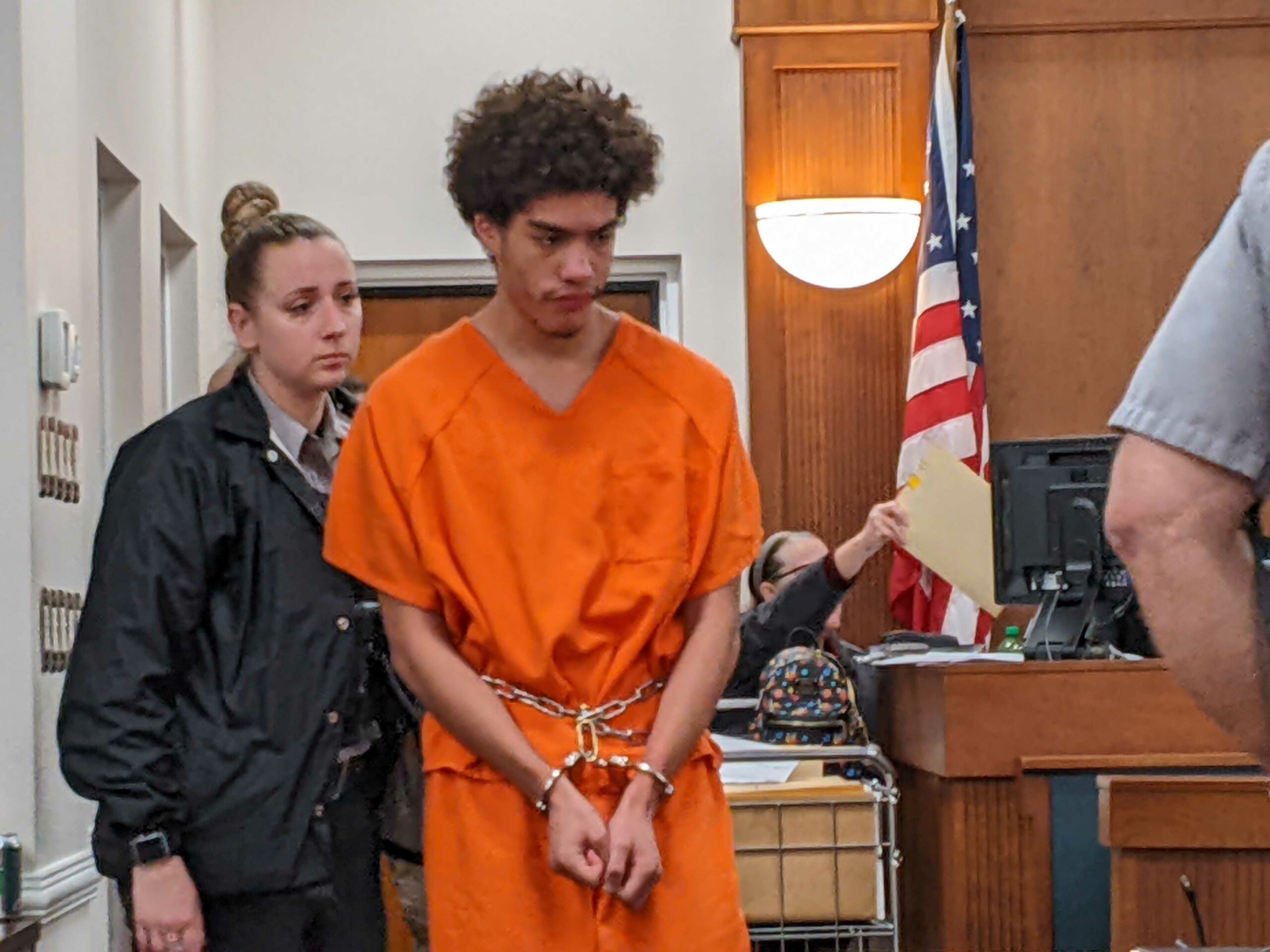
Prior to the trial getting underway, the 21-year-old turned down a plea deal from the state to bump his charges down to second-degree murder and serve 20-25 years concurrently and chose to proceed with jury selection. If convicted on the two first-degree murder charges, he could face life in prison.
Chapelboro.com does not charge subscription fees, and you can directly support our efforts in local journalism here. Want more of what you see on Chapelboro? Let us bring free local news and community information to you by signing up for our newsletter.