Johnny Mariakakis keeps a binder filled with newspaper clippings and photos of floods around the line of businesses at his Mariakakis Plaza. Having been at Eastgate facing 15-501 for decades, he’s seen plenty of floods — but never anything like last July’s Tropical Storm Chantal. He said he remembers begging firefighters that night to not smash in his window, despite being inside with water up to his waist.
Because of these experiences, Mariakakis is acutely aware of how quickly water rises behind his building, even with the town’s construction of a basin park a few years ago.
“It’s going to flood again,” he said. “And again.”
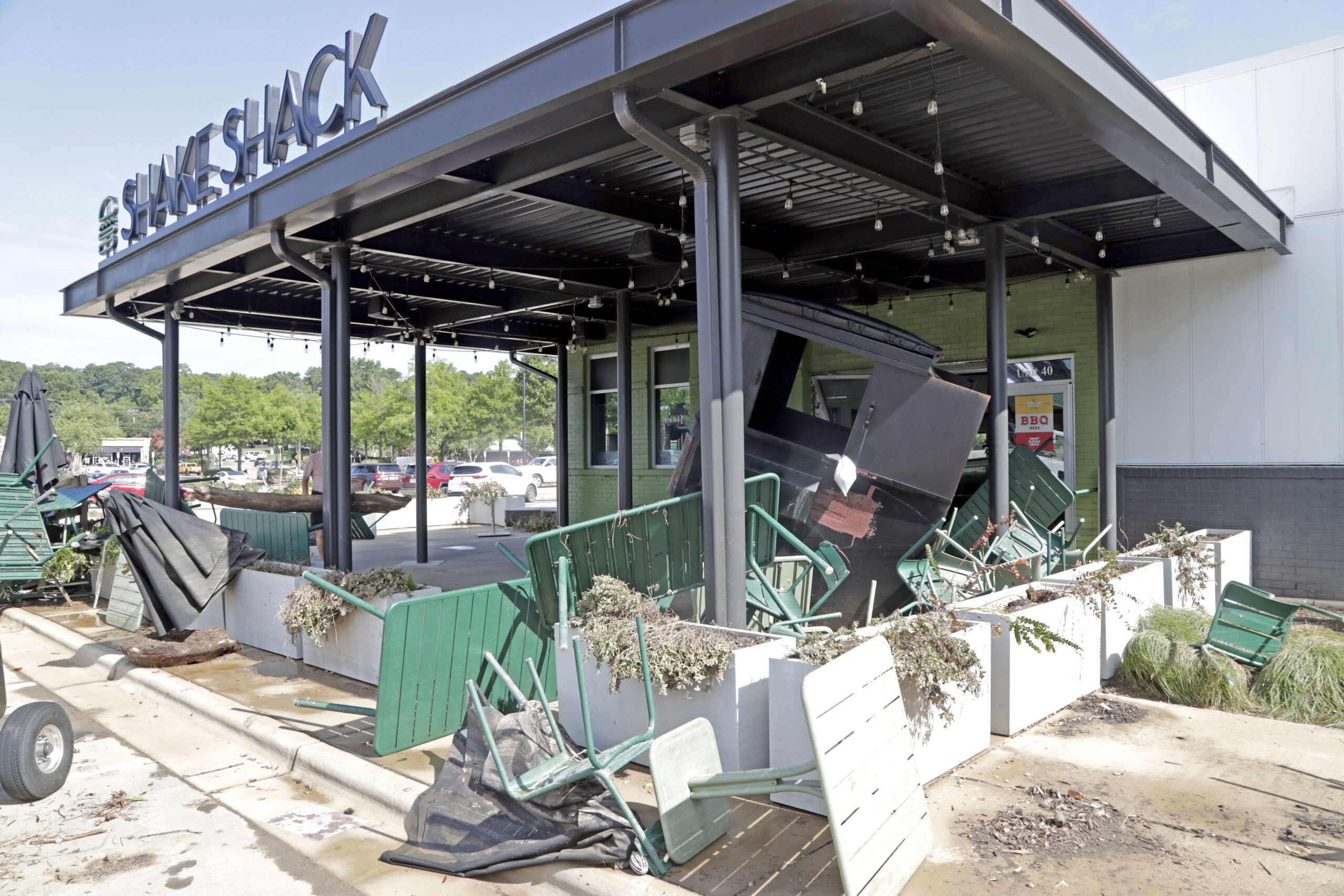
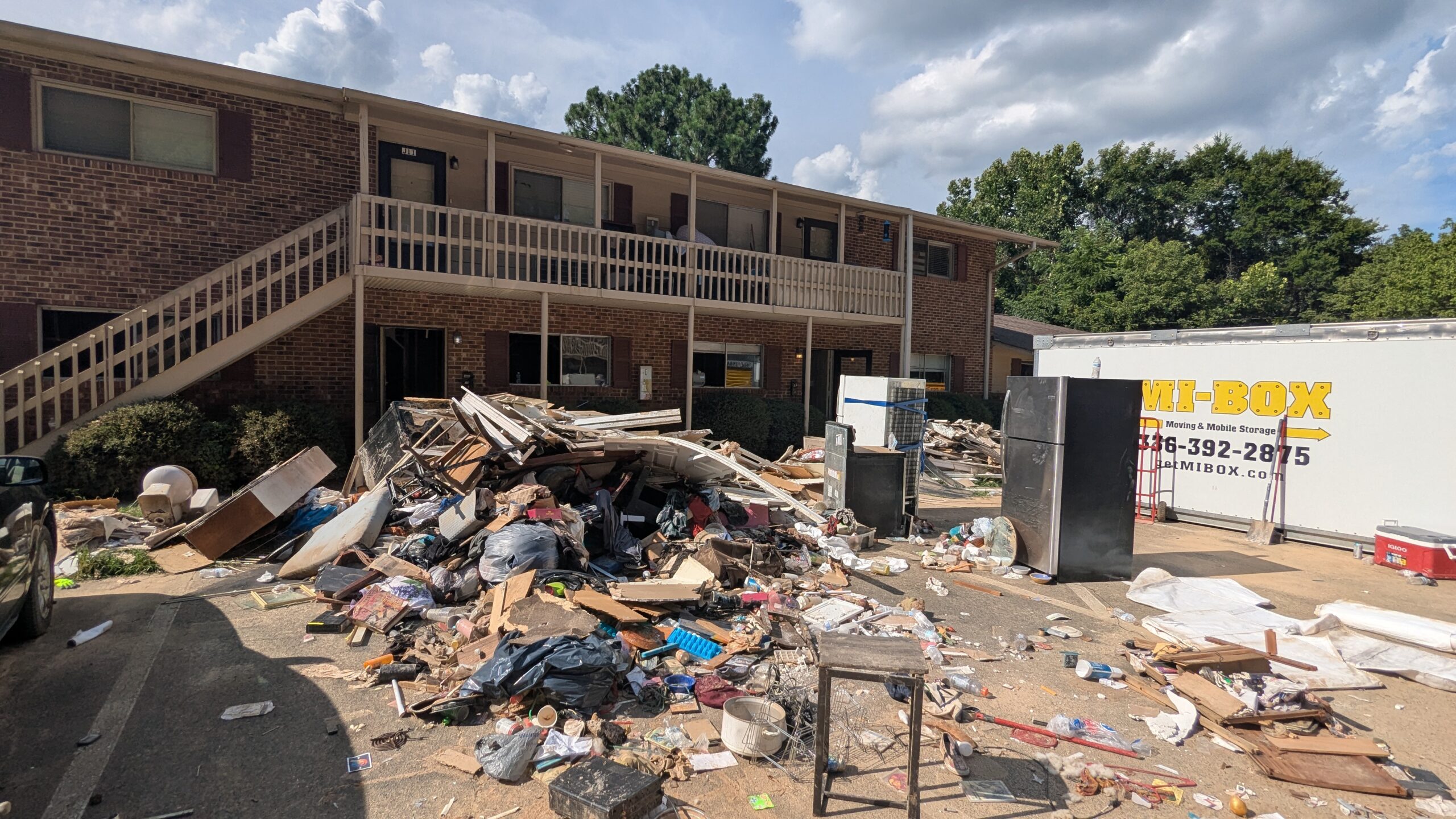
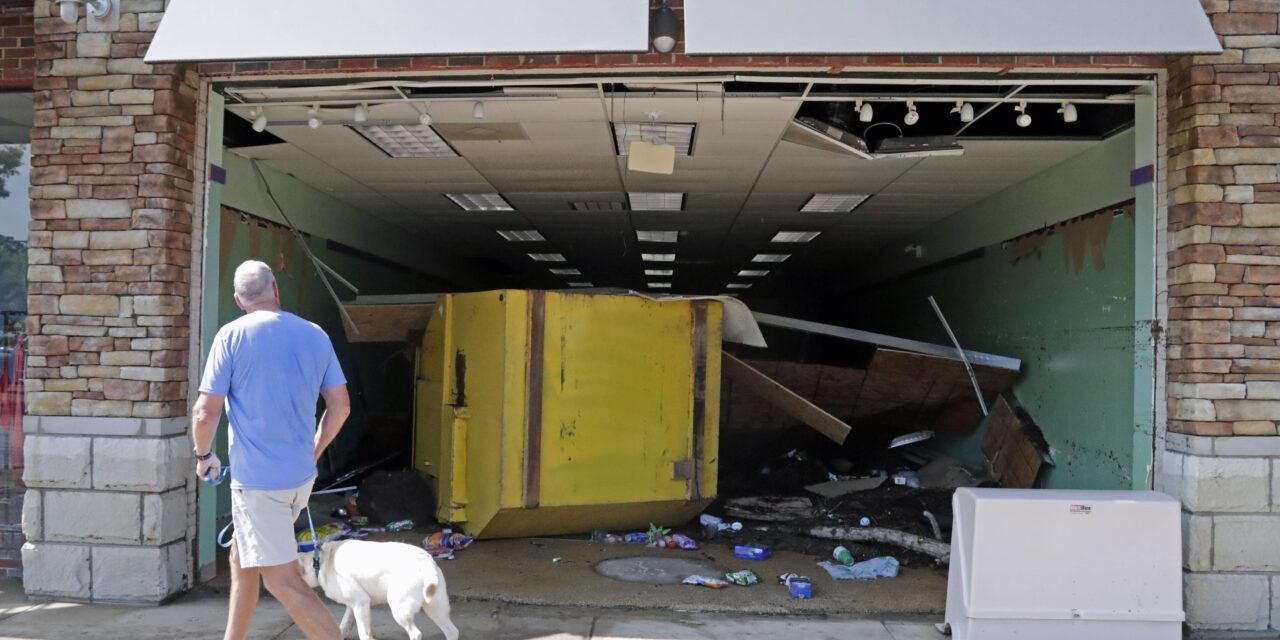
Monday marks the first anniversary since Tropical Storm Chantal struck central North Carolina, dumping historic amounts of rain on parts of the Triangle and creating intense flash floodwaters that damaged homes, roads, infrastructure and more. One of the more high-profile groups impacted was the local business community — as vendors in several areas saw water enter their buildings and leave significant damage.
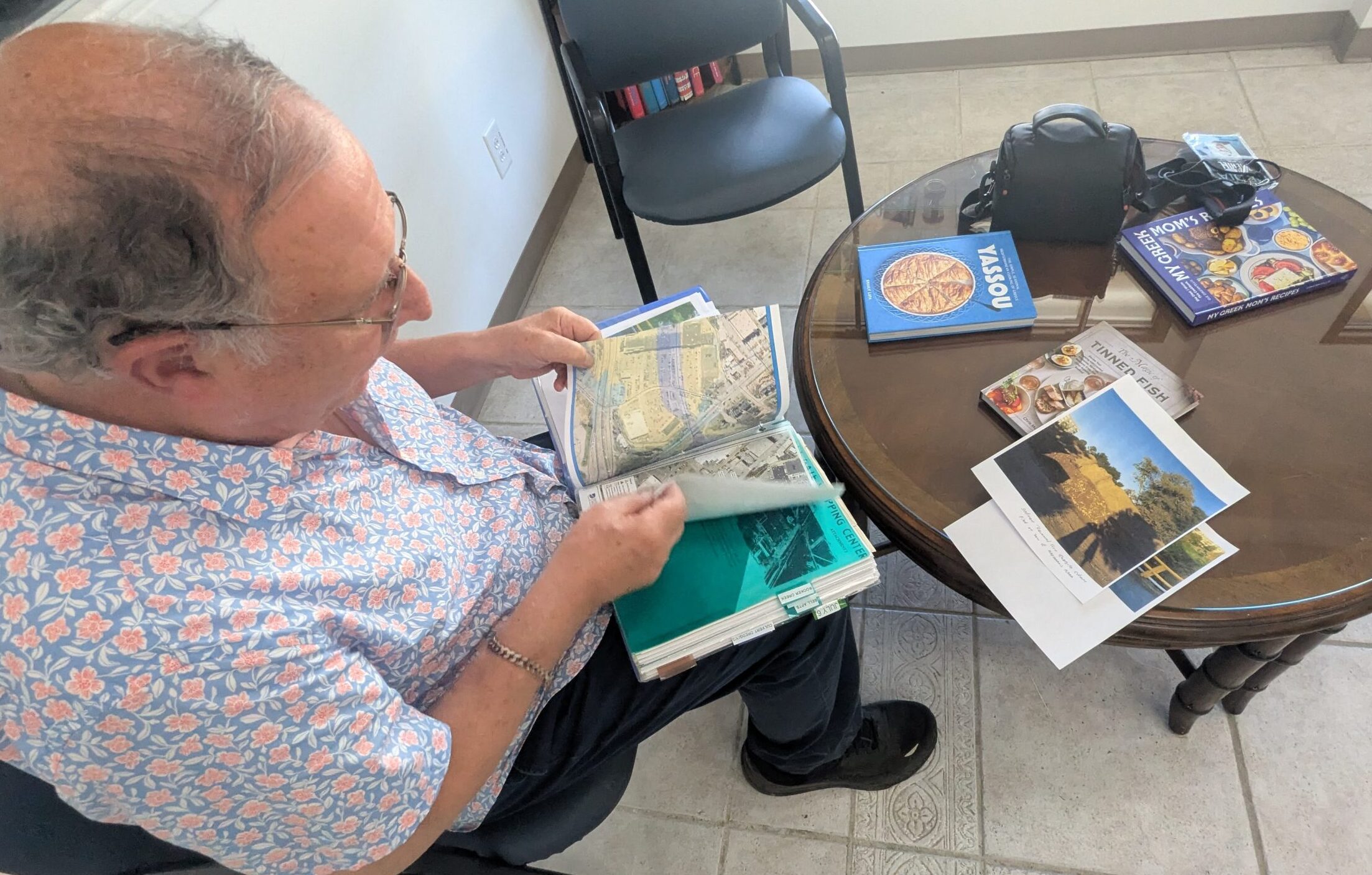
Johnny Mariakakis flips through a binder of newspaper clippings and photographs of work around his Mariakakis Plaza property, including all of the major floods and remediation work that have happened. (Photo by Brighton McConnell/Chapel Hill Media Group.)
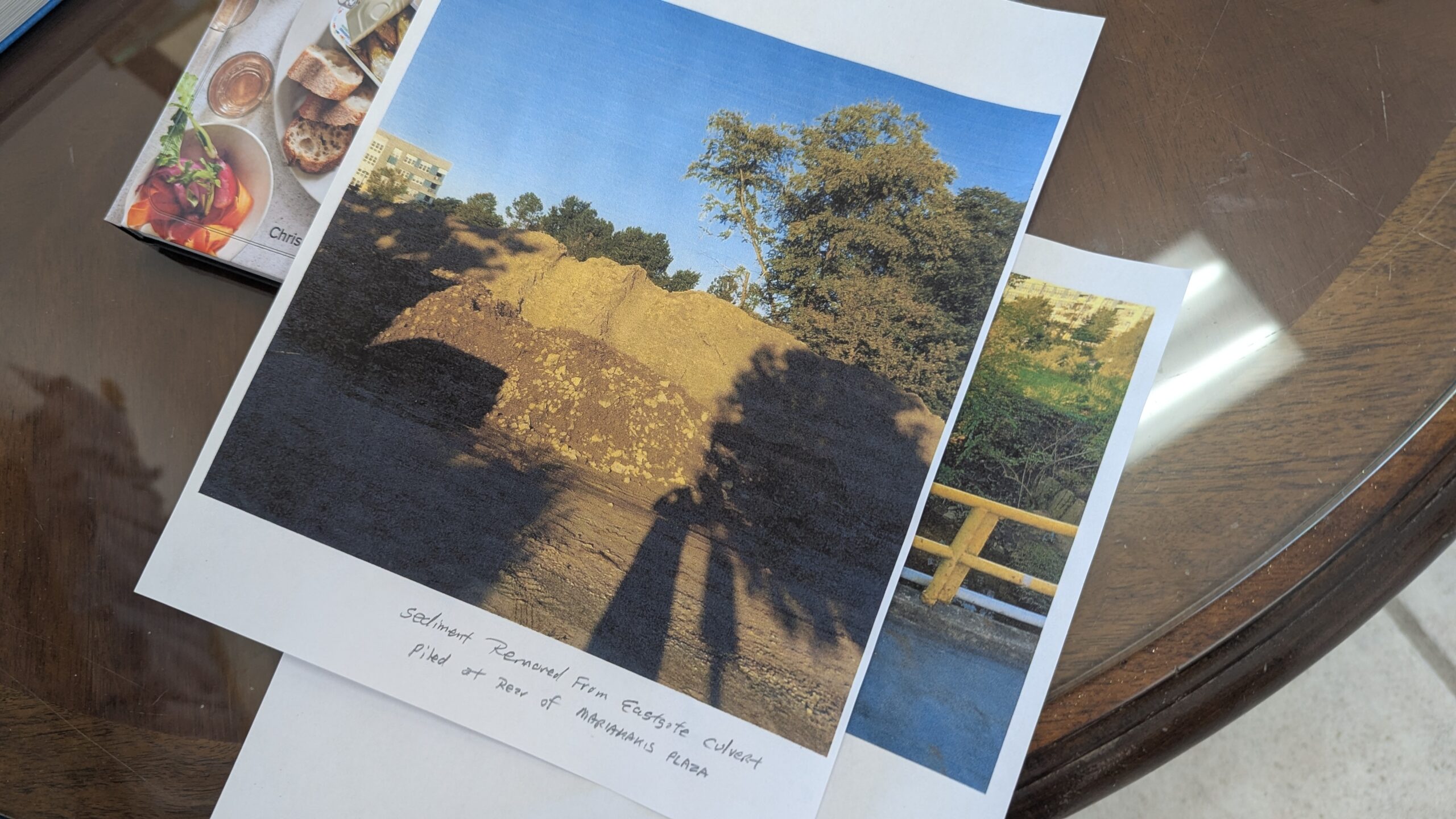
A photo of sediment excavated by the Town of Chapel Hill from Booker Creek behind Eastgate Crossing and Mariakakis Plaza when clearing the land that would become its basin park. (Photo by Brighton McConnell/Chapel Hill Media Group.)
In the aftermath of the storm, Mariakakis said he used flood insurance and a GoFundMe campaign to pay for roughly 60% of his expenses, but the experience and financial gap he faced made him consider closing and selling the plaza. But his tenants convinced him otherwise, saying many would not be able to find a space that fits both their needs and landlord that understands their price point like Mariakakis.
One of those tenants is Cinderella Riggsbee, who runs the Shoe Repair. She also considered closing after Chantal’s flooding, in part because she could retire. But her family convinced her to reopen and it is paying off.
“I’m coming back at full blast now,” Riggsbee said with a smile.
While some of her equipment is still out of order from the floodwaters, Riggsbee and her family members are stepping up to help address customers’ requests. Not only is Riggsbee one of the few regular cobblers in Orange County, but patrons’ high praise and good reviews draw in people from all over the state to use her repair services.
“To me, it’s getting better because I have a lot of people coming in,” she told Chapelboro. “People I haven’t see before…and then the ones that were coming to start with, they go online and find out I’m back, they call me to tell me, ‘Thank you for coming back.’ And I enjoy hearing that…[it] makes me feel really good.”
It was not just Eastgate Crossing and Mariakakis Plaza that saw enough rain to cause flood damage. Some businesses in Carrboro’s South Green took on water, while others in downtown Pittsboro suffered flooding. That included the antique store Reclamation, run by Tiana Thurber, which saw inches of water damage many of the goods in her shop. She became so concerned about the potential for another storm to flood her Fayetteville Street space that when a new spot became available along West Street, she asked if she could break her lease and her landlord agreed. Thurber told Chapelboro the move is paying off with great traffic to her store — but even before then, the greater Pittsboro community was showing up to help.
“I was overwhelmed,” she told Chapelboro. “We had a grand reopening party [in the fall], and there was probably 500 or 600 people who came. Very supportive…and even after that, the whole entire year before we moved out, people were making purchases that maybe they didn’t even need just to show their support. It was really very inspiring.”
Over in Eastgate Crossing, questions swirled about just how many business tenants would reopen out of their own fear – since the shopping mall is especially prone to flooding with Booker Creek running underneath the property. Ten of the tenants decided to move away or permanently close, with the 22 others choosing to stay, reinvest in their space and reopen.
Chad Pickens, the general manager for the Great Outdoor Provision Company location in Eastgate Crossing, said he and his team felt confident about reopening despite the damage they suffered in the storm. The shop needed around three months of repairs to get back open and quickly saw a return to good business, which Pickens said financially stabilized them.
“We still think it’s the best shopping center in town…when it’s dry,” he said with a laugh. “When it’s not dry, that may be up for debate.”
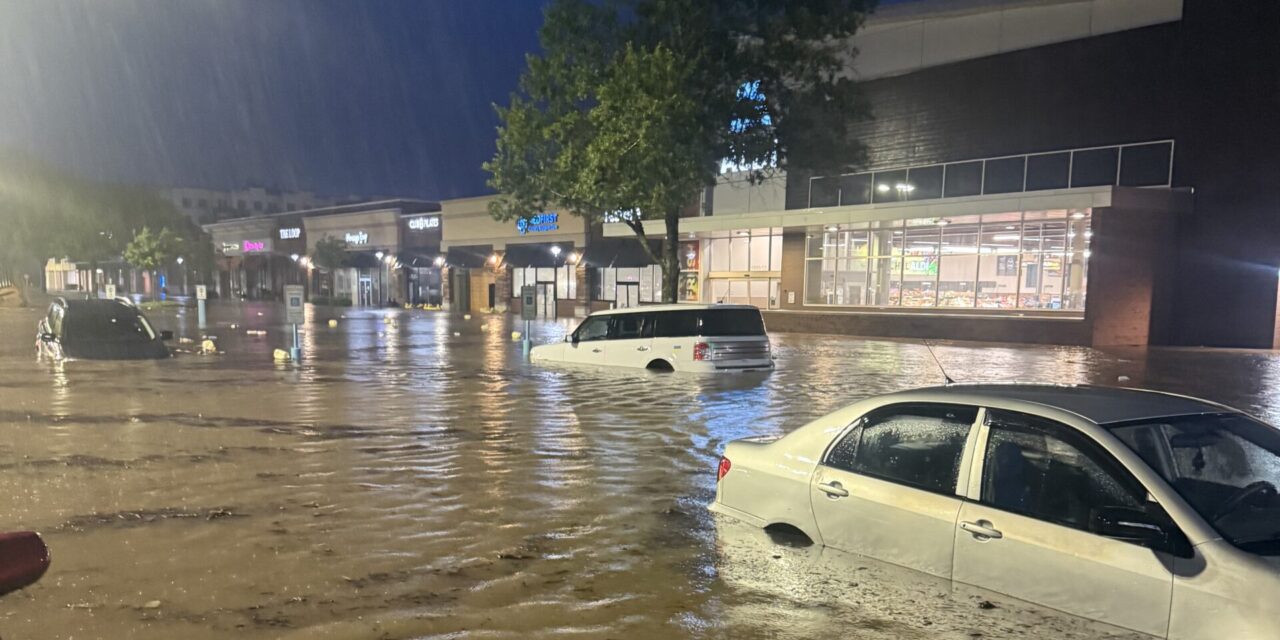
Scenes of the the flash flooding at Eastgate Crossing during Tropical Storm Chantal on July 6, 2025. (Photo via Joe Nanney.)
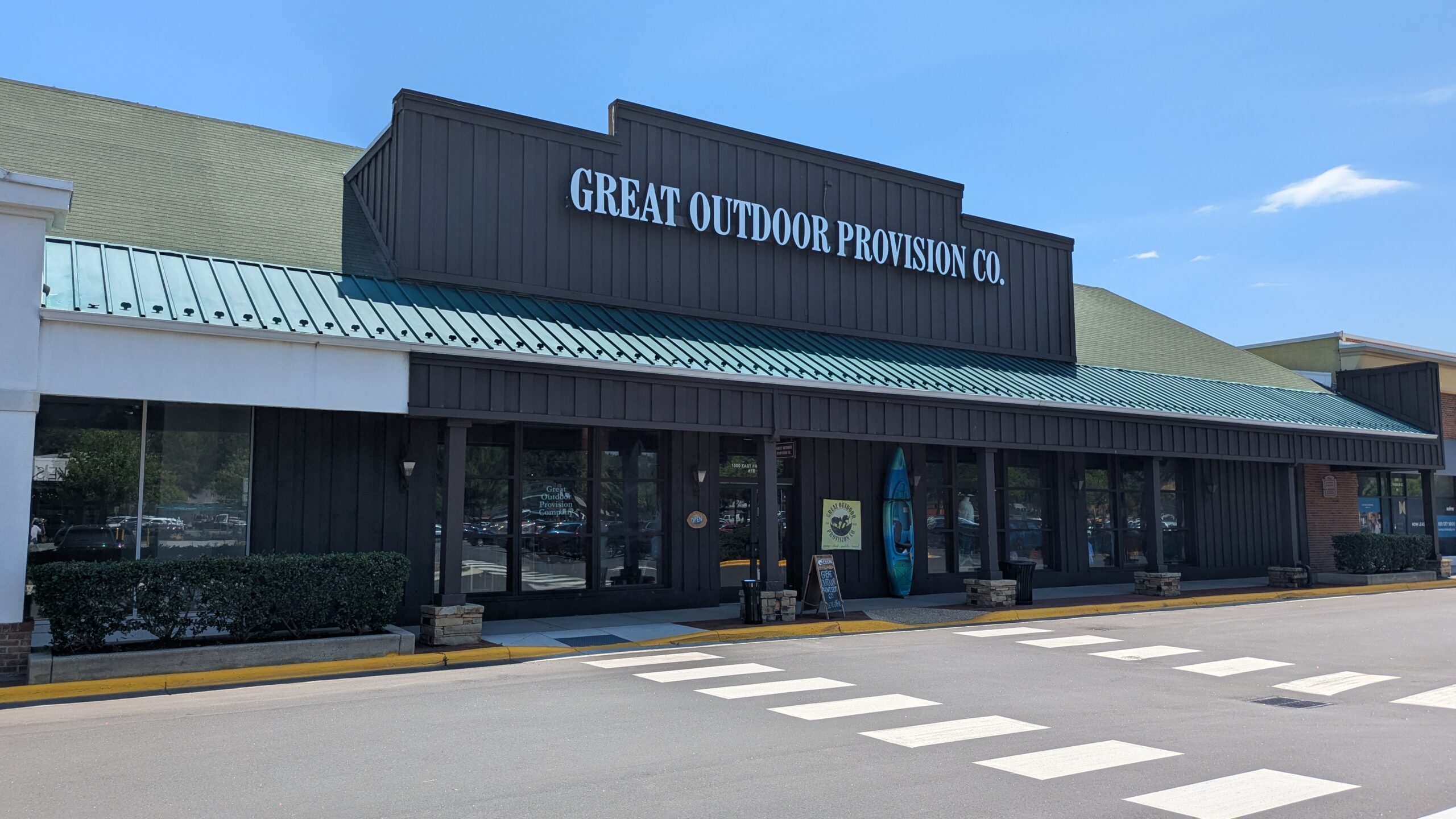
Today, Great Outdoor Provisions Company welcomes customers back daily. The Chapel Hill store is still managing occasional problems caused by Chantal’s flooding, mostly in its plumbing and air conditioning systems.(Photo by Brighton McConnell/Chapel Hill Media Group.)
Pickens acknowledges that Great Outdoor Provision was helped by having eight other regional locations to buffer what could have been “horrific” losses and keep all their staff employed. In another corner of the shopping center, the Greek restaurant Kipos also was helped by being one of several restaurants in the Giorgious Hospitality Group. But general manager Erica Pastis said the eight-month-long renovation, and replacing basically all equipment and supplies, cost a hefty chunk it will need to earn back. So far, she said, customers have been steady in their support — keeping up their foot traffic and orders even beyond the typical summer patterns. While the choice to stay was difficult, Kipos negotiated with Kite Realty to expand its space and add a reservable dining room for private events, Pastis is optimistic it will help when the room opens later this year.
“That’s where we plan to really recover from this,” she said. “We plan to kind of expand and grow. I’m going to sit with the chefs this fall and develop and get a bigger menu going. But we’ve really just been [recovering] based on the support of everyone coming in and continuously staying busy.”
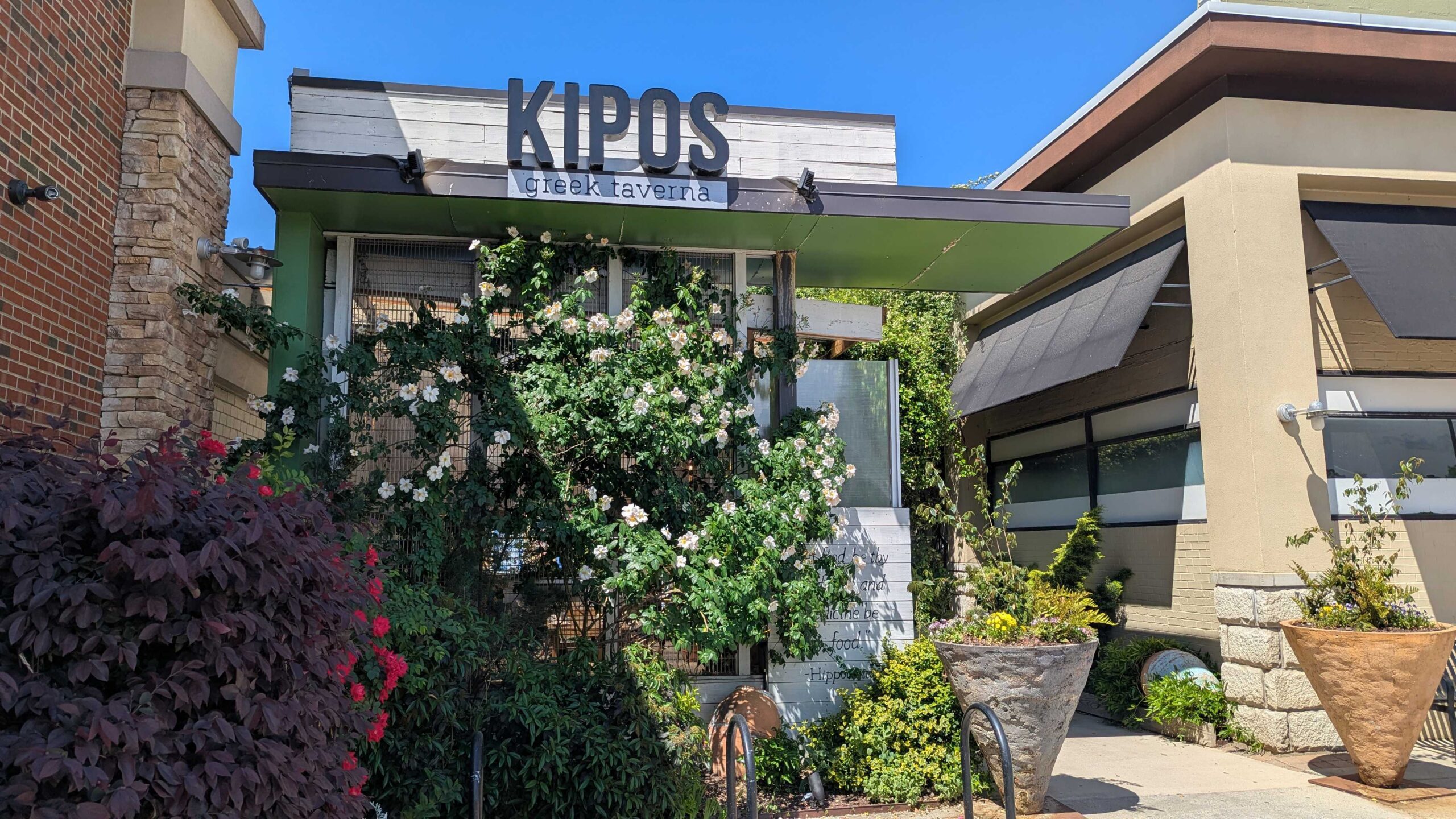
Kipos reopened in February after a long renovation and rebuilding process. The restaurant, which features an extensive outdoor patio, is on the corner of the Eastgate Crossing property near where Booker Creek exits from under the shopping center. (Photo by Brighton McConnell/Chapel Hill Media Group.)
For those businesses that are bouncing back, they have one unified message: the community is responsible for them not only wanting to reopen, but for keeping them open.
“It’s a community where people put on their work gloves and work boots, and they get to it,” said Pickens. “And we certainly have been the beneficiaries of that.”
“Thank you for loving me the way that you do, and letting me come back,” Riggsbee added.
Some businesses, though, are still facing plenty of challenges. Changes in the federal government and workforce contributed to getting loans from the Small Business Administration months after the storm. Others might have gone different routes to try and recoup losses or pay for renovations, only to run into other complications. President and CEO of the Chamber for a Greater Chapel Hill-Carrboro Aaron Nelson confirmed that many of the 96 businesses who took water from Chantal’s floods have not experienced a straightforward recovery process. Some businesses might be able to pivot more easily thanks to the COVID-19 pandemic creating new avenues for them — but many suffered more acute, physical damage beyond just economic damage.
“[During] COVID,” Nelson said, “we used to say that it was the same storm, but everybody was in different boats. And that is the case here as well. Some people had thousands of losses and some people had millions of dollars of losses…where a piece of equipment costs $100,000.”
For Mariakakis, that includes seeing tariffs on imported goods and high gas prices lead to a significantly higher cost of doing business and a raise in prices for what he sells. It’s a challenge, he said, but he’s working to keep both his store and the plaza afloat. But stormwater management is equally among his top concerns. Mariakakis said he believes the biggest outstanding need is for the Town of Chapel Hill to further remediate Booker Creek Basin Park — by clearing out sediment, redirecting creek from the bend out of the tunnel, and not let debris gather at the pedestrian bridge – and look at putting more retention ponds above the Eastgate Crossing property.
“This is the main street of Chapel Hill now,” Mariakakis said of Eastgate. “They need to nourish it and keep us vital and going. Like I said: they cannot stop the floods, but I certainly think there’s some remediation that could reduce the intensity and the level.”
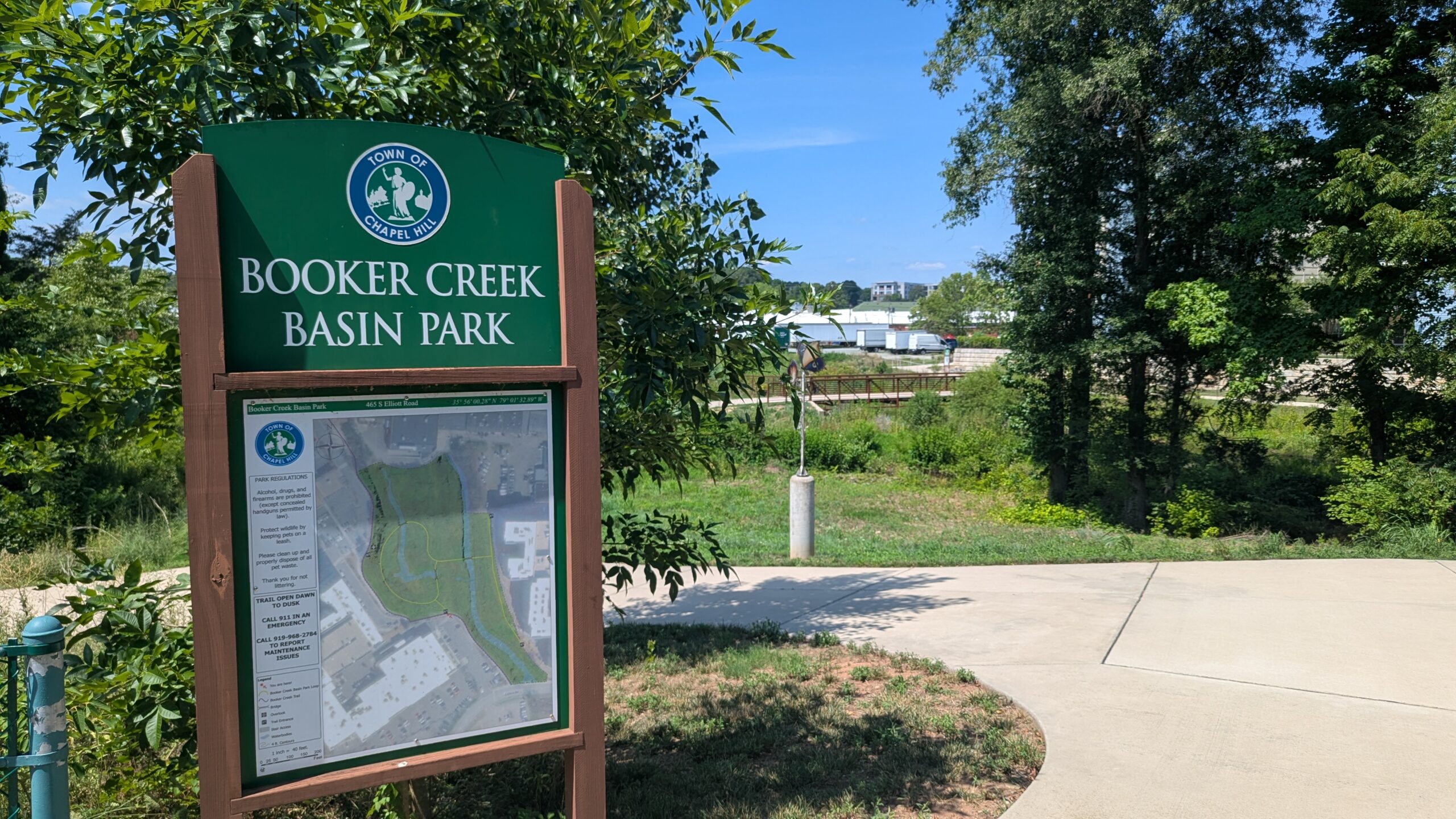
Chapel Hill turned some of Booker Creek southeast of Eastgate Crossing into a basin park, meant to hold more water and better recover from floods. The measure was to help prevent flooding at Elliott Square and the apartment complexes downstream, as well as Eastgate Crossing upstream. (Photo by Brighton McConnell/Chapel Hill Media Group.)
Featured photo via AP Photo/Chris Seward.
Chapelboro.com does not charge subscription fees, and you can directly support our efforts in local journalism here. Want more of what you see on Chapelboro? Let us bring free local news and community information to you by signing up for our newsletter.