
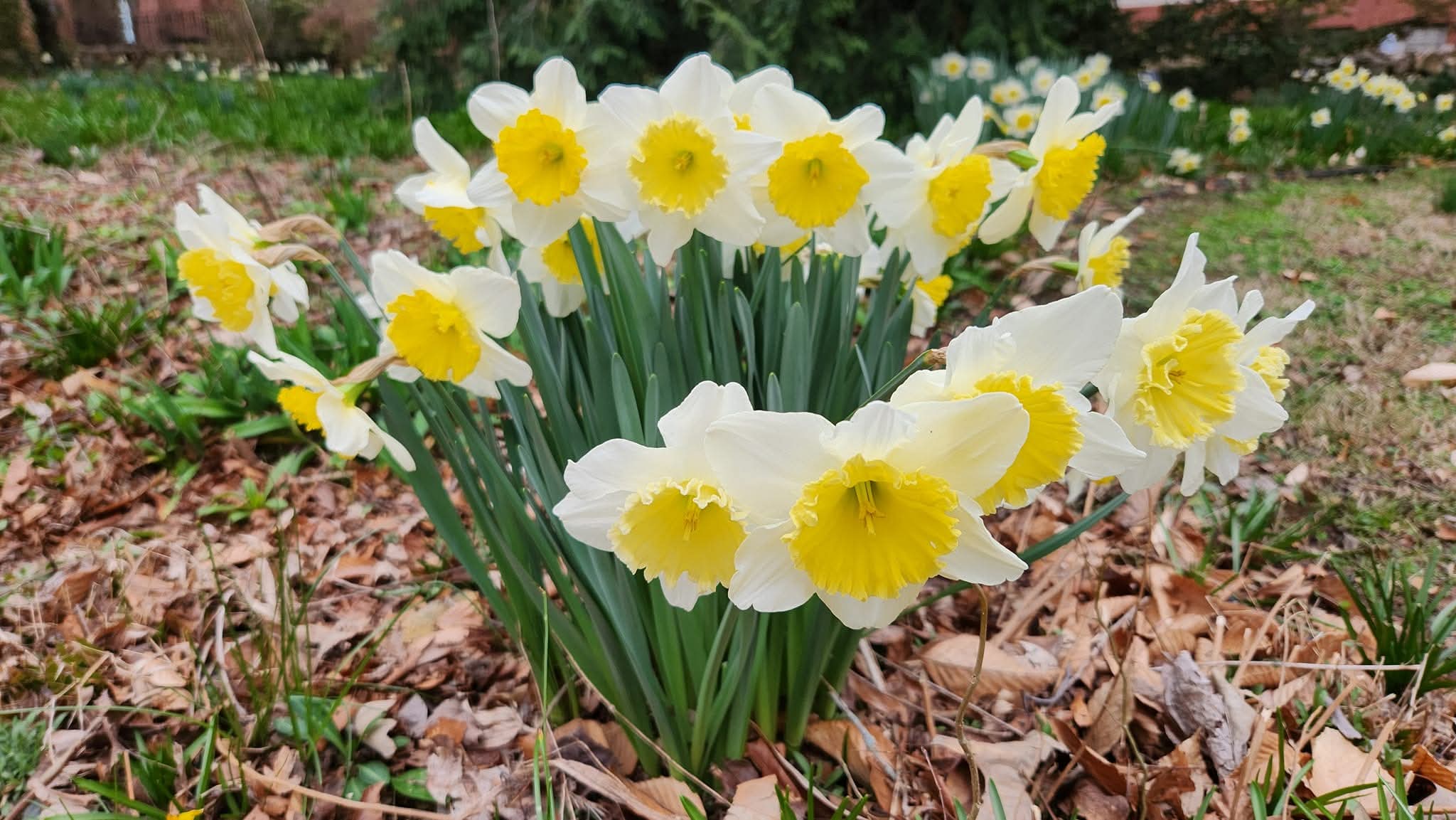
“The column is basically gonna write itself.” Yep, that’s what I said sometime last week when discussing the March missive. It’s daffodils, how hard can it be? A spiffy little intro, a playful grapple, y’all don’t mind if I flick at your earlobe, do ya? Maybe a concise and thoroughly not AI-generated synopsis of the etymology of the word Narcissus, a mention to provenance and popularity, something about the Southern Vernacular (folks love that sort of thing), and voila! Article accompli! Can I have my popsicle now?
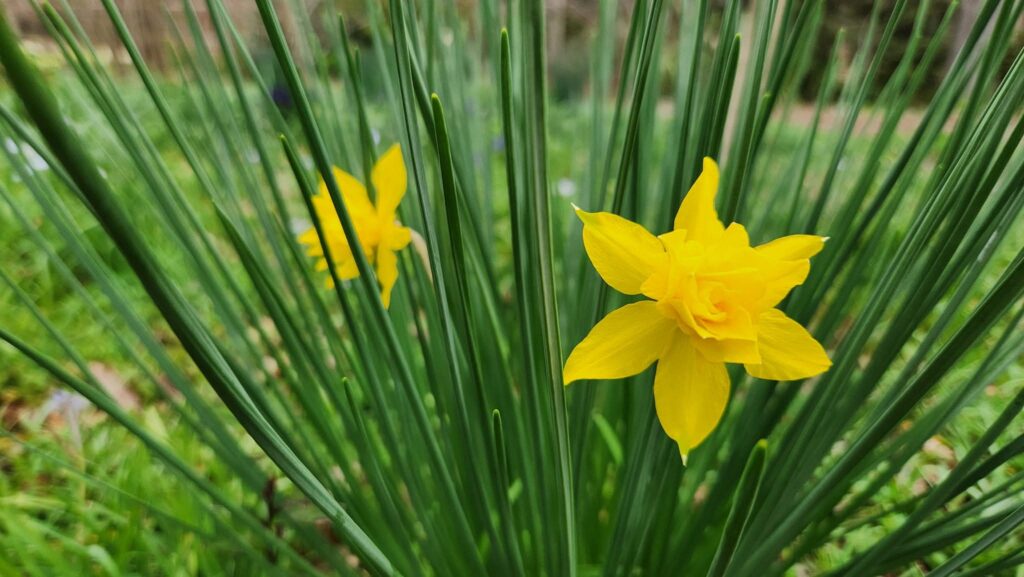
Queen Anne’s Double Jonquil
A meditation on the daffodil
Okay…if you’re reading this and you’re not out in a garden enjoying daffodils, then well, I don’t know what to tell you. The chill that rimes the morning, the donning and shedding of layers to keep pace with prevernal energy flows, the anticipation and outright joy that follows the time change and we get our hour back and we’re not driving home in the dark after work…
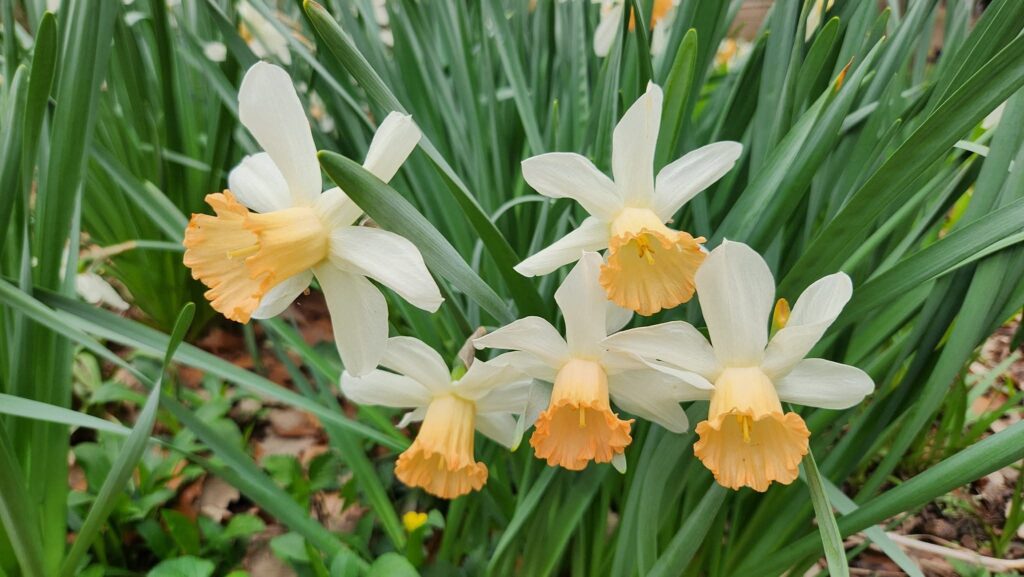
Mrs. R. O. Backhouse
There are whole shelves of books devoted to the genus Narcissus. There are countless articles — print and virtual — lauding and extolling and marveling and demonstrating all that is right and pure and just and good about this genius of a plant. Almost seems silly to be adding my handful of words to the pile. Just another few drops into a big ol’ sloshing tub. It’s to the rim already and past that on the turn. Better go easy or we’re in for a right mess.
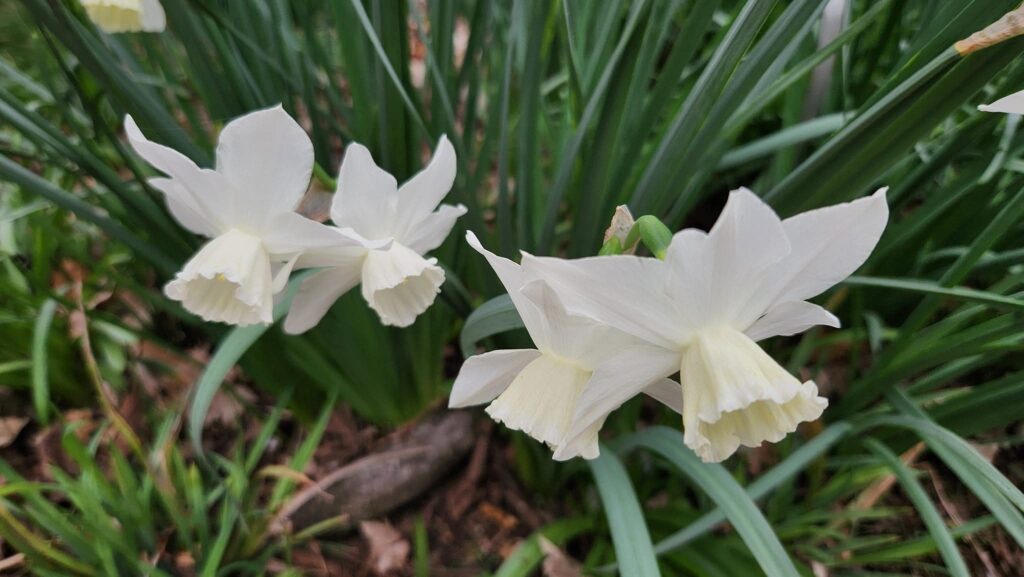
Thalia
A little backstory
The daffodil comes to us primarily from Spain and Portugal. The word itself stems from asphodel, an older word that comes from the Greek and is the name of another genus of flowering bulb that is sometimes seen in our gardens. There are about 76 species of Narcissus and nearly a hundred hybrids. The number of cultivars is staggering. As an unabashed collector of names, I’m dizzy this time of year with the challenge of learning new daffodils as they emerge and flower. In an effort to simplify things (haha), there are 13 divisions of daffodils — a classification scheme that places individuals into groups based on physical characters. The length of the cup or the number of flowers on a single stem, for example. The curious traveler may wish to visit the American Daffodil Society for more on this labyrinthine rubric. It is, as they say, beyond the scope of this article.
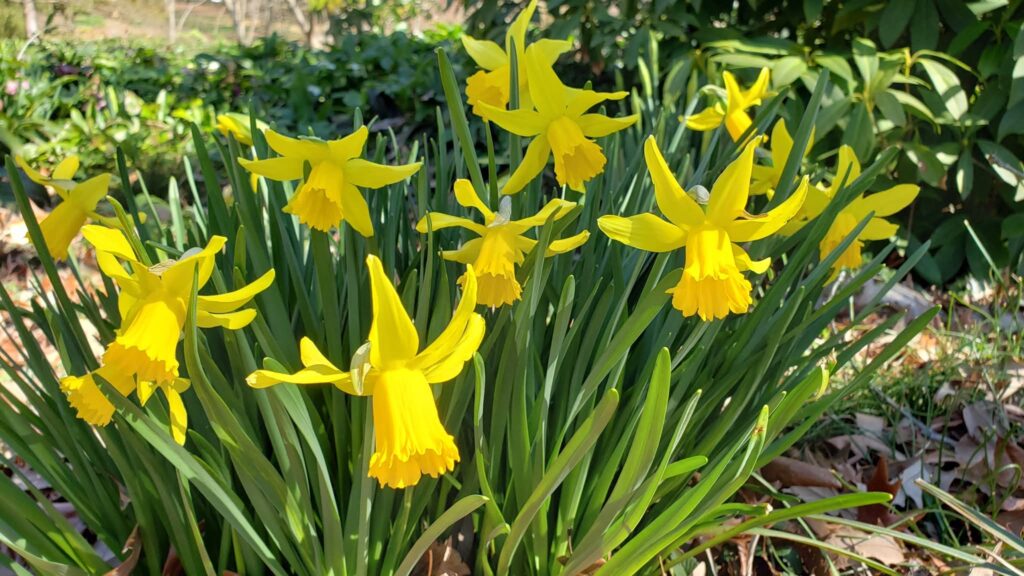
February Gold
Spreading cheer
What remains, dear reader, is the gentle reminder to get thee out of doors and find some flowers to see. There are daffodils everywhere! One of my favorite spots to spot will be on a walk in the woods and the chance occasion of coming up on a patch of old blooms in the proverbial middle of nowhere. The daffodil is a long-lived plant; individuals propagate vegetatively, producing smaller copies of themselves right alongside the parent bulb. This offset (the term used when talking about baby bulbs attached to the parent) will grow in time and continue the line, a small clump of flowers becoming a larger one as the years pass. These old plots were once a planting near a home that perhaps stood nearby. One may occasionally find additional shadows of the lives lived there. Often what remains will be a bit of foundation wall (a slice of chimney maybe), a solid, conspicuous oak or hickory adjacent to the old dooryard, and a few bright splashes of spring flowers in the understory, certain to have been visible from a kitchen window.
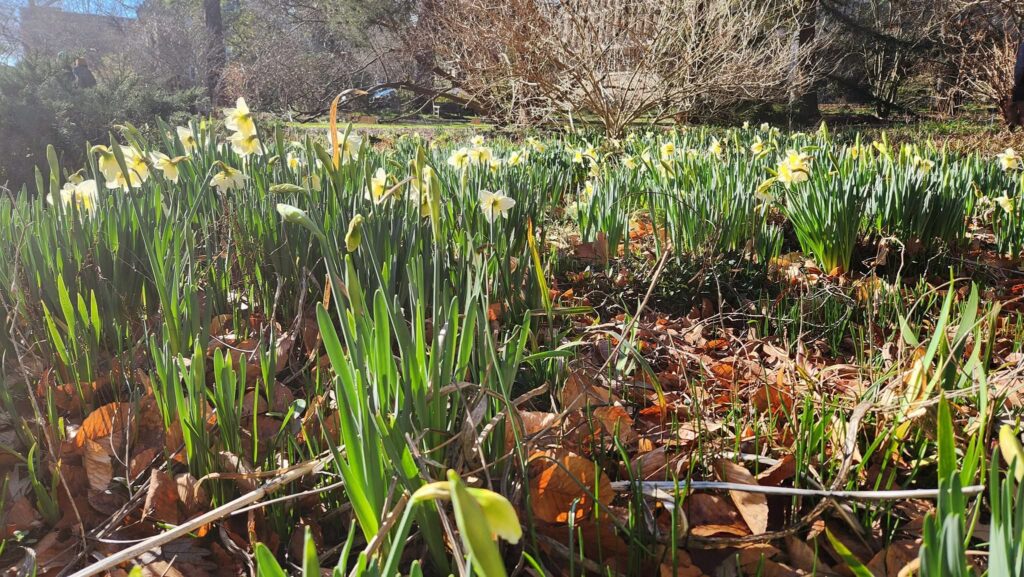
Along the President’s Walk in Coker Arboretum
In my day-to-day, I’m cheered immeasurably by the absolute riot of daffodil flowers that greet me each morning. The winter has been long. It’s been cold. It’s been dark. No better tonic – aside from the obligatory draught of predawn coffee – than the salutes of yellow, white, orange, red and green. Heck, there are only so many ways to say, “cheerful flowers.” Maybe a few pictures to keep us moving…
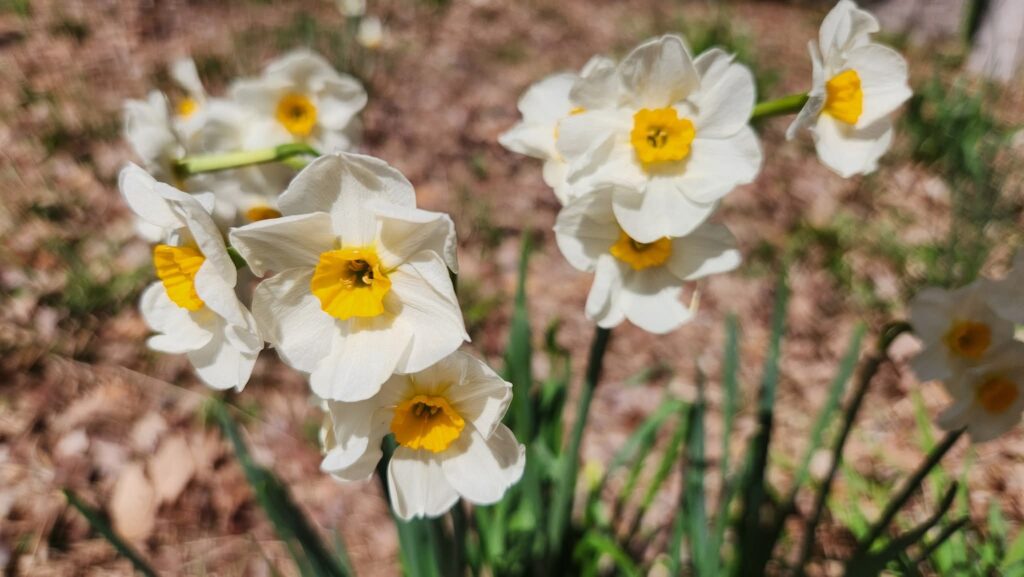
Aspasia
Planting and caring for daffodils
Regarding care and maintenance, not much to add to what most of y’all already know. Plant the bulb in good soil. Nothing fancy, mind, these plants really will grow just about anywhere, except for standing water. Enjoy the flowers as they emerge. I find the stems are sometimes knocked about in a heavy rain. When I have bent stems with flowers, I go out with the scissors and snip, bringing that sunshine indoors. They smell great and the flowers will hold for a solid week or more in a vase.
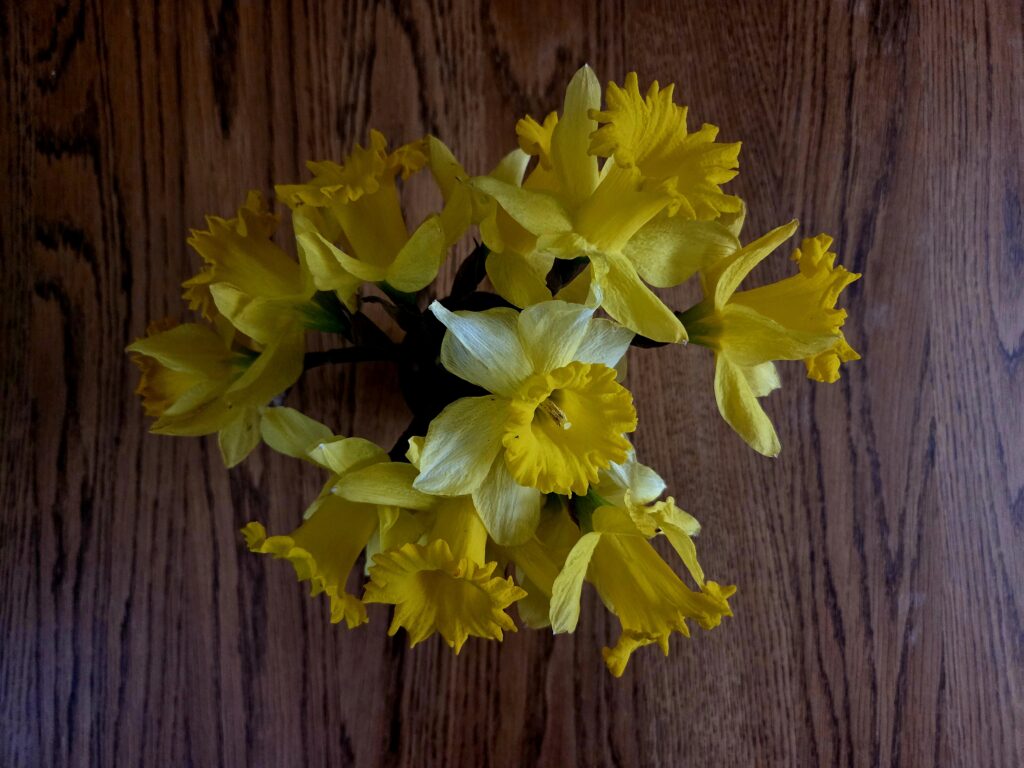
A few fallen flowers
The roots of daffodils work to hold the bulb in place and slowly pull the bulb lower into the earth. This process is gradual, but over a long while, individuals can be pulled down deeply enough that they have a hard time flowering. It takes energy to get a shoot and leaves above ground and if the bulb is too deep in the soil, it might not have enough juice to flower. The remedy is simple: dig up your bulbs and replant them, just a bit higher than they were before. This does not need doing often. At work, we look for clumps whose flower production has slowed as a signal that the plants are having to work too hard to get above ground. Wait to do this until after flowering has ended and the leaves are starting to turn. Carefully dig around your clumps with a digging fork. This is when you can divide your mass of bulbs and spread them about as you replant. Or bring me or Margot a few — we’re only too happy to help out.
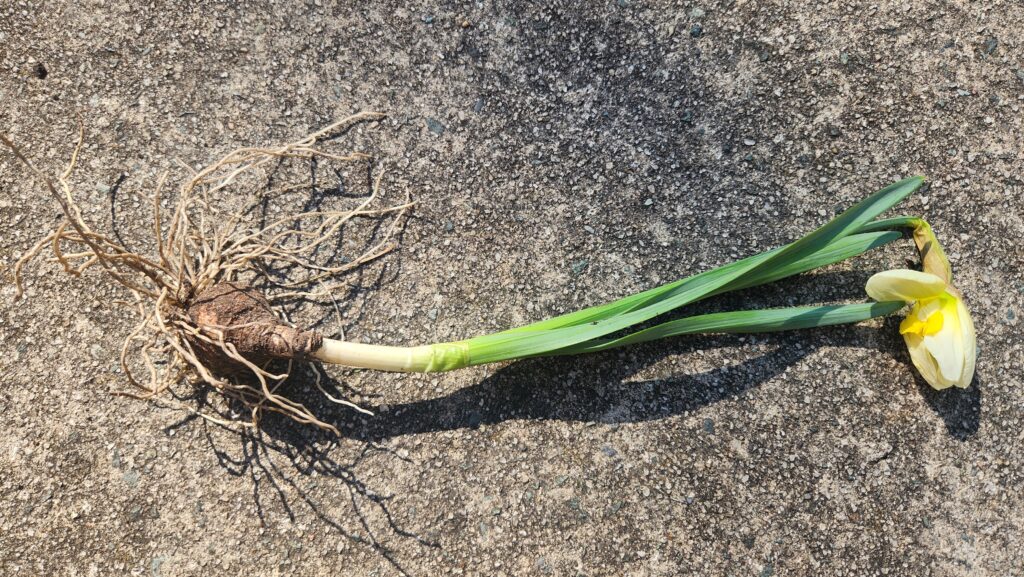
A daffodil unearthed
Read more of Geoffrey’s musing on daffodils.
Photos by Geoffrey Neal
Geoffrey Neal is the director of the Cullowhee Native Plant Conference. See more of his photography at soapyair.com, @soapyair and @gffry. Margot Lester is a certified interpretive naturalist and professional writer and editor. Read more of her work at The Word Factory.
About the name: A refugium (ri-fyü-jē-em) is a safe space, a place to shelter, and – more formally – an area in which a population of organisms can survive through a period of unfavorable conditions or crisis. We intend this column to inspire you to seek inspiration and refuge in nature, particularly at the Arboretum!

