
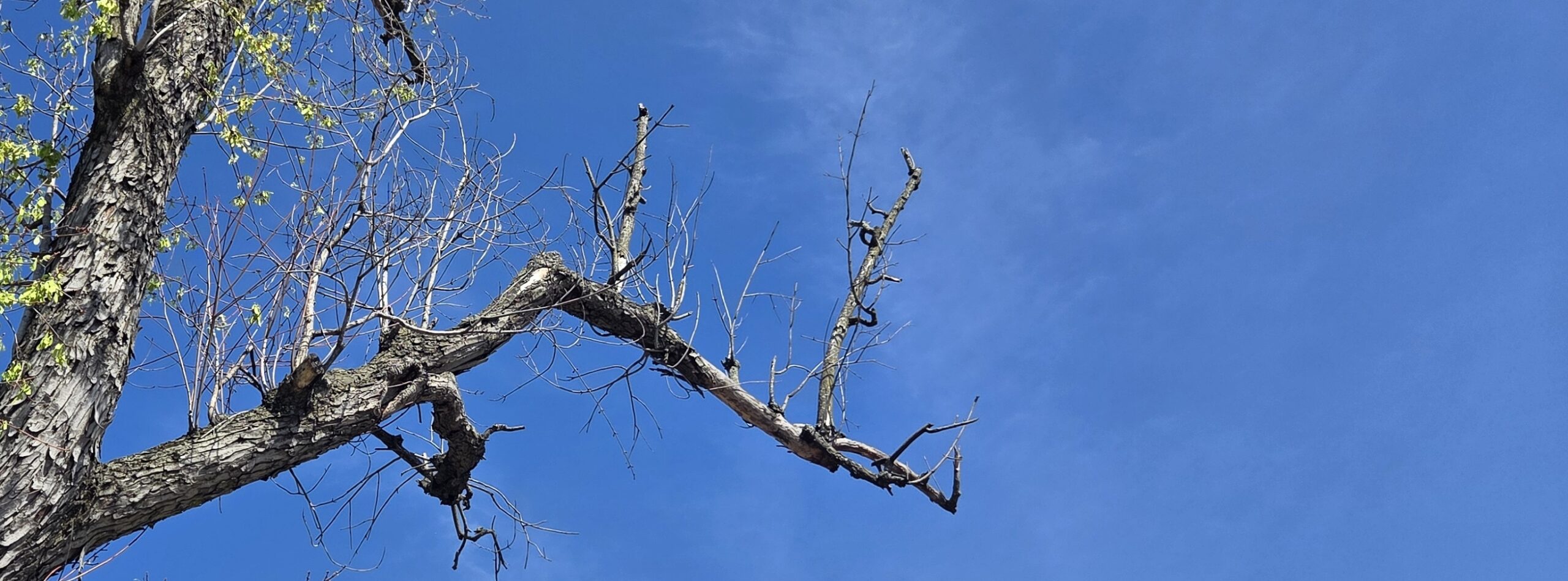
There is a slow-moving mess of mediocre poetry out there on the interwebs that clogged my screen when I searched “poem for a dead tree”. I’ll not do that again. I was thinking of inserting a small segment of something pithy yet profound, brief yet bountiful, worthy of honest attention. I was thinking about all those lovely essays that open with just the right quotation, floating in an italicized cloud of immortality. Instead, what I found in my searchy naivete was a plateful of expired potted meat product. I couldn’t even make it to the second page.
I’ve noted the judgmental nature that I have allowed to grow from faint sprout to full-limbed shade-giving rock-breaking tree. As we step together, gentle reader, into the recurring miracle and spectacle of spring, please bear with me as I shake the rug one more time off the back porch step and allow all my dusty pronouncements to merge with the swirl of yellow air. I’m gonna whack that old cloth with the sturdiest stick in the bin, you betcha, ‘cause this time around I would love to direct your curious collective gaze into the westward reach. Carrboro!
It seemed to me a shame to reserve all my picking of horticultural nits for the (lovely, truly) downtown of Chapel Hill. As it happens, I do tend to drift Carrboro-way from time to time. I find the coffee to be excellent, the grocery shopping adequate and the traffic to be only occasionally irritating. I stopped yelling at cars a while back, and I feel so much better. That’s great (you may be thinking at this moment), but what exactly does this have to do with plants, with gardening, with anything remotely connected to the previous 14 columns that sit under this marginally cryptic marquee? Well, I’ll tell you.
Sad old maples
As I was making the walk from F&F Auto (yep, that’s a recommendation) over to the Coker Arboretum one morning not too far back, I noticed a couple of real dogs standing up behind The Spotted Dog, the terrific restaurant that sits on the wedge where Weaver and Main streets fuse into the eastern tip of the town.
(Using the term dog here as the fairly common shorthand in tree care circles for a specimen that looks bad, like really terrible, like the next couple of sentences are going to be a gently worded suggestion that maybe this tree should no longer be upright.)
It’s a pleasant walk, especially early in the morning, before too much of the metropolis has turned back the sheets. At the time, I was in a bit of a hurry, having timed my sojourn to arrive to work on time so long as I stayed in motion. I’m pretty efficient that way. But I did make a point of returning to the scene of this visual outburst to confirm that these trees might be worthy of an article. I snapped some pics and contacted Margot to get her opinion. Fortunately, she agreed that: A) these trees are an eyesore at best, a hazard at worst, and B) they were a worthy topic to take up the April slot. Great news!
She allowed that, having grown up far enough west of here that Carrboro was “town,” she remembers these trees being here her whole life — so long that at some point they escaped notice, perhaps down to being tucked away as they are. If you drive, walk or bike this stretch, you, too, have probably not paid heed to these once majestic maples.
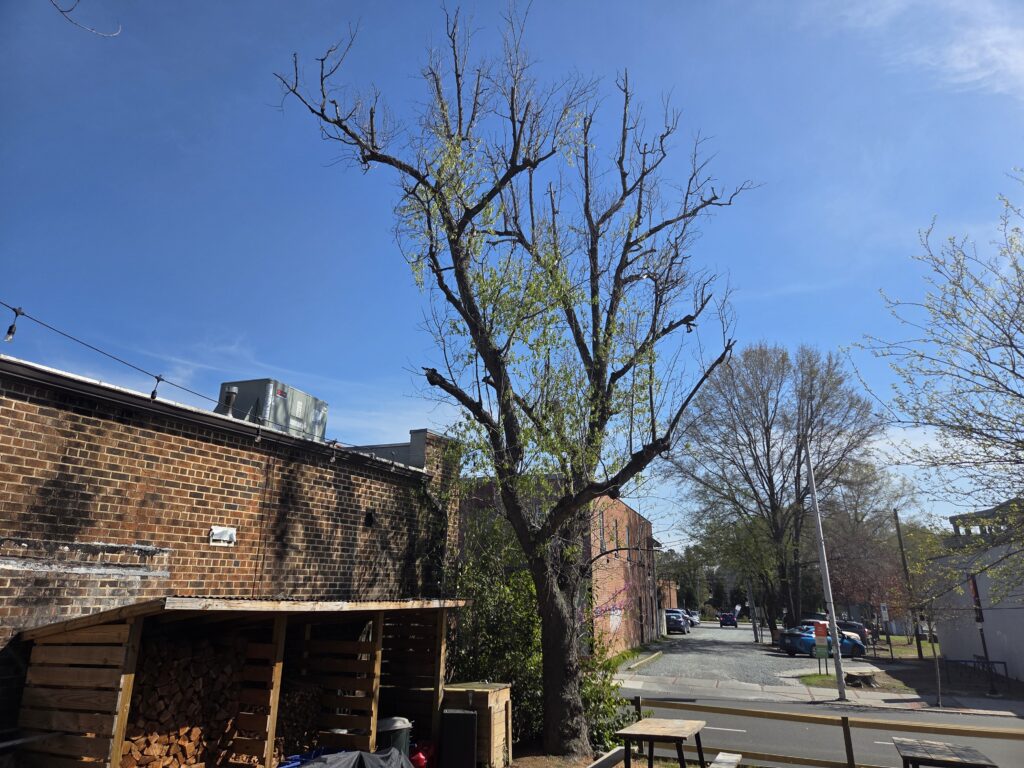
This old maple, viewed from beside The Beehive, has seen better days.
The harsh life of urban trees
Street trees lead a rough existence. Previous columns have seen a partial inventory of the trees along Franklin St in Chapel Hill, with some commentary on their suitability and/or condition. Those of you who have been in town for a while have seen many of the larger oaks along Cameron, Franklin and elsewhere felled, usually proactively, in order to render the streetscape a bit safer, albeit sunnier. So it goes, I suppose. Those willow oaks are fast-growing and large. And the space between the street and the sidewalk simply does not allow for a population of mature oaks. Replanting with smaller species, more interesting species, does seem to be happening. Indeed, the downtown trees in Chapel Hill are a varied collection (not quite ideal, but who am I to judge? Wink.) and I enjoy the differences in habit, texture and color that these plants offer season on season.
I noted just last year that another failing oak was taken down from the front corner of Peel Gallery (favorite place to experience sensory overload…and they sell art). That tree was going to hurt somebody, for real. It was a jumble of desiccated twiggery attached, barely, to a really heavy log. Fortunately, the log was straight and upright, or it might have prematurely ended the working life of a passing car. Not to mention the traffic snarl that comes of an unexpected road obstacle at that pinch point. Yikes.
But back to the other confluence at Main and Weaver and the gnarliest maples in Carrboro (unverified). I include here a couple of pictures, and I trust you, dear reader, to keep your exhortations and cries of shock and dismay to yourselves if you can. We do not want to upset the little ones right here before bedtime. I have not done the research to determine ownership of these unfortunate plants. I can only hope that they will be tended to before they become more than a visual concern. The lot these trees abut used to be a home for Christmas tree sales many years ago. Some of y’all may remember Scotty. Nice guy. No doubt it has had other uses besides. Currently, it holds wood for the firing of the Napoli oven. (It’s a lovely machine: wood and care and cash go in and delicious pizza comes out.) I am optimistic that someone will recognize these sad plants and perhaps ease their passing.
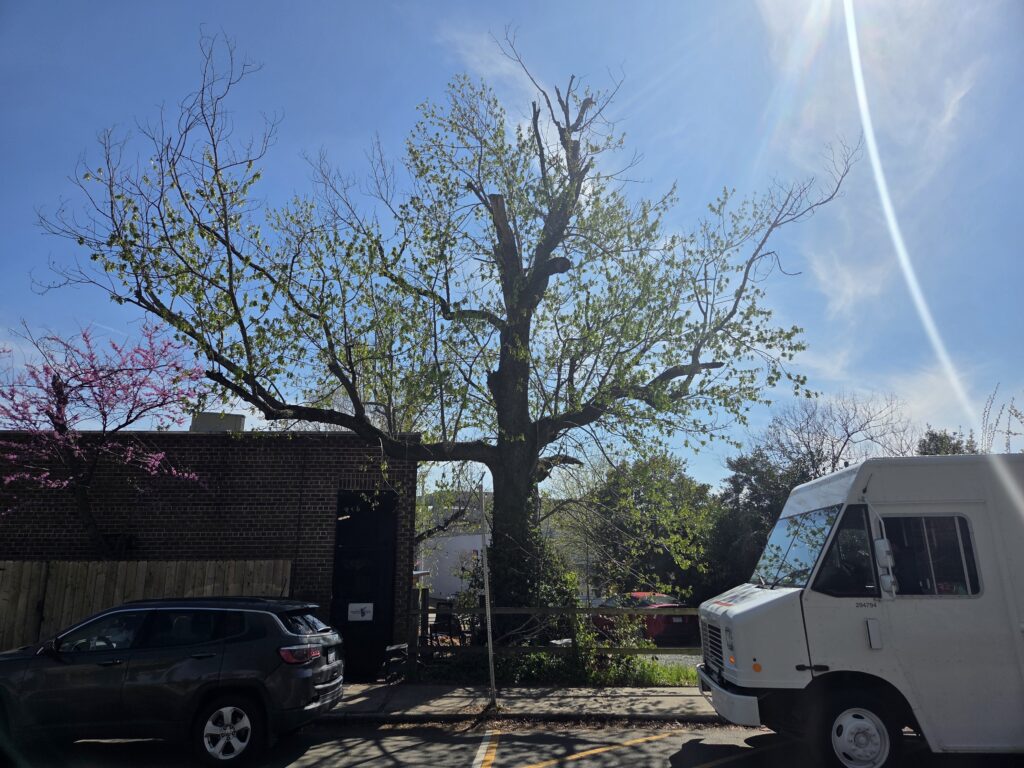
The second old maple as seen from the Weaver Street lawn.
Oh, by the way, there are a couple of real beauties nearby that will, I trust, end this article on higher, cheerier ground. Truly, dear ones, it will not do to have you regard this little article as solely a font of vitriol. To be certain, there are plenty of horticultural ghasts out there in our petite tranche of nirvana. And as someone who takes great pride and pain in using my words to share all the big feelings that bubble out of me with alarming insistence every time I am confronted with another gardening goof, I can only say “See that? Didja see that??” (two question marks…signaling next level incredulity) truly, I cannot help myself. I only thank you all for bearing with me through these troubling landscapes.
Happy little trees
The real beauties I mentioned several sentences back happen to be out in front of the Center Theater (née ArtsCenter) site. Two youngish maples that have been cared for and pruned appropriately. They flank the entry walk, sit on the edge of a parking lot, have very little permeable earth around them, and yet they thrive.
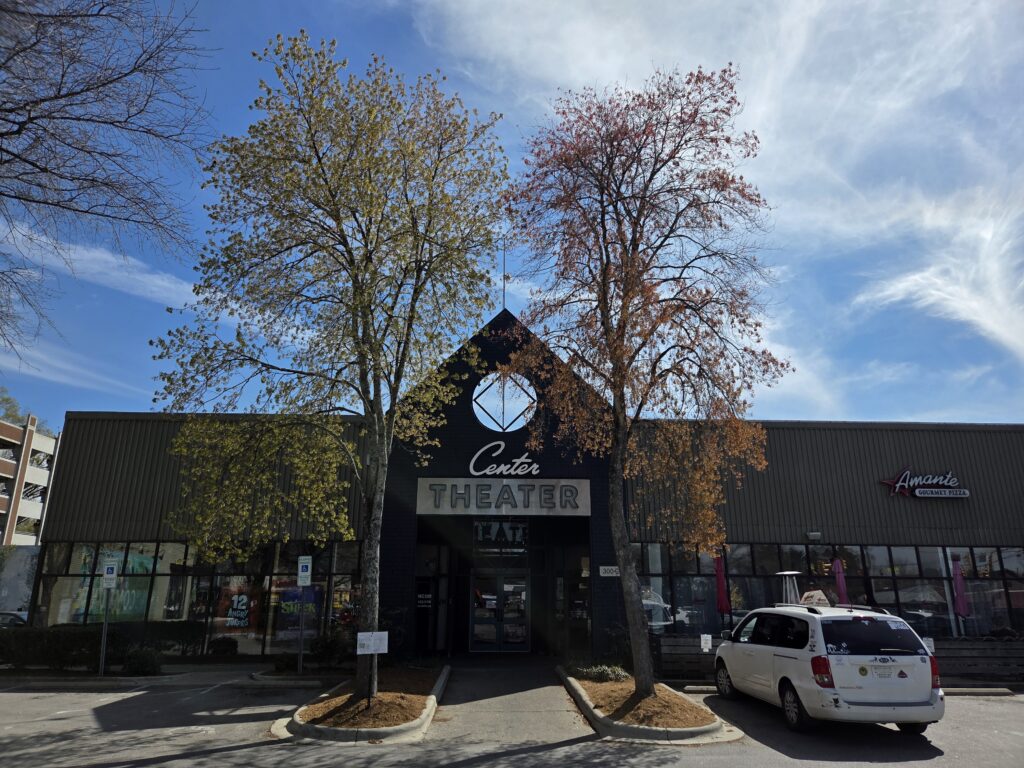
Two happy maples mark the entrance to the Center Theater.
These are excellent examples of how to do it. Recognize the need for something soft and nonrectilinear to front all those parallelisms and orthogonalities — maybe something with seasonality, something that will offer a service to its surroundings. Color, shade, sound, food, all of the boxes that a correct street tree can tick as it journeys into maturity. Take a real look next time you find yourself heading that way. Heck, take an extra 5 minutes out of your day to turn into the parking lot right there next to the Grey Squirrel (excellent coffee, looking forward to their expanded space), park and have a proper look. Introduce yourself and allow the trees to do likewise.* As the wise ones might say, breathe.
Marvelous creatures, trees. Proud to call them friends, even the scraggly ones.
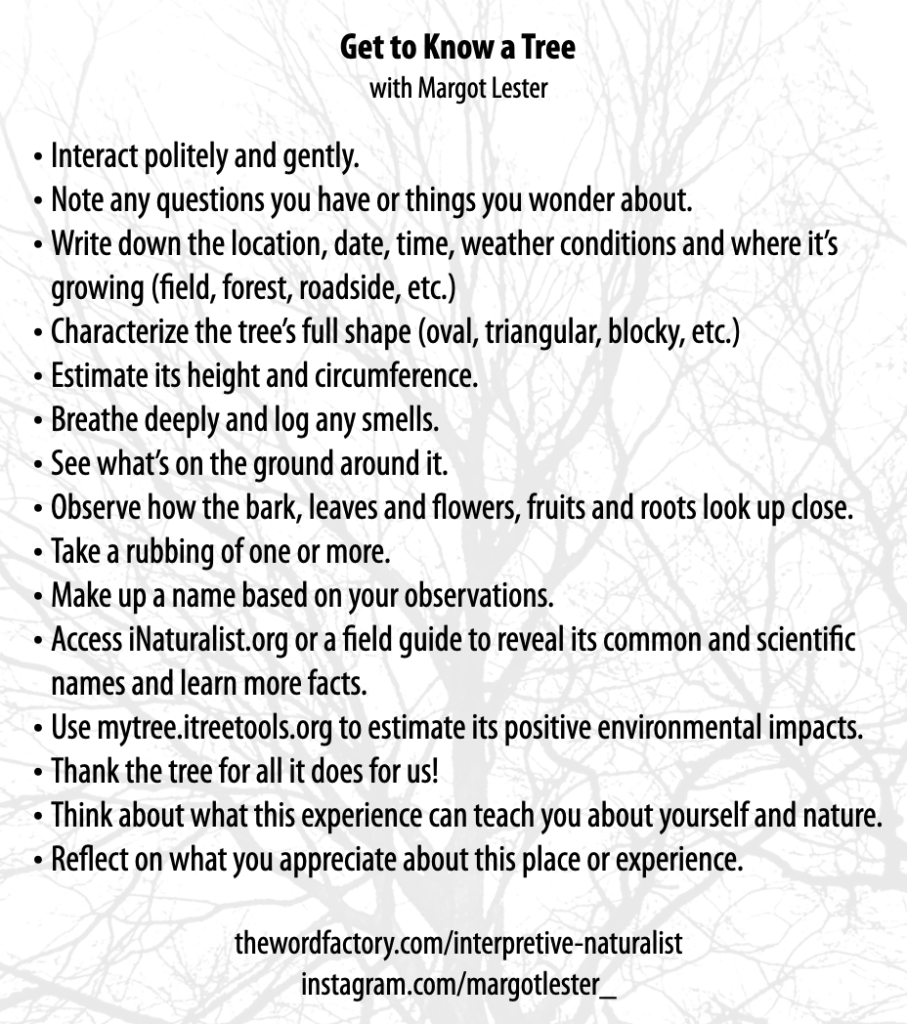
* Pssst. Hey, it’s Margot. Speaking of introducing yourself to trees, let me introduce you to Get to Know a Tree, an activity I led earlier this month at Triangle Land Conservancy’s Wild Ideas event at the N.C. Art Museum Park. Screengrab these prompts to keep on your camera for easy access when you’re out and about and click here to get a list of additional resources. Remember to be gentle and thoughtful when interacting with trees — don’t cut, taste, break or otherwise harm them.
Photos by Geoffrey Neal. See more of his work at soapyair.com.
Geoffrey Neal is the director of the Cullowhee Native Plant Conference. See more of his photography at soapyair.com, @soapyair and @gffry. Margot Lester is a certified interpretive naturalist and professional writer and editor. Read more of her work at The Word Factory.

About the name: A refugium (ri-fyü-jē-em) is a safe space, a place to shelter, and – more formally – an area in which a population of organisms can survive through a period of unfavorable conditions or crisis. We intend this column to inspire you to seek inspiration and refuge in nature, particularly at the Arboretum!

