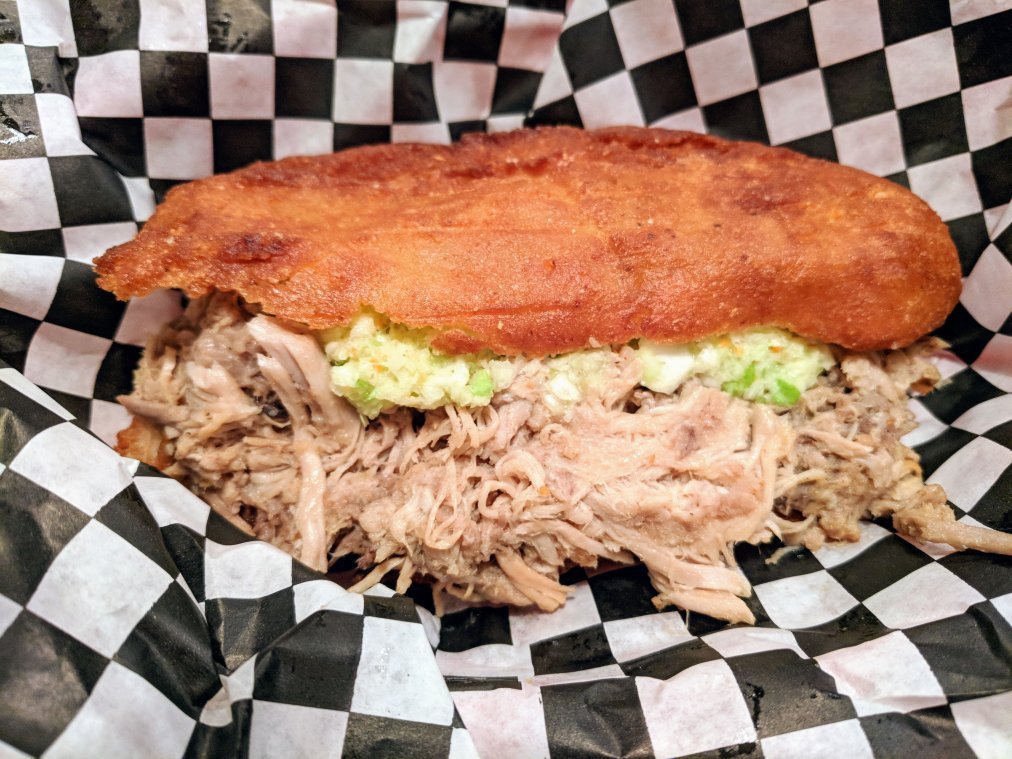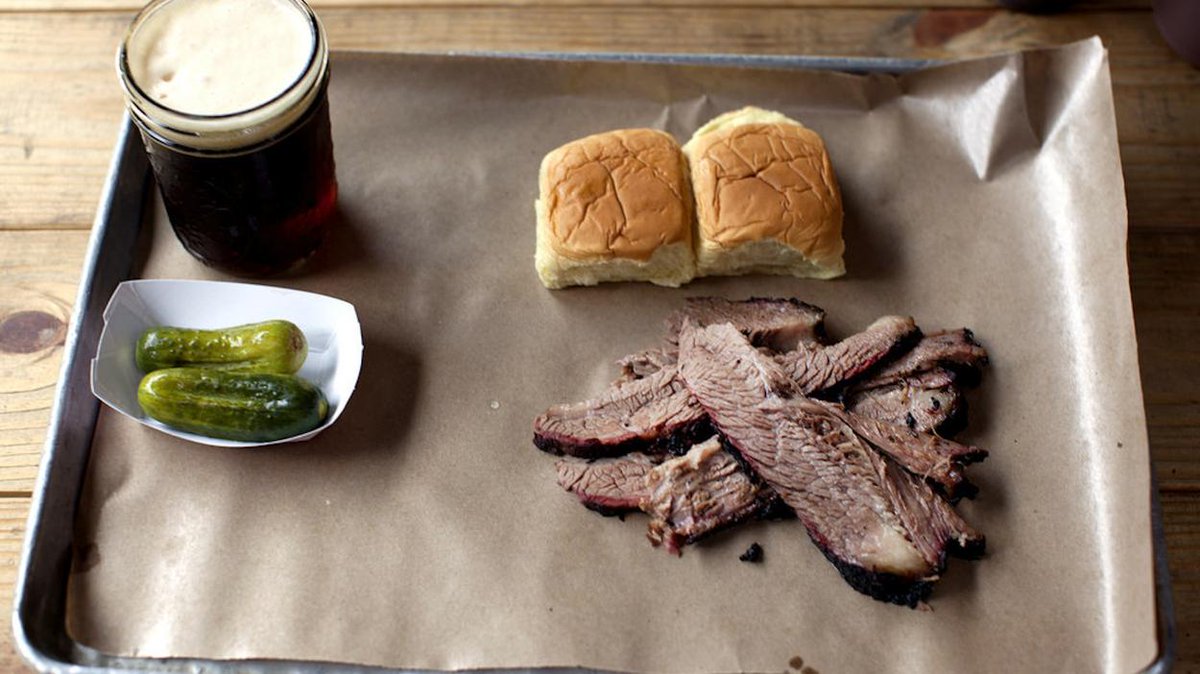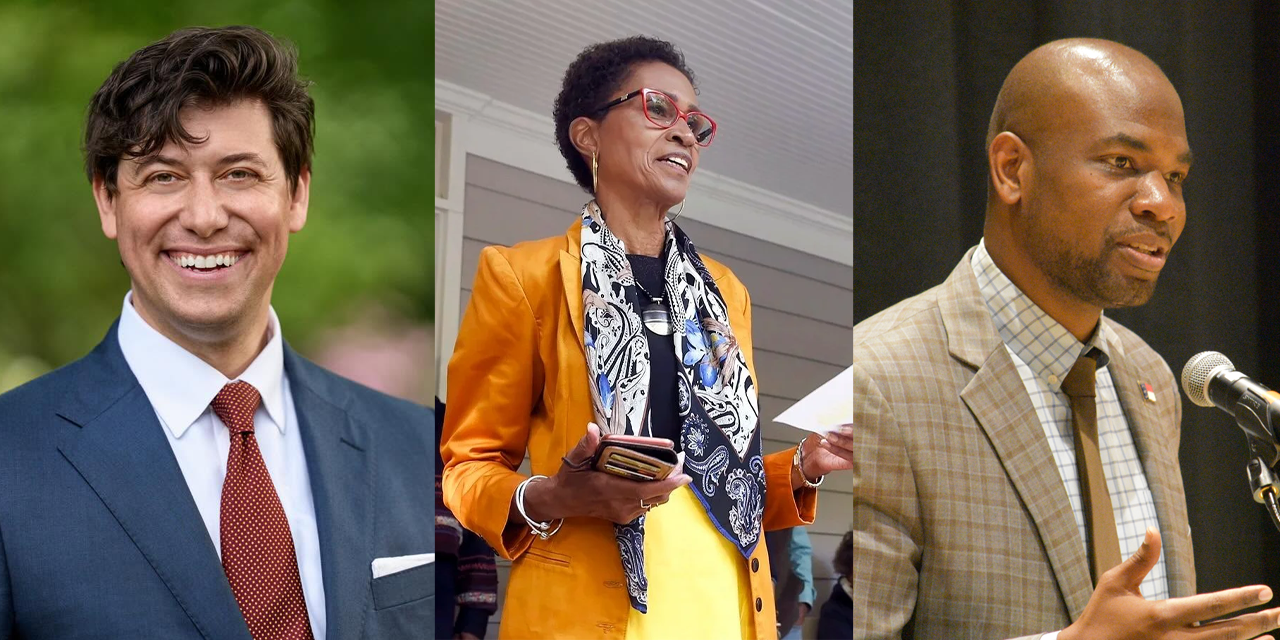
Sam Suchoff is cooking up something big in Chapel Hill. A former vegan turned pork enthusiast, he owns Lady Edison Country Ham, a business born out of an appreciation for the way things used to be.
Lady Edison offers extra-fancy country ham, a specialty ham unique to the South, and other delicious varieties of pork in a partnership with the North Carolina Hog Growers’ Association, a nonprofit food co-operative. The hogs are raised on pasture in eastern North Carolina at certified Animal Welfare Approved farms.
Suchoff, a UNC-Chapel Hill graduate with a degree in mathematics, got his start working in several restaurants in the Chapel Hill area. He opened his own restaurant, The Pig, in 2010 and quickly found success serving up barbecue.
His passion for quality pork led him to establish Lady Edison Country Ham with Rufus Brown, the curemaster at Johnson County Hams. The two had an industry connection before, which strengthened after Suchoff opened The Pig and began buying whole hogs from Brown.
“I felt like what Rufus was doing was the most unique,” Suchoff said. Brown and Suchoff’s first product focus was the now famous Extra-Fancy Country Hams that are sold all over the state.
Now, Lady Edison supplies several restaurants, including Mateo in Durham and Momofuku in New York.
Lady Edison is founded on the values of animal welfare and sustainability. Both Brown and Suchoff appreciate the traditions that family farms have upheld in raising hogs on the ground.
“You weren’t getting what I call a cookie-cutter hog out of a commercial farm,” Brown said. “That’s what the co-op, where Sam purchases his hogs from, reminds me of — going back to the way hogs used to be raised.”
When it comes to the food industry, Suchoff sees a case for sustainability in multiple areas.
“It makes a difference in a lot of different areas, actually, politically, economically, environmentally,” Suchoff said. “I was just talking about Chinese tariffs on pork and soy, but the guys that I work with raise their own non-GMO soy and corn, so they’re kind of outside the market, because they’re going the extra step to raise their animals humanely.”
Suchoff said there are areas for the natural food industry to grow in transportation and distribution.
“I believe that in the big picture if this type of sustainability is going to really make a difference in our food system, it’s going to have to be done with the same efficiencies as industrial pork production,” Suchoff said. “Not all of them, obviously, not the nasty habits that have driven me away from that stuff.”
Suchoff is doing his part to increase sustainability within his endeavors by piggybacking rides with other distributors and reducing his carbon footprint.
All of his business investments — like The Pig, Lady Edison and even a hot dog stand in Carrboro’s Weaver Street Market — have sustainable practices at the core of their operations and will continue to do so, Suchoff said.
He has plans for more quality food ventures and is working on an upcoming bar featuring charcuterie or cheese plates and a processing facility.
While Suchoff has experienced the challenges of running a business, he continues to enjoy the entrepreneurial process.
“The rewarding part is that I’m working with people who care about what they do, and they appreciate me the same way that I appreciate them.”
Chapel Hill residents can taste the difference at The Pig or order products straight from the Lady Edison website.
Photos via Lady Edison County Ham
Related Stories
‹

One on One: Enjoy Them While You CanReal barbecue and small towns: enjoy them while you can. Is it just one more small-town business that has closed its doors? Or is there more to it? For North Carolina barbecue lovers, last week’s closure of Wilber’s in Goldsboro was like the loss of a family member. Wilber’s has been on my list of […]

One on One: Florence’s Floods and Puppy Love in KinstonLike all North Carolinians, I am worrying about the flooding causing heart-rending damage throughout our state following Hurricane Florence. I have a special worry, though — a puppy in Kinston that I fell in love with a few weeks ago. I’m worried that the floods from Hurricane Florence might put that puppy’s place of business […]

Brooklyn BBQ Is Not Taking Over The WorldAn article by Munchies claimed that Brooklyn barbecue is taking over the world. We're here to set the record straight on the matter.

Corporate Tax Cuts, Prediction Market Leeway, and Underfunding Education: Why Orange County's Legislators Voted Against NC's BudgetAll three of Orange County’s state representatives voted against North Carolina's updated budget, citing issues with its contents and construction.

On the Porch: Dr. James Wood - Sports Around the WorldThis Week:
James Wood is currently Professor of Latin American and modern world history at North Carolina A&T State University. He is the author of The Society of Equality: Popular Republicanism and Democracy in Santiago de Chile, 1818-1851 and the co-editor of "Problems in Modern Latin American History: Sources and Interpretations", now in its fifth edition with Rowman and Littlefield. As a Fulbright scholar for Chile in 2016 he was a visiting professor at the Universidad Diego Portales in Santiago (where he observed Chilean student activism up close).

On the Porch: Bill Brown - Art and Science Merge at NCMAThis Week:
Bill Brown joined the North Carolina Museum of Art as a Conservation Intern in 1988. Thirty-two years later he retired from the Art Museum as Chief Conservator. He received his M.A. and Certificate of Advanced Studies in Conservation from State University College at Buffalo, NY in 1989. At the Museum, he established the Art + Science Initiative, a collaborative program with Duke University math and science departments. Bill has a passion for Italian Old Master Paintings of the 14th to 18th century. He works part-time as a conservator in private practice and provides conservation support for the Museum and Gallery collection of old master paintings at Bob Jones University in Greenville, SC . He enjoys retirement with his wife and young adult son.

On the Porch: Nora Gaskin - Conjuring Crime StoriesThis Week:
Author Nora Gaskin is a lifelong resident of the Durham-Chapel Hill area. Her latest is novel is "Lammie Loves Cubby". Nora has a bachelor’s degree in English with Honors in Creative Writing from UNC, and a Masters in English from the University of Washington in Seattle. She spent over 24 years as a stockbroker and financial advisor in the Durham office of a major investment firm. She retired in 2005 to focus on writing. She is the publisher at Lystra Books and Literary Services and the author of three novels and one nonfiction book. She lives and writes in Chatham County, inspired by her native landscape, her husband, and dogs. Her favorite word is "gratitude."
![]()
Therapy Smarts and Sen. Natalie Murdock on How HB696 Impacts Children and Families — On Air Today (June 15, 2026)Founder and CEO of Therapy Smarts Avani Shah and N.C. District 20 Sen. Natalie Murdock speak with 97.9 The Hill on Monday, June 15.

On the Porch: Steven Fenberg - What Funded America's Infrastructure?This Week:
Writer Steven Fenberg discovered Jesse Jones was reputedly the most powerful person in the nation next to President Franklin Roosevelt during the Great Depression and World War II. As chairman of the federal government’s Reconstruction Finance Corporation (RFC)—the nation’s indispensable infrastructure bank—Jones initiated and managed massive New Deal agencies that saved and expanded the nation’s economy and then shifted the RFC’s priority from domestic economics to global defense to fight and win WWII. Fenberg told this remarkable story as executive producer and co-writer of the Emmy Award winning documentary film “Brother, Can You Spare a Billion?” that was narrated by Walter Cronkite and broadcast nationally on PBS. Fenberg then wrote the biography “Unprecedented Power: Jesse Jones, Capitalism, and the Common Good.”

Viewpoints: Constitutional Changes Are Rarely NecessaryConstitutional amendments are supposed to be rare. They are supposed to matter. They are meant to alter foundational principles or governmental structure when absolutely necessary.
›