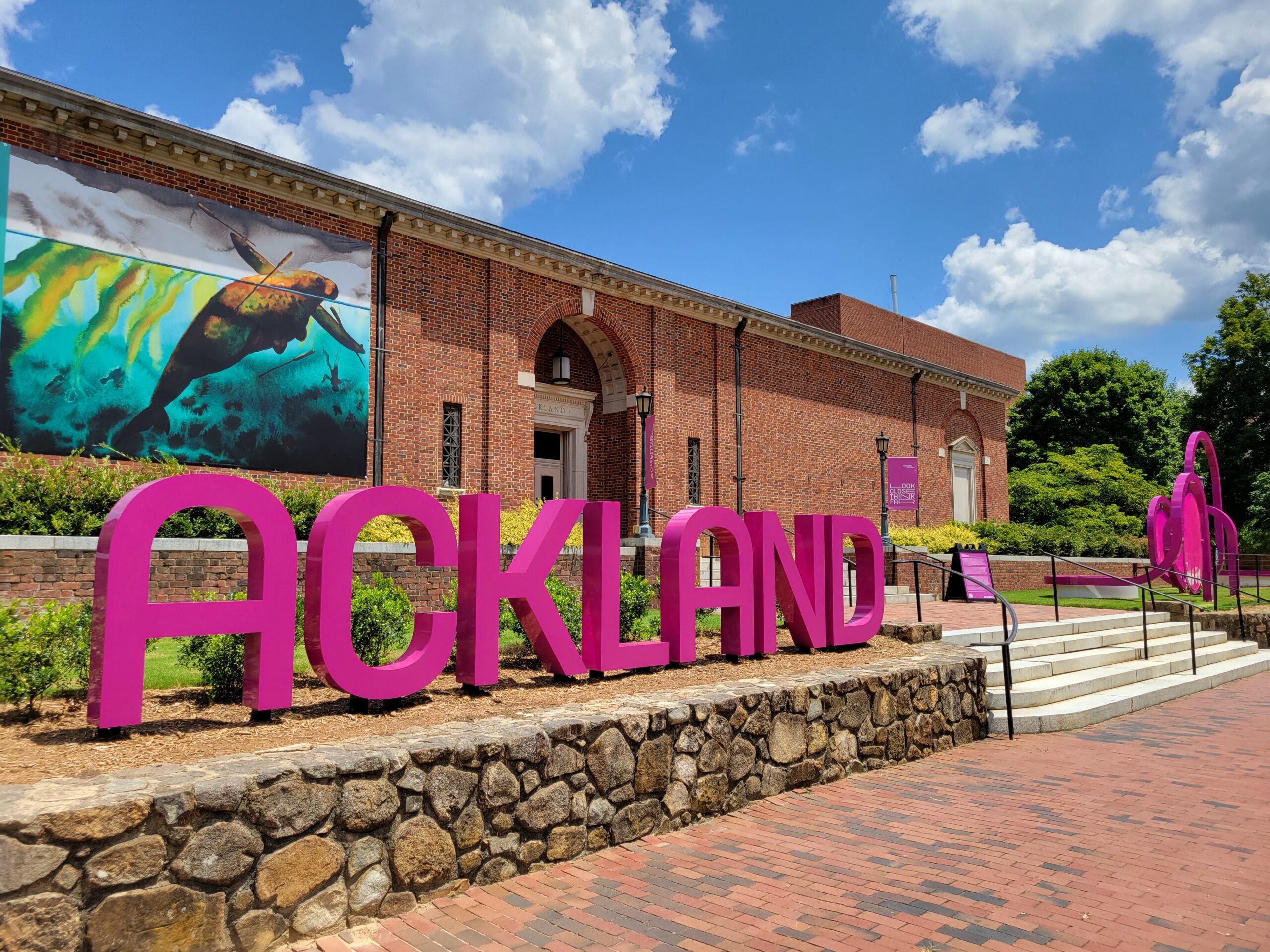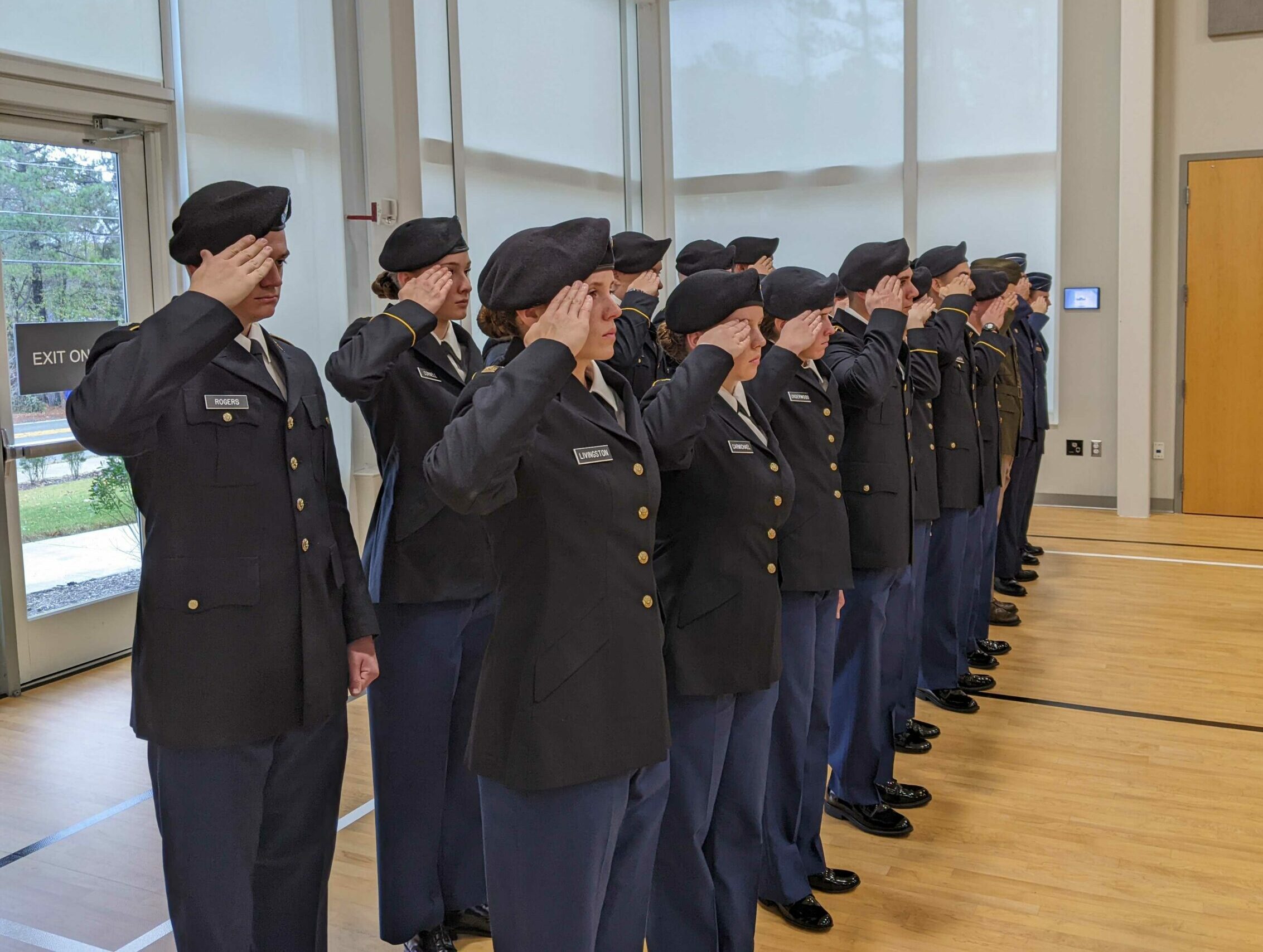
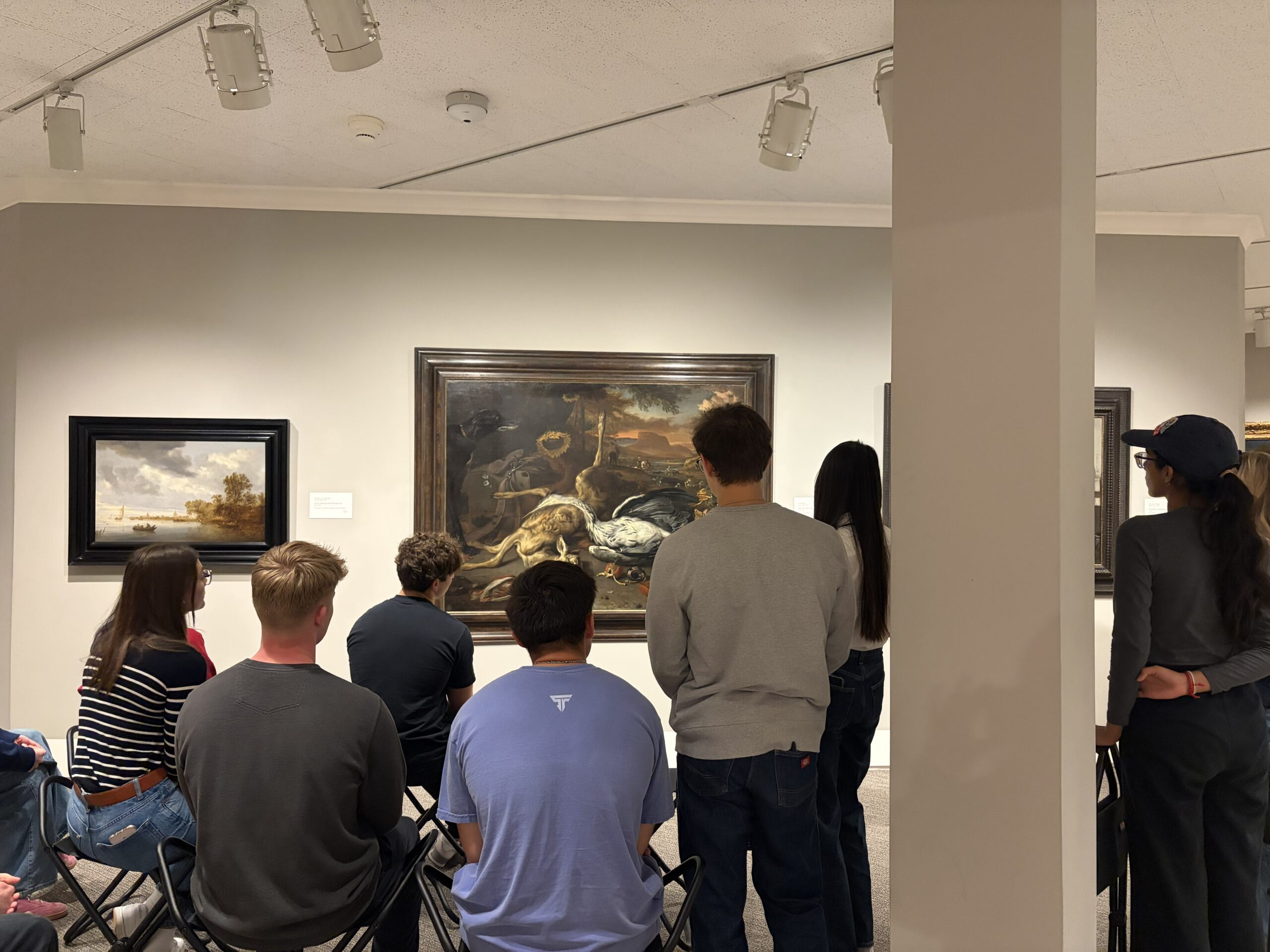
UNC students in “The Business of Art” study paintings at the Ackland Art Museum in Chapel Hill. (Photo via Flavia Nunez Ludeiro.)
From general art history courses to niche topics like artwork in ancient Pompeii, there is always an interesting class to take at UNC-Chapel Hill. But a course the university does not offer is one exclusively focused on the business side of the art world — that is why a student decided to create it herself.
Flavia Nunez Ludeiro never quite planned to be both a student and educator during her time at Carolina.
While the senior said she has always loved art and looking at it through a historical lens, it was in an online art law class offered through Sotheby’s Auction House last year where she first dove into the business side of it all.
“And I was so, so interested in concepts I had never heard about like art restitution and provenance,” Nunez Ludeiro said. “That’s how I got my little taste of the art market world, and I slowly found that art wasn’t something just of the past, it’s something that [is] currently being traded today.”
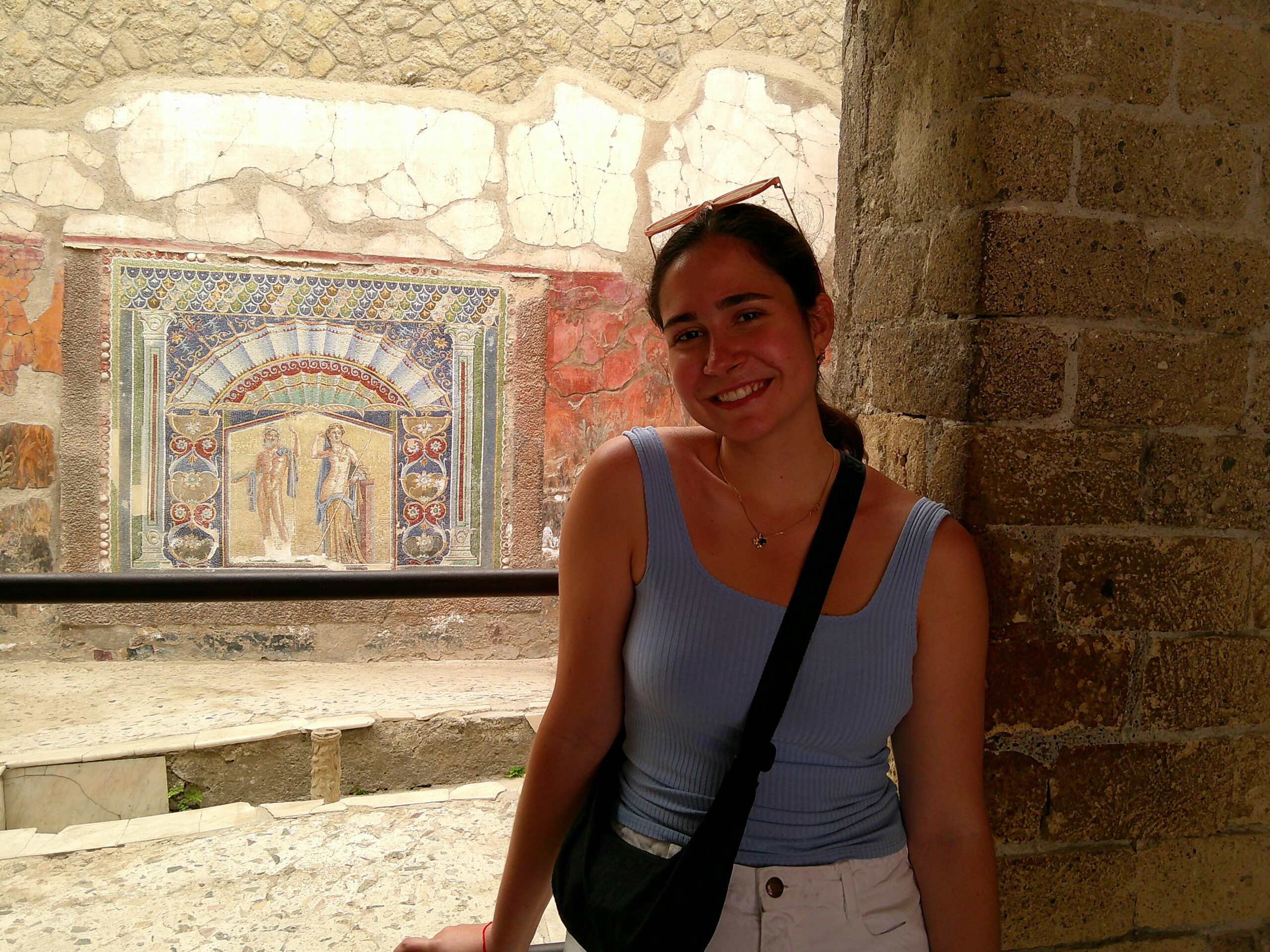
In Italy, Flavia Nunez Ludeiro started in Salerno before seeing Florence, Turin, and Milan. In England, she spoke to auction professionals across London. (Image via Flavia Nunez Ludeiro.)
A Morehead Cain scholar majoring in economics and business, Nunez Ludeiro followed her curiosity abroad that summer to Italy and the U.K., exploring the cultural value of art through interviews with museum directors, curators, and auction-house professionals. She said the lesson plans for her class, Creation to Collection: The Business of Art, became a way to put that research in one spot.
But it also meant she could give her peers in Chapel Hill the opportunity to learn about a subject they would not be able to otherwise — the intent behind all Honors Carolina C-START (Carolina Students Taking Academic Responsibility through Teaching) courses. The program allows students to submit a proposal to design their own semester-long class, and Nunez Ludeiro’s was among 10 chosen for the academic year.
This spring’s student-instructed courses cover topics like medical ethics, female rage in media, and foundations of brain imaging. The UNC senior said her class follows the journey of an artwork from creation to sale, examining art market structures and how they determine a piece’s monetary value.
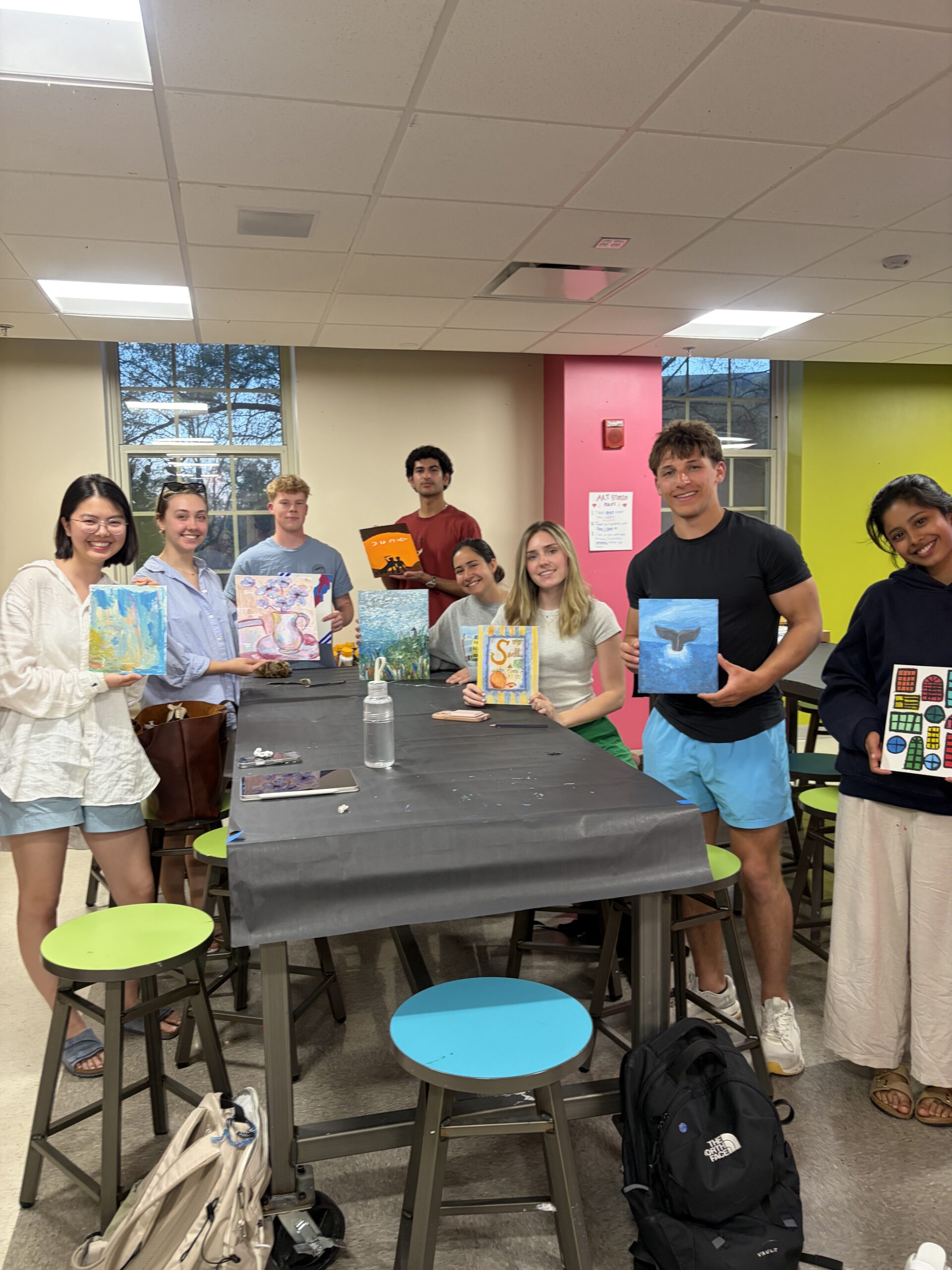
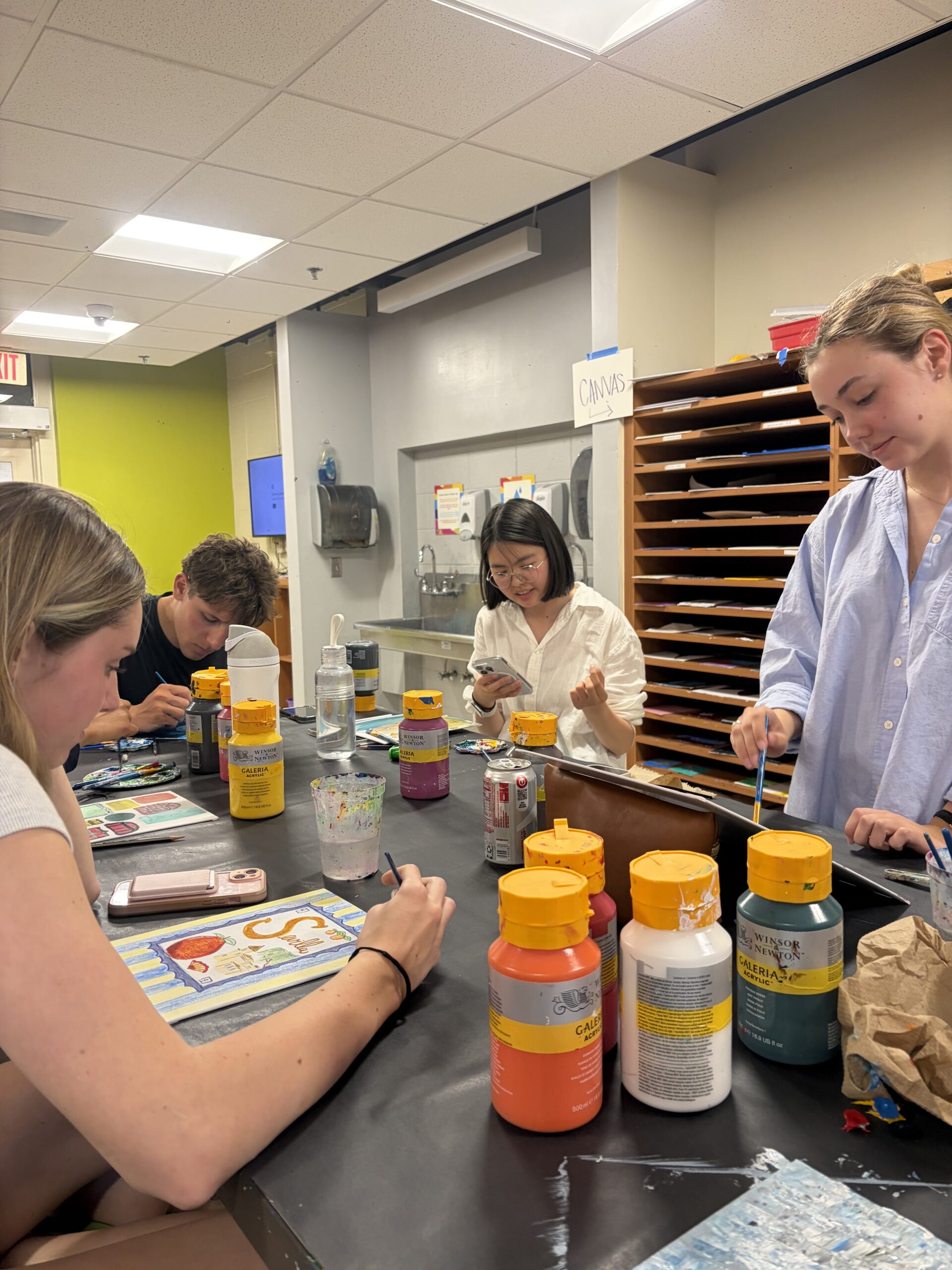
At Morrison Art Studio, students painted their own pieces, inspired by those sold at auction or anything that sparked their creativity. (Image via Flavia Nunez Ludeiro.)
By the end of the semester, Nunez Ludeiro said she hopes her students will be able to look critically at the economic systems that underpin the circulation of art pieces. While billions of dollars worth of fine art are sold at auction each year, it is not a business many people know a lot about.
“I think the art market is something you’ve got to seek out,” Nunez Ludeiro said. “You have to really either read a lot about it, or ask good questions when you’re talking to professionals in it, because it is an industry that’s everywhere you look, but it’s not always explained everywhere.”
The weekly classes of conversational lectures, projects, and even an after-hour trip to the Ackland Art Museum are a result of hours of preparation with a faculty advisor during the prior semester. And Nunez Ludeiro said the experience has been collaborative in more ways than one, incorporating feedback from her class along the way.
“I’ve been learning a lot about how to engage students in the process,” she added. “Because theory is one thing and it’s very important, but I think in practice, you’ve got to sort of figure out what works and what doesn’t work.”
For example, the group wanted to make their own art and hold a faux auction to mimic those they learned about. So she swapped a classroom discussion for a day of painting at the Morrison Art Studio, where most of the pieces were inspired by works recently sold at auction or those they saw at the campus museum.
Nunez Ludeiro said she asked for feedback at the end of each class, incorporating more hands-on activities as the semester progressed. (Image via Flavia Nunez Ludeiro.)
A student in the class, Kathryn Bolick said she is looking forward to seeing the class lectures come to life.
“Those settings can become so competitive so quickly,” Bolick said. “And I think seeing how students will take the knowledge that they’ve learned about art finance, and about the interaction between bidders, and what the incentives of an art auction house are, taking all that knowledge and applying it to you actually being in the room and being a bidder will be really interesting.”
Also a senior, Dylan Krakker said taking a course taught by one of his friends is not something he anticipated doing during his time on campus. But he shared how the unique dynamic means students feel more comfortable engaging in the material.
“I’d say that’s the biggest difference, Krakker said. “I think a lot of times people don’t want to ask questions or say things in big lectures, but in a situation like this where it’s like 10 people and most of us all know the [instructor], it definitely makes it a lot easier to learn or to interact. And also, if there’s anything you need, [you can] reach out.”
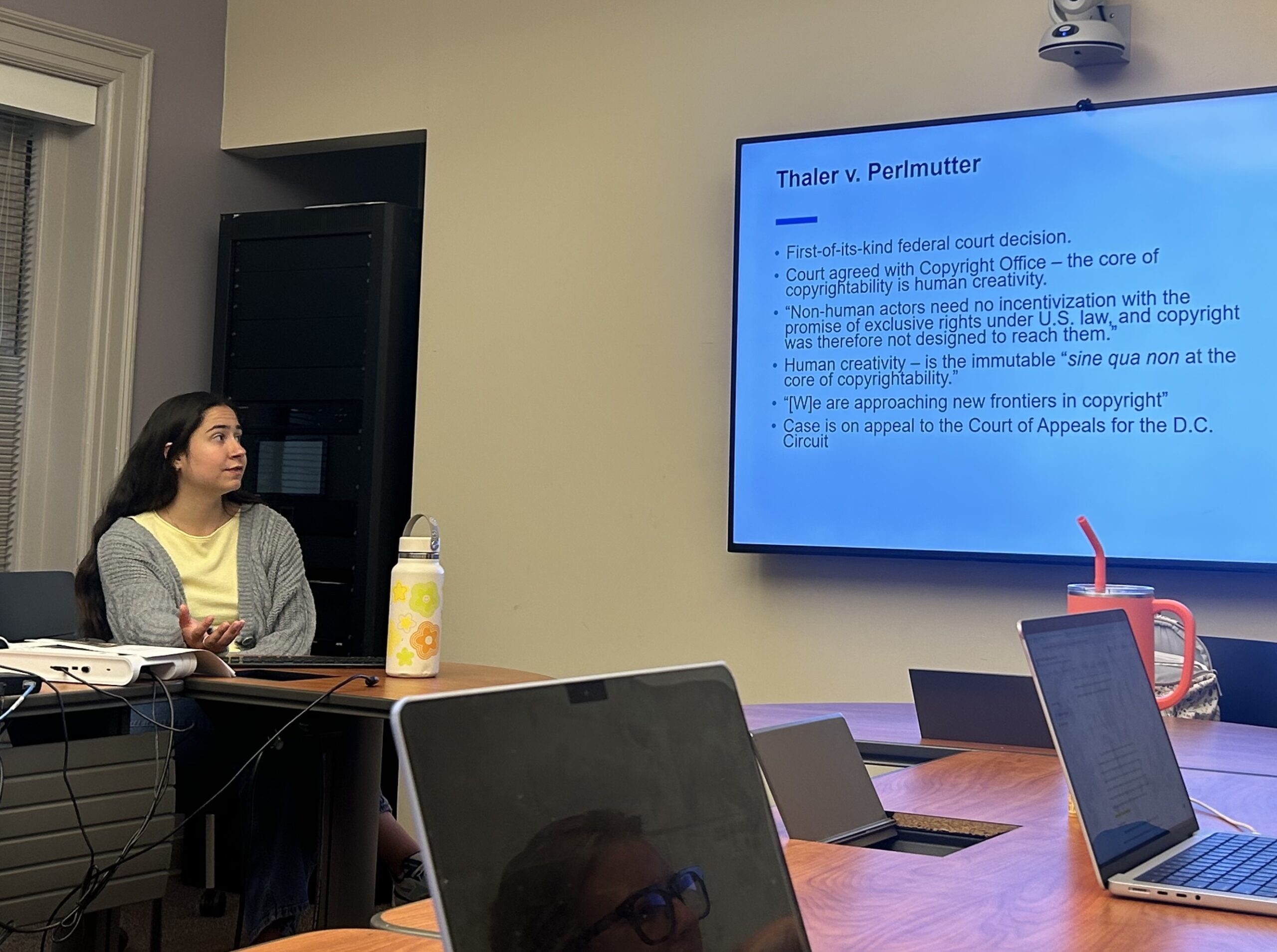
The class was one of 10 C-START selected for the year. The student instructors spend the fall semester creating a syllabus for a class of 15, to then teach in the spring.
Just because she is in the teaching role does not mean she’s stopped learning, Nunez Ludeiro explained. Describing herself as a “newcomer” to the business of art prior to studying abroad, she said the extra research it took to put together the class helped clarify a lot of lingering questions she still had about the industry. Beyond that, the senior said her students have pushed her to think more deeply about the material.
“That’s been my favorite part,” Nunez Ludeiro said. “Because they’ll ask questions that I either didn’t consider or just accepted as fact. And so when we’re able to have those discussions, that is such a fulfilling moment, because you know that they’re also interested in what you’re interested in. And that is so wonderful, to talk about something you love so much.”
The current C-START courses will be archived at the end of the semester, with a new, niche set to be offered next spring. For those passionate about a subject, Nunez Ludeiro said the teaching experience is a wonderful way to further that curiosity.
“That’s the thing about knowledge, you’re never gonna let it go,” Nunez Ludeiro said. “I’m really grateful to UNC for giving me that opportunity.”
Chapelboro.com does not charge subscription fees, and you can directly support our efforts in local journalism here. Want more of what you see on Chapelboro? Let us bring free local news and community information to you by signing up for our newsletter.