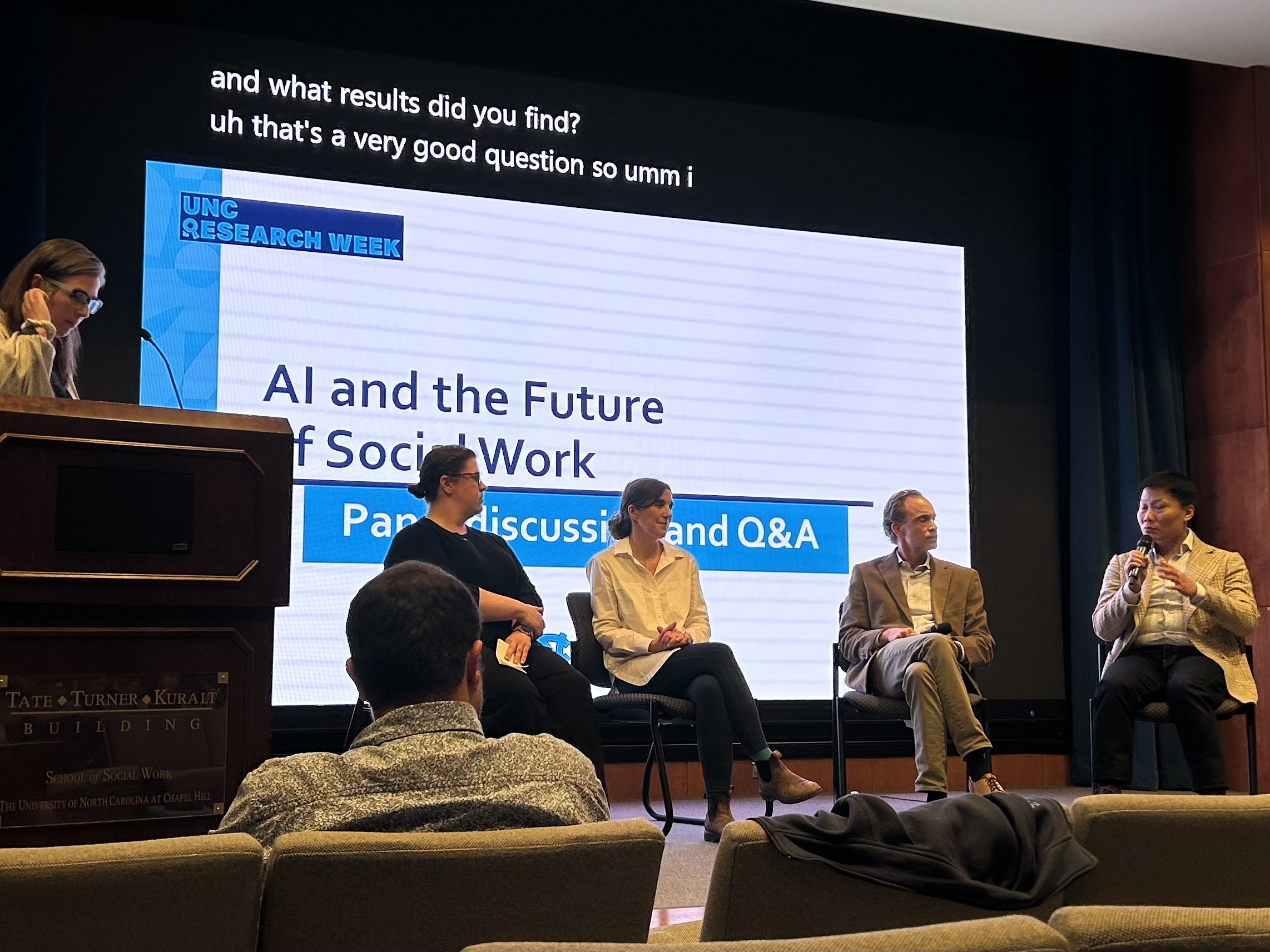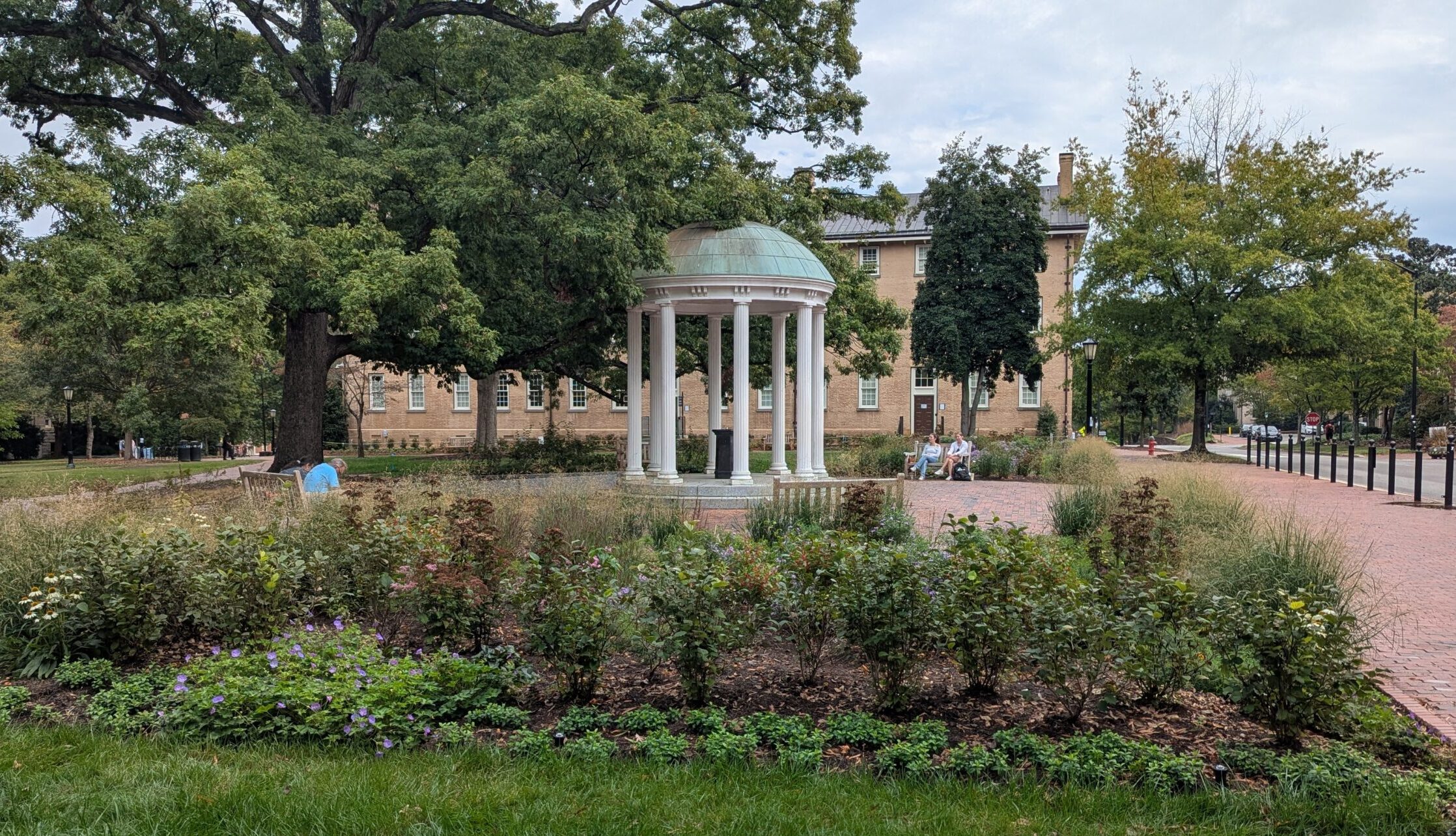

Wednesday marks the start of the spring semester at UNC and the first day of classes in a new calendar year. While 2025 was less turbulent on campus compared to recent years, there was still no shortage of changes – including how the rise of artificial intelligence influenced higher education for students, educators and administrators alike.
The topic was a common thread through 97.9 The Hill’s Forum On The Hill panels with local collegiate leaders, as they discussed how to best marry the traditional role of education with preparing college students to potentially be met with AI as they enter the workforce.
“I think we tend to overestimate the impact [of artificial intelligence] in the short-term and underestimate the impact over the longer term,” UNC Chancellor Lee Roberts told 97.9 The Hill. “But there’s no doubt in my mind that over time, it will reshape most of what we do at the university…[and] we have a responsibility to respond effectively.”
Roberts and his administration have been up-front with embracing the opportunities created by artificial intelligence, with the chancellor having identified it as a priority during his interim period and first year leading the university. Some of that strategy is attempting to put Carolina in a “strong” position to capitalize on interest and those long-term changes, which includes combining the School of Information and Library Sciences with the recently founded School of Data Science and Society. That announcement – which also included tabbing Jeffery Bardzell as the Vice Provost of AI – is geared toward ensuring UNC can contribute to research around the technology but also prepare students to use it appropriately after graduation.
Roberts said he believes no one responds to workforce demands and changes better than students and their families, and there is increased interest in UNC’s data science degrees. But with how widespread he believes AI could be, the chancellor said creating a baseline of knowledge on how to use the technology will be a key step for the university to best prepare all students – both during and after their time on campus.
“We have some students who have not been exposed to the technology much at all,” said Roberts. “We have other students who have started businesses using AI agents that they’ve built themselves. How do we address that as a university, and make sure that everybody is being met where they are and given the instruction that they’re going to need?”
For a community college like Durham Tech, President J.B. Buxton said challenges exist as well, but in different forms. He said he thinks AI is creating more uncertainty than ever before in the job market, even if it’s not necessarily directly hitting the fields that community colleges most often support.
“It really is impacting different levels of jobs,” said Buxton. “It’s not like it’s going to automate low-skill jobs or going to automate routine jobs…it’s automating traditionally white-collar jobs.
“What we’re hearing from the industry is ‘We’re just getting way more productive and are able to do more with AI,’ and so you need to know how to use AI [when you] come in…we’re not just going to be relying on AI. I.T. is an area like that, life sciences to a degree…health care, increasingly, [although] it’s not replacing jobs, but more so augmenting their work.”
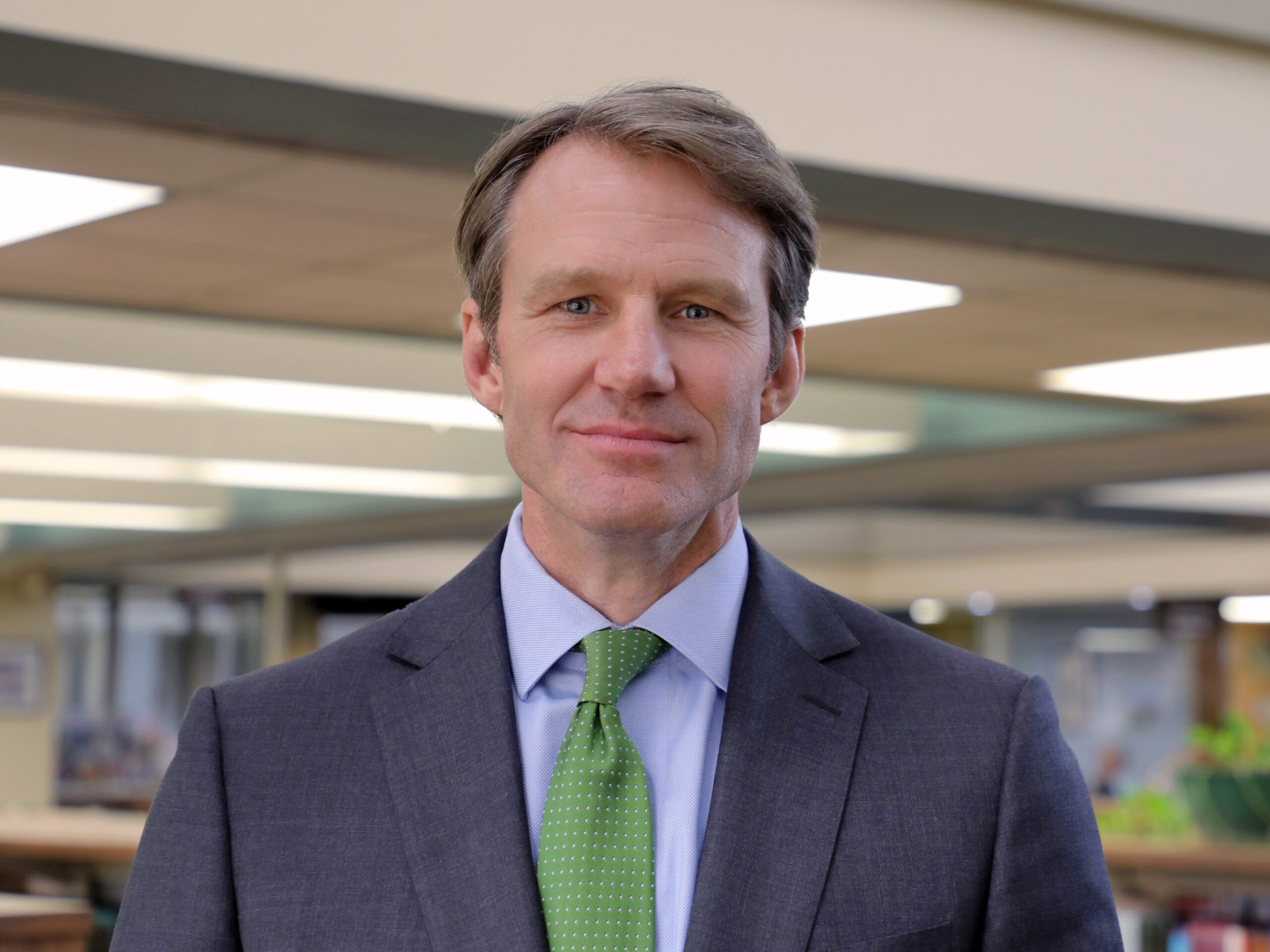
Durham Tech President JB Buxton. (Photo via Durham Technical Community College.)
Still, it’s raising questions in the classroom at both schools. Much discussion around AI in higher education has been whether faculty are policing or encouraging students’ use of it, and what areas of their studies could be properly aided by the tech or incorrectly used to plagiarize assignments. Buxton said since 75% of Durham Tech’s student body are already working, some use AI models during their day jobs and then are asked to scale back on using them for their studies, which creates some confusion. For now, neither UNC nor Durham Tech are implementing a staff-wide approach, instead asking faculty to think critically about it on a course-by-course basis and providing support as needed from central offices.
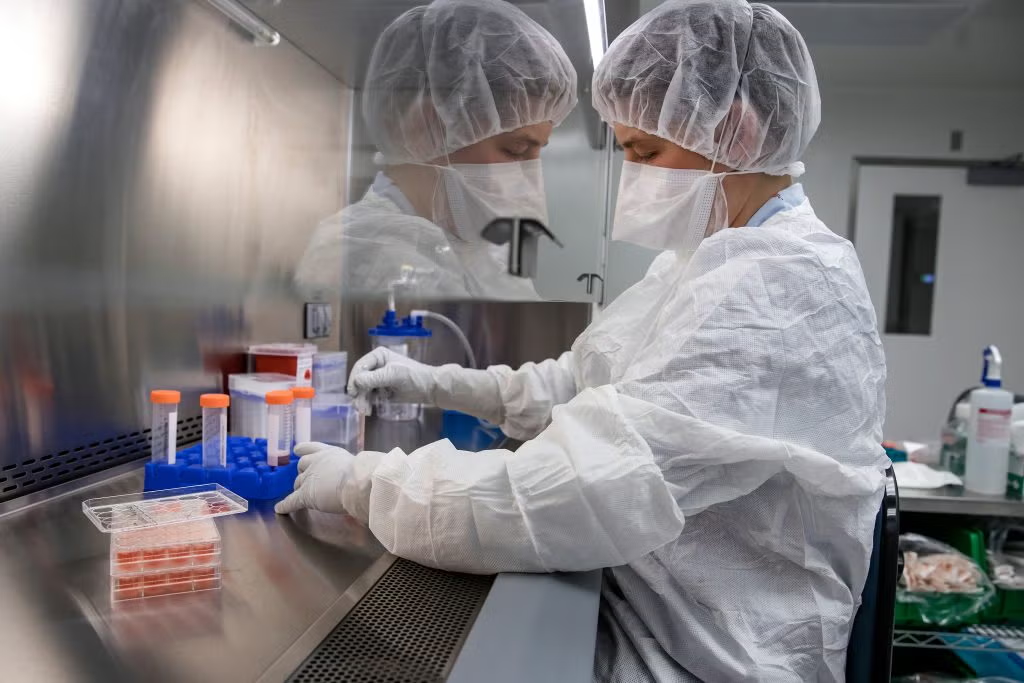
Rebecca Berlow is an assistant professor with her own research lab in UNC’s biochemistry and biophysics department. She said the presence of AI has created “downstream skepticism” amid faculty of how accurate and original student and others’ work is. Berlow added that she appreciates Carolina taking a “proactive” approach to examine both the benefits and risks of AI and tries to emphasize her personal philosophy around classroom education: help young people learn how to be themselves and bring an impact to others.
“We’re not training AI models to do that – we are training people,” said the researcher. “I think it does require this mutual respect and mutual engagement, where we can try and steer people in the right direction but ultimately everybody that comes to Carolina is here for a purpose and we as educators, we as researchers are involved in making sure they are able to achieve what their goals are in moving toward their purpose.”
Enhancing that purpose through the core studies that make up a liberal arts education is part of what gives educators like Berlow and administrators like Roberts confidence in higher education being able to sustain and adapt as AI advances. The UNC chancellor acknowledged the skepticism many faculty have toward the emerging technology and how it could threaten what or how they teach. But he added how much of what educators can offer students is shielded from the technology – as long as the students embrace it.
“If there’s one thing we’ve told students over the last 30 years, one applied skill we’ve told them they need to know, it’s coding,” Roberts said. “And now, the AI can code better than any undergraduate. I would hope the lesson that some students take from that [example] is that to try to learn one applied skill and hope that it serves you well over the course of a 50-year career is futile.
“What you really should be looking for from a college education,” he continued, “are the skills that the humanities teach you. Logical thinking, communication skills, critical reasoning, the ability to write persuasively… those are the skills that you know, no matter what happens with technology, will serve you in good stead.”
Buxton agreed, saying he believes that well-rounded development is critical even for Durham Tech students attending to join or advance through specific trades.
“It’s a mix of the two skills: we want you to have the technical skills for the industry you’re interested in entering, and we want you to have what some people call ‘soft’ – and we think of as ‘essential’ – skills,” said Buxton. “You’re going to do humanities, you’re going to do science and math, and creative liberal arts as part of what you do – even if that’s an applied associated degree in automotive tech. Even if that’s one of degrees in skilled trades, you’re going to get some of that coursework.”
To listen to the panel with Lee Roberts and J.B. Buxton, click here — while Rebecca Berlow’s panel about UNC research, instruction and funding can be listened to here.
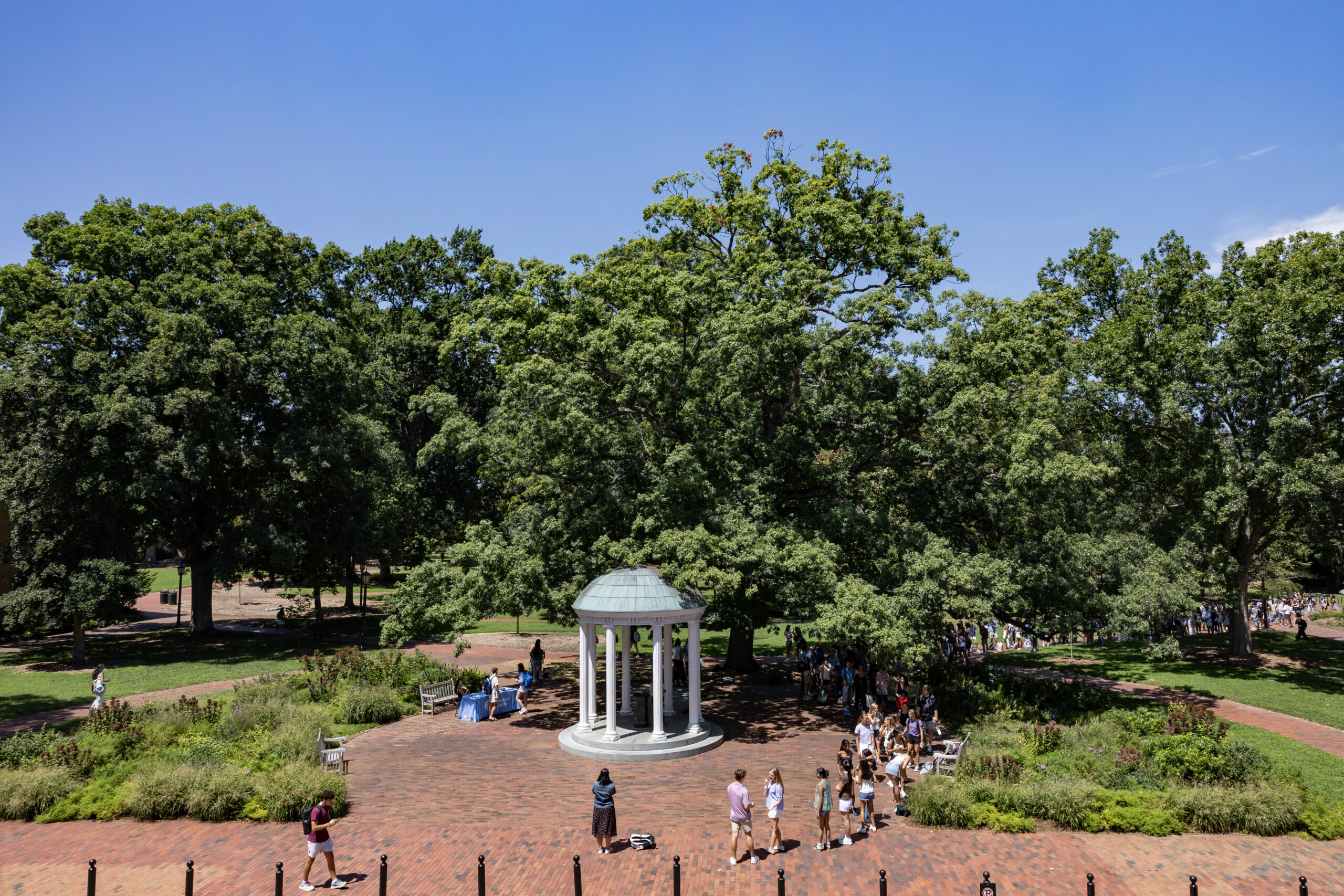
Featured image via Jon Gardiner/UNC-Chapel Hill
Chapelboro.com does not charge subscription fees, and you can directly support our efforts in local journalism here. Want more of what you see on Chapelboro? Let us bring free local news and community information to you by signing up for our newsletter.