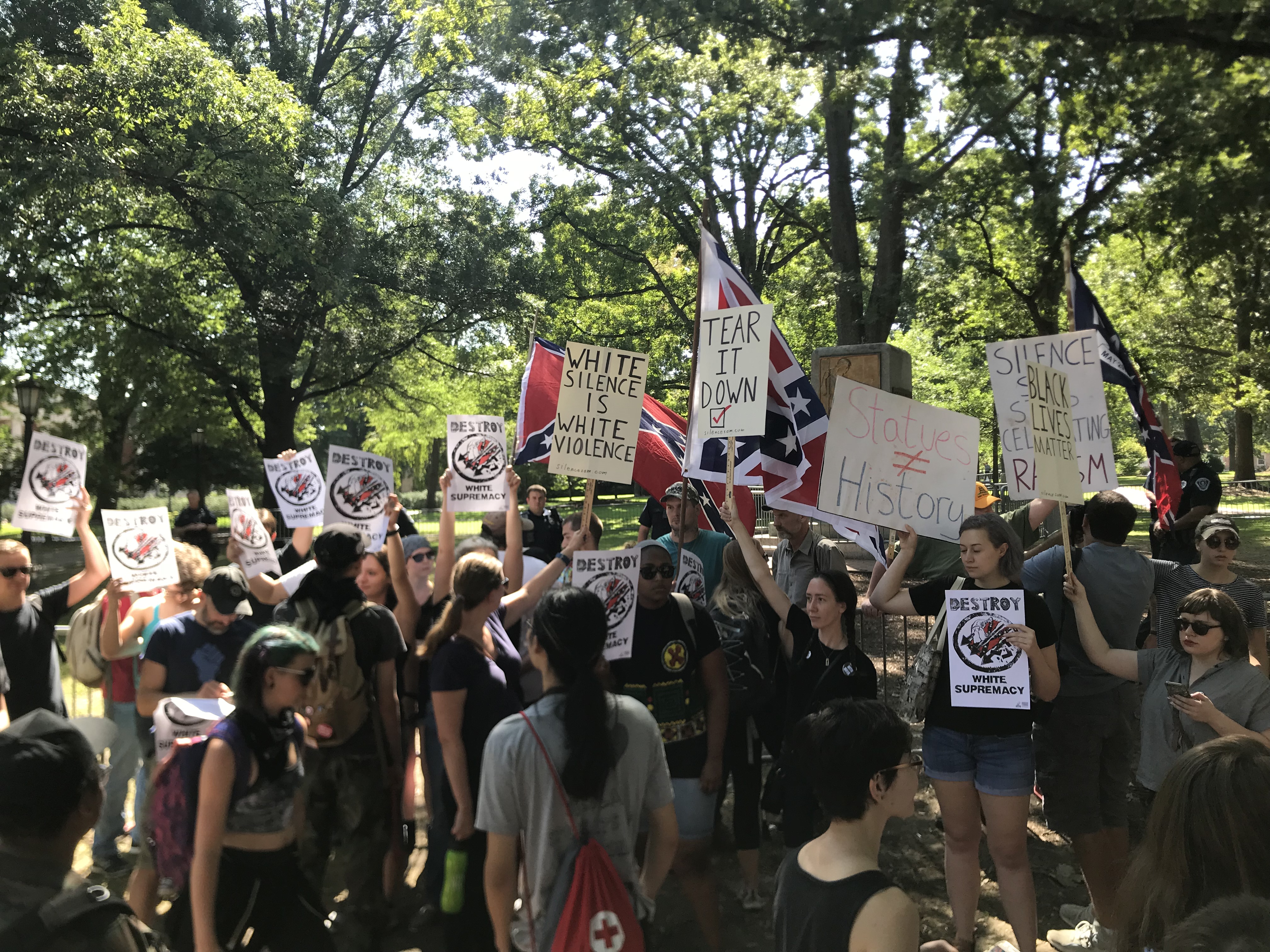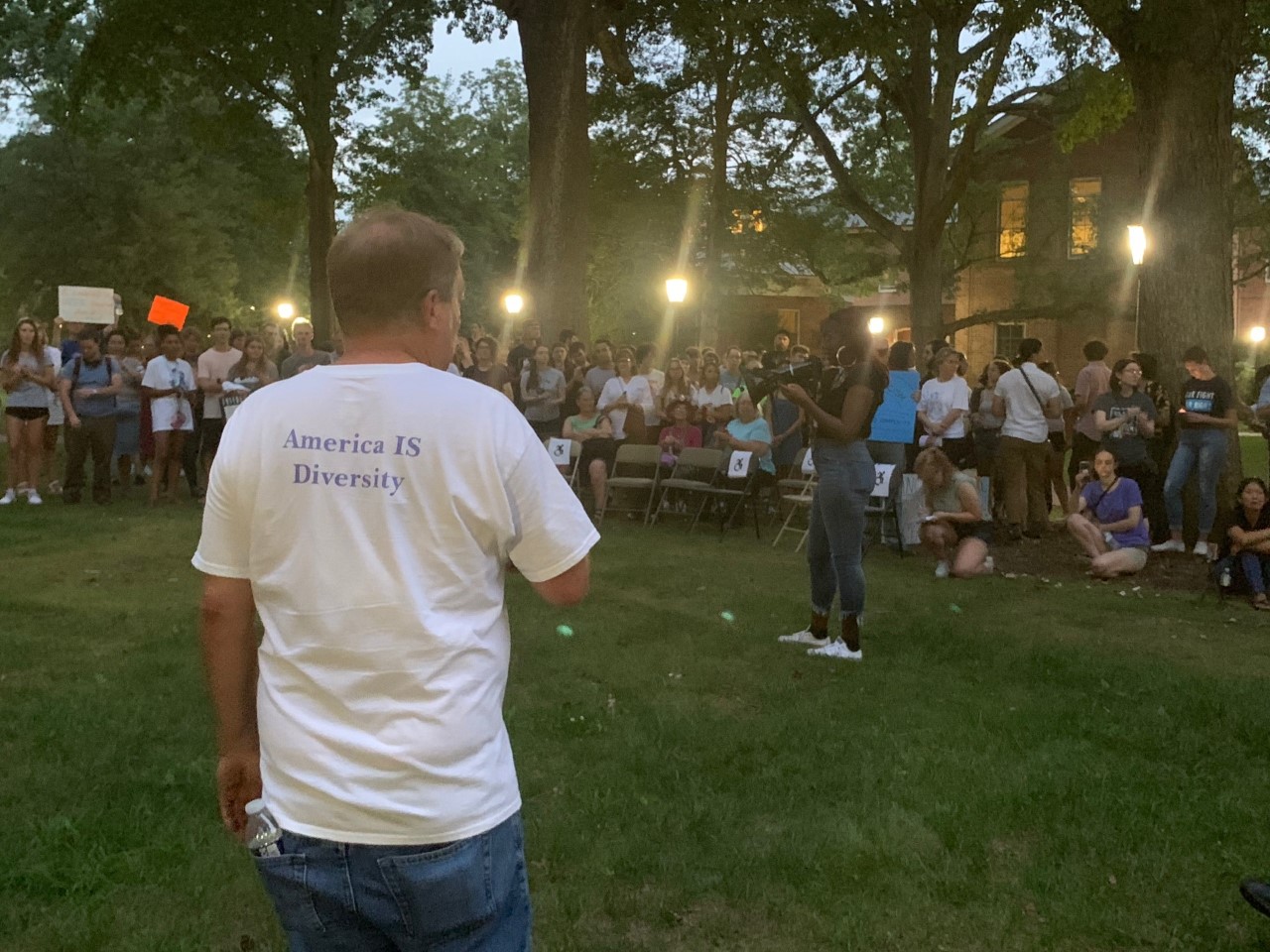

Jerry Wilson wearing a noose in protest of Silent Sam at a rally in August
Jerry Wilson is pursuing a doctorate degree in the Policy, Leadership and School Improvement program in the School of Education at UNC. He is black. And for the last week, Wilson has been walking across the UNC campus with a noose around his neck.
“I’m hoping that more folks will start to do the double-take and be struck by how out of place a noose around a student’s neck looks,” Wilson said in a recent interview. “And I hope that they make the connection to how out of place Silent Sam is on the campus at UNC.”
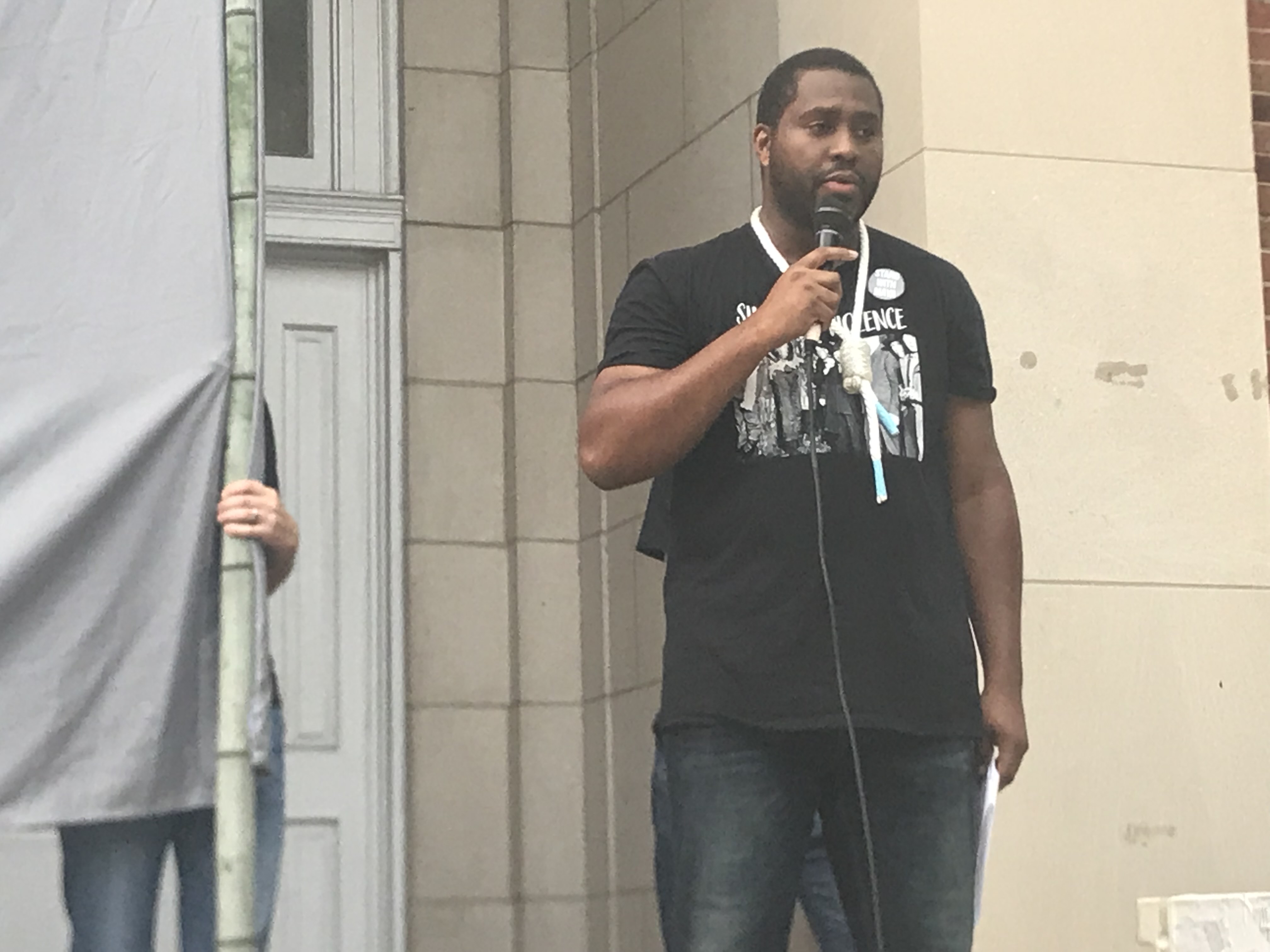
Jerry Wilson at a rally in August where he pledged to wear a noose on the campus until Silent Sam was removed. Photo via Blake Hodge.
Wilson and one of his peers initially put nooses around their necks on August 20. It was at a rally calling for the removal of the Confederate monument on the Chapel Hill campus known as Silent Sam. The two would wear the nooses until the monument was no longer standing atop its pedestal on McCorkle Place, Wilson said that August night. Several hours later, protesters pulled the statue down.
Wilson, who is originally from Charlotte, said protesting by donning the noose was initially inspired by other activists, including history graduate student Maya Little. She was arrested this spring for pouring a mixture of what she said was her own blood and red paint on the statue.
But Wilson restarted the protest last Wednesday, two days after the UNC – Chapel Hill Board of Trustees voted to approve a recommendation to build a new $5 million facility to house Silent Sam in the future and incorporate teaching and exhibit space to tell the full history of the university.
That vote drew another rally with protesters saying the monument has no place on the campus in any capacity.
“Certainly, building a $5 million shrine to the statue won’t solve anything,” Wilson said, “and, in fact, will make things much worse. It’s a slap in the face.”
Wilson added that the monument has had a negative impact on black students, faculty and staff for decades.
“If you don’t know the history, if you don’t experience racism on a daily basis,” Wilson said, “when you’re not on McCorkle Place – and even when you are, and you look at the statue – you don’t have a full understanding that black students have and black faculty members have and black staff persons have when we walk around campus every day.”
Wilson said the decision to recommend a new facility on campus to house the statue left him and some other black members of the campus community speechless.
“We can look at each other and understand that we are both feeling the same pain,” Wilson said. He added other students had repeatedly used the word “betrayed” to describe how they felt about the decision.
UNC – Chapel Hill Chancellor Carol Folt noted that there were strong feelings on each side of the debate over the future of the monument from the roughly 5,000 public comments submitted regarding the monument’s future. But Wilson said the two sides of the argument don’t bare the same weight of the decision.
“Just because there are strong feelings on either side,” Wilson said, “doesn’t mean that the impact and the pain are evenly distributed.”
A growing list of faculty and others from the campus community have signed multiple petitions asking that Silent Sam not be returned to the campus; one of those petitions has been signed by more than 100 current and former UNC student athletes. A group of graduate students and teaching assistants say they have been withholding submitting final grades to the university in protest of the Silent Sam proposal.
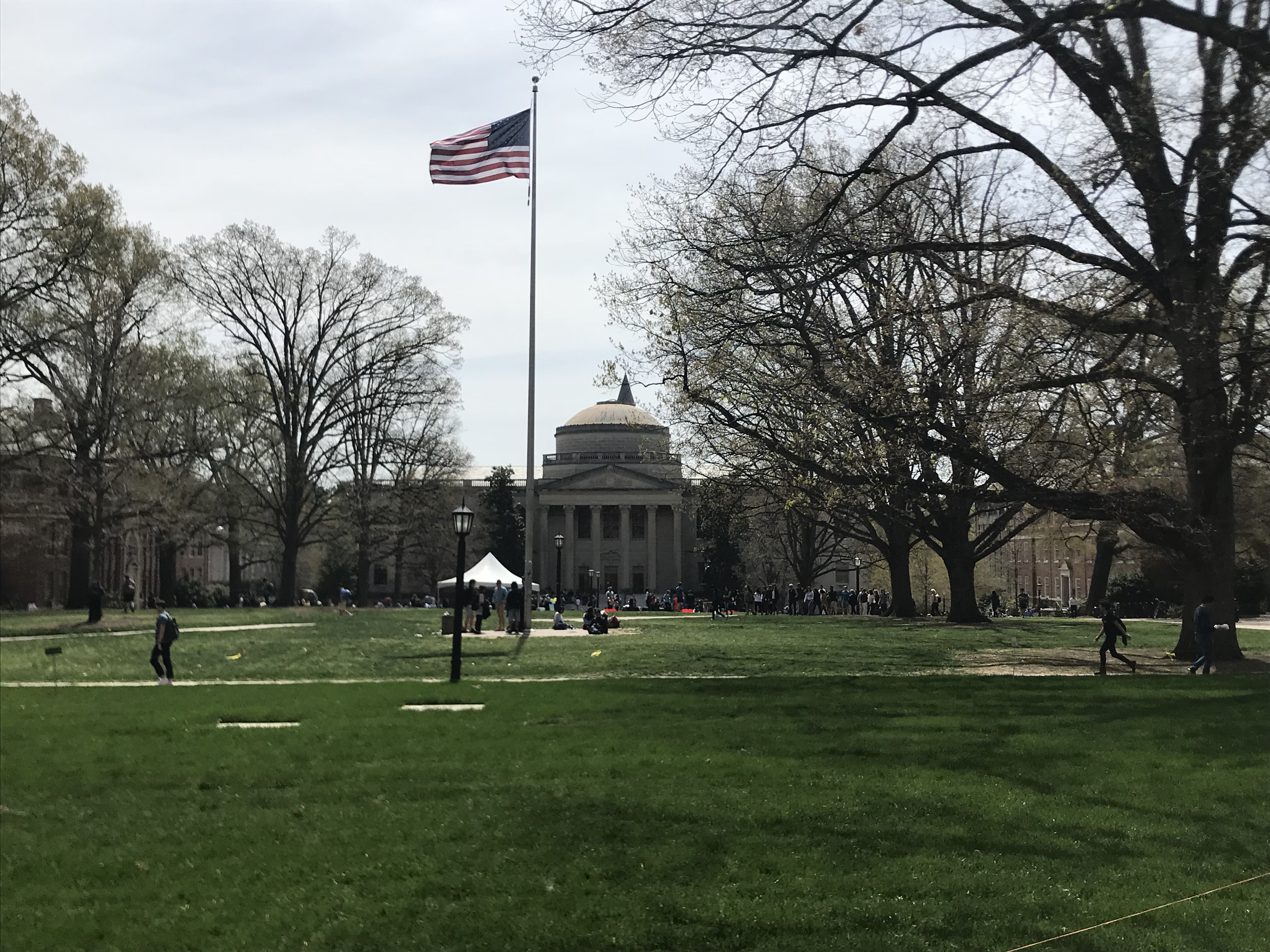
Folt and several members of the Board of Trustees said during last week’s meeting to approve the recommendation that they would prefer the monument be moved to a new location off the Chapel Hill campus. But the administration and trustees said they were prevented from making that recommendation due to a 2015 law that limits the movement of objects of remembrance.
The plan from the campus will now go to the UNC System Board of Governors; at least one member of that board has said the statue should be reinstalled on the pedestal it called home on McCorkle Place for more than 100 years. The Board of Governors is expected to discuss the recommendation at a meeting on Friday.
Meanwhile, social media posts have suggested that supporters of Silent Sam plan to gather on McCorkle Place on Sunday.
UNC associate vice chancellor for campus safety and risk management Derek Kemp said in a statement issued by the university that officials were aware of the plans.
“The University is aware of a small number of individuals who plan to demonstrate at the Confederate Monument Sunday, and of a potential counter protest. As a public entity subject to the First Amendment, the University does not require or grant permits to assemble on campus and may not consider the content of any group’s speech in applying the facilities use policy.
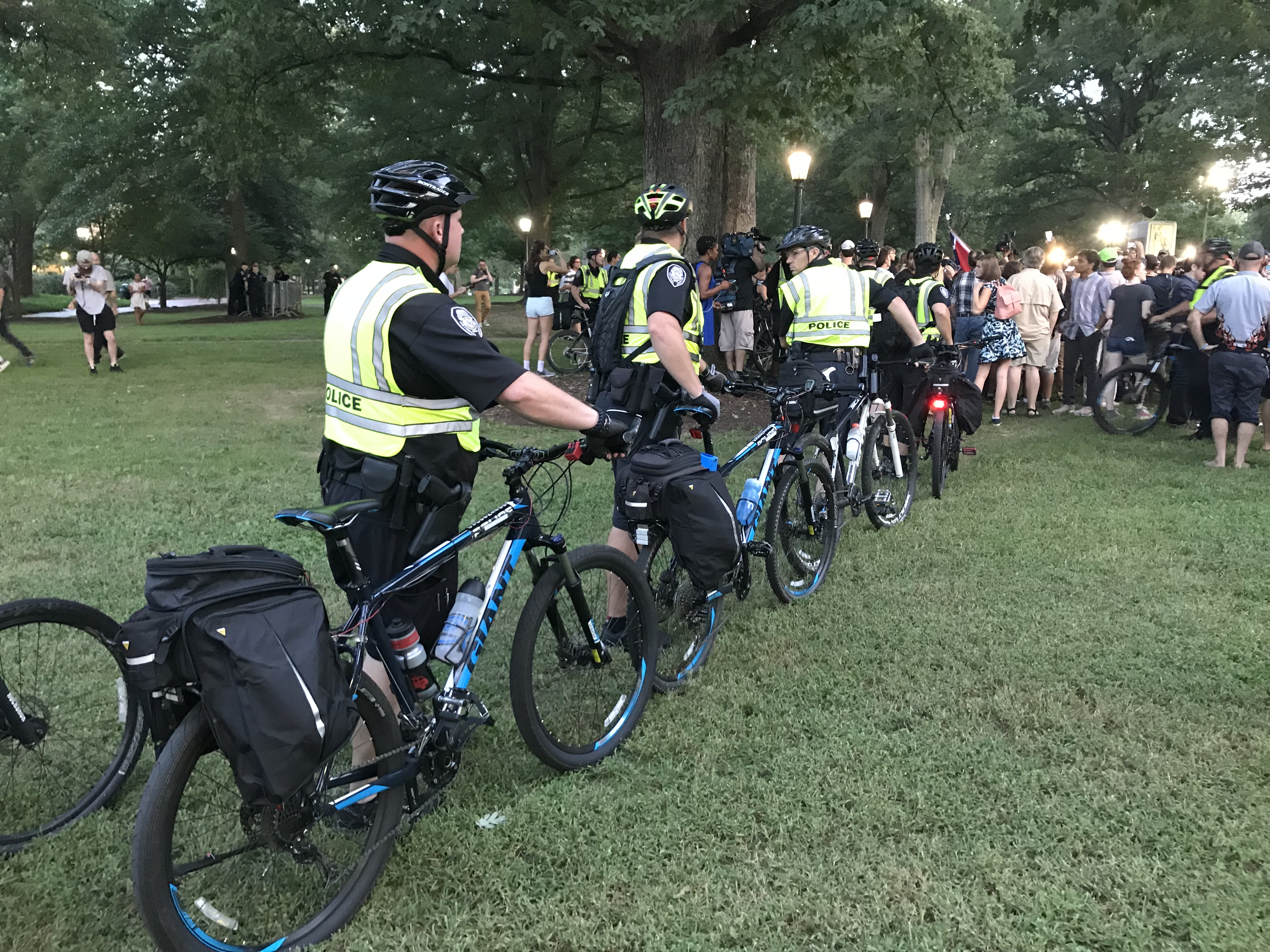
“Anytime a group demonstrates at the University, UNC Police works to ensure the safety of everyone and follows best practices for crowd management. As a matter of protocol, UNC Police reach out to any group that is willing to work with them to learn their plans, develop a safety plan, including entrance and exit, and ensure that opposing groups have separate spaces. As we learned from the events in Charlottesville, one of the most effective ways of ensuring safety is to keep counter-protest groups separate.”
Anti-Silent Sam protesters have criticized UNC Police in the past for working with outside groups coming to campus and facilitating an entrance and exit to the monument.
Sunday is also Winter Commencement at UNC – Chapel Hill. The commencement speaker is former vice chancellor for student affairs Winston Crisp, who retired from the university this fall. Public records showed that Crisp had on multiple occasions pushed for the university to take a stronger stance against Silent Sam. But he has said on multiple occasions that his decision to retire was not based on the status of the Confederate monument on the campus.