For more than 25 years, the man identified as the triggerman in the death of Michael Jordan’s father has repeatedly declared his innocence in the murder.
Now he’s going before a judge to lay out evidence he says proves that although he helped dispose of the body, he didn’t kill James Jordan in the early-morning darkness one July day in 1993.
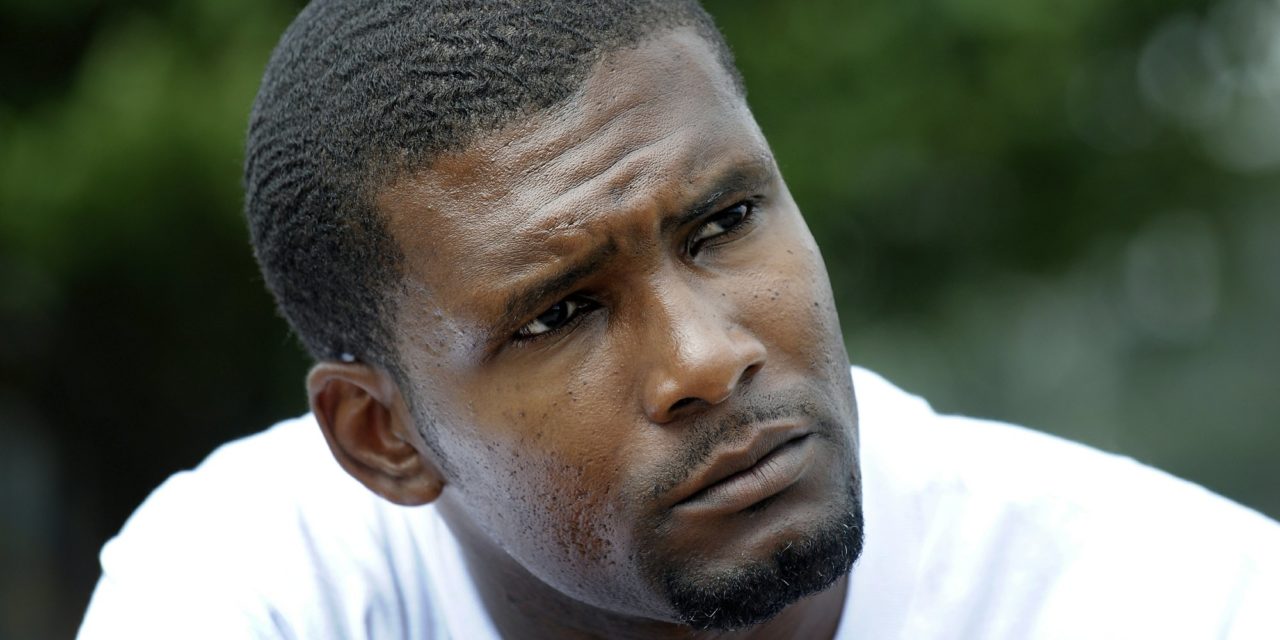
“I had nothing to do with this man losing his life, period. I wasn’t connected to the murder. I came in after he was already dead. … The way I look at it is: I denied his family the right to a proper burial because of what I did,” Daniel Green said last week in an interview at the Lumberton Correctional Institution in Robeson County, the same county where Jordan was killed.
Jordan was killed July 23, 1993. His body was found 11 days later in a South Carolina swamp. It wasn’t identified until dental records confirmed it was James Jordan. His body had been cremated except for his jaw and hands, which were saved for identification.
On Wednesday, Green goes to court, where defense attorney Chris Mumma and prosecutors from the state attorney’s general office will argue whether he deserves an evidentiary hearing that could lead to a new trial. Mumma says this is the first time a judge will hear all evidence gathered by the defense. The state Court of Appeals upheld his conviction in 1996, as did the state Supreme Court in 1999.
Green was convicted of first-degree murder. His friend, Larry Demery, testified that Green pulled the trigger and killed Jordan in a roadside robbery gone wrong. Both are serving life sentences.
Green, 44, was 18 when Jordan was killed. He’s probably best remembered for a video in which he rapped while wearing an NBA All-Star ring and gold watch that Michael Jordan gave to his father. Green says he got the jewelry while disposing of the body.
Superior Court Judge Winston Gilchrist will hear the arguments in Lee County court in Sanford. Defense filings make various claims. Several people say they saw Green at a family cookout at the time Jordan was killed. Other issues deal with blood-evidence testimony, the handling of Jordan’s shirt, and ineffective trial and appellate counsel.
Green said Demery left the cookout to meet someone for a drug deal and he refused an invitation to accompany Demery. Green said he was just out of prison for a conviction that was later vacated, and a girl “was kissing on” him so there was no way he’d abandon that opportunity.
Demery returned hours later, Green said, and told him he approached Jordan at a motel parking lot because he mistakenly thought Jordan was the drug connection he was supposed to meet. He said Demery told him the two had an altercation and Demery killed Jordan.
If that’s true, then much of what people think they know about the murder is wrong, starting with the notion that James Jordan was killed as he slept in his parked Lexus along Interstate 95.
“I don’t think anybody knows the truth about what happened to James Jordan – the state or the defense,” Mumma said.
Attorney Hugh Rogers, who represented Demery, said no physical evidence tied either man to the shooting.
“It became ‘he said, he said,’” Rogers said. “I guess looking at the various versions each one gave, once Larry got to his ultimate version, there was more corroboration there than there was to Daniel’s ultimate version.”
Green said he and Demery became friends in third grade, when they got into a playground fight and a teacher made them apologize and read books together. When he found out Demery had accused him, Green said, he couldn’t believe it.
As he wore the jewelry and drove around in the red Lexus, Green said he thought he was using the possessions of a drug dealer. He believes he learned he had helped dispose of the body of James Jordan when he read that in news stories.
By that time, Michael Jordan had helped the North Carolina Tar Heels win the 1982 NCAA championship and led the Chicago Bulls to three NBA titles. He would win three more titles with the Bulls; he now owns the Charlotte Hornets. A spokeswoman for Michael Jordan declined to comment on Green’s attempt for a new trial.
In addition to evidence in the defense filings, Green’s lawyers will contend that no one was convicted of actually killing James Jordan. Demery accused Green, but jurors found in the sentencing phase that Green didn’t kill or intend to kill Jordan, and didn’t plan to use deadly force.
The state attorney general’s office says jurors’ opinions at sentencing aren’t relevant to the conviction of first-degree murder under the felony murder rule, which means someone died during the commission of another crime.
The district attorney who prosecuted Green said he doesn’t believe it matters who shot Jordan, although he’s confident the evidence showed Green pulled the trigger.
“If you ask me who killed James Jordan, I’m going to say Daniel Green and Larry Demery,” said Johnson Britt, who retires at the end of the year.
File Photo via Sara D. Davis / Associated Press

Related Stories
‹
![]()
Chapel Hill Named Best City for College Basketball FansIt’s no surprise that Chapel Hill is a top-tier college basketball town. The Tar Heels are consistently one of the best programs in the nation, the fans are passionate (and sometimes crazy) about supporting their team and you can regularly find former players in the stands. But just how good of a college basketball town […]

On the Porch: Carl Nordgren - Creativity Can Unite USThis Week:
Carl Nordgren is a best-selling novelist, a teacher, and an imaginal cell. After 25 years as an entrepreneur, he taught Creativity at Duke for 14 years. He’s a two-time TEDx speaker and hosts the weekly radio show ‘Exploring your Creative Genius’ on 97.9 The Hill. His calling is to help each of us and all of us grow our creative capacities and develop our entrepreneurial instincts and behaviors, a calling that informed his book "Becoming a Creative Genius (again)". His new book, "Common Ground for US" continues that work and offers new perspectives on governance and policy making for political and community leaders. You can attend his book launch event at Golden Fig Books in Carrboro on June 4, by clicking the show title above.

On the Porch: Tiffany Muller - End Citizens UnitedThis Week:
Tiffany Muller is the President of End Citizens United. She has helped grow the group into a nationwide organization with more than 4 million members and 1 million grassroots donors. Before leading End Citizens United, Tiffany was Deputy Political Director at the Democratic Senatorial Campaign Committee, where she worked with top Senate races. She also served as chief of staff to two members of Congress, ran a political research firm, and was Vice President of Political Operations at the LGBTQ+ Victory Fund. As a member of the Topeka City Council, she led successful efforts to expand anti-discrimination protections.
![]()
Anderson Clayton on N.C. Democratic Party's General Election Preparation — On Air Today (May 20, 2026)Chair of the North Carolina Democratic Party Anderson Clayton joins 97.9 The Hill News Director Brighton McConnell on Wednesday, May 20.

Rep. Allen Buansi Shares Details on Bill for Millionaire Tax to Fund Public SchoolsThe District 56 representative joined 97.9 The Hill to discuss the bill he's co-sponsoring to explore new ways for funding public schools.

On the Porch: Graig Meyer - NC Justice CenterThis Week:
Graig Meyer is the Executive Director of the NC Justice Center where he will continue to "prioritize decisions and policies that make our state safer, healthier, more fair, and more prosperous". Meyer brings more than a decade of leadership in the North Carolina General Assembly, where he served in the House of Representatives beginning in 2013 and most recently in the State Senate representing Orange, Person, and Caswell Counties. Throughout his legislative career, Meyer championed strong public education, access to health care, economic opportunity for working families, and policies that strengthen communities across the state. Before entering public office, Graig spent sixteen years working in North Carolina’s public schools. A trained social worker and longtime public-school advocate, Graig has focused his public service on helping families connect to the resources and opportunities they need to thrive.

On the Porch: Lisa Sorg - Data CentersThis Week:
Lisa Sorg is the North Carolina reporter for Inside Climate News. A journalist for 30 years, Sorg covers energy, climate environment and agriculture, as well as the social justice impacts of pollution and corporate malfeasance.
She has won dozens of awards for her news, public service and investigative reporting. In 2022, she received the Stokes Award from the National Press Foundation for her two-part story about the environmental damage from a former missile plant on a Black and Latinx neighborhood in Burlington. Sorg was previously an environmental investigative reporter at NC Newsline, a nonprofit media outlet based in Raleigh. She has also worked at alt-weeklies, dailies and magazines. Originally from rural Indiana, she lives in Durham, N.C.

On the Porch: Holly Lux-Sullivan - Walking You HomeThis Week:
Holly Lux-Sullivan of Heartwood Death Doula & Bereavement Care is a trusted end-of-life guide, grief counselor, and board-certified chaplain with 18 years of experience supporting people through illness. She is a respected death doula whose passion is caring for those at life’s margins, particularly during severe and terminal illness, and normalizing conversations about mortality. An ordained Unitarian Universalist minister, she serves people facing the end of life across central North Carolina. HeartwoodDeathDoula.com

'Worried For Our Future': Authors React to Removal Attempt of LGBTQ+ Books from CHCCS Elementary LibrariesNorth Carolina legislators are pushing to remove 63 LGBTQ-themed books from CHCCS elementary schools, saying they violate state law for being available in libraries.

On the Porch: Deana Joy - Child Abuse in NCThis Week:
Deana Joy has spent her career working in the nonprofit sector with victims of crime. She began by working with victims of sexual violence then, in 2006, she was promoted to Executive Director of a local Children’s Advocacy and Sexual Assault Center. In 2014, Deana began working as the CEO of Children’s Advocacy Centers of North Carolina, the state chapter for Children’s Advocacy Centers (CACs). In 2017, Deana became a national accreditation site reviewer for National Children’s Alliance, the accrediting body of Children’s Advocacy Centers. Deana currently serves as the Chair of the Children’s Justice Act for the Governor's Crime Commission and is on the NC Human Trafficking Commission, the NCDHHS Safety Design Team, the central region Citizen Review Panel, and the statewide Mass Violence Committee.
›