The North Carolina Utilities Commission has signed off on orders involving Duke Energy’s two electric subsidiaries in the state over their 2019 rate increase requests and a plan for how the company will pay to get rid of coal ash stored in the state.
The regulatory panel issued an order Friday involving Duke Energy Progress, whose customers are largely in the Triangle area and points east, as well as in and around Asheville. A similar order was filed March 31 involving Duke Energy Carolinas, which includes Charlotte and most of western North Carolina. The two subsidiaries have 3.4 million electric customers in the state.
The two orders approved “partial rate increases” for both utilities after they had requested increases in 2019. Duke Energy Progress wanted a 12.3% rate increase, while Duke Energy Carolinas sought a 9.2% increase, according to commission news releases. Both utilities were allowed to issue temporary rates in 2020. The final rates haven’t yet been been finalized, but the commission said they will be “somewhat higher” than the temporary rates.
The orders also approved a settlement announced in January by Duke Energy, Attorney General Josh Stein and a conservation group over how coal ash clean-up costs would be divvied up. Charlotte-based Duke Energy is working on closing all 31 of its coal ash pits or ponds in the state. The settlement would shift an estimated $1.1 billion in expenses away from customers over the next decade and to Duke Energy and its shareholders.
The orders also addressed how both subsidiaries can treat in their accounting books the costs for making improvements to the electric grid.
Duke Energy said in a statement Friday about the Duke Energy Progress order that it was pleased with the settlement agreements, resulting in a “decision that balances the needs of customers and the company.”
As part of the orders, Duke Energy said its shareholders also will contribute $11 million over two years toward efforts to assist low-income customers with their bills and make their residences more energy- and cost-efficient.
Photo via Duke Energy.
Related Stories
‹
Duke Energy Seeks to Merge Carolina Utilities, Projecting More Than $1B in Customer SavingsDuke Energy Corp. said it formally asked federal and state regulators on Thursday for permission to join together its two subsidiaries.
Duke Energy Prefers Meeting North Carolina Carbon Target by 2035. But Regulators Have Final SayWritten by GARY D. ROBERTSON Duke Energy Corp. offered Tuesday updated proposals on how it would meet mandated greenhouse gas emissions reductions in North Carolina through increasing solar and wind power generation and replacing outgoing coal-fired plants in part with new nuclear and hydrogen technologies. A landmark 2021 law directed the North Carolina Utilities Commission to create an ongoing […]
NC Utilities Panel Hears Testimony Over Duke Energy CO2 PlanWritten by GARY D. ROBERTSON North Carolina’s electricity regulators began listening Tuesday to potentially weeks of testimony over proposals by Duke Energy Corp. subsidiaries on how to carry out a state law demanding greenhouse gas reductions in the next decade. In keeping with the landmark 2021 law, the Charlotte-based utility pitched to the state Utilities Commission […]
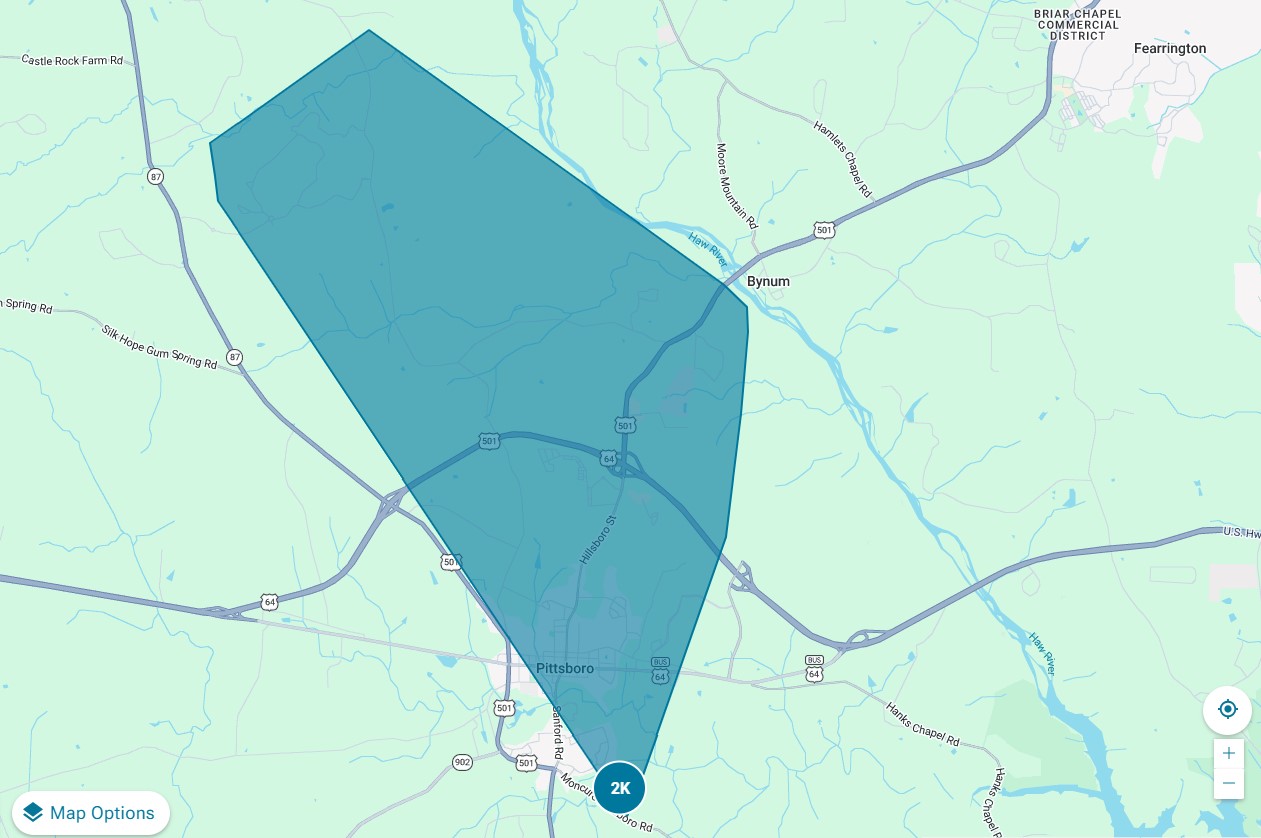
Pittsboro Power Outage Affects More than 2,500 Duke Energy CustomersUPDATE: As of 4:45 p.m., most Duke Energy customers’ power has been restored, according to its outage map. Hundreds of Pittsboro and northeast Chatham County residents are without power on Monday afternoon. Duke Energy sent out alerts to customers impacted by the outage and its Outage Map said as of 3:45 p.m., roughly 2,550 customers […]
![]()
The Morning News: VinFast, Binkley Baptist, UNC BasketballIn today's news: local officials take action against the EV maker VinFast, and UNC men's basketball adds a preseason exhibition against USC.
![]()
The Morning News: 'Hello, Dolly!' at PlayMakers, Animal Cruelty Charges in Siler CityIn today's news: PlayMakers Repertory Company's Summer Youth Conservatory celebrates its 20th year with the musical "Hello, Dolly!"
![]()
The Morning News: Moving CHCCS Students, Previewing UNC Football, and Saving Mr. PicklesIn today's news: six-year-old cocker spaniel Mr. Pickles is reunited with some of the officers and vets who saved his life earlier this year.
Downtown Hillsborough, 1,000 Duke Energy Customers Lose Power in Friday ThunderstormMore than 1,000 Duke Energy customers in Hillsborough reported a power outage on Friday evening after a storm rolled through the region.

On the Porch: Lisa Sorg - Data CentersThis Week:
Lisa Sorg is the North Carolina reporter for Inside Climate News. A journalist for 30 years, Sorg covers energy, climate environment and agriculture, as well as the social justice impacts of pollution and corporate malfeasance.
She has won dozens of awards for her news, public service and investigative reporting. In 2022, she received the Stokes Award from the National Press Foundation for her two-part story about the environmental damage from a former missile plant on a Black and Latinx neighborhood in Burlington. Sorg was previously an environmental investigative reporter at NC Newsline, a nonprofit media outlet based in Raleigh. She has also worked at alt-weeklies, dailies and magazines. Originally from rural Indiana, she lives in Durham, N.C.

In Carrboro and Orange County, A Push Back Against PollutionThe Carrboro Town Council and Orange County Commissioners both passed resolutions this week to tackle climate change.
›