Written by THE ASSOCIATED PRESS
North Carolina state government will develop a rule requiring van, bus and commercial truck manufacturers to sell more zero-emission vehicles in the state over the next decade, Gov. Roy Cooper said on Tuesday.
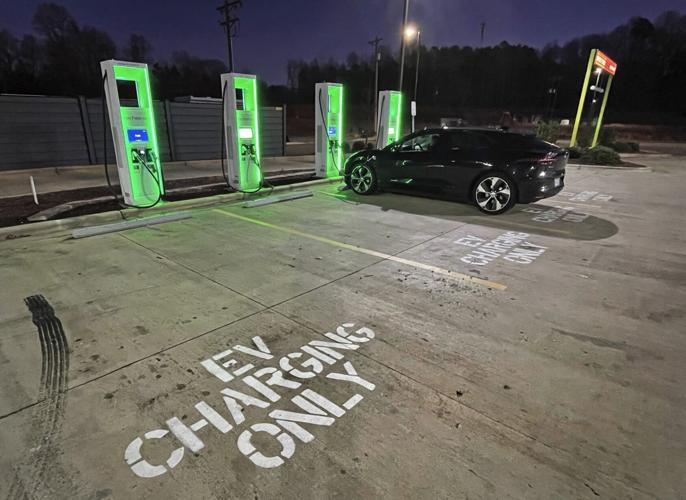
Signing an executive order at the North American headquarters of electrical equipment company ABB, Cooper said the proposed rule and other activities he directed would help cut pollution from medium- and heavy-duty vehicles and promote charging and fueling infrastructure needed.
“North Carolina is already a national hub for truck and bus manufacturing and supply chain development, and we should not miss the opportunity to lead the market-driven transition already underway to cleaner and increasingly cheaper zero-emission technologies that benefit our economy and our communities,” Cooper said in a news release.
The anchor of Tuesday’s order tells the Department of Environmental Quality to propose the Advanced Clean Trucks Program to the Environmental Management Commission by next May. The commission then would have to sign off on any proposal to make it enforceable.
Six other states have adopted such a program including California, New York and Massachusetts, Cooper’s office said.
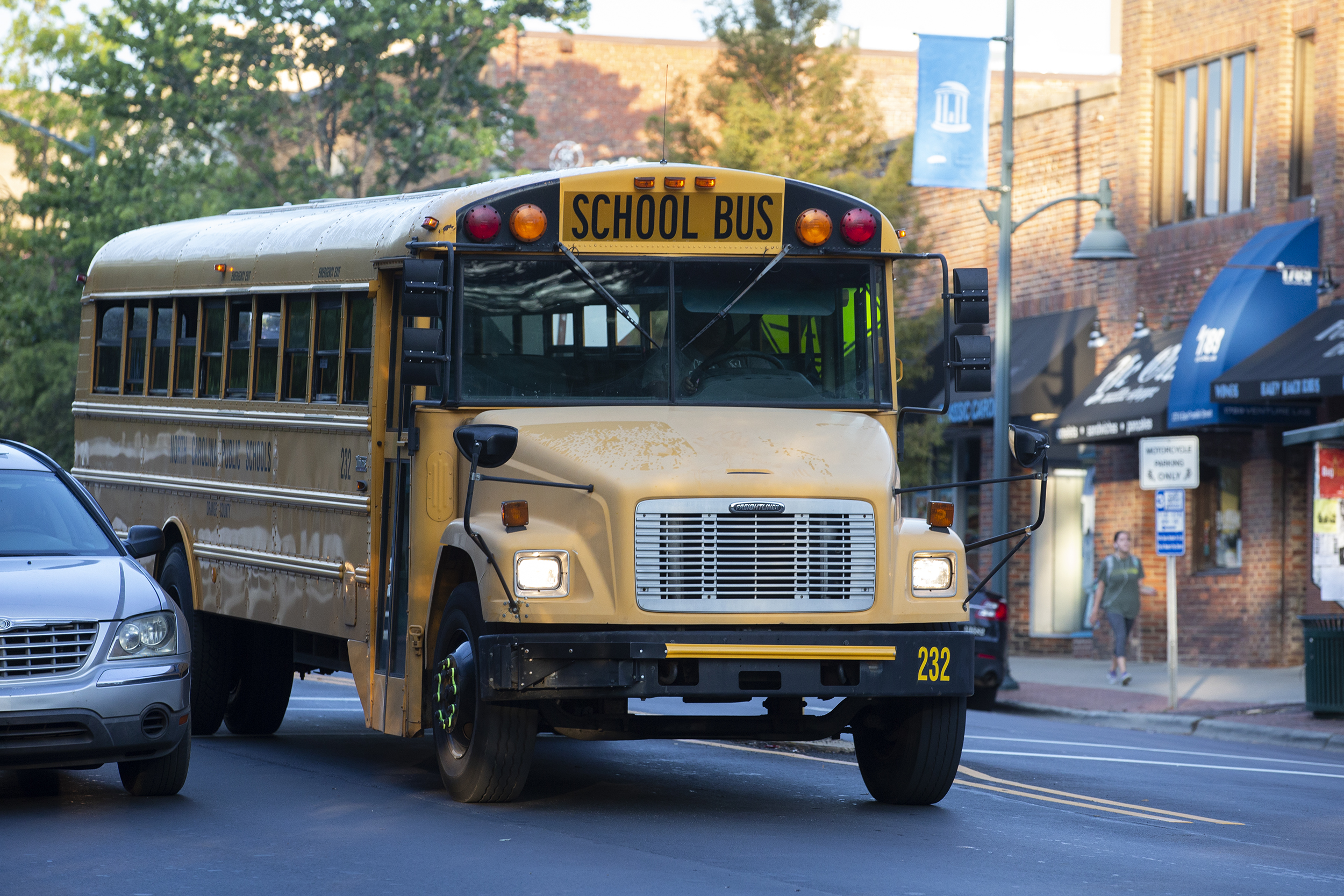
Cooper’s office said the program would apply to what’s called medium- and heavy-duty vehicles, whose gross vehicle weight rating is at least 8,500 pounds, such as delivery vans, garbage trucks, school buses and semi-tractors. It said zero-emission vehicles can include hybrid plug-in vehicles that do have internal combustion engines.
The required sales shares of zero-emission vehicles by manufacturers under the program would increase over time from 10-13% in 2026 to 40-75% in 2035, depending on vehicle sizes, the governor’s office said.
The vehicles targeted for replacement in the program compose just over 3% of registered vehicles in North Carolina, but they emit 26% of smog-forming nitrous oxide emissions, according to Cooper’s office.
The order comes several months after the Democratic governor unveiled another series of clean-vehicle initiatives, such as directing his Department of Transportation to create a “Clean Transportation Plan” to reduce carbon emissions.
There are now more than 125 medium- and heavy-duty zero-emission models available in North America, Cooper’s office said. Federal laws in 2021 and 2022 include grants and loan programs to support manufacturing as well as some tax credits to replace commercial gas or diesel vehicles that offer up to $40,000 per vehicle.
Environmental groups praised Cooper’s action, which also tells his Cabinet agencies to develop strategies to improve health outcomes for communities disproportionately affected by air pollution caused by vehicles.
Low-income neighborhoods and communities of color are more likely to be near transportation corridors and freight hubs, according to Cooper’s office.
“Implementing this executive order will protect our children’s health as well as the climate,” North Carolina Conservation Network Executive Director Brian Buzby said in a separate release. “Replacing diesel with electric trucks over time will massively reduce air pollution exposures for both urban and rural North Carolinians living near roads.” Several other groups wrote Cooper in August urging the clean trucks program be adopted.
Any final Environmental Management Commission rule would be subject to additional scrutiny by a state rules panel. It’s also possible that the General Assembly could formally vote to block any rule.
In a tweet, Republican House Speaker Tim Moore said that while the executive action was being reviewed, “I can’t help but think that now is not the time for expansive, burdensome new mandates for our trucking industry while inflation and supply chain issues continue to crush NC families.”
Cooper joined a multistate memorandum of understanding in 2020 that would seek to increase sales shares of zero-emission medium- and heavy-duty vehicles to 30% by 2030 and 100% by 2050.
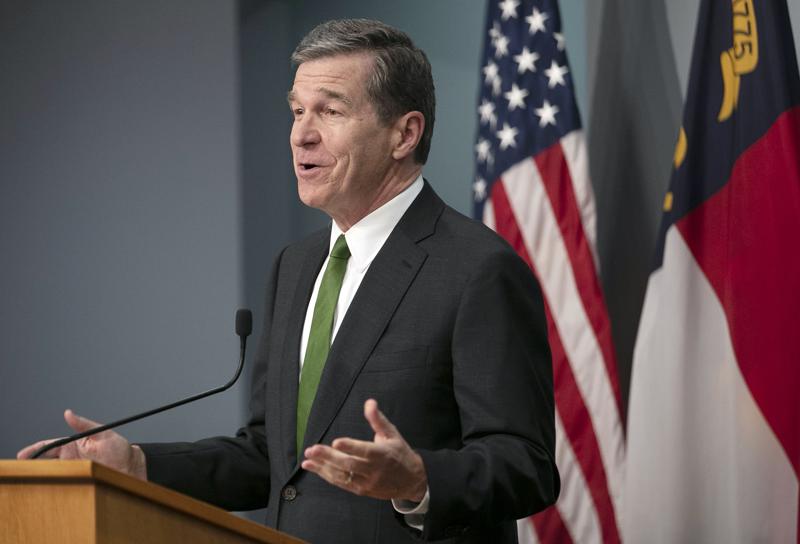
Photo via Robert Willett/The News & Observer and Associated Press.
Related Stories
‹

Bill for 'Forever Chemicals' Manufacturers to Pay North Carolina Water Systems AdvancesNorth Carolina could order "forever chemicals" manufacturers to help pay for cleanup when found responsible for spills into water systems.

NC Tops 50K EVS; Triad’s Electric Vehicle Pace Trails StateWritten by JOHN DEEM (The Winston-Salem Journal) North Carolina has accelerated past the 50,000 mark for electric vehicle registrations, but EV saturation in the Triad continues to lag behind the state as a whole. Through October, 51,500 plug-in vehicles were registered in the state, according to the N.C. Department of Transportation. Ten Triad region counties […]

NC, Colonial Pipeline Reach Agreement on Handling Fuel SpillWritten by THE ASSOCIATED PRESS Colonial Pipeline has agreed to a consent order which says it should be held accountable for a gasoline spill in a North Carolina nature preserve that was found to be far worse than what the company initially said, a state agency said Thursday. The N.C. Department of Environmental Quality filed […]

Biden Picks North Carolina Regulator Michael Regan for EPA AdministratorPresident-elect Joe Biden has picked an experienced but not widely known state regulator, Michael S. Regan of North Carolina, to lead the Environmental Protection Agency. Regan, who is head of North Carolina’s environmental agency, was one of several contenders whose name emerged only in recent days. Biden’s pick was confirmed Thursday by a person familiar […]

North Carolina Announces Plan to Replace Old Buses, Improve EmissionsRiding a bus can help cut down on your greenhouse gas footprint. But how do we prevent those buses from also contributing to emissions? Governor Roy Cooper recently announced the state is awarding nearly $30 million to replace vehicles and install charging stations around North Carolina. The projects are funded by Volkswagen, which is paying […]
![]()
NC to Test Drinking Supplies for Chemicals Emerging as RisksNorth Carolina environmental regulators will start testing the state’s major supplies of drinking water to learn whether people are ingesting industrial chemicals whose health effects are poorly understood, a state official said Friday. Monitoring could start next month for nearly two dozen unregulated chemicals that the U.S. Environmental Protection Agency classifies as “emerging contaminants” needing […]

On the Porch: Lisa Sorg - Data CentersThis Week:
Lisa Sorg is the North Carolina reporter for Inside Climate News. A journalist for 30 years, Sorg covers energy, climate environment and agriculture, as well as the social justice impacts of pollution and corporate malfeasance.
She has won dozens of awards for her news, public service and investigative reporting. In 2022, she received the Stokes Award from the National Press Foundation for her two-part story about the environmental damage from a former missile plant on a Black and Latinx neighborhood in Burlington. Sorg was previously an environmental investigative reporter at NC Newsline, a nonprofit media outlet based in Raleigh. She has also worked at alt-weeklies, dailies and magazines. Originally from rural Indiana, she lives in Durham, N.C.

On the Porch: Holly Lux-Sullivan - Walking You HomeThis Week:
Holly Lux-Sullivan of Heartwood Death Doula & Bereavement Care is a trusted end-of-life guide, grief counselor, and board-certified chaplain with 18 years of experience supporting people through illness. She is a respected death doula whose passion is caring for those at life’s margins, particularly during severe and terminal illness, and normalizing conversations about mortality. An ordained Unitarian Universalist minister, she serves people facing the end of life across central North Carolina. HeartwoodDeathDoula.com

'Worried For Our Future': Authors React to Removal Attempt of LGBTQ+ Books from CHCCS Elementary LibrariesNorth Carolina legislators are pushing to remove 63 LGBTQ-themed books from CHCCS elementary schools, saying they violate state law for being available in libraries.

On the Porch: Deana Joy - Child Abuse in NCThis Week:
Deana Joy has spent her career working in the nonprofit sector with victims of crime. She began by working with victims of sexual violence then, in 2006, she was promoted to Executive Director of a local Children’s Advocacy and Sexual Assault Center. In 2014, Deana began working as the CEO of Children’s Advocacy Centers of North Carolina, the state chapter for Children’s Advocacy Centers (CACs). In 2017, Deana became a national accreditation site reviewer for National Children’s Alliance, the accrediting body of Children’s Advocacy Centers. Deana currently serves as the Chair of the Children’s Justice Act for the Governor's Crime Commission and is on the NC Human Trafficking Commission, the NCDHHS Safety Design Team, the central region Citizen Review Panel, and the statewide Mass Violence Committee.
›