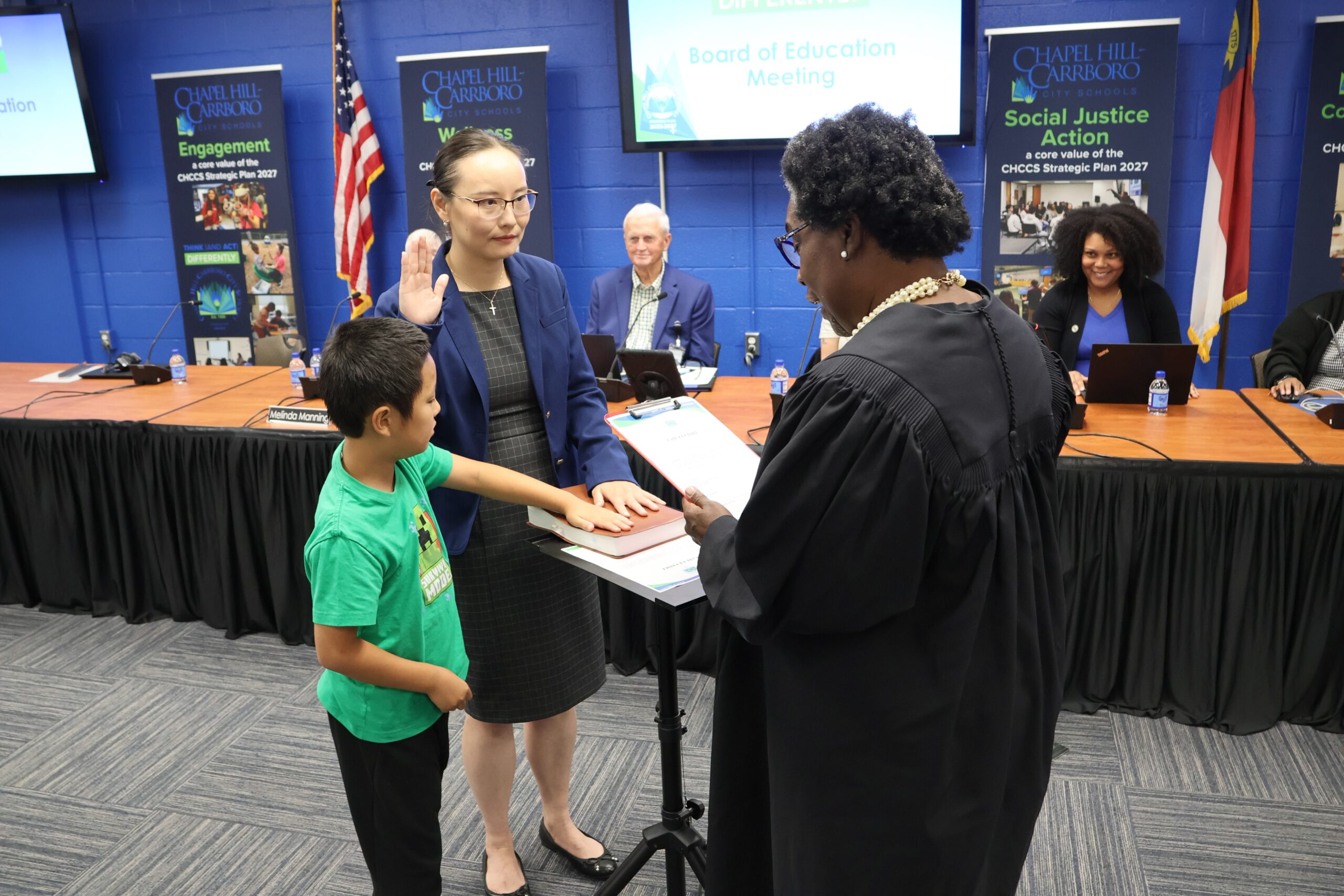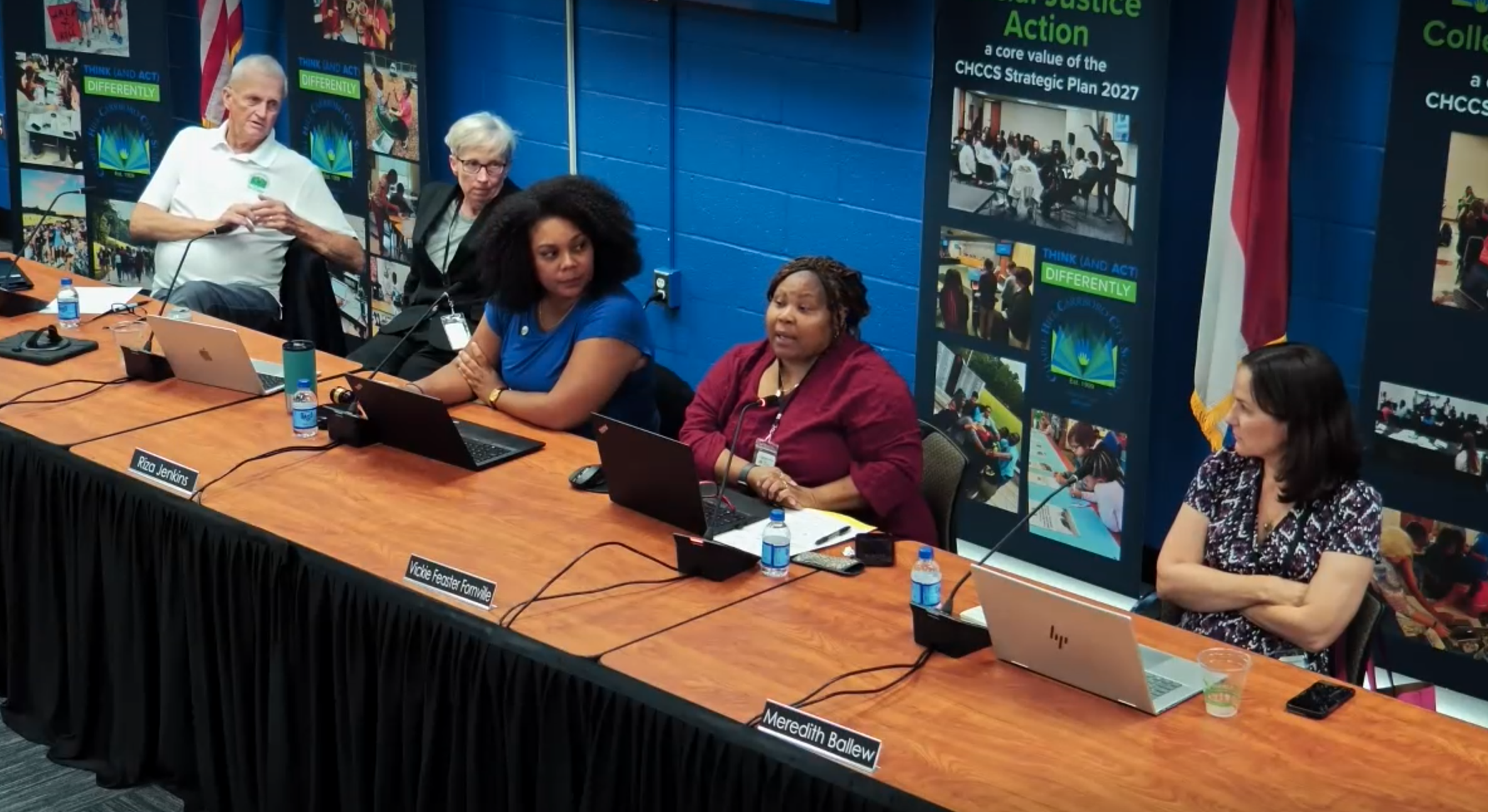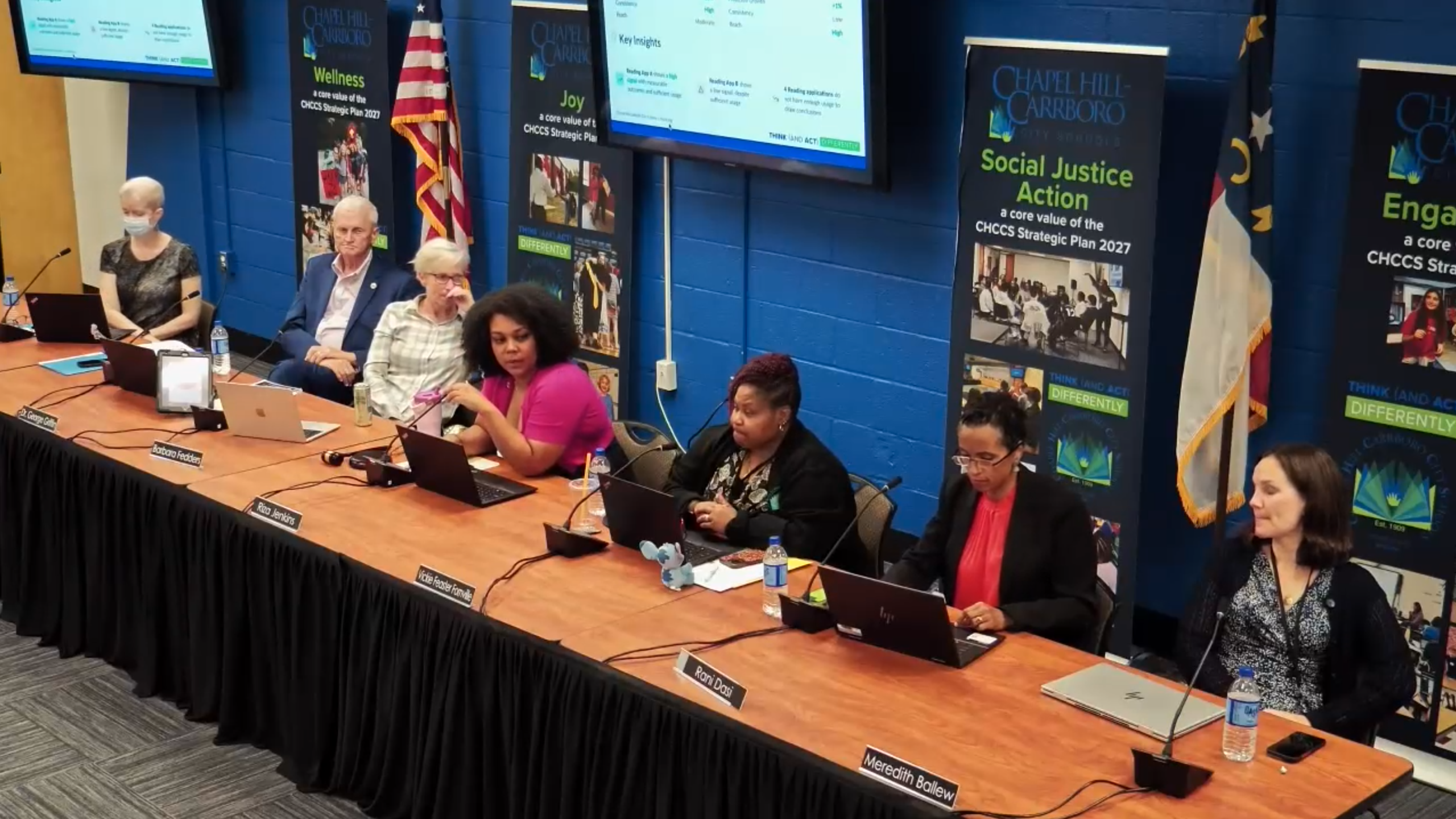
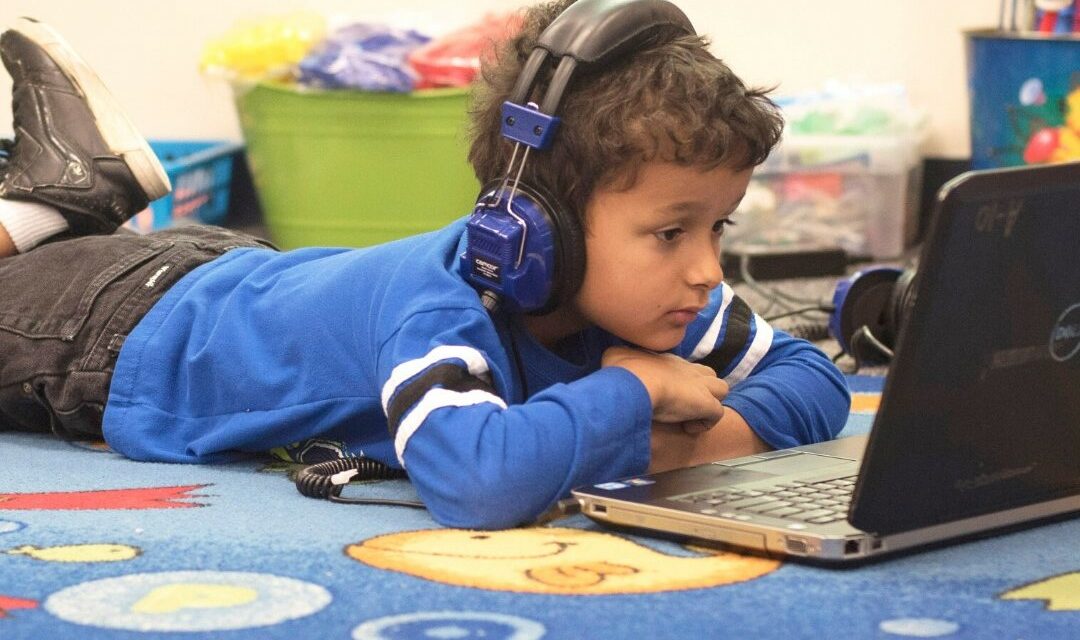
We know kids are looking at screens more than ever before, but Chapel Hill-Carrboro City Schools is trying to have better guardrails in the classroom. The Board of Education recently approved a digital learning plan for the upcoming school year. For the district, it is a new framework to help ensure technology use in schools supports instructional goals and student learning outcomes.
According to CHCCS Chief Academic Officer Bob Bales, schools will begin implementing the plan when students return to classes in August. Helping lead the June 4 presentation, he said the plan is not about eliminating technology in classrooms, but creating clearer expectations for how instructional technology should be used daily and for assessments.
“CHCCS students should learn in classrooms where technology is available when it adds value, limited when it does not,” Bales said “And [it should] always intentionally support teaching, learning and student well-being.”
Bales described the framework as an evolving document to be informed by teacher, administration, and parent feedback over the course of its three-year phase-in. However, additional priority actions for the summer and fall include: increasing YouTube restrictions and web filtering, publish a centralized list of approved digital resources, require GoGuardian Teacher for grades 2-12, release a professional learning calendar for digital planning, and plan for the phase out of iPads for kindergarten and first grade students.
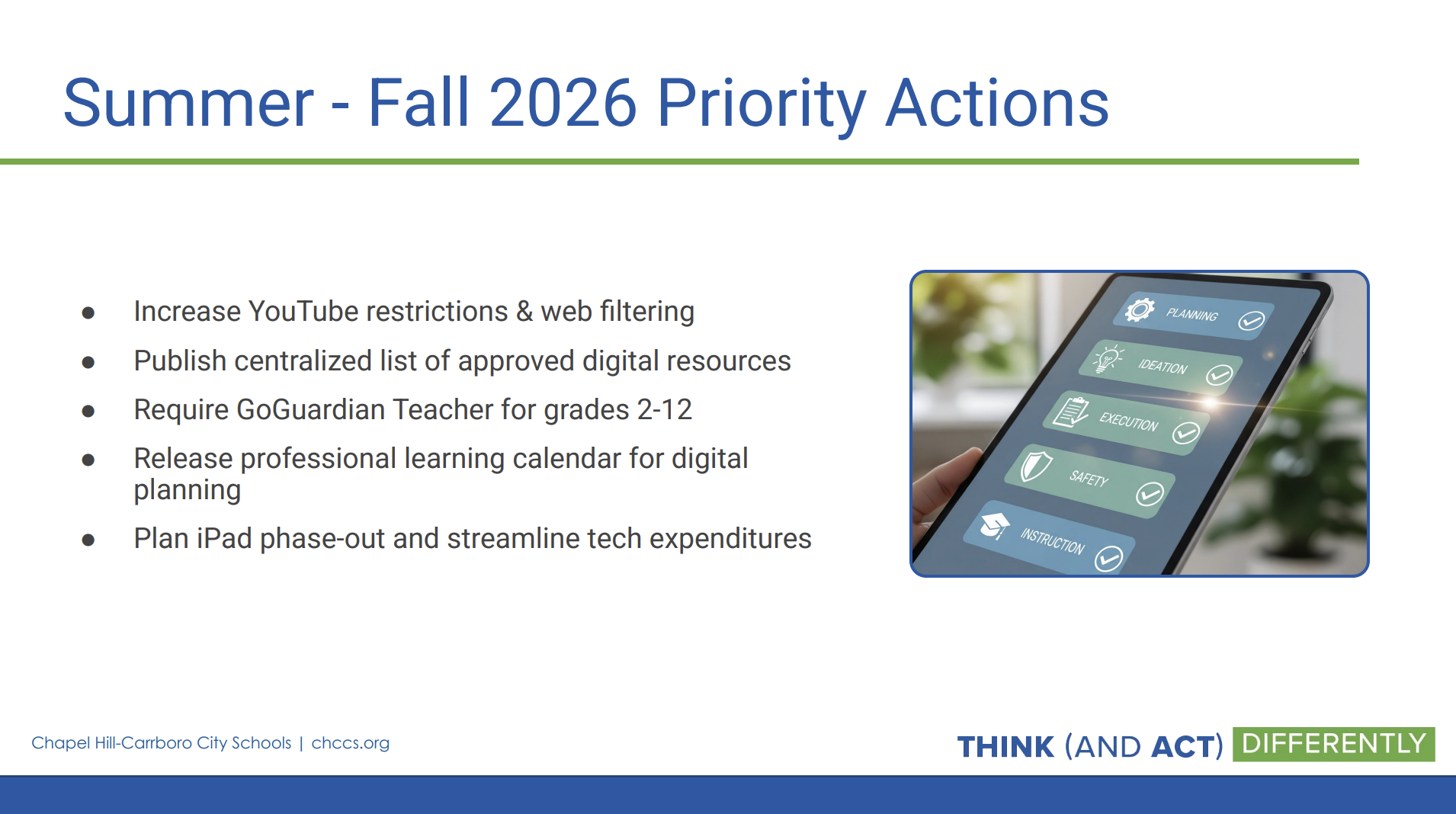
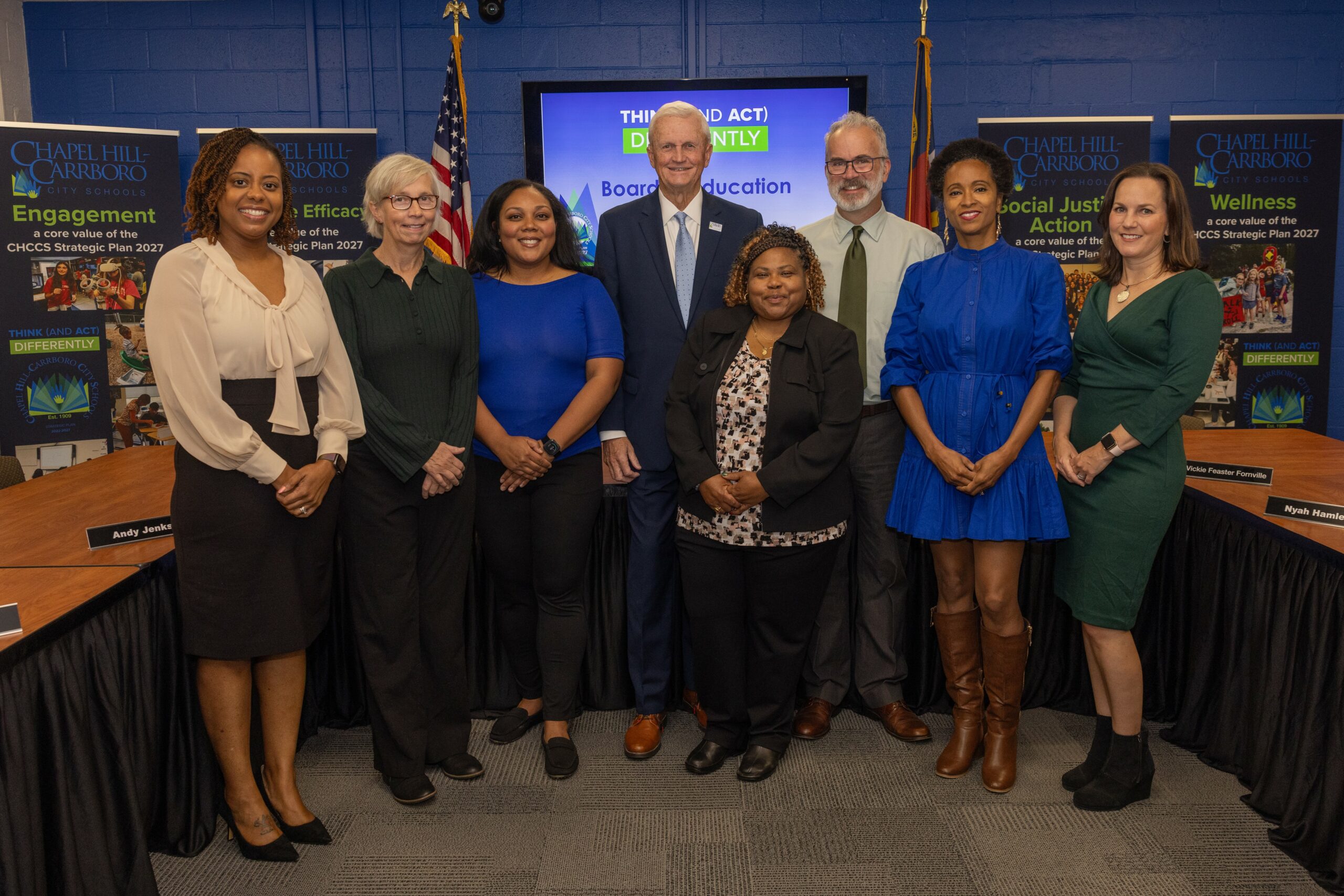
The district-wide plan encourages classrooms to be engaging, human-centered spaces. Alongside the framework, the CHCCS Board of Education approved five priority actions to limit screen time. (Photo via CHCCS.)
The district-wide plan is not only a way to combat unnecessary screen time for students, but reduce technology expenditures across all grade levels. While maintaining access to core instructional resources, Bales said the district has reduced digital subscriptions for the upcoming school year by a third, leaving $435,000 to be directed back into schools for curriculum adoptions and operational funds.
“If you have a middle schooler, if you have a high schooler, you probably have seen Kami at some point,” Bales said. “Where basically a student is going to jump into a worksheet that they could have on a sheet of paper, and then they’re trying to work their finger on a computer and trying to navigate that piece. That’s something that we have cut.”
Bales said moving forward with the digital learning plan will require professional learning opportunities to support staff amid the process, providing clear examples of what purposeful technology use looks like. Particularly as lessons and tests have grown more digital, he expressed how that support is important for helping teachers pivot. While Bales said the intent of the plan is to strike a balance between digital tools and hands-on, print-based, and face-to-face learning, he acknowledged how teachers have concerns for the reduction of classroom tools.
Many CHCCS parents, however, shared their belief that the digital learning plan may not be aggressive enough. Citing screen addiction, poor reading and writing comprehension, and lacking internet restrictions during the school day, parents and students alike dominated the meeting’s public comment portion. Ultimately, John Easterbrook called the framework “too late” for his child.
“My seven-year-old son is in first grade,” Easterbrook said. “On Monday I picked him up from school and he was incredibly angry with me because on the walk home it turned out he had been on eBay that day in school and he saw some things he wanted to buy and I wasn’t going to buy it. And so I asked the principal about it and I asked his teacher about it and I’m told that this is an approved website for research.”
Similarly, Sarah Snyder expressed a frustration for her sixth grader’s screen time on the school-issued device, which exceeds 45 hours every month.
“As someone who’s working really hard on emotional regulation in my house all the time, it’s very hard to do it when schools are giving devices and my kid is texting his friends in e-mail form all day long,” Snyder said. “And again, they’re in the Google documents writing notes to each other and then erasing them before the teachers see them. They are emailing proxy gaming sites.”
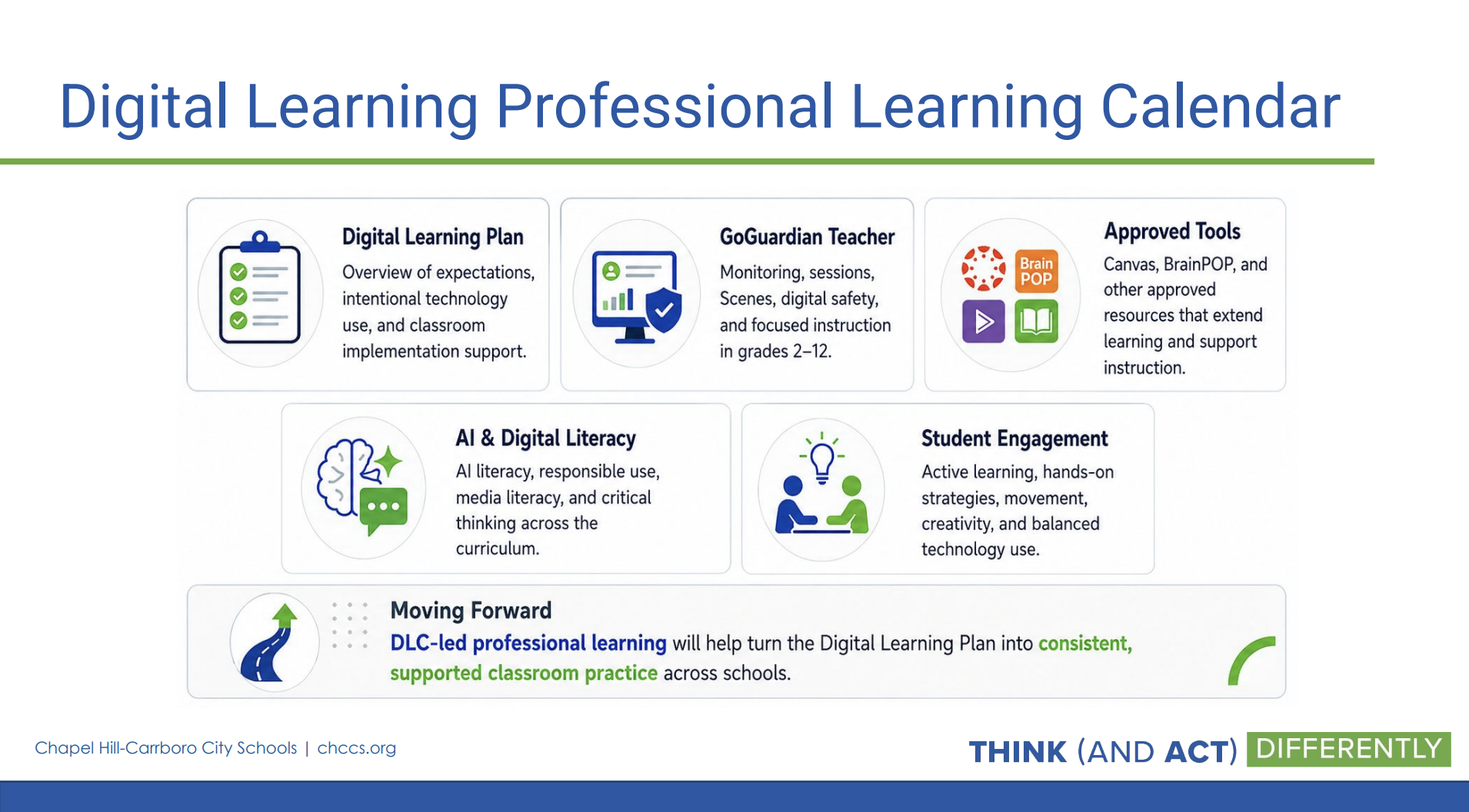
CHCCS Digital Learning Calendar for the upcoming school year. The framework seeks to promote consistent, supported classroom practices across all district schools. (Photo via CHCCS.)
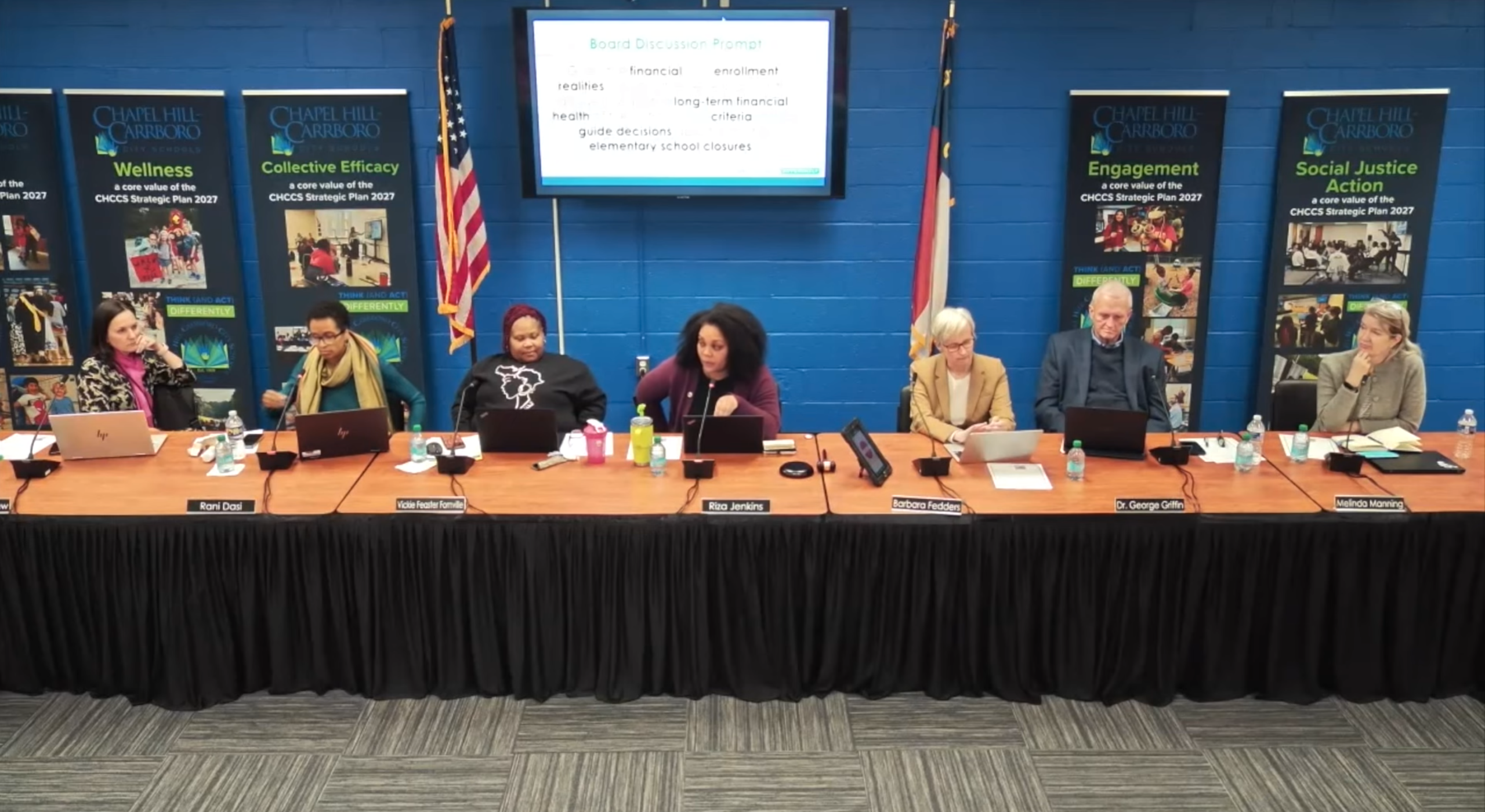
To help combat what she described as a “crisis,” board member Rani Dasi said she would like to target minimizing or eliminating phones in schools moving forward. Most board members also urged that screen time no longer be an in-classroom reward for completing or doing well on tasks. Particularly with younger grades, board member Vickie Feaster Fornville said the schools have an opportunity to emphasize fine motor skills in those rewards, like reading and drawing.
The board also voted for district staff to convene a Media Technology Advisory Council to actively monitor technology use in schools and address issues more quickly than mere board action could. Bales added how the public-facing list of approved digital resources will help set appropriate screen time limits, while also providing guidance for why each tool is used.
“So with some of these [digital resources], it’s a 45-minute [assignment] that should be done within a school day,” Bales explained. “And if it’s being sent home at a middle school and being used as homework, that’s not what the tool is being used for.
“I don’t want to sit here and make this a ‘blame the teacher game,’” he continued. “Because they don’t have this document, they haven’t had it, and we have teachers coming in throughout the year. But I also know just getting rid of something and saying ‘We’re not going to do this anymore,’ [means that] we haven’t taught or informed that teacher of how to do anything differently. We just took a tool away.”
Beyond Chapel Hill and Carrboro, the nationwide issue has led 14 states to propose laws limiting screen time in schools. In Los Angeles, for example, the nation’s second-largest school district said it will ban screens until second grade, require daily caps for screen time per grade, ban YouTube and require an audit of all education technology contracts. Changes proposed in other states include stronger cellphone restrictions and allowing parents and teachers to decline the use of classroom tech.
To hear the full discussion, click here.
Editor’s Note: A quote from Johanna Foster made during the public comment portion of the meeting and originally included in this story has been removed.
Featured image via the North Carolina Department of Public Instruction.
Chapelboro.com does not charge subscription fees, and you can directly support our efforts in local journalism here. Want more of what you see on Chapelboro? Let us bring free local news and community information to you by signing up for our newsletter.