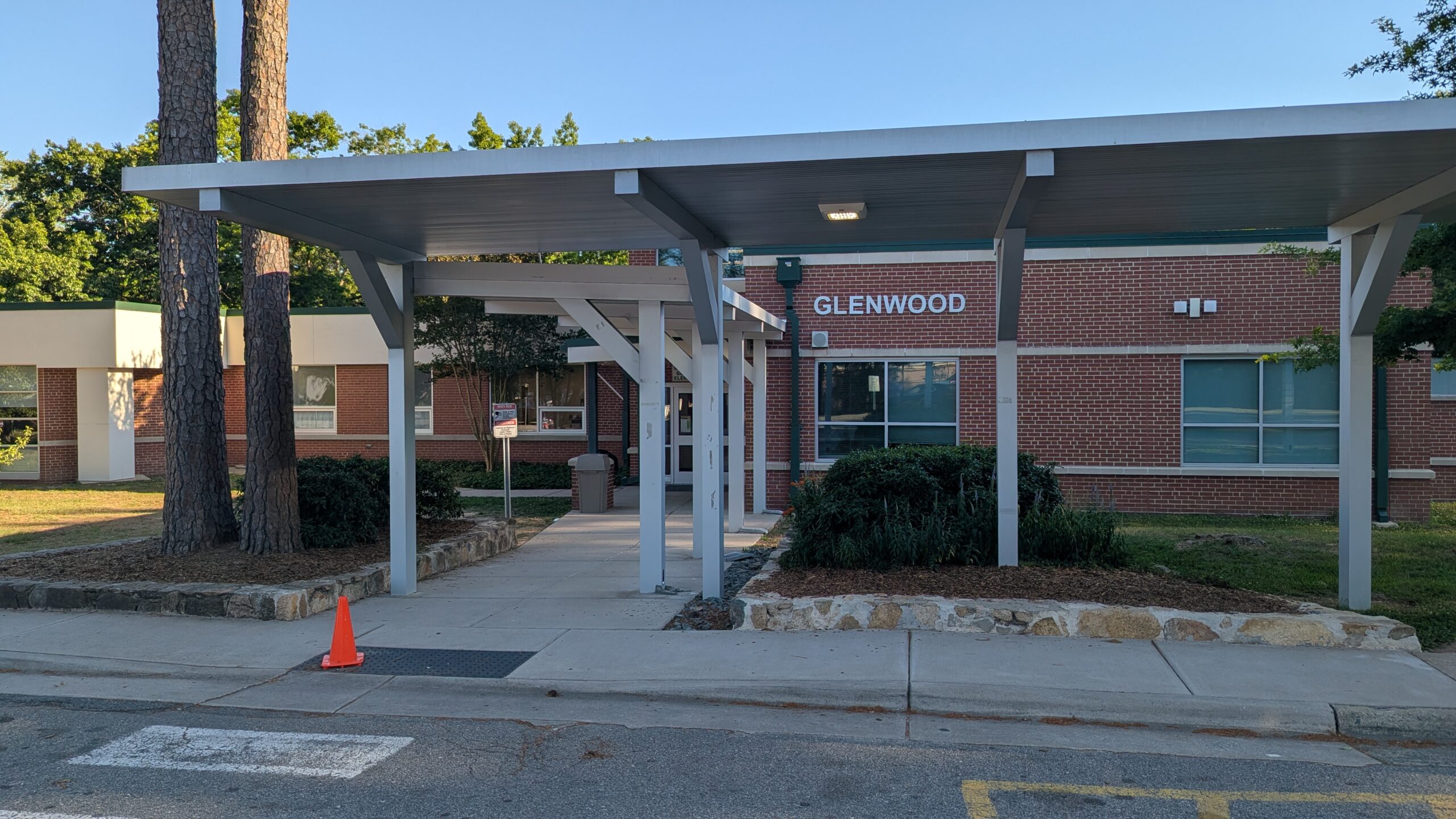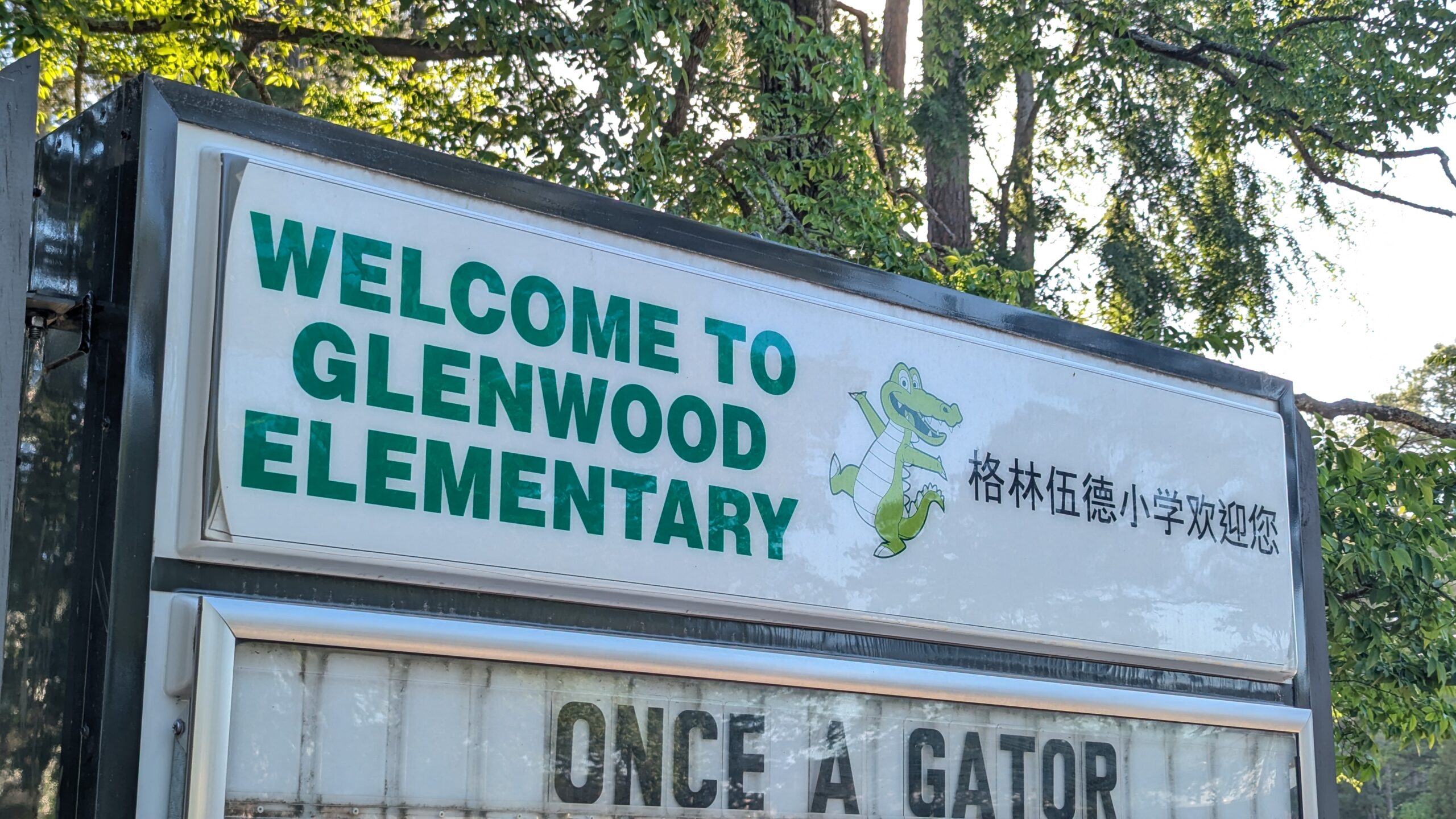
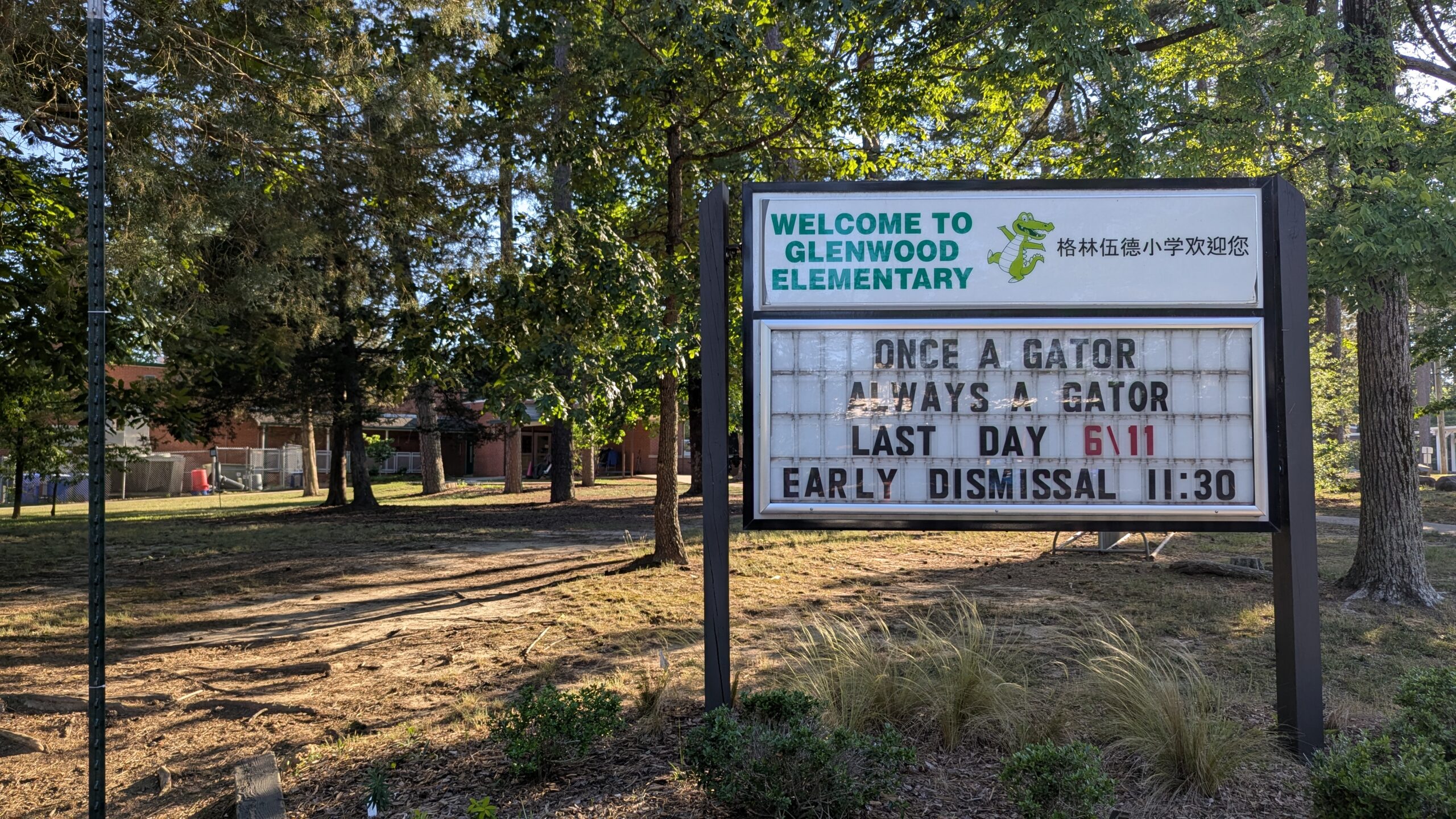
On June 4, the Chapel Hill-Carrboro City Schools Board of Education voted to close Glenwood Elementary School next year, due to an expected drop in state-level funding caused by declining enrollment across the district. Glenwood is currently a magnet school that houses the district’s highly acclaimed Mandarin program – meaning the school board now has to decide where those programs will end up next.
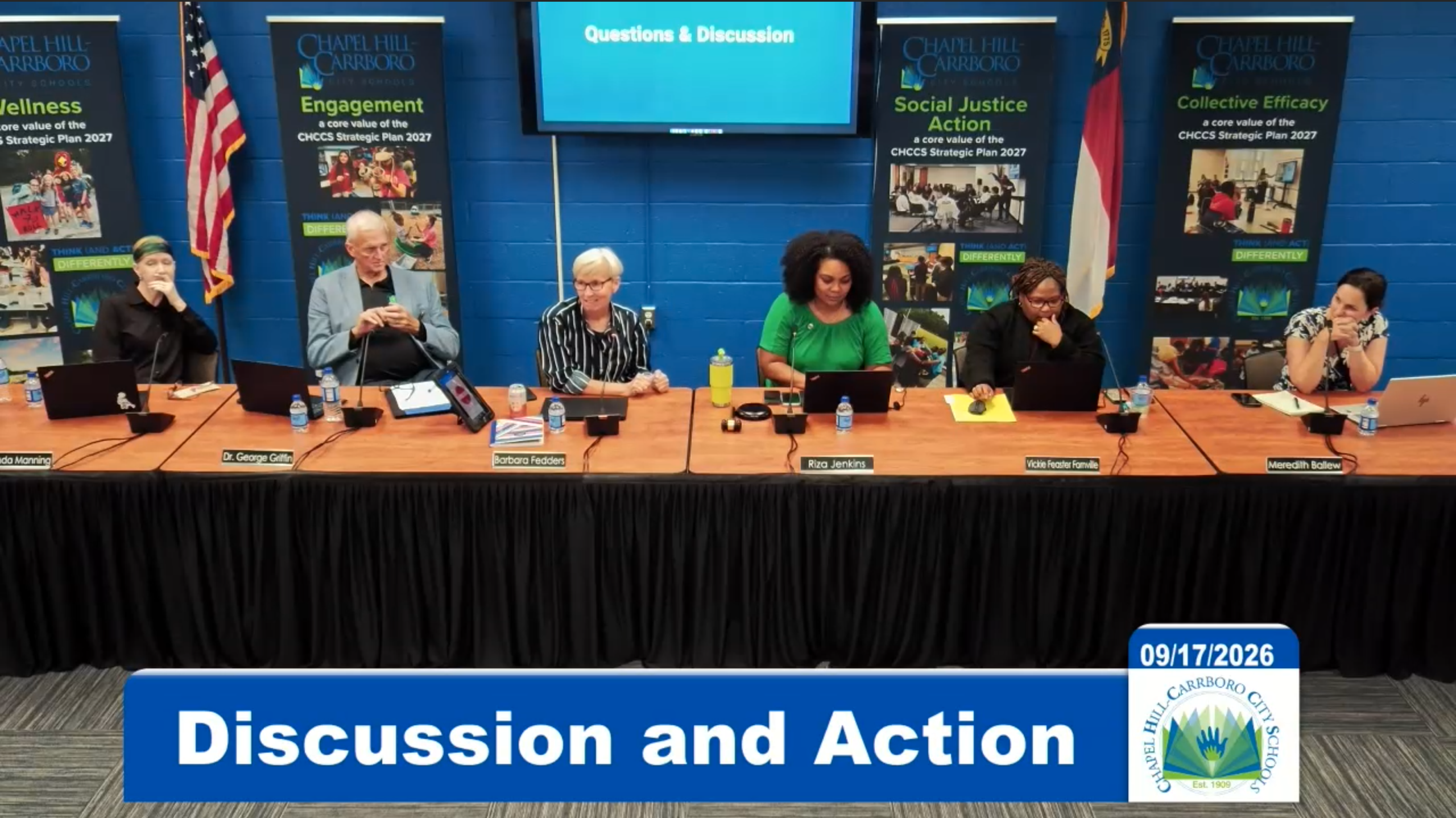
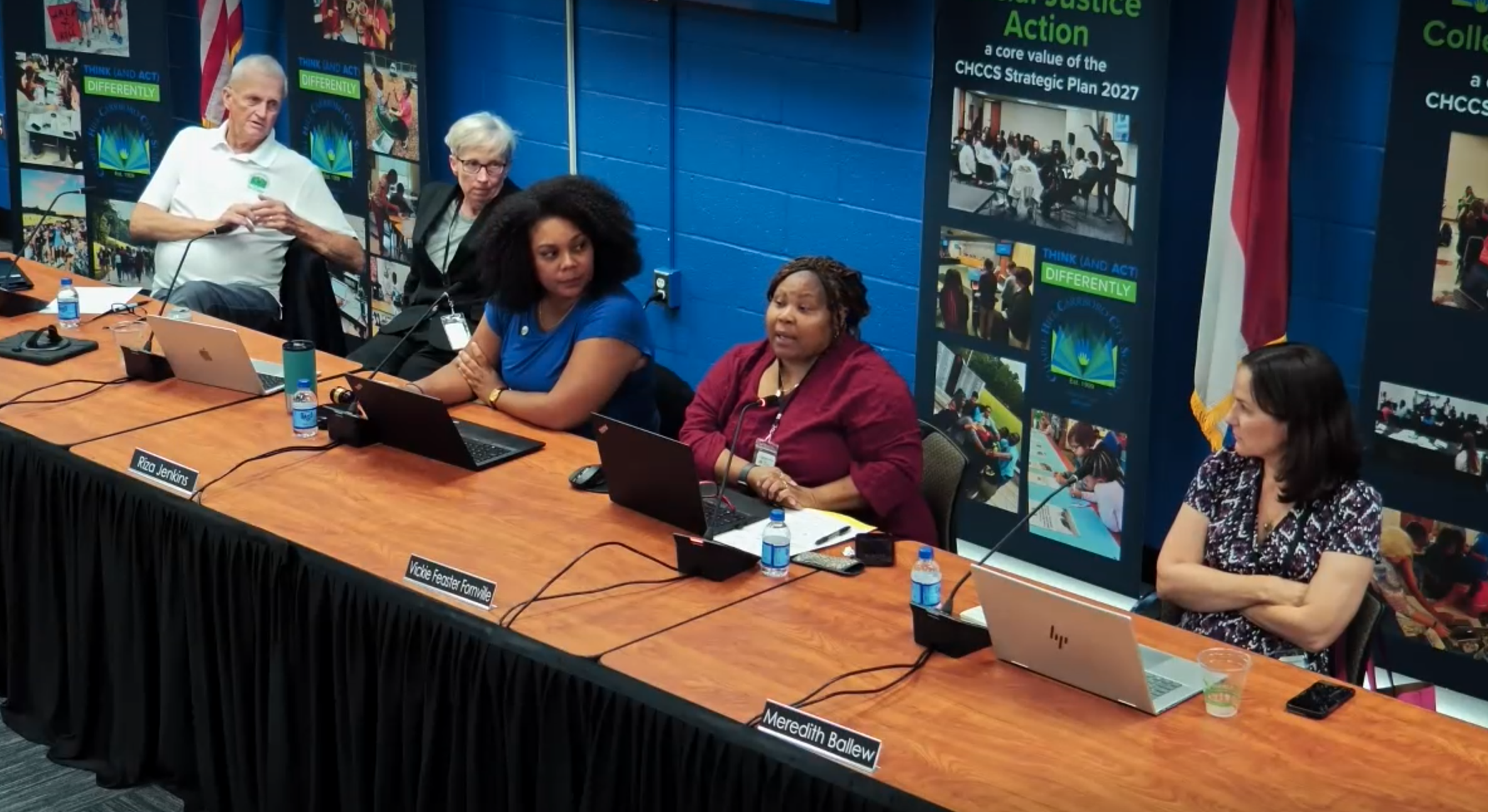
That process began on Thursday, as the school board and district staff gathered to receive data points about Glenwood’s magnet program and the options for rehousing it. And while there were many to be shared and weighed, Superintendent Rodney Trice reminded the board members that “behind each of these data points is a student.”
What is certain is that the program and focus on Mandarin will be preserved. Commonly referred to as “STEAM²” – or STEAMM, in other words, with the extra M for Mandarin – the dual-language program has earned Chapel Hill-Carrboro City Schools a reputation that extends literally around the world.
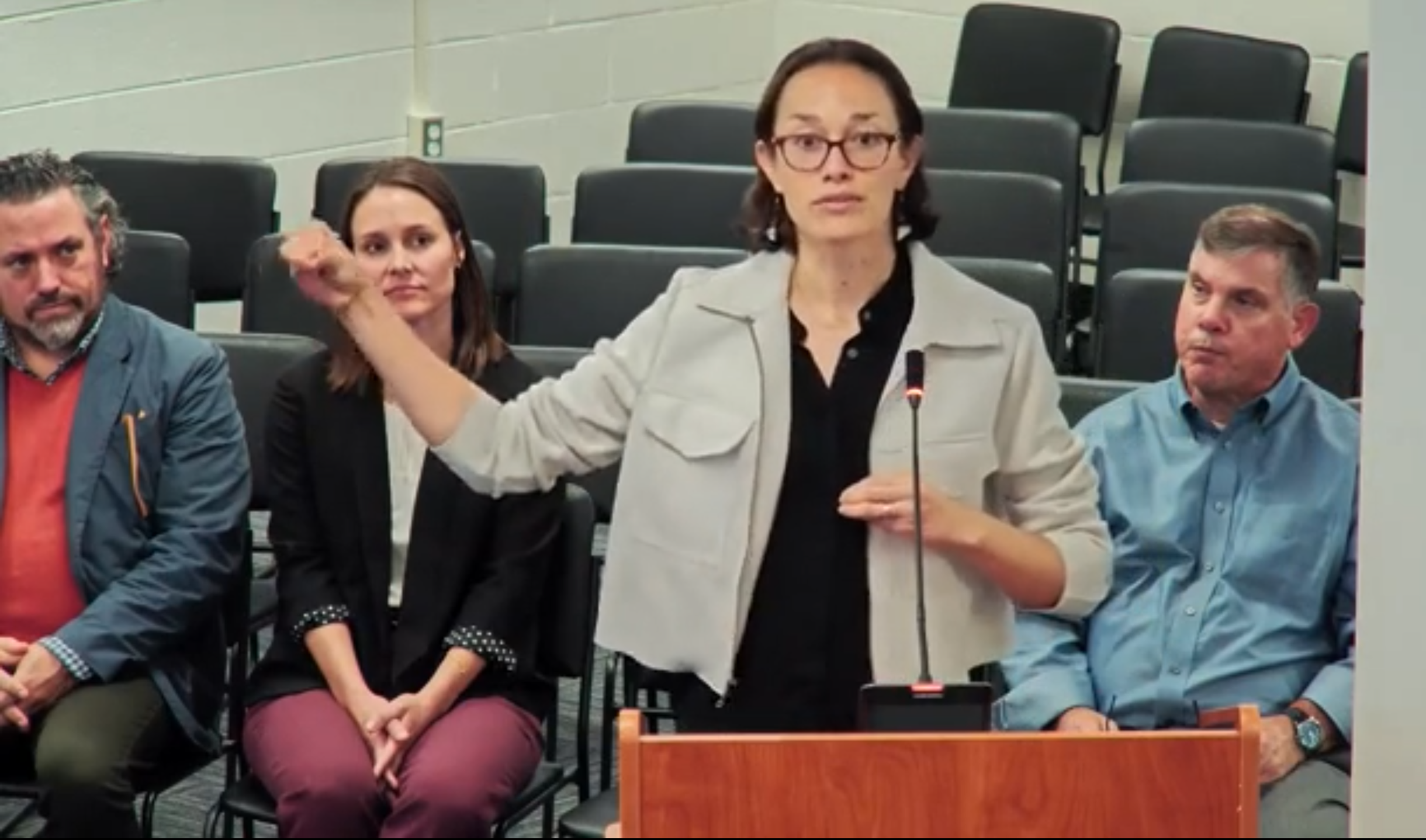
“My family moved to Chapel Hill from Singapore,” said Glenwood parent Angel Hsu during public comment at Thursday’s meeting. “I had heard about Glenwood from that far away. Its dual-language program, honestly, was a major factor in our decision to leave Singapore. Families actively choose Chapel Hill because of these opportunities.”
Learn more about Glenwood’s STEAM² program here.
But the STEAM² program at Glenwood is technically comprised of two different pathways (World Language and Mandarin Dual Language) with varying degrees of language immersion. That gives the district an option: either moving both pathways together to the same school, or relocating them at separate schools.
To help identify the best approach, the district contracted with an agency at North Carolina State University called School and Community-Aligned Master Planning, or SchoolCAMP for short. Speaking Thursday, Matthew Palmer of SchoolCAMP presented two options: Option 1 would move both learning pathways together to Rashkis Elementary; Option 2 would move one to Rashkis and the other to Mary Scroggs.
“(As far as) enrollment trends, Scroggs, Rashkis, and Northside are currently forecasted to be in decline, (and) Rashkis is projected to have the steepest decline in enrollment,” Palmer explained. “And with a geographic location more center to the district, Northside is in a (better) position to assist (if) other schools are struggling with overcrowding.”
With nearly 400 students enrolled across Glenwood’s STEAM² program, moving both pathways together would effectively fill Rashkis, requiring many of the students currently there to be redistricted elsewhere – a move that could also increase transportation costs, if the 57 students who currently live in the elementary school’s walk zone chose not to enter the World Language pathway and have to be bused to a different school. For that reason, Palmer said splitting up the two pathways might be less disruptive from a districtwide perspective.
“It would reduce the overall reassignment impact at Rashkis, and would (preserve) the walk zones at both Mary Scroggs and Rashkis,” he said.
SchoolCAMP found that if the STEAM² program was at maximum enrollment, keeping the pathways together would require about 320 students at Rashkis to change schools, while splitting the two would require fewer students to move — about 150 students in all, between Rashkis and Scroggs combined.
For those reasons, school board members on Thursday were largely skeptical of the prospects for keeping the two pathways together at one campus.
“It would be great to be able to move an entire school into another school, but then we have a whole other school community that would be disrupted,” said Riza Jenkins.
“I’m not a fan of solving one problem for a group by creating a problem for another group,” said George Griffin.
“One priority that feels really important is to keep the walk zones at all the schools, just considering (the) transportation costs and environmental impact,” added Rani Dasi. “It also feels like, with that context, the likelihood of being able to support both programs in one location is not as high.”
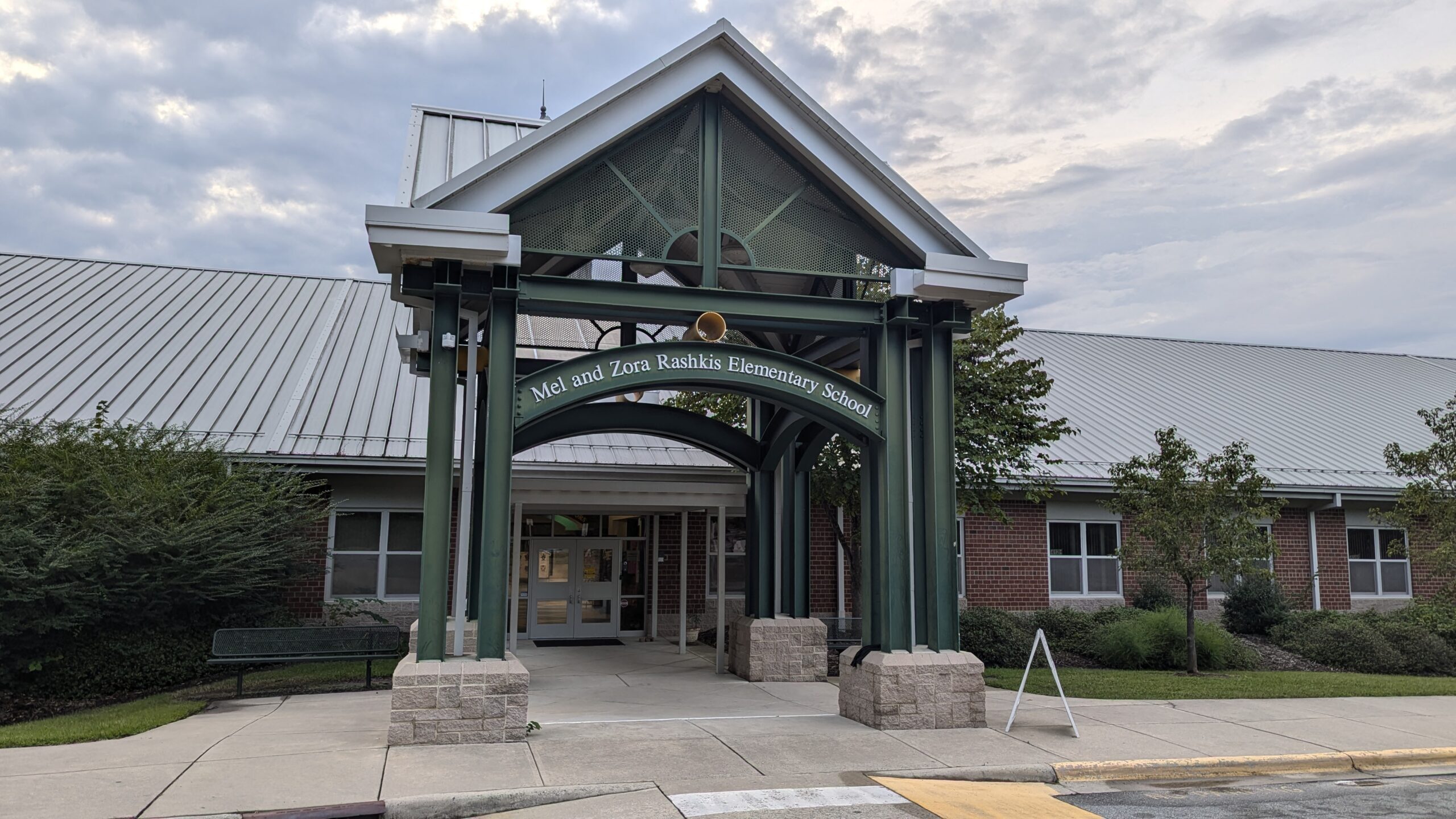
Rashkis Elementary School is not far from Glenwood Elementary, with both being off of North Carolina Highway 54 in eastern Chapel Hill. Rashkis was built in 2003, around the same time its surrounding Meadowmont community was constructed. (Photo by Brighton McConnell/Chapel Hill Media Group.)
But the question is not simply a matter of numbers. Families and teachers at Glenwood say the two pathways have coexisted so long that they now function as a single integrated whole – and separating them would damage both. Having lost in a push this spring over which elementary school would ultimately be closed, the InvestiGATOR parents are now urging the school board to preserve the community they have built and keep the program fully together.
“The dual language and world language pathways were designed to work together,” said Glenwood parent Iris Vance. “They share teachers, resources, staff, culture, and community. Separating them risks weakening the very strengths that have made this program so successful.”
Fellow parent Allison Willis agreed. “From my 25 years working in schools in New York and across the country, (I’ve learned that) you don’t dismantle your bright spots,” she said. “The two tracks of Mandarin immersion and World Language are clearly intimately interconnected, and to think that we might divide what has become a singular program into two seems shortsighted.”
Trice pointed out that the district does have a successful dual-language program at Carrboro Elementary School that coexists with more traditional non-magnet classrooms – though he also acknowledged that earlier attempts to do the same with the Mandarin program had not been as successful as the current all-school model at Glenwood.
Some school board members, like Jenkins, suggested that splitting the two language tracks could ultimately enhance Mandarin learning in the district, by promoting Mandarin culture in two schools rather than one.
“Two schools gives us the option to look at that vision…bigger, and beyond (just) saying ‘it’s only right here where this can happen,’ versus saying ‘it’s now a lot of places where these things can happen,'” the board chair said.
But the Glenwood parents who spoke Thursday unanimously disagreed – and some suggested that many would even be likely to leave the district altogether if the two pathways weren’t kept together as one. A recent survey conducted by the Glenwood PTA found that 41% of Glenwood parents would likely move their students out of Chapel Hill-Carrboro City Schools if World Language and Mandarin Dual Language students were separated, with another 26% unsure.
“If the dual language program is divided,” said Hsu, “families like mine are going to look elsewhere.”
No final decisions were made on Thursday, but a deadline is looming: district officials say the school board will need to make a decision by the end of August in order for staff to have ample time to complete the subsequent redistricting process before the 2027-28 school year. The board is currently slated to take a final vote at its August 20 meeting, though some Glenwood parents are calling for a delay. Before that decision is made, the district will be hosting events to seek feedback from residents and families, particularly those with students at Glenwood, Rashkis and Scroggs.
For their part, families at Glenwood are hoping to spend the month convincing the board to side with them this time around, regardless of the raw numbers.
“Sometimes the best long-term decision isn’t the one that minimizes disruption today,” Glenwood parent Molly Chen said. “It’s the one that preserves something extraordinary for the next generation.”
The district’s CHCCS Together website, which was launched to help inform community members about the transition of closing an elementary school and upcoming redistricting process, was updated after Thursday’s meeting with the latest details from the presentation. Visit the website here.
Editor’s Note: This article has been updated to better reflect the language of “pathways” for the World Language and Mandarin Dual Language learning tracks instead of referring to them as separate programs.
Featured photo by Brighton McConnell/Chapel Hill Media Group.
Chapelboro.com does not charge subscription fees, and you can directly support our efforts in local journalism here. Want more of what you see on Chapelboro? Let us bring free local news and community information to you by signing up for our newsletter.