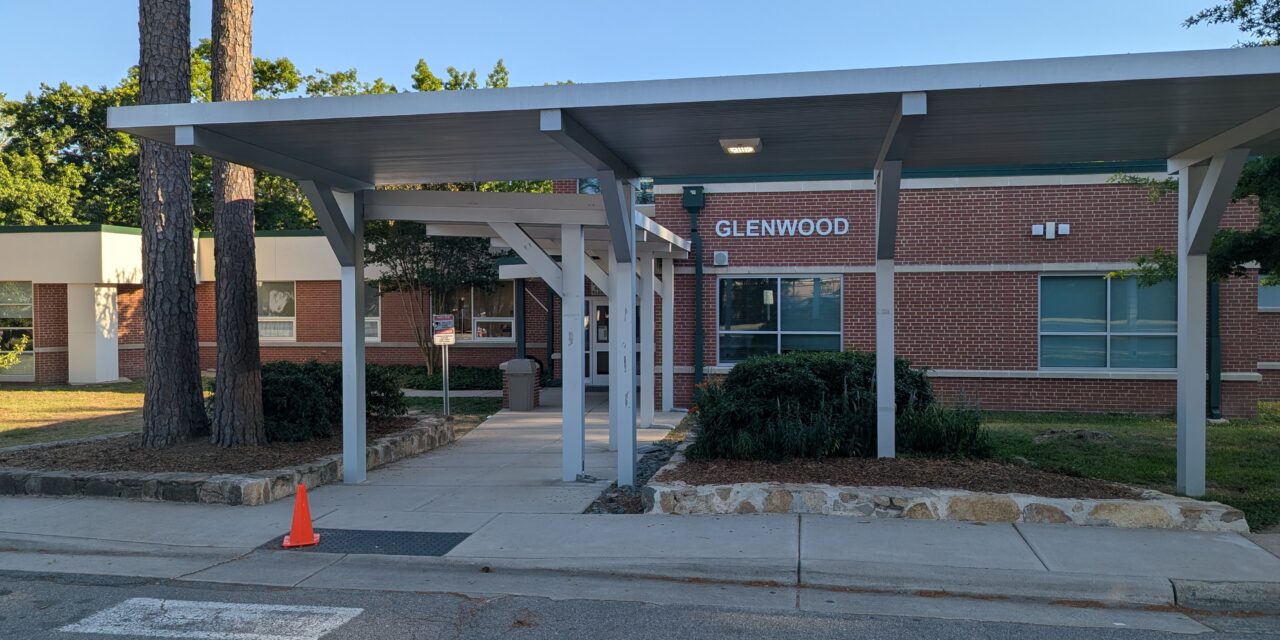
Glenwood Elementary School will close in the fall of 2027, after the Chapel Hill-Carrboro City Schools Board of Education voted unanimously on Thursday night and ended a months-long discussion around the potential sunsetting of three elementary campuses.
Members voted 7-0 in favor of Glenwood instead of Epehesus Elementary or Seawell Elementary schools. All board members who shared comments on Thursday, as well as the district, voiced support of preserving Glenwood’s dual language and STEAM² programs amid a redistricting process now expected ahead of the 2027-28 academic year. Additionally, the board passed a motion tasking the school district’s leadership with presenting before or on its scheduled August board meeting of options for where the programs could be housed.
Board Member Barbara Fedders, who made both motions on Thursday, started her comments by saying she sees this “hard decision” as the result of a “systemic underfunding of education at every level of government.” She said, however, that the decision to choose Glenwood Elementary — located off of N.C. Highway 54 in Chapel Hill — is because of the logistics of moving its program-based student body.
“I do want to say to the families and staff of Glenwood: I understand that you, as much as any school defined by a neighborhood boundary, are a community,” Fedders said. “And my motion today is motivated heavily by the fact that I trust our district leadership’s repeated commitment to maintain a dual language and world language Mandarin track [and], regardless of physical infrastructure, that we’ll have the capacity to replicate the successes achieved in your school to date.”
The decision is the culmination of months of deliberation within the Board of Education members — and emotional strife within the school district’s community — about how to approach addressing a decline in elementary school enrollment alongside the need for financial efficiency. The CHCCS administration began posing the idea of a school closure to the board last August, with Deputy Superintendent of Operations Al Ciarochi initially asking the board members to consider closing two schools before revising his recommendation in May to only one. On Thursday, Ciarochi affirmed the district’s recommendation was to consider one school for closure.
After determining in March which schools to consider, the board then chose what criteria it wanted the district administration to study and build a report on — which not only influenced Thursday’s discussion, but is a required step by North Carolina law before closing a public school campus.
Chapel Hill-Carrboro City Schools’ total enrollment in the 2025-26 academic year is roughly 10,700 students, its lowest enrollment in two decades, and comes after seeing net losses to its elementary and middle school populations since 2020. Since North Carolina state legislature funding for public school is on a per-pupil basis, CHCCS is facing a steady decline in state allocation thanks to those numbers and is looking for more financial sustainability after depleting its fund balance during the COVID-19 pandemic. Additionally, some of the district’s elementary schools are operating at under capacity for students and many are decades into their usage, leading to high costs and repairs.
Glenwood Elementary’s building is one of the oldest in the district at nearly 73 years old, behind only the Lincoln Center where Phoenix Academy High School and administrative offices are housed. Seawell Elementary is 55 years old and Ephesus Elementary is 53, making all three schools ‘potential replacement’ candidates by 2034, according to the Woolpert study commissioned by Orange County. Beyond hypothetical savings prevented from needing to repair any major equipment or infrastructure problems, Ciarochi and district staff said closure of one elementary school could save $1.7 million annually in recurring operational costs.
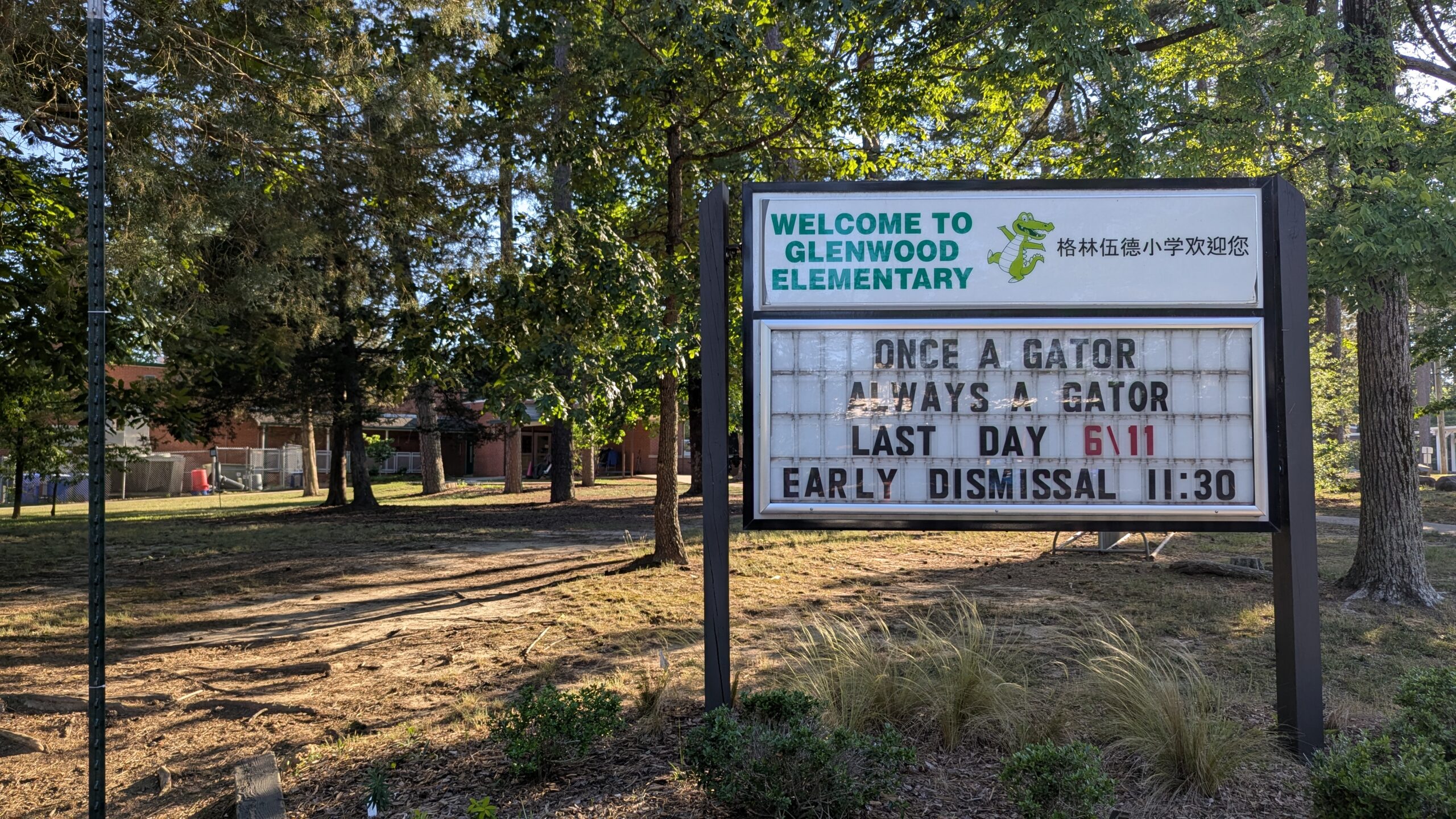
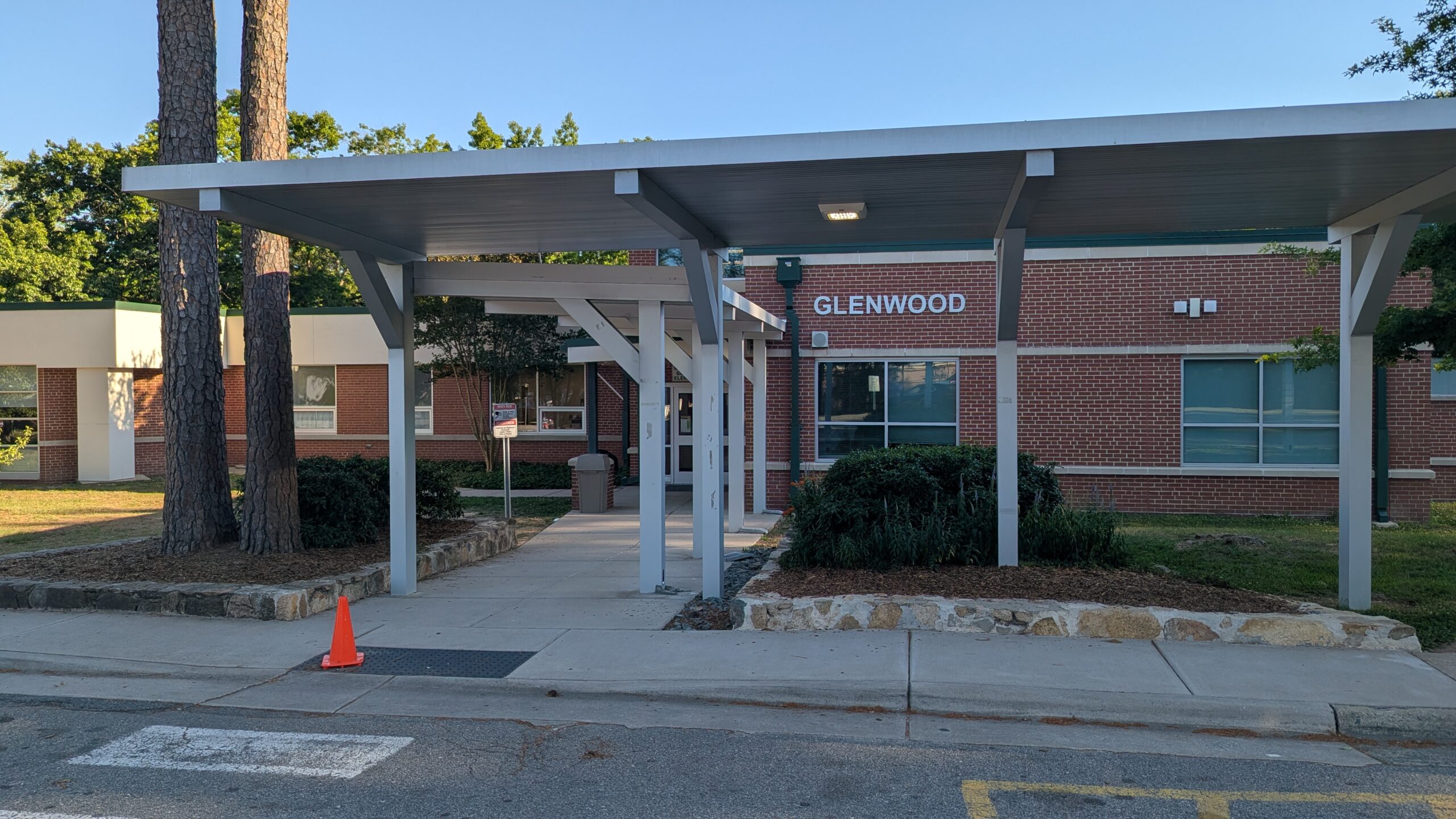
The entrance to Glenwood Elementary School on Thursday, June 4, 2026. (Photo by Brighton McConnell/Chapel Hill Media Group.)
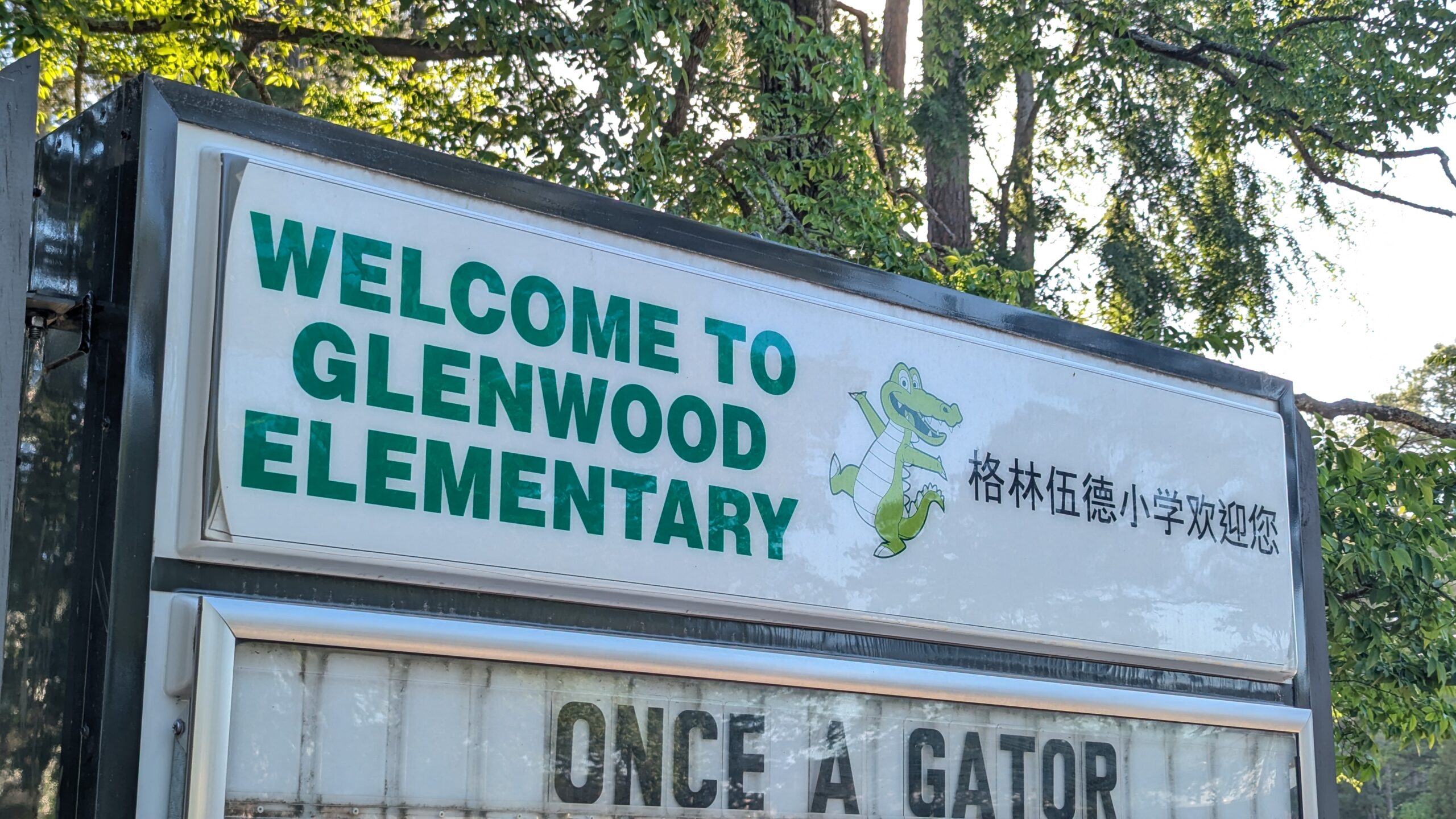
Glenwood Elementary also features a different student make-up than Ephesus and Seawell. Having operated with a dual language program since 2002 and adopting a magnet concept in 2019, Glenwood offers both a Mandarin-English track and a STEAM-focused learning track with Mandarin components to students — which feature a lottery system where enrollment is not dictated by CHCCS’ student districting. Like Fedders, other Board of Education members who shared remarks about their decisions on Thursday cited how students were not geographically assigned to the school compared to Ephesus and Seawell, which would limit disruption and transportation costs.
That included Board Member Melinda Manning, who said she could not justify keeping both of Glenwood Elementary’s programs in the same place in order to close a neighborhood-based school.
“When I look at the [closure study] criteria, the one that speaks loudest to me is the issue of hardship for our students,” said Manning. “If we were to shut down a neighborhood school, that community is effectively wiped out – the students would not follow their teachers or program. But if we shut down a program school, we can minimize the hardship. We can move the various programs into schools that have lots of empty seats.”
“Weighing this difficult decision is not about the wonderful things that make each school special,” Board Member Rani Dasi said about her vote. “It is a very practical consideration about the financial costs that minimize additional costs and student movement. I echo Barb’s comments [about the] magnet school operating in a transportation-dependent model, while the other two neighborhood schools are centered in areas where a proximity and walk-zone access reduces the need for district transportation.”
The decision came after the CHCCS administration held listening and information sessions at each of the Glenwood, Ephesus and Seawell Elementary campuses this spring. At those gatherings and prior Board of Education meetings, hundreds of parents, teachers and staff gathered to share their stories about why they believed their school should be set apart from the closure consideration. Many questioned whether the district needed to close a school at all, which both CHCCS Chief Financial Officer Jonathan Scott and several board members addressed Thursday night.
“Simply put, we have more elementary seats than we need – even when future housing development is considered,” Board Member Meredith Ballew read during her comments. “Continuing to operate buildings that are not fully utilized diverts resources away from the work that matters most: supporting students and staff, and investing in innovative programs that will keep our district strong in the years ahead. The data made clear that maintaining every school in our current portfolio is not sustainable in the long term.”
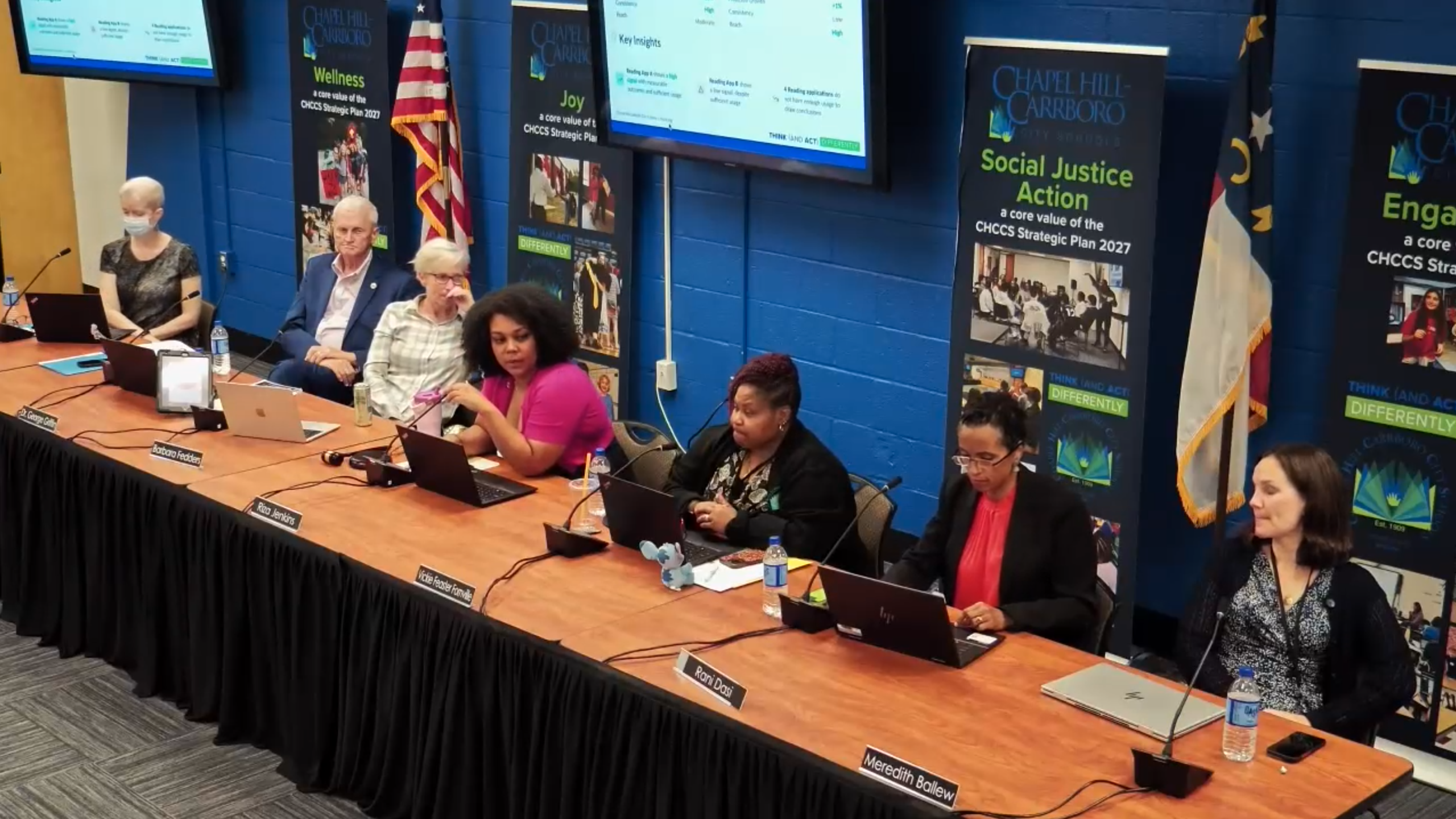
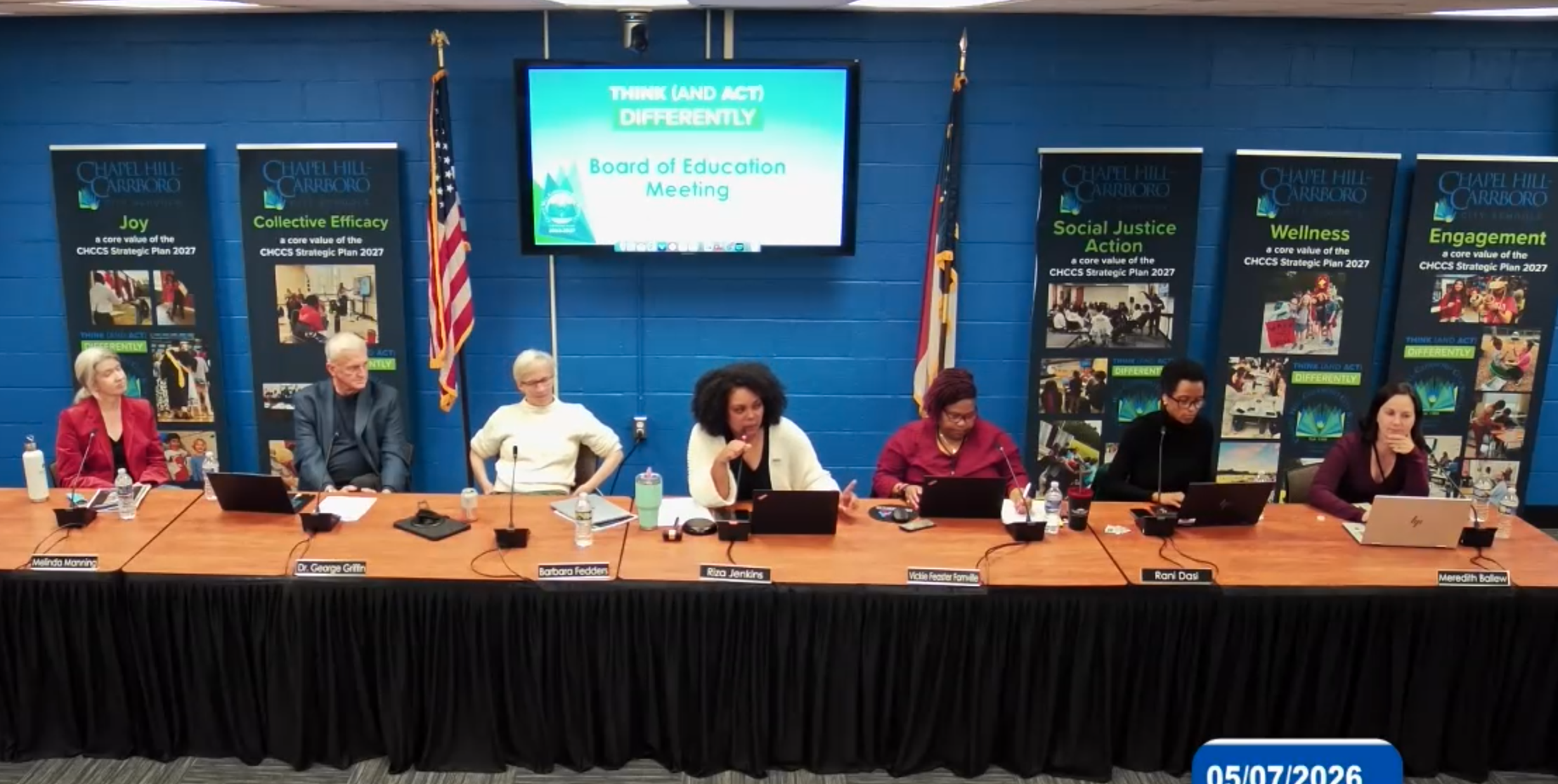
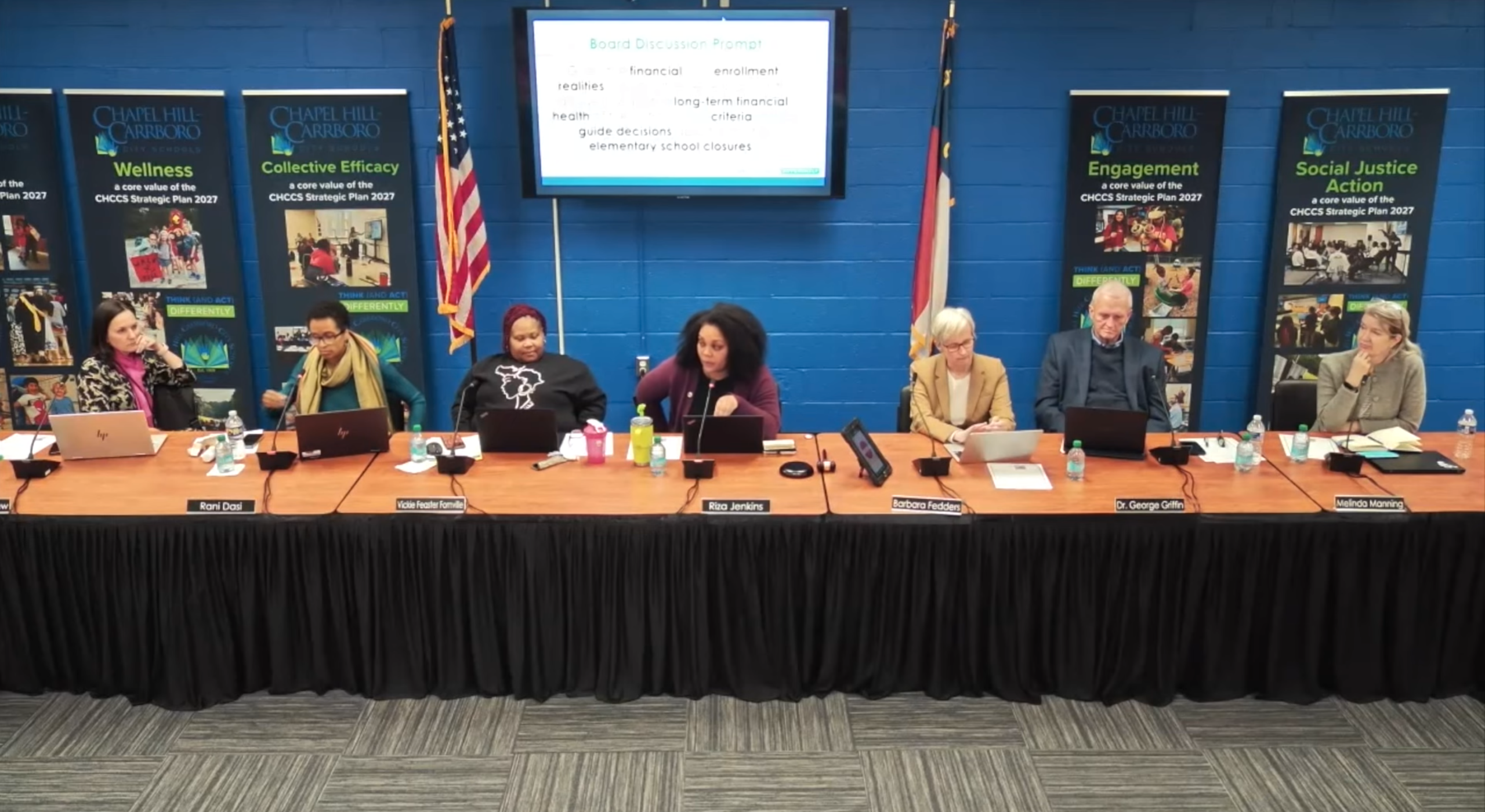
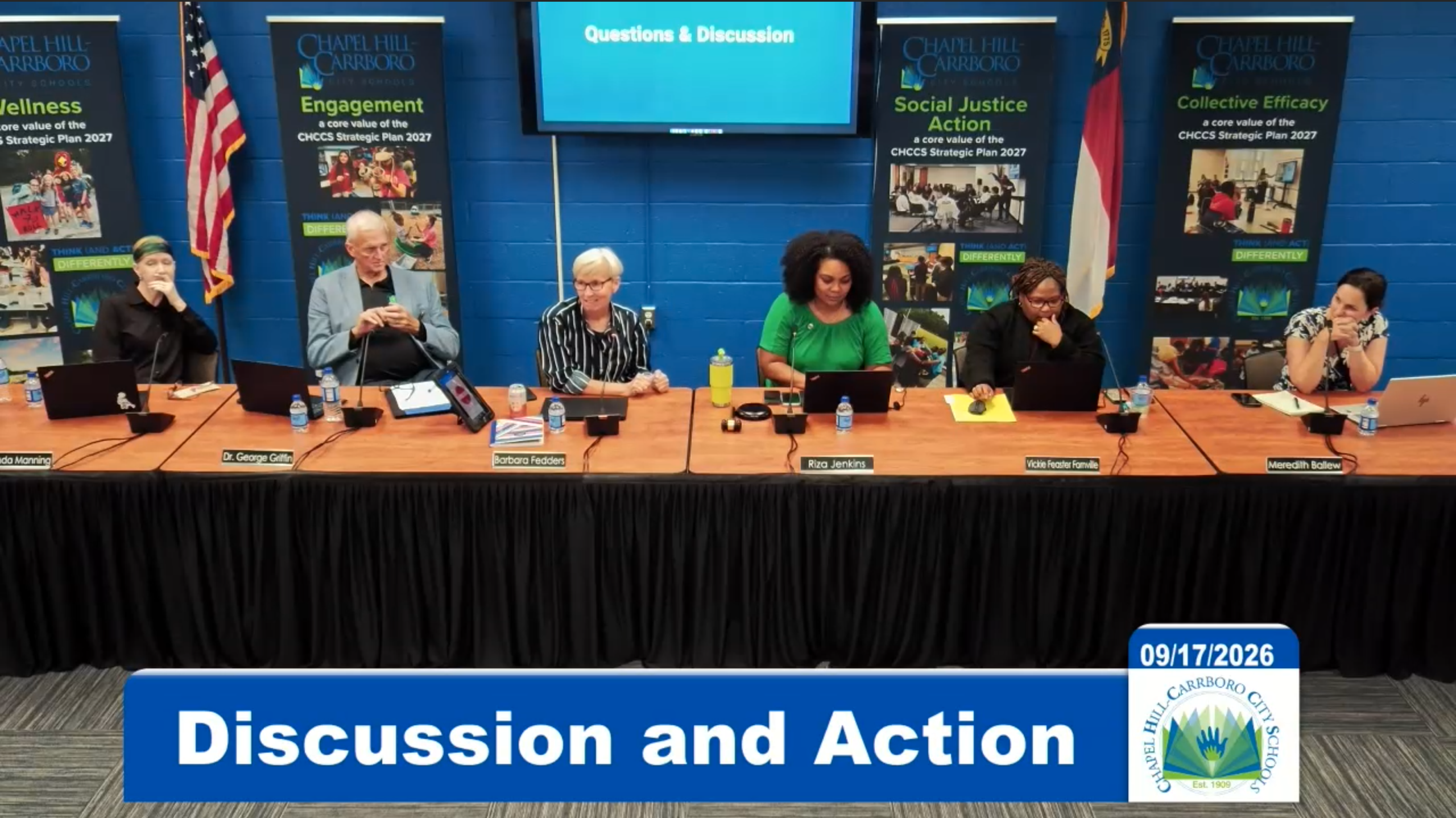
CHCCS Board of Education members during Thursday night’s meeting, which included the vote to close an elementary school. (Photo via the Chapel Hill-Carrboro City Schools livestream.)
Dozens of speakers shared final pleas to the board during Thursday’s public comment, with many being Glenwood Elementary parents and some students. Many shared their concern that students, especially Asians, would face a higher risk of discrimination and not being welcomed if the program was moved onto another campus. Others shared fears that either program offered at Glenwood would not be the same if the two were split up and at different schools. Parents of Seawell and Ephesus students also spoke, sharing testimonies of their children’s experiences and urging board members not to close their respective campus.
When Fedders asked how CHCCS would try and prevent any racism or bullying of students who move from a closed school, Superintendent Rodney Trice said he believes it will be important for the adults in the schools’ communities “to be intentional about establishing a community.” He said he remembered seeing it more than a decade ago in a prior redistricting and said he thinks the district “could have done more” to prevent tensions boiling over.
“Mr. Ciarochi talked about an advisory committee – that’s fine, that’s good for redistricting,” Trice said. “But on a more granular level, we have to be able to bring communities together and build community. If you think about PTAs, SITs and what we’re going to do with all of those things…it’s a bunch of adults coming together and saying, ‘We want what’s best for our kids and part of that is not being racist toward each other.’
“We need to plan for that — because when there’s a huge decision that impacts us, sometimes the best of us doesn’t show up,” the superintendent concluded. “And so, I think that type of engagement needs to happen ASAP, perhaps even before a lot of the logistics get started.”
According to officials and the CHCCS-run website CHCCS Together, the next step in this process will be studying student geolocation and working to redistrict Chapel Hill and Carrboro’s schools in the winter to cover for Glenwood Elementary’s closure. Ciarochi said the district’s target is to implement a redistricted school system for the Fall of 2027, which would be the first academic year Glenwood is closed.
Full comments from the Board of Education on the closure decision can be read here and watched on the CHCCS website.
Editor’s Note: A previous version of this story had two incorrect dates. The piece incorrectly said the Glenwood Elementary School building was 75 years old, when it is 73, and had a typo saying “2022” instead of “2002” when discussing Glenwood’s dual language programs. Both of these errors have been corrected.
Featured photo by Brighton McConnell/Chapel Hill Media Group.
Chapelboro.com does not charge subscription fees, and you can directly support our efforts in local journalism here. Want more of what you see on Chapelboro? Let us bring free local news and community information to you by signing up for our newsletter.