A discussion by the Chapel Hill Town Council about downsizing by two members and extending the length of mayoral term was met with swift, vocal opposition during a public hearing last week. The community comments, in the span of just a few days, led the elected officials to stop considering any changes.
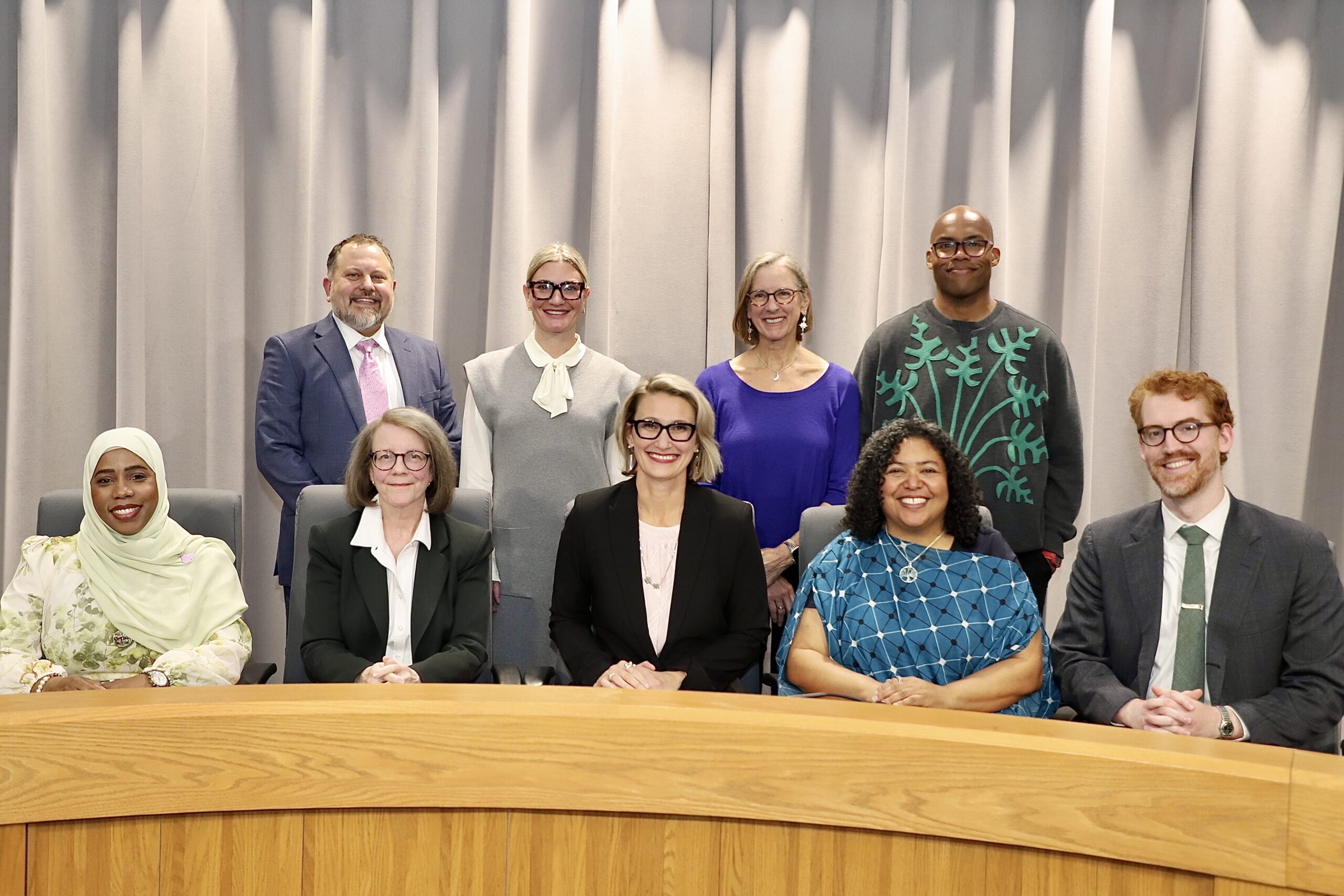
The local government passed a measure earlier in April to hold a dedicated hearing on the matter, with the idea of exploring a change to the town charter to eliminate a pair of seats from the elected body in upcoming election cycles and extending the mayor’s term to four years instead of two. During their own comments, council members sounded split on what they preferred, with some denouncing the ideas and others saying they wanted to take a closer look at the possibility of one or both possible changes.
Wednesday’s public hearing did not turn out droves of speakers – although those who did said they believed the fast-moving nature of the process for potentially trimming the council affected who was able to show. But even if not in amount, the weight and alignment of their comments sent a clear message to the Chapel Hill elected officials. Prominent members of the town’s Black community – Delores Bailey, Danita Mason-Hogans, Yvette Mathews, Betty Curry and Michelle Laws – all spoke against the pair of ideas alongside a trio of figures from Chapel Hill’s political past – former mayor Mark Kleinschmidt, former council member Nancy Oates, and multi-time town council candidate Will Raymond.
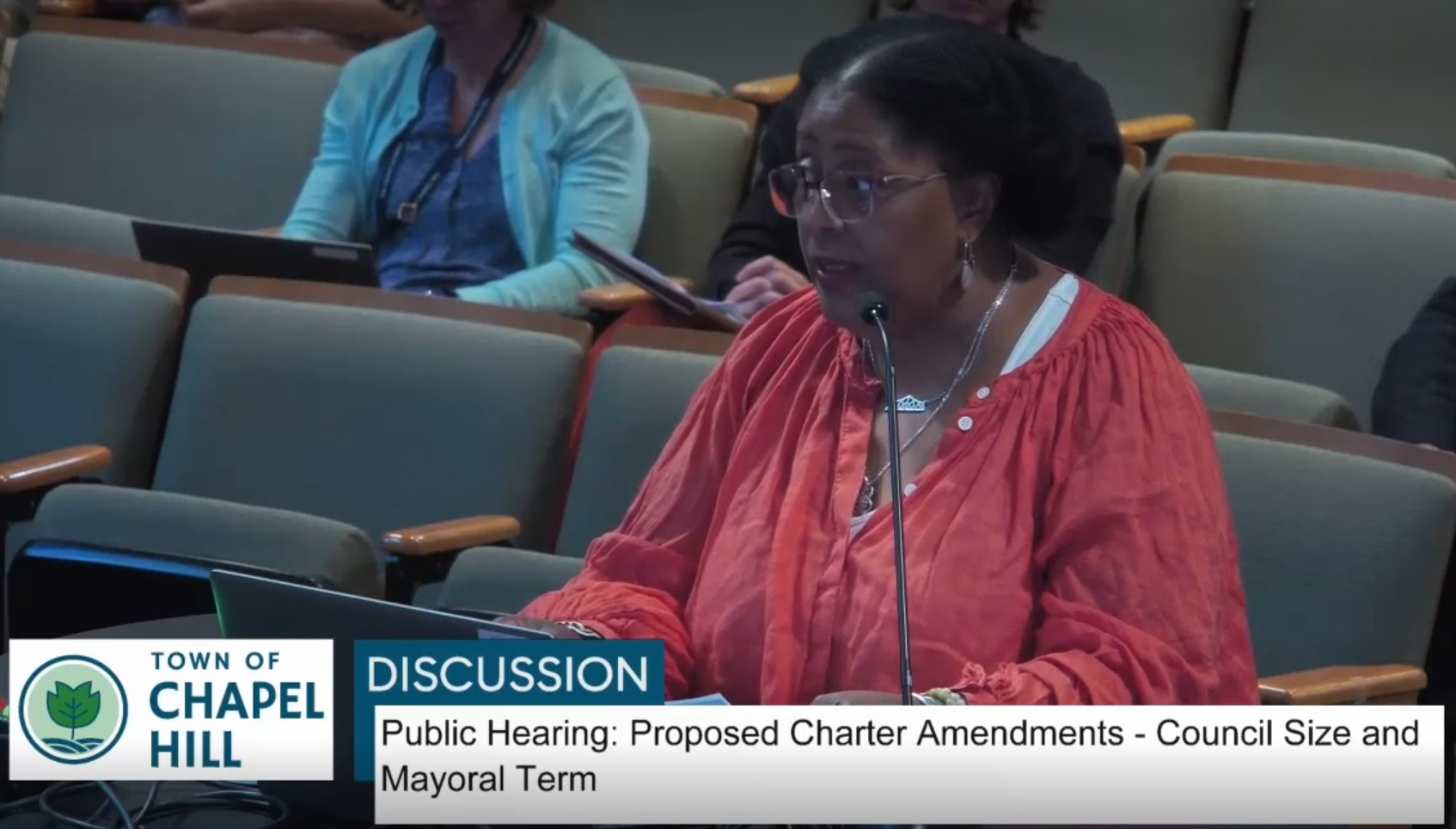
Local historian and community advocate Danita Mason-Hogans speaks during the Chapel Hill Town Council’s public hearing on Wednesday, April 29. (Photo via Chapel Hill’s Granicus stream.)
Mason-Hogans, a community historian and long-time advocate for Chapel Hill’s historically Black neighborhoods, was quick to point out representation of that community on council is a structural issue it has faced for a long time. By scaling back the town council from nine seats to seven, she argued the local government would be reducing the space where minorities can be decision-makers.
“From my perspective as a generational Black Chapel Hillian,” said Mason-Hogans, “diversity cannot simply mean whether a black person, young person, student or person of color can occasionally win a seat. The deeper question is whether government allows enough room for people with the lived, historical and community rooted knowledge to shape policy before harm is done.”
Kleinschmidt agreed and shared memories of his discussions with former town councilor Bill Thorpe, who was elected to office shortly after Chapel Hill expanded the council’s seats in 1975. The former mayor said he remembered Thorpe detailing how the town’s Black neighborhoods would need to consolidate their vote to just get one minority candidate elected – but that pressure was far less when seats got added.
“It allowed for these voices that were otherwise not heard to be present at the table – and it didn’t just impact the ability of African Americans to get onto this council, but it opened the door for lots of diversity,” Kleinschmidt said before listing the council’s past, out LGBTQ members. “Joe Herzenberg came in fourth in 1987, which allowed me to come in fourth in 2001, which allowed Lee Storrow to come in fourth in 2009. And that’s the only reason why Karen Stegman was able to come in second and then first.”
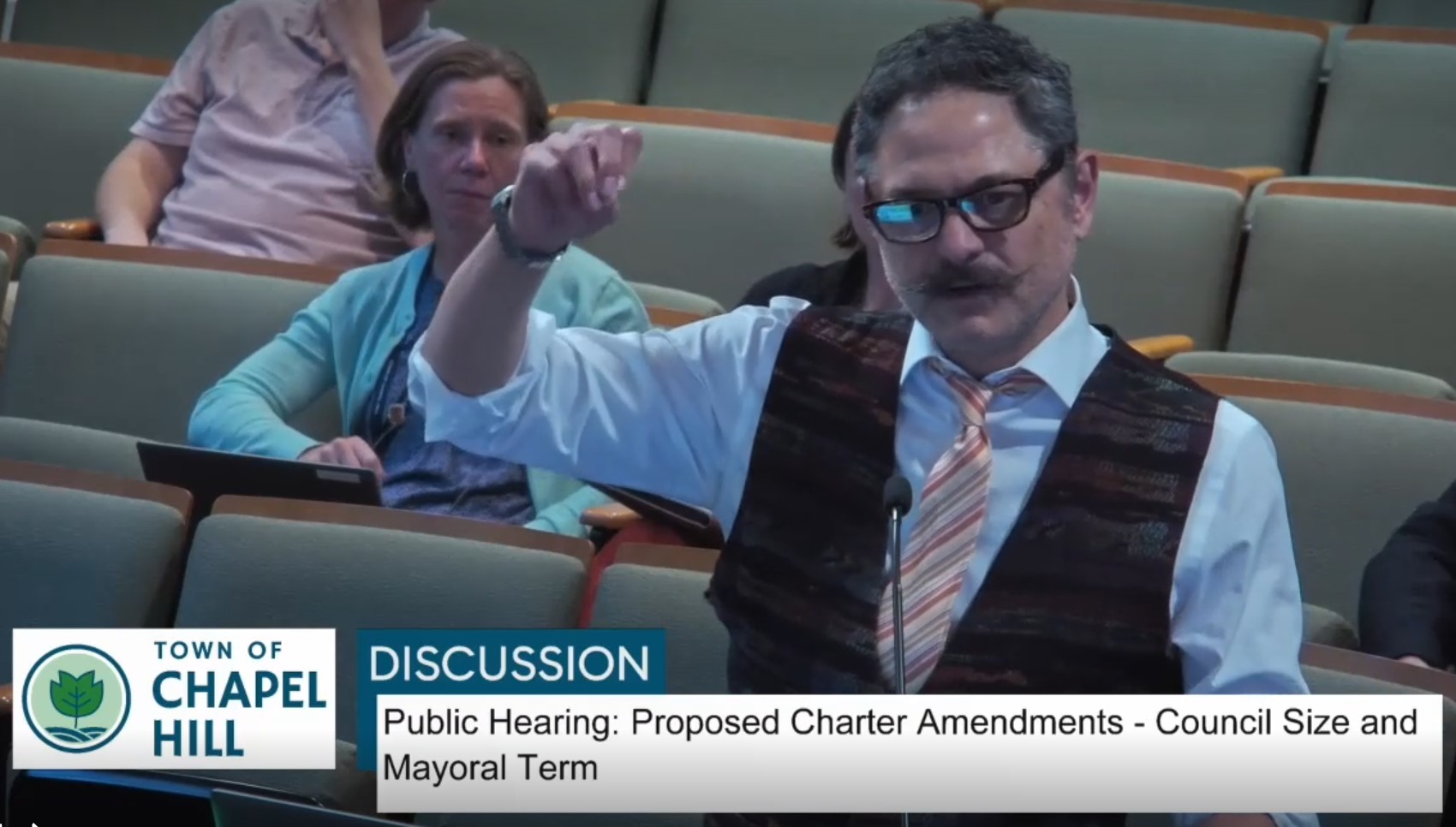
Orange County Clerk of Court Mark Kleinschmidt speaks during the Chapel Hill Town Council’s public hearing on Wednesday, April 29. (Photo via Chapel Hill’s Granicus stream.)
Bailey, a significant leader in the nonprofit and affordable housing space, also questioned what shrinking the council would do to its diversity. She also pushed back against extending the mayor’s term length to four years, saying she feared it would weaken accountability of the town’s most public figure.
One of the reasons why the change was considered is the sentiment that two-year terms put the mayor in a near-constant state of campaigning. But Bailey argued she sees it as a way to keep voters engaged with their elected officials and ensures mayors are serving the will of the public.
“It is also important,” Bailey added, “to challenge the assumption that campaigning and governing are mutually exclusive. Effective leaders should already be actively engaged with the community, listening, communicating and showing up. What some call campaigning is often simply the work of being visible, accountable and responsive. Extending terms risk reducing that urgency.”
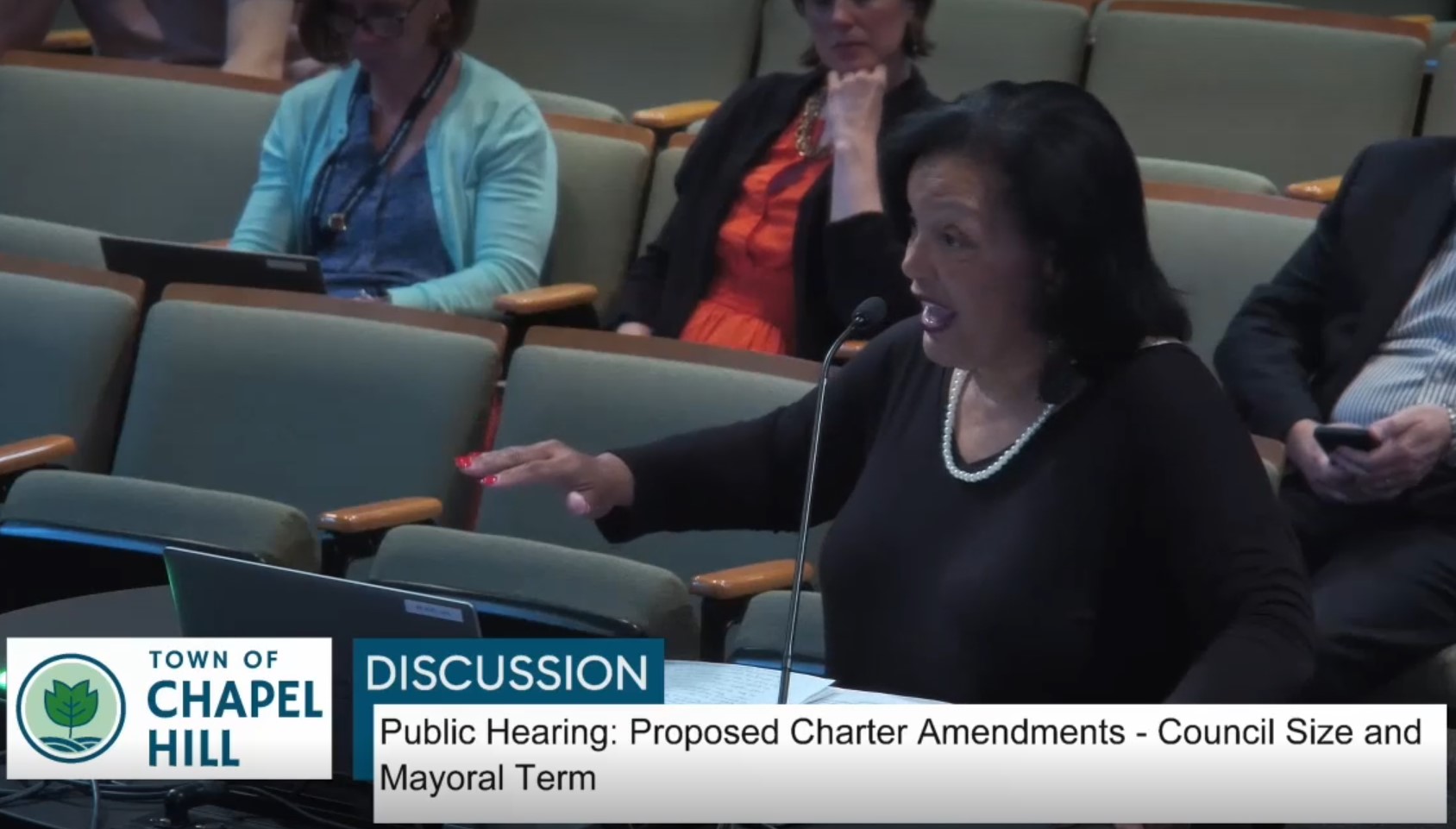
EmPOWERment Inc. CEO Delores Bailey speaks during the Chapel Hill Town Council’s public hearing on Wednesday, April 29. (Photo via Chapel Hill’s Granicus stream.)
Oates, meanwhile, pointed out how a term length extension could complicate the role of the mayor as a deciding vote in council action. She hypothesized that even if voters in an off-cycle replaced all four council members over displeasure of their leadership, the mayor could still side with the other four – which led Oates to call it effectively gerrymandering.
“All of the arguments I’ve heard in favor of a four year term center on the benefit to the candidate,” the former council member said. “I’d urge you to ask yourselves, as you do with every decision you make, ‘What’s in the best interest of the people?’”
The interest of the people was also a theme through all of the public comments, as speakers said the issue was brought forth with not enough time dedicated to alerting residents to the possible change. Raymond – who, despite no longer regularly running for office, remains a critic of Chapel Hill’s broader public engagement efforts – said the lack of public events to check the community’s temperature on downsizing council before Wednesday’s hearing was a mistake. Matthews agreed, saying an elected body often dominated by white voices ought to ensure it includes the community’s historical Black perspectives. Dropping the size of the council wouldn’t help with that, she said.
“If you’re going to reach out to people,” Matthews told the council, “and you really want to be fair with folks and really want their opinion, then you need to really ask us…and we would actually tell you. And if you ask us, don’t already have your mind made up about what you’re going to do.”
“When communities feel left out of decisions,” Curry said to punctuate her comments, “they do not lose trust in the process. They lose trust in the leadership, and that is something far more difficult to repair.”
The result was the town council closing the public hearing and shutting down formal consideration of the changes. Chapel Hill Mayor Jess Anderson shared Wednesday night and on Thursday her personal perspective on why she believes both ideas are worth exploring – but said it was clear the idea needed to be ended for now.
“I feel like we heard pretty resoundingly that people aren’t ready for that type of change and that they’d want to understand more,” Anderson told 97.9 The Hill. “I am very thankful that people came out, shared with us their perspectives and concerns, and that they were willing to listen to what we were thinking and how we were feeling about it. That’s how this whole democratic system is supposed to work.
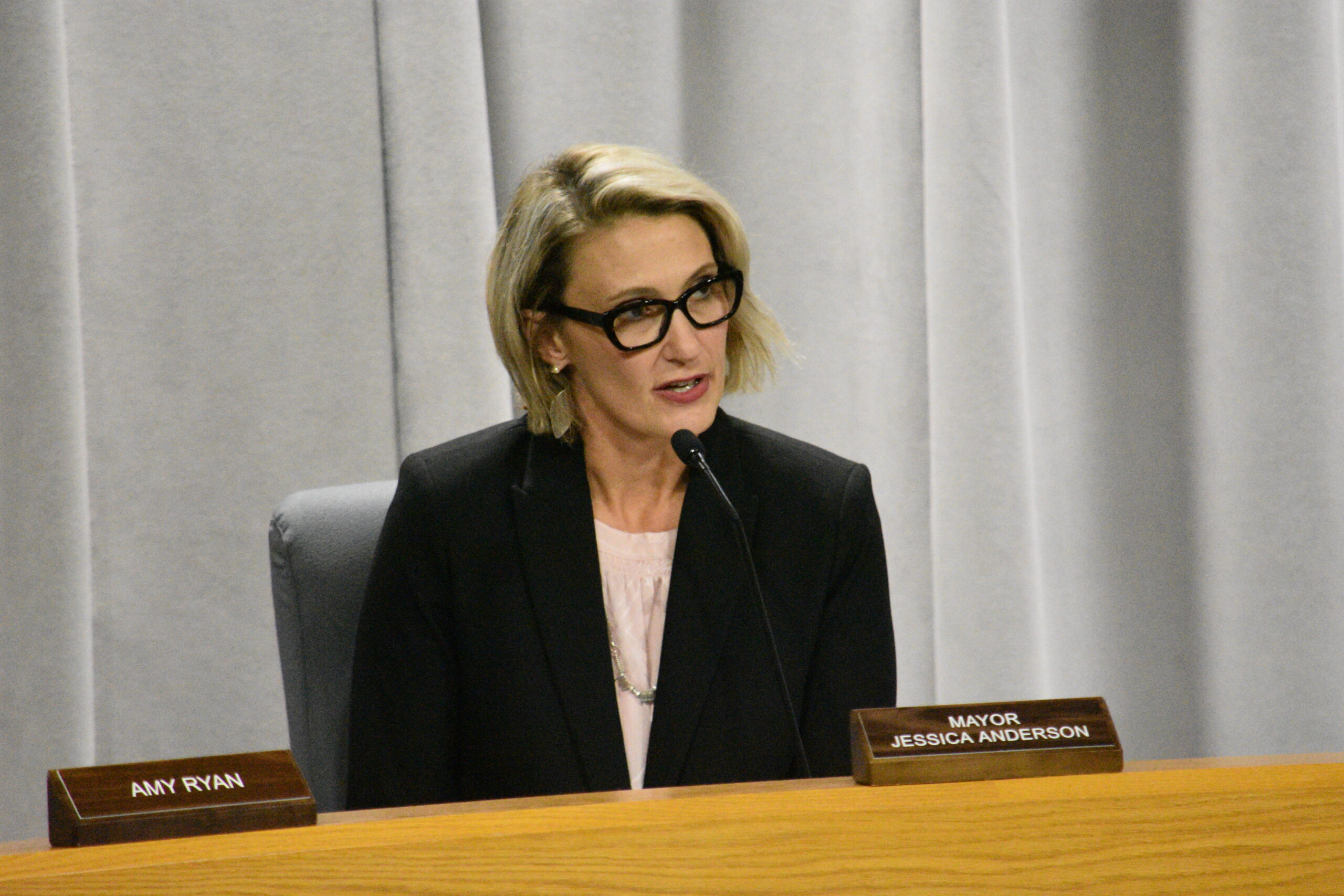
Chapel Hill Mayor Jess Anderson during a Dec. 2025 town council meeting. (Photo by Brighton McConnell/Chapel Hill Media Group.)
“Should it come up again,” the mayor added, “I very much agree that we need to make more information available in advance so that people have time to understand it and we need to provide more opportunities for people to engage together and with us.”
Full video of April 29’s public hearing, and the rest of the Chapel Hill Town Council’s meeting, can be watched on the town’s Granicus page.
Chapelboro.com does not charge subscription fees, and you can directly support our efforts in local journalism here. Want more of what you see on Chapelboro? Let us bring free local news and community information to you by signing up for our newsletter.