
At least 30 million people of all ages and genders suffer from an eating disorder in the United States. Of those affected, one person dies every 62 minutes as a direct result of an eating disorder.
As talk surrounding eating disorders slowly becomes less taboo, some medical practices are working to provide more specialized and inclusive care to those who are struggling.
Dr. Louise Metz is an internal medicine physician and the owner and founder of Mosaic Comprehensive Care in Chapel Hill. Along with providing primary care, Mosaic provides a few specialized services – one of them being the recognition and treatment of eating disorders.
At her practice, Metz says they do things a little differently. They provide something they call ‘weight inclusive care’ – also known as ‘Health at Every Size.’
“Really what it is – is recognizing normal size diversity,” Metz said. “That we all come on this Earth with different shapes and sizes and it’s all normal. We really try to take the focus away from weight management or that weight-centric approach that you see in most areas of healthcare.”
Dr. Metz said they take weight out of the equation. One of the first things that happens at most medical practices is individuals being asked to step on a scale. She says this is detrimental to a patient’s well-being.
“Though most people who work in healthcare are well-meaning and believe they are doing what’s best for their patients, what we know about this is that focusing on weight can really lead to harms that are unintended,” Metz said. “The weight stigma that comes with that – we know that leads to an increased risk of negative health outcomes like heart disease, diabetes, hypertension, and eating disorders.”
Dr. Metz thinks one of the reasons eating disorders remain prevalent is because the weight bias, or the idea that weight is a sole determinant of health, is so perpetuated in our culture – especially in young people.
“Adolescents who begin to diet are at a higher risk of developing eating disorders,” Metz said. “In fact, they’re five times more likely to develop an eating disorder.”
Disordered eating is becoming even more widespread by the rise of new ‘fad diets’ and restrictive eating plans that are becoming more mainstream and trendy.
“These diets are just that, they’re fads,” Metz said. “They’re really framed nowadays in terms of helping people with their health, but that’s not really what they do. They’re really part of this diet culture industry and really the underlying focus is on weight and products that make money.”
Dr. Metz says not only is there no evidence proving that any of these diets work, but focusing on ‘good foods’ and ‘bad foods’ can directly lead to pathological disordered eating and eating disorders.
“It’s important to note that eating disorder are very serious conditions,” Metz said. “They carry significant medical complications and actually carry the highest mortality risk of any mental illness.”
Metz says all diets have the potential for negative impact and none of them are sustainable, despite their advertising. Research shows 95 percent of people who diet will regain the weight within 5 years and two-thirds of dieters will actually regain more weight than they lost.
Instead of these diets that may lead to disordered eating, Dr. Metz recommends ‘intuitive eating.’
“It’s really relearning trusting and listening to our bodies,” Metz said. “Learning what hunger feels like, learning what fullness feels like, learning again to appreciate and enjoy food. It’s important to note that intuitive eating is not another diet. It’s not designed to lose weight in a different way. This is a way to relearn how our bodies were meant to exist.”
Outside of moving away from the diet industry, Dr. Metz says we need to be screening everyone for eating disorders, especially those with pre-existing mental illnesses like depression and anxiety. Research shows 94 percent of people with an eating disorder had co-occurring mood disorder – mostly major depression.
Metz says patient screenings, alongside education, need to become more commonplace to help decrease the stigma and misconceptions surrounding eating disorders.
“Eating disorders are very common and I think the most important thing to note is that eating disorders do not discriminate,” Metz said. “They can occur in people of all genders, of all ages, of all races and ethnicities of all socioeconomic classes, and really most importantly can occur in people of all body sizes and shapes.”
Metz says this discussion, reframing how society looks at weight and health from a young age, will hopefully lead more people to seek professional help – especially as health professionals slowly start to implement a more weight inclusive approach.
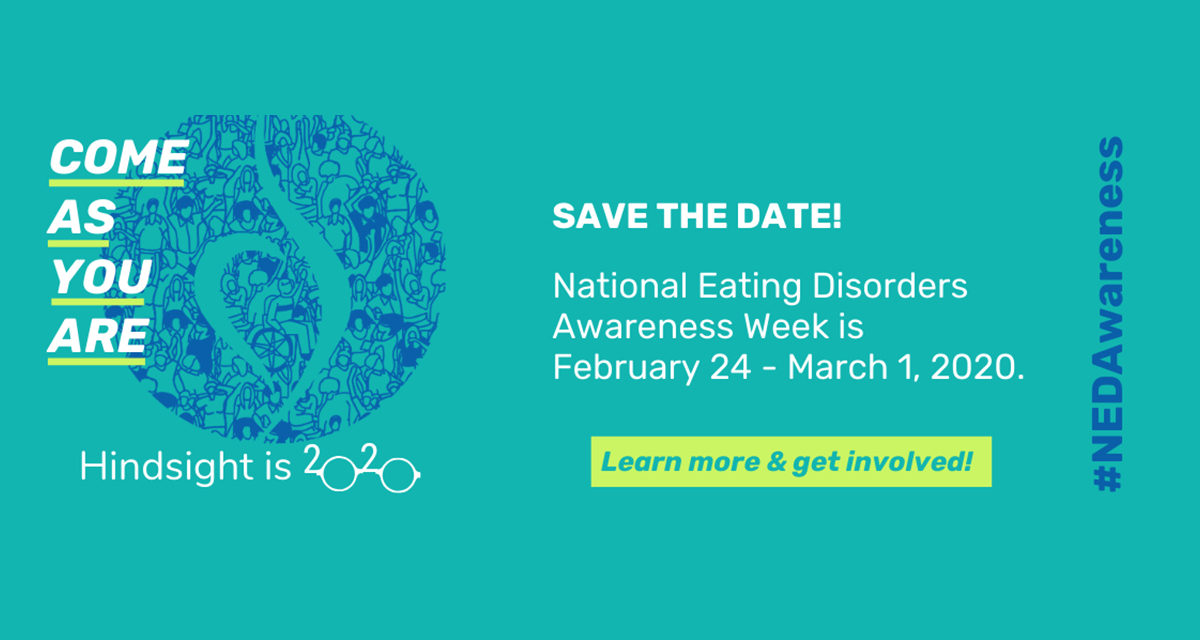
To join in on the conversation, National Eating Disorder Awareness (NEDA) week will be held February 24 through March 1. For more information on how to get involved, visit NEDA’s website.
(Photo courtesy of NEDA)