
COVID has forced American business to finally look at how many of us do our work. Employers have seen in the last 18 months that workers who do the bulk of their work on a computer, working in teams can get their job done from home. Many of us have sought this kind of arrangement for years and employers have resisted, insisting on the factory model that the worker reports to the physical plant, subject to direct supervision. We punch in and out. In an innovate-or-go-out-of-business situation, many companies have come to realize they don’t have to pay for all that commercial office space. They need to focus on what workers need to do the job.
During the Great Depression, the idea of compulsory education was new. The North Carolina General Assembly took control of the system in 1933. Tens of thousands of schools across the country closed, but none in North Carolina did so. High school was not required across the state until the 1940s and kindergarten was added much later.
Let’s be clear. High school and college preparatory education was for rich white people – mainly boys.
Children in rural areas of North Carolina (that’s much of the state) were expected to milk cows, cut firewood, and finish their chores before the lucky one caught a bus to school (instead of walking)—assuming their parents could get along without their free labor for the day. There was plenty to do when they returned from school and homework was usually done by candlelight as kerosene and electricity were expensive.
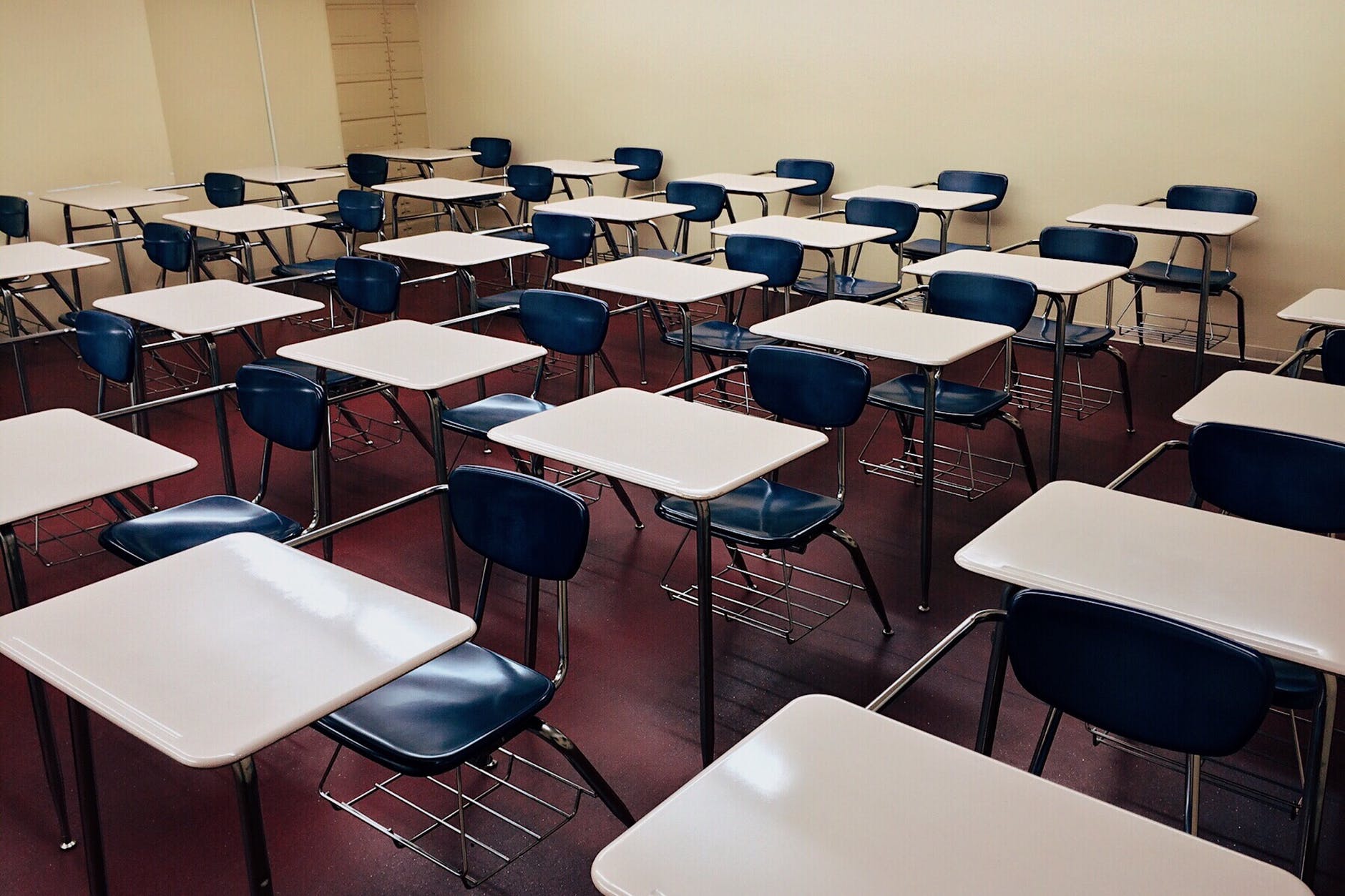
The manufacturing model was used in the mid-20th century to create a public school system that would generate an educated workforce. Much like an assembly line, there was great emphasis on conformity and ensuring that the basics were covered. Reading, writing and basic math. Desks in rows and lecture style teaching was the standard.
Our expectations for what public schools must deliver now are dramatically different than it was in 1950 and yet so very much remains the same without justification. For example, regardless of level of mastery in the topic students must have a certain number of contact hours to satisfy requirements. Why?
In college, I was able to take challenge exams to receive course credit without taking some courses. Why can’t a high school student do this?
The challenge of COVID has demonstrated that we can, if need be, throw all 52 cards in the air, scrap what “we usually do” and create new solutions we might never have considered.
Public education today faces a daunting challenge – to keep students and school employees safe from COVID while delivering a meaningful education experience. I would suggest that we first break away from the idea that there is one solution. The best solution to this challenge will likely include many different avenues to arrive at the ultimate destination – well-prepared graduates.
Public school systems tend to resist dramatic changes and innovative approaches for fear of making mistakes. They can get caught up in distracting controversies–like whether or not every school recites the pledge of allegiance at the beginning of each day–and spend hours on that instead of considering remote learning as an option for all or part of the school day for students who want it, regardless of COVID.
A quality education is not a single standard that can be accomplished by gathering students, organizing them by age, lining them up in neat rows and exposing them to the same material. It’s an individual experience and an individual achievement for each student. We know so much more now than 100 years ago about different learning styles and the various types of “wiring” in the human brain.
We need to deliver education to that brain, not force the brain to a particular building for a fixed number of hours. Proximity doesn’t cause learning. It’s a different paradigm, to be sure, but the COVID disruption can teach us important lessons about focusing on what we CAN do, not wringing our hands about the departure from what we used to do. Let’s be smart and agile enough to benefit from these lessons.
 Jean Bolduc is a freelance writer and the host of the Weekend Watercooler on 97.9 The Hill. She is the author of “African Americans of Durham & Orange Counties: An Oral History” (History Press, 2016) and has served on Orange County’s Human Relations Commission, The Alliance of AIDS Services-Carolina, the Orange County Housing Authority Board of Commissioners, and the Orange County Schools’ Equity Task Force. She was a featured columnist and reporter for the Chapel Hill Herald and the News & Observer.
Readers can reach Jean via email – jean@penandinc.com and via Twitter @JeanBolduc
Chapelboro.com does not charge subscription fees. You can support local journalism and our mission to serve the community. Contribute today – every single dollar matters.

