North Carolina and inclement winter weather go together like contact lenses and lemon juice.
It’s not that I don’t love you, North Carolina. But sometimes you just have to let the evidence speak for itself.

Esse Quam Videri
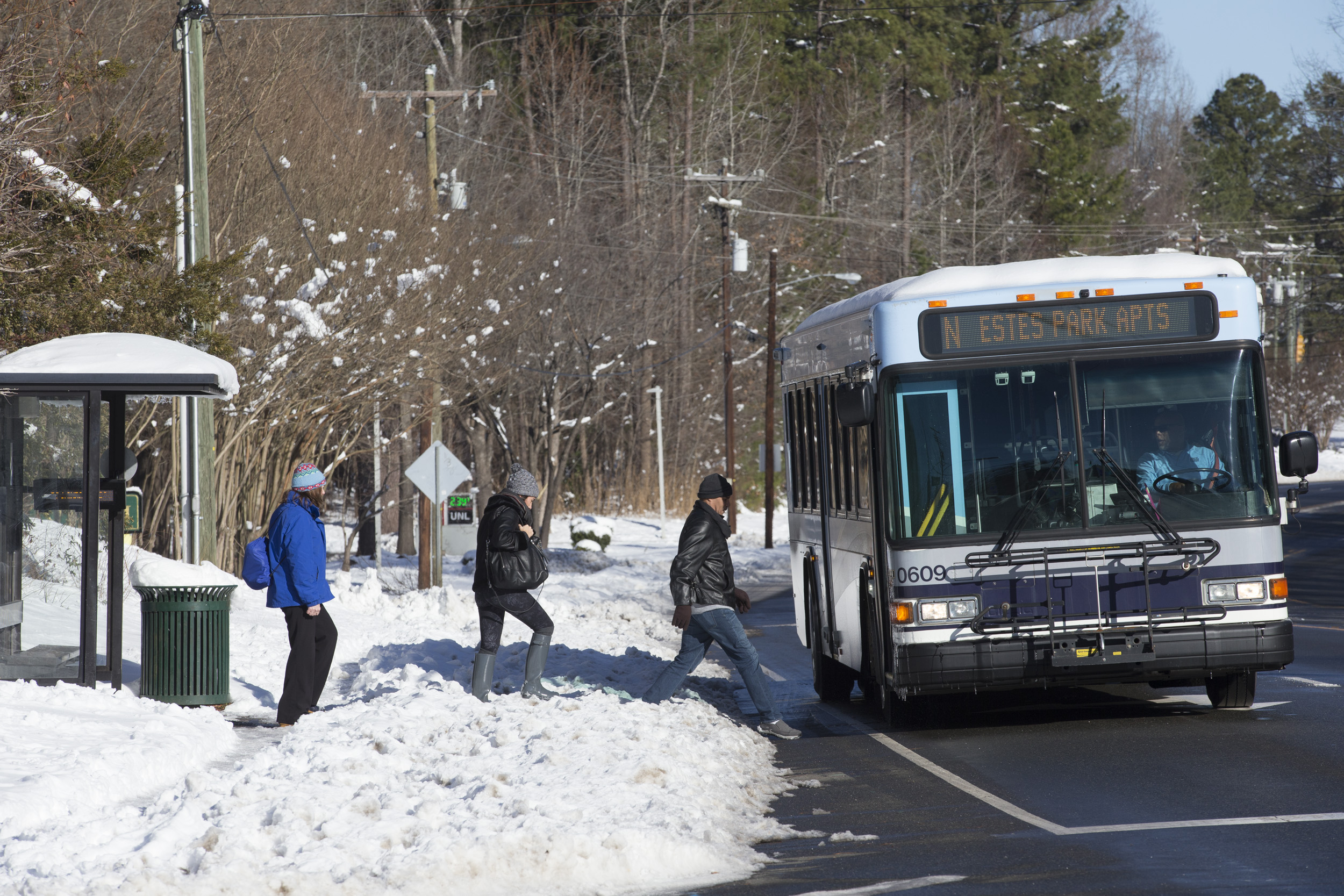
When rain washes away early efforts to prepare roads for the imminent icy onslaught, 28 accidents occur before noon. When officials whose job is to maintain the highest level of public safety possible announce – repeatedly announce – to stay off the roads during a storm that has blanketed Blue Heaven with nearly a foot of snow, somehow enough accidents occur on I-85 to force emergency services to close the road entirely. When cars are abandoned every twenty yards and areas formerly graced with the sweet touch of civilization start to resemble an ice-themed Thunderdome, we’re in trouble. We know we have our problems preparing for and dealing with winter weather and we struggle to meet them, heads held high and buckets of salty tap water at the ready.
But none of those issues, not a single one, compares to the problem we have with bread and milk.
It feels like every time whispers of potential snowfall begin to circulate, a chant begins in every Southerner’s heart. Two words that resonate across generations and divides of all kinds repeat in an endless drumbeat. Bread. Milk.
Sometimes eggs fly off supermarket shelves as well, but it somehow seems that our two major culprits are bread and milk. Bread isn’t very nutritious all on its lonesome, eggs aren’t much good when the power goes out unless you’re on a gas line or the Balboa diet, and milk is… milk. Unless you’re making French toast on your surprise day off, these three things aren’t much use to you when you’re snowed in. Why are we buying these things, besides a minor compulsion to pretend it’s all business as usual?
Bread, milk. Milk, bread. Lines swell at grocery stores, the unspoken social contract of a handbasket-only self-checkout is violated, loving mothers and doting fathers battle it out for the last loaf of Nature’s Own. In a world where only the strong survive and the new currency is supremely perishable goods, North Carolinians are determined to reign supreme.
When tires start to spin on a snowy hill climb, we mash the gas pedal. More gas, more power, more better. When the first snowflake falls, we don our hockey masks and go to war in the dairy aisle. Bread, milk. But when push comes to shove, no one appreciates the relative rarity of frozen precipitation more than the South.
https://twitter.com/analisasorrells/status/954087898999087104
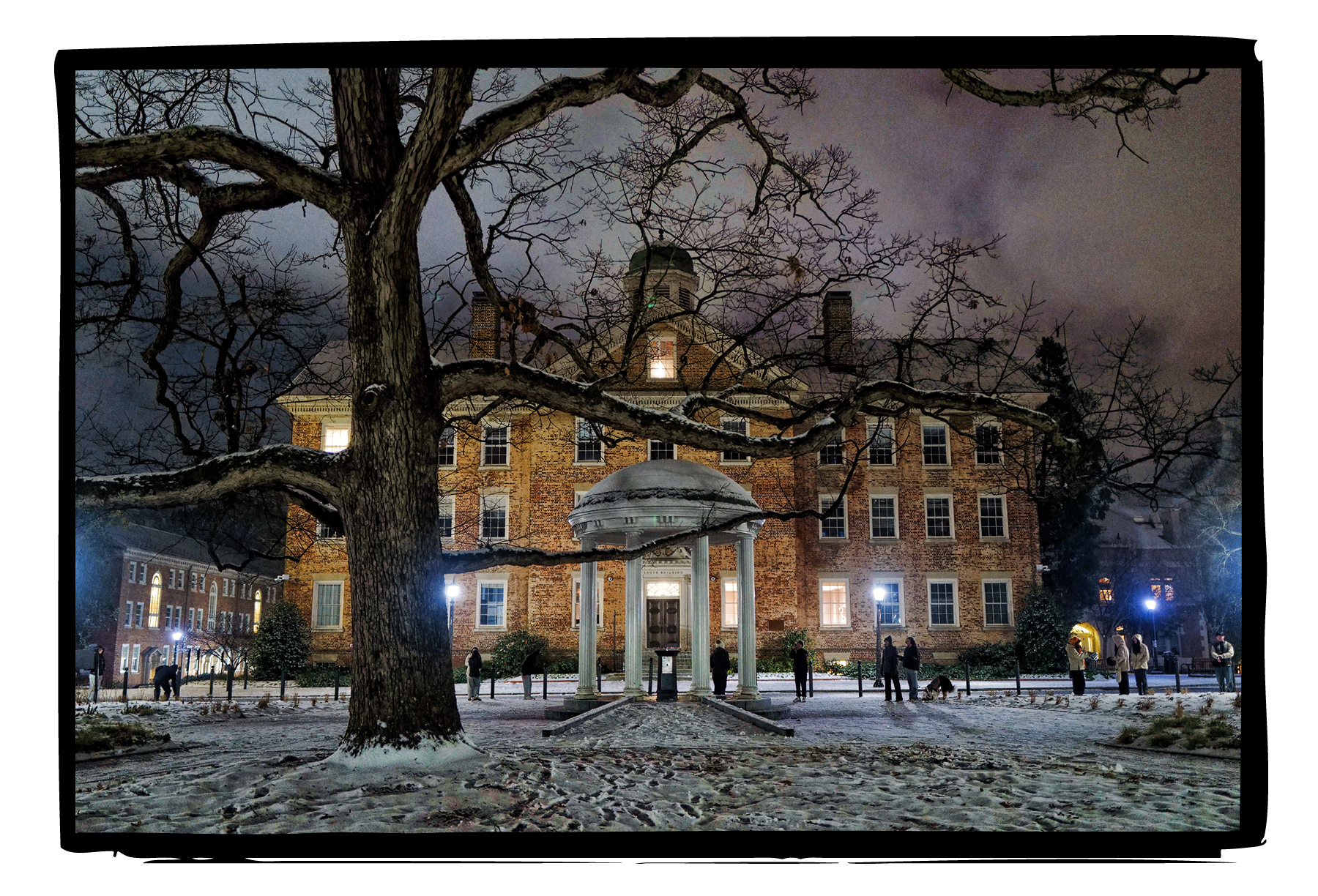
With makeshift sleds and lovingly crafted snowmen, with class cancellation announcements that revive a flagging Tar Heel squad on the hardwood through deafening cheering and a healthy dose of that House of Pain classic we all know and love, North Carolina knows what snow is about.
https://twitter.com/carasiliakus/status/953814831085342721
North Carolina knows how to appreciate snow, and we’ll tell these stories to our grandkids someday. The tales of the legendary Ice Storm of ’02, the internet famous fire on I-40 in 2014 and now of the surprise foot of snow in 2018.
Related Stories
‹

Wintry Mix Expected This Weekend, with 'Significant Accumulation' in the TriangleHow much snow and ice are we expected to receive this weekend in the Triangle? Meteorologists say it's not clear yet, but probably a lot.

Photo Gallery: Chapel Hill Sees First Snow in YearsFor a few hours over the weekend, the greater Chapel Hill community was in a winter wonderland. A winter storm blanketed Orange County and the surrounding area with a thin layer of snow on Friday. Overnight on Saturday, it was later packed down or rinse away by freezing rain, which its own layer of ice […]
![]()
Winter’s Wrath: Bitter Cold, No Power and a Deadly TornadoAt least three people were killed when a tornado tore through a seaside town in North Carolina, one of many wild and deadly impacts from a sprawling blast of winter weather across the United States. Millions of people remained without power Tuesday amid subfreezing temperatures, and authorities warned of treacherous travel conditions in many states. […]
![]()
In Hillsborough, Just Seven People To Clear The RoadsHillsborough Mayor Tom Stevens.

On the Porch: Dr. James Wood - Sports Around the WorldThis Week:
James Wood is currently Professor of Latin American and modern world history at North Carolina A&T State University. He is the author of The Society of Equality: Popular Republicanism and Democracy in Santiago de Chile, 1818-1851 and the co-editor of "Problems in Modern Latin American History: Sources and Interpretations", now in its fifth edition with Rowman and Littlefield. As a Fulbright scholar for Chile in 2016 he was a visiting professor at the Universidad Diego Portales in Santiago (where he observed Chilean student activism up close).

On the Porch: Bill Brown - Art and Science Merge at NCMAThis Week:
Bill Brown joined the North Carolina Museum of Art as a Conservation Intern in 1988. Thirty-two years later he retired from the Art Museum as Chief Conservator. He received his M.A. and Certificate of Advanced Studies in Conservation from State University College at Buffalo, NY in 1989. At the Museum, he established the Art + Science Initiative, a collaborative program with Duke University math and science departments. Bill has a passion for Italian Old Master Paintings of the 14th to 18th century. He works part-time as a conservator in private practice and provides conservation support for the Museum and Gallery collection of old master paintings at Bob Jones University in Greenville, SC . He enjoys retirement with his wife and young adult son.

On the Porch: Nora Gaskin - Conjuring Crime StoriesThis Week:
Author Nora Gaskin is a lifelong resident of the Durham-Chapel Hill area. Her latest is novel is "Lammie Loves Cubby". Nora has a bachelor’s degree in English with Honors in Creative Writing from UNC, and a Masters in English from the University of Washington in Seattle. She spent over 24 years as a stockbroker and financial advisor in the Durham office of a major investment firm. She retired in 2005 to focus on writing. She is the publisher at Lystra Books and Literary Services and the author of three novels and one nonfiction book. She lives and writes in Chatham County, inspired by her native landscape, her husband, and dogs. Her favorite word is "gratitude."
![]()
Therapy Smarts and Sen. Natalie Murdock on How HB696 Impacts Children and Families — On Air Today (June 15, 2026)Founder and CEO of Therapy Smarts Avani Shah and N.C. District 20 Sen. Natalie Murdock speak with 97.9 The Hill on Monday, June 15.

On the Porch: Steven Fenberg - What Funded America's Infrastructure?This Week:
Writer Steven Fenberg discovered Jesse Jones was reputedly the most powerful person in the nation next to President Franklin Roosevelt during the Great Depression and World War II. As chairman of the federal government’s Reconstruction Finance Corporation (RFC)—the nation’s indispensable infrastructure bank—Jones initiated and managed massive New Deal agencies that saved and expanded the nation’s economy and then shifted the RFC’s priority from domestic economics to global defense to fight and win WWII. Fenberg told this remarkable story as executive producer and co-writer of the Emmy Award winning documentary film “Brother, Can You Spare a Billion?” that was narrated by Walter Cronkite and broadcast nationally on PBS. Fenberg then wrote the biography “Unprecedented Power: Jesse Jones, Capitalism, and the Common Good.”

Viewpoints: Constitutional Changes Are Rarely NecessaryConstitutional amendments are supposed to be rare. They are supposed to matter. They are meant to alter foundational principles or governmental structure when absolutely necessary.
›