The Rapture: it’s a common trope in Christian thought, the idea that one day the faithful will be abruptly transported to heaven, leaving the rest of us behind. That in turn is just one iteration of the larger belief that the apocalypse is upon us and the end times are nigh – a belief that’s shared, in this age of nuclear weapons and climate change and AI, by unbelievers as well as believers.
But how Biblical is the idea of the Rapture, really? And to what extent does the widespread belief in some imminent apocalypse keep us from fulfilling our responsibility for making this world a better place today?
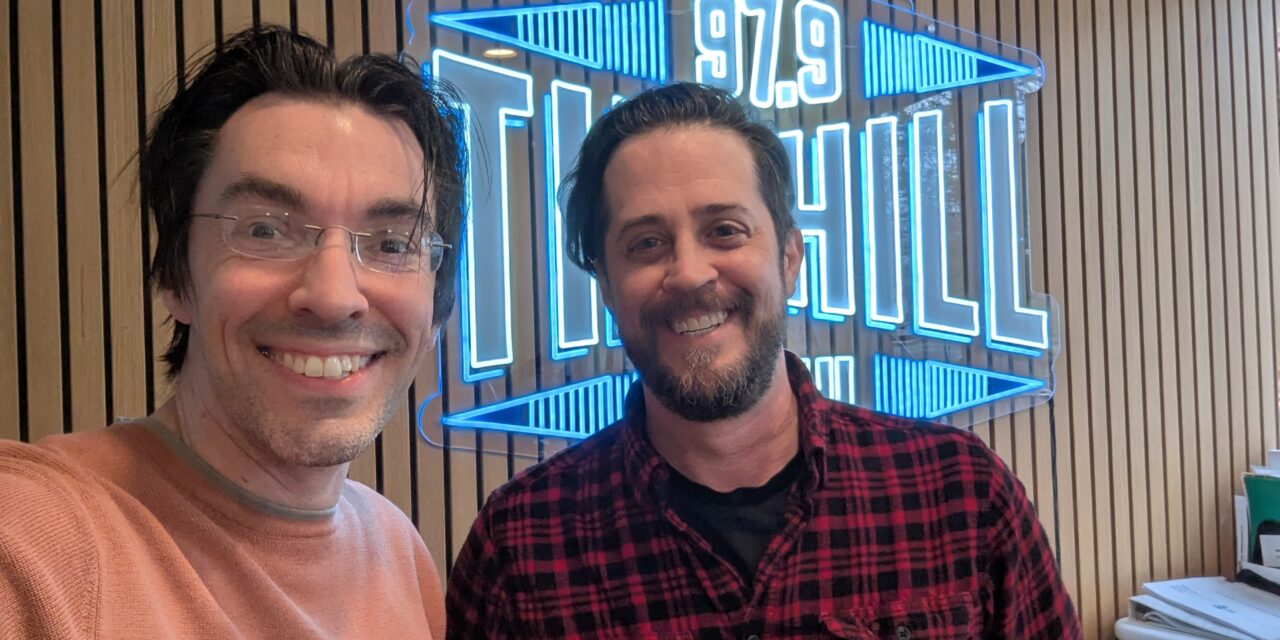
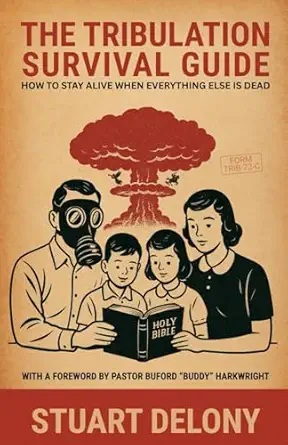
This week, 97.9 The Hill’s Aaron Keck welcomed Stuart Delony, a former pastor turned local writer/blogger and host of the popular podcast “Snarky Faith.” His new book is a satire called “The Tribulation Survival Guide: How to Stay Alive When Everything Else Is Dead.”
Listen to their full conversation here. The transcript below has been lightly edited to add clarity. (Grammatical, not spiritual.)
Aaron Keck: What inspired the book?
Stuart Delony: I remember as a kid, six or seven, being in church: (we were there) Sunday morning, Sunday night, Wednesday night, that kind of commitment where you’re stuck there all the time. And I remember it was a Sunday night – and Sunday nights you would have the B team choir up, so (while) the music on Sunday mornings wasn’t great, the music Sunday nights was a lot worse – and I remember the pastor saying, “Isn’t this wonderful? We’re going to do this forever, forever and ever and ever in heaven.” And I was like, “that just sounds like hell!” <laugh>
And I’d also just grown up around evangelical culture and seen how damaging this whole rapture culture, this whole Left Behind culture can be to people psychologically, anxiety-wise. So I wanted to write a book that took all of their thoughts of what they think is going to happen – and tease them out to their logical conclusions. Because once you do that, you start to see how ridiculous all of this is, and it begins to break under its own weight.
Keck: What is the deal with the rapture? What is it about the rapture that (attracts people)?
Delony: First of all, the rapture is not in the Bible. This may shock some people, but it’s a concept that came up in the 1800s by a guy named John Nelson Darby – a guy that had no scriptural backing, no training. He was a lawyer. But he wanted to find a system that made sense. And so he was trying to (reconcile) the Old Testament and New Testament, somehow force them into a shape that they weren’t meant to be forced into. But the idea caught on…(because) a lot of folks want certainty, and this gives them some sort of certainty. Even though it’s crazy, even though it’s not true, it still gives them some sort of certainty in the face of the world that we find ourselves in.
And so you end up finding folks that will follow these pastors – televangelists and grifters – that like to push these narratives of fear. Because it teaches people to abdicate their responsibility for being here and now. And it points them away from where we’re at. Which – if you’re going with the Christian message of Christ – Christ would tell people to be very much dialed in here and now, into the community here and now. (Christ’s message is) not about escapism. It’s about being present.
Keck: You’ve got a really good blog post on your website called “Apocalypse as Permission” – which (explores) the idea that if you believe the apocalypse is upon us, (that justifies) extreme acts of cruelty and violence that might otherwise not be justifiable. But – and I think this is even more of an issue – it also becomes justifiable to (withdraw and) stop trying to make the world a better place, stop trying to push for democracy, stop trying to work for a better future. Because it’s all over, right?
Delony: Yeah. “It’s all over and the future doesn’t matter – we (just) need to listen to our Orange Messiah and keep following him in whatever crazy direction he’s leading us down to.” Yeah, I think it does. And I think it pulls people away from their own humanity. It pulls people away from even being able to see the humanity in the other folks around us as well.
Keck: It’s really easy to associate this with the Trump lovers on the one side, (but) it’s also, I think, just as common – and this isn’t necessarily a religious thing, but you get the same thing, with younger people especially, (with) a lot of people on the left, who look at the world and see everything’s going to hell in a handbasket, World War III trending on Twitter every other day – and we internalize it and we think, “well, there’s no point in me getting off the couch and trying to make the world a better place either.” And that’s the same apocalyptic mindset.
Delony: Yeah. It’s the death of the American Dream for a lot of folks too. A lot of young people are realizing they’ve been sold something that they may never be able to achieve. A lot of younger folks are realizing they’re not going to be able to own a home, and that going to college and doing all the things you were told to do doesn’t necessarily guarantee everything is going to be fine for you. It’s scary for them too. And they tend to cling towards the immediacy of the now, as opposed to looking longer-term towards hope and a better future for our community and country.
Keck: Okay, so if you’re in that worldview – whether it’s religious or non-religious, that feeling of despair, that feeling of apocalypse – what gets you out? Like, what got you out?
Delony: One, I think humor can rattle us out of it, because it gives us the ability to laugh at situations. (And) I think for people looking for some sort of an off-ramp out of this type of thinking, I think it’s just being able to have good conversations with folks that we come in contact with… because (we’re) becoming more and more polarized and isolated, to where a lot of folks are just insulating themselves from any new information that’s happening, insulating themselves from the outside world. And they get very calcified where they’re at. So I think being able to have conversations with others, even simply getting to know your neighbors around you, even if you may not agree with them politically – just get to know them as humans.
Keck: What’s your relationship now with faith? Your website is “Snarky Faith,” not “Snarky Lapsed Faith.”
Delony: I feel like I’m more of a spiritual free agent. Over my career of 20 years, I’ve worked in different denominations of different churches, and I’ve really kind of found my space outside the institution as the best place to be, as someone that is speaking to things that folks inside the system are struggling with. I can give words to their struggles.
Keck: People who read the book – what do you want them to take away?
Delony: First and foremost, that there is so much more to life. (Even in tough times), we need to take a breath to realize that even though there’s a lot of things that we can’t control in the world, and it makes us feel hopeless, there are things in your life that you can control. There are small things that you can do, and those small things do matter. I think it’s going to be lots of acts by small people doing small things, that will eventually change things in the world to make it better.
Keck: And then last question: what specifically gives you hope?
Delony: What gives me hope? That’s a hard one. Some days it’s really, really tough. When I’m reading the news, it’s really hard –
Keck: I always get so wigged out when I ask that and people pause.
Delony: I know <laugh>. No, I think it’s being able to see ordinary kindness from folks. I think it’s being able to see people that are not operating just out of the polarized zones where you just scream at each other but don’t listen. I think it’s the small conversations that are happening. I think it’s the small acts of kindness that are giving me hope. And I do think there are better days ahead – I at least have to tell myself that <laugh>, so I don’t go into existential doom.
Chapelboro.com does not charge subscription fees, and you can directly support our efforts in local journalism here. Want more of what you see on Chapelboro? Let us bring free local news and community information to you by signing up for our newsletter.