A lawsuit filed by former UNC provost Chris Clemens against the school alleges the university’s Board of Trustees violated the state of North Carolina’s open meeting laws when it – among other things – hired head football coach Bill Belichick in December.
Clemens’ lawsuit takes aim at several violations by the Board dating back to “at least” 2023, including a closed meeting during which policies and practices related to tenure for faculty were debated. In addition, notable topics concerning the UNC athletic department are specifically mentioned, including the hiring of Belichick.
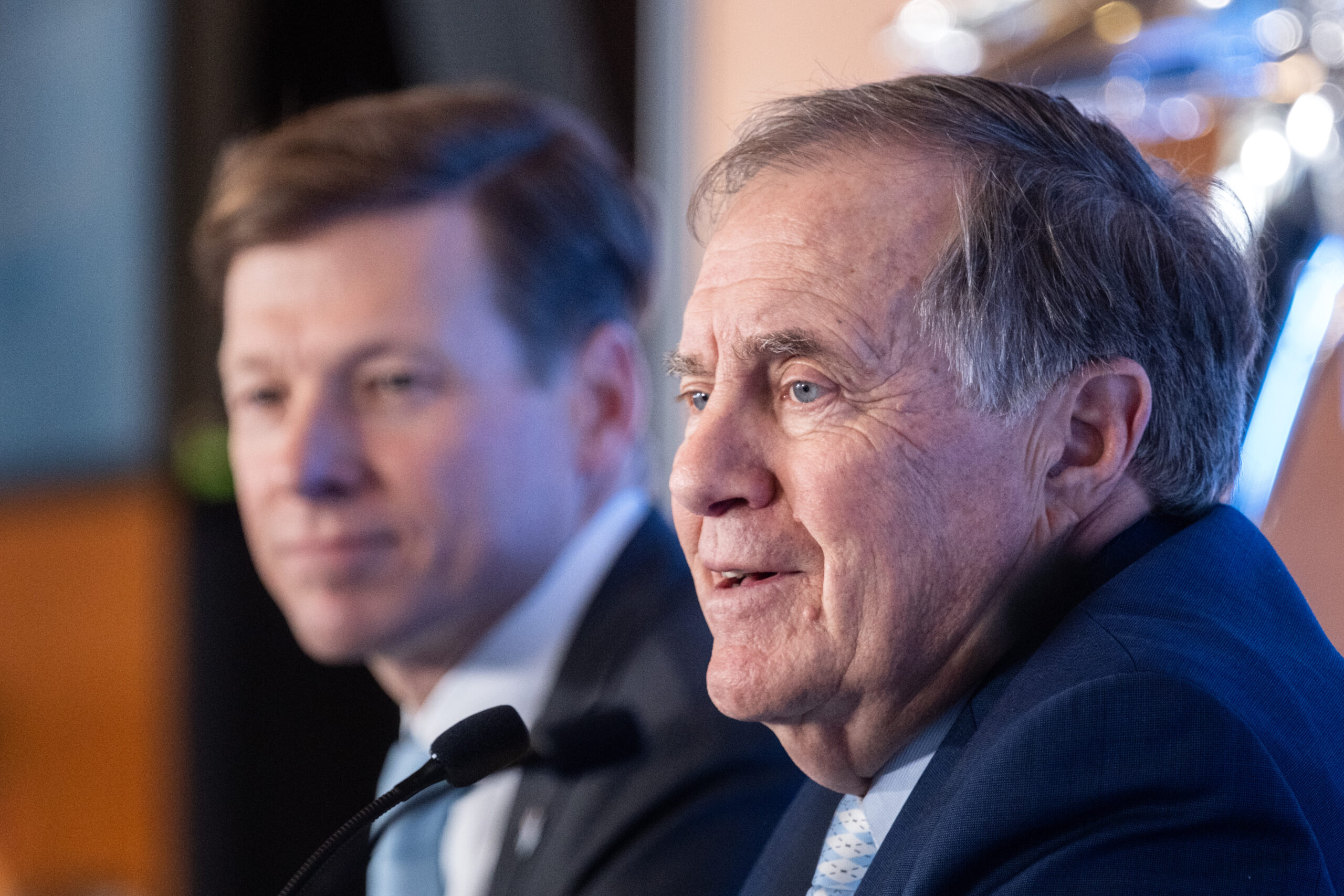
The lawsuit alleges that, on December 12, 2024, the Board of Trustees “called an ’emergency meeting’ with minimal notice, then immediately entered closed session to approve hiring a high-profile football coach [Belichick] whose compensation package and entire hiring was already public. The Board’s perfunctory return to open session for a rubber-stamp vote demonstrates that substantive deliberation occurred in secret.”
Belichick’s hiring was made official on December 11, and he was introduced to the public the next day.
North Carolina’s open meeting laws require public bodies such as UNC’s Board of Trustees to conduct “hearings, deliberations and actions” in a manner open to members of the public, whether in person or online.
The processes which led to Belichick’s hiring have already been subject to criticism, with a report by ESPN earlier this year revealing that then-chair of the Board of Trustees John Preyer and the rest of the Board undercut athletic director Bubba Cunningham’s authority by submitting an offer sheet to Belichick’s agent without Cunningham’s approval.
The lawsuit points to two other athletics deliberations which allegedly violated the open meeting laws. First, in November 2023, the lawsuit says the Board entered a closed session to discuss UNC’s future in the ACC “and compare potential financial outcomes with SEC or Big Ten membership.”
“These conference affiliation and departmental budget discussions are policy matters that belong in open session,” the lawsuit wrote.
In May 2024, the Board allegedly used another closed session to discuss UNC’s strategy relating to potential conference realignment and the finances of the athletic department.
“There is no statutory exemption that permits closing discussion of institutional affiliations and budget planning,” says the lawsuit.
Clemens is retaining the services of attorney David McKenzie, who himself sued UNC and the Board of Trustees last year in a similar complaint. McKenzie also sued UNC in February over alleged public record violations relating to potential conference realignment moves.
Clemens resigned as UNC provost in May following an extended dispute with the Board, which asked him to leave his position while citing his “inappropriate disclosure” of discussions during closed session relating to the tenure debate. Clemens himself alleges the Board took part in a “retaliation campaign” against him, after Jed Atkins, dean of the School of Civic Life and Leadership, told Preyer about Clemens sharing the closed session discussions. Notably, Cunningham and UNC chancellor Lee Roberts are not named as defendants in Clemens’ lawsuit, while Preyer and 13 other members of the Board of Trustees are.
Featured image via UNC-Chapel Hill/Jon Gardiner
Chapelboro.com does not charge subscription fees, and you can directly support our efforts in local journalism here. Want more of what you see on Chapelboro? Let us bring free local news and community information to you by signing up for our newsletter.