To reflect on the year, Chapelboro.com is re-publishing some of the top stories that impacted and defined our community’s experience in 2025. These stories and topics affected Chapel Hill, Carrboro and the rest of our region.
While the academic calendar goes from July to June and the current school year is ongoing, this calendar year for Chapel Hill-Carrboro City Schools was filled with major stories from start to finish. From changes in central office leadership, to changes in student cell phone use at school, to upcoming changes in funding and school capacity, “change” was a clear theme for the district while aiming to maintain the same level of instruction and services for families. Here is a look back on those stories and others, as covered by the Chapelboro news team.
While the main news for the school community in January was it navigation of the first snow days in several years, the Chapel Hill-Carrboro City Schools community learned of a big change at the top of its leadership structure to start February. Superintendent Nyah Hamlett announced her plans to depart the district after four years in the role, with it later revealed she would be taking an equity and development-focused role with Maryland’s Montgomery County Public Schools system. Her time leading CHCCS was defined by the return to in-person instruction from COVID-19, the student achievement growth marked in the following years, a strategic plan that centered equity and district-wide engagement, and — toward the end — controversy over both the district’s waning fund balance, job cuts to the district’s central office and questions around her doctoral dissertation.
After a national search that resulted in dozens of candidates applying and being reviewed, the Chapel Hill-Carrboro City Schools Board of Education decided to keep the course for the school system instead of overhauling its approach. In June, it formalized the hire of Rodney Trice, a veteran educator who held the position of Deputy Superintendent for Teaching and Learning, Systemic Equity and Engagement at CHCCS under Hamlett. Along with his experience as a teacher, principal, department chair, education policy advisor, and associate superintendent, Trice’s passion for the Chapel Hill-Carrboro community resonated with the board members and led to a strong retention of central office administrators.
“My leadership is from the classroom [outward], not the central office down,” Trice told 97.9 The Hill on his first day as CHCCS’ superintendent. “It really does focus on elevating the voices and experiences of our teachers. To me, it’s a very simple equation. If our teachers aren’t taken care of, then our students aren’t taken care of. I want to take a step back and just be sure that I don’t bring some preconceived notion of what it looks like to receive teacher voice and input. I want to take some time to be in space with teachers and really understand what they need to be heard and to be seen, and then develop a plan on how to move forward.”
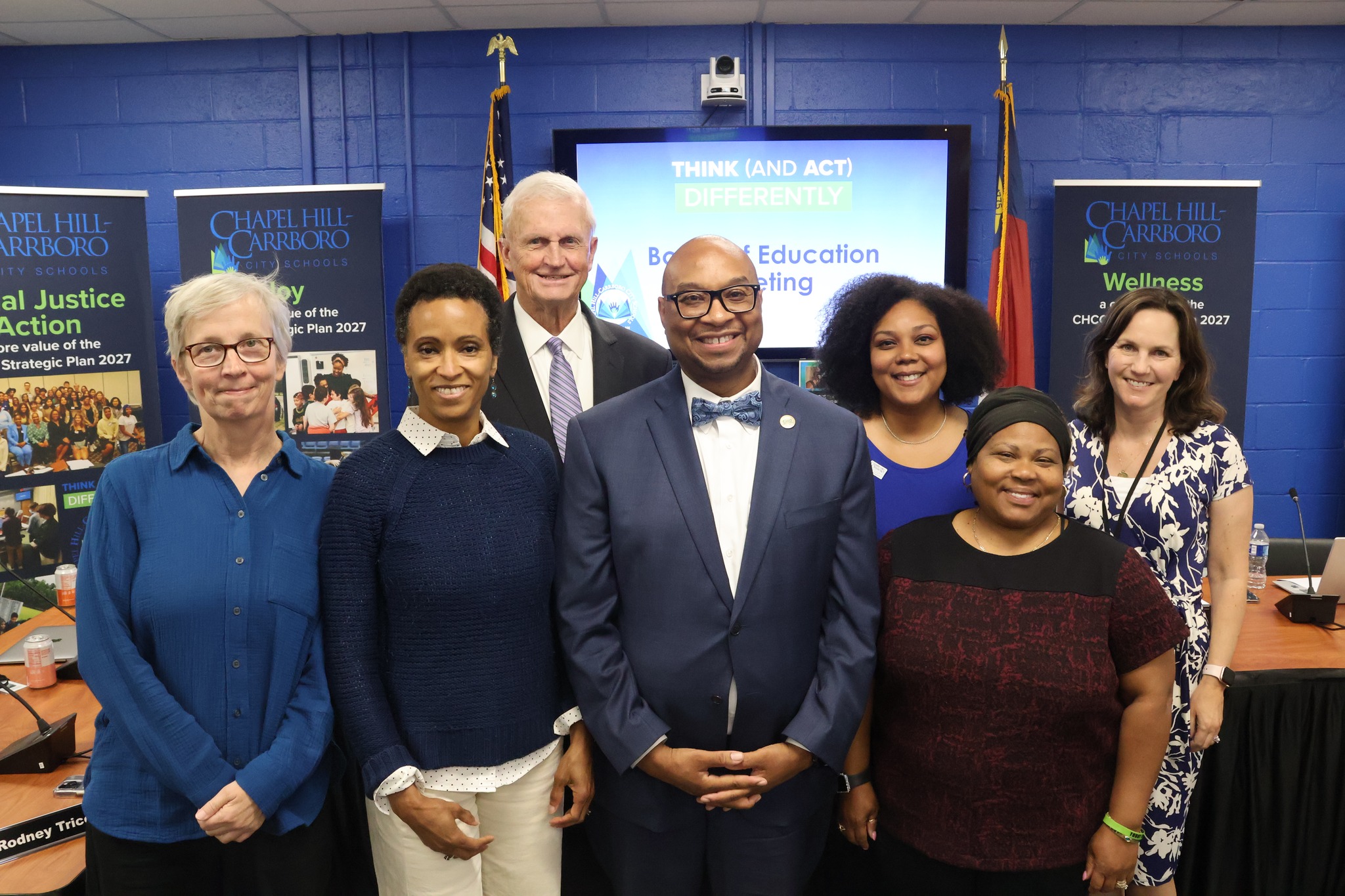
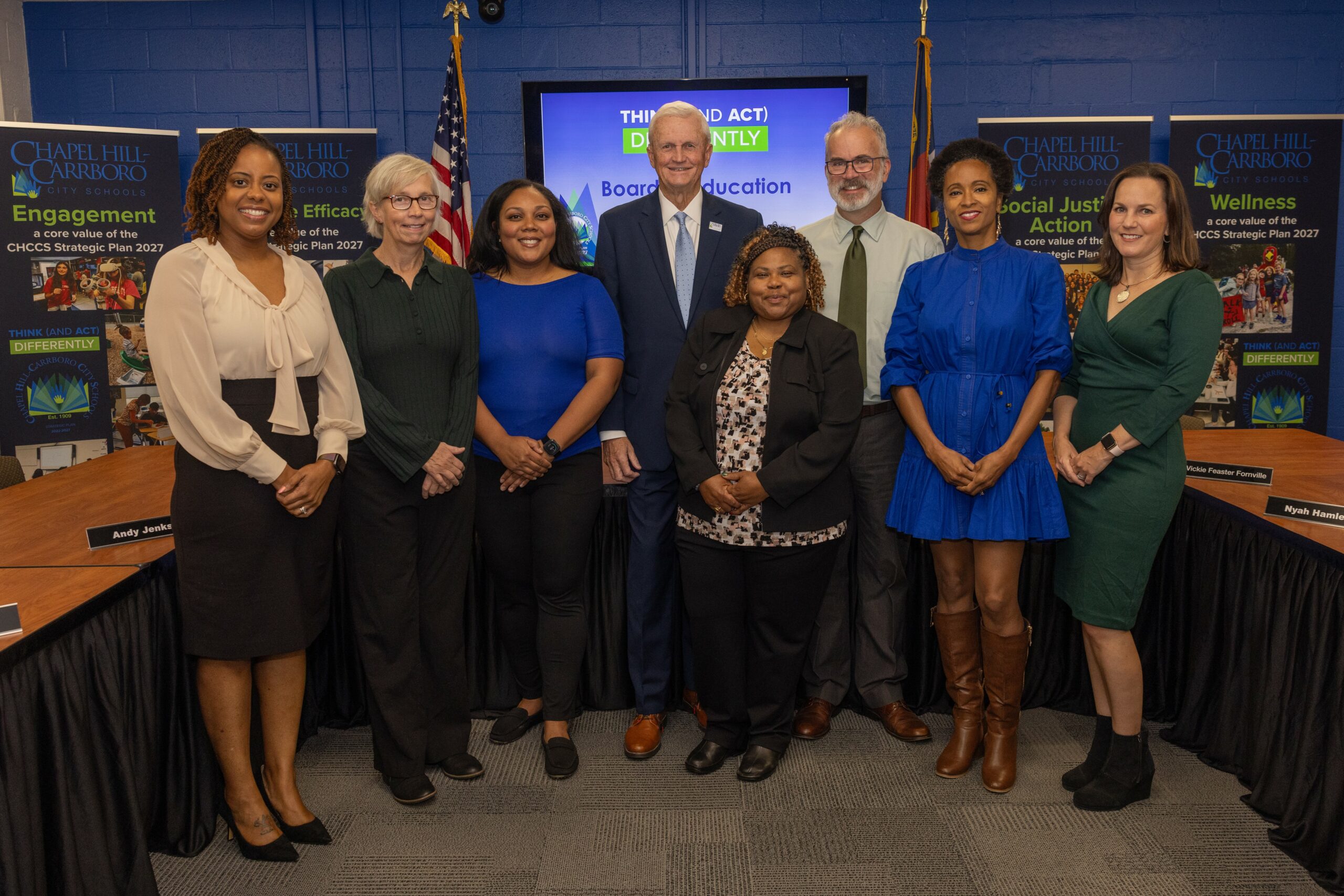
Rodney Trice (center) stands with the Chapel Hill-Carrboro City Schools Board of Education. At the time, the board was missing a member after Mike Sharp departed mid-year. Sharp’s empty seat was later filled by Melinda Manning, who was elected to a four-year term in November alongside incumbents George Griffin and Riza Jenkins. (Photo via Chapel Hill-Carrboro City Schools.)
One of the first big decisions made by Trice and CHCCS leaders in the summer was determining a path forward for the Carrboro High School community, which dealt with controversy between its principal, students, parents and staff. Following Helena Thomas’ contract extension in April, staff at the high school shared their concerns about Thomas’ leadership through a letter read to the school board in May. Citing data gathered from Panorama staff surveys, dozens of educators shared examples and anecdotes about how Thomas’ actions created a climate of poor communication in emergency situations, flawed staff evaluation, and low morale amid a feeling of micromanagement. Carrboro High students and parents staged a walkout during a school day on May 29 advocating for a review of Thomas’ administration and an alternative dispute resolution with faculty.
The school district ultimately put Thomas on leave to investigate the claims and interview those around the high school. The local chapter of the NAACP organized a rally in June in support of the Carrboro High principal , accusing the district of having “unjustly responded to community concerns” and caused “considerable harm to her professional and personal reputation.” In July, CHCCS announced Thomas would be reassigned to the district’s Instructional Services Division and named veteran educator Valerie Akins as interim principal with Tracey Lockhart as the interim assistant principal ahead of the 2025-26 school year.
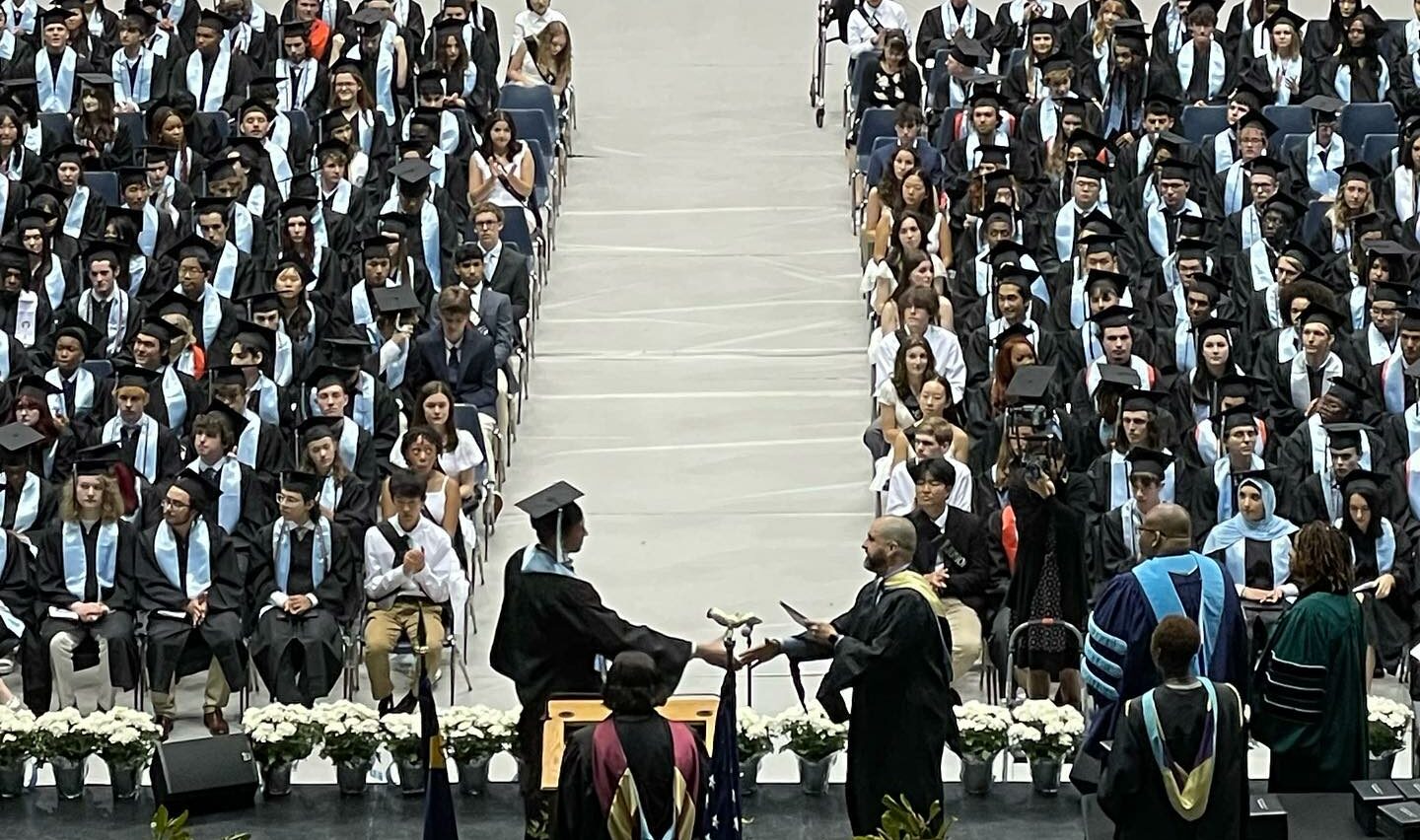
In addition to that leadership change for Carrboro High’s community, a pair of new policies also went into effect and influenced high schoolers’ day-to-day lives on campus. The first is a policy the district had long been debating and then planning for: a transition to a block schedule to align all four of CHCCS’ high schools to a similar schedule structure. After the Board of Education approved the shift one year prior and staff worked with schools to transition to the new format, Chapel Hill High, East Chapel Hill High and Carrboro High switched from year-round seven-period schedules to four classes each semester. Now, students have 80-minute class periods and 40 minutes of daily “flex” time alongside a standard lunch break with the goal of providing opportunity for students to enroll in community college or other high schools’ courses while adjusting their homework load. Reviews are mixed a few months into the new setup, with both students and teachers saying the extended class periods created some initial focus issues — but students also reported enjoying having fewer classes per day with more focused work.
High school students and others also began adjusting to a new cell phone policy implemented by Chapel Hill-Carrboro City Schools this school year. After the North Carolina government passed a law banning the use of cellphones by students during classroom instruction, the district re-examined its cell phone policies to update them and emphasize less access to personal Bluetooth devices. While the state law goes into effect on Jan. 1 for all districts, CHCCS began using its policy in August to introduce the changes early. High school students now must follow the “away all day” model for smartwatches or similar accessories alongside their phones and earbuds — including during transitions between classes and excluding their lunch periods. Middle school and elementary school students have an “away all day” policy with all devices through the entire school day. The exceptions for student phone uses are emergencies, medical needs and Individualized Education Programs. Gov. Josh Stein’s Advisory Council for Student Safety and Well-Being published a video on Dec. 11 indicating students reported increased social interaction and teachers reported fewer discipline issues in districts with the policy already in place.
“The goal is just to protect the sanctity of our classrooms,” Trice said in August to 97.9 The Hill. “We want to focus on learning, building connections, building relationships, growing together. With the explosion of mobile devices over the past couple of years, it’s just been really difficult for our teachers to compete with that. And so, we wanted to start the year off with clear expectations.”
As the year continued and Trice settled into the duties of superintendent, more and more conversations began about further changes at CHCCS. Declining enrollment at the district across several years has the administration and decision-makers looking at several options, with one example being a hypothetical exercise in August between school board members and CHCCS staff about the possibility of consolidating and closing an elementary school. Trice hit the road to discuss enrollment data and funding impacts on the district with community members in the fall, holding several sessions to highlight a projected loss of $2.1 million in state funding because of its declining student population. During 97.9 The Hill’s Forum On The Hill panel about school enrollment, the superintendent described the decline as “a structural issue, not a temporary issue” — but he cautioned against seeing the district as a “sinking ship” and instead facing an opportunity to improve its student experience.
“This is not the end of a conversation about enrollment and our future, it’s the beginning,” Trice said. “We’ll continue to get in front of our community in a lot of different ways, whether that’s in-person or virtually. We want to be as transparent as possible about our change and, also, get a lot of feedback about what we should become as a school district. There’s not anything inherently wrong with becoming a smaller district — we just want to make sure that we continue to serve students at a very high level. That’s the expectation that I have as a parent in Chapel Hill-Carrboro City Schools, and I know that’s the expectation others have as well for their children.”
Trice and former CHCCS Board of Education chair George Griffin took part in a relatively one-sided conversation that garnered headlines toward the end of the year. The North Carolina House Committee on Oversight and Reform called the two men to testify regarding the district’s implementation of and adherence to the state’s “Parents’ Bill of Rights” law passed in 2023 after the legislature’s conservative majority overrode Gov. Roy Cooper’s veto. Republican lawmakers on the committee accused the Chapel Hill-Carrboro district of skirting the required policy points about alerting parents to a student changing their preferred name or pronouns at school. Some also accosted the educators for “indoctrinating” students with discussions or lessons about gender identity, sexual orientation or racial privilege — talking points often used by conservatives to downplay racial inequity and villainize the LGBTQ+ community.
Rep. Brenden Jones (R – Columbus, Robeson), who chairs the committee, described the school board’s discussions in Jan. 2024 about not adopting policies related to the law as “a middle finger to this legislature” and accused CHCCS of “protecting an agenda” at the expense of students.
“Let me be clear: this General Assembly will use every tool, every statute, and every ounce of our authority to protect children and to force you to comply with the law,” Jones concluded. “If you don’t follow it willingly, we will hold you to the fire with every legal and legislative mechanism in our power.”
During the hearing, Griffin apologized for any “misunderstanding” that came from his comments, with both the school board member and superintendent testifying they are confident CHCCS is in compliance with the state law regarding parental communication, student pronoun preferences, and following North Carolina’s curriculum. Republicans, though, still threatened to dock the district’s funding — an unclear punishment method, based current on state laws and sent a follow-up letter to the district requesting monthly reports on its compliance to state laws.
The Chapel Hill-Carrboro City Schools system is on its winter break through Monday, Jan. 5
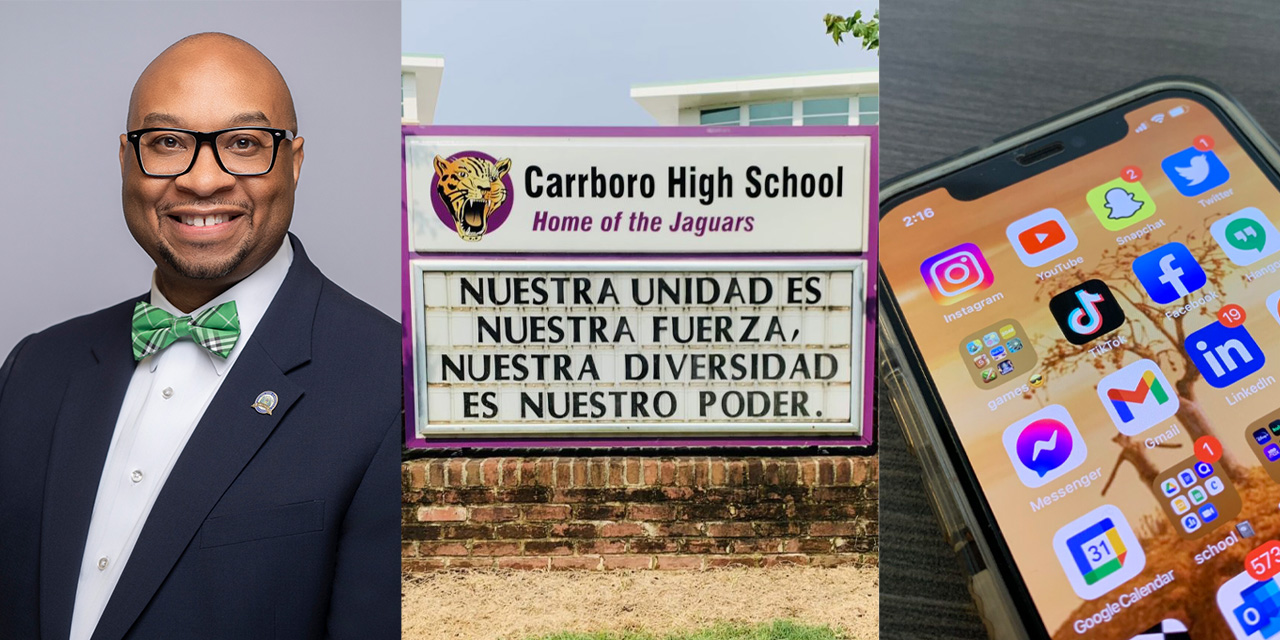
Featured photo via Chapel Hill-Carrboro City Schools, Diego Arturo Mureño/Education NC, and the Chapel Hill Media Group.
Chapelboro.com does not charge subscription fees, and you can directly support our efforts in local journalism here. Want more of what you see on Chapelboro? Let us bring free local news and community information to you by signing up for our newsletter.