North Carolina tax collections are on track for the state to post its highest surplus since the Great Recession.
“Extraordinary growth” in year-over-year final tax payments during April means the state ultimately may collect over $700 million above what budget-writers projected last summer to pay for the current year’s budget, General Assembly economist Barry Boardman told legislative leaders. Collections usually pegged to the April 15 tax deadline are historically considered the most unpredictable.
The potential over-collections, equal to roughly a 3% revenue increase, mark a state government revenue surplus for the fifth year in a row and highlight the continuation of stable, modest growth in the state economy. Other states also are reporting similar April results, Boardman said.
The extra cash gives Republican legislators more options in fashioning a final two-year budget this summer, whether through more spending, additional savings or further tax breaks. The budget proposal for the two years starting July 1 approved by the Republican-controlled House last week only envisioned $151 million in over-collections. Last year, there was a surplus of $440 million.
Rep. Chuck McGrady, a House budget committee chairman, doesn’t anticipate the larger surplus will result in more spending in the first year of the budget, since House and Senate Republicans previously agreed on a $23.9 billion cap. Unless they change their minds in final negotiations, Republicans could just park extra funds in savings.
“It could mean something in the second year, when we don’t have a cap,” said McGrady, a Henderson County Republican.
In an email, Boardman attributed the revenue growth to final individual income tax payments, particularly from taxes on transactions like capital gains and dividends. Those April payments alone were $395 million projections and 46% above what was collected last year. Taxes taken from wage and salary income — usually from paycheck withholdings — have remained very close to forecast totals, Boardman said.
Corporate income tax payments in April also were 42% higher than last year and $75 million above projections, his email said.
Boardman and State Budget Director Charlie Perusse confirmed on Monday that more time is needed to examine what portion of the over-collections can be counted on year after year and how much is just a one-time blip. This will result in an updated revenue forecast next week, in time for the Senate — also a Republican majority — to use when the chamber passes a version of the budget by the end of the month.
The greater the percentage of over-collections that can be counted on in future years, the more of it that will be added to the baseline revenue forecast. Those “recurring” funds can be earmarked to fund permanent state programs and salaries. One-time funds more often than not are used for construction projects, employee bonuses or temporary programs.
The House and Senate ultimately will work out a final budget to present to Democratic Gov. Roy Cooper.
Related Stories
‹
![]()
Deadline Delay, Downturn Mean Big Hit to NC RevenuesNorth Carolina revenue collections fell dramatically in April, the state’s chief bookkeeper says, as tax filing deadlines were delayed and commercial transactions slowed due to the COVID-19 outbreak. The State Controller’s Office reported this week that overall revenues for the month totaled $2.67 billion, which is one-third less than what was collected in April 2019. April is […]
![]()
NC Revenue Surplus Lowered Slightly, Still Largest in YearsMuch of the surge in North Carolina income tax collections this spring can’t be counted on to repeat in 2020 and 2021, state government economists said Tuesday. That could limit options on further spending or tax breaks in the upcoming two-year budget. An updated examination of April tax collections by legislative staff and Gov. Roy […]
![]()
2 Years After Hurricane Helene, Where Does Relief Fall Short in North Carolina? – On Air Today (September 29, 2026)Public Policy Analyst Alex Campbell joins 97.9 The Hill's Brighton McConnell on Tuesday, September 29 shortly after the two-year mark of Hurricane Helene.
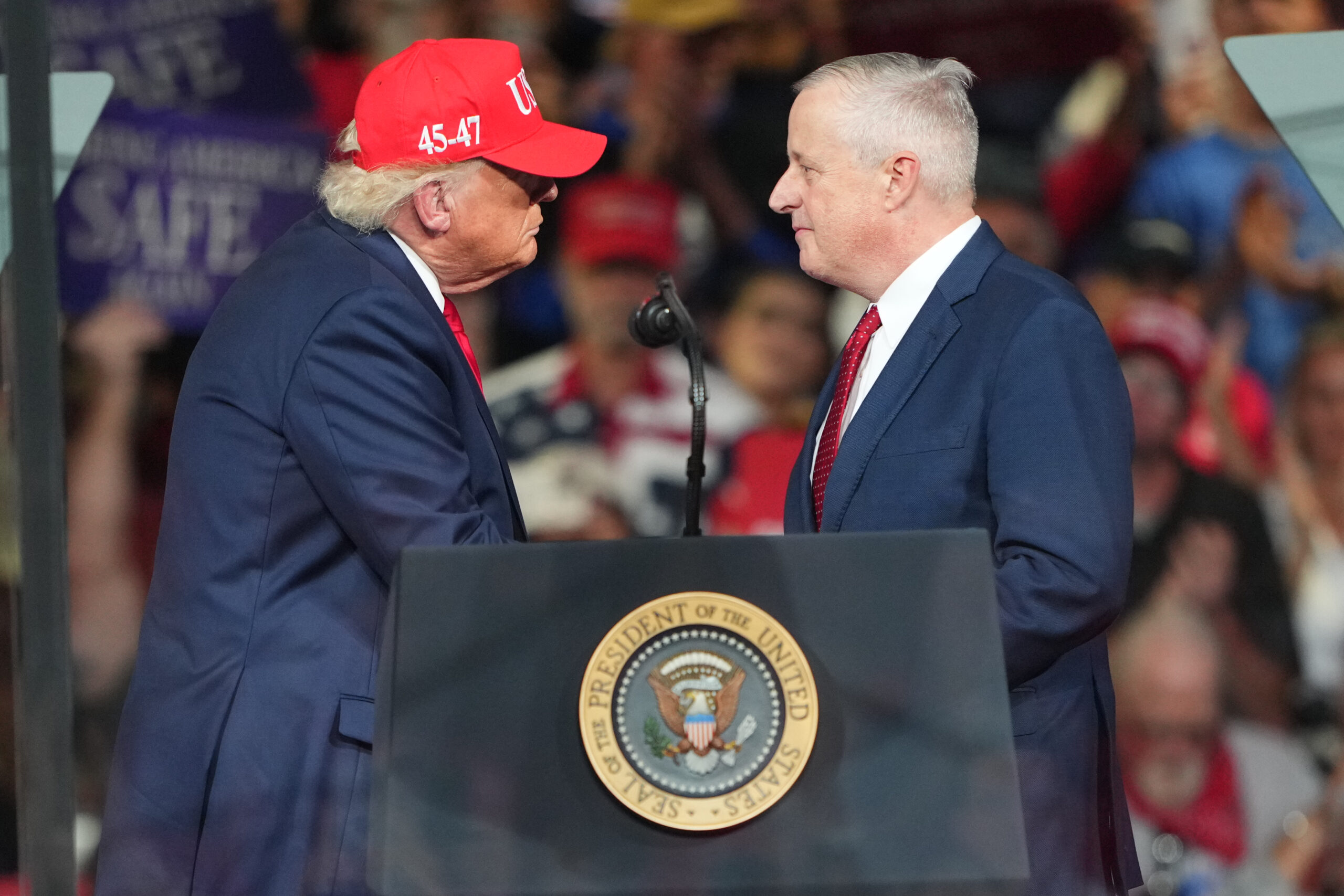
Trump Refers to Black Man From Racially Offensive 1988 Campaign Ad While Stumping in North CarolinaDuring a stop in North Carolina, Trump referenced one of the most controversial campaign advertisements that relied on racist tropes.
Postal Service Work To Comply With Trump’s Executive Order Is Rushed and Sloppy, a Whistleblower ContendsThe U.S. Postal Service is poised to launch a hastily built, error-riddled computer system that could jeopardize the process of mail voting.

Longtime Chatham County Educator Wins $10 Million Lottery PrizeThe North Carolina Education Lottery office revealed that Jean Johnson, who teaches in Chatham County, is the winner of a $10 million prize.
![]()
Theodore Nollert on North Carolina's Budget Corrections Bill and Its Process – On Air Today (August 26, 2026)Theodore Nollert — the directory of policy for Carolina Forward and a Chapel Hill Town Council member — joins 97.9 The Hill's Brighton McConnell on Wednesday, August 26.
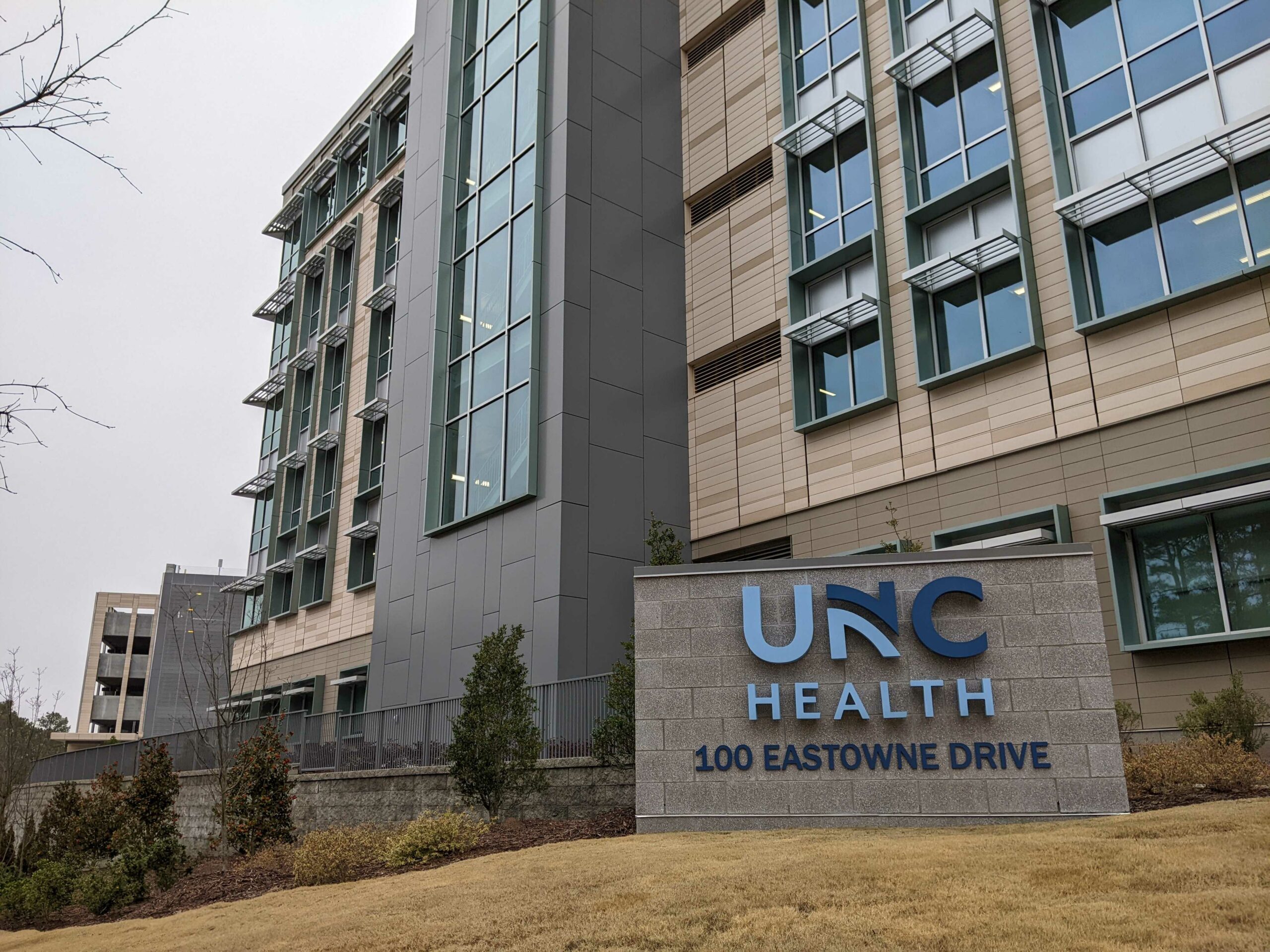
UNC Health Expands, Rebrands Venture Capital Efforts of Emerging TechThe statewide healthcare system announced Rex Health Ventures platform is now UNC Health Ventures and will use $125 million to invest in emerging health tech companies.
Corporate Tax Cuts, Prediction Market Leeway, and Underfunding Education: Why Orange County's Legislators Voted Against NC's BudgetAll three of Orange County’s state representatives voted against North Carolina's updated budget, citing issues with its contents and construction.

On the Porch: Dr. James Wood - Sports Around the WorldThis Week:
James Wood is currently Professor of Latin American and modern world history at North Carolina A&T State University. He is the author of The Society of Equality: Popular Republicanism and Democracy in Santiago de Chile, 1818-1851 and the co-editor of "Problems in Modern Latin American History: Sources and Interpretations", now in its fifth edition with Rowman and Littlefield. As a Fulbright scholar for Chile in 2016 he was a visiting professor at the Universidad Diego Portales in Santiago (where he observed Chilean student activism up close).
›