A Republican operative, who last year rounded up votes for a GOP candidate running for Congress, conducted an illegal and well-funded ballot-harvesting operation, North Carolina’s elections director said Monday.
The director’s testimony came on the first day of a hearing into whether mail-in ballots were tampered with a in race for the state’s 9th congressional district seat that saw Republican Mark Harris narrowly defeat Democrat Dan McCready.
The race wasn’t certified, leaving the country’s only congressional election without a declared winner. The elections board is expected to either declare a winner or order a new election after the hearing.
“The evidence that we will provide today will show that a coordinated, unlawful and substantially resourced absentee ballot scheme operated in the 2018 general election” in rural Bladen and Robeson counties, which are part of North Carolina’s 9th congressional district, state elections director Kim Strach said at the start of a state elections board hearing.
Harris held a slim lead over Democrat Dan McCready in unofficial results following November’s election, but the state elections board refused to certify the contest after allegations of potential ballot manipulation surfaced.
An investigation targeted a political operative working for Harris’ campaign named Leslie McCrae Dowless Jr. He paid local people he recruited $125 for every 50 mail-in ballots they collected in Bladen and Robeson counties and turned in to him, Strach said. That means they could have been altered before being counted.
The operation’s scope allowed Dowless to collect nearly $84,000 in consulting fees over five months leading into last year’s general election, said Strach, adding that in addition to reviewing financial and phone records investigators questioned 142 voters in the south-central North Carolina counties.
Dowless was hired to produce votes for Harris and Bladen County Sheriff Jim McVickers, but his methods last year included paying people to visit potential voters who had received absentee ballots and getting them to hand over those ballots, whether completed or not, Dowless worker Lisa Britt testified.
It’s illegal in North Carolina for anyone other than a guardian or close family member to handle a voter’s ballot.
Britt testified she sometimes completed unfinished ballots and handed them to Dowless, who kept them at his home and office for days or longer before they were turned in, said Britt, whose mother was formerly married to Dowless. While the congressional and sheriff’s races were almost always marked by voters who turned in unsealed ballots, Britt said she would fill in down-ballot local races — favoring Republicans — to prevent local elections board workers from suspecting Dowless’ activities.
While Dowless and Harris’ main campaign consultant were in constant contact, she didn’t have any indication Harris knew about the operation, Britt said.
“I think Mr. Harris was completely clueless as to what was going on,” Britt said.
Harris received 679 mail-in ballots in Bladen and Robeson counties, compared to 652 for McCready, Strach said. But McCready’s lawyers contend nearly 1,200 other mail-in ballots were sent to voters and never returned — enough to erase Harris’ 905-vote lead after Election Day.
Strach was expected to touch on the unreturned ballots later in the hearing lasting at least until Tuesday.
“It’s not just about those that have been returned. It’s potentially about those that haven’t been returned,” she said.
Dowless and Harris attended Monday’s hearing. McCready did not.
Four of the five members on the elections board — composed of three Democrats and two Republicans — would need to agree a new election is necessary.
If that doesn’t happen, McCready’s lawyers said state officials should send their findings to the Democrat-dominated U.S. House and let it decide whether Harris should be seated — arguing that the U.S. Constitution gives the House authority over the elections and qualifications of its members.
Related Stories
‹

Postal Service Work To Comply With Trump’s Executive Order Is Rushed and Sloppy, a Whistleblower ContendsThe U.S. Postal Service is poised to launch a hastily built, error-riddled computer system that could jeopardize the process of mail voting.

Longtime Chatham County Educator Wins $10 Million Lottery PrizeThe North Carolina Education Lottery office revealed that Jean Johnson, who teaches in Chatham County, is the winner of a $10 million prize.
![]()
Theodore Nollert on North Carolina's Budget Corrections Bill and Its Process – On Air Today (August 26, 2026)Theodore Nollert — the directory of policy for Carolina Forward and a Chapel Hill Town Council member — joins 97.9 The Hill's Brighton McConnell on Wednesday, August 26.
UNC Health Expands, Rebrands Venture Capital Efforts of Emerging TechThe statewide healthcare system announced Rex Health Ventures platform is now UNC Health Ventures and will use $125 million to invest in emerging health tech companies.
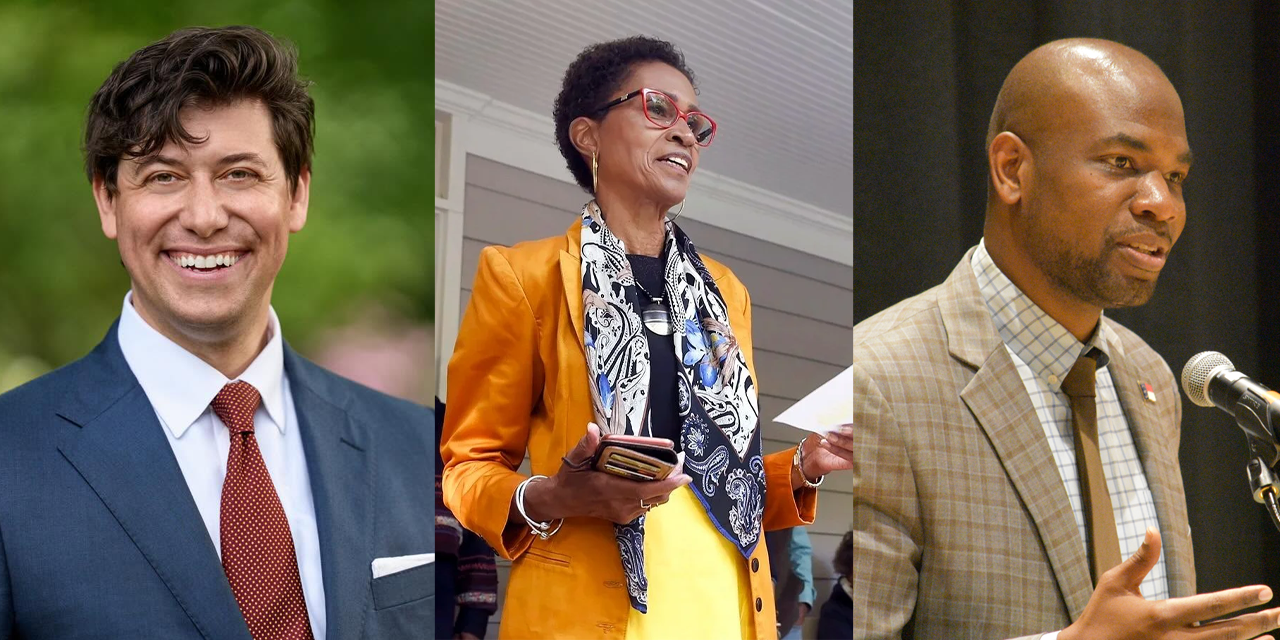
Corporate Tax Cuts, Prediction Market Leeway, and Underfunding Education: Why Orange County's Legislators Voted Against NC's BudgetAll three of Orange County’s state representatives voted against North Carolina's updated budget, citing issues with its contents and construction.

On the Porch: Dr. James Wood - Sports Around the WorldThis Week:
James Wood is currently Professor of Latin American and modern world history at North Carolina A&T State University. He is the author of The Society of Equality: Popular Republicanism and Democracy in Santiago de Chile, 1818-1851 and the co-editor of "Problems in Modern Latin American History: Sources and Interpretations", now in its fifth edition with Rowman and Littlefield. As a Fulbright scholar for Chile in 2016 he was a visiting professor at the Universidad Diego Portales in Santiago (where he observed Chilean student activism up close).
On the Porch: Bill Brown - Art and Science Merge at NCMAThis Week:
Bill Brown joined the North Carolina Museum of Art as a Conservation Intern in 1988. Thirty-two years later he retired from the Art Museum as Chief Conservator. He received his M.A. and Certificate of Advanced Studies in Conservation from State University College at Buffalo, NY in 1989. At the Museum, he established the Art + Science Initiative, a collaborative program with Duke University math and science departments. Bill has a passion for Italian Old Master Paintings of the 14th to 18th century. He works part-time as a conservator in private practice and provides conservation support for the Museum and Gallery collection of old master paintings at Bob Jones University in Greenville, SC . He enjoys retirement with his wife and young adult son.

On the Porch: Nora Gaskin - Conjuring Crime StoriesThis Week:
Author Nora Gaskin is a lifelong resident of the Durham-Chapel Hill area. Her latest is novel is "Lammie Loves Cubby". Nora has a bachelor’s degree in English with Honors in Creative Writing from UNC, and a Masters in English from the University of Washington in Seattle. She spent over 24 years as a stockbroker and financial advisor in the Durham office of a major investment firm. She retired in 2005 to focus on writing. She is the publisher at Lystra Books and Literary Services and the author of three novels and one nonfiction book. She lives and writes in Chatham County, inspired by her native landscape, her husband, and dogs. Her favorite word is "gratitude."
![]()
Therapy Smarts and Sen. Natalie Murdock on How HB696 Impacts Children and Families — On Air Today (June 15, 2026)Founder and CEO of Therapy Smarts Avani Shah and N.C. District 20 Sen. Natalie Murdock speak with 97.9 The Hill on Monday, June 15.
On the Porch: Steven Fenberg - What Funded America's Infrastructure?This Week:
Writer Steven Fenberg discovered Jesse Jones was reputedly the most powerful person in the nation next to President Franklin Roosevelt during the Great Depression and World War II. As chairman of the federal government’s Reconstruction Finance Corporation (RFC)—the nation’s indispensable infrastructure bank—Jones initiated and managed massive New Deal agencies that saved and expanded the nation’s economy and then shifted the RFC’s priority from domestic economics to global defense to fight and win WWII. Fenberg told this remarkable story as executive producer and co-writer of the Emmy Award winning documentary film “Brother, Can You Spare a Billion?” that was narrated by Walter Cronkite and broadcast nationally on PBS. Fenberg then wrote the biography “Unprecedented Power: Jesse Jones, Capitalism, and the Common Good.”
›