As we continue to follow the repercussions from the Dan River coal ash spill, one of the largest in U.S. history, the more than 80,000 OWASA users in our area can be thankful that the water they drink is not supplied by the Dan River or any of its estuaries.
Alan Rimer, Chair of the OWASA Board of Directors, explained that the non-profit agency serving Chapel Hill and Carrboro draws water from three local supplies: the Cane Creek Reservoir, University Lake and the Quarry Reservoir west of Carrboro.
“We are also fortunate in that we do not have any coal ash storage ponds in our watershed. The only power plant we have is the one on UNC’s campus, which handles their ash, or what ash they used to have, in a totally different manner. It was shipped off-site. So, we are protected all the way around,” Rimer said.
The spill happened on February 2 at a former Duke Energy plant in Eden, North Carolina, when millions of gallons of coal ash and waste water were leaked.
On Tuesday, the North Carolina Department of Environment and Natural Resources [DENR] alerted Duke Energy that it was considering changes to its waste water permits for coal ash ponds.
Rimer said that though the coal ash spill does not impact Orange County, there are still lessons to be learned.
In January, thousands of gallons of chemicals contaminated the water supply in Charleston, West Virginia.
Both of these situations, Rimer explained, show the necessity of maintaining properly-working storage outside of chemical tanks in the case of spills.
“If a municipality does not require chemicals that are stored, which could somehow how get into the watershed are properly protected, then you have got a real problem,” he said.
Chemical storage facilities in Orange County comply with federally-mandated regulations by the Environmental Protection Agency, which is enforced by DENR.
“While we do not have a coal ash pile, we do have chemicals that are not dissimilar in their potential to impact our watershed. We look after those very carefully in the county.”
In a WCHL commentary in January, Rimer explained that through the cooperation of local governments, the density and impact of development in our local watersheds are limited by some of the most stringent watershed zoning, streamside buffer requirements, and impervious surface limits in the state. These standards, he said, help to reduce the likelihood of contaminants from reaching area reservoirs.
Related Stories
‹
![]()
Duke Energy Agrees to Remove Coal Ash in North CarolinaThe state of North Carolina says it has secured an agreement with Duke Energy to excavate nearly 80 million tons of coal ash at six facilities. The Department of Environmental Quality said in a Thursday press release that it will be the largest coal ash cleanup in the nation’s history. It also settles various legal […]
![]()
Cleaning Up The Coal Ash: What's The Best Way?In the wake of the massive spill into the Dan River in February, environmental groups are demanding that the nation’s largest utility remove the more than 100 million tons of hazardous coal ash away from the sites.
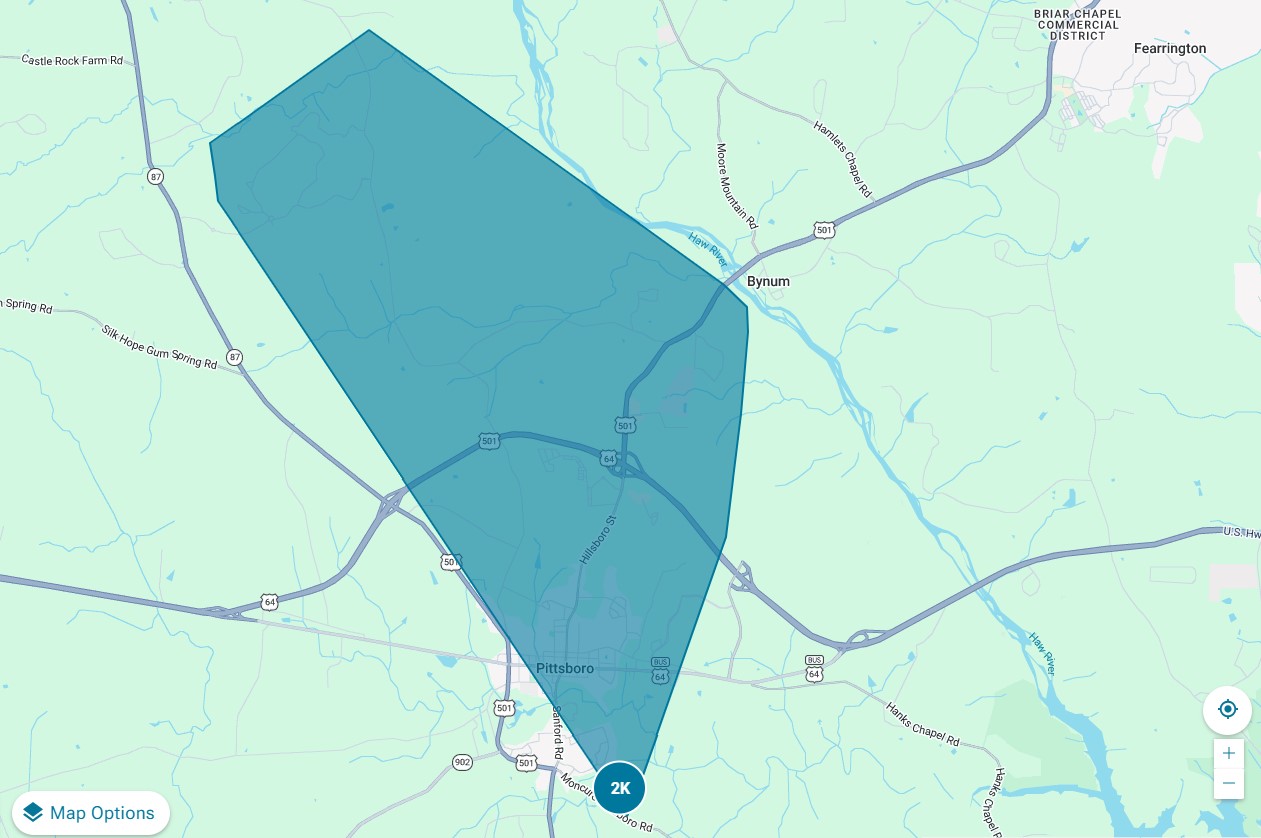
Pittsboro Power Outage Affects More than 2,500 Duke Energy CustomersUPDATE: As of 4:45 p.m., most Duke Energy customers’ power has been restored, according to its outage map. Hundreds of Pittsboro and northeast Chatham County residents are without power on Monday afternoon. Duke Energy sent out alerts to customers impacted by the outage and its Outage Map said as of 3:45 p.m., roughly 2,550 customers […]
![]()
The Morning News: Carrboro Murder Victim Identified, UNC Football Gets Season-Opening WinIn today's news: Carrboro police identify the victim and arrest a suspect in a homicide that took place Thursday.

How OWASA's Reclaimed Water System Extends the Lifespan of Local Water SourcesBuilt 17 years ago to improve the community’s drinking water resilience, it has saved the county billions of gallons of drinking water.
![]()
The Morning News: VinFast, Binkley Baptist, UNC BasketballIn today's news: local officials take action against the EV maker VinFast, and UNC men's basketball adds a preseason exhibition against USC.
![]()
The Morning News: 'Hello, Dolly!' at PlayMakers, Animal Cruelty Charges in Siler CityIn today's news: PlayMakers Repertory Company's Summer Youth Conservatory celebrates its 20th year with the musical "Hello, Dolly!"
![]()
The Morning News: Moving CHCCS Students, Previewing UNC Football, and Saving Mr. PicklesIn today's news: six-year-old cocker spaniel Mr. Pickles is reunited with some of the officers and vets who saved his life earlier this year.

More than 38,000 Gallons of Untreated Sewage Spills into Unnamed Hillsborough CreekThe Town of Hillsborough responded to a discharge of untreated sewage into an unnamed creek Monday morning. The spill, which the town estimated at 38,400 gallons, is believed to have begun Saturday and has since been stopped. According to a town release, the spill began due to a fence post stuck in an eight-inch sewer […]

Downtown Hillsborough, 1,000 Duke Energy Customers Lose Power in Friday ThunderstormMore than 1,000 Duke Energy customers in Hillsborough reported a power outage on Friday evening after a storm rolled through the region.
›