North Carolina’s state-run wholesale and retail liquor distribution agency poorly managed its outside warehouse contract for over a decade, leading to $11.3 million in additional costs, a state audit determined Thursday.
State Auditor Beth Wood’s office released a performance review of the Alcoholic Beverage Control Commission’s contract with a Maryland-based company paid to run ABC warehousing. The liquor comes from licensed distillers and is held before getting shipped to local ABC stores for sale. The company, LB&B Associates Inc., criticized the report’s findings later Thursday.
The audit’s authors found the commission — usually a three-member panel appointed by the governor and employing an administrator — failed by approving contract price increases for LB&B 13 years in a row that exceeded the maximum allowed in the contract. The contract’s annual increase is capped based on certain North Carolina wage and motor fuels price changes.
The contract cost was $8.3 million for the year ending June 30, 2017 and $77.7 million in total for the 13 years ending on that date, according to Wood’s office.
The commission didn’t explain why the price increases were approved repeatedly, “but the commission offered that it had little to no resources dedicated to monitoring the contract,” the report’s authors wrote. Still, they added, the commission “is responsible for the prudent use of public funds and for obtaining services at the lowest possible costs.”
The commission also violated state purchasing policy by approving contract renewals longer than three years without getting approval from a state contract office, the report said.
Wood’s office also found the state could have saved $2.1 million over seven years if unnecessary space at a Clayton warehouse wasn’t leased. It cited a 2017 report by LB&B that said only 23 percent of the space in Clayton is allocated for regularly listed liquor. No monitoring of the warehouse contract also meant the state missed $297,537 in fees over two years, the report said.
But in a separate written response from LB&B, the company said it was disappointed by the final report and contends Wood’s office got things wrong. LB&B said state law doesn’t require the ABC Commission to follow the state’s purchasing and contract procedures, and the contract price increases “were more than reasonable and in the best interests of the state.”
The scope and magnitude of the contract services has soared since 2004, with total sales growing during the period from $520 million to over $1 billion, LB&B said.
“To expect a contractor to perform these greatly increased services with no (or very limited) price increases over a 13-year period is unreasonable,” the statement said. It also said 80 percent of the Clayton warehouse “is at full utilization on a regular basis.”
In a response attached to the audit, current Commission Chairman A.D. “Zander” Guy said he accepted the state auditor’s findings but noted most of the time covered occurred before he was chairman. Guy said current and future contracts will be reviewed carefully and that measures will be put in place to strictly administer the LB&B contract, which expires in 2021. It will be put out for public bid in 2020, he wrote.
Bob Hamilton, the commission administrator since late 2014, worked his last official day last week, according to Agnes Stevens, named as his replacement. Stevens said Thursday she had no comment on Hamilton’s departure, citing personnel matters as confidential.
Related Stories
‹
With Russian Sanctions, NC Agencies Told to End ContractsWritten by GARY D. ROBERTSON North Carolina Gov. Roy Cooper on Monday ordered state offices under his control to terminate government contracts that benefit Russian businesses in response to its war against Ukraine. The directive also meant some liquor was getting removed from shelves at government-operated alcohol stores. Cooper’s executive order directs agencies and departments to review existing […]
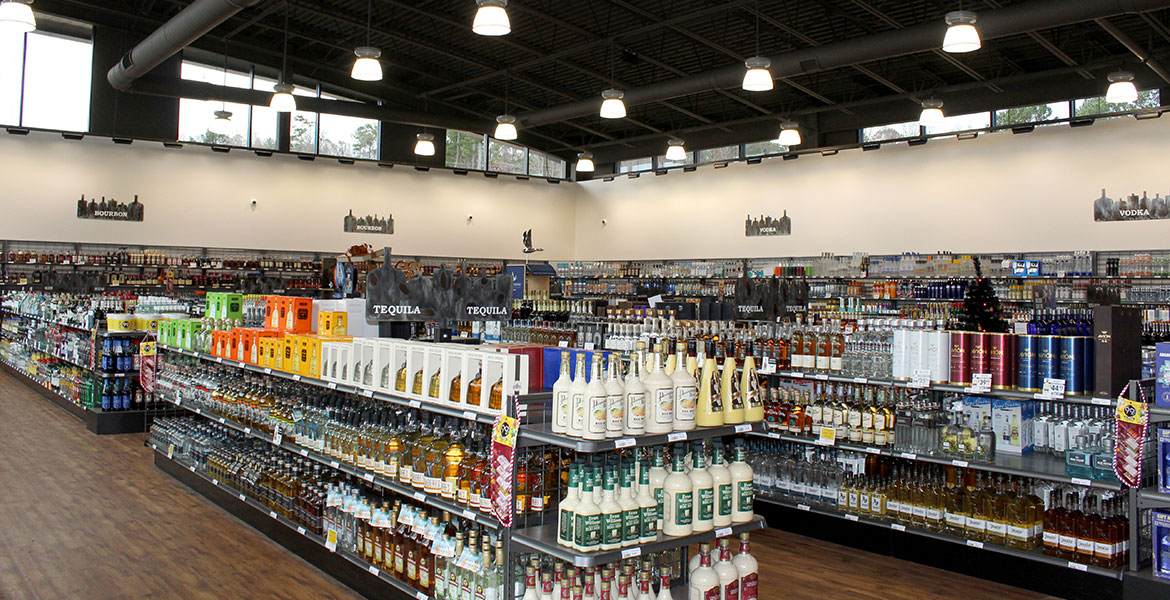
Liquor Shortages on NC Shelves Gets Legislature's AttentionPersistent liquor shortages on local Alcoholic Beverage Control store shelves prompted North Carolina lawmakers to question the current top state ABC official and the distribution contractor. But after a hearing Wednesday, the House ABC committee chairman leading the discussion remained frustrated, news outlets reported. “I’m probably more dissatisfied, or unsatisfied at the conclusion of this […]
Head of North Carolina Alcohol Board Resigns, Cites StressWritten by GARY D. ROBERTSON The chairman of the North Carolina Alcoholic Beverage Control Commission has resigned from the board, citing anxiety over the ongoing COVID-19 pandemic and the agency’s recent challenges with liquor distribution. A.D. “Zander” Guy submitted his resignation on Friday to Democratic Gov. Roy Cooper, who appointed him to the chairmanship in […]
Bar Owners To Postpone ABC Fees Under New Law Ok'd by CooperNorth Carolina Gov. Roy Cooper signed a bill on Thursday allowing bar owners whose businesses were limited or shut down by COVID-19 restrictions to defer permitting fees to the state’s Alcoholic Beverage Control Commission until they are allowed to fully resume operations. The new law that was introduced by House Republicans and unanimously approved by […]
![]()
NC ABC Launches New 'Talk It Out' Campaign Messages in Chapel HillThe North Carolina Alcohol Beverage Control Commission introduced a new campaign in Chapel Hill to combat underage drinking across the state. The Talk It Out campaign has been underway across the Tar Heel state since 2014 with an ambition to curb underage drinking in the state. And a new phase of the campaign was launched […]
![]()
ABC Commission Rejects Offer in Compromise with La ResThe board of the North Carolina Alcohol Beverage Control Commission has rejected a proposal with a Chapel Hill bar over punishment stemming from the triple-fatal wrong-way crash on I-85 in July. Ownership of La Res had agreed to an offer in compromise proposed by staff at the ABC Commission which included a $5,000 fine or […]
Trump Refers to Black Man From Racially Offensive 1988 Campaign Ad While Stumping in North CarolinaDuring a stop in North Carolina, Trump referenced one of the most controversial campaign advertisements that relied on racist tropes.
Postal Service Work To Comply With Trump’s Executive Order Is Rushed and Sloppy, a Whistleblower ContendsThe U.S. Postal Service is poised to launch a hastily built, error-riddled computer system that could jeopardize the process of mail voting.

Longtime Chatham County Educator Wins $10 Million Lottery PrizeThe North Carolina Education Lottery office revealed that Jean Johnson, who teaches in Chatham County, is the winner of a $10 million prize.
![]()
Theodore Nollert on North Carolina's Budget Corrections Bill and Its Process – On Air Today (August 26, 2026)Theodore Nollert — the directory of policy for Carolina Forward and a Chapel Hill Town Council member — joins 97.9 The Hill's Brighton McConnell on Wednesday, August 26.
›