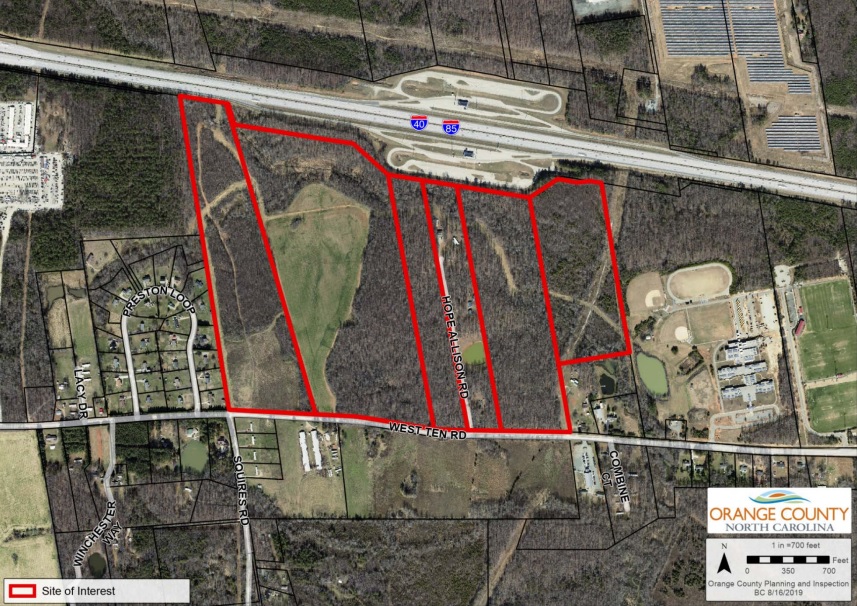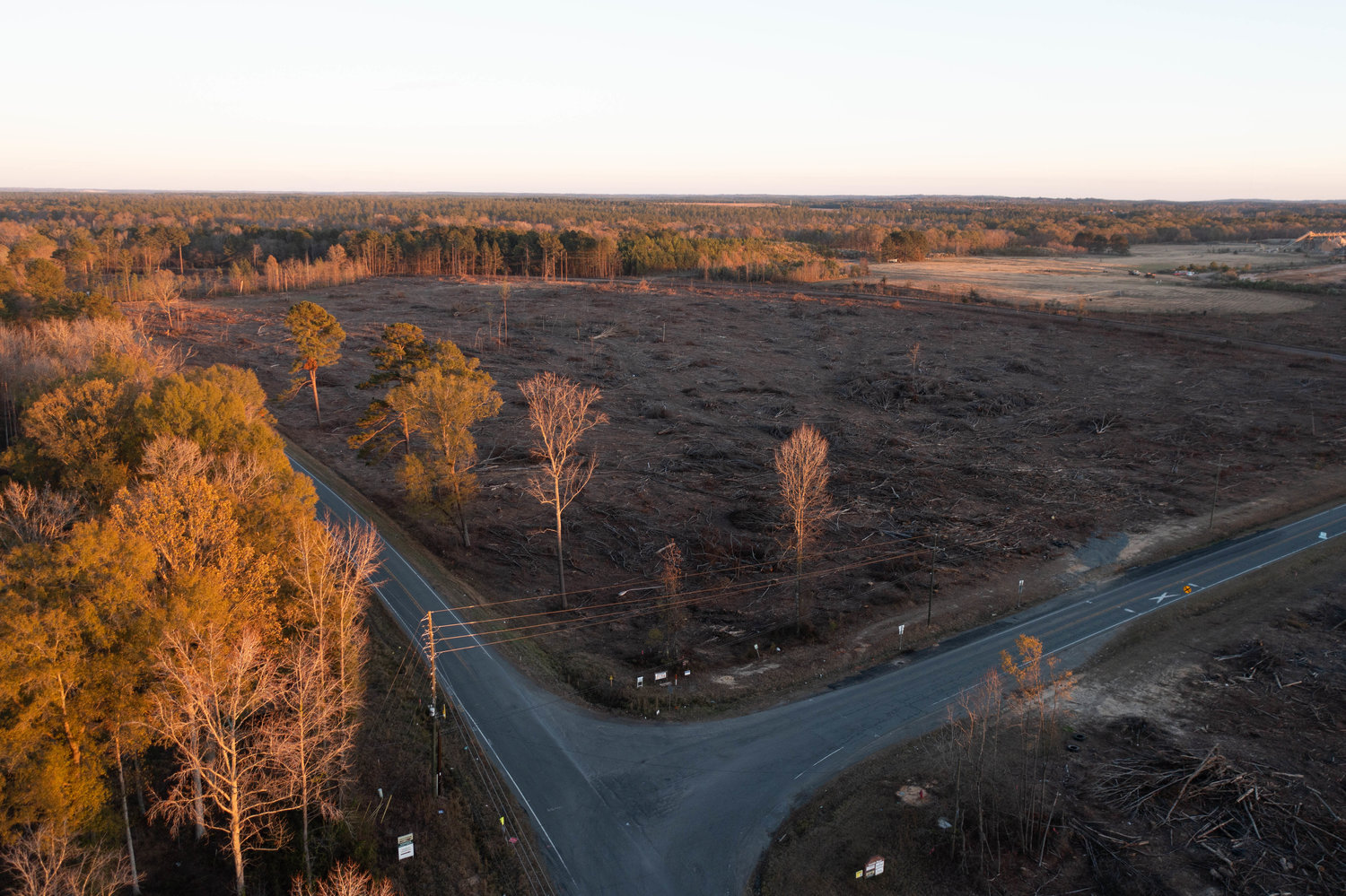

More than four years after the initial announcement of plans for Vietnamese electric vehicle manufacturer VinFast to establish a U.S. base in Chatham County, little progress on construction of the plant has been made.
Now, North Carolina is suing the company to take the land back and see what other economic development bids could use the site.
N.C. Attorney General Jeff Jackson filed a lawsuit on behalf of the state Department of Commerce in May, alleging VinFast broke its contractual agreements of developing the 1,800 acres in southeast Chatham County to create its electric vehicle and battery plant. The company — which is part of the privately-owned conglomerate VinGroup, one of Vietnam’s largest businesses — earned hundreds of millions of dollars from the state and local governments based on construction and hiring benchmarks. North Carolina leaders said since those have not been reached, litigation is the best way forward to reclaim the land.
“VinFast agreed to build a factory and create jobs for North Carolinians – it didn’t do either,” Jackson said in a release from his office. “When North Carolina makes a deal, we build in protection for taxpayers. VinFast broke the deal, so we’re using that protection to find a project for this site that will create jobs.”
“North Carolina will always compete aggressively for jobs and investment, but we also protect taxpayers by requiring the company to hold up its end of the deal,” added Governor Josh Stein. “VinFast has not fulfilled its commitments. Today’s action is about protecting taxpayers and getting the Chatham County mega-site back on the market to support future good-paying manufacturing jobs.”
VinFast, meanwhile, filed updated plans with Chatham County for the site earlier this year, slashing the projected size of the plant and cutting thousands of jobs off its initial estimates. In a statement shared following North Carolina’s filing, the company cited changing U.S. policies around electric vehicles having impacted the project timeline and requiring more time to craft plans.
How did we get here? Read the timeline below of highlights around the VinFast, North Carolina and Chatham County partnership that has now turned sour.
December 2021: Initially labeled as “Project Blue,” Chatham County economic development staff host VinFast representatives at the Triangle Innovation Point, previously called the Moncure megasite.
February 2022: After Hyundai choses a Georgia site for its new manufacturing plant, VinFast – which had also been looking at that site – re-engages discussions with North Carolina leaders about the Moncure property. Emails later obtained by the News & Observer indicate North Carolina’s Commerce Department staff hurriedly put together the deal after VinFast gave the state a condensed timeline to make a pitch.
March 2022: VinFast and North Carolina announce economic development deal for an electric vehicle and battery manufacturing plant at the Chatham County property. In what appears to be a landmark win for the state in the car manufacturing industry, VinFast commits to investing $4 billion into the nearly 1,800-acre site and providing 7,500 jobs. As part of incentives to the deal, North Carolina’s Department of Commerce helps provide job development grants to provide $316 million in reimbursement across 32 years if VinFast hits its job creation and investment benchmarks. Chatham County also pledges up to $400 million in incentives for job creation. More timely incentives from the state also pledge to reimburse the Vietnamese company for site preparation expenses (up to $125 million) and public road improvements ($200 million).
July 2022: After its announcement, VinFast hosts several North Carolina news outlets at its factory in Hanoi to display its manufacturing process and let people test-drive their vehicles. Dozens of journalists, auto reviewers and influencers are flown out on an extravagant trip to Vietnam, flaunting the company’s near-readiness for production of U.S. models and influence thanks to other offshoots of the VinGroup. Many in attendance say the experience, including the test drive, felt high on style and short on substance: an unfinished product, as described by Jalopnik’s Kevin Williams.

A pre-production model of the VinFast VF-8 is displayed at VinPearl Resort in Nha Trang, Vietnam during a media tour in 2022. (Photo via Chatham News + Record.)
November 2022: The North Carolina Department of Commerce signs a purchase option agreement with VinFast. The measure gives the state government the right to buy back parts of — or all of — the site if the manufacturer misses its construction hiring and building deadlines. That includes a Jan. 1, 2024 deadline for starting any vertical construction and a July 1, 2026 benchmark for when the plant is meant to begin producing parts and cars.
March 2023: VinFast announces the first delays in its manufacturing plant, adjusting the timeline to estimate the first vehicles will be produced by the Chatham County facility in 2025. While some of the construction site has been cleared, Chatham County officials tell the Chatham News + Record that they are awaiting some permits, including environmental, to be delivered from the EV company before physical infrastructure can be built.
May 2023: Reviews of VinFast cars from a sponsored event in California are…quite poor. The signature VF-8 models that arrive to the U.S. feature similar issues to the ones driven by journalists in Vietnam — including slow speeds, poor suspension control and sticky steering. Those problems paired with the cars’ initial price point, more than $50,000, forecast further challenges for the electric vehicles becoming a genuine competitor in the U.S. market. But both VinFast and the Chatham County government share their confidence in the product and Moncure manufacturing facility getting back on track.
July 2023: A groundbreaking ceremony held at Chatham County site features North Carolina Gov. Roy Cooper and VinFast CEO Le Thi Thu Thuy. Cooper says he had “a great ride” in VinFast’s VF-8. The event comes shortly after the EV manufacturer submits development plans to Chatham County for roughly 3 million square feet of facility space.
October 2023: Chatham County adopts a small area plan for the Moncure area, including around the Triangle Innovation Point site and VinFast site, which was required by the EV manufacturer’s development proposal. The plan studied the rural areas around the site to best gauge possible impacts, gathered input from residents on their vision for the area, and charted short-term steps to implement that vision.
April 2024: Hunterbrook Media publishes an exposé on the lack of market for VinFast vehicles, leading the company and partners to keep inventory sitting in fields and shipping ports. The independent outlet uses VinFast’s filings to reveal more than 90% of the car company’s sales revenue had come from deals with the VinGroup owner’s other businesses, with Hunterbrook’s research suggesting VinFast’s sales were significantly lagging behind its production. The story also shares VinGroup’s reporting of negative cashflow and efforts to take on more than $1.6 million in debt during 2023. During the reporting process, Hunterbrook shares its staff saw little to no active construction work at the Chatham County site.
May 2024: North Carolina and VinFast leaders meet three separate times, during which VinFast admits it will need more time on the manufacturing plant. In addition to requesting an extension for having the first day of operations be July 1, 2028, it also asks for the required job creation benchmark to be lowered from 6,000 to 3,875 and projects total employment numbers to not be reached until 2035 — eight years later than its initial plan. The state claims it does not agree to any contractual timeline changes during these discussions.
June 28, 2024: As revealed in the state’s lawsuit, the general contractor Clayco used by VinFast at the Moncure site issues a formal notice terminating its contract with the Vietnamese company. It cites extensive delays from the business and “continued failure to provide the required proof of financing” needed to finish the project, which was roughly 50% finished in the design process.
August 1 2024: VinFast sends a letter to the North Carolina government seeking formal recognition that it was not in default with its agreement, saying it is planning to not have vehicle production begin until 2028 and claiming no modifications to its incentives deal would be needed to accommodate the two-year delay. Two weeks later, state officials write back saying the government would not waive any defaults in the partnership and reiterating they did not consent to any change in the timeline of vehicle production.
December 10, 2024: The local building permit for the construction site expires. Chatham County’s assessor says no new construction work had been done by VinFast’s contractors for 12 consecutive months, leading local and state officials to claim that VinFast has abandoned the site. VinFast later says it worked on erosion control and maintenance, meaning the site was not fully abandoned.
July 2025: President Donald Trump’s administration crafts and approves the “One Big Beautiful Bill Act,” which includes the elimination of the U.S. government’s $7,500 tax credit granted to taxpayers who buy electric vehicles. The credit ultimately expires on Sept. 30, further cooling the market on electric vehicles.
December 11, 2025: State leaders meet with VinFast’s leadership group and representation to share their doubt of the manufacturing plant being ready for its July 1, 2026 deadline. The North Carolina officials discuss exercising the option to buy back the land, but also express “interest in a collaborative approach and a willingness to coordinate with VinFast on any public statements surrounding the State’s purchase of the Site,” according to the Superior Court lawsuit. VinFast rejects the offer and again says it plans to build a facility on the Moncure site by the deadline, but provides no details in the meeting of how they plan to do so.
January 6, 2026: North Carolina Attorney General Jeff Jackson sends VinFast a letter on behalf of the Department of Commerce, which alerts the company of its defaults on benchmarks as laid out in their economic development agreement and the state’s option to purchase back the property.
March 2026: VinFast submits updated requests for permits to Chatham County’s government, scaling back the size of the project and reducing its estimated jobs to 1,400. The news comes around the same time as the company’s quarterly earnings call, during which VinFast reported losing $3.9 billion during the 2025 fiscal year.
May 21, 2026: Jackson files a lawsuit against VinFast Manufacturing US LLC to formally begin the process of acquiring the Moncure site by North Carolina’s Department of Commerce. The 193-page filing alleges the company breached its agreements with the state government to meet deadlines for hiring, construction, and operations. “VinFast has failed to take any concrete action that shows it can and will fulfill its obligations to the State,” says the state’s lawsuit. “VinFast abandoned work on the Site for over a year. Not only did the Company fail to create jobs — it made zero progress towards the construction of any buildings or structures.”
July 24, 2026: Attorneys for both the state government and VinFast file an extension of time, setting a September 2 deadline for VinFast to respond to the amended complaint by the attorney general’s office.
July 27, 2026: The Chatham County Board of Commissioners approve the termination of the county’s economic development agreement with VinFast Manufacturing US LLC, citing the failure to hit key benchmarks needed to earn the $400 million in future incentives.
Featured photo by Peyton Sickles/Chatham News + Record.
Chapelboro.com does not charge subscription fees, and you can directly support our efforts in local journalism here. Want more of what you see on Chapelboro? Let us bring free local news and community information to you by signing up for our newsletter.