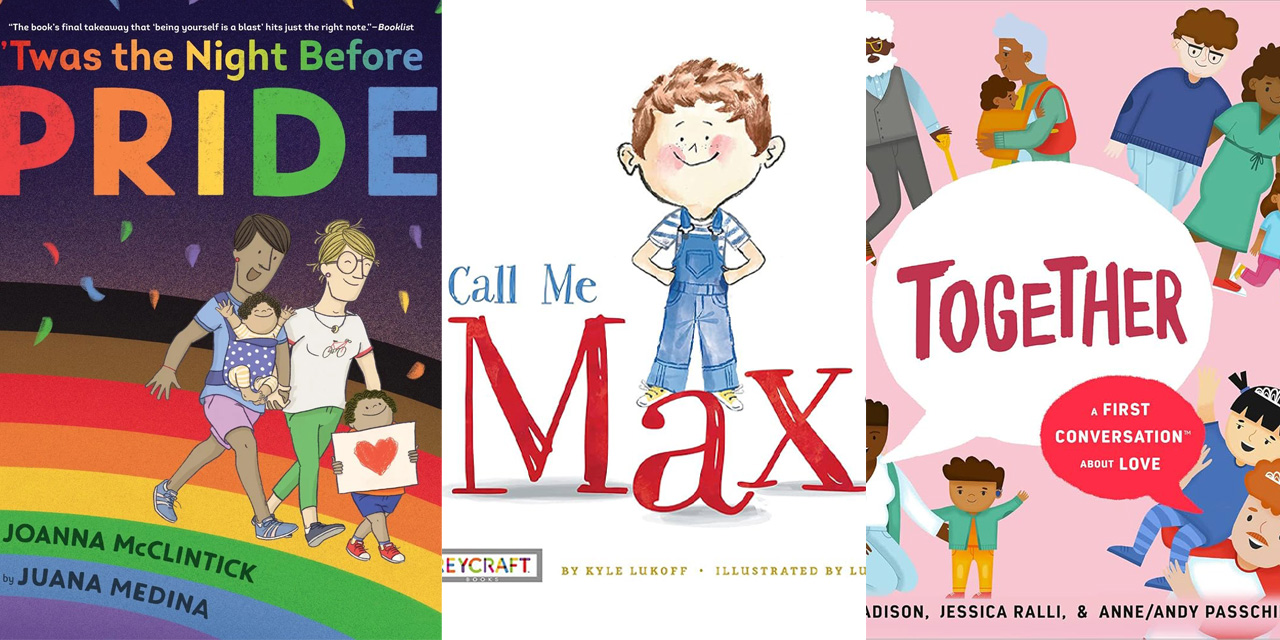
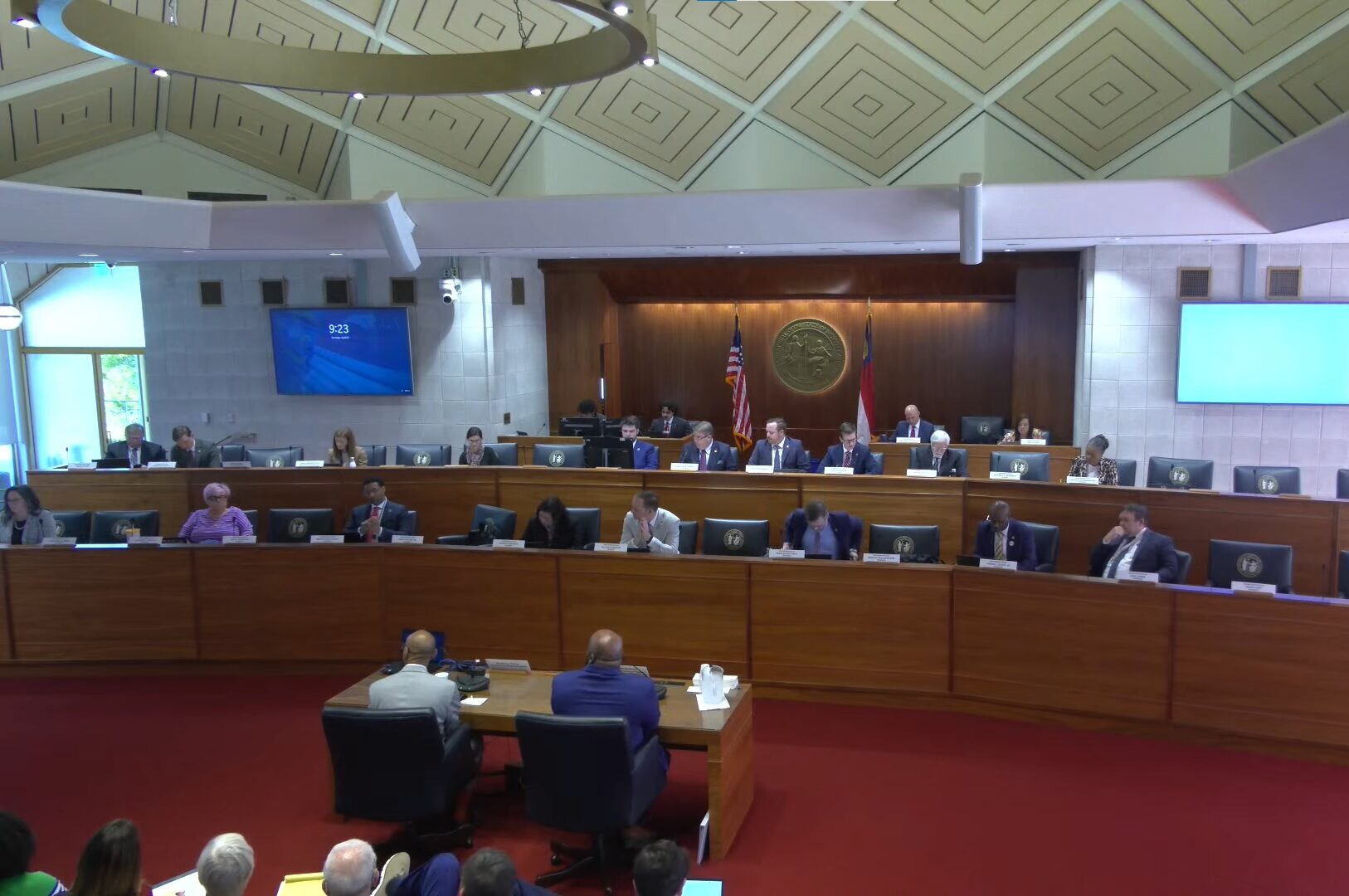
The North Carolina House of Representatives Oversight Committee pushed Chapel Hill-Carrboro City Schools leaders about the local district’s inclusion of LGBTQ+ related books in its school libraries and compliance with the state’s “Parents’ Bill of Rights” law on Thursday, with the committee’s co-chair filing legislation at the end to establish enforcement efforts and further restrictions of reading materials.
CHCCS Superintendent Rodney Trice and Director of Digital Services and Libraries Al McArthur fielded questions and accusations alike from lawmakers during the 154-minute hearing called over the committee’s review of 63 books deemed “in direct conflict” with the 2023 law also known as Senate Bill 49. The meeting ended with House Committee co-chair Rep. Brenden Jones introducing legislation which aims to further define and expand the “Parents’ Bill of Rights” by clarifying that library materials count as curriculum and creating an enforcement method that could result in the General Assembly withholding its funding to public school districts.
Jones (R – Columbus) said in his opening and closing statements the law “is not unclear” and the committee’s job is “not to re-interpret the law,” but much of the tension between legislators — many of them Republican lawmakers — and school district leaders stemmed from differing interpretations of compliance. CHCCS maintained its policies and application of S.B. 49 followed what is outlined in the law regarding no instruction of gender identity, sexual orientation or sexual activity in its curriculum and what rights parents have in influencing their children’s education. Legislators shared their disagreement and questioned the approaches of the Chapel Hill-Carrboro district — pointing to the “legislative intent” of the measure, but often failing to cite the specific portions or definitions of the “Parents’ Bill of Rights” that would determine a clear violation.
One example was when the group discussed the library books in question. Committee Co-chair Rep. Harry Warren (R – Rowan) read the section aloud about “curriculum” including “the standard course of study and support materials, locally developed curriculum, supplemental instruction, and textbooks and other supplementary materials.” School libraries are mentioned just once in the law, as one of the “parents’ legal rights” is to review “all available records of materials their child has borrowed from a school library.”
McArthur detailed how CHCCS has a system in place to allow parents to do that and to flag specific books if they do not want their child to check them out. He also pointed out how the school district makes its library catalogues available on the district website, which links to the opt-out form for parents or guardians to use. McArthur said, beyond that, only one formal complaint has ever been lodged against a book available in any of CHCCS’ school libraries.
“Each school librarian uses book reviews,” he said when asked how books are chosen for libraries. “They also attend and are a part of various national and local organizations, specifically for librarians. They consult amongst themselves…and they speak with families, students and teachers to ensure that what is included in our school libraries represents a school community.
“In talking with other library directors across the state,” McArthur added, “every book in a school library is not inherently part of a school’s curriculum or being used instructionally.”
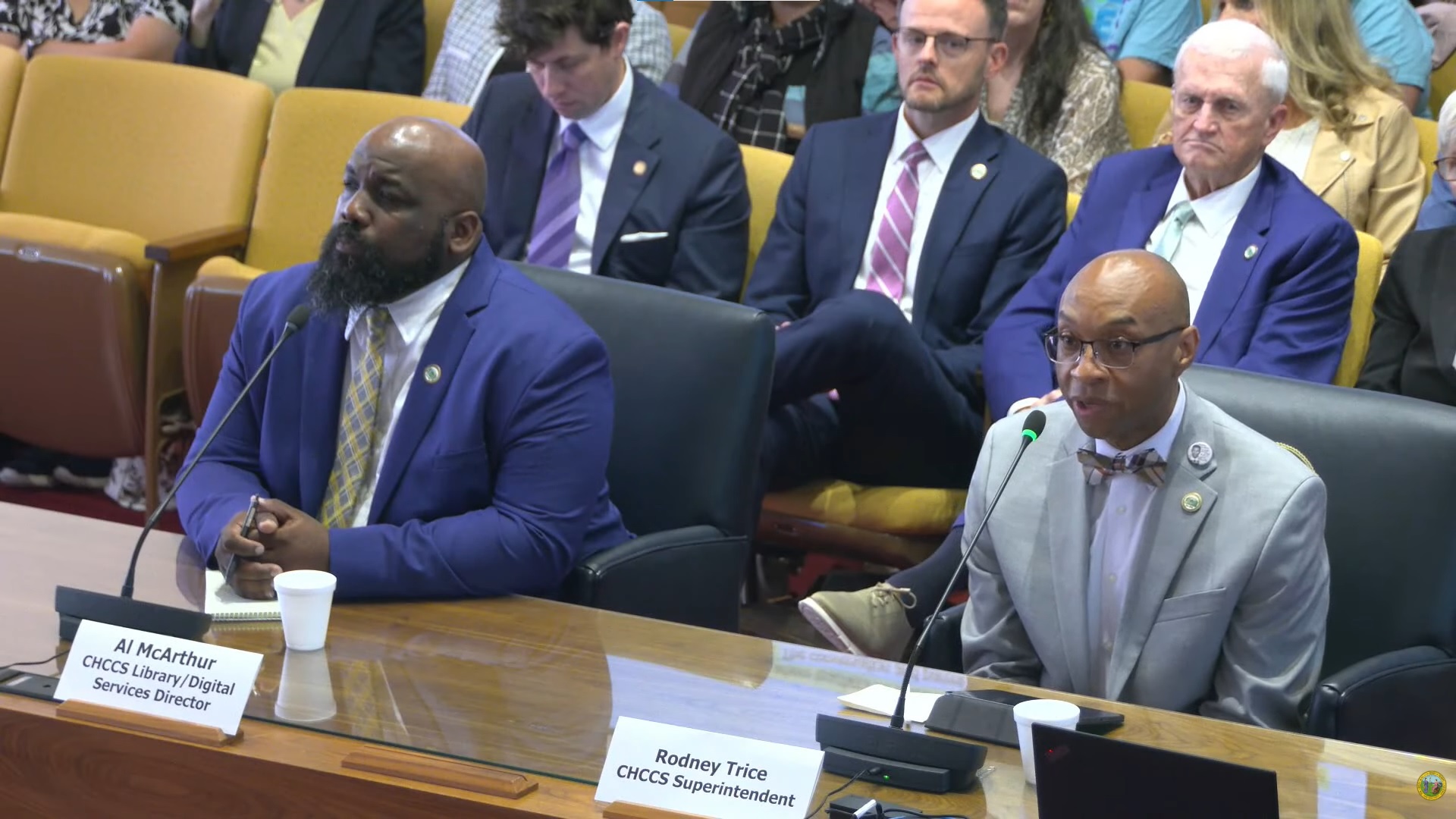
CHCCS Superintendent Rodney Trice (seated, right) and Director of Digital Services and Libraries Al McArthur testify in Thursday’s committee hearing. (Photo via the North Carolina General Assembly livestream.)
Rep. Heather Rhyne (R – Lincoln) asked Trice why he believed the books highlighted by the Oversight Committee are important to offer in the school system. Trice responded by saying the Chapel Hill-Carrboro community has a diverse array of religious, cultural and ideological backgrounds and said his administration supports trying to reflect the district’s residents. Rhyne then brought up “The Power of Reading,” which Trice cited in his written testimonial for the committee, and studies that mentioned the benefits comic books and different alternative styles of books provide to childhood literacy.
“So, why would you choose the books in question,” the representative asked, “over the ones in the study for free, voluntary reading? What makes those better named in the study you cited?”
“My response to that is,” Trice said, “it’s probably not ‘either/or.’ We would want all of those books. We would want the comic books, and we would want the books that reflect the diversity of our community.”
One of the more charged moments came when Rep. Mike Schietzelt (R – Wake) said he felt the hearing and CHCCS’ responses were like “beating a dead horse,” and claimed the district’s actions are putting the onus on lawmakers to not only assess and enforce the law, but make the delineation on library materials itself.
“This whole distinction we’re trying to make is completely false,” Shietzelt said, raising his voice during an exchange with Trice. “You can’t do that — you can’t make that distinction between materials that are intended to serve student interests and materials that serve the curriculum. And that’s probably one of the reasons [why] you don’t make that distinction…and I don’t see why you expect the law to make that distinction too. That is silly on its face.”
Moments before those comments, Trice echoed a sentiment first shared by Rep. Amos Quick III (D – Guilford) in the hearing: the wording of the law itself may contribute to the problem.
“When laws are being considered, asking for the advice and input of educators could be helpful,” the CHCCS superintendent said. “It’s not an issue within schools, in terms of what library books represent vs. curriculum that’s adopted for science or social studies. There are textbooks and other resources available for classroom instruction. There are other books, such as library books, that are for independent reading. But if I’m studying rocks in a classroom and there are books in the library on rocks, it can certainly be used as a resource. But we also have books about aliens and magical kingdoms, that doesn’t mean we’re teaching E.T. or something like that in the classroom.”
With its explicit exclusion of any gender identity and sexual orientation from curriculum for K-4 students — something CHCCS maintains has never been part of its classroom instruction for elementary schoolers — many opponents of S.B. 49 see the measure as an attack on the LGBTQ+ community and an attempt to censor materials depicting queer stories. Rep. Eric Ager (D – Buncombe) used his time to read a passage of one book on the list highlighted by the Oversight Committee, called “Joyful Song,” which he said got flagged solely because it depicts a family with two mothers.
“I don’t know what we’re doing here,” Ager said with a dry laugh. “Because if the majority [party] thinks there’s something vulgar or not okay in this book, then why don’t they just be clear about their desire to go back in history [and] change the law? We talk about being lawful here, and same-sex marriages are lawful and so we ought to talk about them as a community, and that doesn’t mean we shouldn’t talk about them at any age. If it’s lawful, it’s lawful – and that’s what we’re talking about here.”
A good portion of committee members’ questions were based on CHCCS’ removal of language and pages on its equity webpage last October, with Republican lawmakers asking and then claiming the changes indicated there were violations to S.B. 49 on the pages. Trice, meanwhile, said not only is the district’s reading of the law that S.B. 49 lacks anything about online pages, but none of the pages or their content was unlawful. The superintendent said the removed pages simply affirmed the district’s values around equity and LGBTQ, pointing to how they were public for people to access before — while admitting that the district dealt internally with an employee who made unsolicited changes to the webpage the day after receiving a letter from the House Oversight Committee in Oct. 2025.
“I don’t understand the motive,” Trice said, while also saying he doesn’t believe it sent a particular message to the community. “What I know is it was not the right thing to do. We’ve dealt with that in our school district.”
To close the meeting, Jones unveiled the CHCCS Act — short for “the Curriculum, Honesty, Compliance, and Child Safety Act,” but an allusion to the school district’s own abbreviation. To address some of CHCCS leaders’ testimony, the new bill clarifies books in elementary school libraries as subject to the “Parents’ Bill of Rights” and considered curriculum. Jones submitted the bill, which he aims to be enacted before July 1, to the house clerk before the hearing had finished.
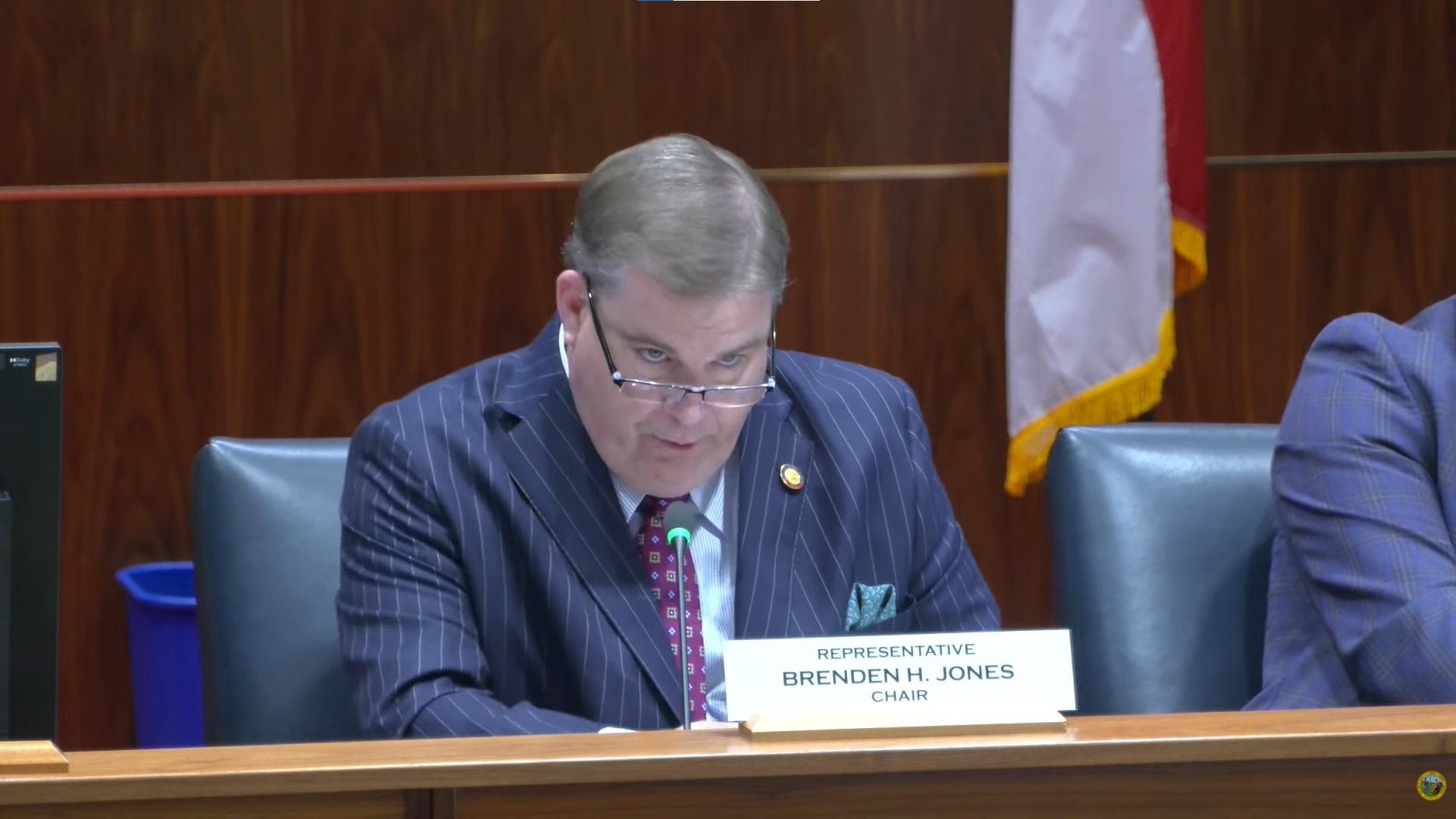
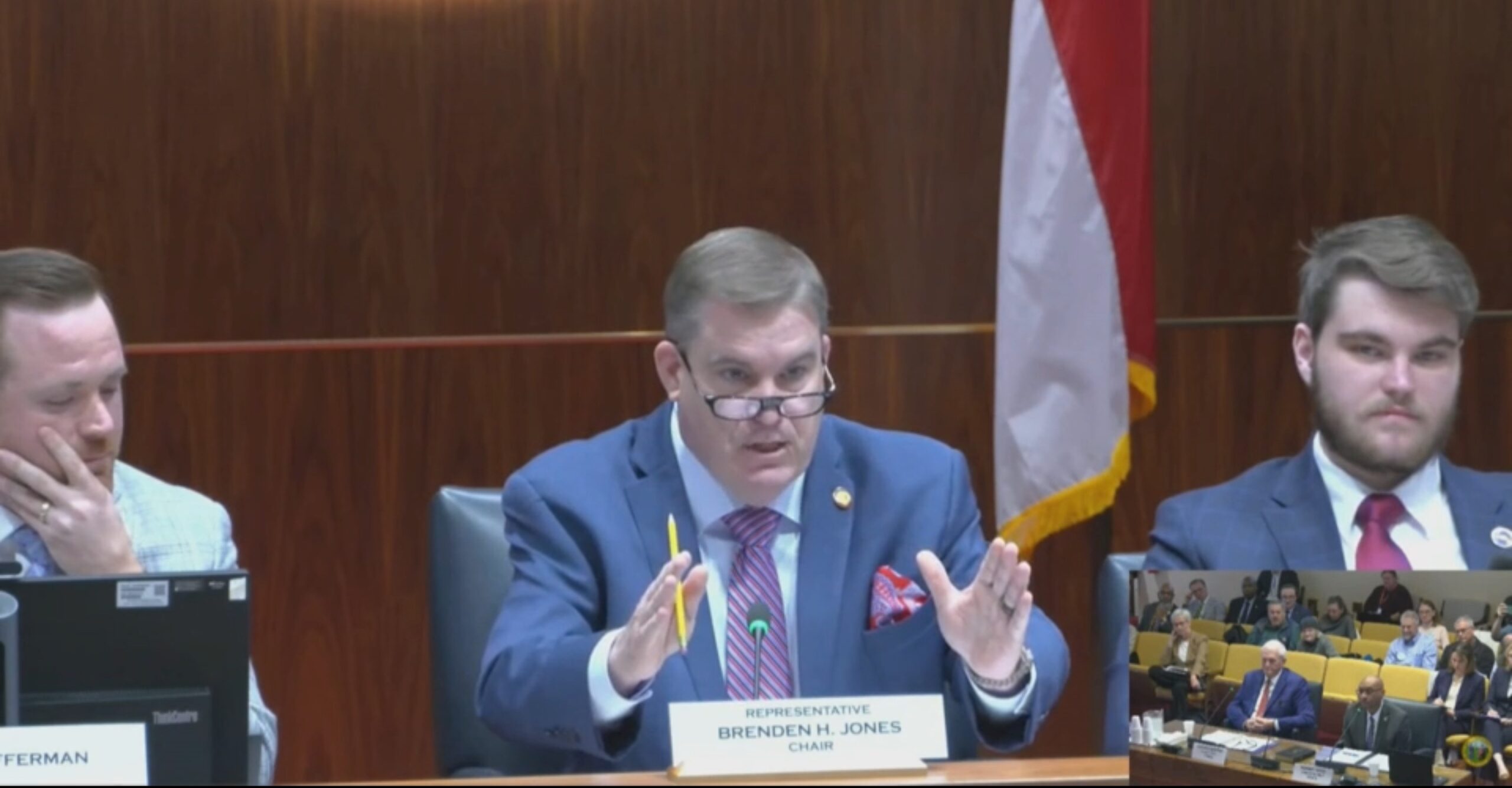
Oversight Committee Co-chair and Rep. Brenden Jones (R – Columbus) speaks during Thursday’s committee hearing. (Photo via the North Carolina General Assembly livestream.)
With the committee co-chair promising “real, enforceable consequences with real financial penalties,” the proposal would also allow the state auditor’s office to conduct reviews of school districts and for the state government to withhold funding or levy administrative fines to those determined to violate S.B. 49. Another section details how parents can file lawsuits for civil damages against school districts in violation of the “Parents’ Bill of Rights” for up to $5,000 each infraction.
“When a district chooses not to follow the law, it should not expect to continue receiving taxpayer dollars without accountability,” Jones said. “Public funds come with public obligations… and when public obligations are ignored, they should come with consequences — real consequences.”
House District 56 Rep. Allen Buansi (D – Orange), who represents Chapel Hill and Carrboro, shared a statement with Chapelboro following the hearing, saying he believes North Carolinians “need and deserve better” from legislators than holding a hearing over children’s library books.
“It’s extremely shameful that today, in a committee meeting, valuable taxpayer money and resources were spent attacking a public school system and engaging in divisive culture wars, instead of funding public schools for the sake of the children,” Buansi wrote. “Our #1 job as a General Assembly is to pass a state budget that is responsive to the people’s needs. The prices of gas, groceries and housing are skyrocketing with no relief in sight. We need to be focused on the task of securing healthcare for folks, raising salaries for our state employees and cost of living adjustments for our state retired employees and driving down costs for everyday North Carolinians.”
Chapel Hill-Carrboro City Schools responded by Chapelboro’s request for comment on Thursday’s hearing and the resulting proposed bill by sharing the testimony entered by both Trice and McArthur. Prior coverage of CHCCS’ testimony on compliance with the “Parents’ Bill of Rights” from Dec. 2025 can be read here.
Featured photo via the North Carolina General Assembly livestream.
Chapelboro.com does not charge subscription fees, and you can directly support our efforts in local journalism here. Want more of what you see on Chapelboro? Let us bring free local news and community information to you by signing up for our newsletter.