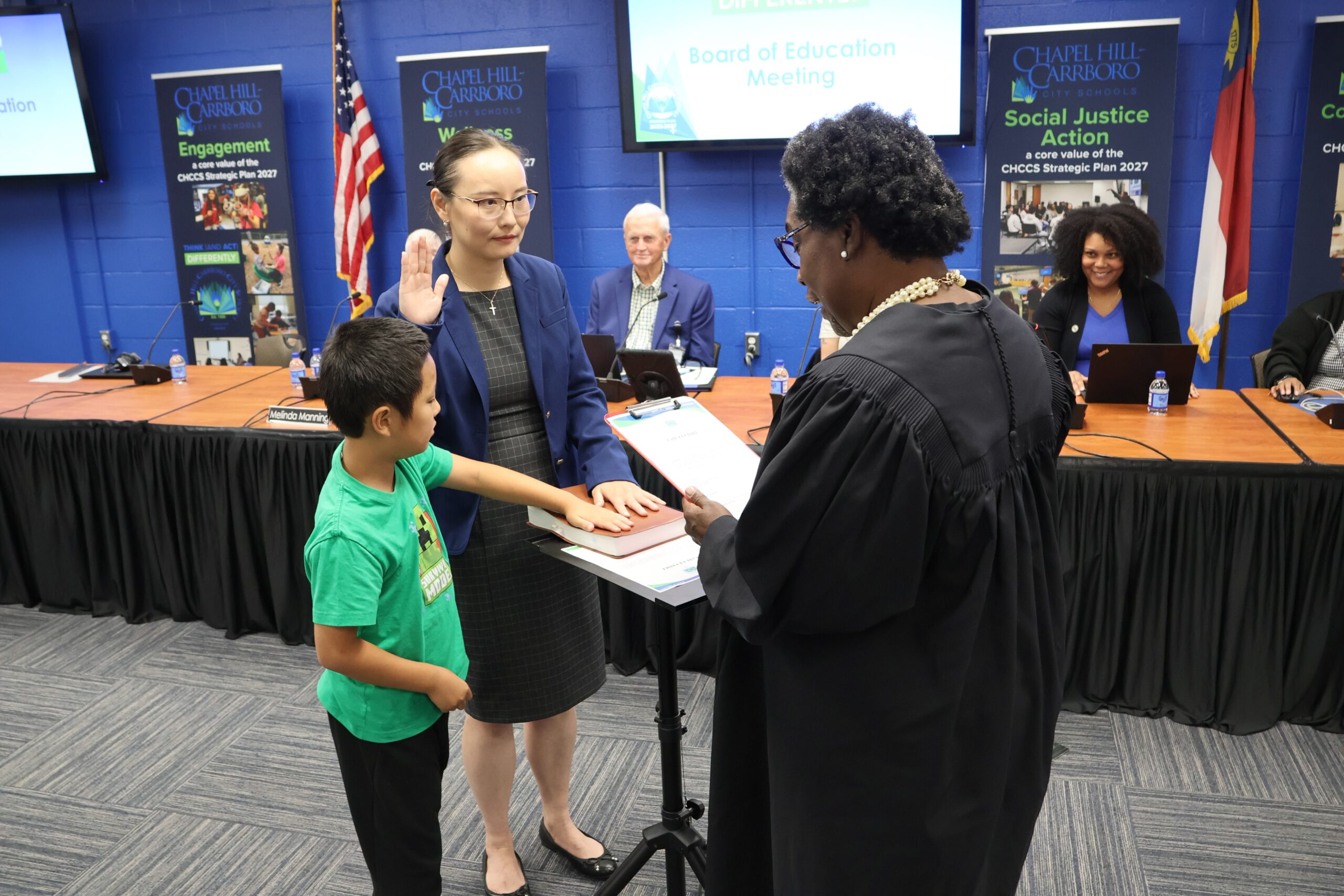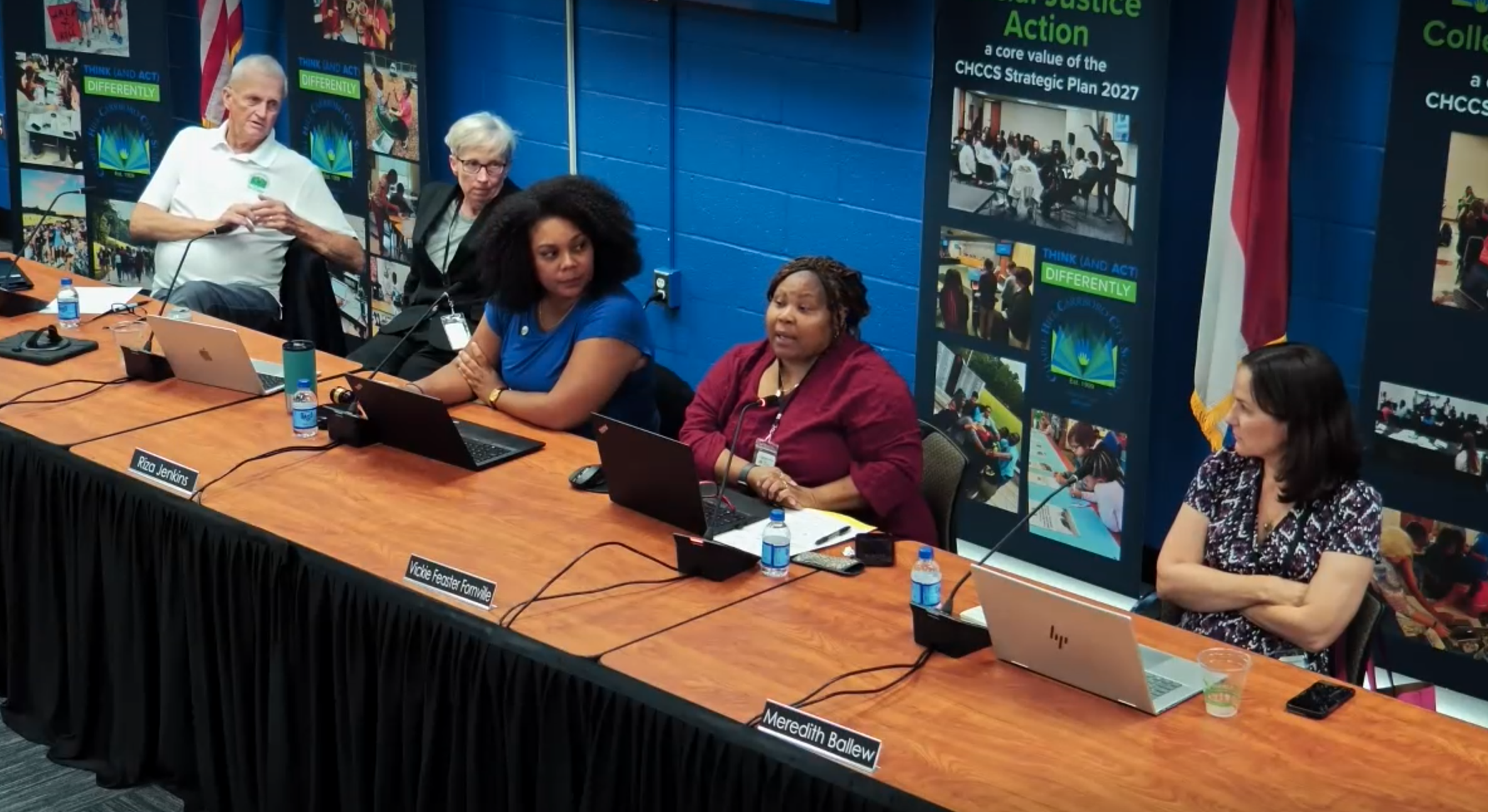

The Chapel Hill-Carrboro City Schools Board of Education resumes meeting Thursday after a short break to discuss plans to promote and enforce academic honesty throughout the system.
According to a report via Schools Superintendent Tom Forcella’s office to the Board of Education, “the need for cultural change at the district’s high schools is urgent and apparent.”
That conclusion is at least partly based on the findings of a committee formed last year to focus on academic integrity throughout the school system.
The committee, which is co-chaired by an assistant principal from each high school, met frequently last year, and its work with concerned stakeholders to implement Strategy 3.4 is ongoing.
Strategy 3.4 is part of the school system’s Long Range Plan 2013-2018, which is posted on the CHCCS website. The plan is separated into five goals, and Strategy 3.4 states that the school system should “foster a renewed emphasis on academic and personal integrity.”
That item is listed under Goal 3, which reads: “The culture of CHCCS will be one that encourages innovation, risk taking, excitement for learning and personal growth in a trusting partnership with the community.”
The committee conducted nine focus groups during the spring semester. The groups consisted of students, staff and parents.
They were asked four questions: What is an appropriate consequence for violating the honor code? What is the desired outcome for disciplinary consequences? In what ways do consequences lead to desired outcomes? And: On what other aspects of the academic experience should integrity policies focus?
Parents and educators offered a variety of answers to each question, and some key themes emerged.
Academic integrity is an issue of culture, as much as it is an issue of learning, according to teachers, who offered that breaches of academic integrity can be caused by many factors. They mentioned peer pressure, competitiveness, stress and apathy, among others.
They also said that policies should be clear and consistent throughout the school system.
Some themes that emerged from parents who responded include the importance of communicating to students that cheating is “not a winning solution to the academic rigors of high school”; and that assignments should encourage critical thinking.
In June of 2013, a student-led survey of juniors and seniors shed light on academic pressure in the district’s high schools. Responders to the survey recommended dropping class ranking, holding students more accountable for online courses, and offering stress-reducing activities throughout the school day.
Cheating at Chapel Hill High School made national news back in 2008. Four students were suspended as a result of two cheating incidents. One involved the use of a master key that had apparently been passed down by graduating seniors for years, for the purpose of secretly entering a teacher’s office.
This week’s meeting of the Board of Education takes place at 7 p.m. Thursday at the Lincoln Center in Chapel Hill.