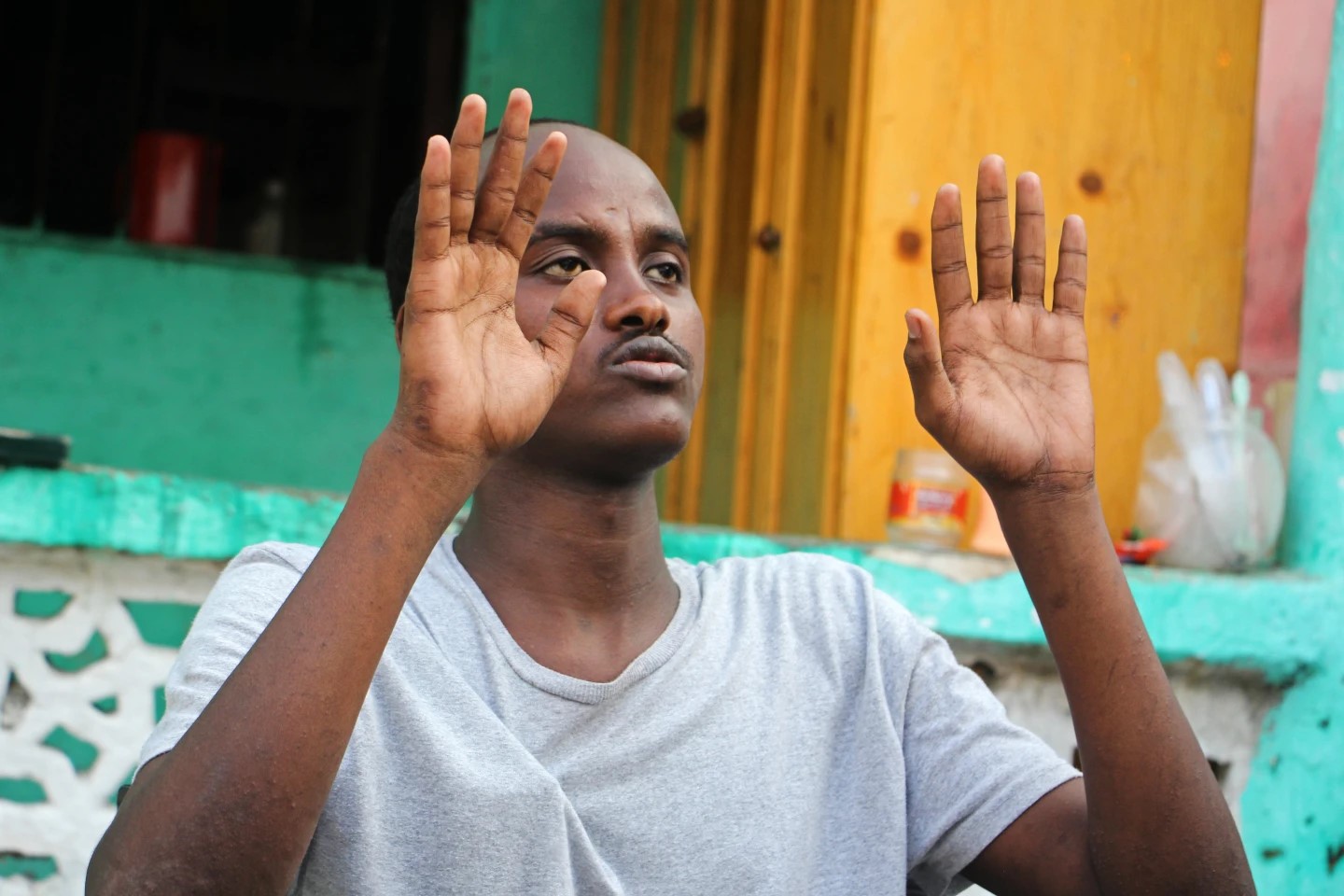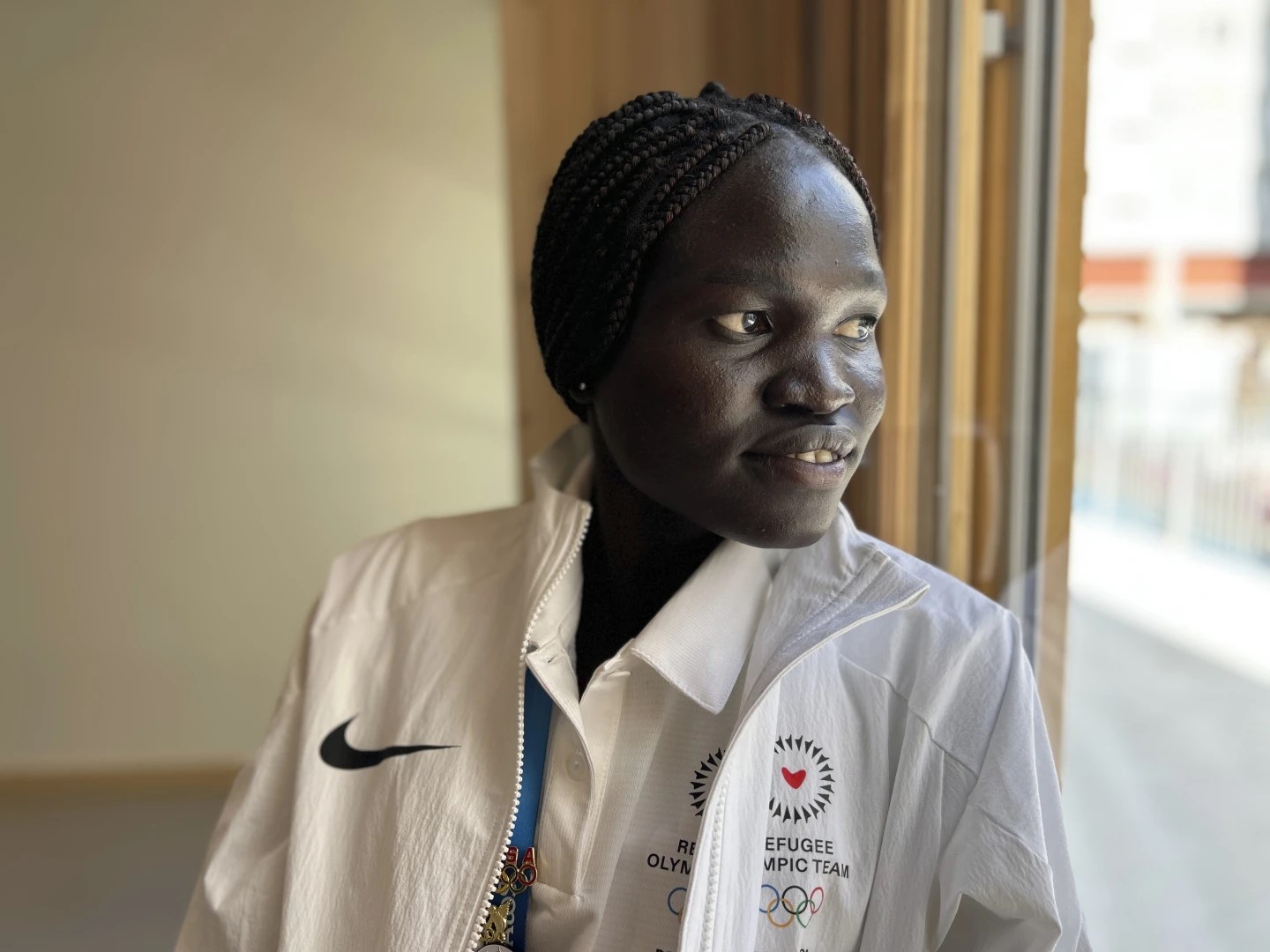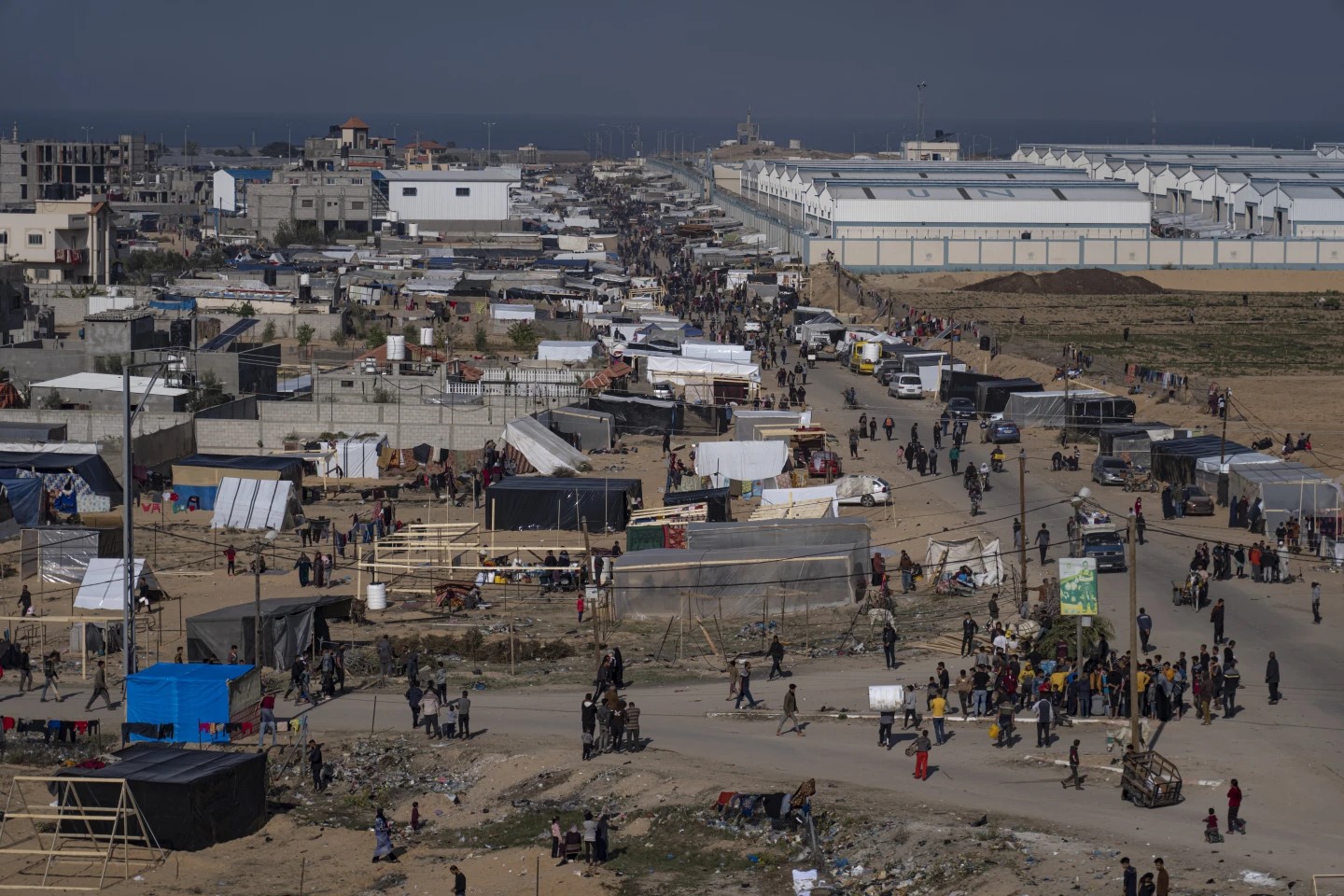
Soni is a refugee from the Democratic Republic of Congo. He said he wanted to come to the United States as a refugee because of the violence in the DRC. He said it took him years to move because of the long bureaucratic process. He said everyone seeking asylum to go to a different country has a case file. And to add immediate family it takes a few years, to finish all the background checks it takes a few years, and to answer all the necessary questions—that takes time too.
“They ask you all of the story,” he said. “‘Why did you leave your country? Do you plan to go back? What’s your own personal problem? Forget about what’s going on in your country, why did you run here?’”
To become a refugee in the United States, one must receive a referral from the US Refugee Admissions Program for consideration. Then the potential refugee must fill out an application and be interviewed by an officer from the US Citizenship and Immigration Services office. All of which can take years, like it took Soni.
But organizations like the Church World Service are trying to help with that.
“Refugee resettlement in the United States is an orderly process,” said Ellen Andrews, director of the CWS Durham office. “Where refugees go through a series of different application steps, including about 17 or 18 layers of security screenings before they’re ever allowed to board a plane and arrive here. When they do arrive, those arrivals are carefully orchestrated by the state department, private non-profits, and the local offices like ours of those private non-profits.”
Ellen Andrews and Sijal Nasralla of CWS, as well as Soni and fellow refugee Muktar Muktar (from Somalia), joined Aaron Keck on WCHL.
Andrews said the Church World Service tries to help meet refugees’ immediate needs and help them and their families quickly become self-sufficient.
“They don’t have a place to go to be able to work and live there legally and have their children go to school, and really sort of exercise the basic human right to opportunity that most of us think of as the foundation of our lives,” she said. “So, they’re invited to come to the US as immigrants and they get a little help from refugee resettlement agencies when they get here.”
CWS also works to dispel rumors and stigma that surround the immigration and refugee process. Sijal Nasralla is the Refugee Organizer for the Triangle area. He said one of the biggest inaccuracies to debunk is that accepting refugees will in any way harm America.
“This is not a threat to the integrity of this nation, or the safety or security by any means,” he said. “If anything, it’s… a testament to what the United States as well as the rest of the western countries have had to offer, in terms of their uplifting of the human right to movement and freedom from persecution.”
CWS helps about 1,000 refugees per year get set on their feet. The organization has helped people from Somalia, Iraq, Eritrea, Ethiopia and people from many other countries.
Soni said he’s glad for the opportunities provided to him from CWS, but the process to get to the US and get to the opportunities is important to remember.
“For you to get the opportunity to come, you really appreciate it,” he said. “And they make sure they do all the screenings, fingerprint, they have doctor bills. They contact other units here in the country. They make sure you never committed a crime before you come here.”
While Soni and CWS said this is an already arduous process, that is all likely to change under the new federal administration proposing extreme vetting.