A 2008 survey as part of the North Carolina’s Child Health Assessment and Monitoring Program found that 1 in 3 parents in the state own a firearm and about 1 in 4 of those firearm owners left their guns unsecured. Pair that statistic with the fact that gun-related incidents are the leading cause of violent deaths among all North Carolinians, and you find many people want to address the issue.
In 2023, North Carolina created an initiative that was the first of its kind among the southeast: a statewide, state-supported Office of Violence Prevention. At the time, Gov. Roy Cooper started it to explore ways to reduce firearm misuse and violence across the state — and Mar. 14 marked the three-year anniversary of his executive order to create the office.
The advocacy group North Carolinians Against Gun Violence is among those – and its efforts helped spur Gov. Cooper’s administration to start a dedicated, state-run office for violence prevention. NCGV partners with both governmental and nonprofit groups to explore different ways to limit gun injuries and its members helped build a statewide coalition in 2019 to promote Community Violence Intervention programs.
Becky Ceartas, who is the executive director of NCGV and a Chapel Hill resident, shared how the programs aim to be proactive instead of the reactive nature of the criminal justice system. She described the method as not looking at the hardware of violence, but at the behaviors.
“They look to address the underlying causes of a disease – or in gun violence’s case, injury – before they occur, promote health behaviors, and really control spread of the outbreak once it does occur,” Ceartas said. “With Community Violence Intervention programs, [they are] really focusing in on that relatively small number of individuals that are either committing the gun violence or are victims of the gun violence…and then working with them, and their families and the community to see what can done to address some of the underlying, root causes of gun violence.”
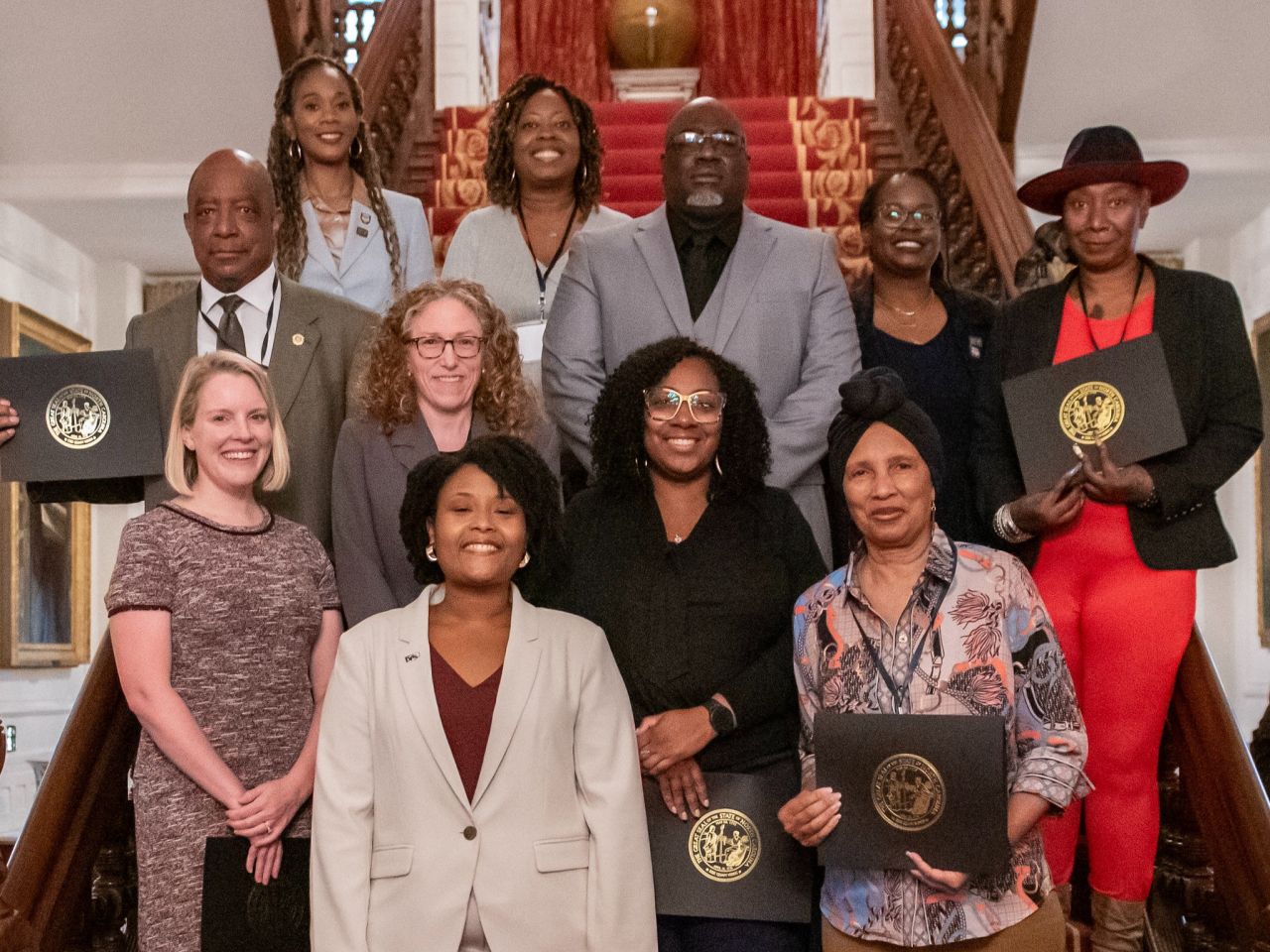
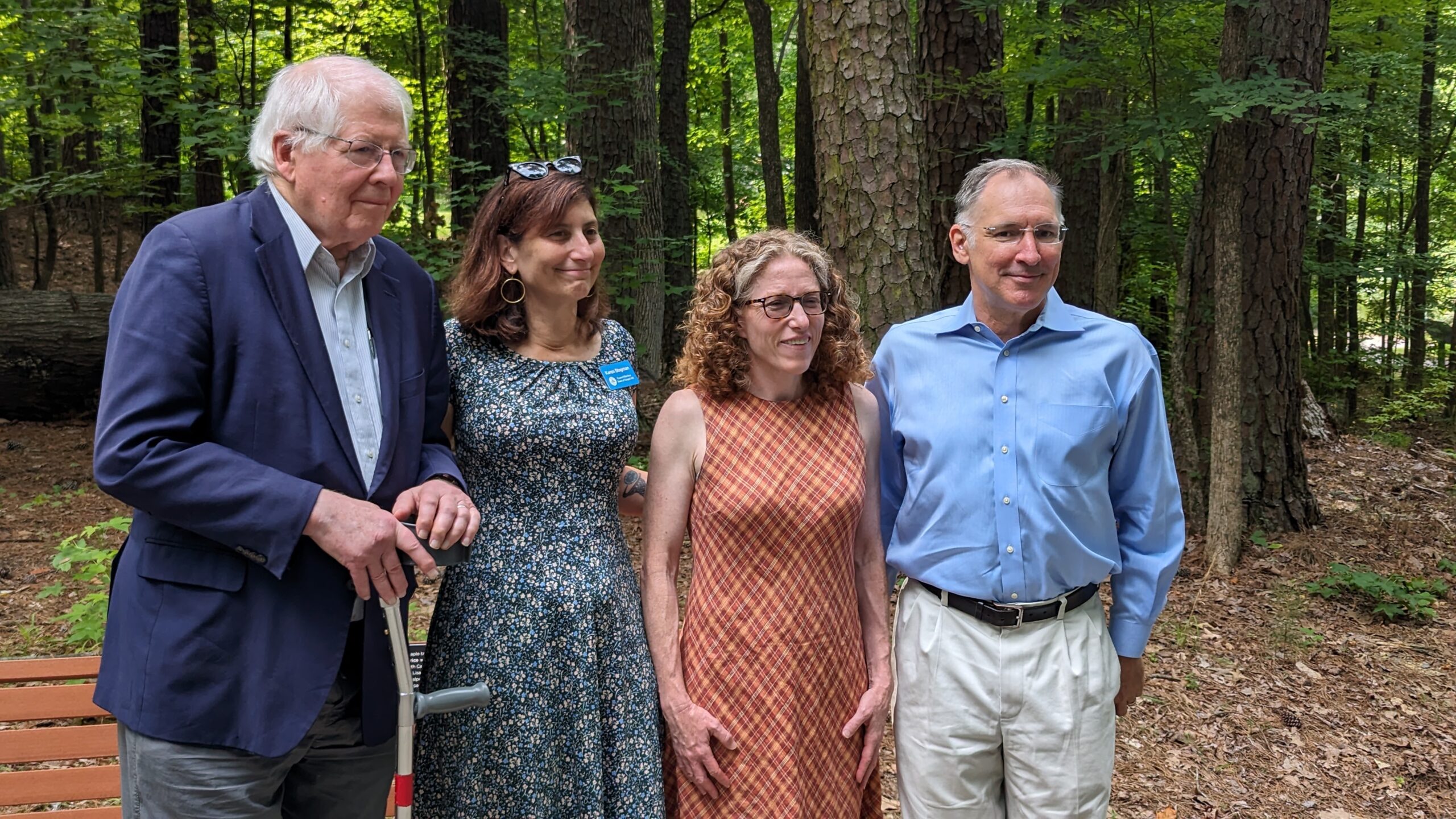
The initial members of the Community Violence Advisory Board were honored at the Executive Mansion in 2024 following their first year of service. (Photo via the North Carolina Department of Public Safety.)
Once Cooper created the Office of Violence Prevention, Ceartas was among the dozen people selected to serve on the North Carolina Community Violence Advisory Board – a committee of law enforcement officials, public health workers and nonprofit leaders who regularly meet with the OVP staff.
UNC public health professor Beth Moracco is also on that advisory board.
“When talking about behavioral health…we’re not talking just about individual behavior, but also families and communities and organizations and structures,” she told Chapelboro. “And I think an effort like this, like OVP, helps to bring all of those sectors together so we can address those things in a coordinated way.”
Despite being housed in the Department of Public Safety, the North Carolina Office of Violence Prevention also heavily collaborates with the state Department of Health and Human Safety. It’s one of several ways the office is similar to the work Moracco helps lead at UNC’s Injury Prevention Research Center. Beyond the common goal of preventing violence, she said both institutes rely on multi-disciplinary work to research and address problems that are as pervasive as gun violence. Moracco said she sees the office and its connections to her research center as another example of the state government’s strong ties with UNC, with many students interning or working with both. The OVP’s current director, Siarra Scott, even worked at the Injury Research Prevention Center as a project manager before taking the statewide position.
From Ceartas’ perspective, the office’s work to curb gun violence helps fill in the gaps and pick up the logistics or operations where NCGV’s issue-oriented work ends.
“We work to create, sustain and expand CVI programs throughout the state – but we’re an advocacy organization, we don’t really advise on the technical aspects,” Ceartas said of her group. “And that’s why it’s really great to have a statewide Office of Violence Prevention, among other reasons.”
Three years is not enough time to fully eliminate gun violence and firearm injuries – so, what has the initiative accomplished so far? By working with the advisory board, the office launched its first statewide strategic plan to enact and encourage community violence prevention. Charting the office’s course through 2027, the document lays out ways to continue coordinating with stakeholders and preparing communities for how to both react to and prevent gun violence.
To also help build on its action items, the office holds an annual violence prevention conference in Raleigh to gather leaders across North Carolina to discuss local and statewide projects with public health approaches. In 2025, OVP reported more than 900 attendees at its various events and more than 150 people receiving new training on interventional practices, according to the office’s year-end report.
Moracco described the strategic plan as “extremely impressive and detailed” and said she is proud of the level of collaboration reflected in the final document. While gun violence is an extremely complex issue to tackle, she added she believes the Office of Violence Prevention is making a difference.
“Absolutely,” Moracco said. “I feel even just the relationships that are being built among law enforcement and public health, and there are some really wonderful Community Violence Intervention programs in our communities. And the fact that we know who to talk to, who to collaborate with… I think that is a huge contribution to prevention.”
Ceartas echoed Moracco that she is proud to have a forward-thinking public health effort like OVP in North Carolina. While her nonprofit knows the limits of making changes solely through the state legislature, she said the office is an example of how state leaders can innovate.
“With the limited powers that our governors have, they’ve really tried to do everything they can to keep North Carolinians safe,” said Ceartas. “And that’s really what this is all about: keeping people safe in their homes, their schools, their communities, their houses of worship…everyone deserves to feel safe and the Office of Violence Prevention is working to achieve that.”
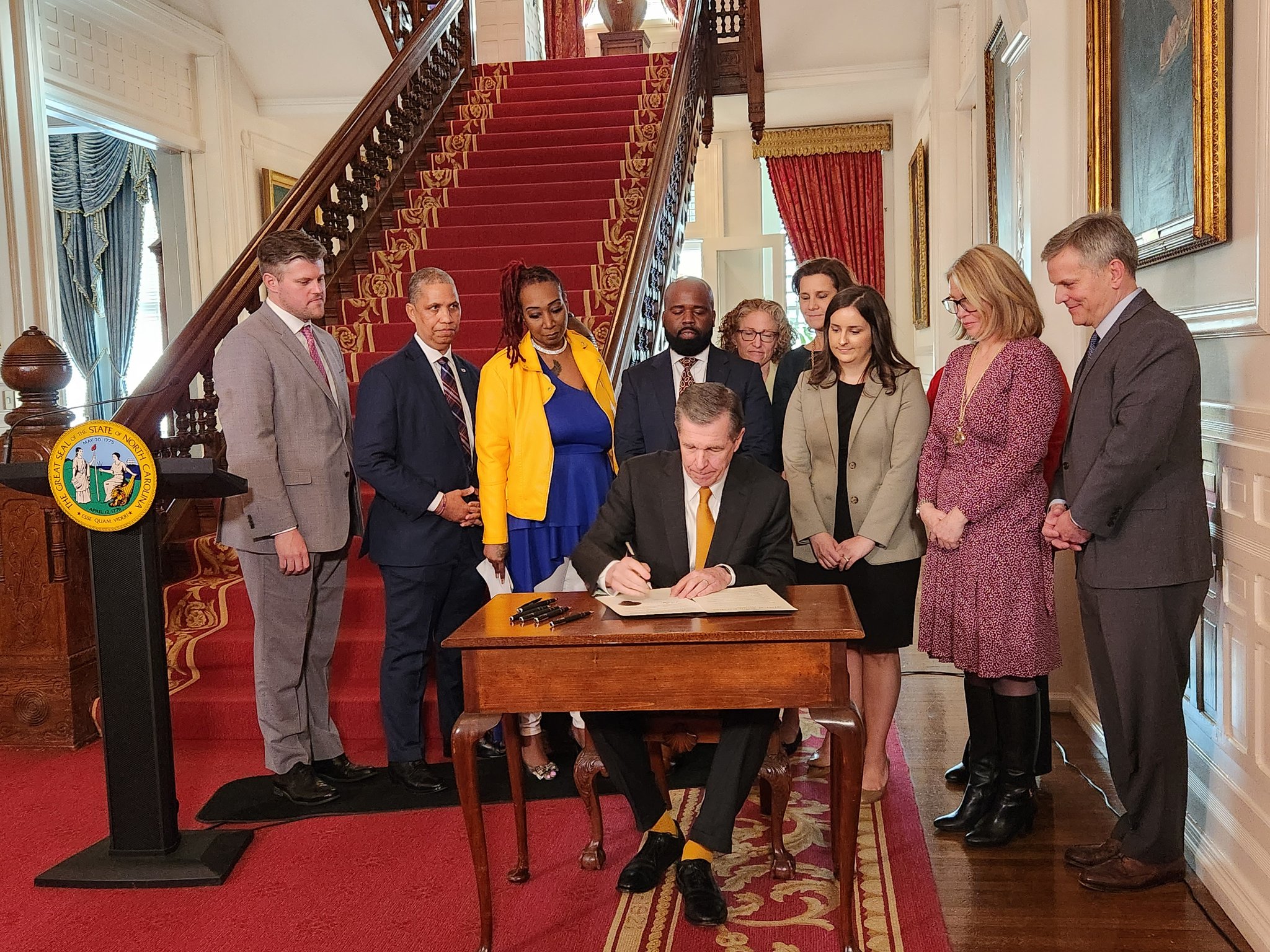
In 2023, Gov. Roy Cooper signs an executive order to create North Carolina’s Office of Violence Prevention in the Executive Mansion while surrounded by violence prevention advocates and state department leaders. Then-Attorney General Josh Stein (far right) was on hand to support the effort, and has continued to pledge support since being elected as governor. (Photo via Dawn B. Vaughan/The News & Observer.)
After Cooper’s term ended in 2024, Gov. Josh Stein took office and has continued to support OVP – including through an executive order signed in February meant to further improve behavioral health and public safety collaboration.
“Keeping people safe is job one for government, and many acts of violence can be prevented if we address the root causes and offer people better options,” a Stein spokesperson said in a statement to Chapelboro. “OVP does important work across our state to support local communities in strategies that reduce violence, including enhancing collaboration and coordination, strengthening workforce opportunities, and empowering communities. Governor Stein’s Behavioral Health Executive Order works to strengthen coordination between criminal justice and behavioral health systems so that people can get the help they need when they need it. Bringing law enforcement, health professionals, and community organizations to the table creates safer communities.”
Chapelboro.com does not charge subscription fees, and you can directly support our efforts in local journalism here. Want more of what you see on Chapelboro? Let us bring free local news and community information to you by signing up for our newsletter.