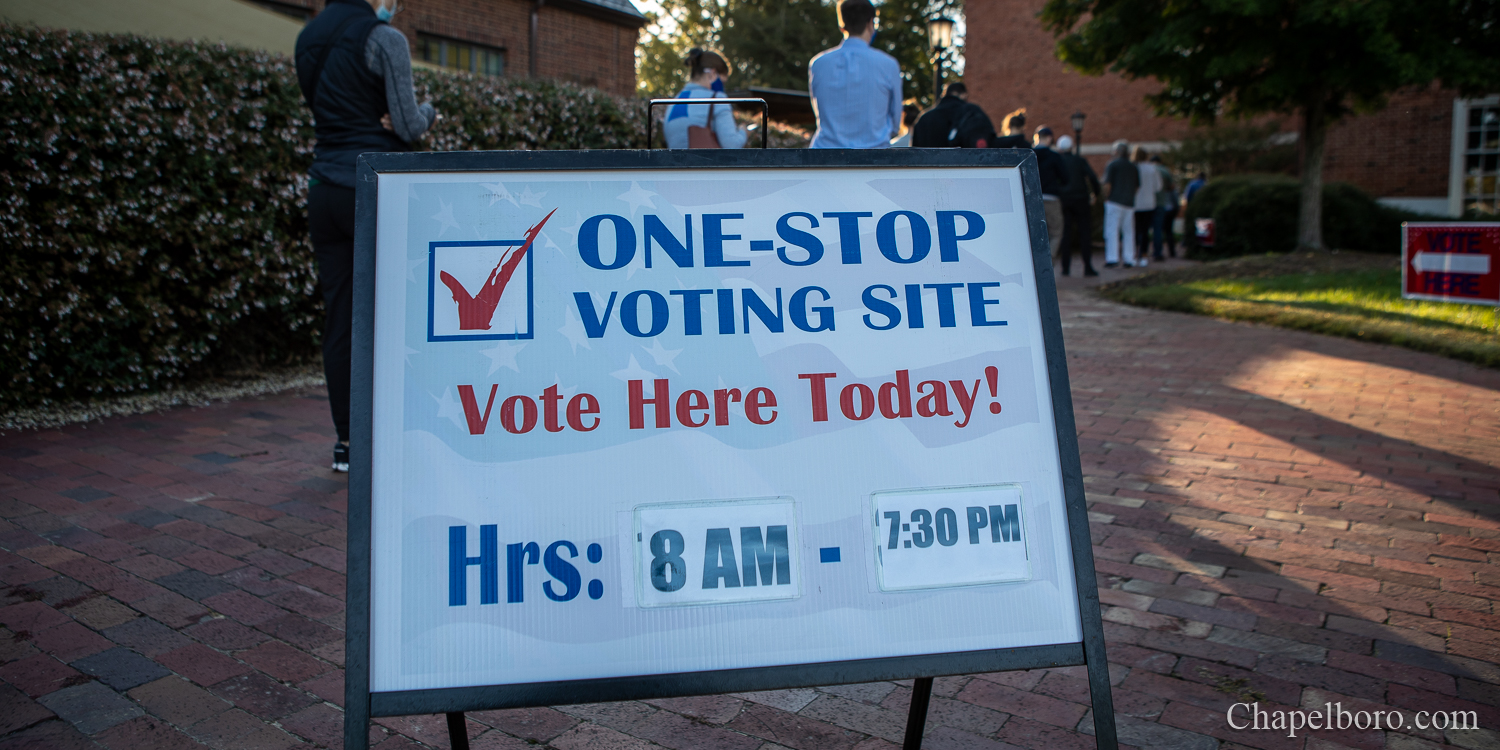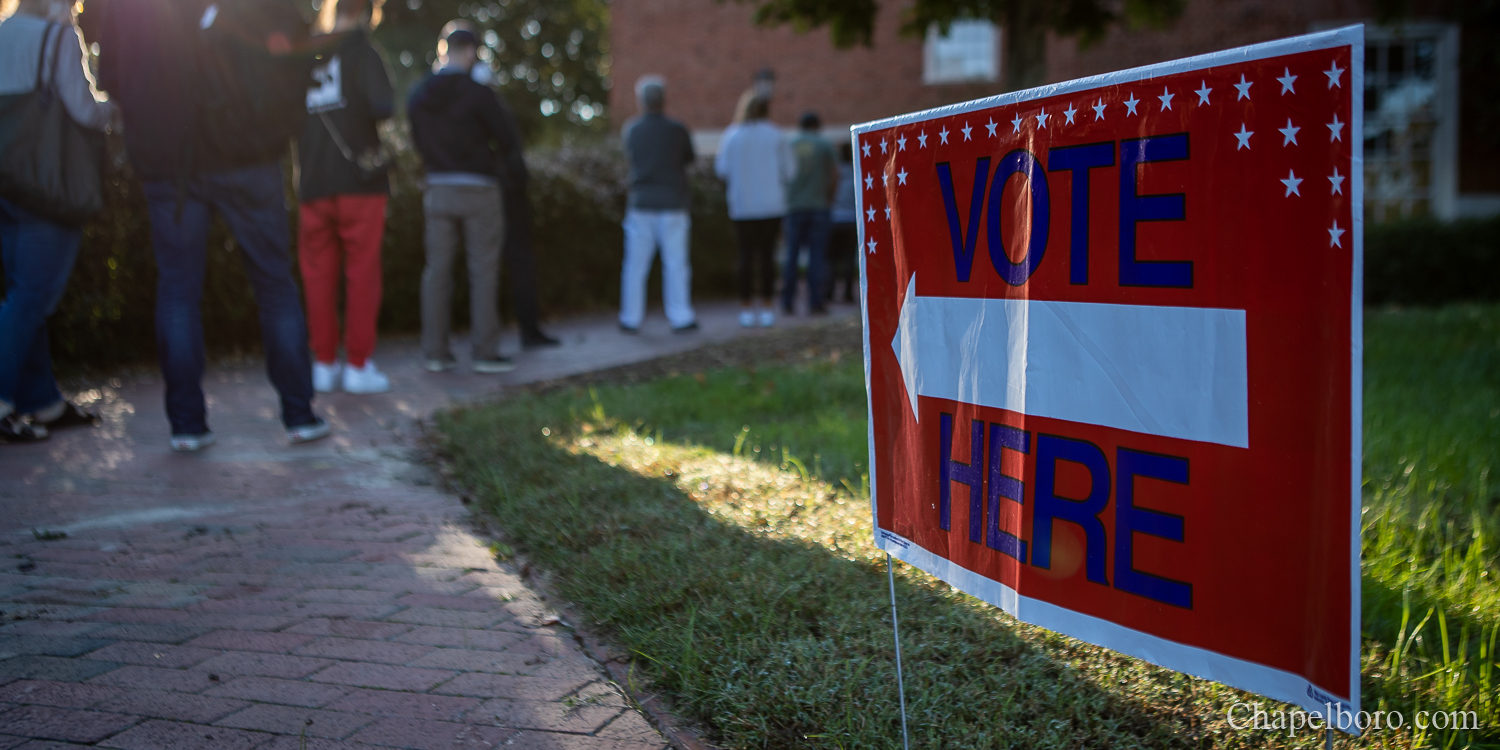
Primary election season is upon us in North Carolina. Early voting begins Thursday, April 28, and Election Day itself is May 17, just a few weeks away.
But to what extent will the parties’ choice of nominees actually affect the outcome of the general election in November?
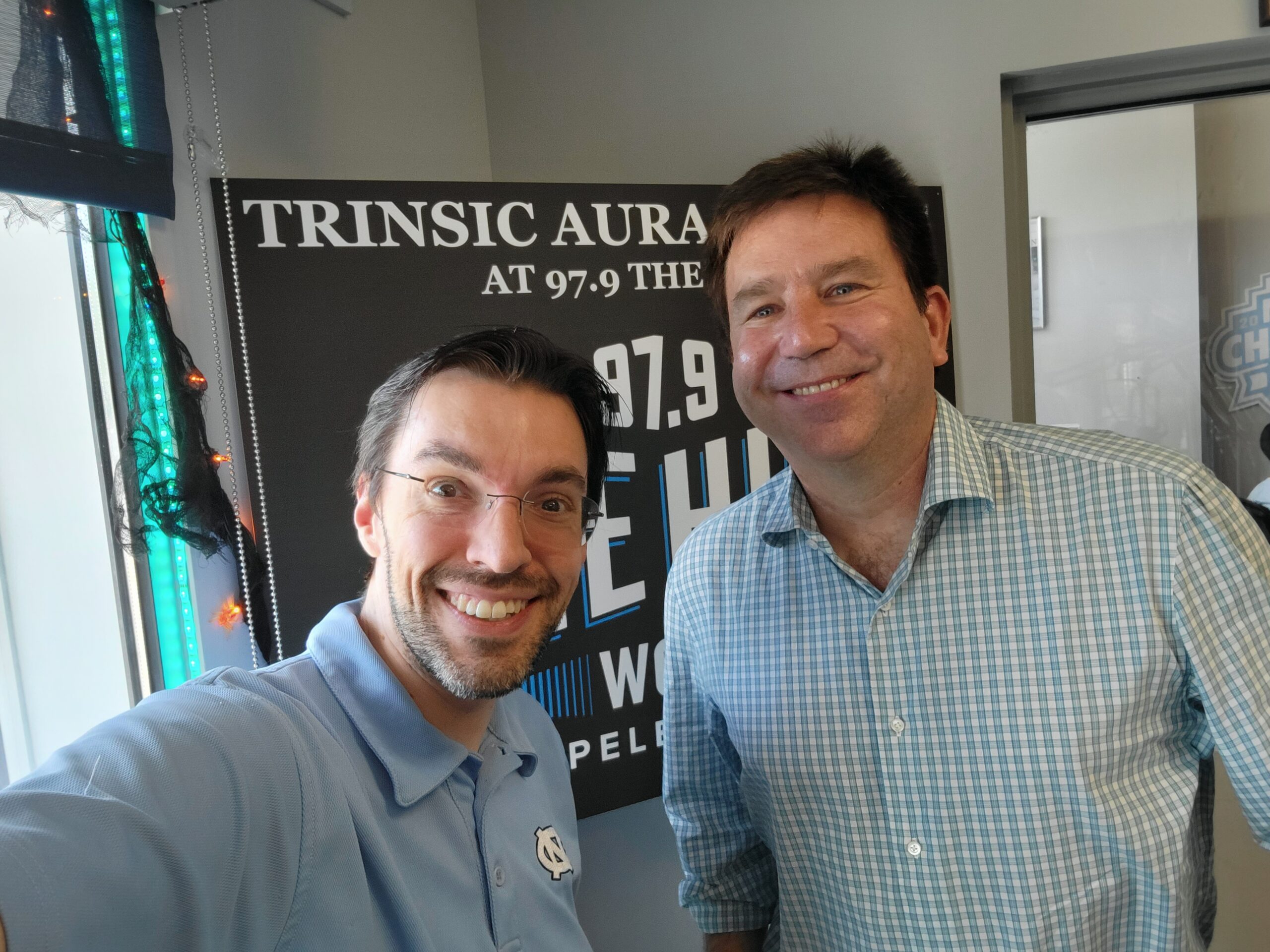
97.9 The Hill’s Aaron Keck discussed that question – and the overall political picture – with Public Policy Polling director Tom Jensen. Jensen said Republicans are likely to pick up seats in both the U.S. House and U.S. Senate – though their gains may be limited by gerrymandering, as most seats today are either solidly Republican or solidly Democratic. Jensen also argued that the parties’ choice of candidates won’t matter too much either, as most Americans vote based on their overall feeling about the state of things.
Listen to their conversation.
Aaron Keck: We’re still six months out from the general election, but what’s the overall national picture right now?
Tom Jensen: Well, I think that if the election was today, Republicans would pick up at least four seats in the U.S. Senate. They would most likely win the Senate races in Arizona, Georgia, Nevada, and New Hampshire that are currently held by Democrats. They’d have an outside shot at somewhere like Colorado. And it would probably be a pretty tall order for Democrats to pick up any of the seats that they trying to seriously challenge. Democrats would like to win Republican-held Senate seats in Pennsylvania, Wisconsin, North Carolina, Florida – but unless the political climate changes, I think that Republicans are going to end up being able to hold on to all of those seats.
And then in the U.S. House picture, Republicans certainly would get a pretty substantial majority if the election was today. Sometimes in these midterm elections, you’ll see the party out of power pick up crazy numbers of seats, 50 or 60 seats. I think that is less likely this year, simply because there aren’t enough competitive districts to really make (that) possible. Seats just aren’t as prone to the kind of election-to-election shifts than they were in the past, because so many of them are so strongly Democratic or so strongly Republican. So I think that Republicans still are in good shape to pick up probably 20-30 seats, but it may not be as bad for Democrats as some of the previous first midterms of Democratic presidents, like in 2010 and 1994, when Republicans truly picked up massive numbers of seats.
Keck: What can you glean from the state of things in North Carolina that give us more of an insight into how things are shaking out?
Jensen: I think there are two House districts in North Carolina that show what’s going to determine whether this ends up being a truly massive victory or just a moderate victory for Republicans.
One thing that gets talked a lot about in redistricting is “how many Biden districts are there” and “how many Trump districts are there,” in terms of who they backed for president in 2020. But I think that’s a little bit misleading, in terms of how a district is necessarily going to vote in a year like this. For instance, the new 13th Congressional district in North Carolina takes up a lot of Wake County and then some more conservative counties around Wake. That district voted for Joe Biden by two points in 2020, so that goes into the picture as a “Biden district” – (but) I actually think there’s almost no chance that Democrats are going to win there this fall, for two reasons. One is that there is nobody who voted Republican in 2020, who’s going to be voting Democratic in 2022. That’s just not something that we see in our polls as a voter who exists. And there aren’t going to be that many people who voted Democratic in 2020 and are going to vote Republican in 2022 – maybe 5% of Biden voters will vote Republican this year – but in a district like that 13th, that only voted for Biden by two, that’s enough to turn it into a Republican win.
And that’s before you even account for the fact that Republicans are so much more fired up than Democrats right now. Let’s say that the midterm turnout is 60 percent of what the presidential turnout was in 2020. There’s a pretty good chance that you’re going to get to that 60 percent by 65 percent of the Trump voters coming back out, but only 55 percent of the Biden voters coming back out. So even though that district in 2020 voted for Biden by two, it’s very possible that more of the people who actually come out to vote this year will have voted for Trump, because of that Republican enthusiasm advantage. There are a lot of (similar) districts across the country, that voted for Biden by a little bit in 2020 but are not very likely to vote for Democrats this year. So that’s one piece.
The other interesting district is NC-1 in the northeastern part of the state, currently represented by GK Butterfield. That’s a district that voted for Biden by nine in 2020, so you would think Democrats should be pretty safe there, even in a bad year. But what’s interesting about that district is that it’s the least educated district in North Carolina. Only 20 percent of voters there have a college degree. And what we’ve seen happen to Democrats over the last five years is that they’re doing worse and worse and worse with non-college-educated voters. Every time it seems like they’ve hit a new low with non-college-educated voters, they end up going even lower. And this is a district where there used to be – maybe not a lot of White people voting Democratic, but there were some White people voting Democratic. And now in that district, we’re getting closer and closer to there being just about no White people voting Democratic. So yes, it voted for Biden by nine, but when you think about these trends, where it’s been getting more Republican, it’s a lesser educated district – I think Republicans are going to end up making that seat very competitive. Democrats may still win it, but I could see it being a 51-49 sort of race. And if Republicans do end up winning there, it likely means they’re winning more like 40 or 50 districts nationally.
Keck: So as folks think about their primary ballots and who they’re going to vote for, does it matter very much which candidates end up winning the primary? On the Democratic side, you’ve got the firebrand progressives on one side and the more mainline liberals on the other; on the Republican side, you’ve got the Trump-endorsed candidates versus the ones who are more like, “well, I’m conservative, but the election was real and it was a bad idea to storm the capital” – does it matter, in terms of which one of those two sides ends up getting the nomination? Or are we seeing similar trends either way?
Jensen: That’s a really great question, and I think it speaks to something that is becoming more and more of a truth in American elections: the candidates don’t really matter.
99 percent of the outcome of an election is sort of just baked into the overall national political climate in any given cycle. Candidates matter for (races) like President – if Republicans had a normal person as their candidate in 2020, instead of Trump, they probably would’ve won. But everything else sort of flows down from what’s going on at that very top of the ticket, the things that people pay attention to the very most – and what that means is, 99 percent of the time it doesn’t matter who the candidates are. If you’re inclined to vote for a Democrat, you’re going to vote Democratic, no matter what flavor of Democrat ends up getting nominated. If you’re inclined to vote Republican, you’re going to end up voting Republican, no matter what flavor of Republican gets nominated.
It’s the kind of thing that maybe could make a difference, in races that are within two or three points. It’s maybe better, in cases like that, for Democrats to have a moderate candidate; it’s maybe better for Republicans to have somebody who isn’t a total Trumper who doesn’t think the election was stolen. But for the candidates to matter, and for those profiles of candidates to matter, it really has to be a close election – because beyond that, things are pretty much just baked in based on how people are feeling about the president. In the 2018 midterm, that was great for Democrats, because people didn’t like Trump. And in the 2022 midterm, that’s going to be good for Republicans, because people don’t like Biden.
Photo by Dakota Moyer.
Chapelboro.com does not charge subscription fees, and you can directly support our efforts in local journalism here. Want more of what you see on Chapelboro? Let us bring free local news and community information to you by signing up for our biweekly newsletter.