

97.9 The Hill and Chapelboro.com have partnered with NC State Extension Master Gardener℠ volunteers of Orange County for “Playing in the Dirt,” a monthly column providing information and inspiration to gardeners of all skill levels! Check back on Chapelboro each month for a new subject – from our gardens to yours!
Plant Some Vegetables!
By Yolana Murrell, Orange County Master GardenerSM volunteer
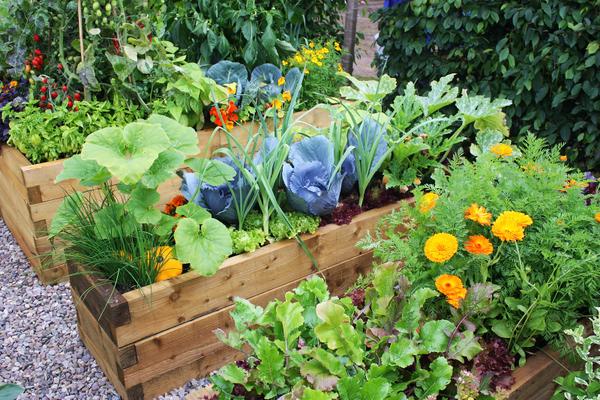
Warm-season vegetables for planting outside when frost is no longer a threat. Photo courtesy of NC State Extension.
We can all feel it! It’s spring at long last and our thoughts have turned to the garden, specifically, the vegetable garden. If you’re just starting out with vegetable gardening, the first thing you need to do is to be brutally honest with yourself. If you live on a beautifully wooded lot where the deer herds come to nap, a successful vegetable garden won’t happen. If you think you’ll grow enough to feed your family and friends during the zombie apocalypse, again probably not going to happen. But, if you just want the joy of veggies fresh from the garden to your kitchen, this is very achievable.
First things first: choose your spot and make sure it gets six to eight hours of sun a day. This is conventional wisdom, but experience has taught me that some crops, like leafy greens, will forgive you if you have a bit less.
The next step is to do a soil test to see what nutrients your soil needs. It’s not as tedious as it sounds and from now through November, it’s free. Soil test kits are available at the Orange County Master Gardener volunteer’s booth at the Carrboro Farmers’ Market (every Saturday) and the Eno River Farmers’ Market in Hillsborough (every third Saturday) where the volunteers will be happy to talk you through the steps of soil testing and submission of the samples. You can bring your test results back there as well if you need help interpreting them. The kits and information are also available at the entrance of the Orange County Extension office, 1020 US Hwy 70 West, Bonnie B. Davis Environment and Agricultural Center, Hillsborough. Read more about soil tests and the importance of healthy soil.
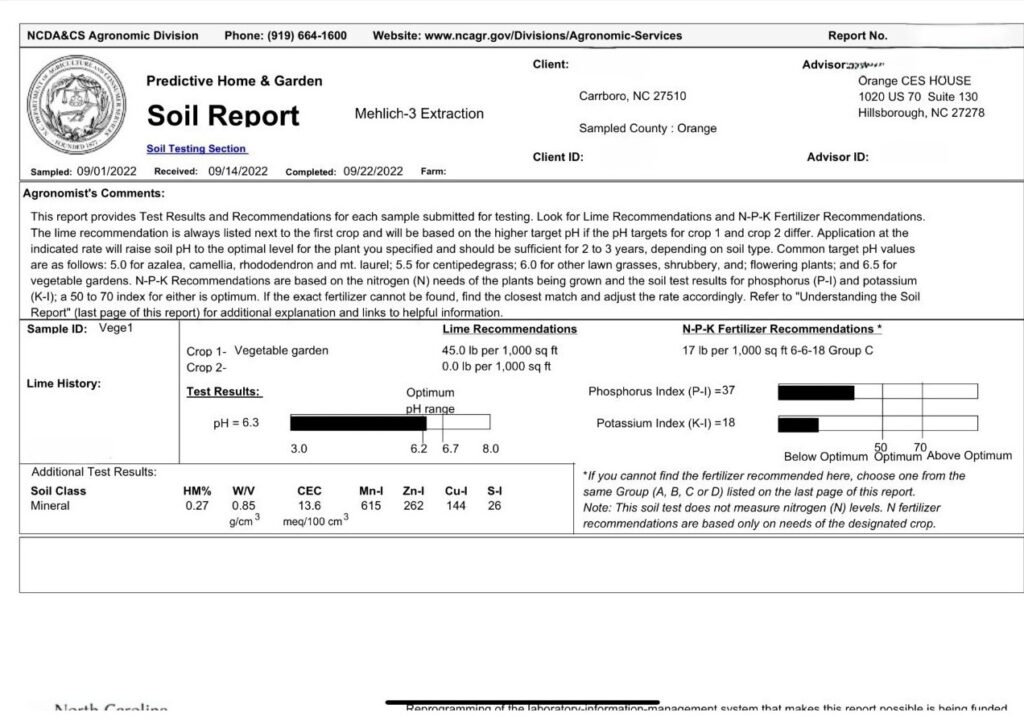
Sample soil test report for Carrboro vegetable garden. Photo by Yolana Murrell.
With your soil test report in hand, prepare and amend your soil. Orange County Solid Waste offers compost; you can find the pick-up location and other details here. If you live in Carrboro, the town offers free leaf compost at its site at 7917 Old NC 86. Your soil test report will have specific instructions on amendments — follow them. If in doubt, don’t hesitate to ask a Master Gardener volunteer for advice. However, if you’re like a lot of people and decide to skip the soil test and wing it (you know who you are), you can’t go wrong by adding in a bit of compost and seeing what grows.
There are several ways you can prepare your soil for planting. I double dug all my veggie beds years ago one time only, and now I add compost and alfalfa meal every year. (See this article for information on “double digging” a garden bed.) Other people prefer to till. If you’re playing a long game, you can go the no-dig route with “lasagna gardening” by layering cardboard topped with compost, and waiting for earthworms and microbes to do the work for you. I use the no-dig option for my perennial borders. Often I get impatient and start adding in plants after only a month or two and find the mortality rate to be acceptable. You can also grow veggies in raised beds, straw bales, lasagna beds and in containers. Wherever you grow, you must protect the plants from deer unless you focus on growing herbs, leeks, garlic and onions.
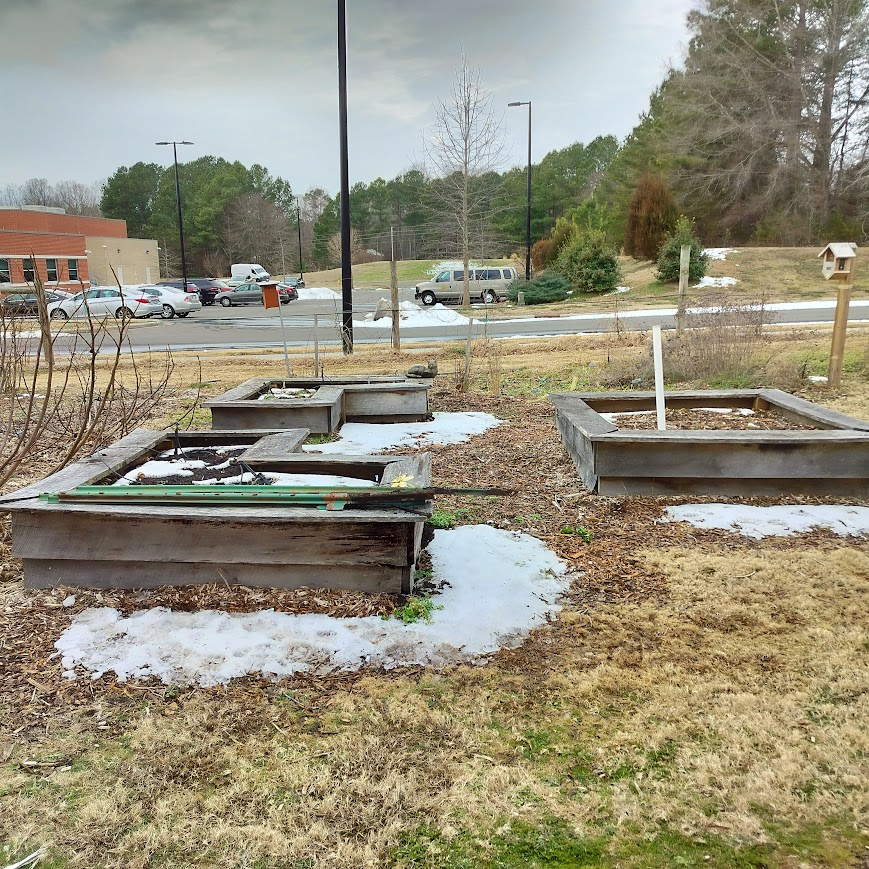
Raised beds ready to prepare for planting. Photo by Yolana Murrell.
Now that the groundwork (pun intended) is laid the real fun begins: choosing your plants. It’s too late to plant many of the spring crops, like peas, broccoli and cauliflower. You can get away with planting some of the more forgiving leafy greens like collards and Swiss chard which will grow all summer and into fall and winter. Some of the non-heading lettuces will work as well, especially if you can find them as starts (seedlings).
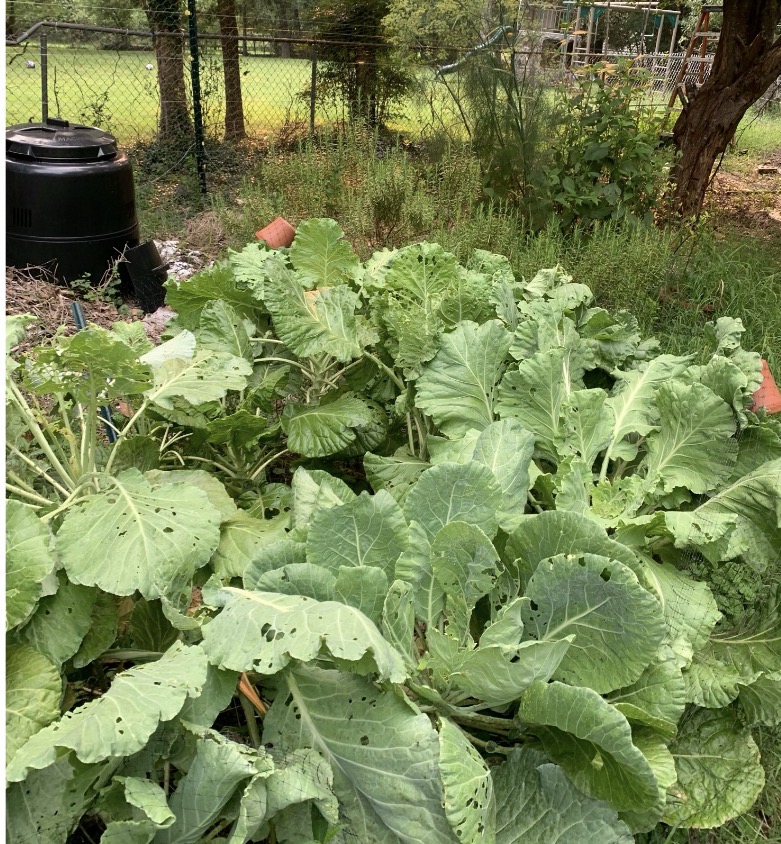
Crop of collards. Photo by Yolana Murrell.
By mid-April, what we think of as “summer crops” can go in. If you want something that’s easy to grow with little risk of disappointment, try peppers of any kind. If you’re a beginner, buy starts to plant — seeds can be fickle germinators. Cucumbers also are quite easy as are squash if the squash bugs and borers don’t find them. The Italian heirloom, Tromboncino butternut squash (Cucurbita moschata ‘Tromboncino’), and Mexican native, Tatume zucchini squash (Cucurbita pepo ‘Tatume’), have harder vines that the borers have a tough time penetrating.
In late April the soil should be warm enough to plant beans and cowpeas. If you’re short of space look for bush varieties but be aware that Japanese beetles are quite fond of beans. This actually doesn’t bother me much; the vines spend a few weeks looking hideous and then recover and keep producing right through fall.
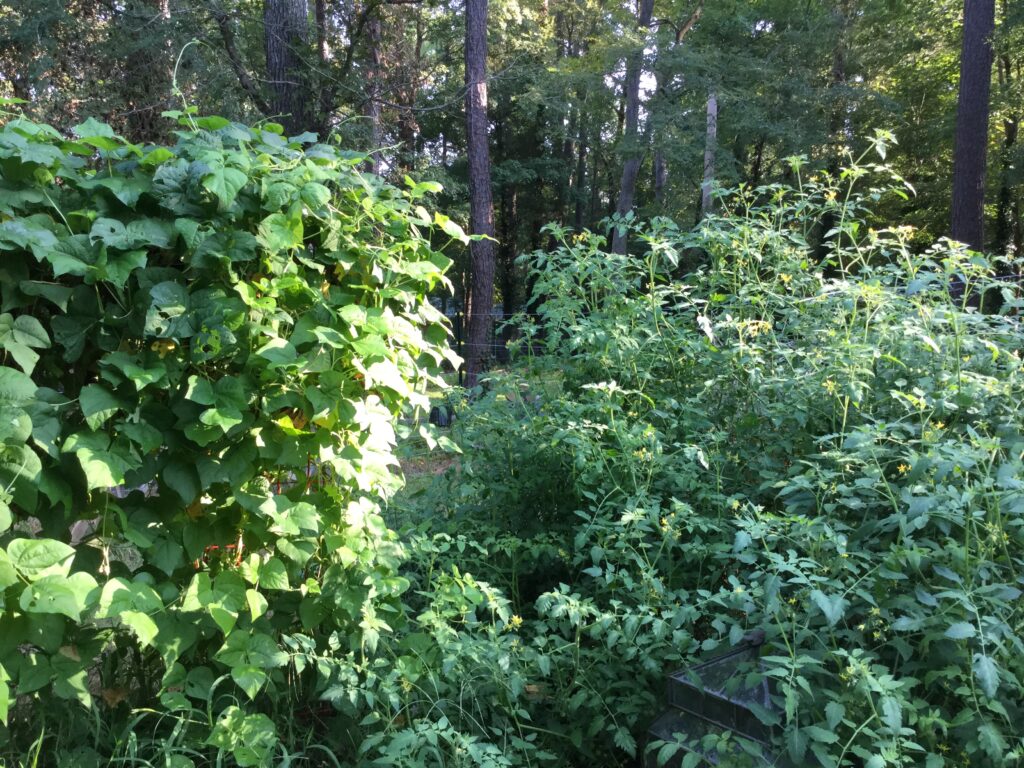
Beans and tomatoes living their best life! Photo by Yolana Murrell.
The true gem of summer can also be planted in the late April time frame: tomatoes, the great love of my life! Some years are fantastic, others bitterly disappointing; but good years make you completely forget the bad ones. If you’ve never grown tomatoes before, I’d suggest starting off with the small varieties of cherry or grape that are bred especially for a container. You’ll use new potting soil for the container and won’t risk infection with diseases or pests that might already be living in your garden soil. If you really want a big variety, get grafted tomatoes which are disease-resistant and highly productive. Or can be — they don’t live up to their potential every year. The Chatham County Master Gardener volunteers host a grafted heirloom tomato plant sale in April every year at fantastic prices, and I’ve had some successful years growing those tomatoes.
Sadly, even with no soil problems and disease-resistant plants, you will still need to keep an eye out for pests, especially the hornworms — big green, sneaky, underhanded insects that will destroy a plant in no time flat. They’re the same color as the plant, between one and three inches long and about as thick as a size-7 finger. Remove them immediately.
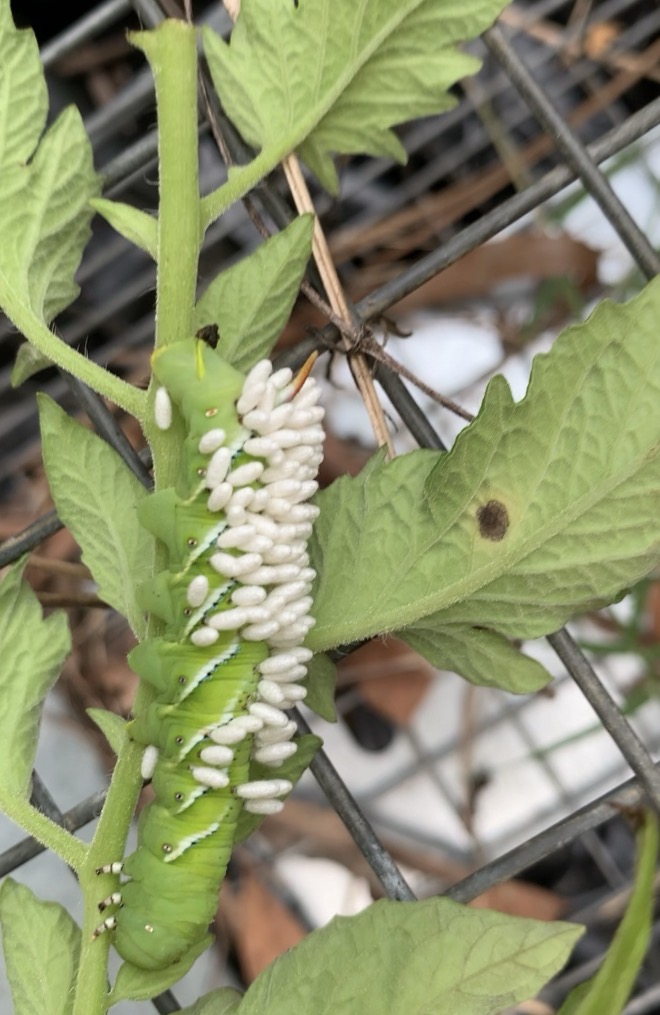
Adult hornworm attacked by parasitic wasp larvae. Photo by Yolana Murrell.
Whew! It’s time to sit back and enjoy eating the fruits of your labor and start thinking through to July and August when it will be time to start planning your fall garden.
For More Information:
- The Orange Gardener.org Plant and Garden Resources page — scroll down to section on Vegetables for links to NC and Piedmont gardening guides.
- Straw Bale Gardening, Piedmont Master Gardeners, Virginia Cooperative Extension.
- Getting Started with Raised Bed Gardening, Clay County Extension.
- Vegetables — NC State Vegetable Gardening Resources, NC State Extension.
- For successful tomato gardening:
- Setting Your Tomatoes Up for Success, Durham County Cooperative Extension.
- Growing Tomatoes in the Home Garden, NC State Extension.
- Growing Tomatoes at Home, NC State Extension.
More from the Master Gardener Volunteers of Orange County:
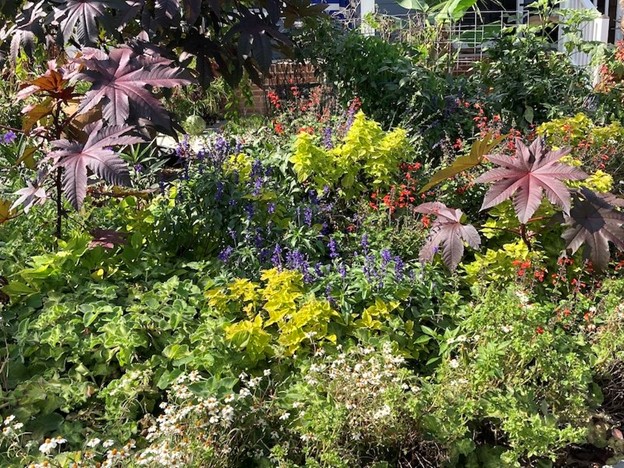
Brie Arthur’s Fuquay-Varina, NC garden — a combination of ornamentals and vegetables. Photo by Margaret Cloud.
- May 17 “Dig Deeper” Talk: Embracing the Imperfect Garden
Each month, our Master Gardener group hosts a free talk about plants and gardening.
Our next talk, “Embracing the Imperfect Garden,” will be Sunday, May 17, 2-3:30 p.m., at the Orange County Southern Branch Library (Drakeford Library Complex, 203 S. Greensboro St., Carrboro). Parking is available in the adjacent garage. Master Gardener volunteer Janet Staats will talk about gardens that are a little messy — they are often the healthiest, most resilient and most alive. Please bring your questions and join us for an informative and fun presentation!
- Have a plant or garden question?Email us at ocmgardeners@gmail.com or phone 919-245-2061 (leave message).
- Visit our website: org.
- Subscribe to our monthly newsletter: The Garden Buzz. Read past issues of The Buzz.
- Follow us on Facebook: Our page isNC State Extension Master Gardener volunteers, Orange County.
- Follow us on Instagram:@orangencmastergardeners.
Chapelboro.com does not charge subscription fees, and you can directly support our efforts in local journalism here. Want more of what you see on Chapelboro? Let us bring free local news and community information to you by signing up for our newsletter.

