
Let me begin here: I respect Stephen A. Smith.
I respect his work ethic, his remarkable career, and his ability to build a powerful media platform. As someone who has spent much of my life in sports, education, business, and advocacy, I understand what it takes for a Black person to enter spaces that were not designed for us, succeed in them, and remain relevant.
Stephen A. Smith has done more than succeed. He has become one of the most recognizable and influential voices in American media. Thanks to ESPN and SiriusXM for making Smith the $33 million dollar per year man.
But influence does not remove the need for reflection. In fact, the larger the platform, the greater the responsibility.
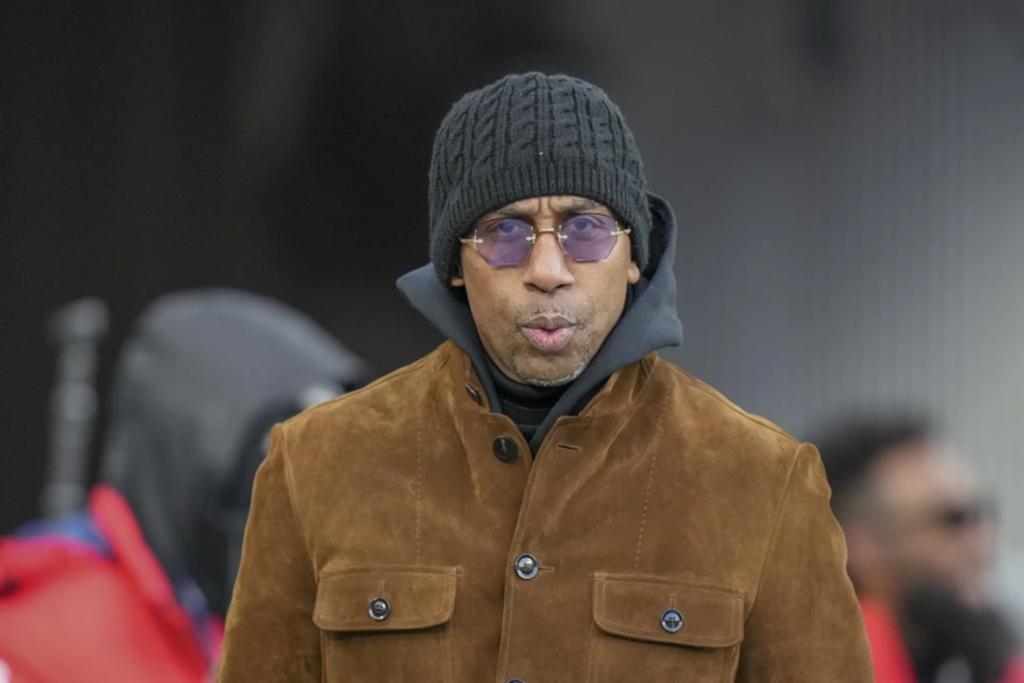
Stephen A. Smith walks on the sidelines prior to an NFL football game between the Baltimore Ravens and the Pittsburgh Steelers, Saturday, Dec. 21, 2024, in Baltimore. (AP Photo/Stephanie Scarbrough, File)
The National Association of Black Journalists (NABJ) recently gave Smith one of its 2026 “Thumbs Down Awards.” NABJ cited what it described as “a recurring public pattern of disparaging commentary directed at prominent Black women across politics, sports, and media.” The organization said such biting commentary reinforces harmful narratives and conflicts with its commitment to responsible and inclusive media representation.
Smith strongly rejected the criticism. He defended his history of supporting Black women, discussed the Black women who raised him, and pointed to his professional accomplishments. He also said NABJ would regret giving him the award and promised to become even more intense.
That is where I believe he missed the point.
NABJ did not say that Smith hates Black women. It did not say he has never hired, supported, promoted, loved, or defended Black women. It gave him a one-year report card that raised a concern about a recurring public pattern in his commentary.
Those are not the same accusations.
Being raised by Black women does not automatically prevent a Black man from speaking about Black women in ways that may be unnecessarily harsh, dismissive, or damaging. Loving Black women does not exempt anyone from examining how their words land. Supporting some Black women does not mean that criticism from other Black women—or from an organization representing Black journalists—should be immediately dismissed.
The question is not simply whether Smith has the right to criticize Kamala Harris, Jasmine Crockett, Michelle Obama, Serena Williams, Joy Reid, Cari Champion, or any other Black woman. Of course he does. Black women are public figures, political leaders, athletes, journalists, and professionals. We are not above criticism.
The real questions are different: Is his tone the same when he criticizes Black women? Does he extend them the same context and benefit of the doubt that he extends to others? Is he critiquing their ideas and actions, or is he using language that invites the public to view them through familiar stereotypes about angry, incompetent, ungrateful, or unruly Black women?
Those are legitimate questions. They deserve more than an angry denial.
What also disturbed me was Smith’s decision to respond first on Sean Hannity’s Fox News right-wing program. We are living in strong anti-Black times due to an administration that has doubled down against the values of equality and equity. A Black professional organization, with a rich history of protecting the Black community and its press, challenged a prominent Black media personality about his treatment of Black women, and one of his first major responses occurred in White conservative media.
Think about that.
Instead of beginning with Black journalists, Black women, or NABJ representatives, Smith took this internal and culturally important disagreement to an audience that may not understand—or may have little interest in understanding—the historical treatment of Black women in American media.
That choice mattered.
It allowed a serious concern about Black representation to be reframed primarily as an unfair attack on Smith. He chose to explain Black organizational conflict to White media before fully engaging the Black community that raised the concern.
It also gave Hannity and his audience an opportunity to watch a powerful Black man condemn the judgment of a respected Black organization. Whether Smith intended it or not, that became part of the story.
Stephen A. Smith knows media. He understands that the platform is never neutral. He knows that where we choose to speak can be nearly as important as what we say.
I am not suggesting that Black people should only discuss our disagreements or political positions behind closed doors. Nor am I arguing that Smith needed permission from Black journalists before responding publicly. I am saying that his choice of platform revealed something about whose understanding, validation, or protection he prioritized in that moment.
Smith says NABJ failed to contact him before presenting the award. If that is accurate, NABJ should reflect on its process. Journalistic organizations should demonstrate the fairness they expect from others. Accountability must work in every direction.
But a flawed process does not automatically erase the underlying concern.
The NABJ president Errin Haines, a former national writer on race and ethnicity for The Associated Press and bold advocate for truth-telling, offered to meet with Smith in private after the announcement. This meeting was an opportunity for Smith to pause and say, “I strongly disagree with this characterization, but I want to understand why respected Black journalists and Black women believe they see this pattern.” Smith chose to decline and then requested that Haines come on his show to discuss the matter.
This issue is larger than Stephen A. Smith. It is about the way Black women are treated in public discourse. Black women are often expected to be strong enough to absorb every attack while remaining calm enough not to make anyone uncomfortable. Their expertise is questioned, their tone is policed, and their mistakes are frequently treated as evidence of personal or cultural deficiency.
A commentator with Smith’s reach must understand that his words do not enter an empty room. They enter a culture already filled with harmful assumptions about Black women.
Fairness, therefore, requires more than saying, “I criticize everyone.” It requires examining how criticism is delivered, what narratives it activates, and what consequences may follow.
Smith has built a career demanding accountability from athletes, coaches, owners, politicians, and institutions. He frequently tells others that their intentions do not outweigh their performance or impact.
The same standard must apply to him.
This message is not about silencing Smith. It is not about “canceling” him. And it is not about denying him the right to offer strong opinions.
It is about asking a highly influential Black man to consider whether his words sometimes cause harm—especially to Black women—and whether his defensiveness is preventing him from seeing it.
Accountability from your own community can hurt. And clearly, Smith is hurt. This hurt can feel personal, unfair, and even disloyal. But sometimes the people closest to us are the ones willing to tell us what our success has made it difficult for us to hear.
Stephen A. Smith is certainly talking.
The question is whether he is willing to listen.

“Never Too Far” contains perspectives and insights from an inquisitive and engaged Orange County transplant from Philly. Deborah Stroman is an entrepreneur and UNC leadership professor who has seen too much and not enough, and thus continues to question and explore the thoughts and actions of humankind.
Chapelboro.com does not charge subscription fees, and you can directly support our efforts in local journalism here. Want more of what you see on Chapelboro? Let us bring free local news and community information to you by signing up for our newsletter.

