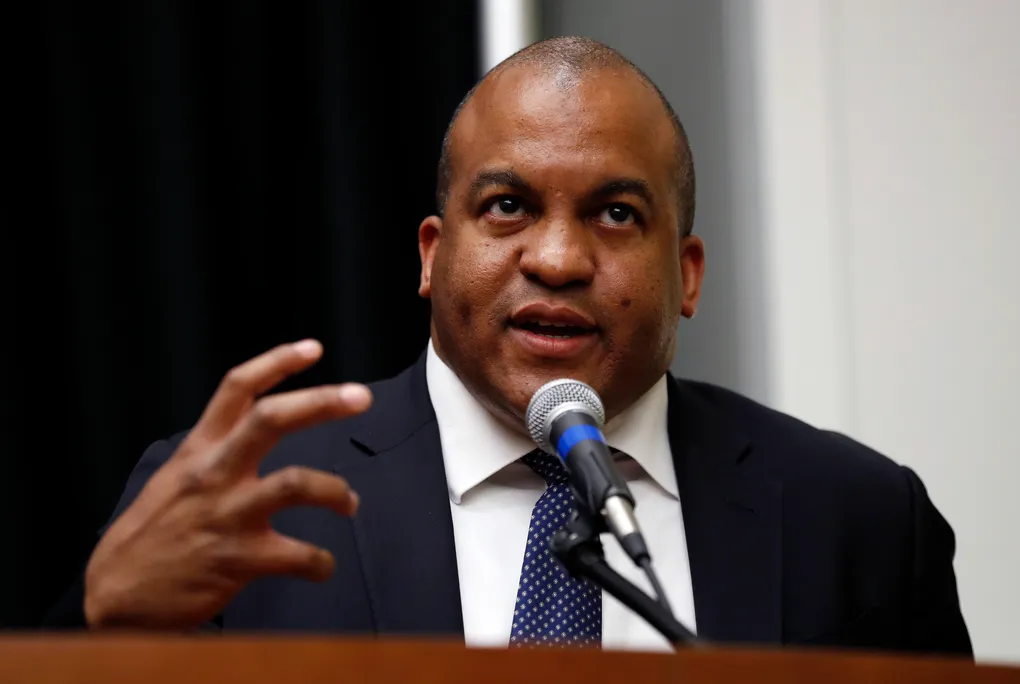
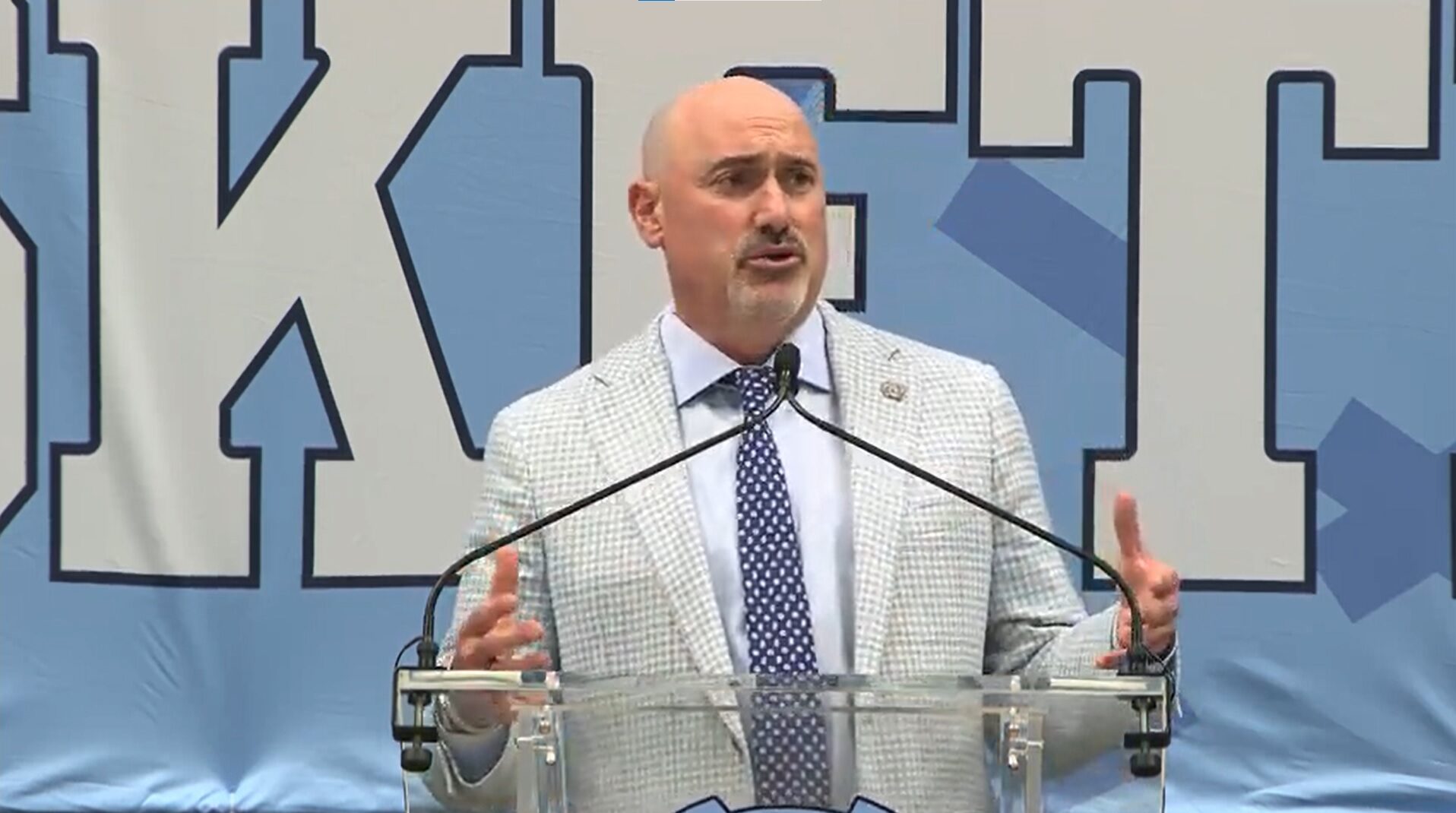
In a special meeting of the UNC Board of Trustees Tuesday, Athletic Director Steve Newmark presented a plan to create an associated entity dedicated to handling revenue generation for the department.
“Over the last year, we’ve been doing an assessment on how to best position ourselves to tackle the increasing costs in collegiate athletics,” Newmark told the board. “And one of the pieces of that puzzle is, we believe, to create a specially focused entity to consolidate our commercial operations and our commercial functions.
Newmark described six “verticals” making up the entity: sponsorships, licensing, ticketing, NIL (name, image and likeness), special events and the operation of Finley Golf Club, which is owned by UNC.
“We feel like the approach that we were taking was narrowly tailored to accomplish our gals,” Newmark said. “Which was not to upset how we operate generally, but to allow us to take these specific functions to see if we can maximize the revenue. That’s a primary goal of ours going forward.”
Newmark also clarified that the entity would be “wholly owned” by the university and would have its own Board of Directors. That Board would be made up of seven members: the university’s Chief Financial Officer (Rick Barakat), the Athletic Director (Newmark), the Chair of the Board of Trustees (Malcolm Turner), the Chair of The Rams Club (Jim Sigman) and three additional independent members appointed by Chancellor Lee Roberts. Roberts said there had been no discussions as to who those three members would be.
UNC is not the first school to explore new options for revenue generation in its athletic department. Similar entities have been created at the University of Louisville, the University of Utah and UNC-Charlotte. In 2025, the University of Kentucky went a step further, moving its entire athletic department into a holding company called Champions Blue.
“We’re not leading the way,” Turner said. “You’re seeing this more and more across the collegiate landscape… this is not breaking new ground at all.”
The discussion of the entity lasted approximately 30 minutes, with Newmark and Roberts answering questions from several trustees – including Marty Kotis, Jim Blaine and Vice Chair Ramsey White – who wanted to know more about the entity’s operations. Though Newmark explained the entity would not disrupt normal operations in the athletic department and that only “10 to 15” employees would be moving fully to the entity, the Board agreed to table further discussion until more information – notably a finalized operating agreement for the entity – was available.
Blaine also expressed concern over the entity operating as an associated entity, similar to the General Alumni Association or The Rams Club. He noted that neither organization had signed their “AE” contracts with the university after “years of work.”
“That really raises my antenna,” Blaine said. “We generally… have had some concerns about associated entities.”
“I can’t speak to some of the issues with different associated entities and how they’re structured,” Newmark responded. “[The athletic revenue entity] is still an LLC, it is still wholly owned with absolute control by the university. The associated entity status and requirements are just an additional layer that go on top of that foundation and baseline.”
The 2024-25 academic year saw the UNC athletic department operate at a deficit of more than $15 million, its first time running at a deficit since 2020-21. Its total expenses of $187,967,260 were the most in the history of the department. Though the numbers for the 2025-26 year have not yet been made public, we do know that year was the first for UNC (and every other athletic department in the NCAA’s so-called “power conferences”) in which it dealt with the fallout of the House settlement, which went into effect in the summer of 2025. Under the terms of the settlement, UNC shared $20.5 million in revenue with its student-athletes, a number which is set to increase in the coming year.
Additionally, even more money will be paid out across the next decade to former players who missed out on their chances to earn revenue. That distribution is funded by withholding revenue to schools, including UNC, and will cost Carolina about $2 million per year.
UNC has already instituted changes in an effort to generate more revenue for the athletic department. In March 2025, it hired Barakat as its Chief Revenue Officer. The following May, Barakat and then-athletic director Bubba Cunningham presented several strategies to the university’s Board of Trustees to bring in more money, many of which have already come to fruition.
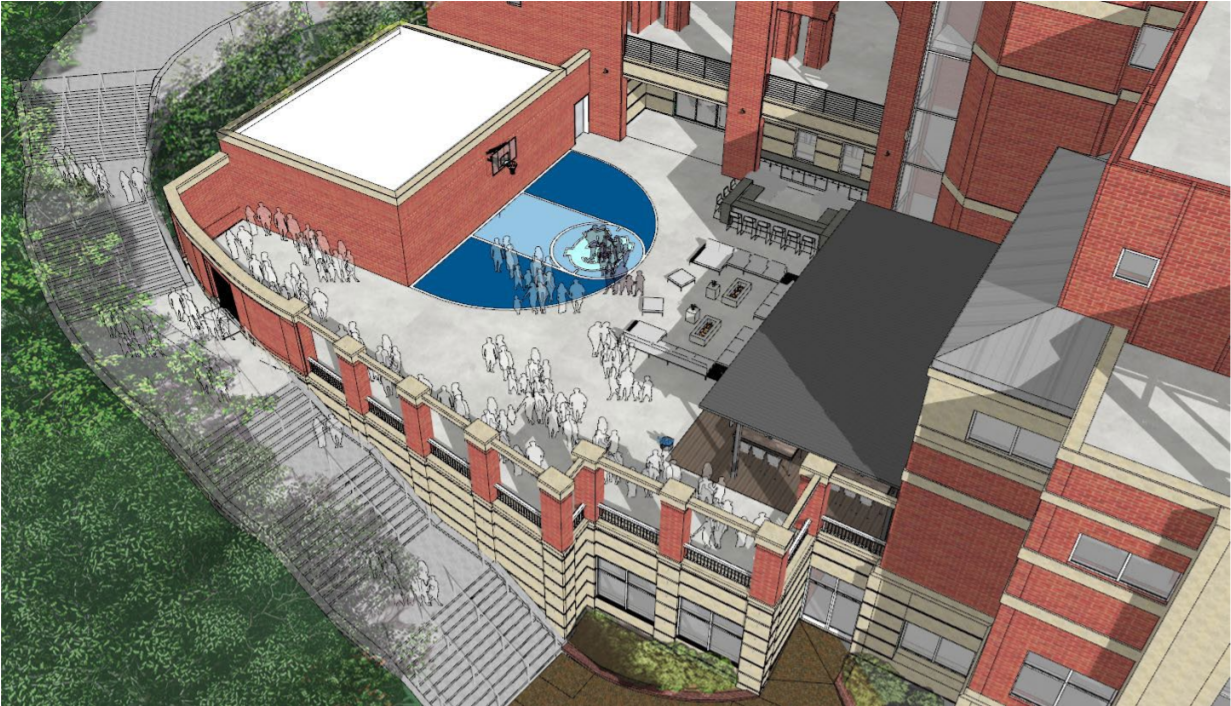
Barakat envisioned enhancements to Kenan Stadium; those upgrades are underway and will be ready by the start of the 2026 season. He also teased a larger football gameday presentation on the part of the athletic department; 2026 will be the second year of “Chapel Thrill Game Day,” which includes a concert series in front of Wilson Library. Barakat expressed his desire to host special events at Kenan Stadium; the venue hosted the Savannah Bananas for two games in the spring.
Newmark is in his first academic year as UNC’s athletic director, having taken over for the outgoing Cunningham July 1. Newmark had served as Cunningham’s protégé during the 2025-26 year, and prior to that served as president of Roush Fenway Keselowski Racing in the NASCAR Cup Series. The UNC job is his first in a college athletic department.
Chapelboro.com does not charge subscription fees, and you can directly support our efforts in local journalism here. Want more of what you see on Chapelboro? Let us bring free local news and community information to you by signing up for our newsletter.